Two Hours at the House of the Virgin Mary (Meryem Ana Evi) on the Slopes of Bülbül Mountain in Selçuk
Many people visit the Ephesus ruins in Selçuk, Turkey and leave, but that afternoon I spent entirely on the mountain. Halfway up Bülbül Mountain (Bülbül Dağı) south of Ephesus, at…
Selçuk
Many people visit the Ephesus ruins in Selçuk, Turkey and leave, but that afternoon I spent entirely on the mountain. Halfway up Bülbül Mountain (Bülbül Dağı) south of Ephesus, at the end of a winding road, stands the House of the Virgin Mary. As soon as I got out of the car, the temperature dropped noticeably. In early March, a light jacket would have been enough in downtown Selçuk below, but here the wind cut through to my neck. The stone ground was wet and smelled of pine.
The stone house at the very end of the pilgrimage route was smaller than expected. It's far more modest than what I'd seen in photos. The walls, built of mixed stone and red brick, have three arches, with the center arch serving as the entrance. Beside the door is a sign reading "QUIET / NO PHOTOS," and to the left stands a massive old tree stump, completely hollowed out and trimmed like a planter.
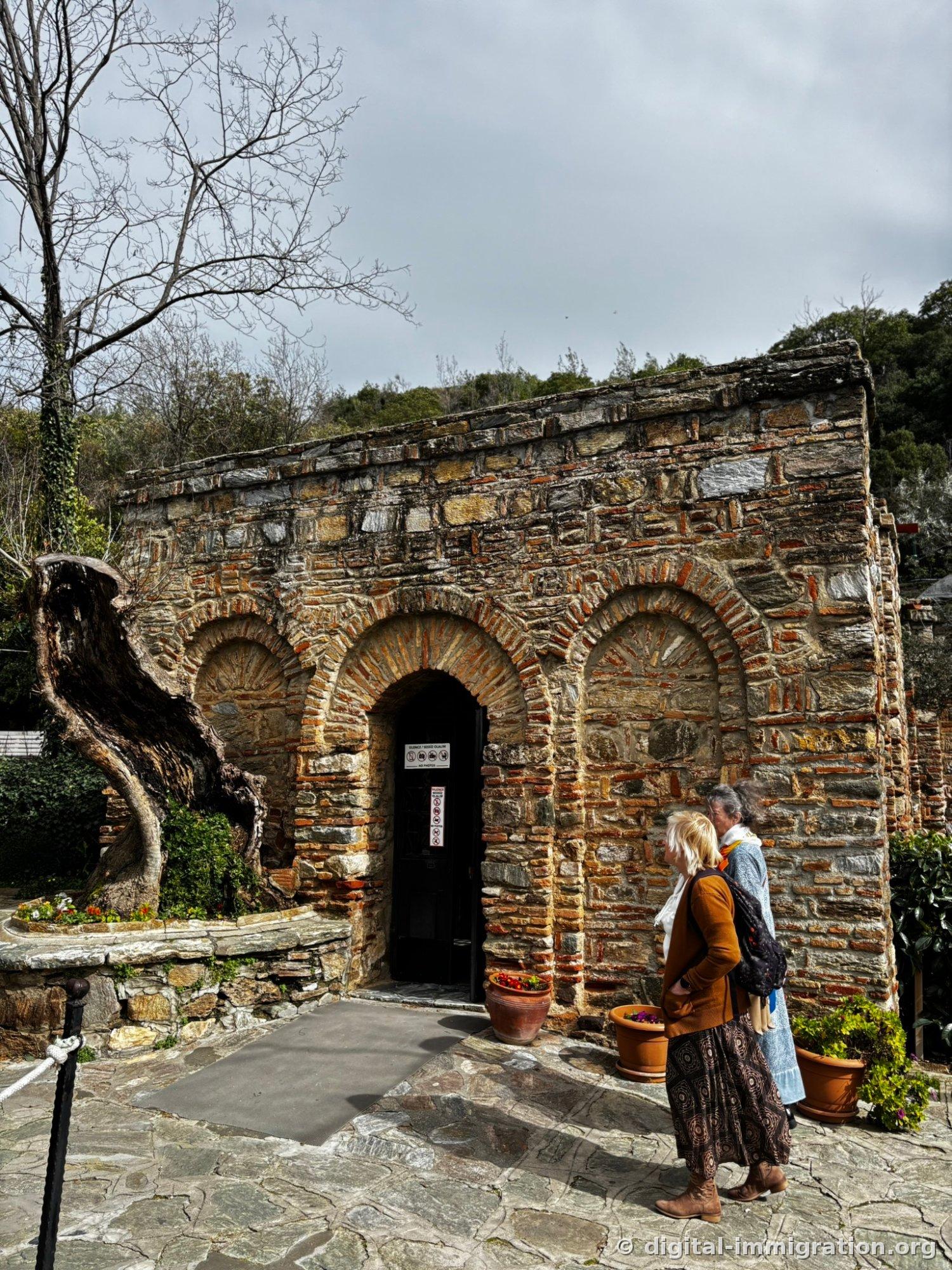
I Went Thinking It Was Her Birthplace, but Stopped in Front of the Information Plaque
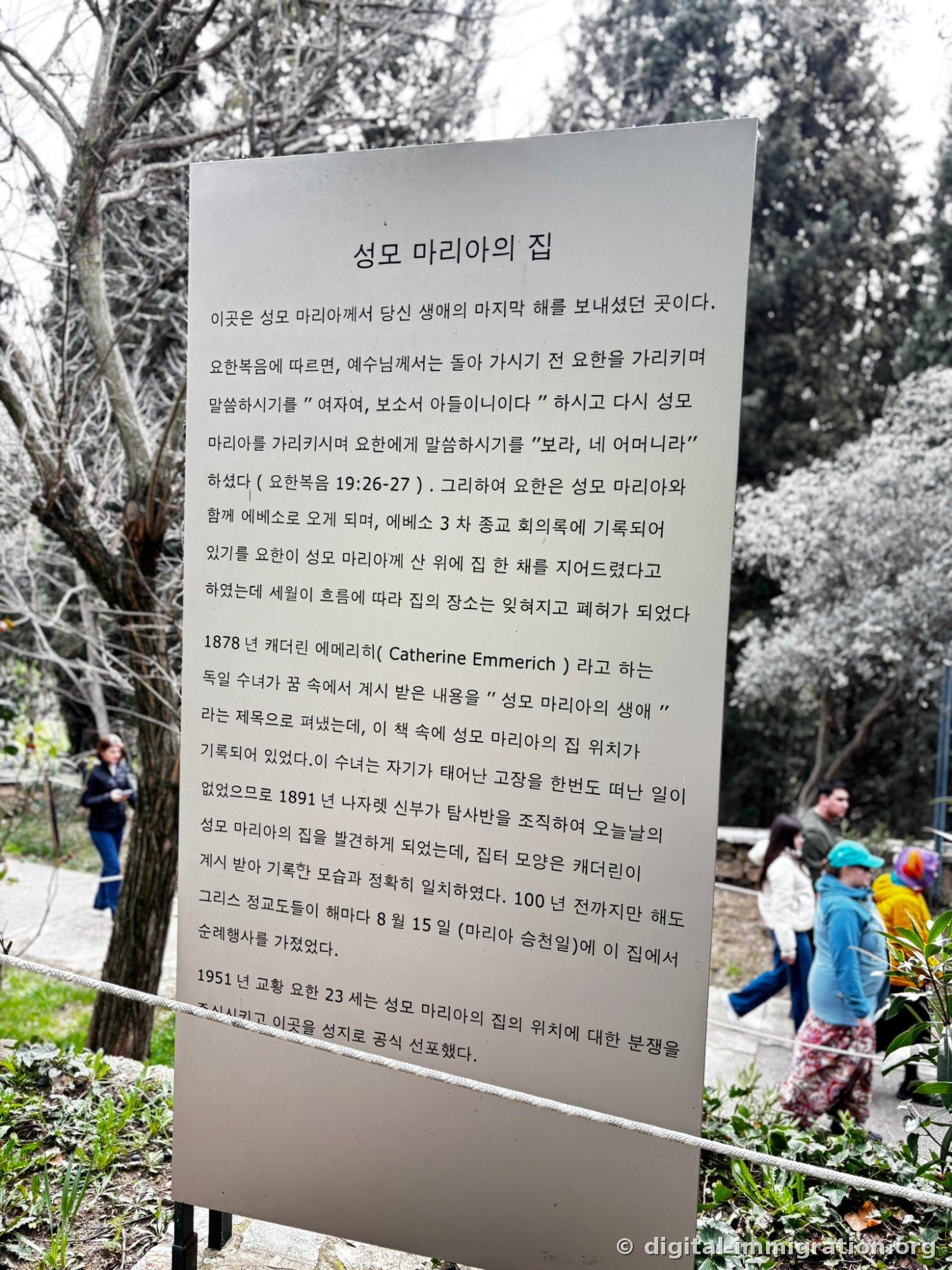
To be honest, I also came here thinking it was the Virgin Mary's birthplace. I'd seen it described that way multiple times in Korean travel guides. But the first line of the Korean information plaque set up near the entrance begins like this: "This is where the Virgin Mary spent the final years of her life." Not where she was born, but where she spent her last days. I stood there for quite a while because of this single line.
The plaque also includes the basis for this claim. In John 19:26-27, Jesus entrusts Mary to John's care, so John came to Ephesus with Mary. In 1878, German nun Catherine Emmerich published "The Life of the Virgin Mary" based on her visions, and in 1891, an expedition organized by Father Lazarus found a house site that precisely matched the descriptions in the book. Then, in 1951, Pope John XXIII officially proclaimed this place a holy site. It was my first time seeing such detailed information in Korean on a plaque in Turkey, so I took a photo.
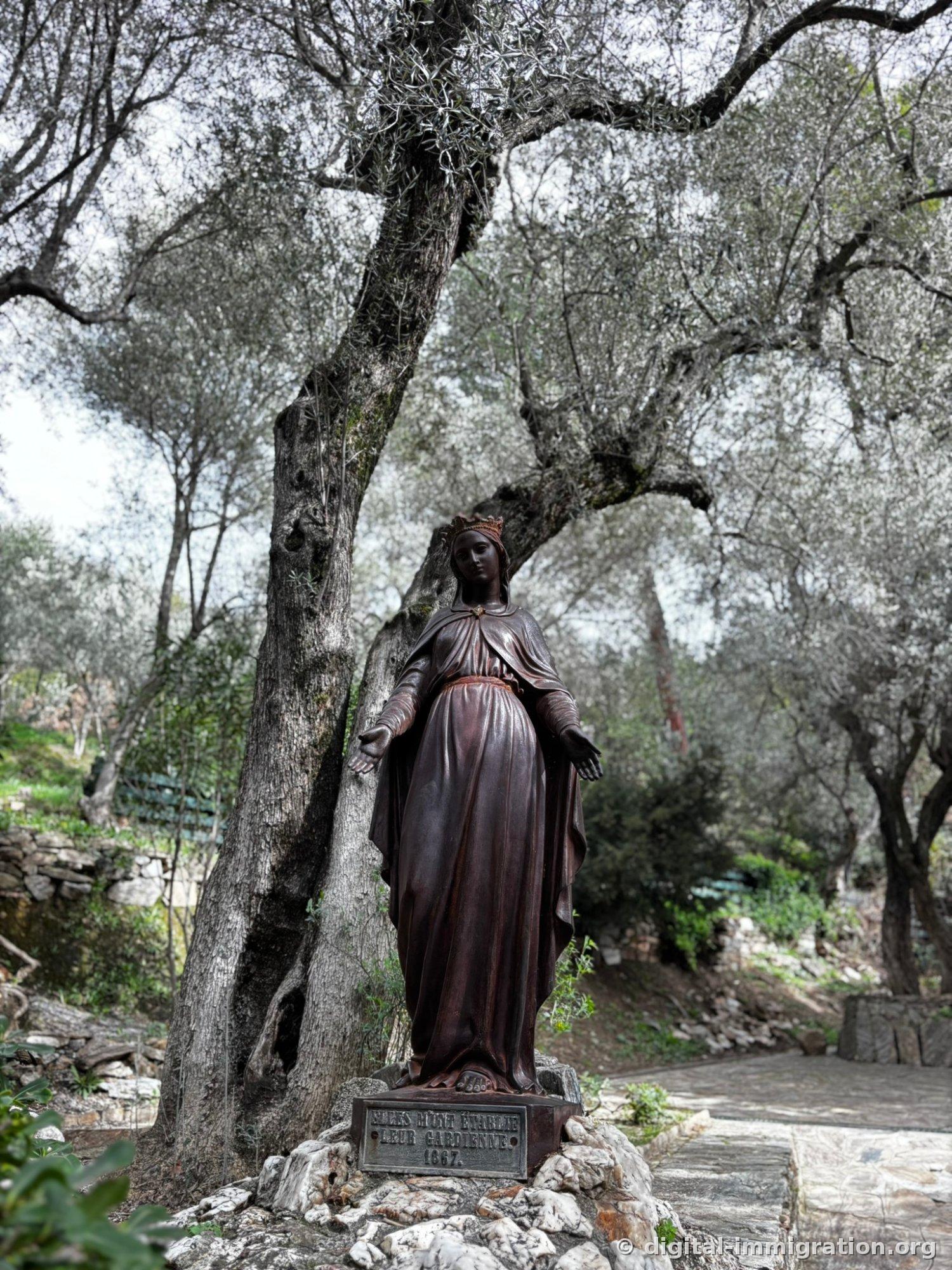
Bronze Statue of Mary Under the Olive Tree — This Is Where It Really Begins
From the ticket office to the house is a gentle uphill walking path. Partway along, under an old olive tree with silvery leaves sparsely scattered, stands a bronze statue of Mary with both arms outstretched. It's taller than a person, and the surface has weathered to a dark reddish-brown from years of rain. The French text on the base plaque is heavily worn, but the number 1867 reads clearly. This predates 1891, when the house was discovered, which made me pause and wonder if the statue had been moved here — but there was no on-site explanation for this, so verification would be needed.
Most tour groups just take a photo in front of the statue and move on, but I note that this was the quietest spot in the entire shrine. Just a few steps aside toward the olive groves and the sound of people vanishes completely.
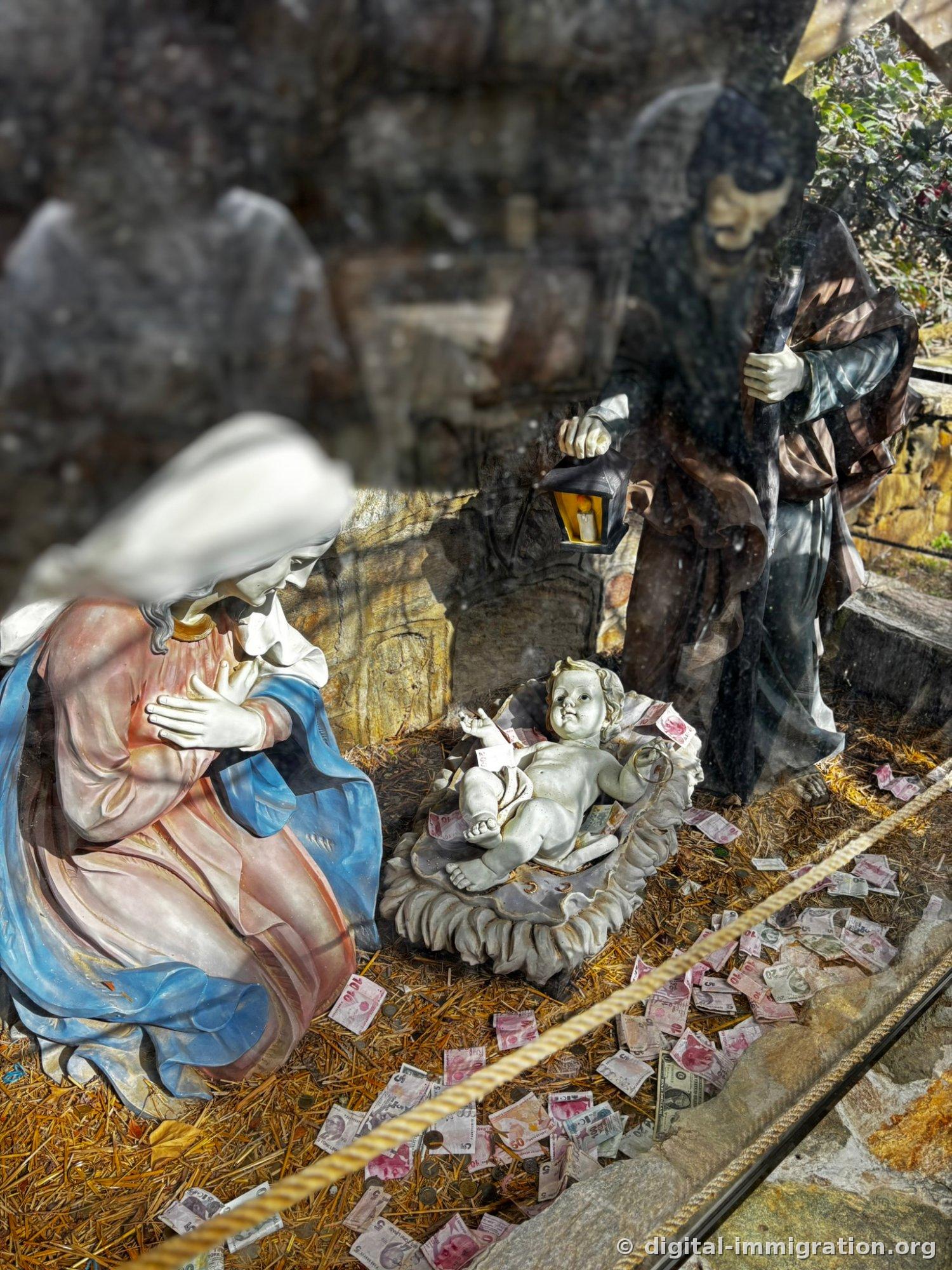
No Photography Inside the House, But a Nativity Scene Behind Glass Outside
Photography is prohibited inside the stone house. It's dark inside, with a mix of incense and candle wax scents. A single narrow passage connects the front room to the inner altar, allowing only single-file passage, creating crowding from behind. The actual time spent inside is only one to two minutes. I saw many people disappointed by this brevity, but I felt it was actually the most honest part of the shrine. It's just a small stone room with little to offer.
Instead, outside there's a life-size nativity scene enclosed in glass. Mary kneeling, baby Jesus lying on a shell-shaped cradle, Joseph holding a lamp. Heavy reflections on the glass make it difficult to photograph properly. But what caught my eye wasn't the figures—it was the floor. Turkish lira bills and coins were scattered thickly over the straw, mixed in with American dollars. Even though someone must collect these daily, the sheer amount suggested the number of people passing through this place.
Drinkable Spring Water — Three Arches, Three Lines of Waiting
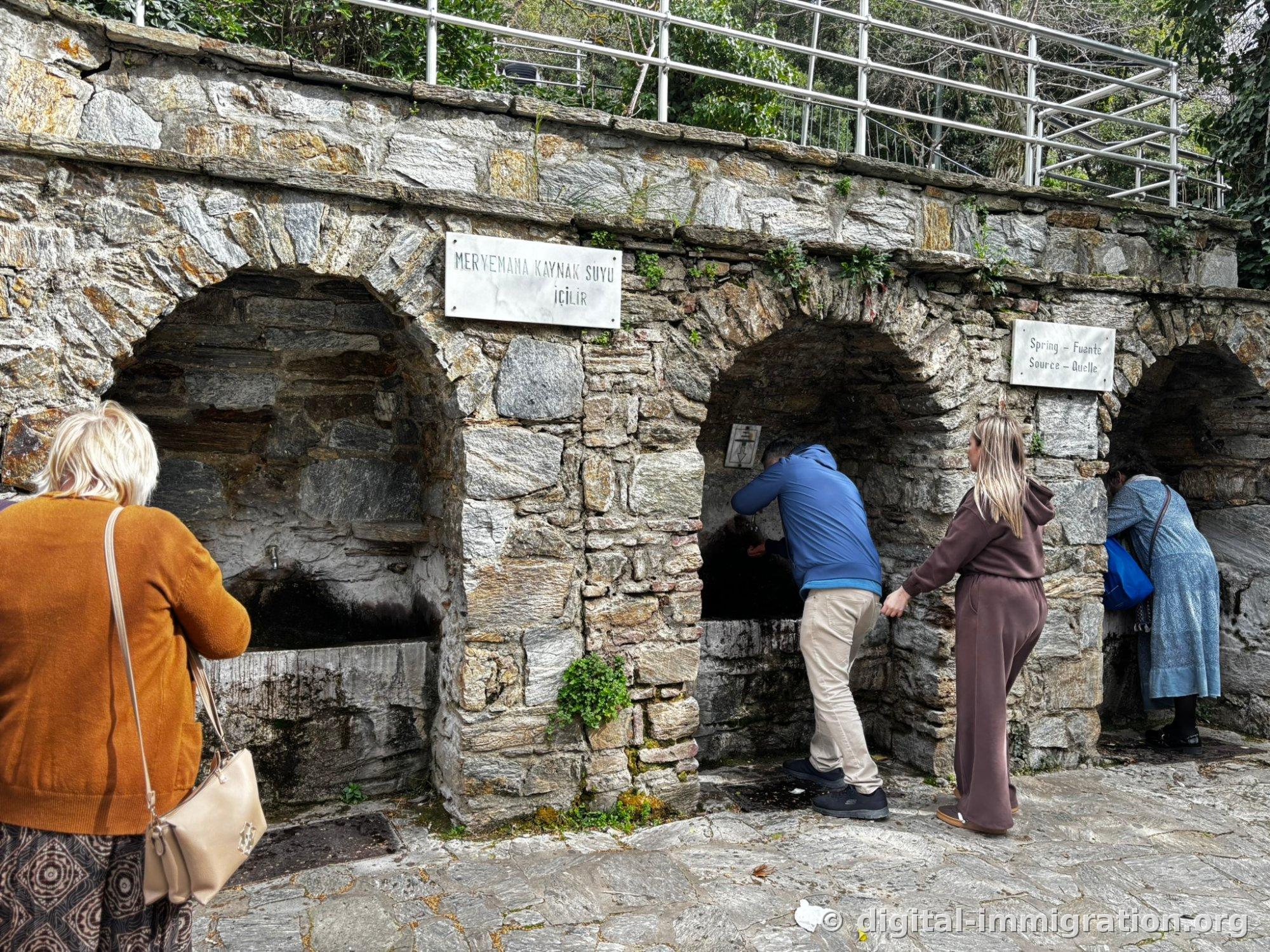
Coming down the steps from the house, you reach a spring with three arches carved into the stone wall. A marble plaque reads "MERYEMANA KAYNAK SUYU / İÇİLİR" in Turkish, and the adjacent sign displays Spring – Fuente – Source – Quelle in four languages. 'İÇİLİR' means "drinkable." People actually bend into the arches to catch the water.
When I visited, the leftmost arch had no water, only the center and right ones trickling. Dipping my hand in, the water was cold enough to sting my fingertips. I took a sip and tasted nothing special—just very cold mountain water without any mineral aftertaste. You can bring an empty bottle and fill it, but there are no hygiene guidelines, so it's better to skip it if you're concerned about sanitation. Even though the line for water is short, there's always someone waiting, making you conscious of those behind you.
The Wish Wall — Where Photos and Reality Differed Most
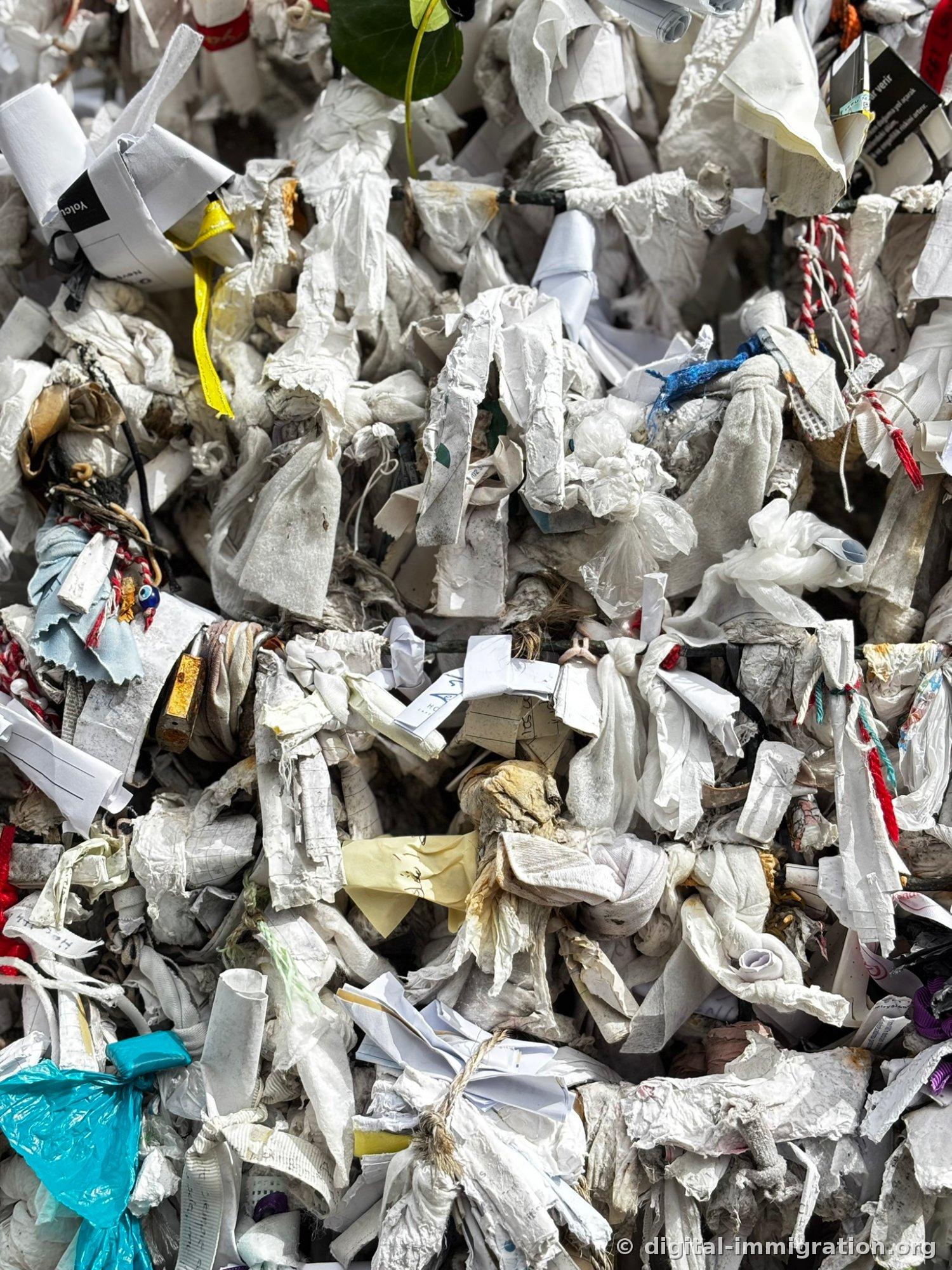
The entire corridor beside the spring is covered by the wish wall. From photos, I expected to see white ribbons tied beautifully, but the reality looks completely different. The wall is covered not with ribbons but with tissue paper, wet wipes, receipts, torn notebook pages, and paper napkins. People have written wishes on whatever paper they have in hand and tied them to the wire mesh. Years worth of papers overlap in gray layers, some with mold. There was no smell, but I didn't want to touch it.
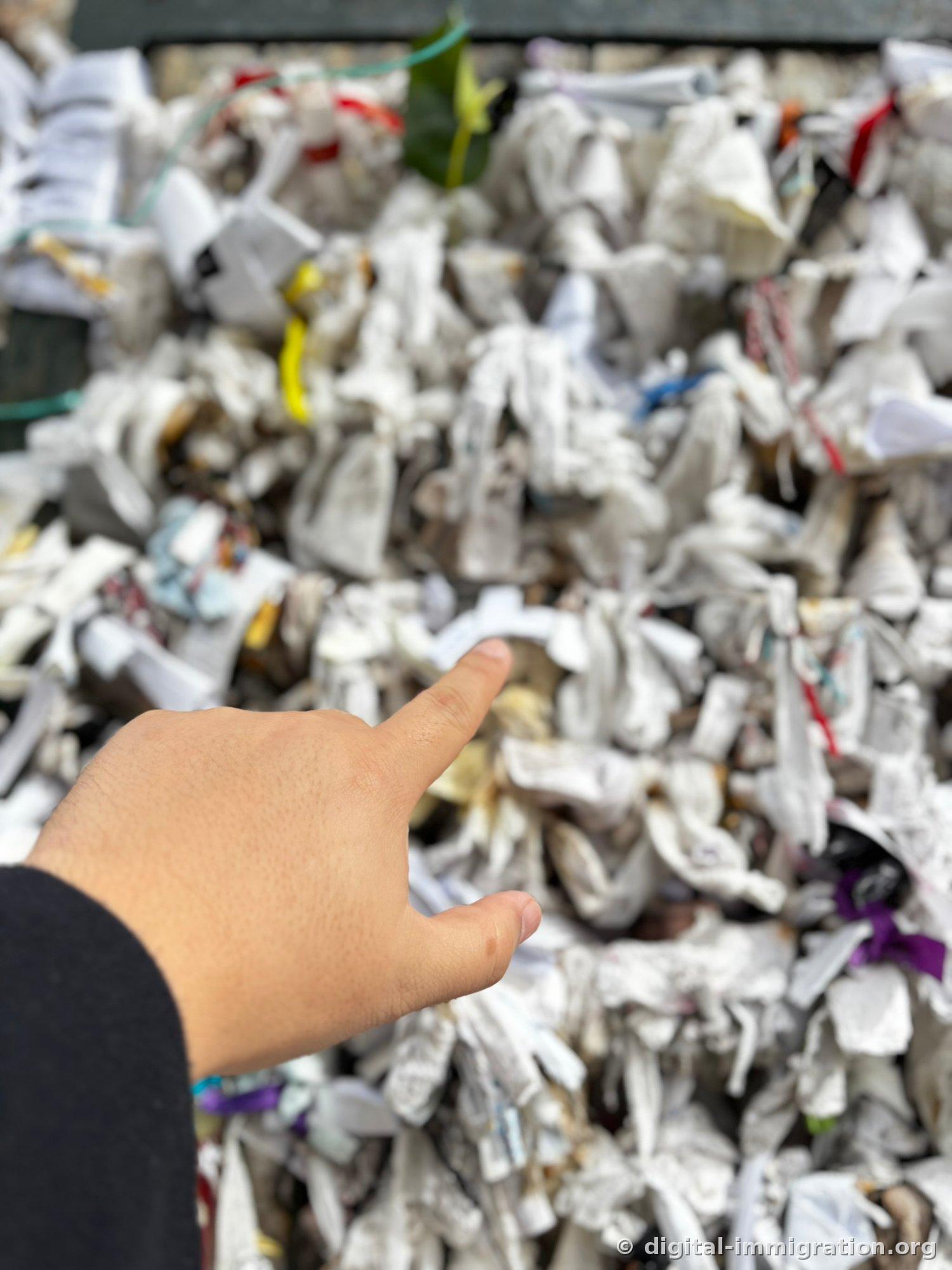
Looking closer, you understand what makes it fascinating. Between the knots are yellow ribbons, red and white twisted thread, blue glass evil eye charms (nazar boncuğu), prayer beads, even a single green leaf. At this holy site, Turkish folk talismans are tied alongside everything else—that's the wall's true character.
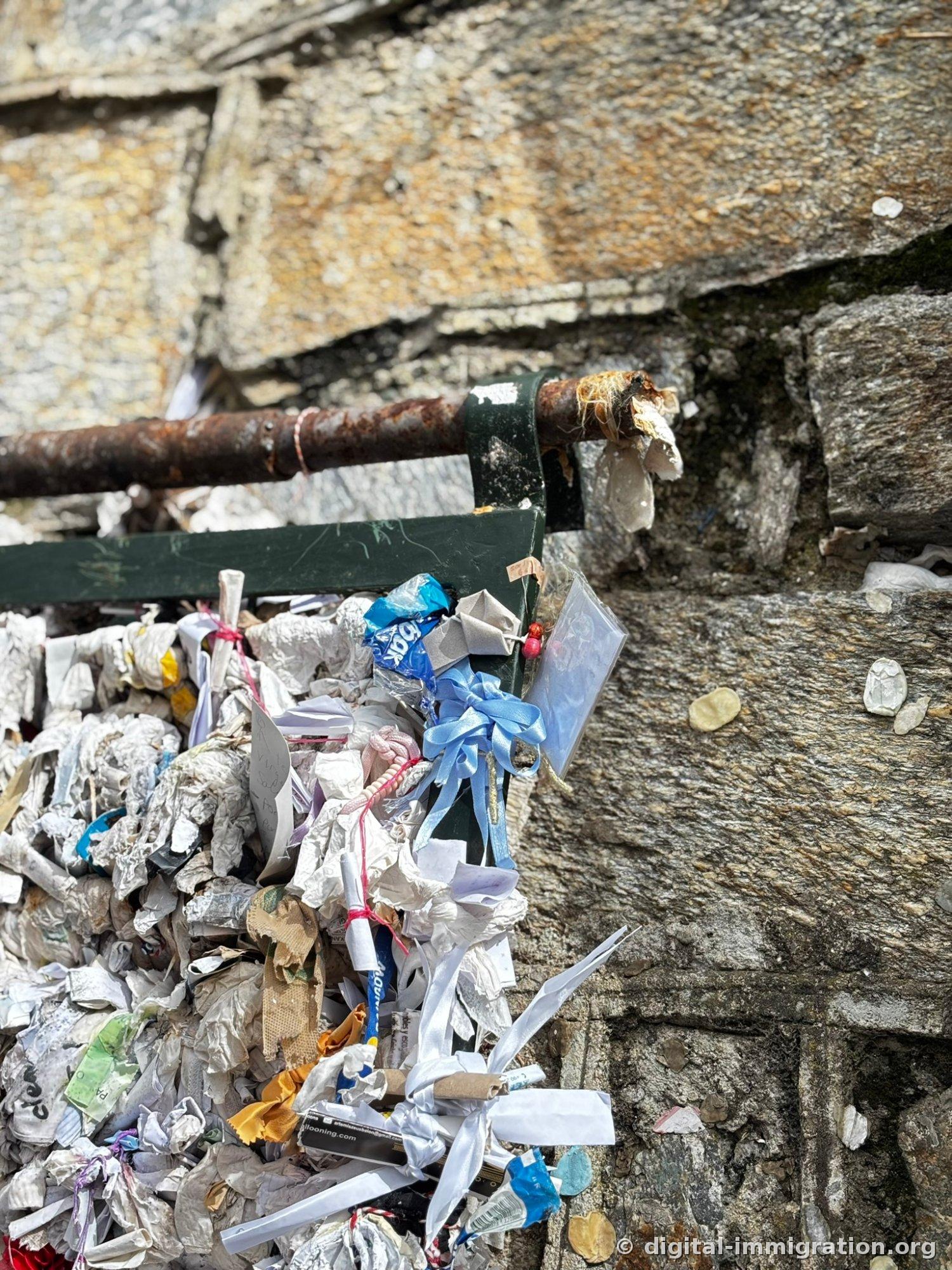
The end of the wall was particularly striking. A rusted iron pipe disappears into the stone wall, but knots fill it right up to the last few centimeters. With nowhere left to tie, people have tucked papers into the concrete at the pipe's end. Next to it, a single light blue ribbon stood out for being remarkably new, and there was a photo suspended in a zipper bag. Someone wanted that to last.
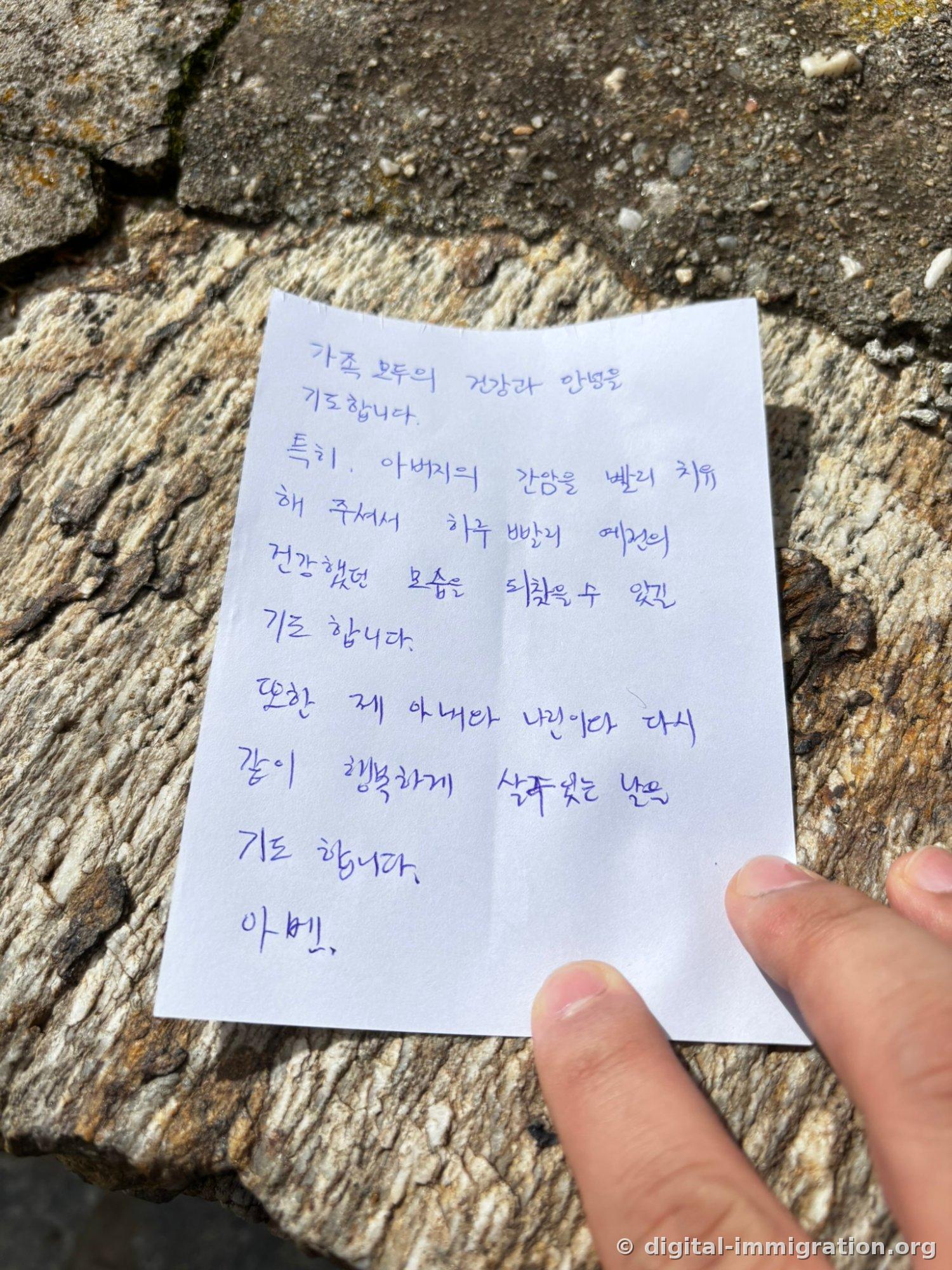
I wrote one myself. You can buy wish papers near the ticket office, but I just folded an A5 sheet from my bag in half and wrote with a ballpoint pen. Health and safety for the whole family, for my father's liver cancer to heal quickly and for him to regain his former healthy self, and for me to live happily together with my wife and Narin again. When I wrote "Amen" at the end, my hands trembled. I placed the paper on the windy stone, took just one photo, then tied it to the wall. That photo is the one I've looked at longest since this trip.
The Outdoor Mass Grounds and Pilgrims in Red Robes
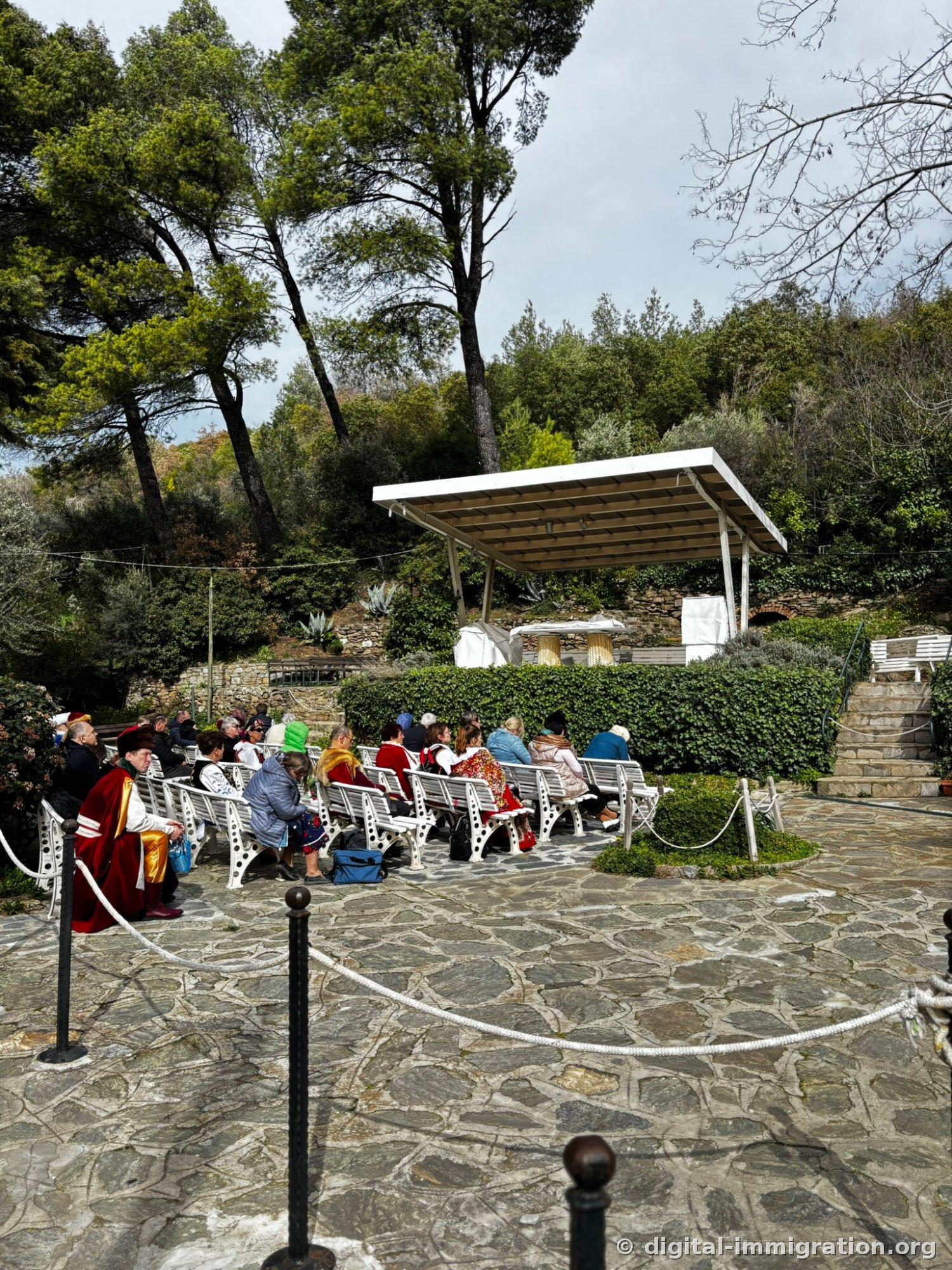
Below the house is an outdoor mass area with about twenty white benches. It's an open-air altar with just a roof, and when I visited, the altar and columns were covered with white cloth—meaning no mass was scheduled. Yet more than half the benches were occupied. Most were elderly pilgrims, and no one was speaking. Through the pines, I could hear only the wind passing and someone fingering prayer beads.
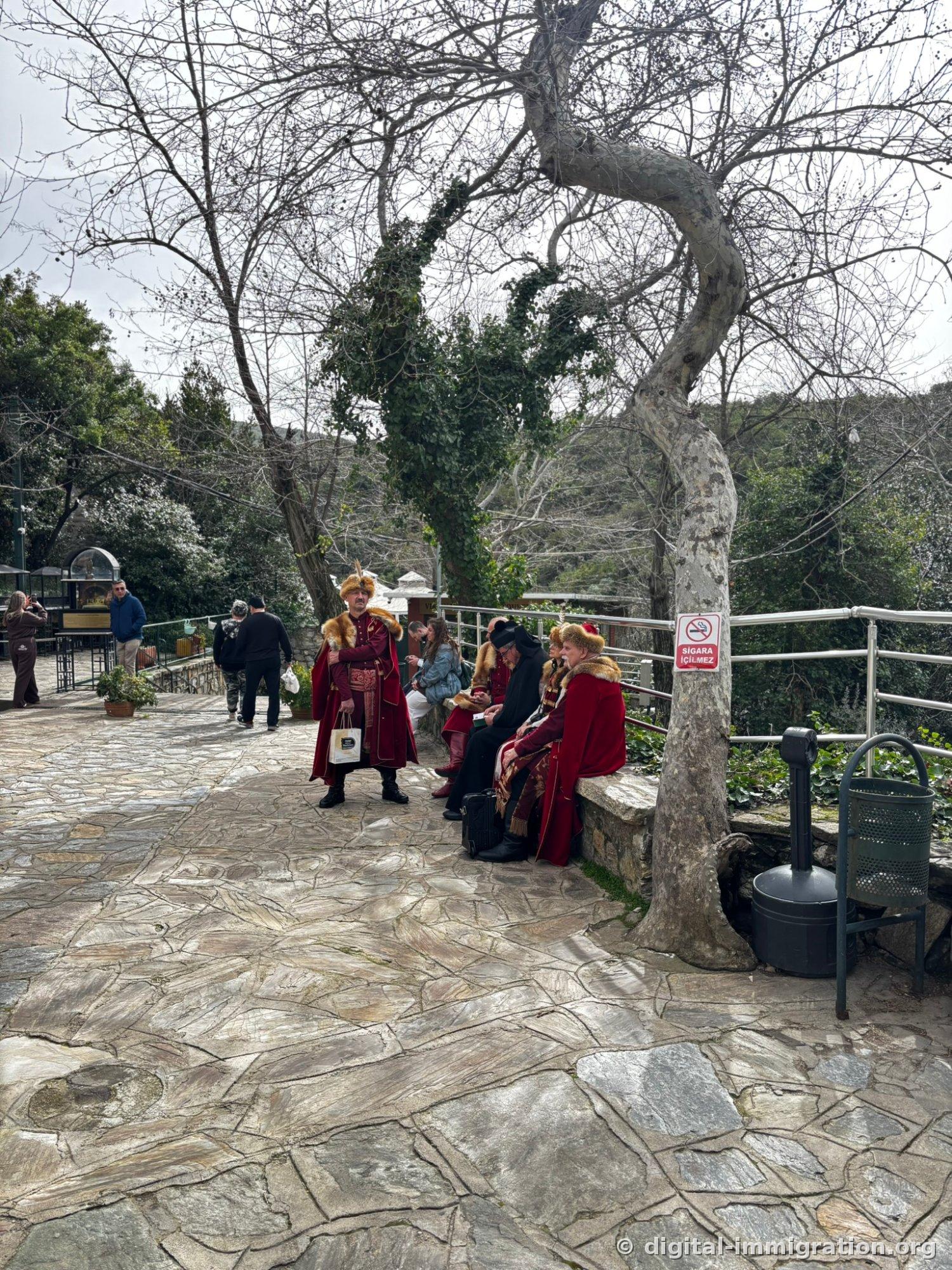
One group particularly stood out. Five or six men and women in traditional dress: crimson velvet coats trimmed with fur, fur hats with feathers, and heeled long boots. It looked like traditional ceremonial dress from some Eastern European country, but I didn't ask directly, so I don't know where they were from. They just sat on benches resting and stood waiting for their group, holding souvenir paper bags. Next to the railing is a red SİGARA İÇİLMEZ(NO SMOKING) sign. At this holy site, traditional dress, a no-smoking sign, and smartphones all fit into one frame—that's what this place is now.
That There's a Quranic Verse About Mary Displayed Here
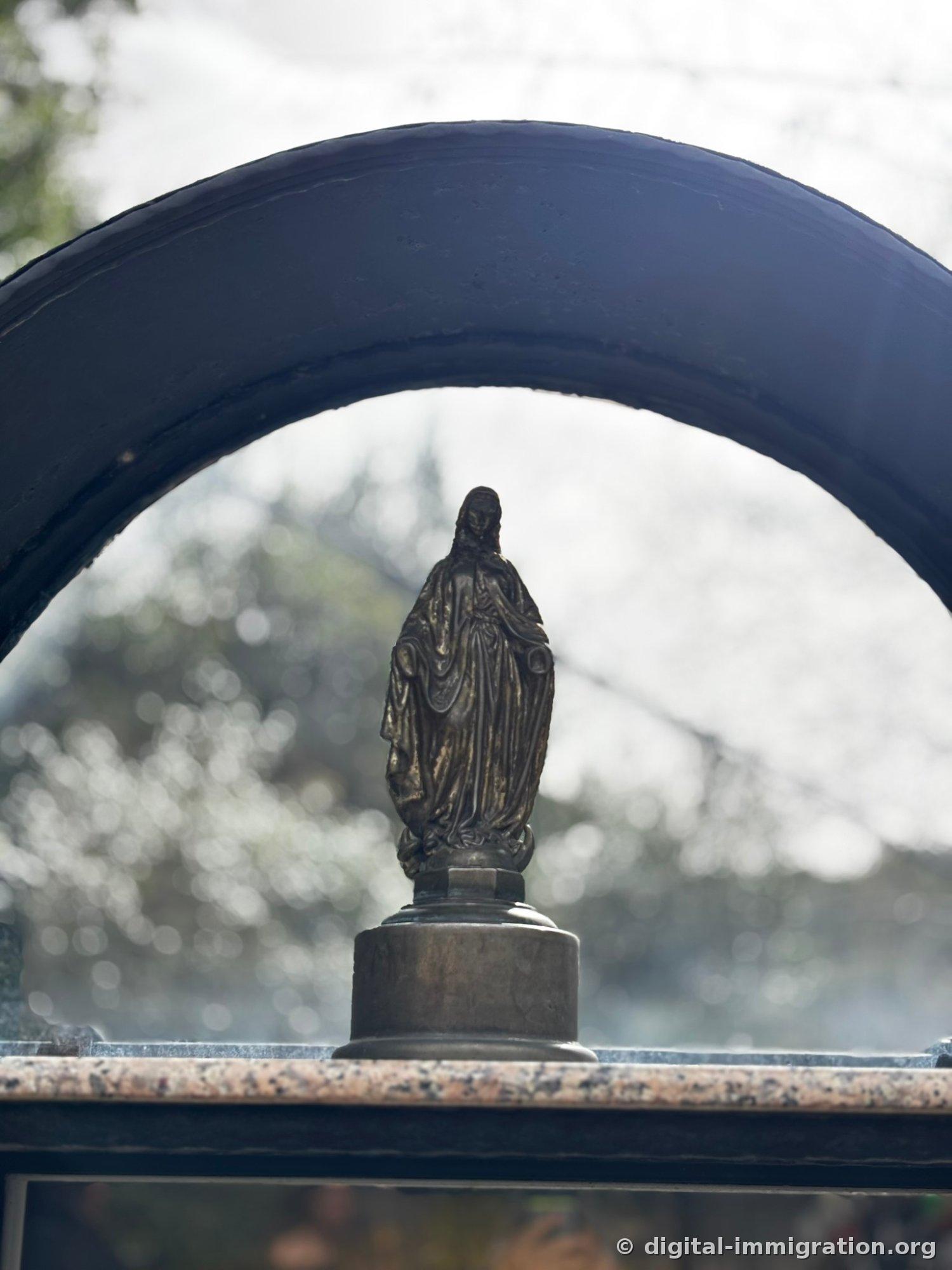
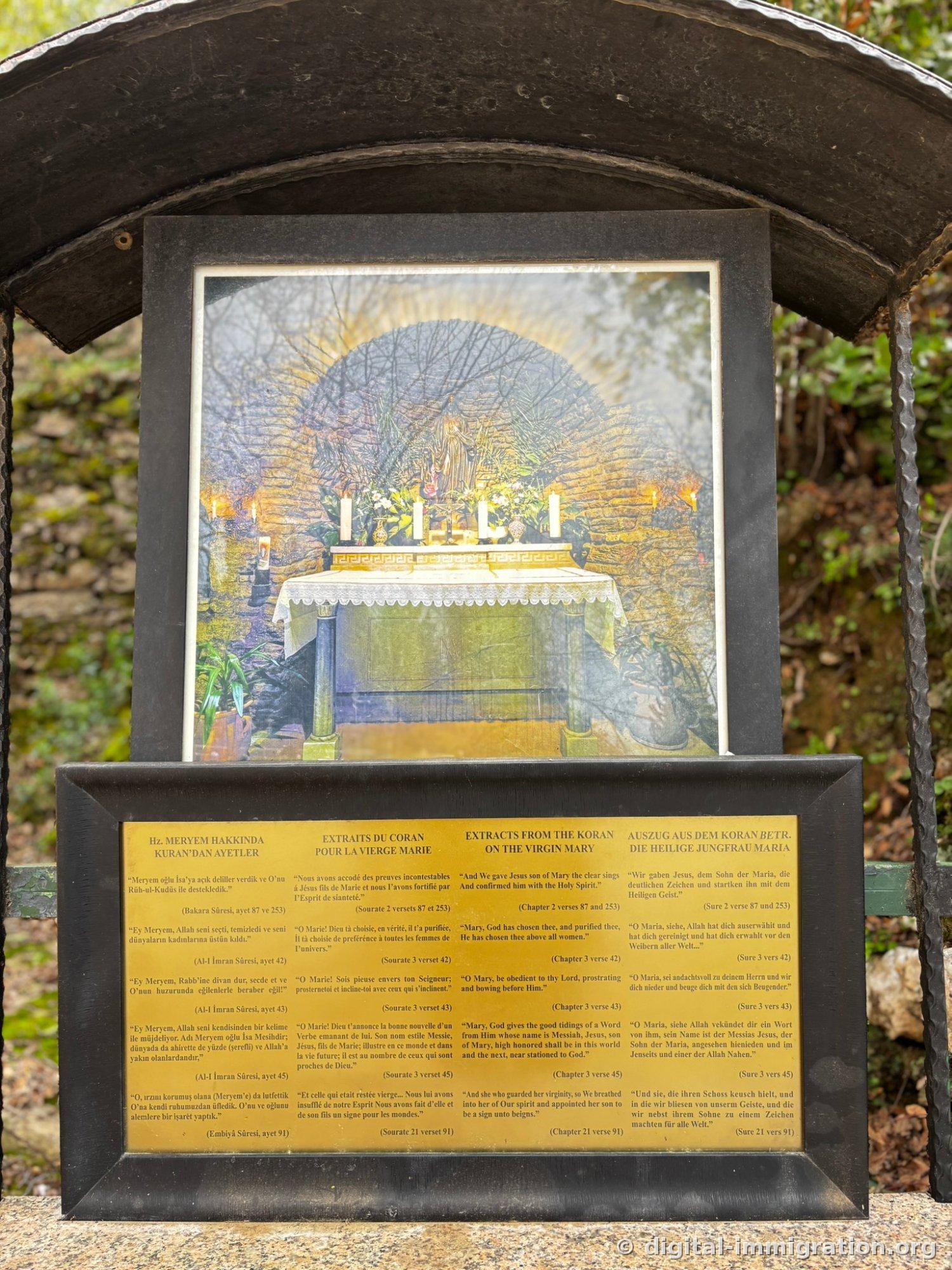
This is the most easily missed thing for first-time visitors to this shrine. There's a glass display case with a black iron arch above it, and a small bronze statue of Mary the size of a palm sits atop the arch. Most people just walk past. I initially thought it was decoration.
Looking into the display case below, there's a framed photo of the altar inside the house, and below that a brass plaque. The title reads "Hz. MERYEM HAKKINDA KURAN'DAN AYETLER / EXTRACTS FROM THE KORAN ON THE VIRGIN MARY" — Quranic verses about Mary are engraved side by side in four languages: Turkish, French, English, and German. Al-Baqarah 2:87 and 2:253, Al-Imran 3:42, 3:43, and 3:45, Maryam 21:91. A Quranic plaque stands in the middle of a Catholic holy site.
I knew that Islam also reveres Mary (Meryem) as a saint, but I'd never seen this explicitly displayed as part of shrine operations until here. It takes only five minutes to read this plaque, but those five minutes were the most memorable part of my visit that day.
Location, Route, and Things I Wish I'd Known Beforehand
The location is halfway up Bülbül Mountain on a mountain road southwest from downtown Selçuk. Cars drive up a mountain road that connects from the south gate (upper gate) of the Ephesus ruins, but it's not walkable distance. It's practical to catch a taxi or a half-day tour near Selçuk's otogar (bus terminal). I planned my route to enter the Ephesus ruins at the upper gate and descend, visiting this place before the ruins. I recommend this order—after hours of walking at the ruins, you won't have energy left to climb here. I couldn't confirm public transport directly, so please verify locally.
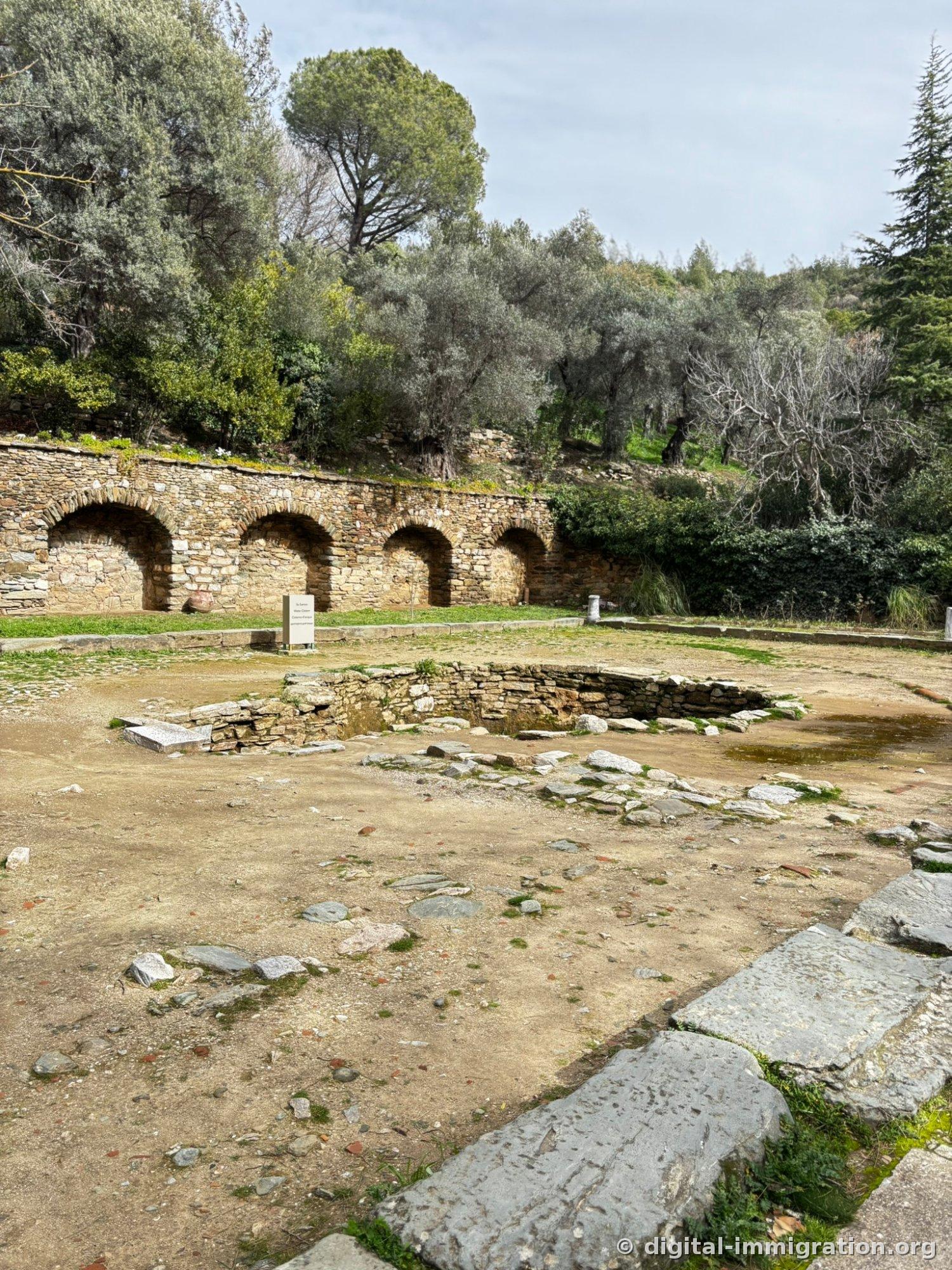
On the way down, there's a low stone wall with four arches carved through it, and in front of it, an excavated pool-shaped structure. There's a small sign, but it was too far to read, and almost no one visits, so I stood alone. Behind it, silvery olive groves blanket the hillside. It's the only place in the shrine area that looks like actual ruins, so it's worth photographing.
To summarize:
- Admission fees, parking, and operating hours aren't listed here. Turkey's prices and fees change frequently, so listing what I paid would only mislead. Official verification on-site or before departure is recommended.
- Actual time needed is one to one-and-a-half hours. Time inside the house is less than two minutes. The rest is the spring, wish wall, mass grounds, and walkway. Tours that allow only thirty minutes may feel rushed.
- No photography inside the house. It's better to put your phone away before the entrance. Most outside areas are photographable.
- Bring a jacket. Based on early March, it's definitely colder and windier than downtown. Even in summer, evenings are cool.
- Prepare your wish beforehand. You can buy paper near the ticket office, but if you think about what to write in advance, you won't fumble in front of the wall. Be sure to bring a pen.
As I came down the mountain, one thought occupied me. Whether this really is the place where she spent her final days—I have no way of knowing. But the thousands of papers hanging on the wall are real. Somewhere among them, my own piece of paper with my father's name is still tied.
Read next
- Boiling Shin Ramyeon Black on the Hill in Front of Zemi Hotel Cappadocia in Göreme in February
Summer is peak season in Cappadocia's Göreme. I went in February. Morning temperatures drop below freezing, and there's a thin layer of white powder—frost or light snow—along the r…
Göreme - An Afternoon at Yuvam Shisha Nargile Kafe Overlooking the Harbor from the Cliffs Above Antalya's Kaleiçi
Kaleiçi, the old town within the walls of Antalya, Turkey, is a maze of narrow streets tucked inside ancient ramparts. When you first arrive, you can't quite tell where the sea is.…
Antalya · Yuvam Shisha Nargile Kafe - Antalya's Kaleici Yacht Harbor — One Day Viewing the Harbor Below the City Walls from Three Different Angles
In Antalya's old town of Kaleici (Kaleiçi), Turkey, the city walls remain intact atop a cliff, and beneath that cliff lies an entire yacht harbor. On a map it looks like 'one harbo…
Antalya · Yuvam