Four Days on Vientiane's Backpacker Street: Eating and Drinking Under the Tangle of Cables
Vientiane's backpacker street in Laos spans just a few blocks on the map—from Namphu Fountain Square down toward the Mekong River. Yet within this narrow area, guesthouses, Japanes…
Vientiane Capital · Yeohangja Street
Vientiane's backpacker street in Laos spans just a few blocks on the map—from Namphu Fountain Square down toward the Mekong River. Yet within this narrow area, guesthouses, Japanese izakayas, French wine shops, street noodle stalls, government buildings, temples, and Chinese shrines are all crammed together. I walked through this neighborhood twice during the day and twice at night, and each time I couldn't tell if it was the same street. During the day it feels like a sleepy provincial town, but once the sun sets and the strings of bulbs light up, it becomes an entirely different street.
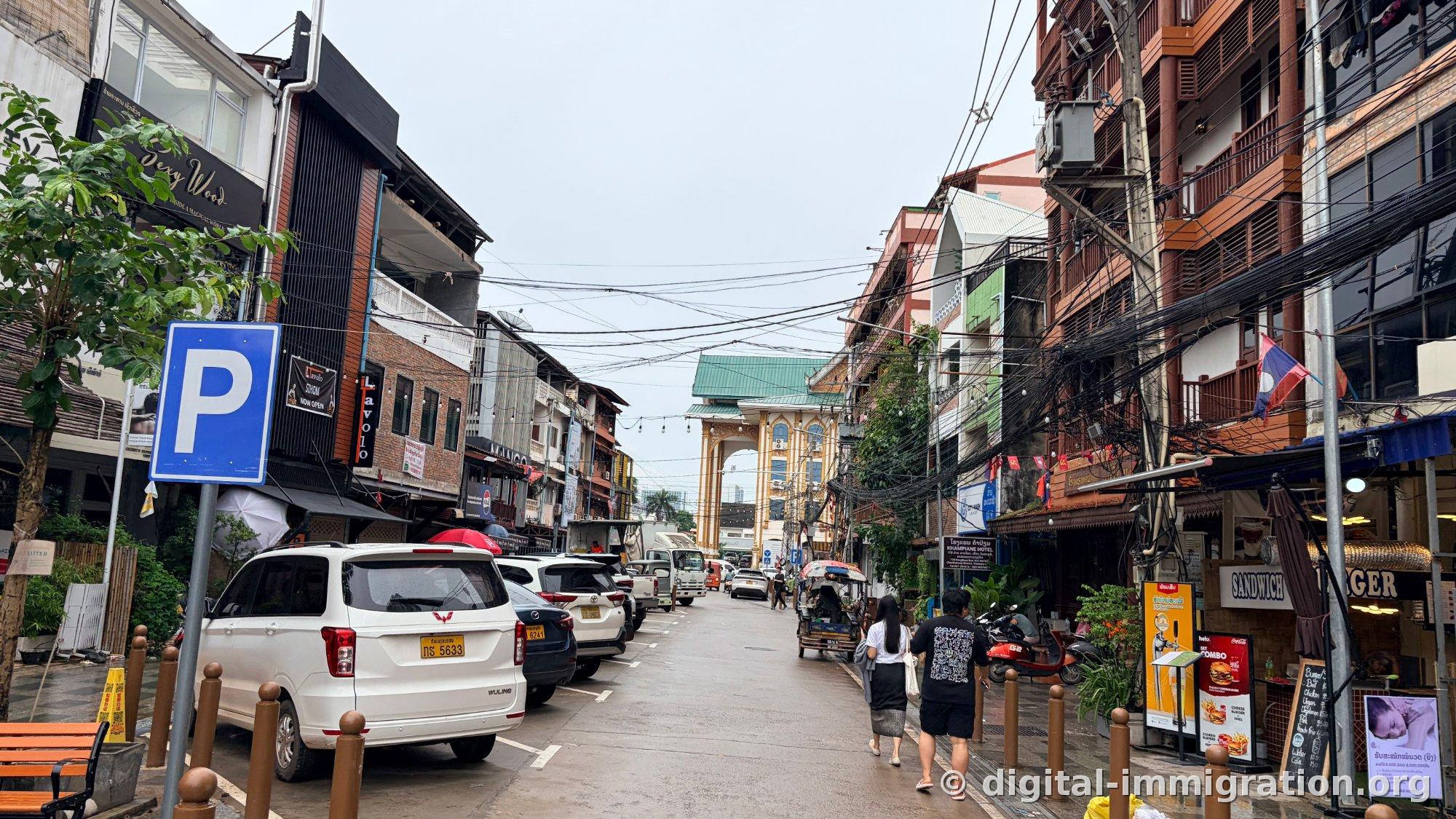
What You See When You Look Up—The Cable Tangle
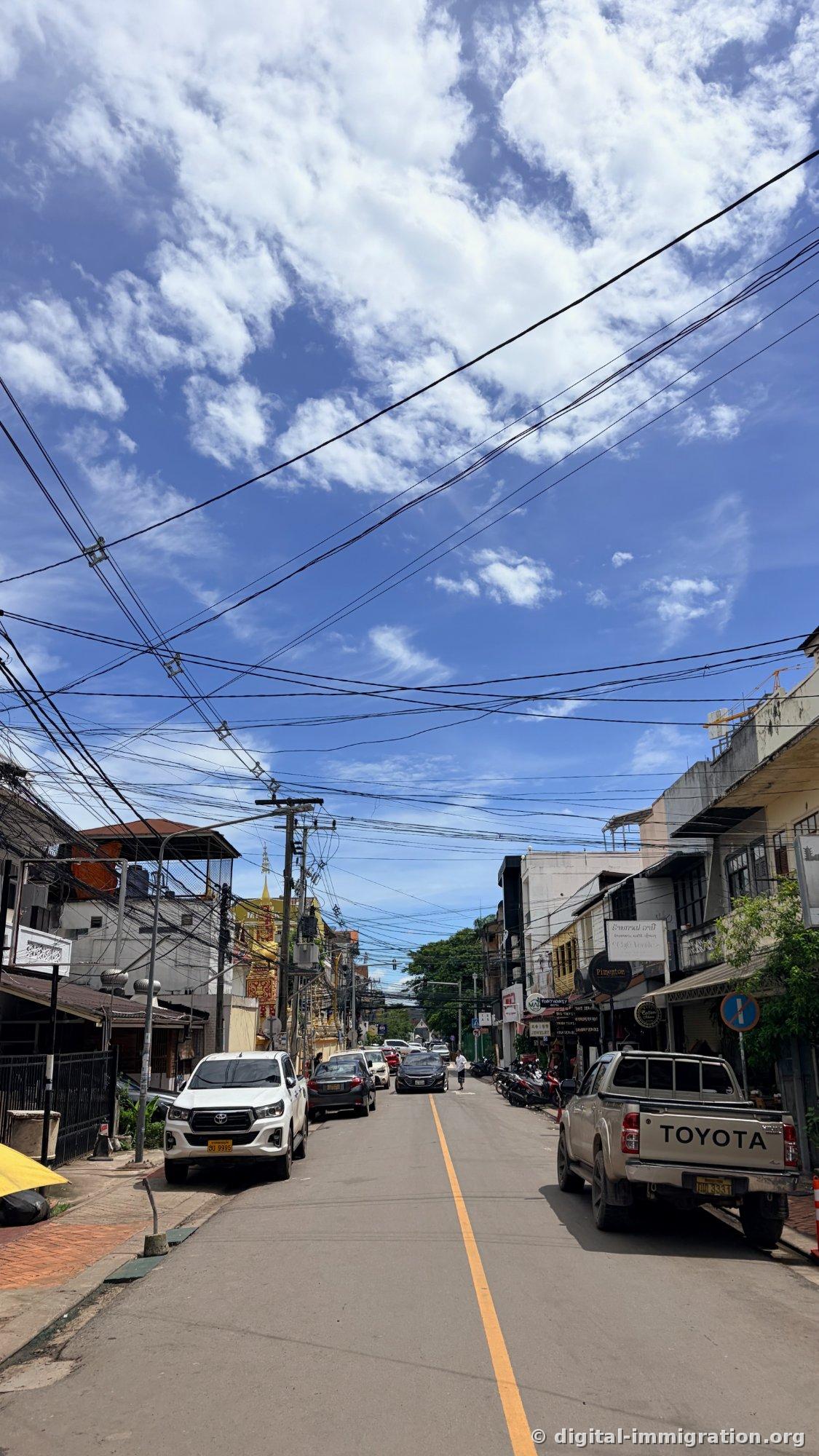
The first thing newcomers to this neighborhood photograph is not food or temples—it's the utility pole. I did too. A single pole bearing signs for Lao National Culture Hall and Nam Phu direction has hundreds of cables wrapped around it, and the upper section has already become a black bundle, like a bird's nest. The result of decades of power lines, communication cables, and internet wiring accumulating on top of each other.
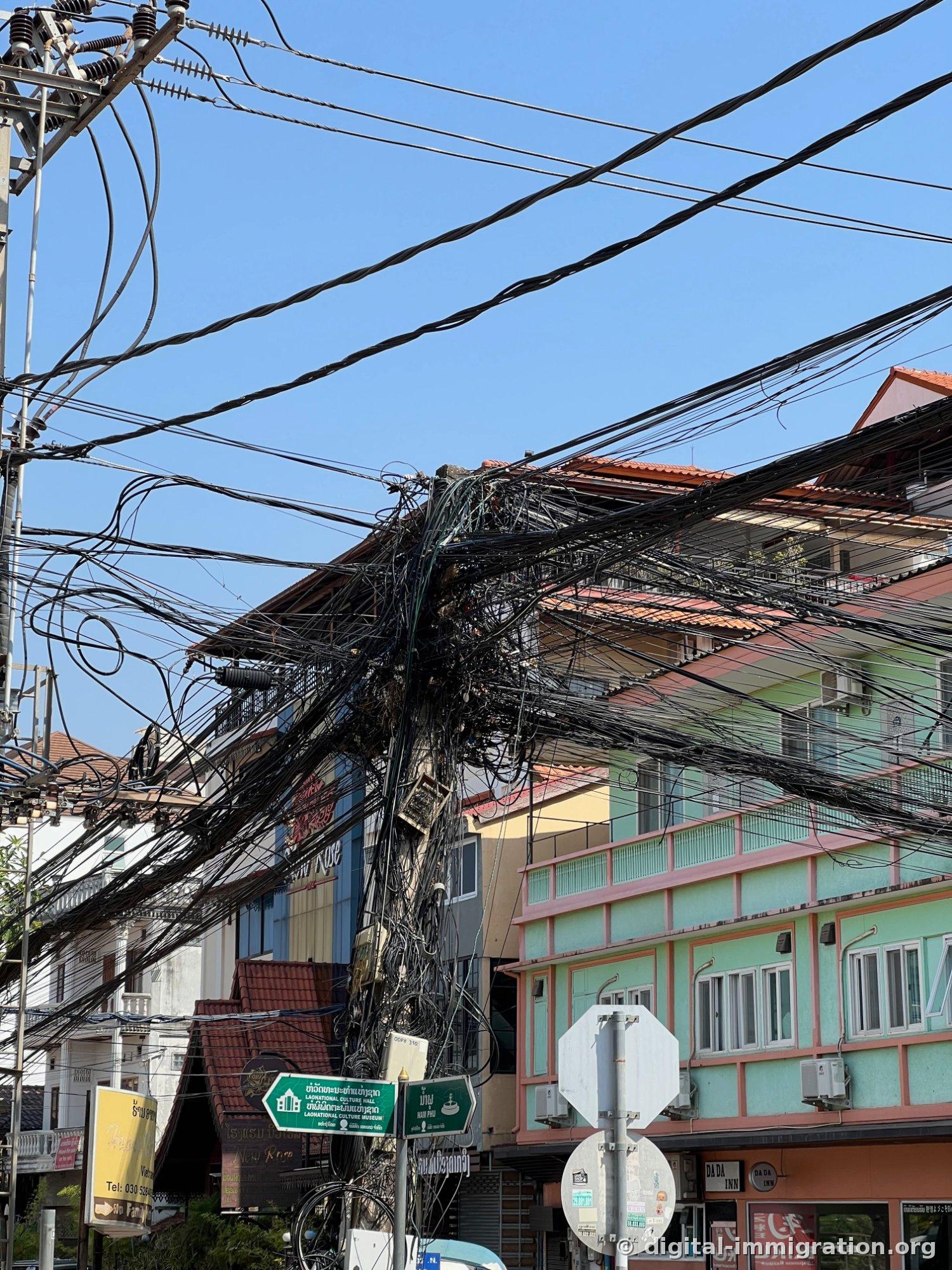
Honestly, my first thought upon seeing it was, "Isn't that dangerous?" Walking beneath it on rainy days made me uneasy. But what I heard from locals was the opposite: the tangled cables themselves had become famous, attracting travelers who came specifically to see them. I actually saw Western backpackers with cameras positioning themselves twice, measuring the angles. An eyesore had become a tourist attraction, which is both amusing and oddly fitting. It really is the most quintessentially Vientiane sight in Vientiane.
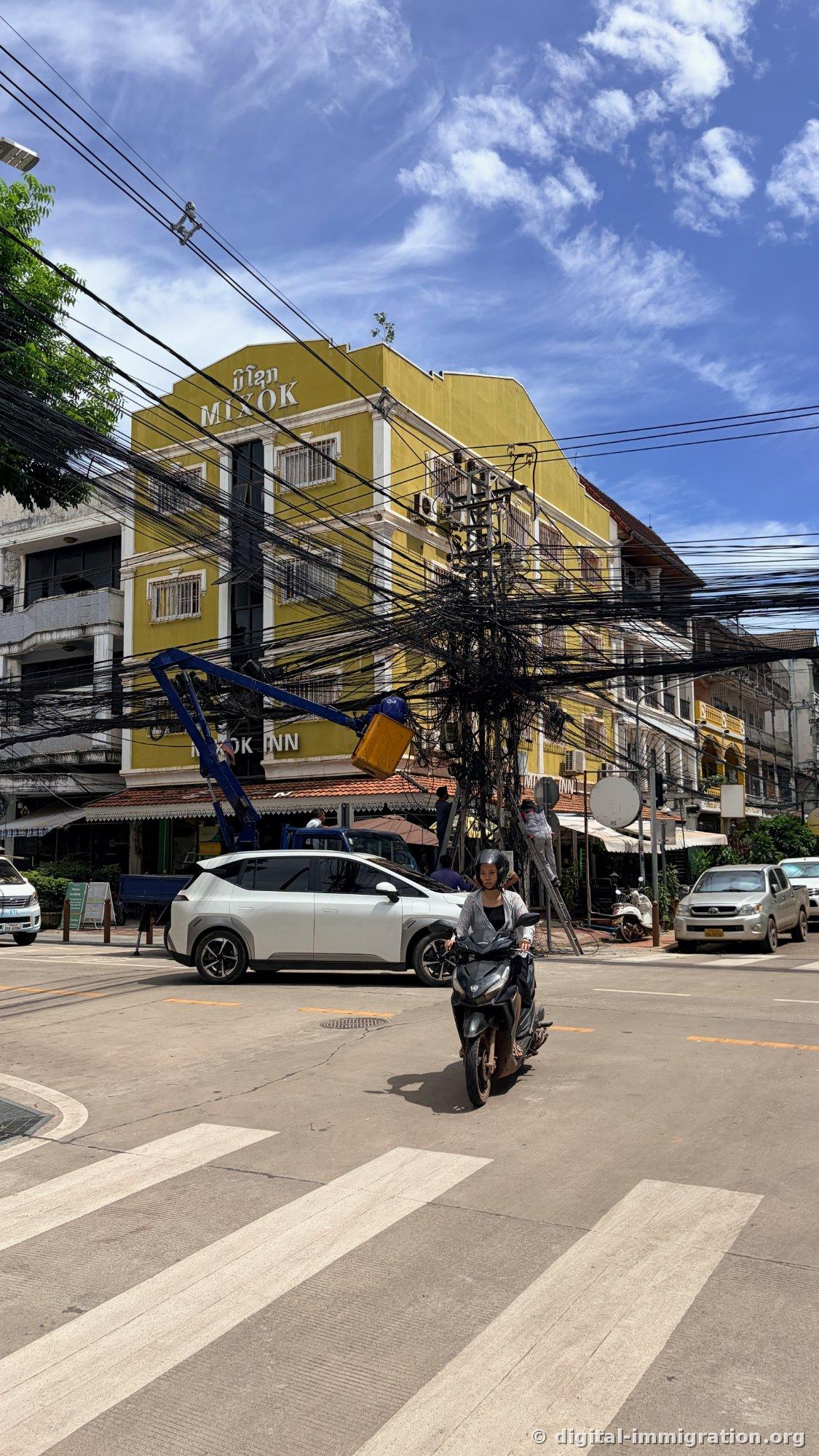
That said, it's not just abandoned. Over two days, I saw maintenance work in the same spot twice. At the intersection in front of MIXOK INN, three or four workers were rummaging through the tangle with both a blue bucket lift and a wooden ladder positioned side-by-side, and on the main road near the Hard Rock Cafe sign, another crew was working on a streetlight with a ladder. Watching them stand on ladders without safety belts, I couldn't help but walk faster. Don't pass under the ladder to get your shot.
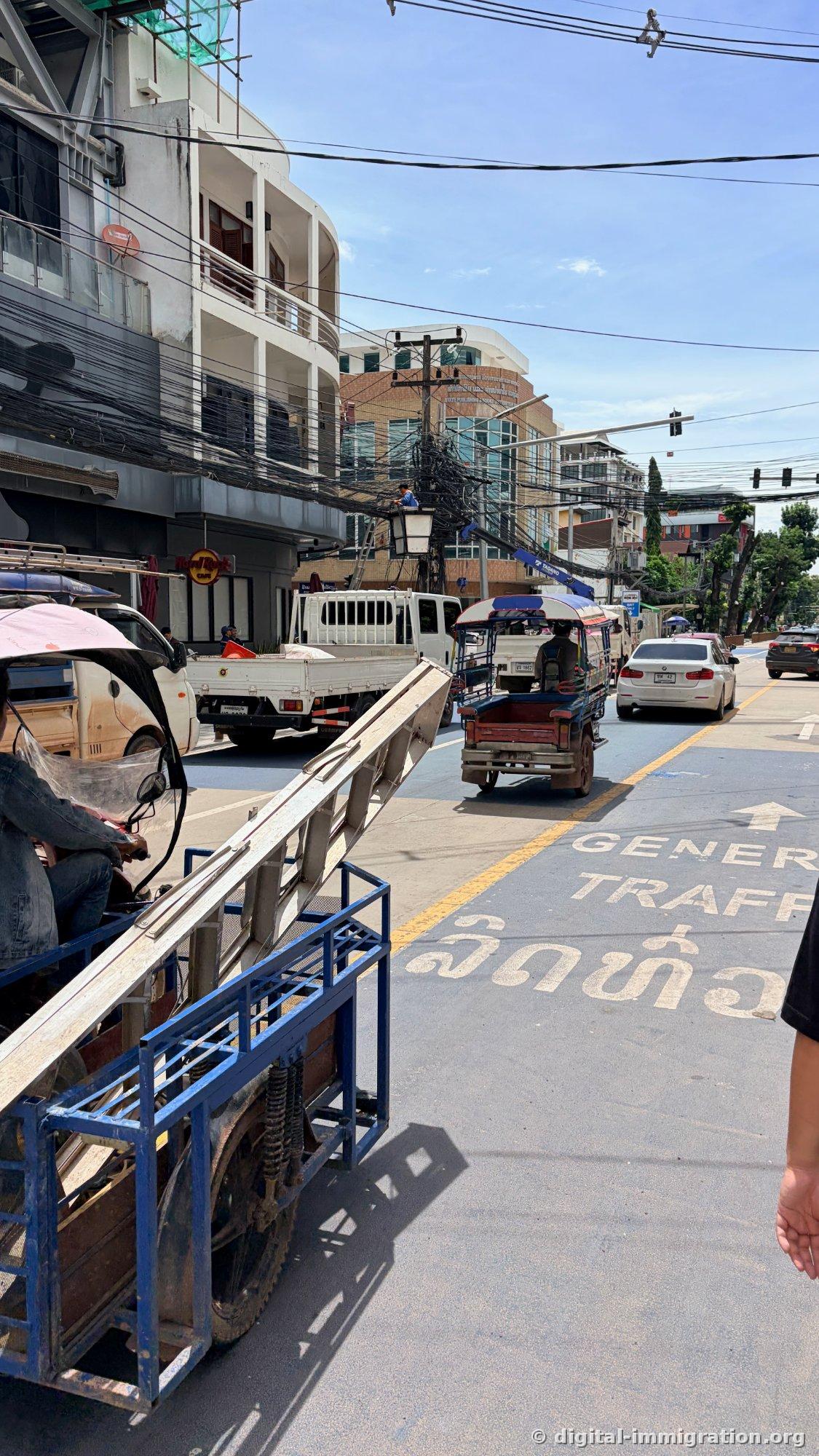
The Daytime Backpacker Street Is Quieter Than You'd Think
Between 10 a.m. and 2 p.m., the area is almost empty. Stores are open but have no customers; tuk-tuk drivers nap inside their vehicles parked in the shade. The sky is brazenly blue, crisscrossed diagonally by power lines. Photographed from this angle, the cables actually help frame the composition. In the distance, the golden roof of a temple rises slightly above the roofline.
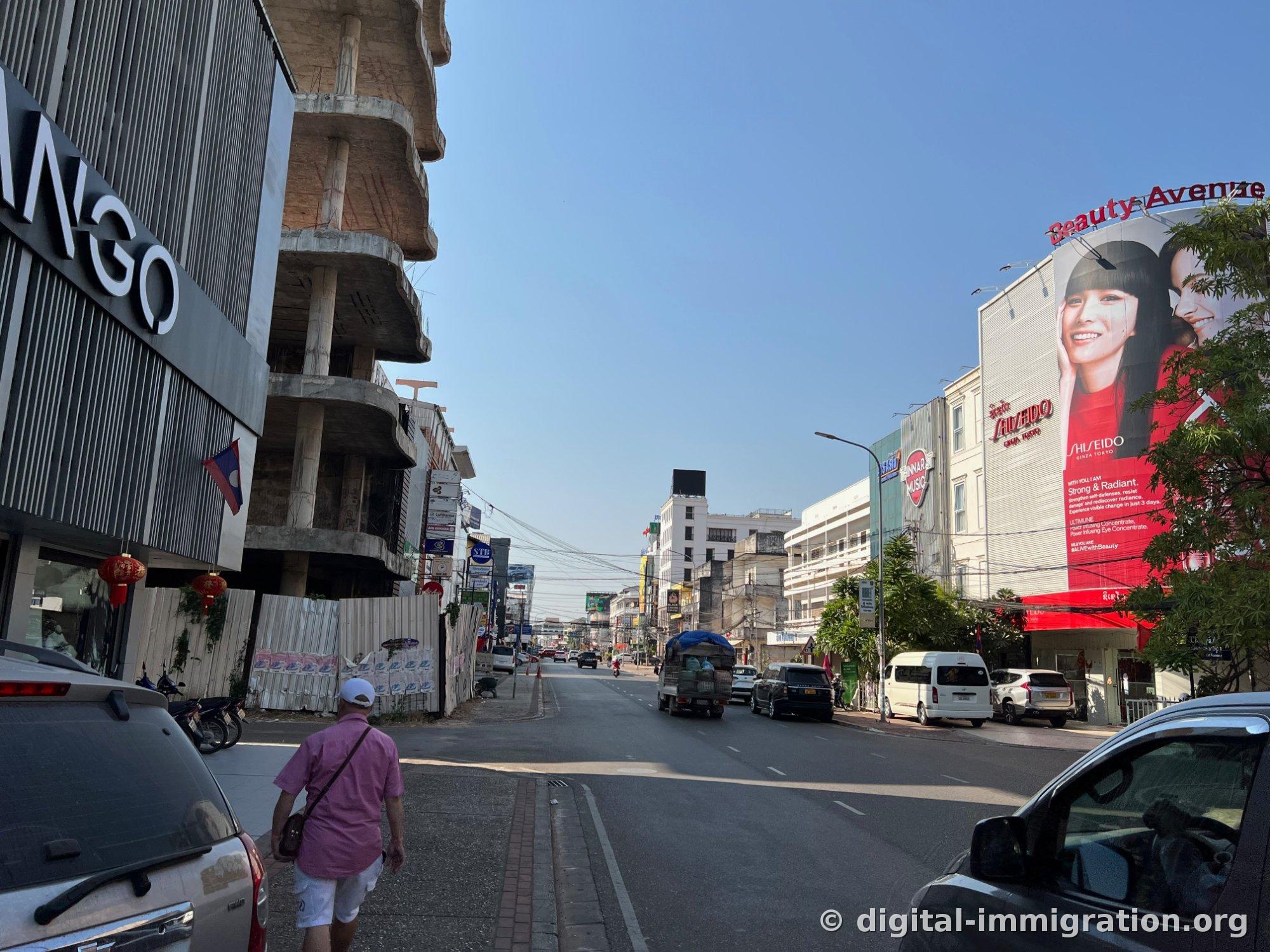
The atmosphere changes dramatically one block over to the main road. A MANGO store and a building under construction stand side by side, and across the street is 'Beauty Avenue'—a building whose entire facade is covered with a Shiseido advertisement. A Laotian flag, red lanterns, and a six-story cosmetics ad all fit in a single frame—this seemed to be Vientiane's current pace.
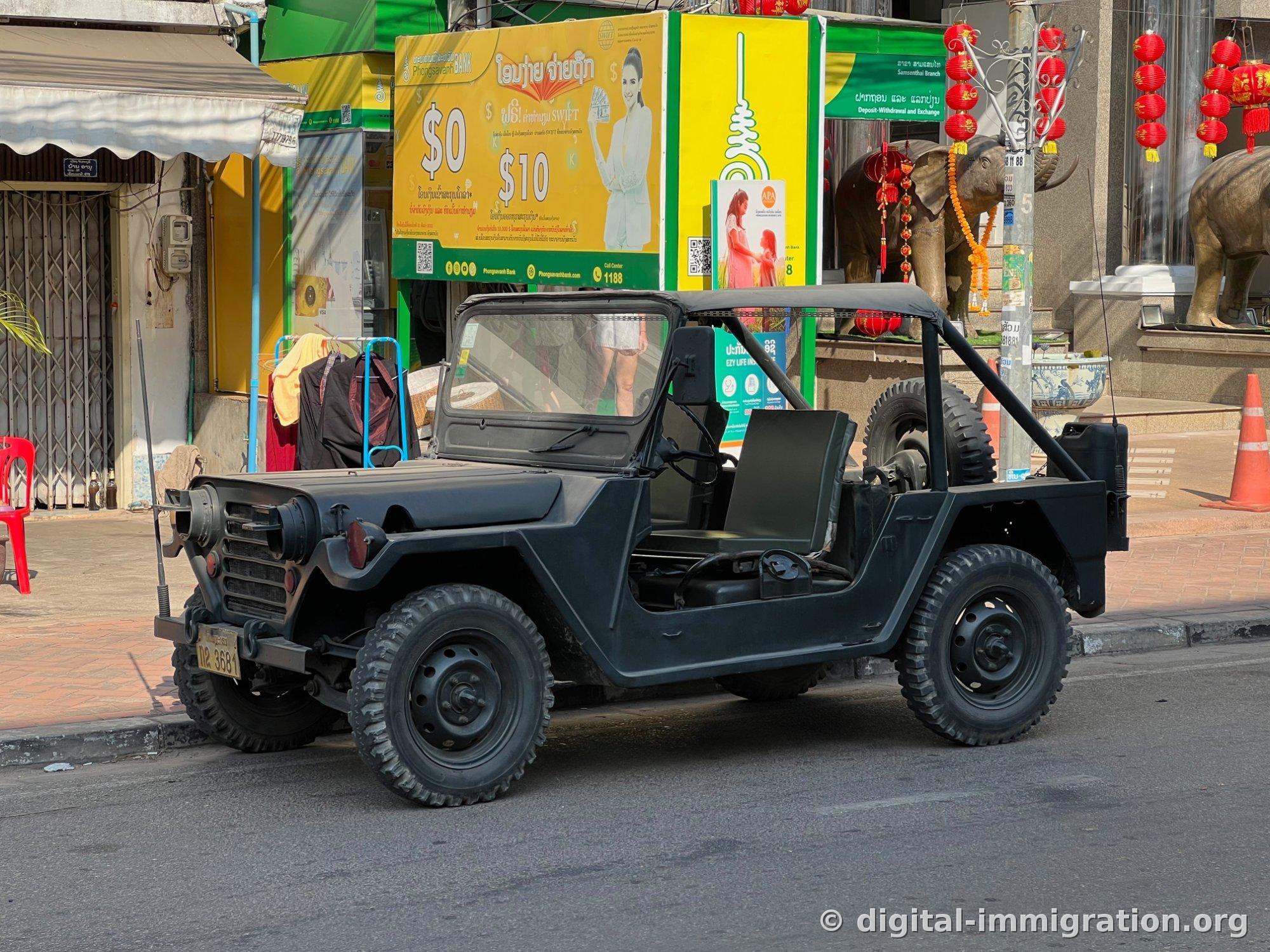
Banks and money changers cluster in this area. Passing in front of Phongsavanh Bank's Thom Sat Sai branch, I spotted an old military jeep parked there. The window displayed large signage for SWIFT transfer fees of $0 and $10, and with that jeep sitting in front, two eras seemed to overlap visibly. Exchange rates differ between banks and private changers, so for large amounts it's worth comparing a couple of places (official rates change daily, so checking on-site is recommended).
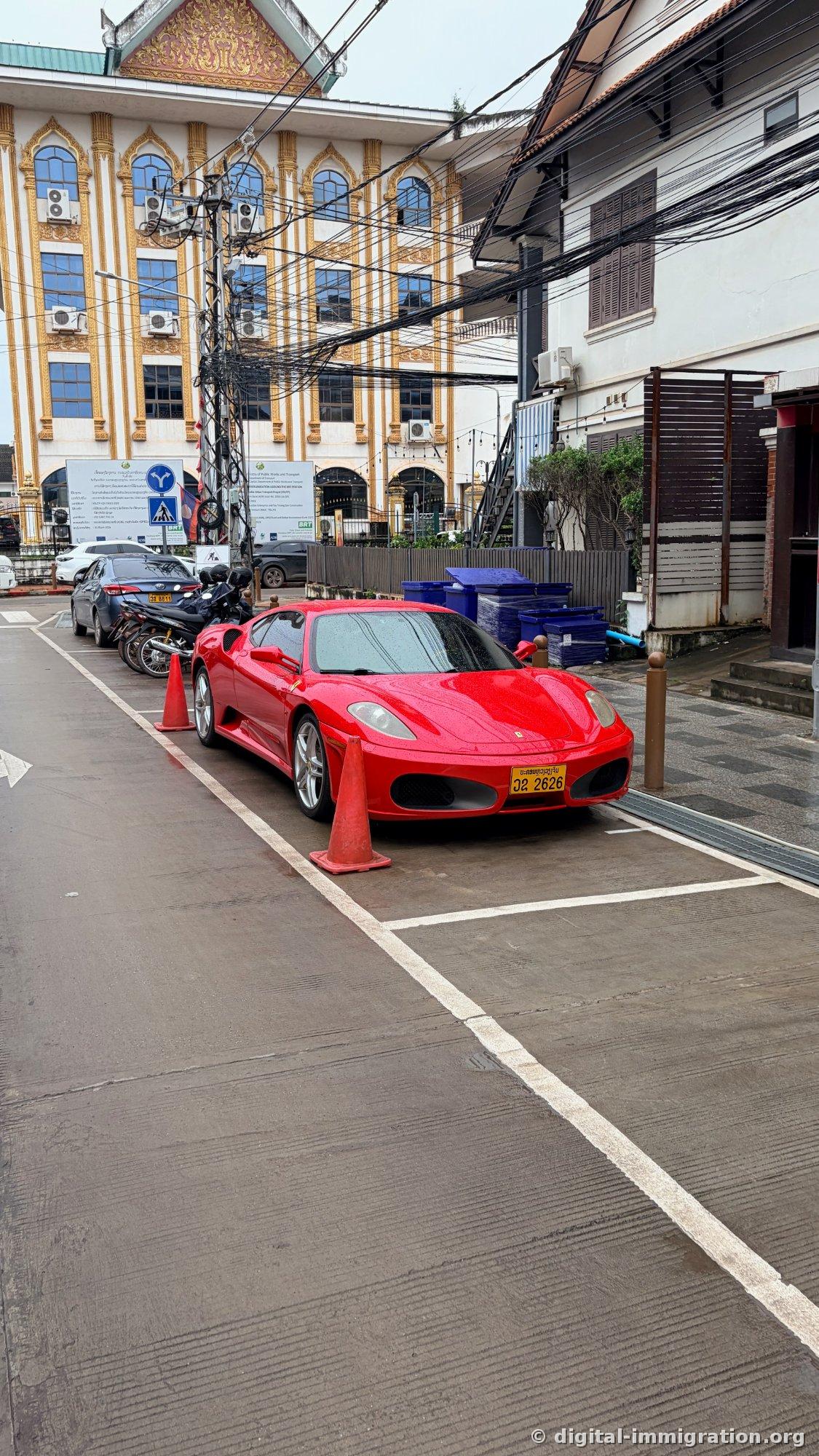
If you arrive with the impression that Vientiane is a poor city, there are scenes that will surprise you. In the parking area in front of the Ministry of Public Works and Transport building sat a red Ferrari F430 with a Laotian license plate (ວ2 2626). Traffic cones were even set up in front and behind it. The wealth gap in this city doesn't hide itself.
Apply for the Digital Immigration Form (LDIF)
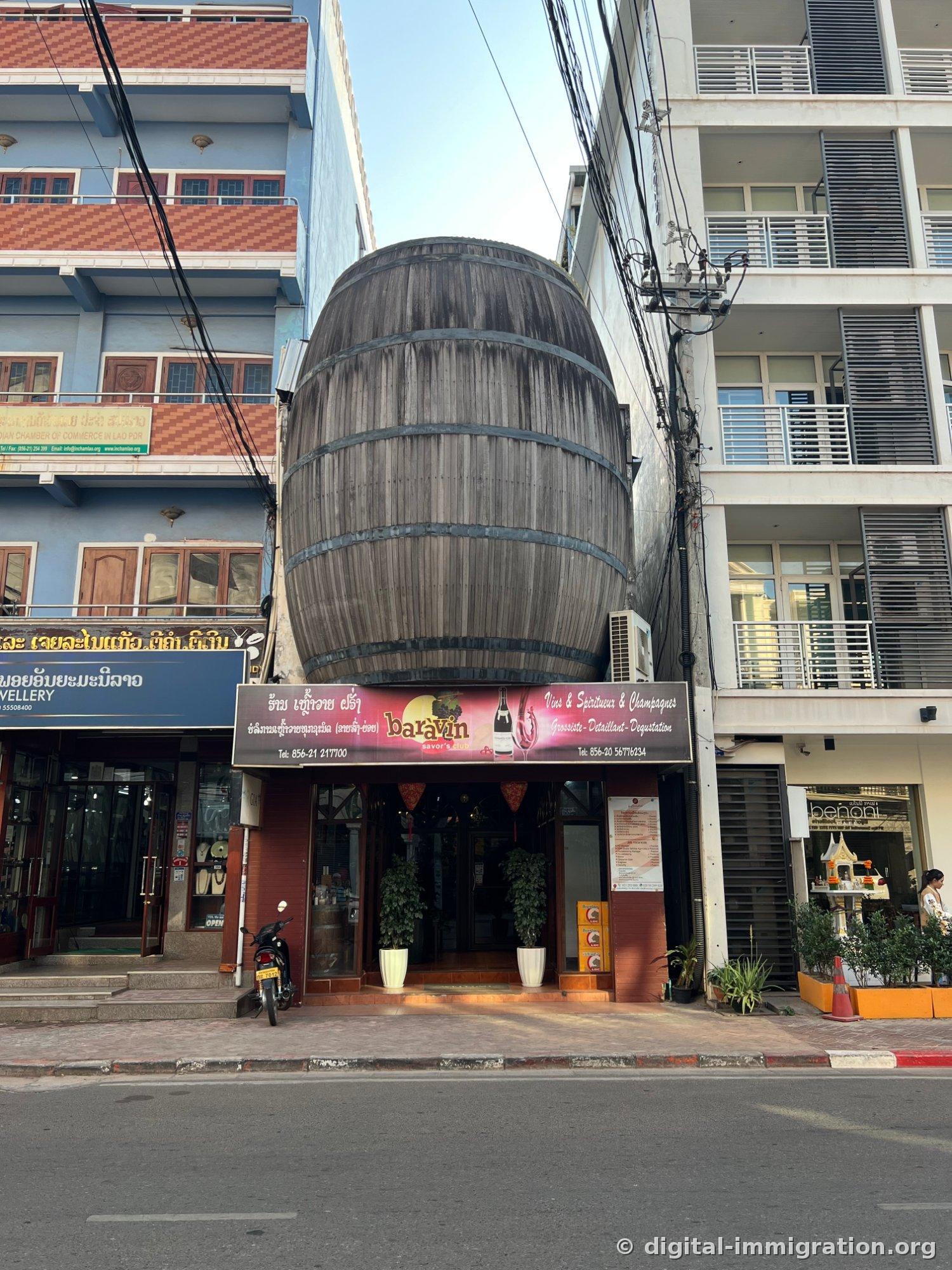
The most eye-catching street sign is undoubtedly the enormous wooden wine barrel. The 'baravin' wine shop has constructed an oak-barrel shape that spans two stories of the building and attached it as a sign—no other sign in Laos so blatantly displays the remnants of French colonial history. The sign reads Vins & Spiritueux & Champagnes, along with the phone number 856-21 217700. The adjacent building houses the Laos-India Chamber of Commerce.
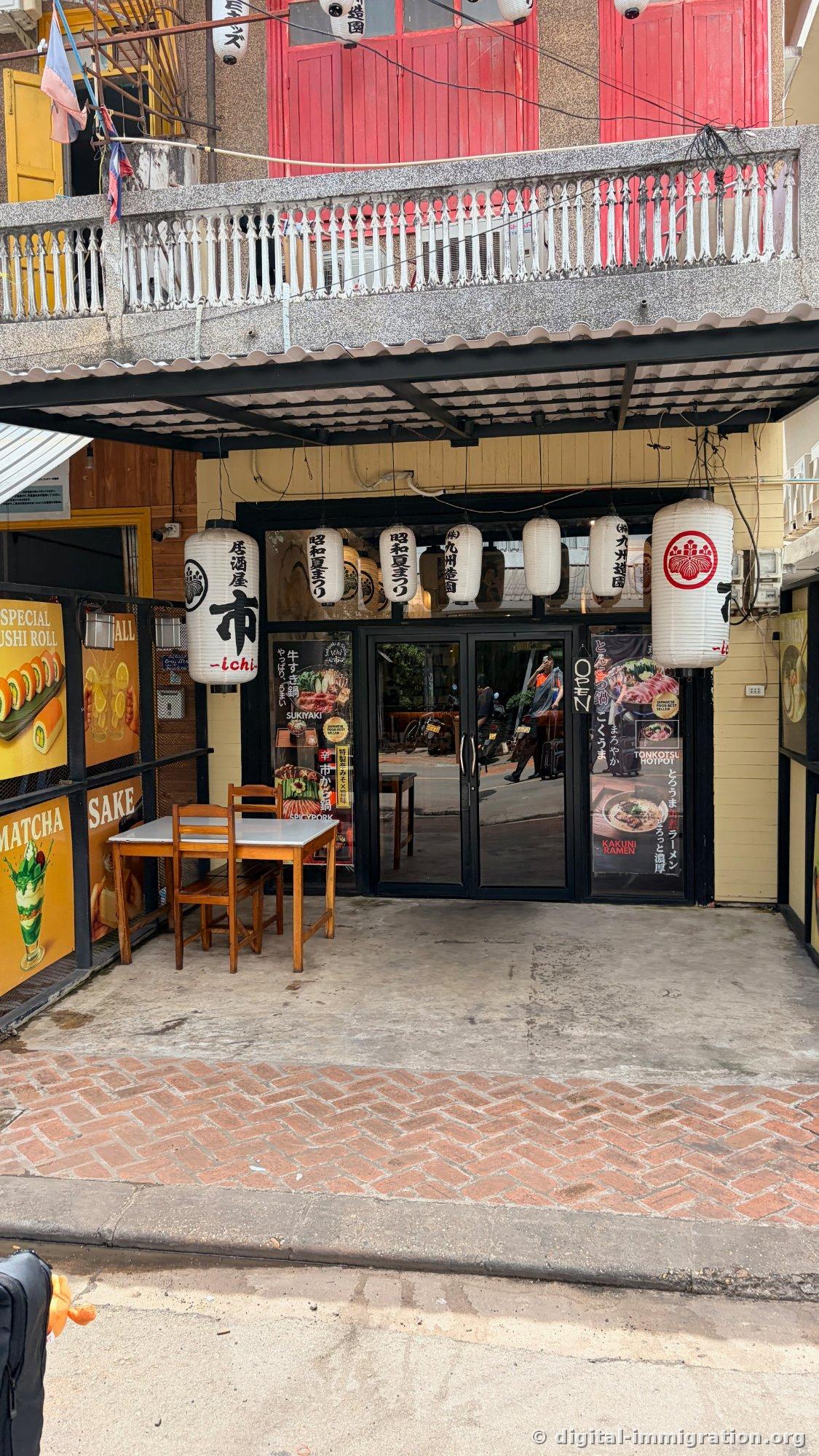
There are a surprisingly large number of Japanese restaurants. The izakaya '市(ichi)' hangs about seven white lanterns at its entrance and displays photos of sukiyaki, tonkotsu ramen, and kakuni ramen. You wonder why you'd eat ramen all the way in Laos, but by the evening of the third day, you crave the broth and end up going in. That's what happened to me.
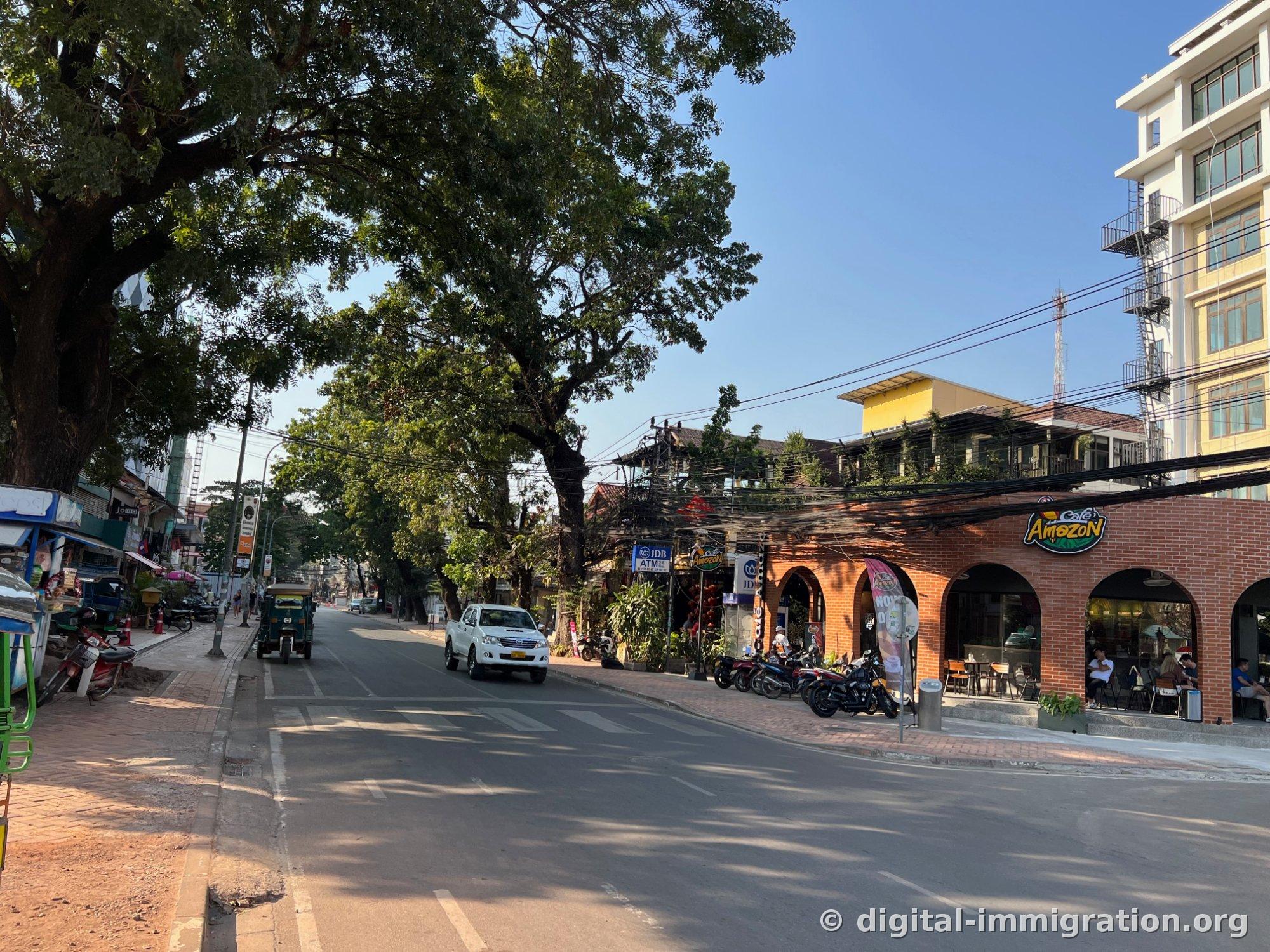
Thai chain Café Amazon occupies the red brick arcade prominently. The JDB 24-hour ATM is affixed right next to it, making for a convenient combination of withdrawing cash and getting coffee. Note that Laotian ATMs charge withdrawal fees and have low per-transaction limits, so I chose to withdraw as much as possible at once (fees and limits vary by bank, so check the screen).
Faiths Clinging to the End of the Street
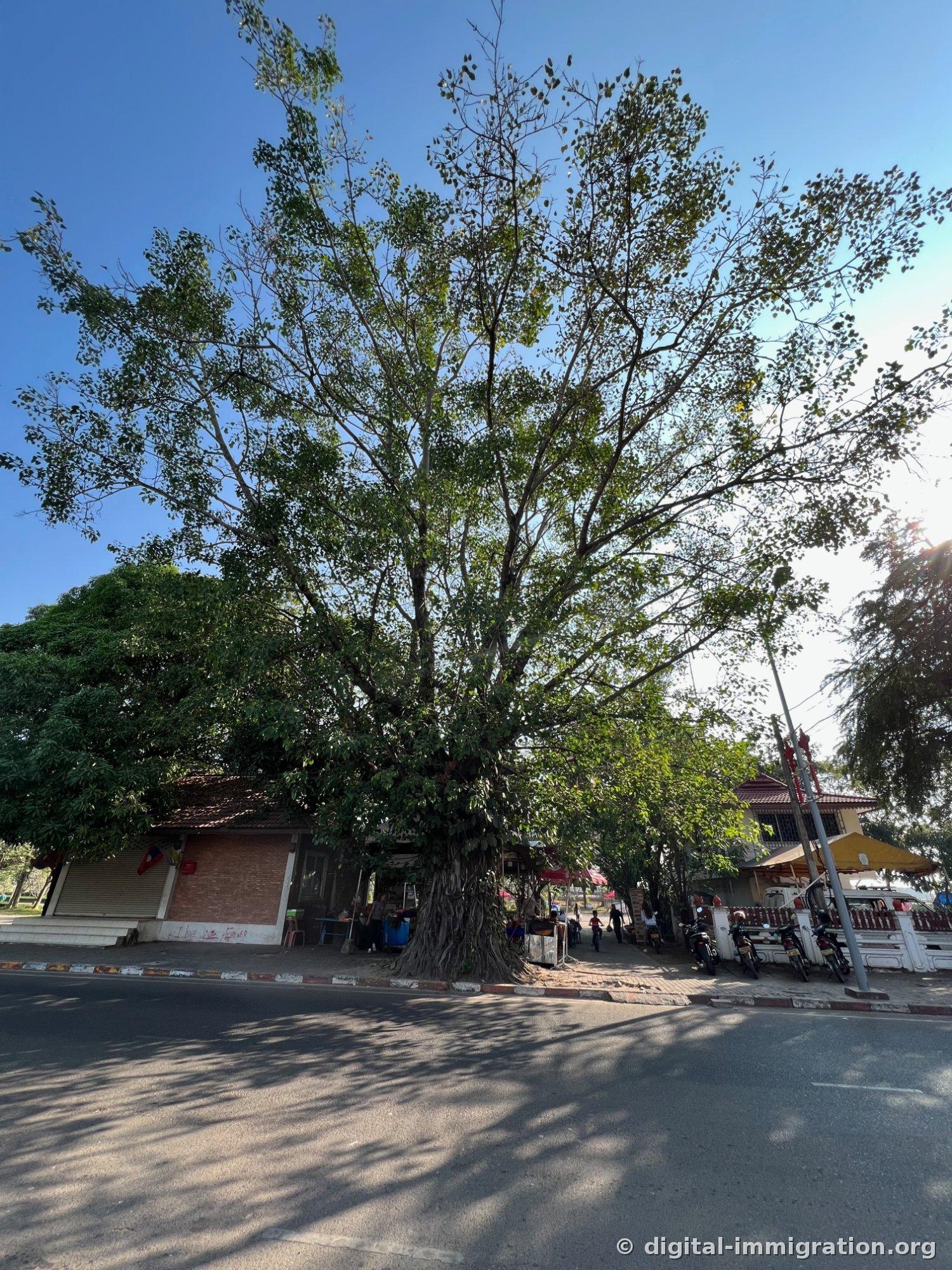
Walking down the backpacker street, you encounter religious facilities that haven't been cleaned up for tourism—they're just mixed into the alleys. Next to a red brick shop stands an enormous bodhi tree with exposed roots, and a beverage stall has set up between those roots. The tree's shade covers half the road, so standing here at midday, the perceived temperature definitely drops a few degrees.
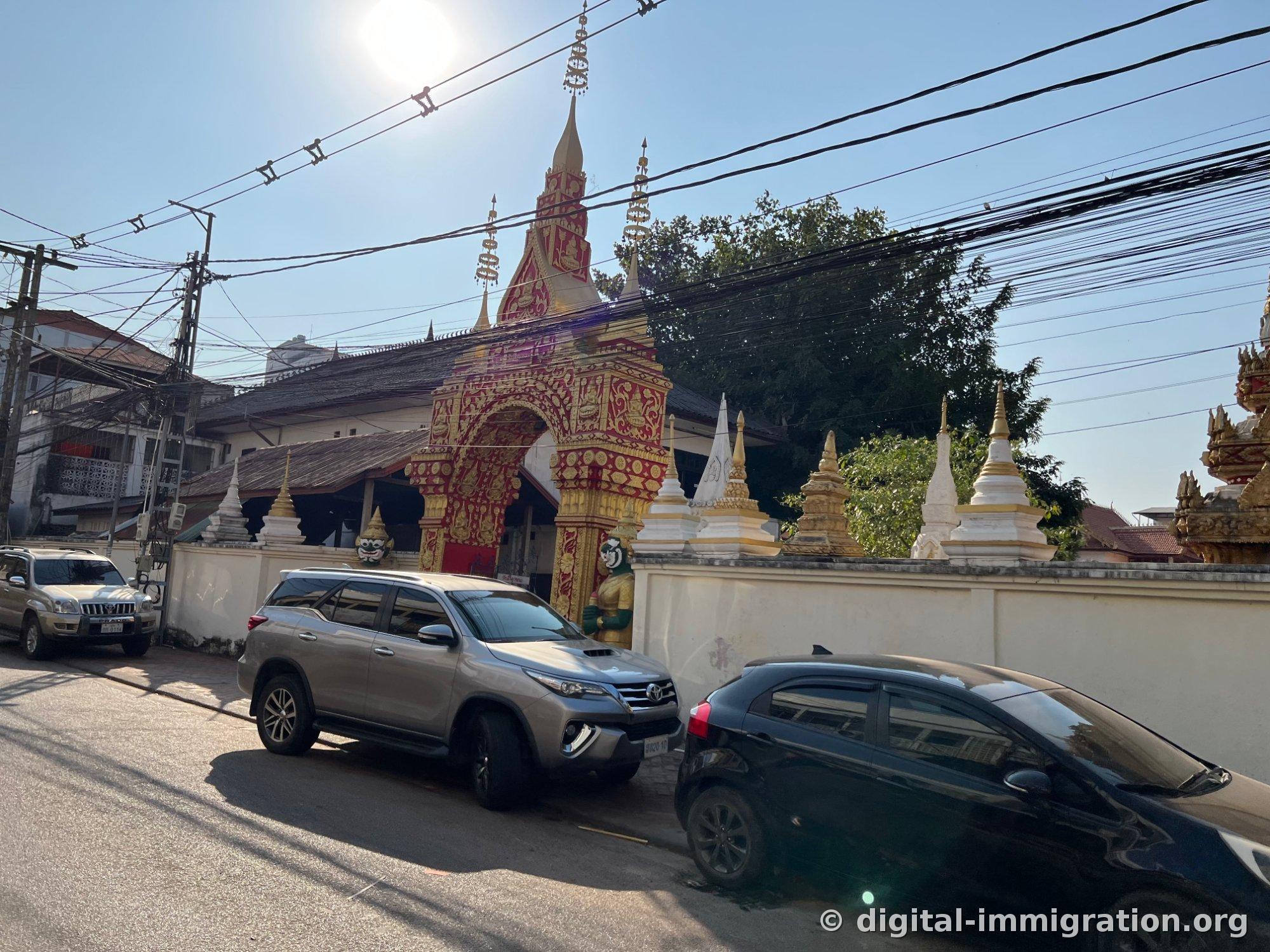
Temples appear suddenly beyond walls. Behind gates covered in red and gold sit several white stupas, and a green-faced guardian deity statue stands watch beside the gate. Yet dozens of power lines pass straight over it. This combination is Vientiane.
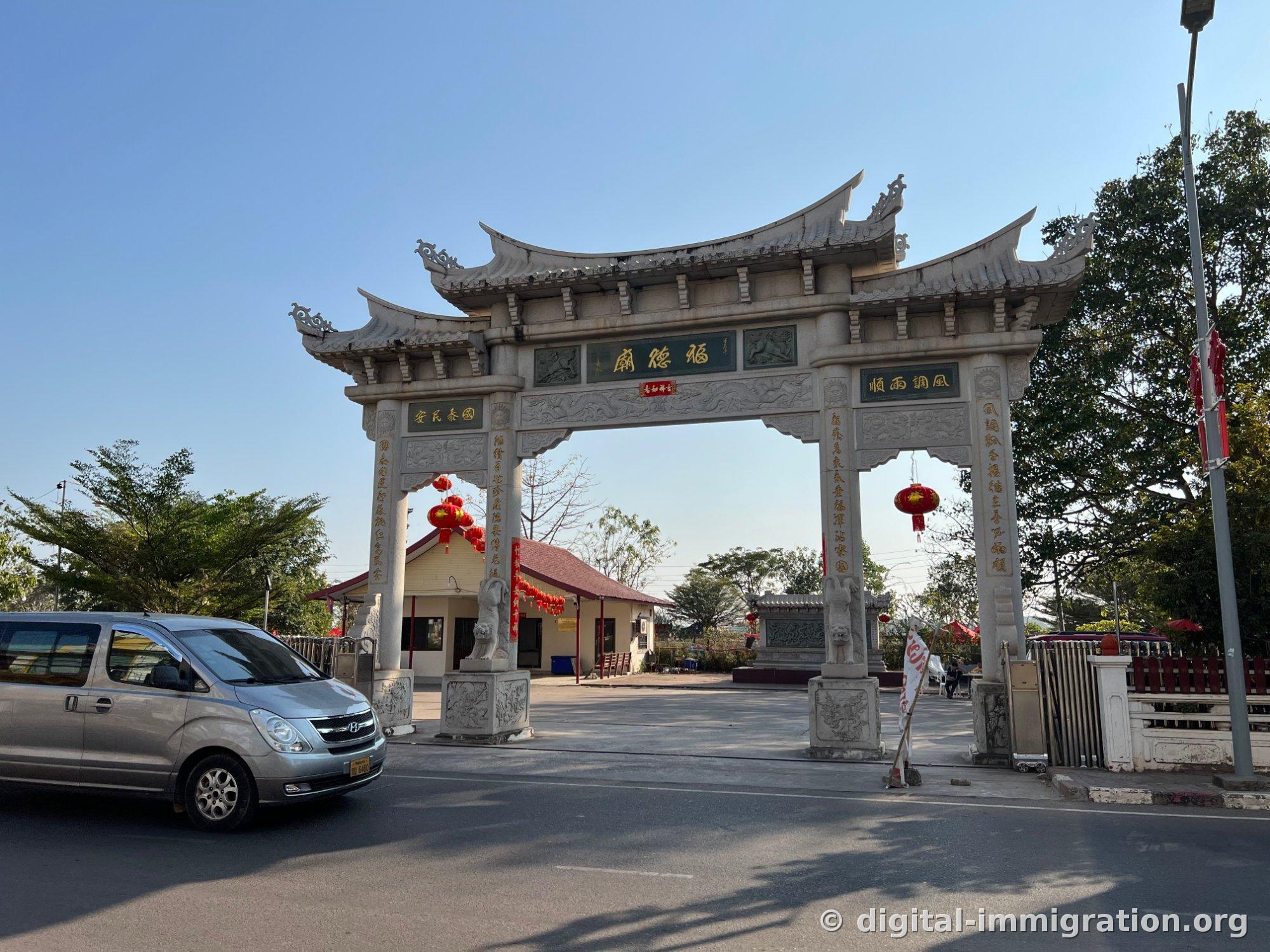
A bit further along is a Chinese temple. A white stone paifang is engraved with '福德廟', and the left and right pillars feature '國泰民安' and '風調雨順' in gold lettering. Lines of red lanterns hung from the eaves suggest it was around a festival. The building testifies to the long-established presence of the Chinese community in this city.
Location and Getting Around—It's All Walkable
The key point about this area is that you can walk everywhere. Within a 500-meter radius of Namphu Square, you'll find accommodations, restaurants, night markets, money changers, and temples. From Wattay International Airport, it's about 20 minutes by car, and airport taxis operate on a fixed-price ticket system purchased at a counter, so there's no haggling involved (check the posted rates at the counter). When you catch a tuk-tuk in town, you must confirm the price verbally before getting in. I took one without doing so once and got double-charged at the end, which led to an argument. After that, I always asked first. The map below shows the locations where I took photos.
When the Sun Sets, This Street Reveals Its True Nature
Around 6:30 p.m., when the string lights turn on, the street that was empty during the day suddenly fills with people. The evening I went, a brief downpour passed through, leaving the asphalt wet, and the light from the bulbs and signs reflected off the wet pavement, which actually looked even better. Beerlao signs, Korean signs, Chinese signs—all visible in a single frame.
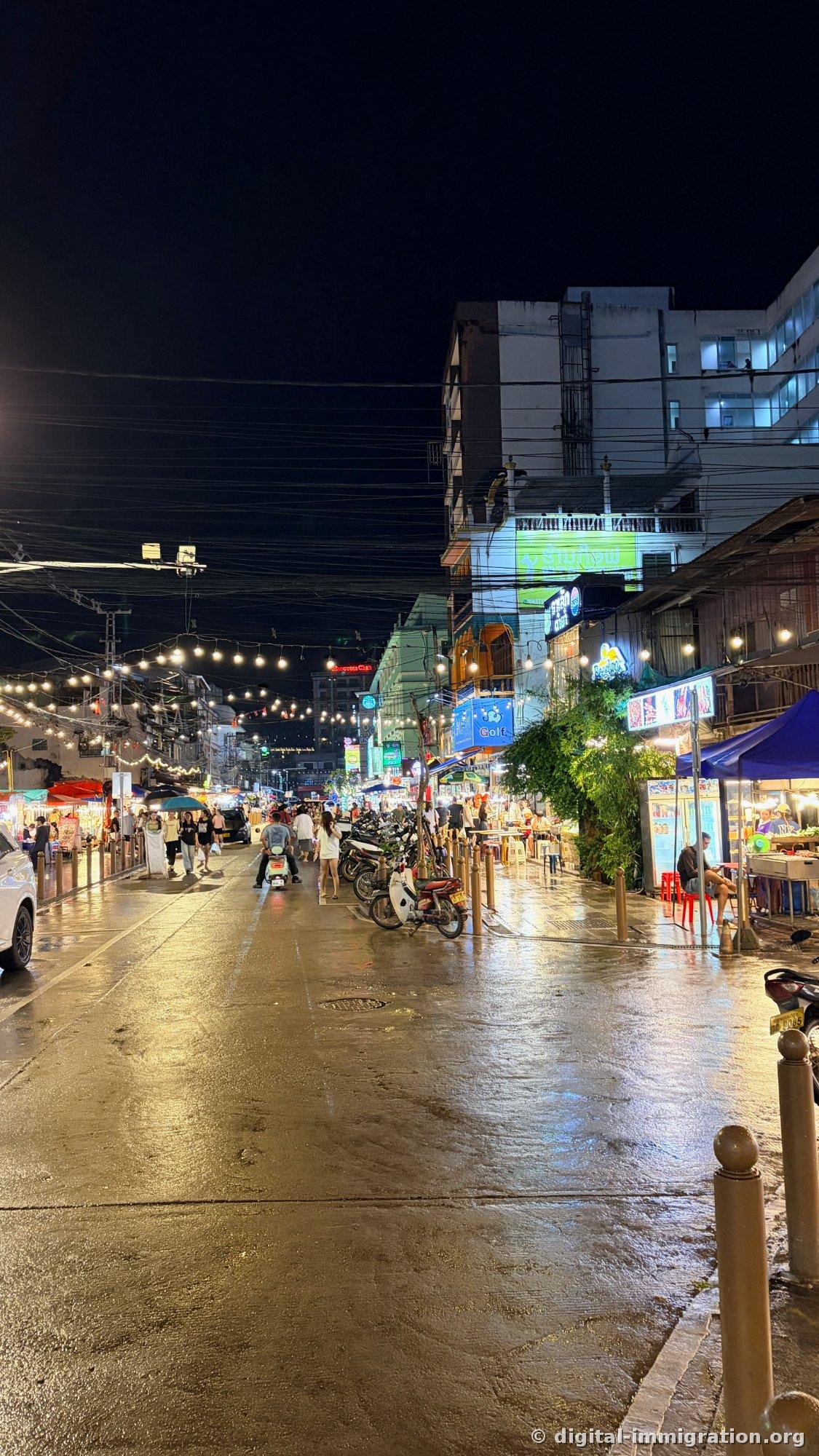
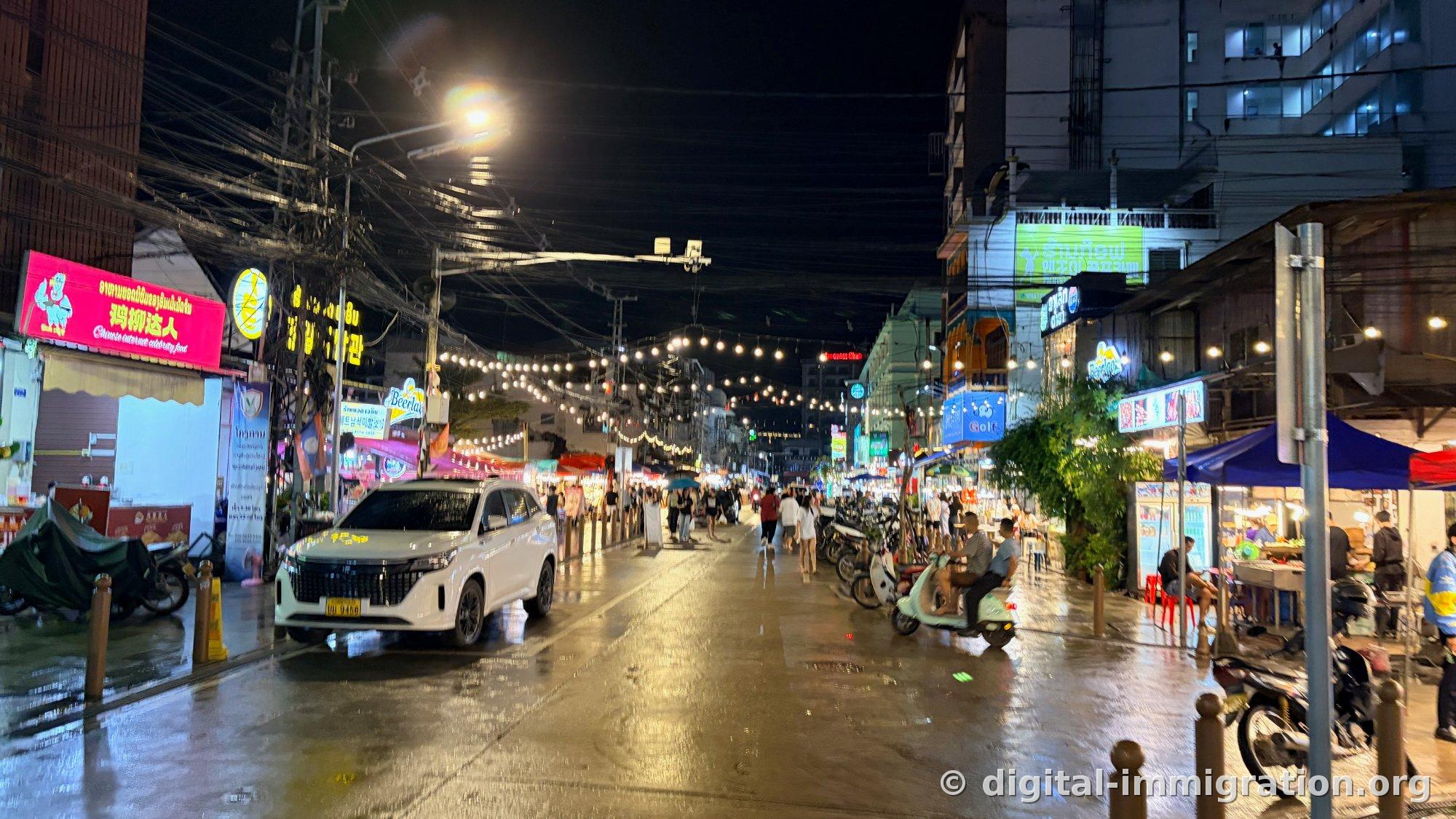
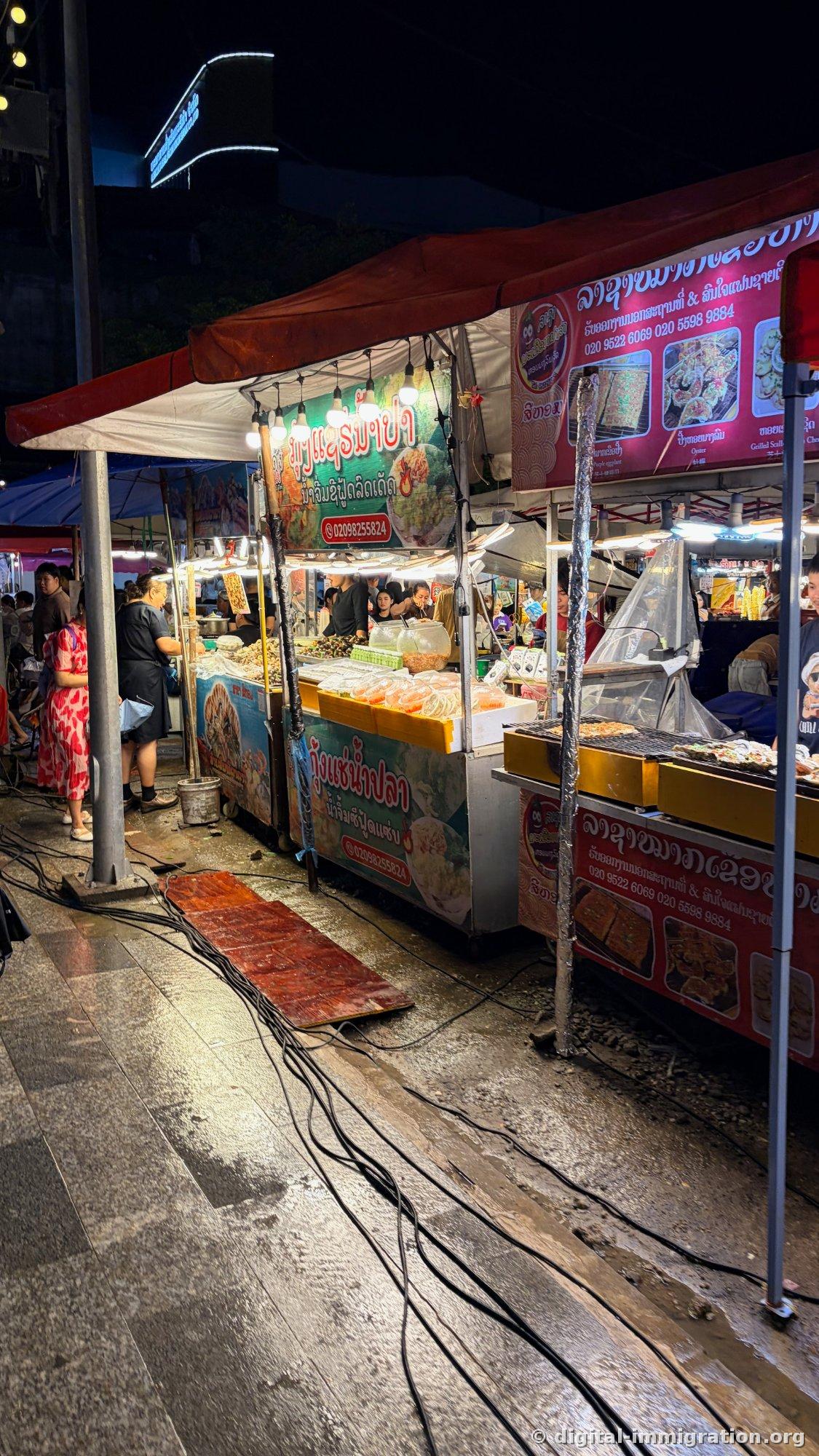
Food stalls line up with red awnings. Inside glass display cases are shrimp paste condiments, assorted nuts and dried fruits, skewers, and oyster pancakes-like items on flat grills. Each stall's Lao-language sign displays a phone number prominently (for example, 020 9522 6069), suggesting they take delivery orders too. Prices vary by stall and many don't display pricing, so it's more comfortable to point with your finger and ask the price before placing your order.
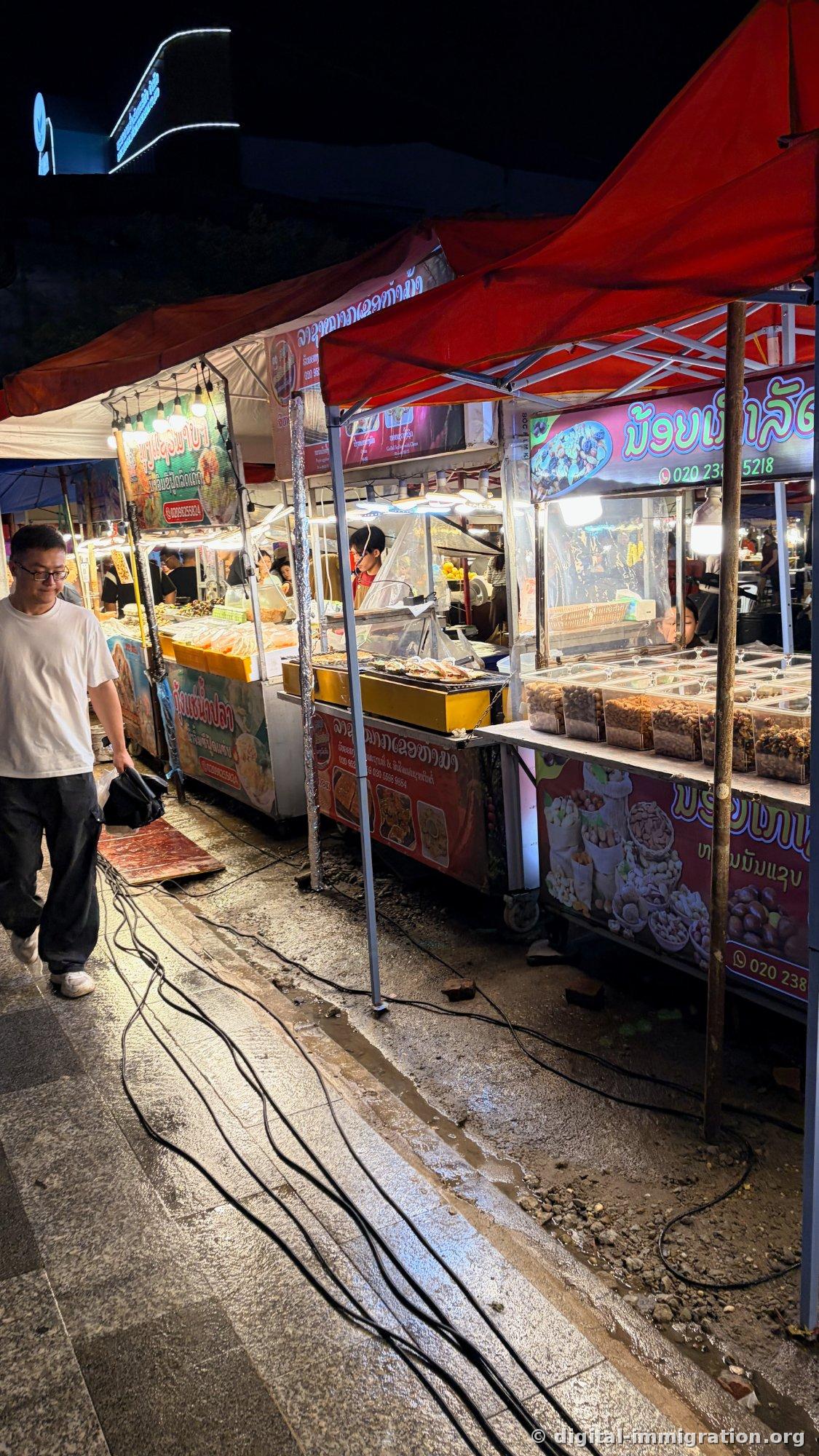
There's one thing I want to point out. The cable tangle you saw above also exists on the ground. Stall power lines run in thick bundles across the sidewalk, and water pools on top of them on rainy days. Some sections are covered with wooden planks, but most aren't. I nearly tripped over one backing up to take a photo. When walking through the night market, glance down at your feet occasionally—this is the most practical advice in this article.
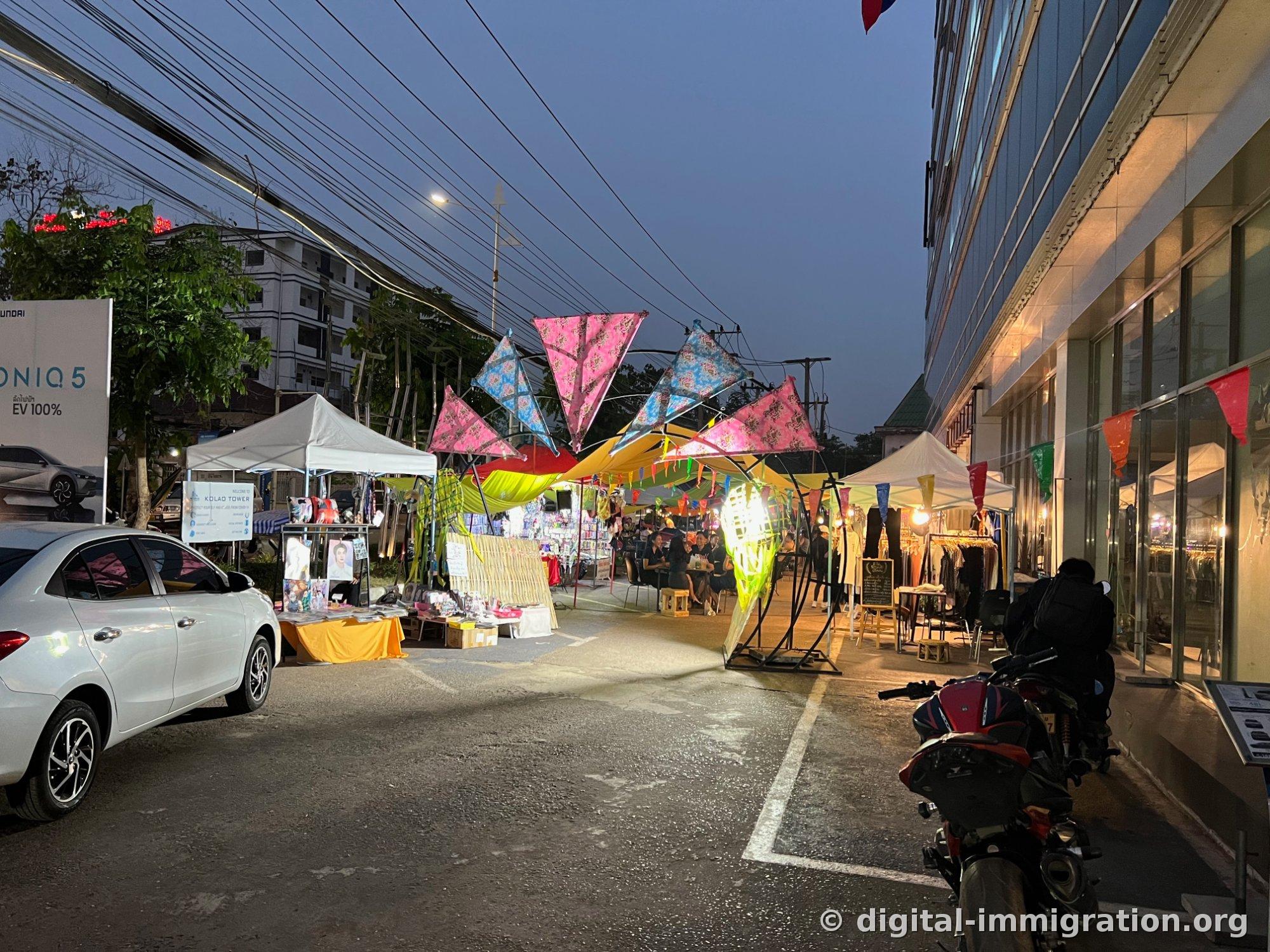
There are multiple night market areas scattered throughout the neighborhood. Canvas stalls also set up in one corner of the parking lot near KOLAO Tower, decorated with pink and sky-blue kite-shaped ornaments hanging from above, visible from a distance. This spot emphasizes clothing, miscellaneous goods, and accessories over food and has a smaller scale. In exchange, it's less crowded, allowing you to browse leisurely.
What Disappointed Me
- Coming during daytime hours (11 a.m.–3 p.m.) is often disappointing. Only cafes are really open, and there's insufficient shade to walk comfortably. This street's main event starts after 6 p.m.
- There are many sections where the sidewalk is interrupted. Because of parked vehicles and stalls, you inevitably end up walking on the road, and you have to stay alert with cars, scooters, and tuk-tuks all passing by.
- Many shops don't display prices. For stalls and tuk-tuks, you must ask first, and it's better to confirm numbers using your fingers or a phone calculator.
- After rain, puddles overlap with ground-level power lines. I learned after getting soaked on the first day that sneakers with good drainage are better than sandals.
Still, if I come back, I think I'll stand in the same spot again and look up to photograph the utility pole. That single black tangle says everything about what kind of face a city wears as it goes on, unorganized.
Read next
- Pha That Luang in Vientiane: Walking the Golden Stupa on a Cloudy Afternoon at Five O'Clock
Take a tuk-tuk fifteen minutes northeast from downtown Vientiane and the road suddenly widens, with a golden mass rising abruptly beyond a wall. Pha That Luang. The very stupa that…
Vientiane Capital · That Luang - Kyoto-Style Water Drop Mochi Found in the Heart of Vientiane — KYO Cafe & Meal Record
Vientiane is fiercest at two in the afternoon. Shade does nothing to help, and you can feel your shirt clinging to your back. That day, while walking through downtown, it became un…
Vientiane Capital · KYO Cafe & Meal - A French Evening at Le Vendôme in Vientiane, Laos—Record of Three Plates: Pizza, Carbonara, and Salad
On an evening when the breeze from the Mekong River drifted across the street, I stepped into Le Vendôme Restaurant tucked into an alley near Wat Inpeng. Whenever French cuisine co…
Vientiane Capital · Le Vendôme Restaurant