Walking Through Ginkgo Leaves at Waseda Campus — Waseda University, Shinjuku Ward Tokyo, A Late November Afternoon
Exit Waseda Station on Tokyo Metro's Tozai Line, climb the gentle slope, and you'll reach Waseda University's Waseda Campus. It had rained the day before and the sky was thick with…
Tokyo · Waseda University
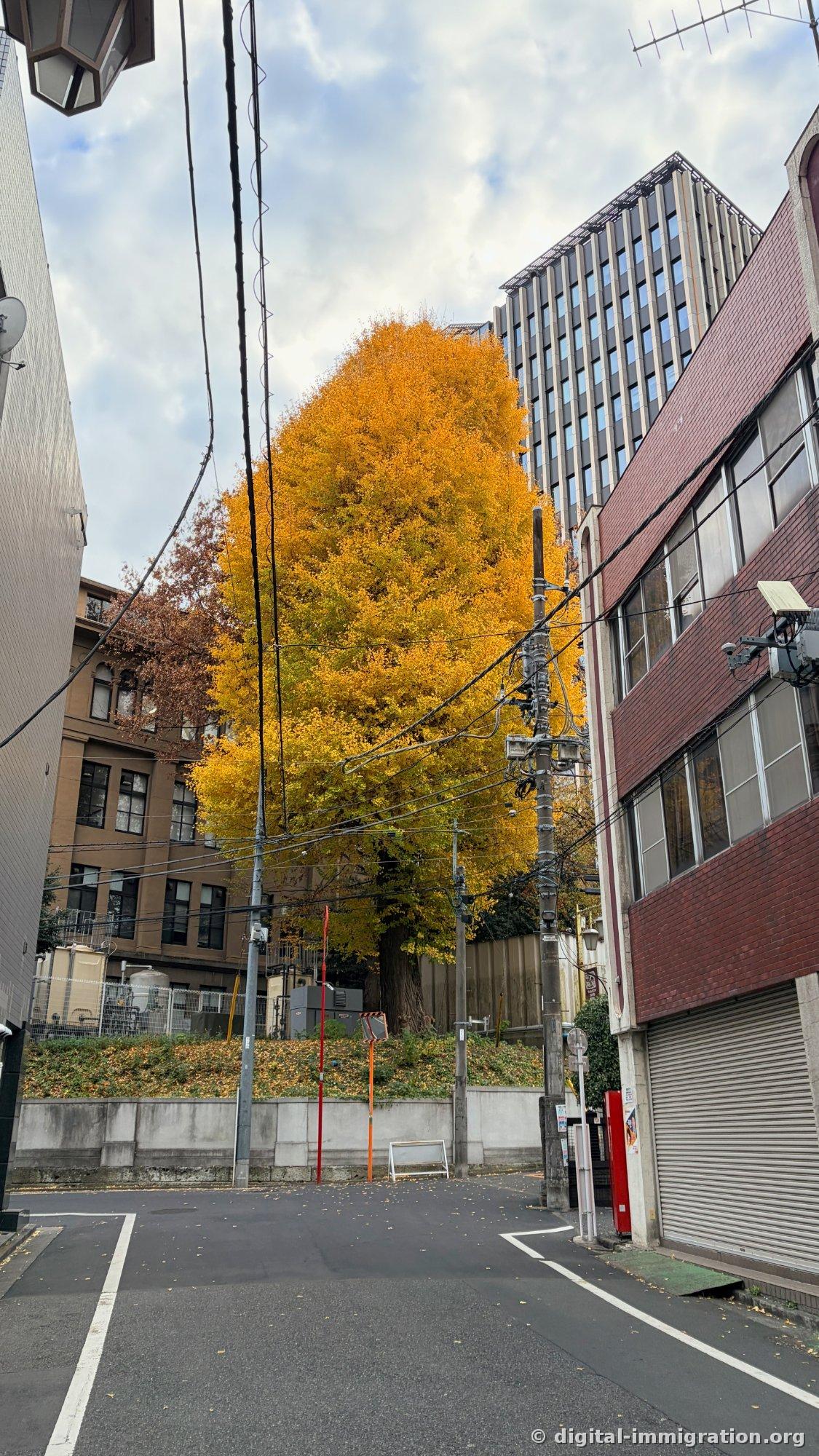
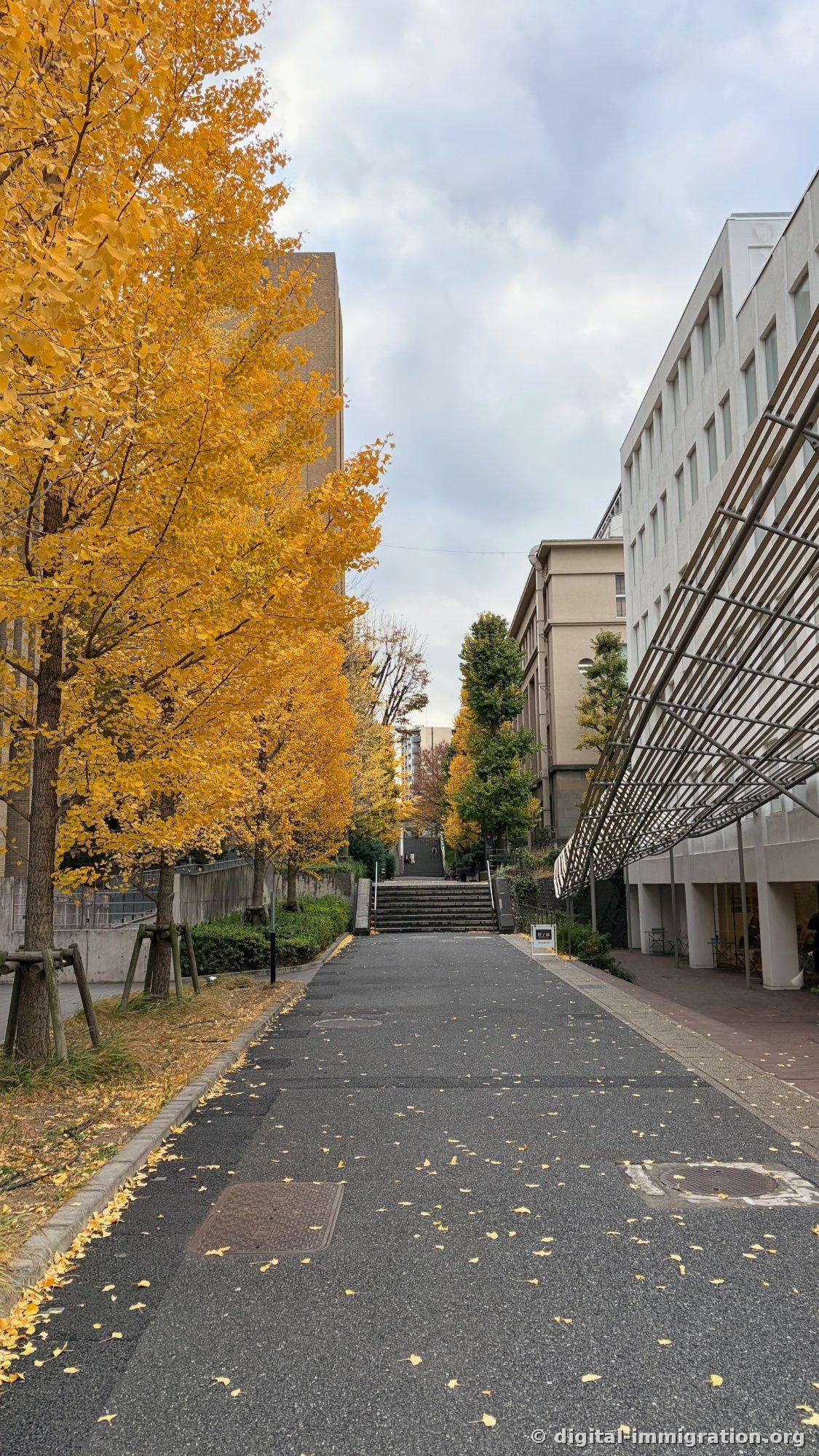
Exit Waseda Station on Tokyo Metro's Tozai Line, climb the gentle slope, and you'll reach Waseda University's Waseda Campus. It had rained the day before and the sky was thick with clouds, but turning one corner revealed a single ginkgo tree standing fully golden between the buildings. On an ordinary alley where power lines crisscross in a tangle, one tree transforms the entire street's color. When searching for autumn foliage spots in Tokyo, people usually think of Meiji Shrine Outer Garden or Showa Memorial Park first, but university campuses have far fewer crowds and no entrance fees.
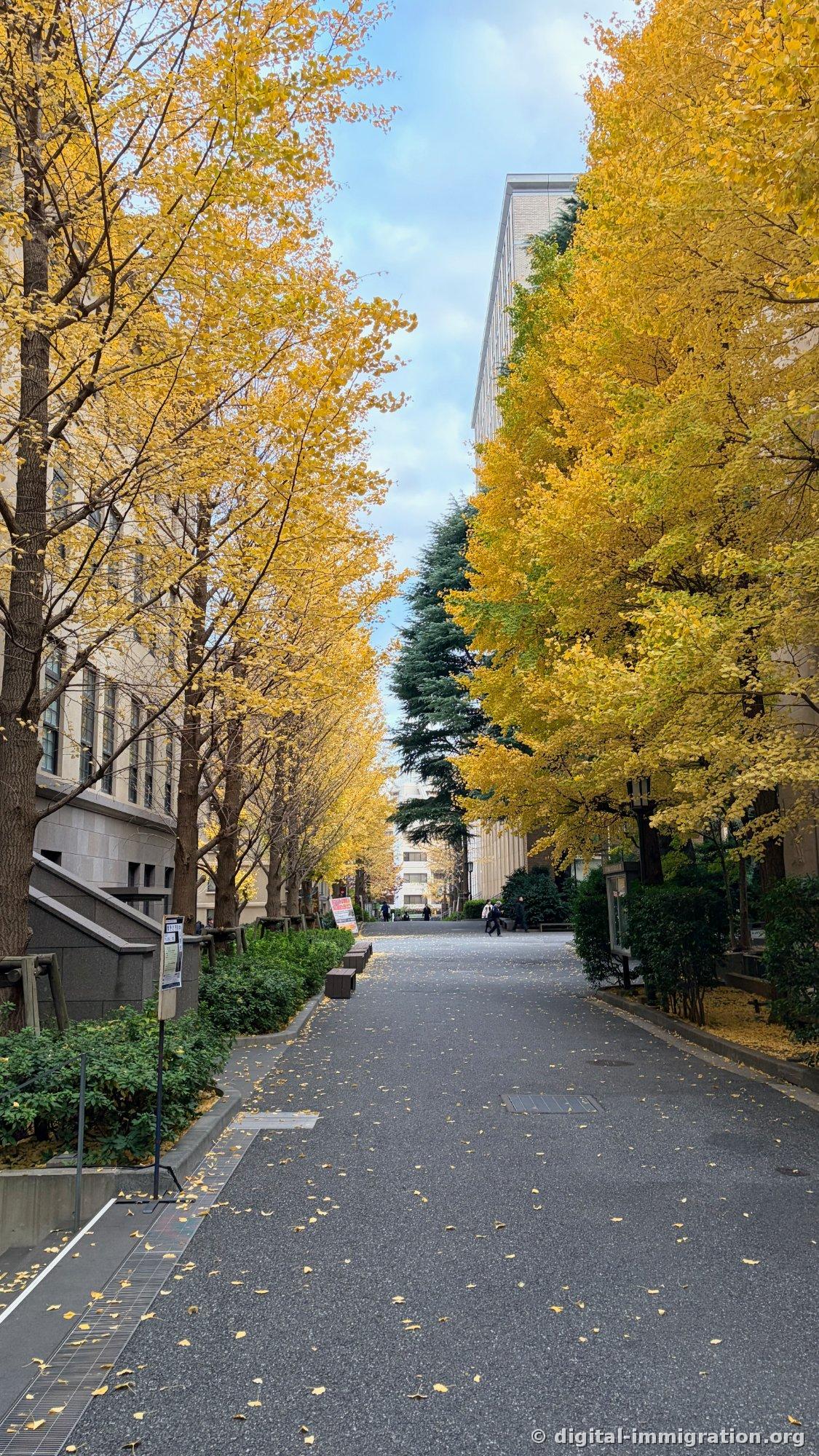
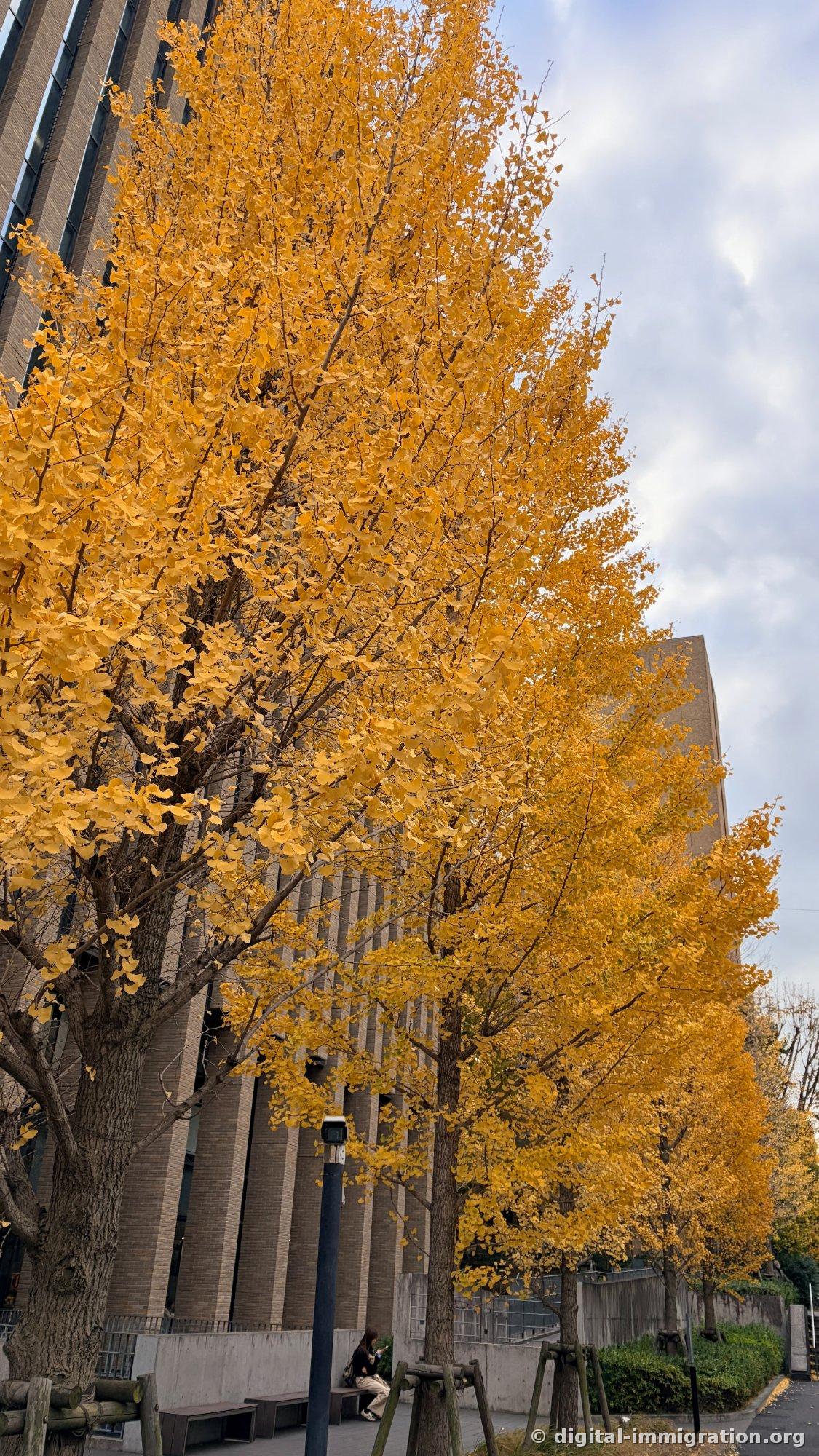
A Golden Ginkgo Path, Perfect With Coffee in Hand
What I loved most about this campus wasn't the grand buildings, but the simple act of walking. With a coffee—disposable cup or mug, didn't matter—I slowly traced the ginkgo avenue back and forth, and that was the entire afternoon, and it was perfect. When the wind picked up, leaves would flutter down, and the dry crunch beneath my feet was satisfying. The distinctive smell of ginkgo fruit was milder than expected—the trees lining the campus seemed to be mostly male trees that don't produce fruit. Benches were scattered along the path, so you could sit anywhere.
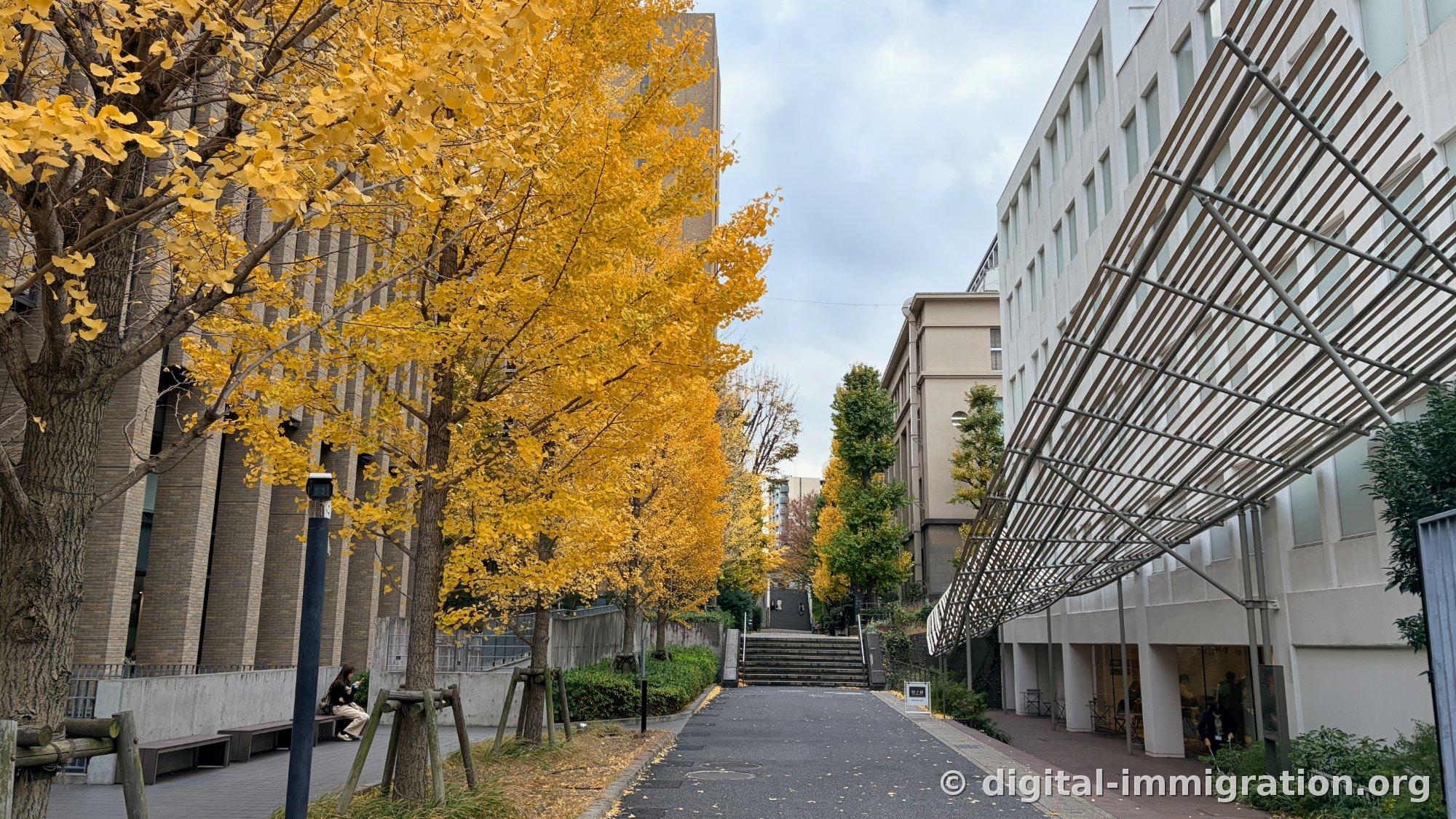
Haruki Murakami Library — The Quietest Building on Campus
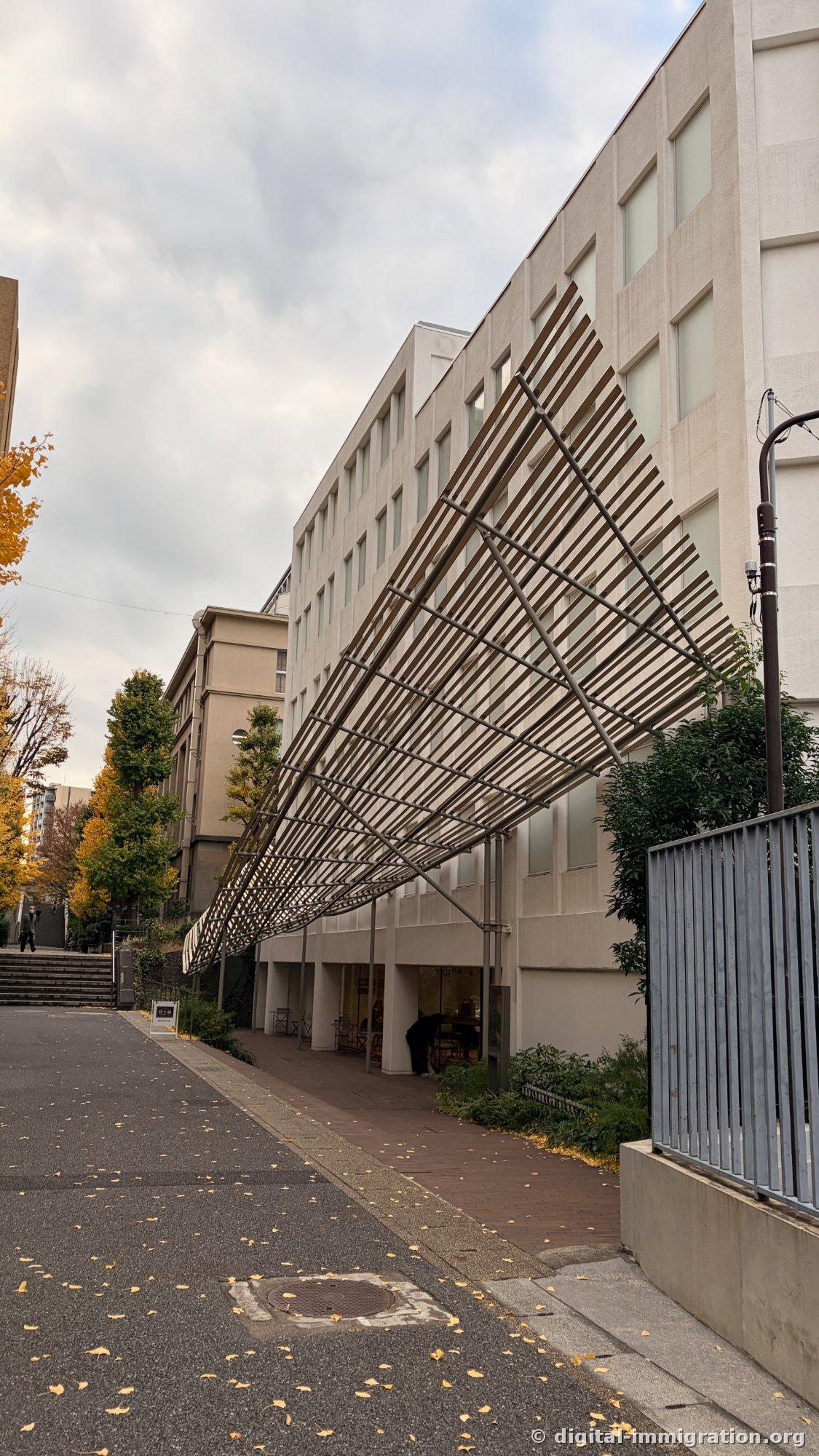
Follow the ginkgo path deeper into campus and you'll find old brick buildings on your left and on your right, a white building with wooden lattice canopy extending diagonally outward. This is Waseda University's International House of Literature, commonly called the Haruki Murakami Library. Designed by architect Kengo Kuma, the wooden lattice curves like waves, flowing down the building's wall from the outside. You could easily miss it from the street, so look up at the eaves on the right.
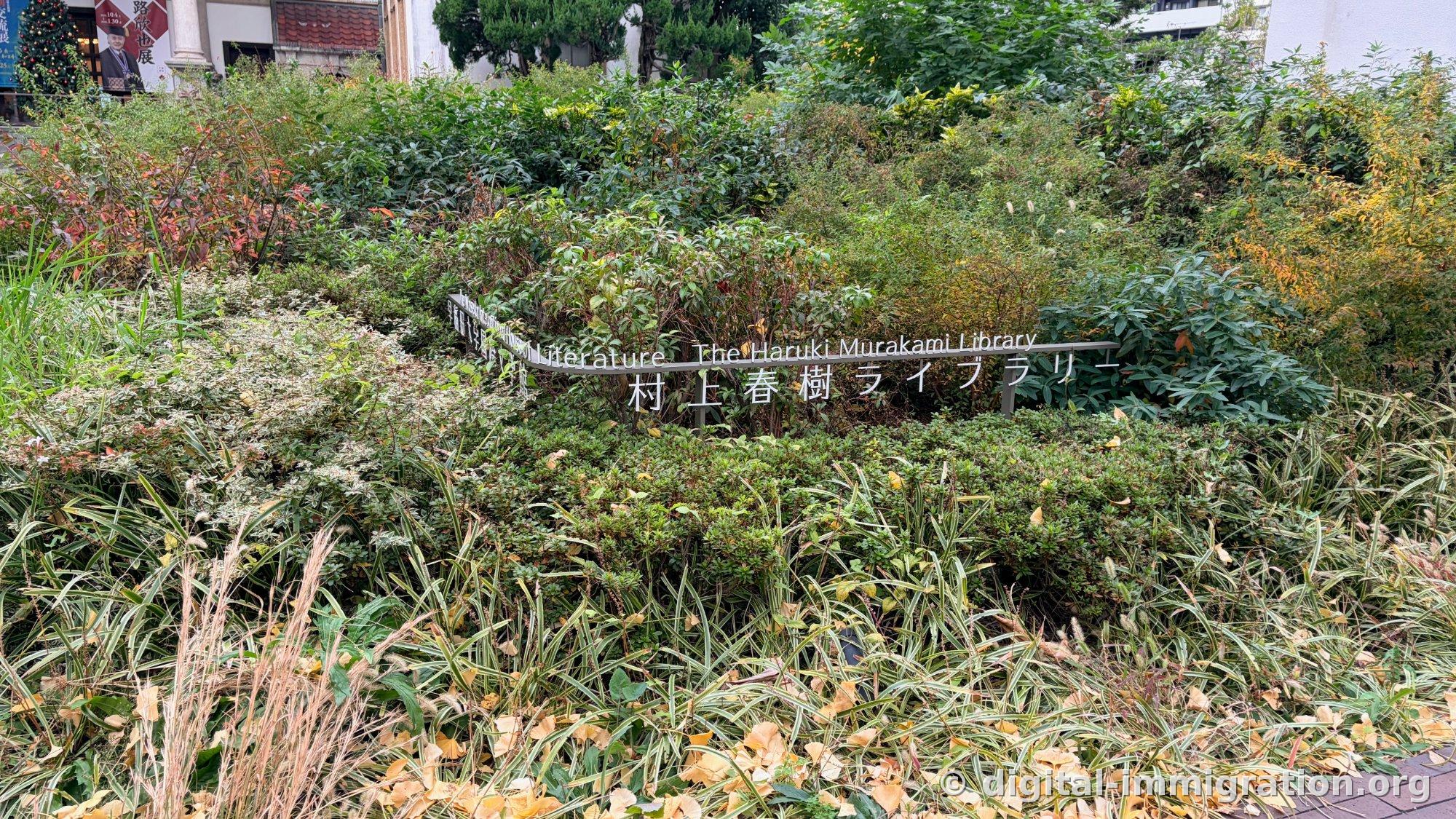
The entrance sign sits low, nestled in shrubbery. "村上春樹ライブラリー / The Haruki Murakami Library". With no prominent signage, first-time visitors find themselves passing by, then having to double back.
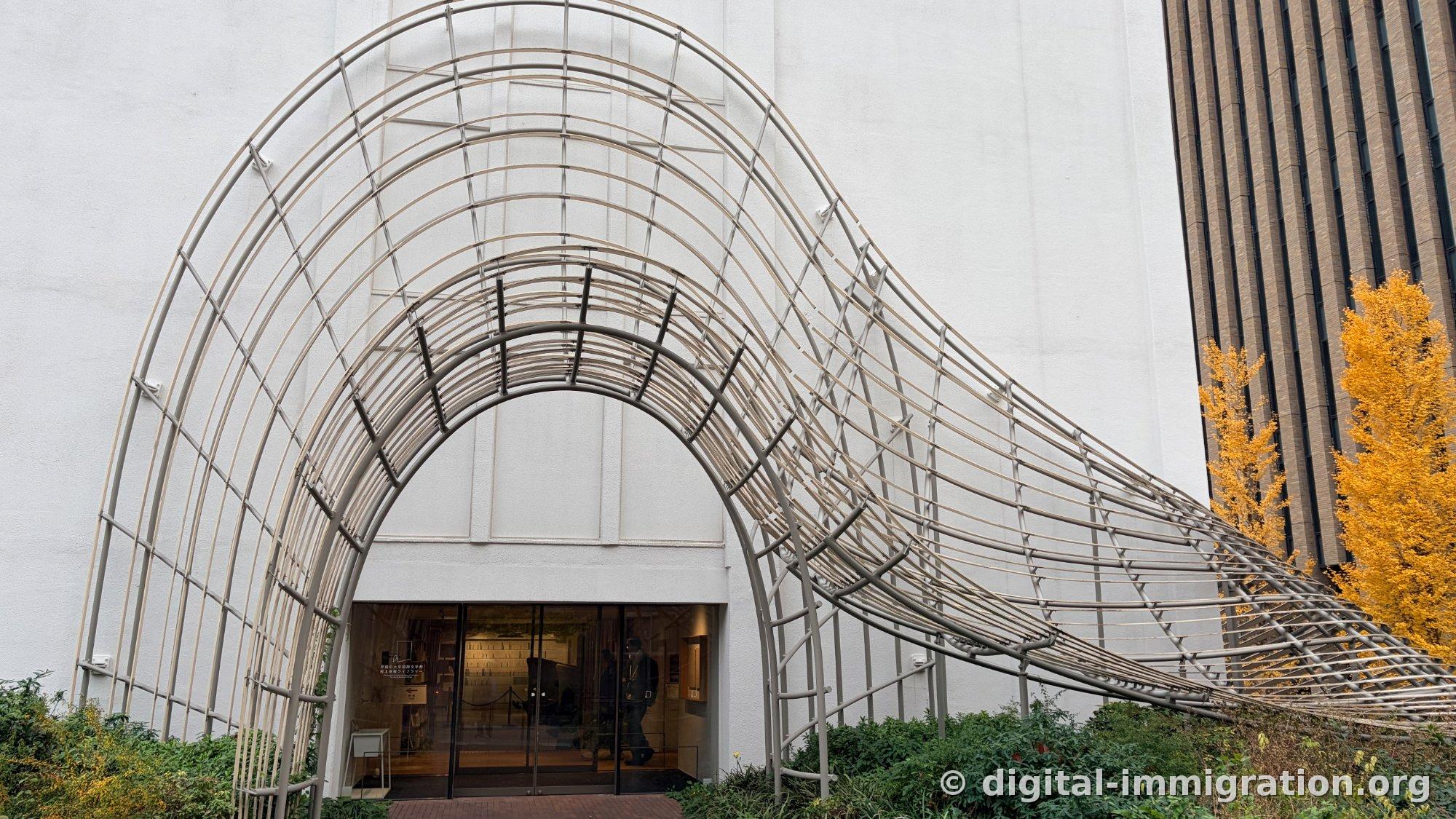
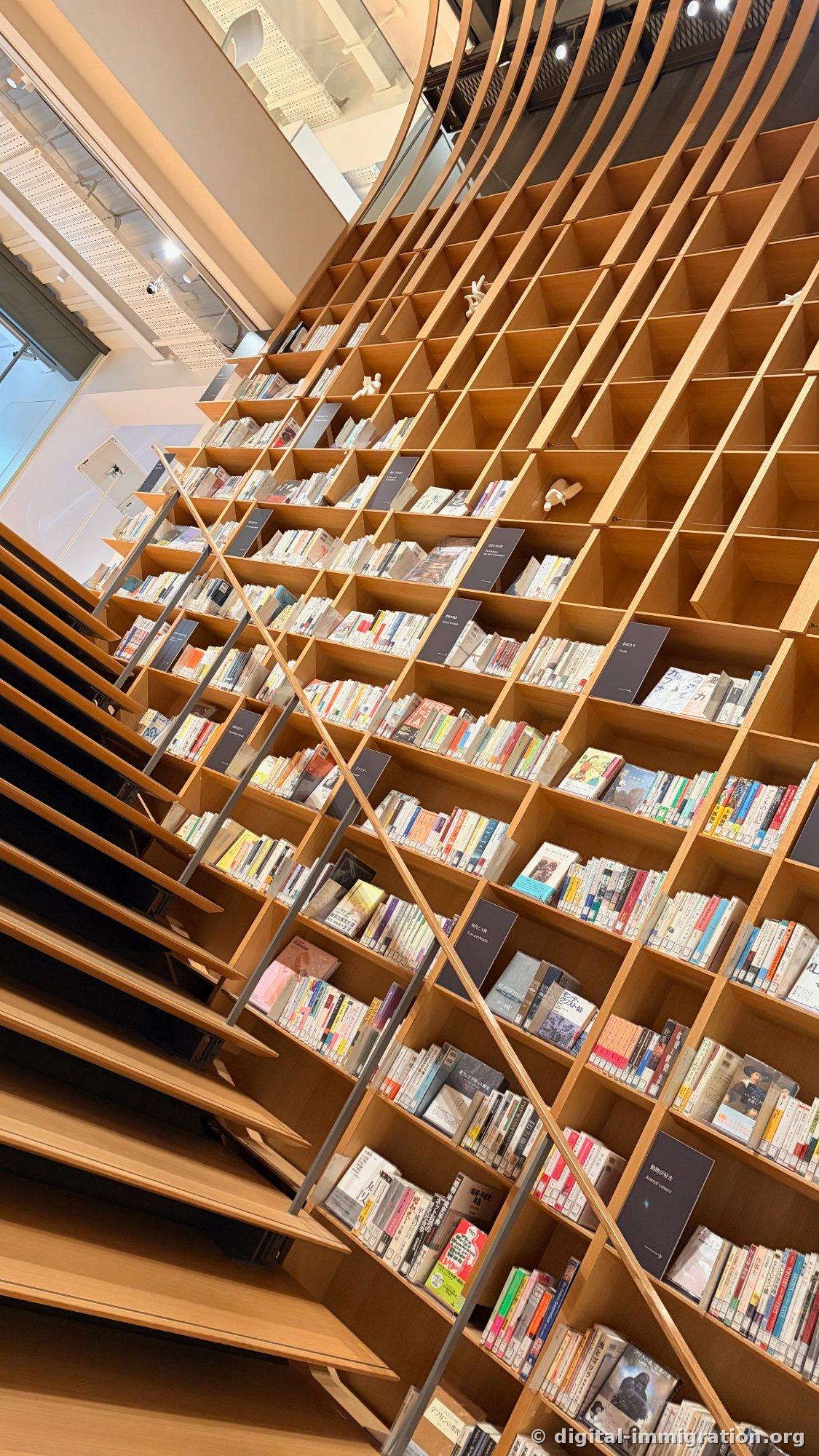
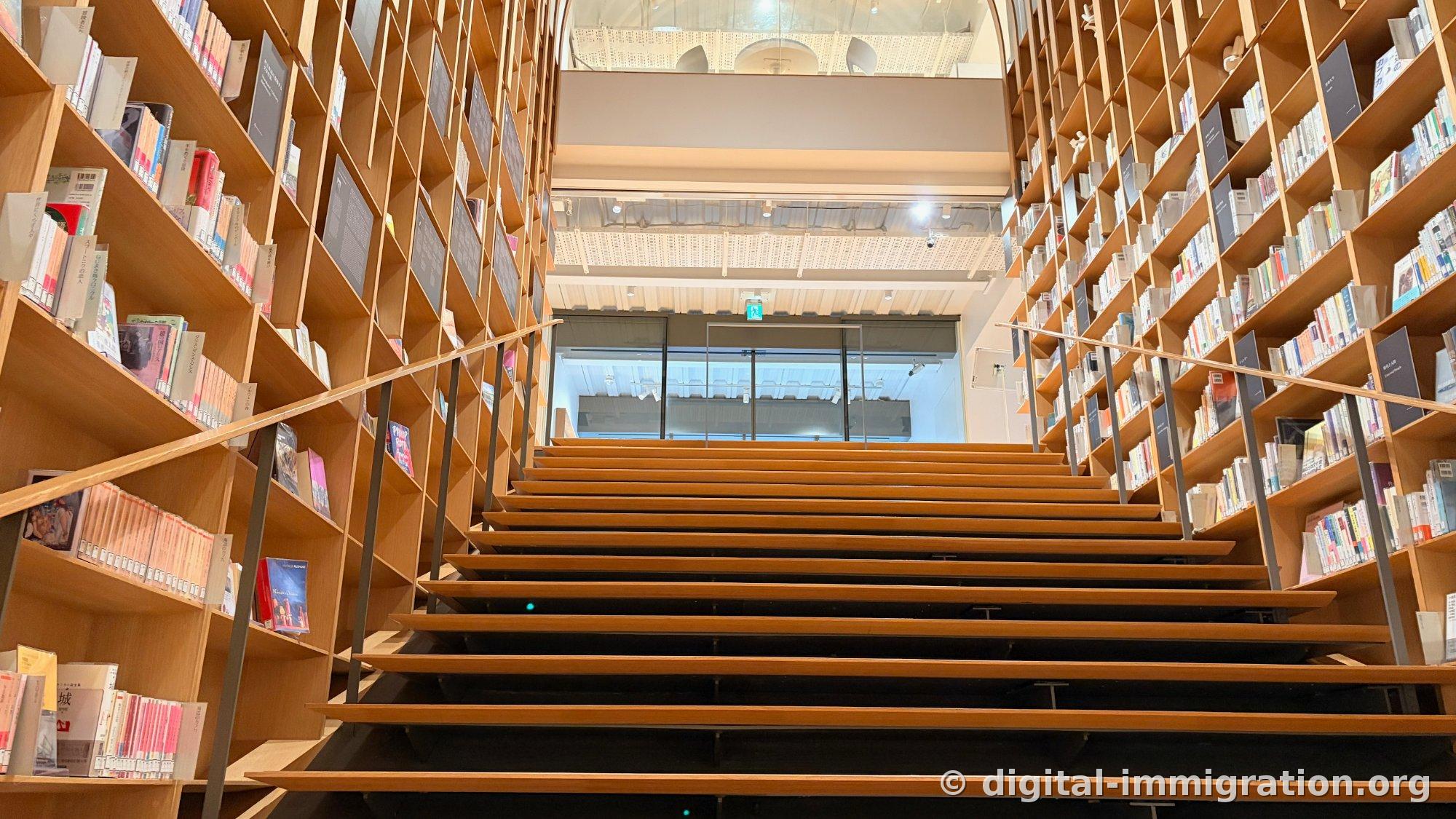
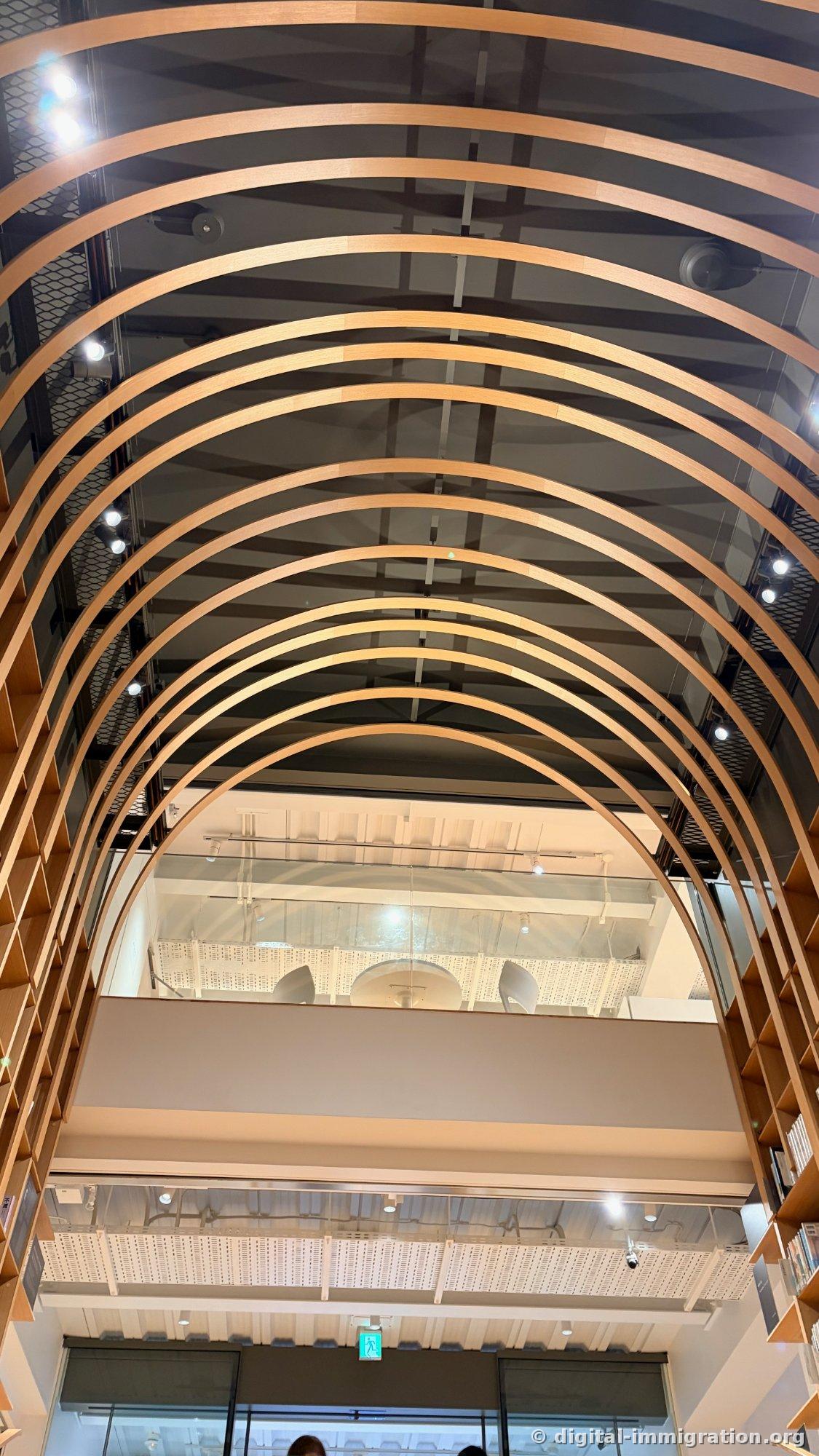
Inside, a staircase appears immediately, with bookshelves covering both walls. A wooden arch frame embraces the stairs, extending down to the lower floor. The books aren't organized by genre but by feeling—categories like "Loves Animals" or "Everyday Mysteries". The space inside was quiet enough to hear footsteps, with a couple of people sitting on the stairs reading. Despite being a popular photo spot, everyone moved silently.
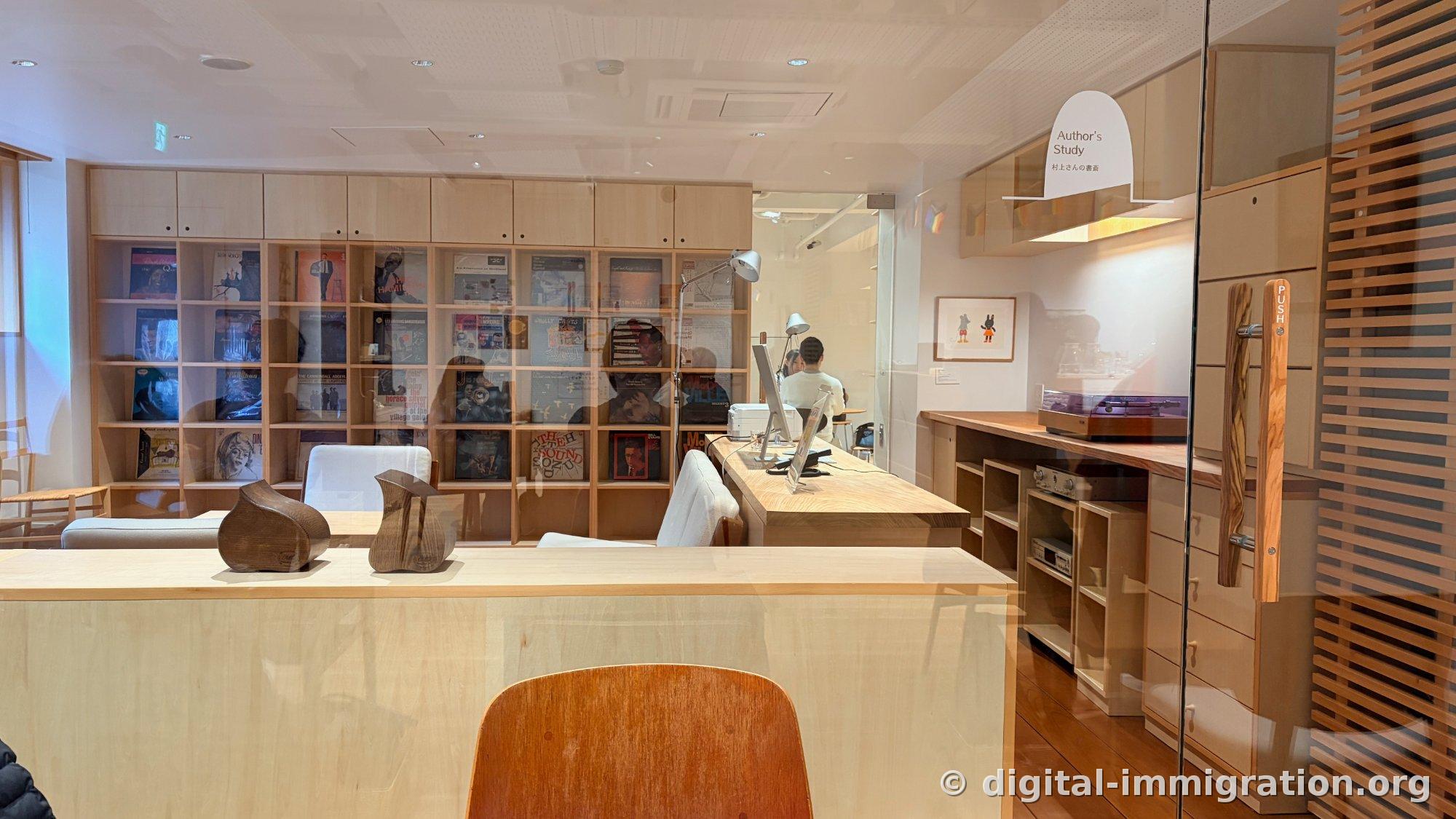
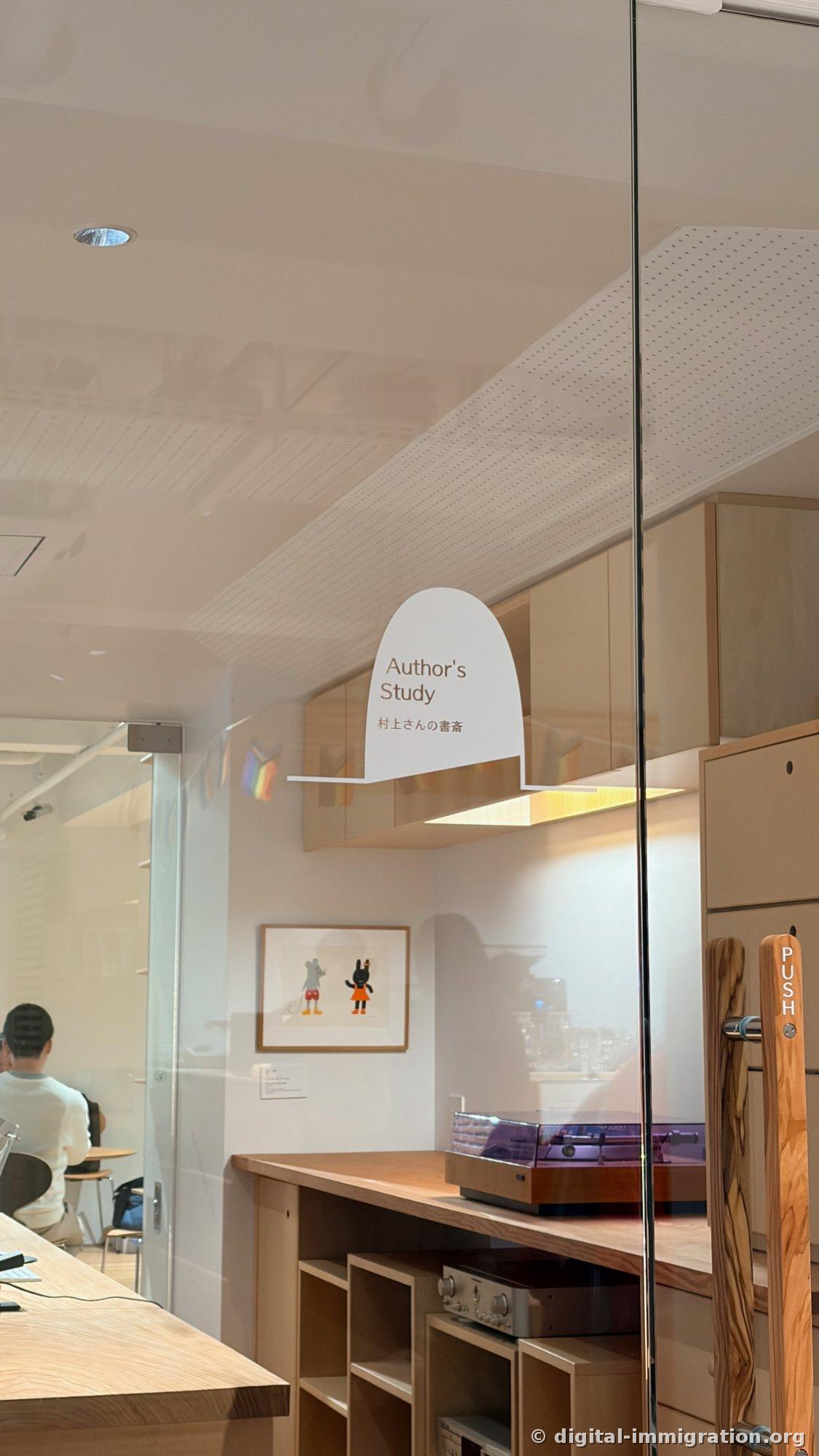
Descending to the basement, through a glass wall you can see "Author's Study"—his work desk, desk lamp, a shelf packed with records, and a turntable with amplifier. You can't enter beyond the glass; you can only look in from outside. The glass reflection is heavy, so photographs don't turn out well—it's better to just look with your eyes for a while.
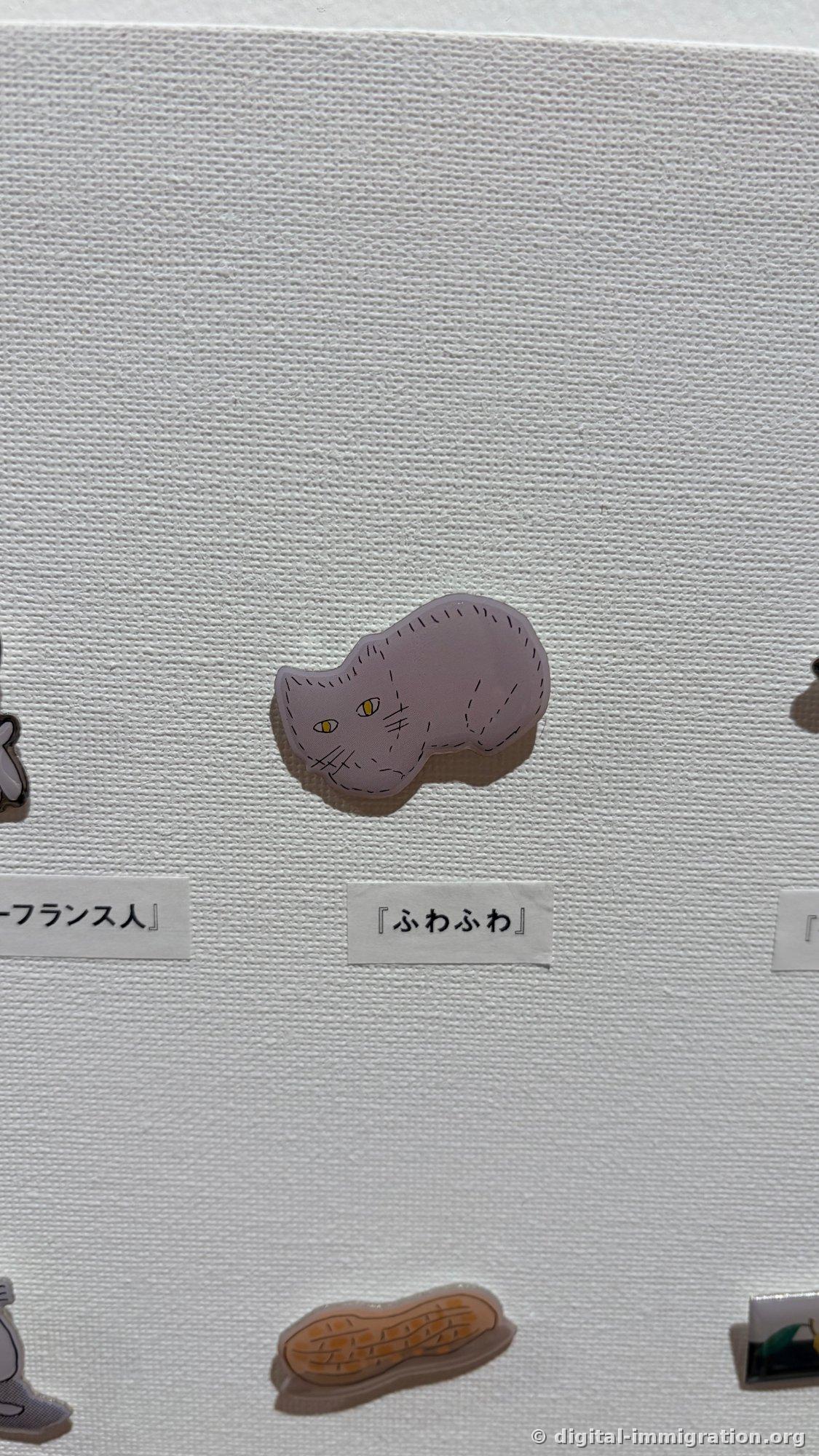
On one wall, small illustrations were displayed with work titles attached. Beneath a gray cat: "Fluffy", next to it a peanut illustration, then another title. Picture book and short story titles arranged like stickers across the wall—it takes only minutes to scan the entire collection.
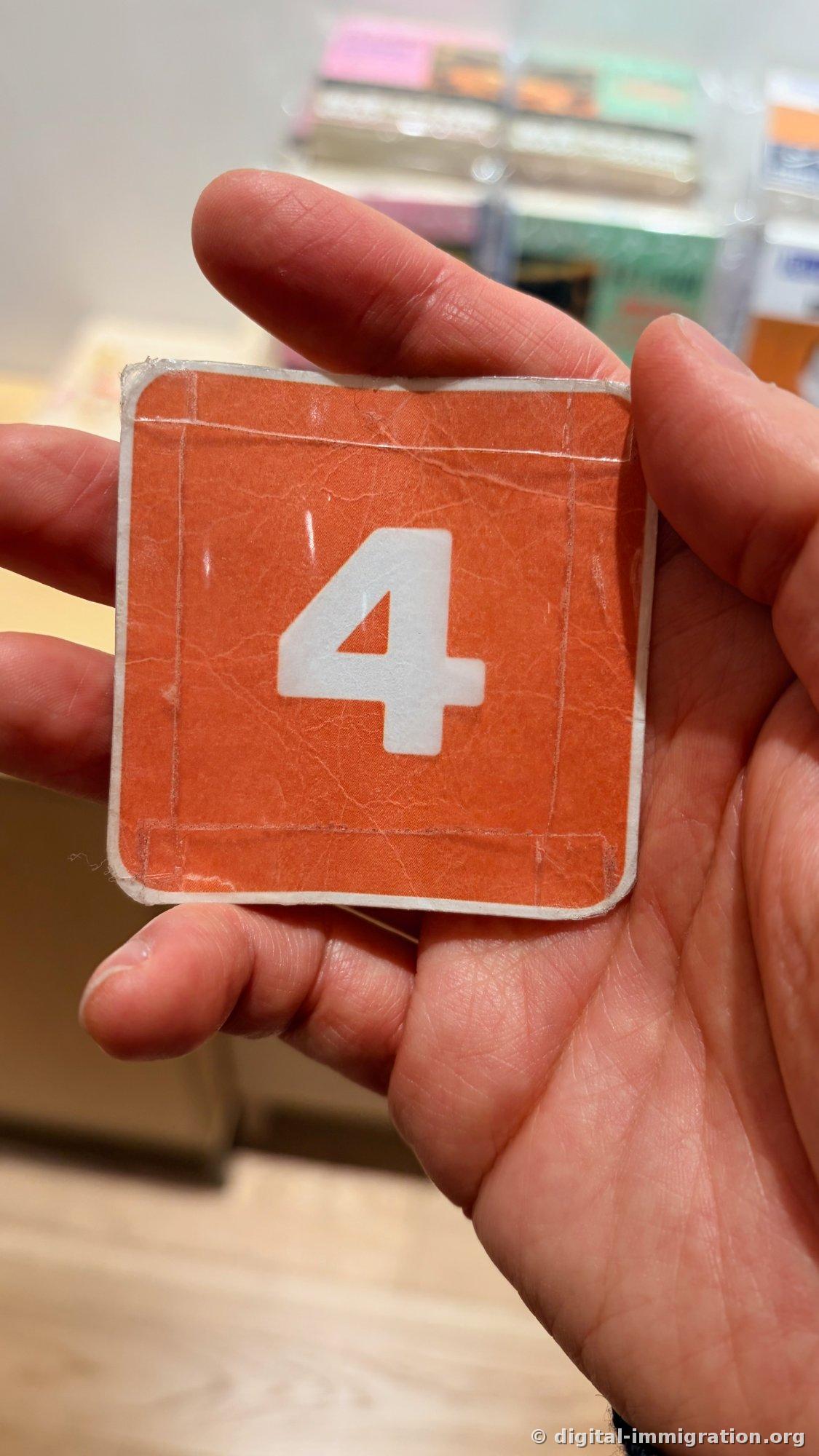
The basement café is called Orange Cat. It's run by students, and when you order, you receive an orange number tag. A white number 4 printed on a palm-sized paper tag. I didn't ask whether it was a table number or order number.
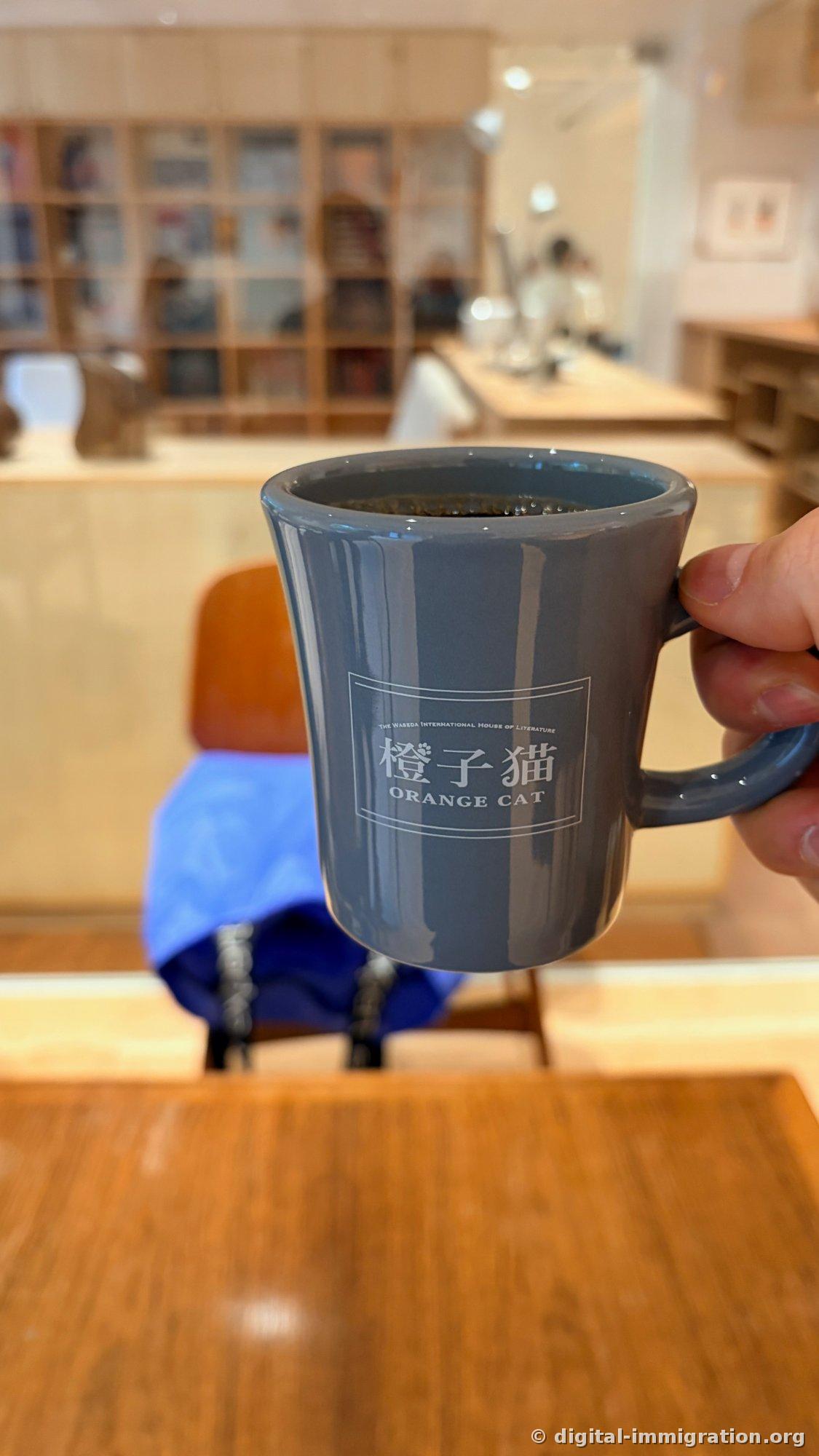
Coffee arrives in a gray mug. The mug bears the inscriptions "Orange Cat ORANGE CAT" and "THE WASEDA INTERNATIONAL HOUSE OF LITERATURE". The taste was low in acidity and rich, stronger than the Tokyo café average. The price was in the hundreds of yen range, but I don't remember exactly—the menu is posted on the counter, so check there. Taking this coffee outside and walking the ginkgo path again was the day's highlight. The indoors are quiet, which is wonderful; outside, the leaves are falling, which is also wonderful.
The Theatre Museum — A Single Tudor-Style Building
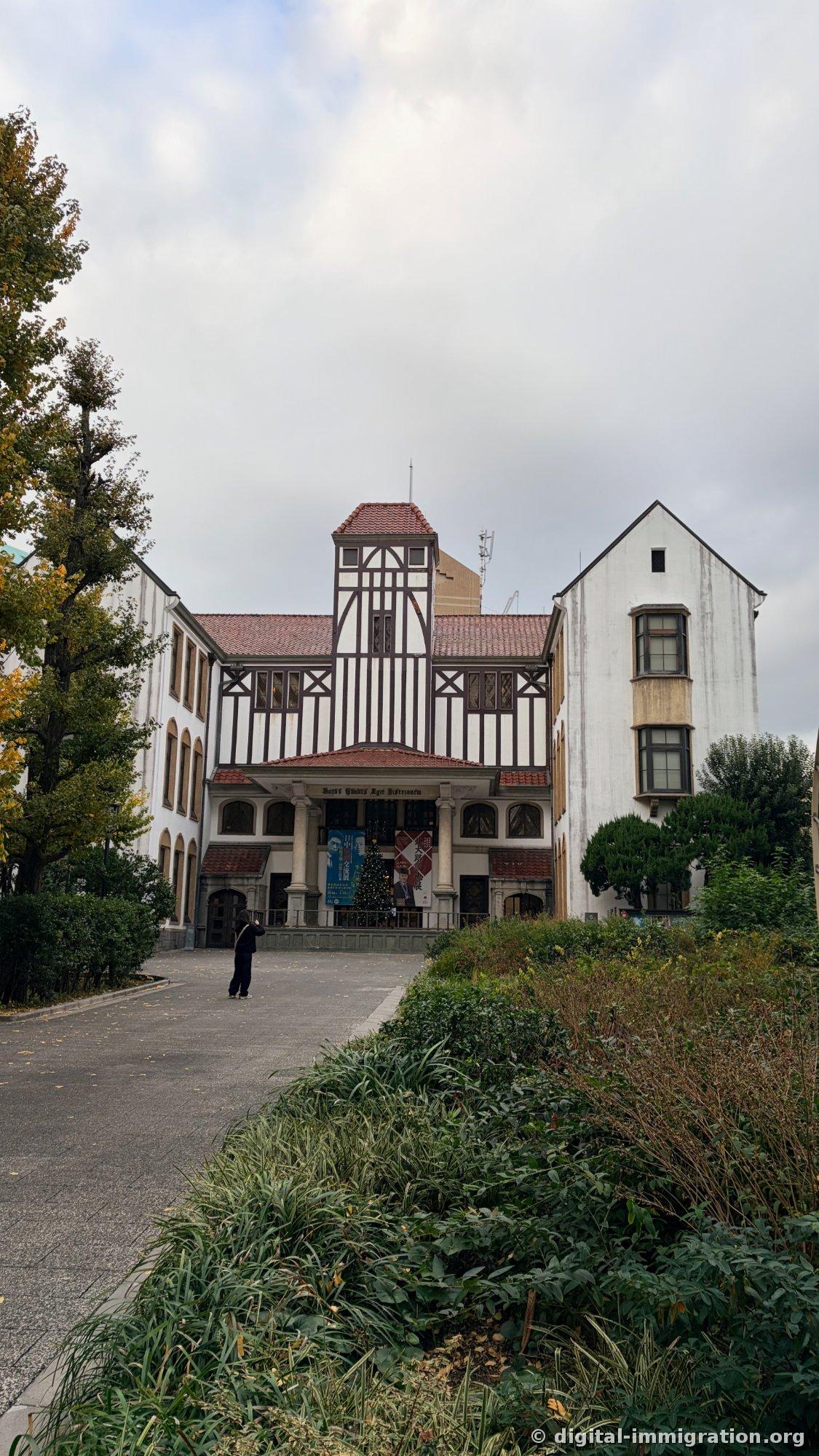
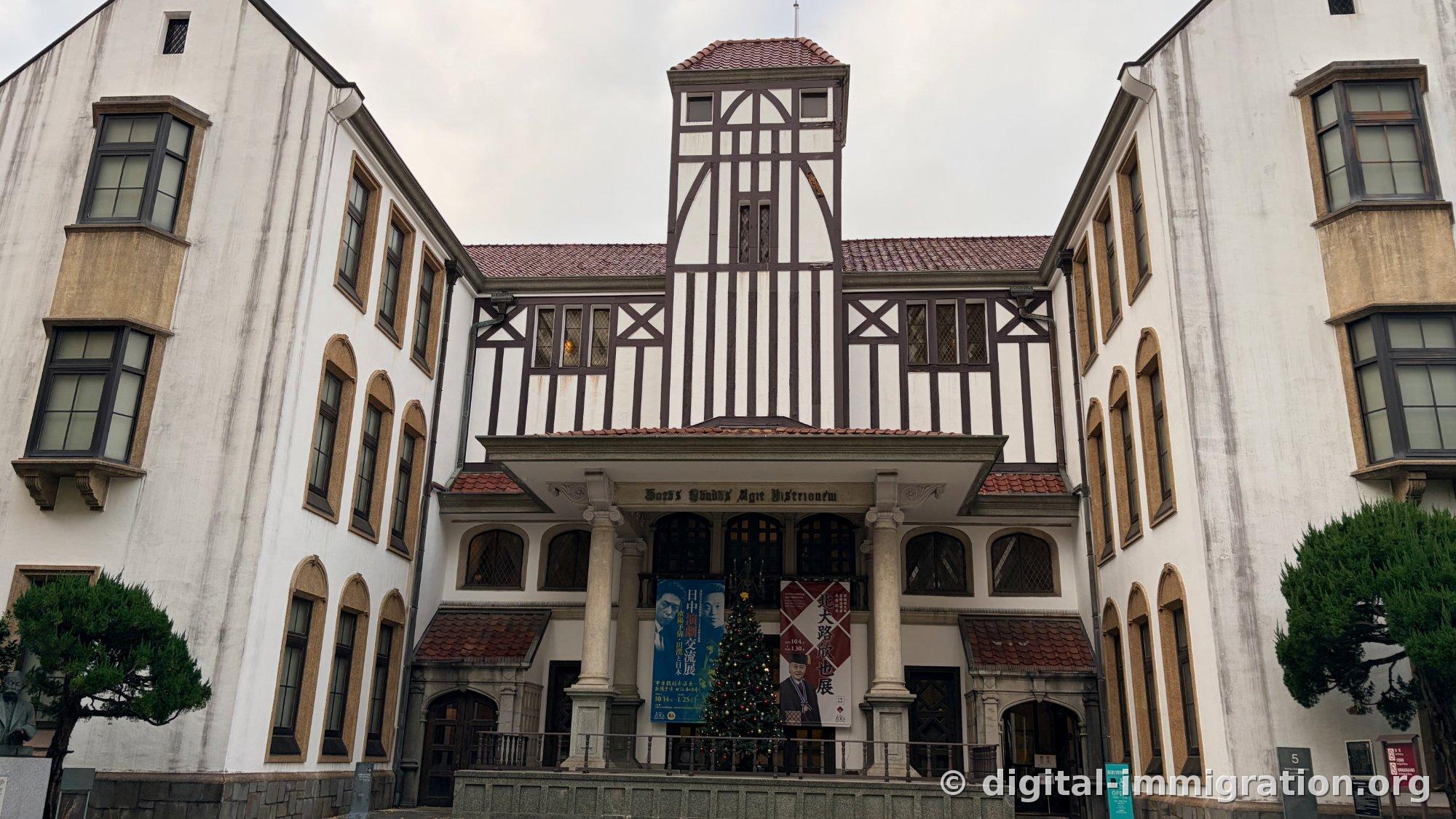
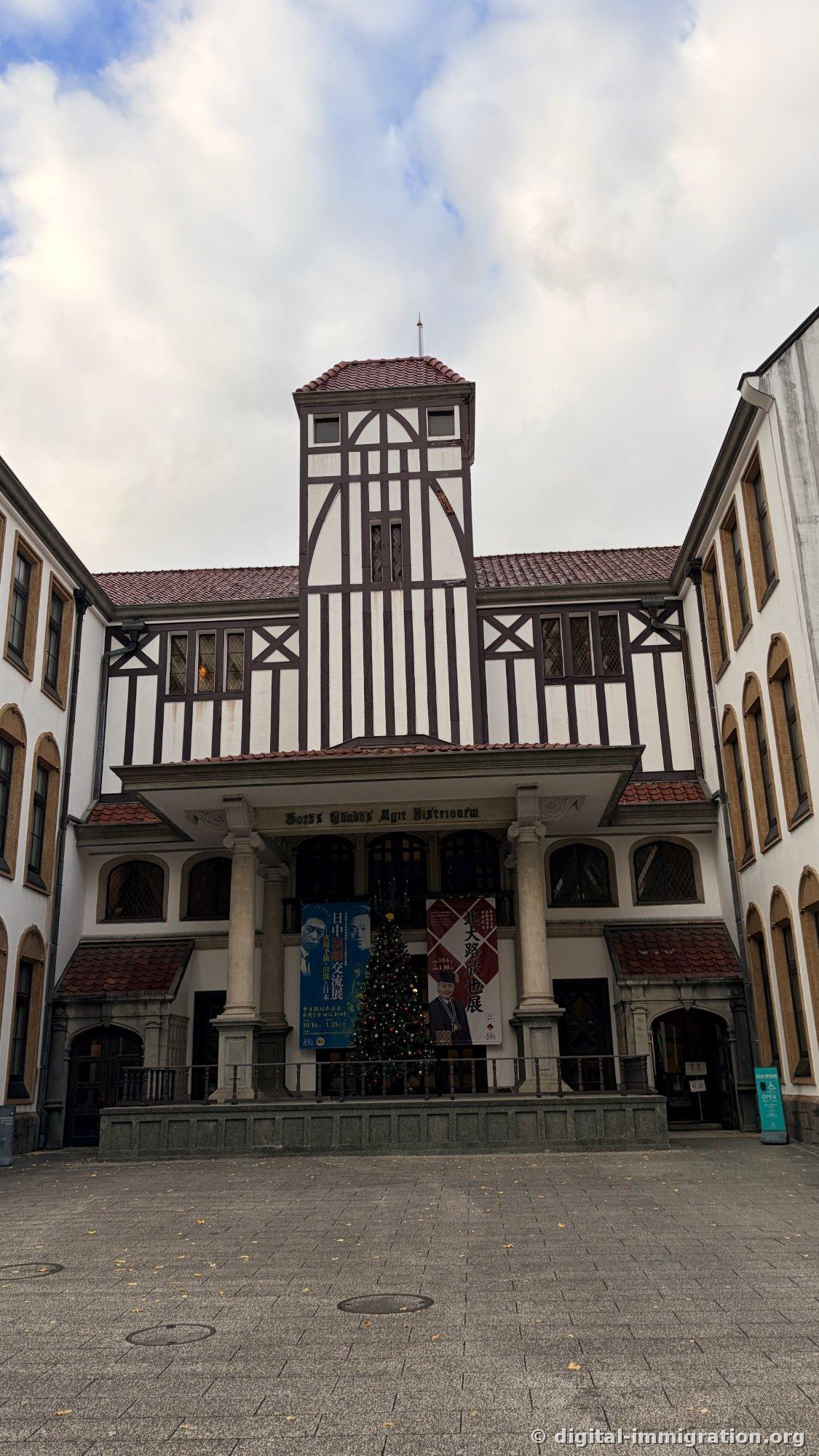
Going up the stairs from the library, you suddenly encounter what looks like an English countryside building: the Tsubouchi Shoyo Memorial Theatre Museum. Half-timbered exterior with red tile roof and Latin inscribed above the entrance: Totus Mundus Agit Histrionem (all the world's a stage). A Christmas tree stood in the front courtyard, with banners for "Sino-Japanese Theatre Exchange Exhibition" and "Yoshiya Kitaoji Exhibition". Exhibitions change with each run, so check before visiting.
Before Okuma Hall — The Main Street and Access
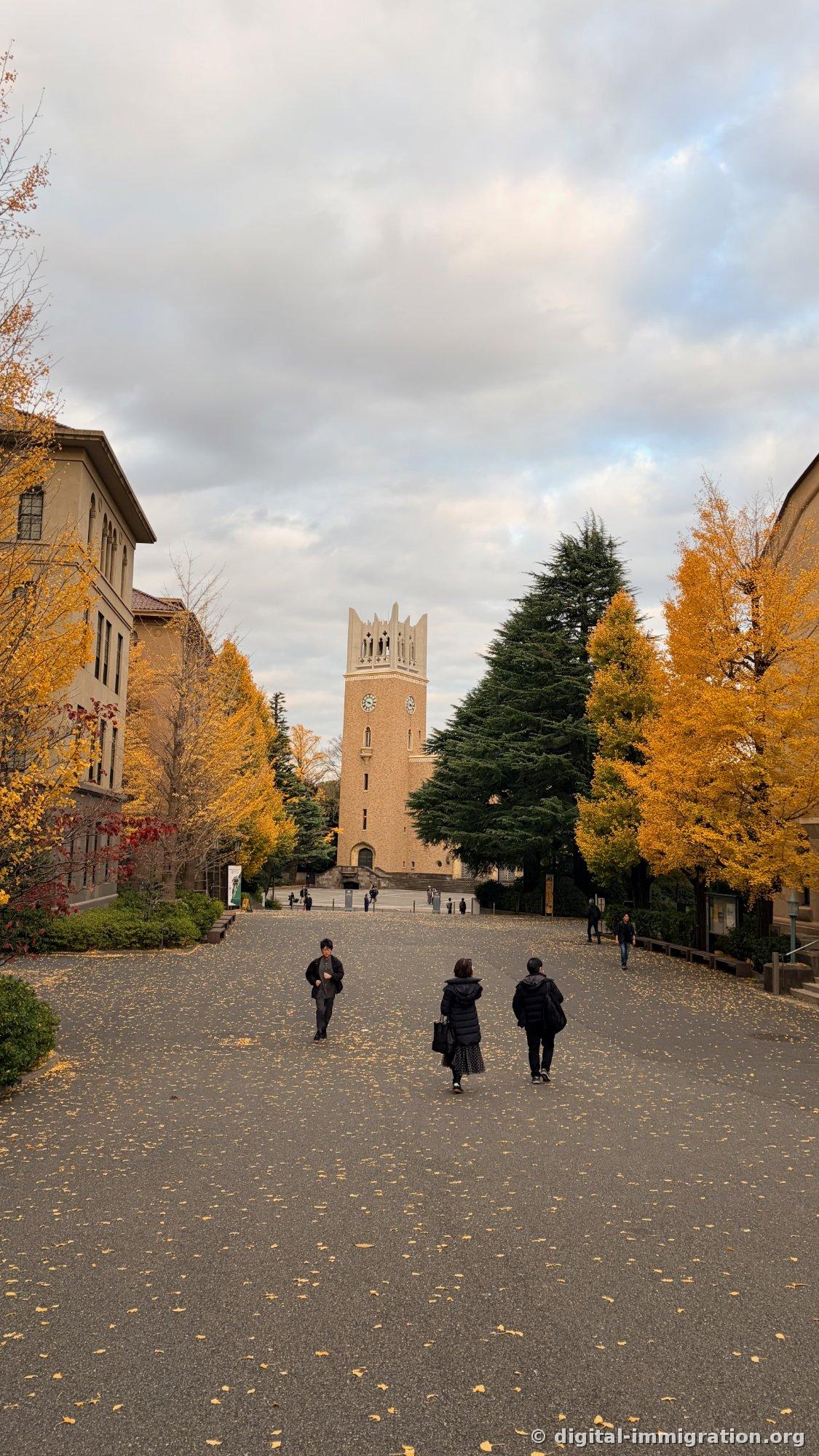
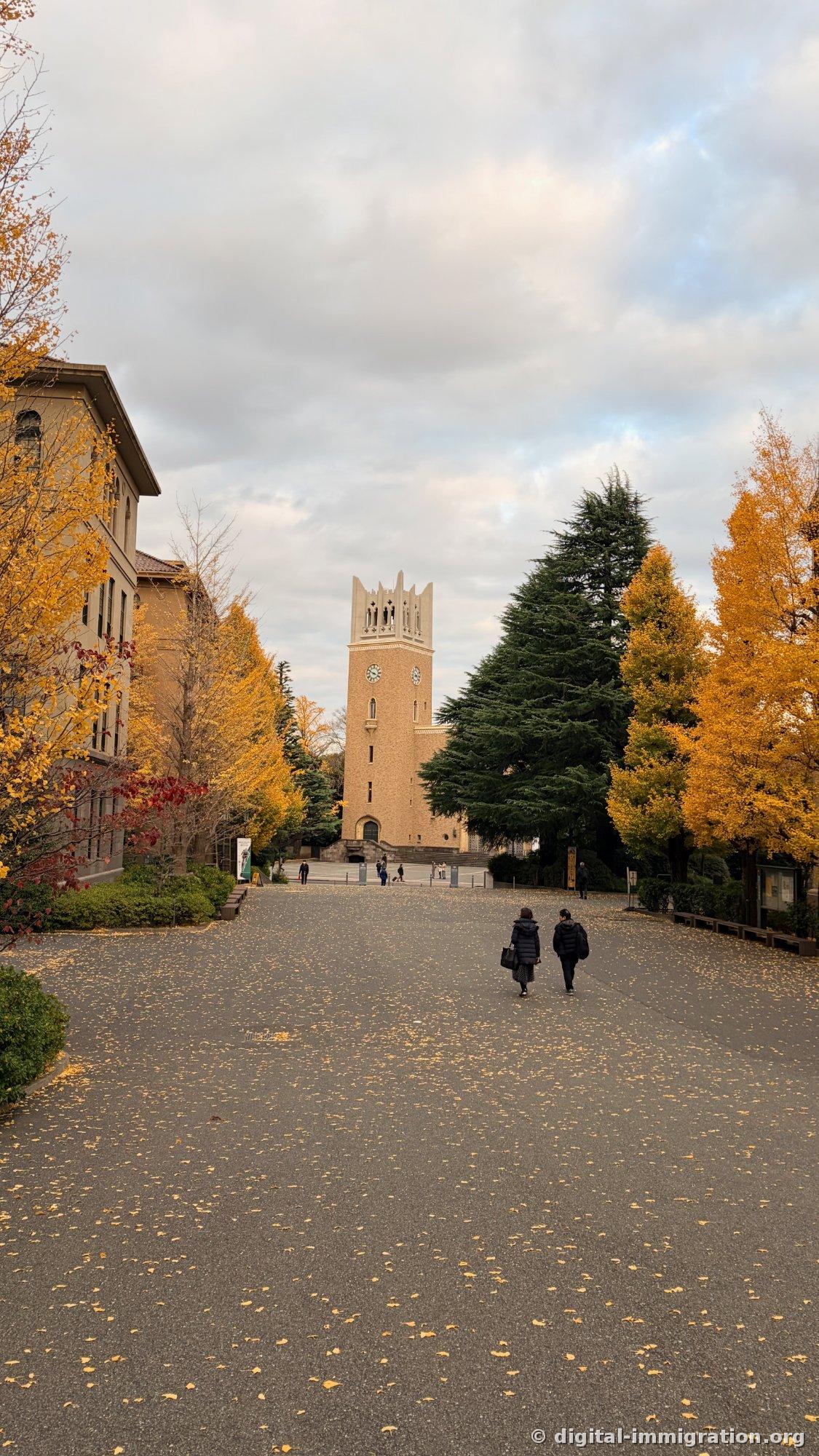
Continue beyond the theatre museum and the main street of campus appears. A clock tower stands at the far end, and ginkgo trees line both sides of the street. This section's ground was entirely covered in yellow. Around 4 PM, as the light lowered, the brick buildings and yellow leaves became equally drenched in color.
Getting here is straightforward. From Exit 3b of Waseda Station on Tokyo Metro's Tozai Line, it's a 5-minute walk including a gentle uphill climb toward the main gate. From JR Takadanobaba Station, it's about a 20-minute walk, so a bus or one stop on the Tozai Line would be better from there. The campus is open without gates, requiring no separate admission procedure, and it's proper not to enter lecture halls—those are student and staff spaces. The coordinates of photographed locations are marked on the map below.
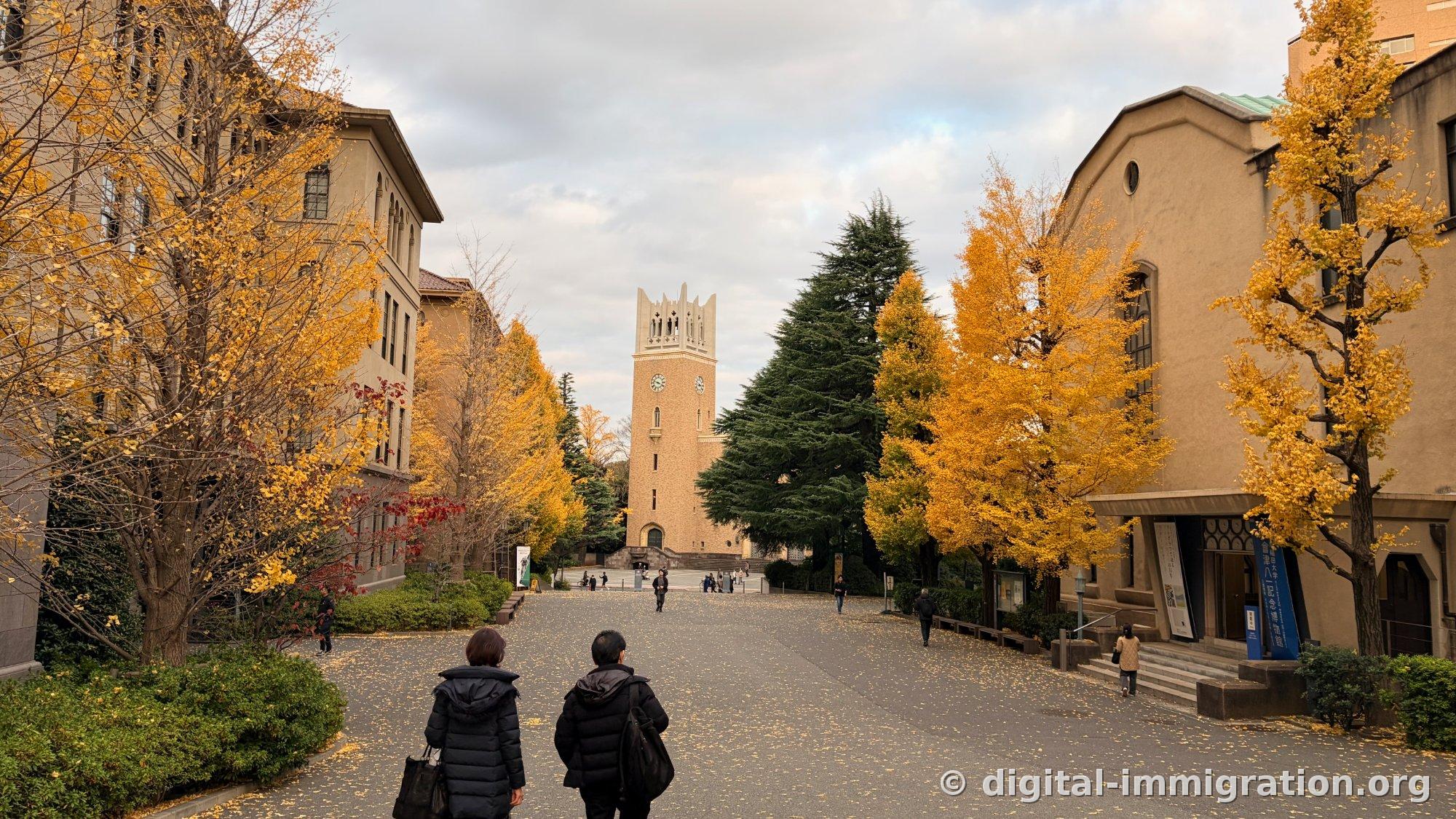
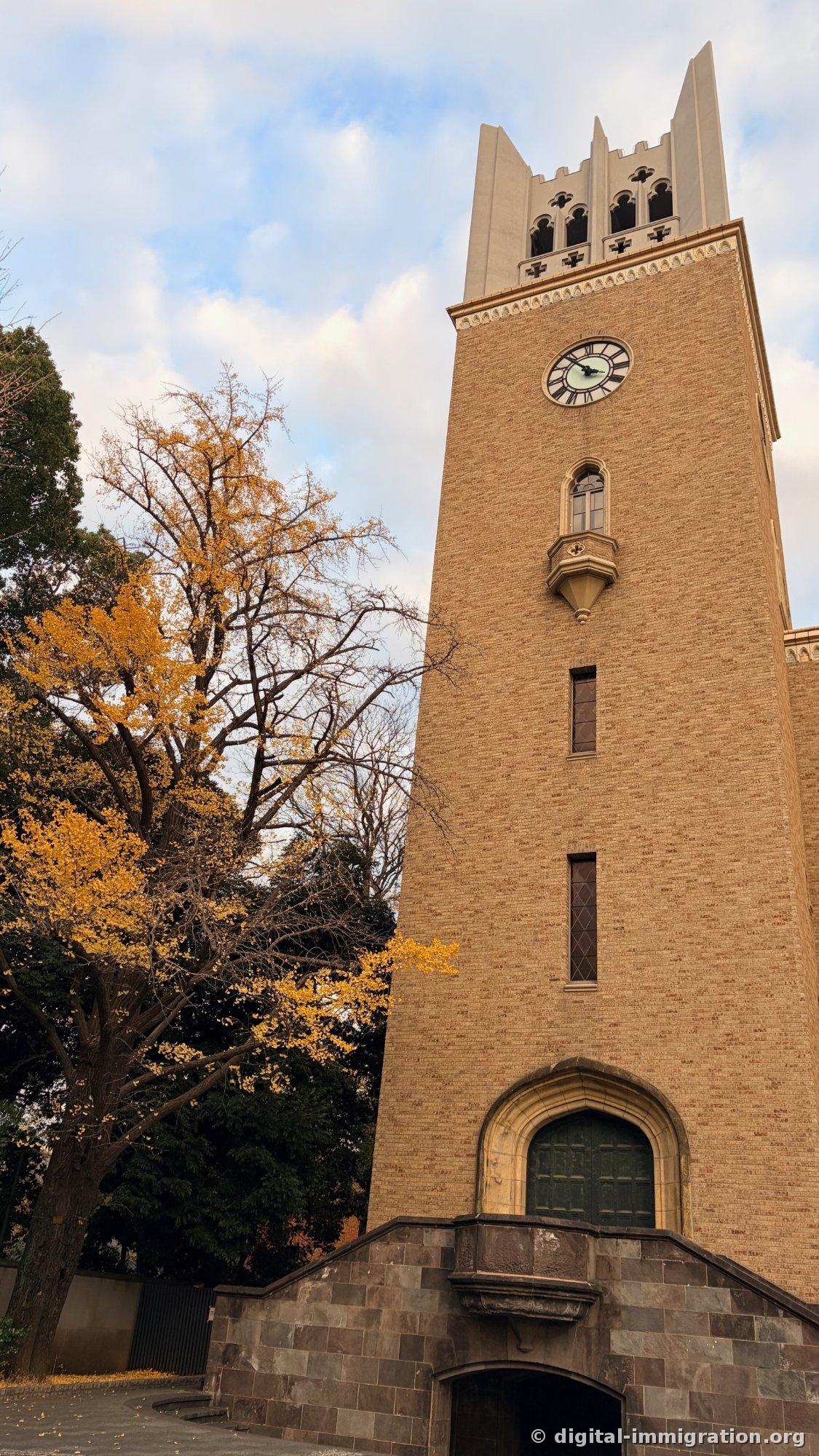
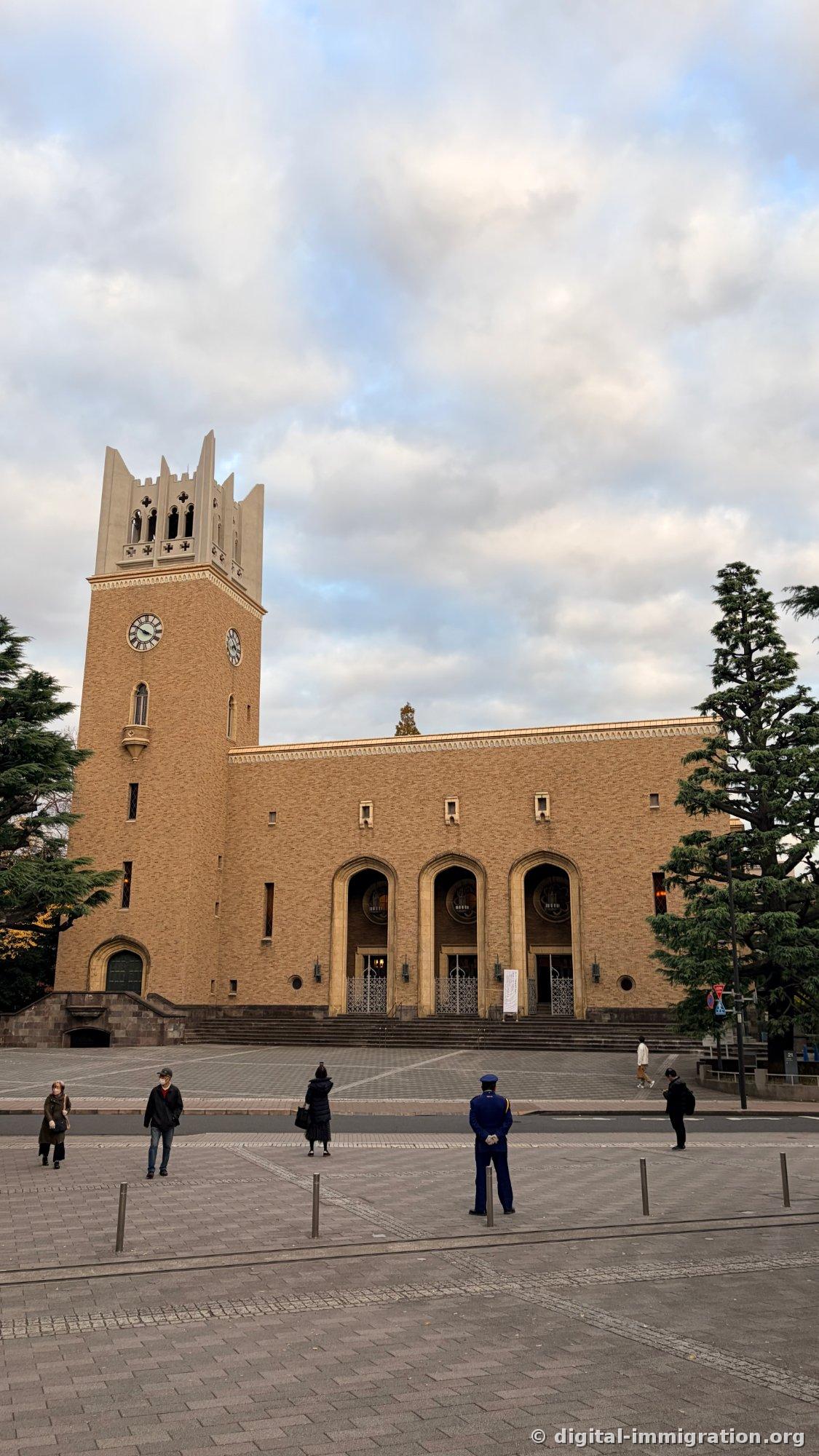
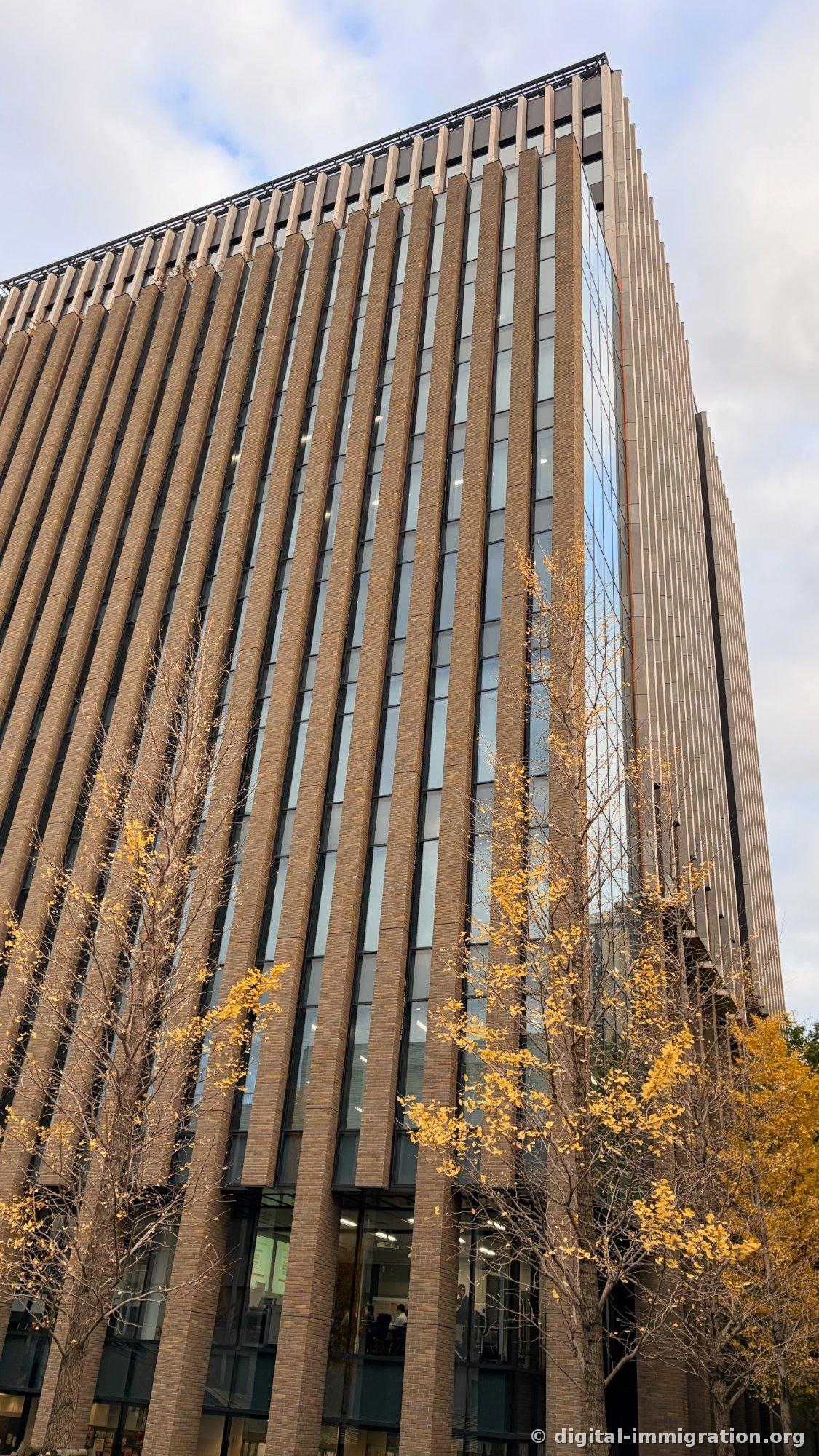
Okuma Hall appears larger than expected when viewed from near below. The brick surface shows signs of age with uneven coloring, and the clock face uses Roman numerals. A security guard stood in the plaza before it, with more passing students and neighborhood residents than tourists.
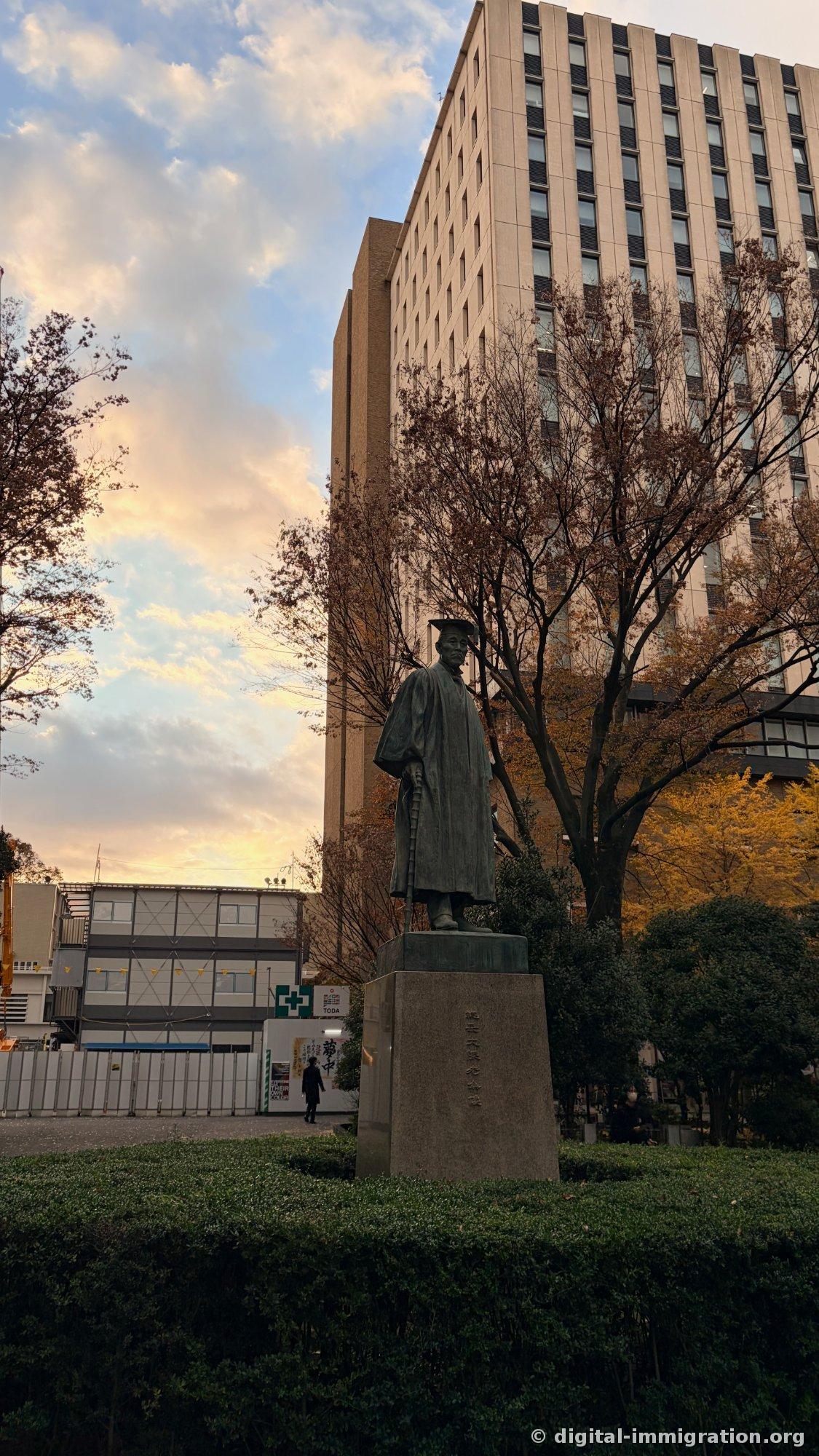
In a grassy area beside the hall stands a bronze statue of Shigenobu Okuma. In academic robes and holding a scroll, it became a silhouette as the sky turned pink at dusk. Behind it, construction barriers were set up—various parts of campus are under construction, limiting available photo angles.
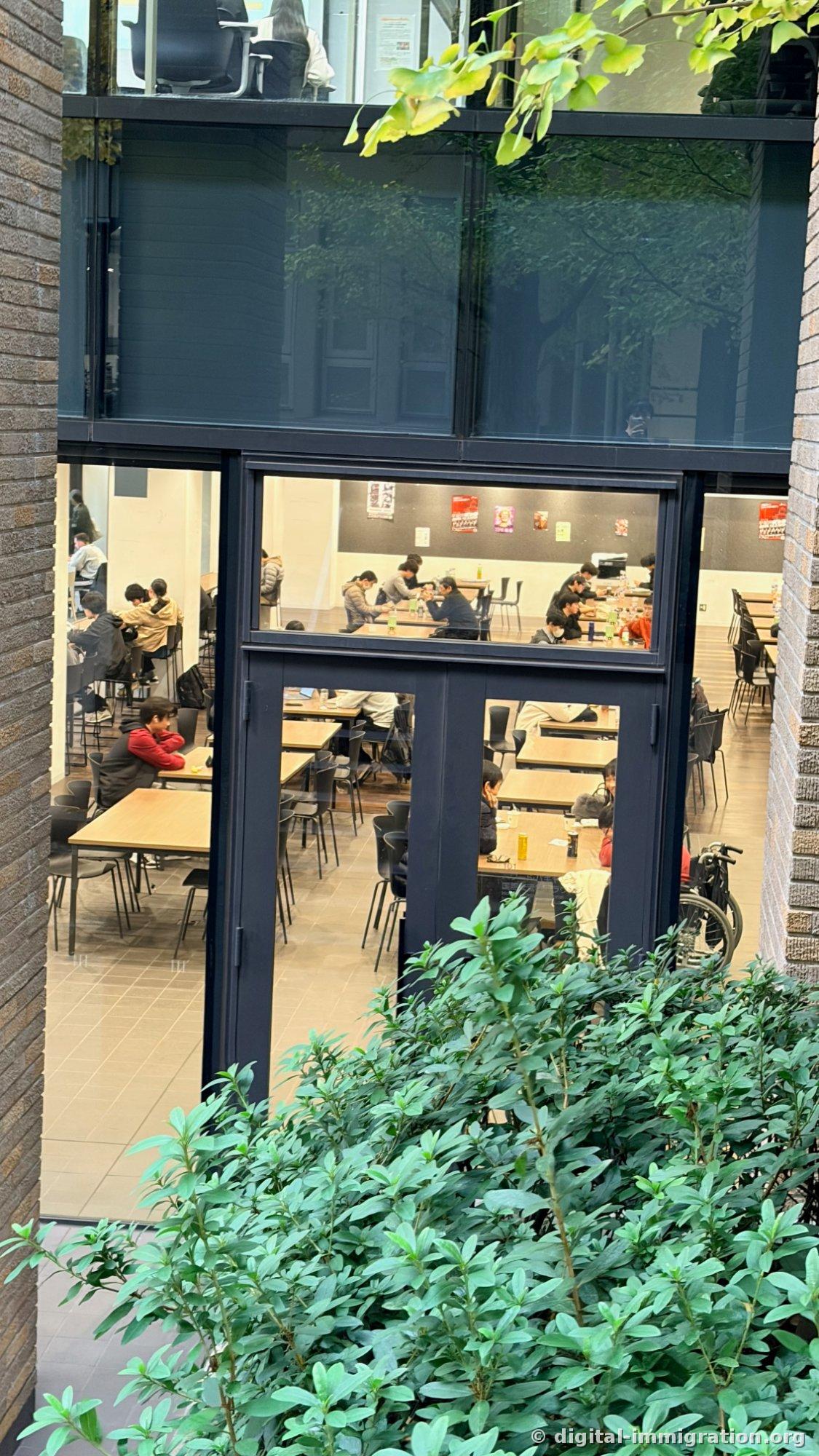
Passing by, through a courtyard window I could see the student dining hall. Students were scattered at long wooden tables, eating and chatting. I heard there's a dining option open to visitors on campus, but the timing was awkward so I didn't go in. If you visit around lunch, you can grab an affordable meal here.
Okuma Garden — After Ginkgo Comes Maple
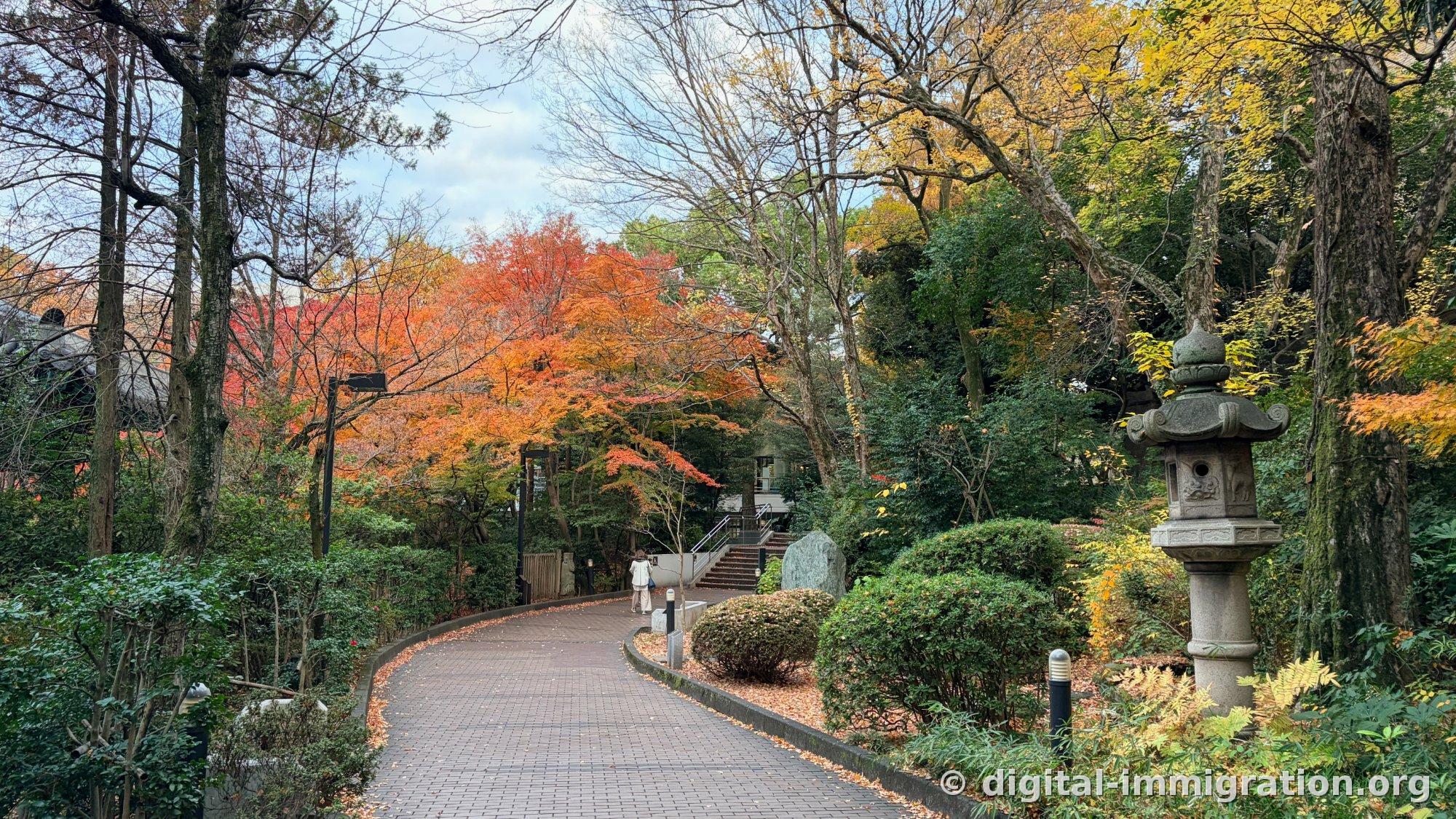
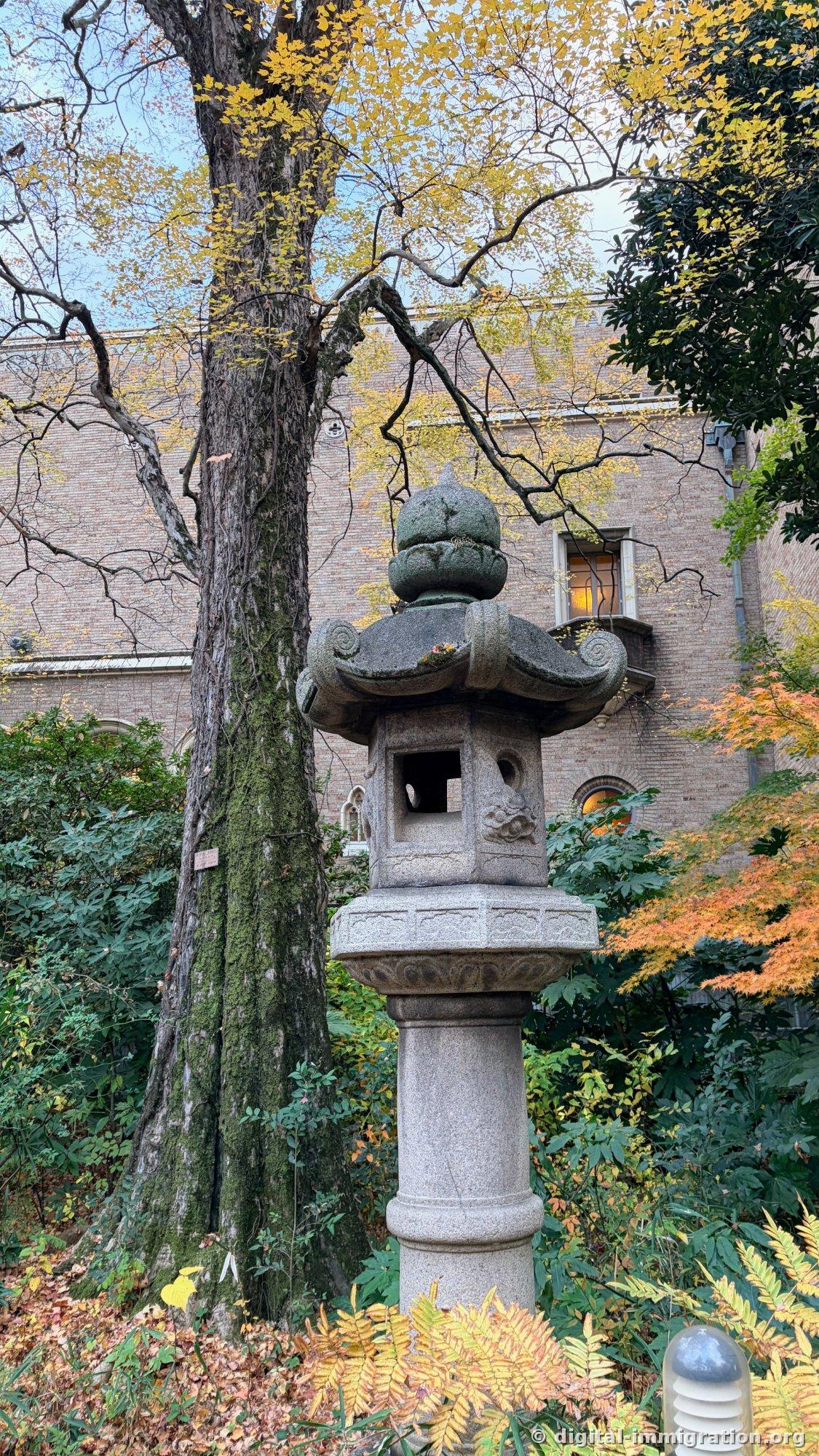
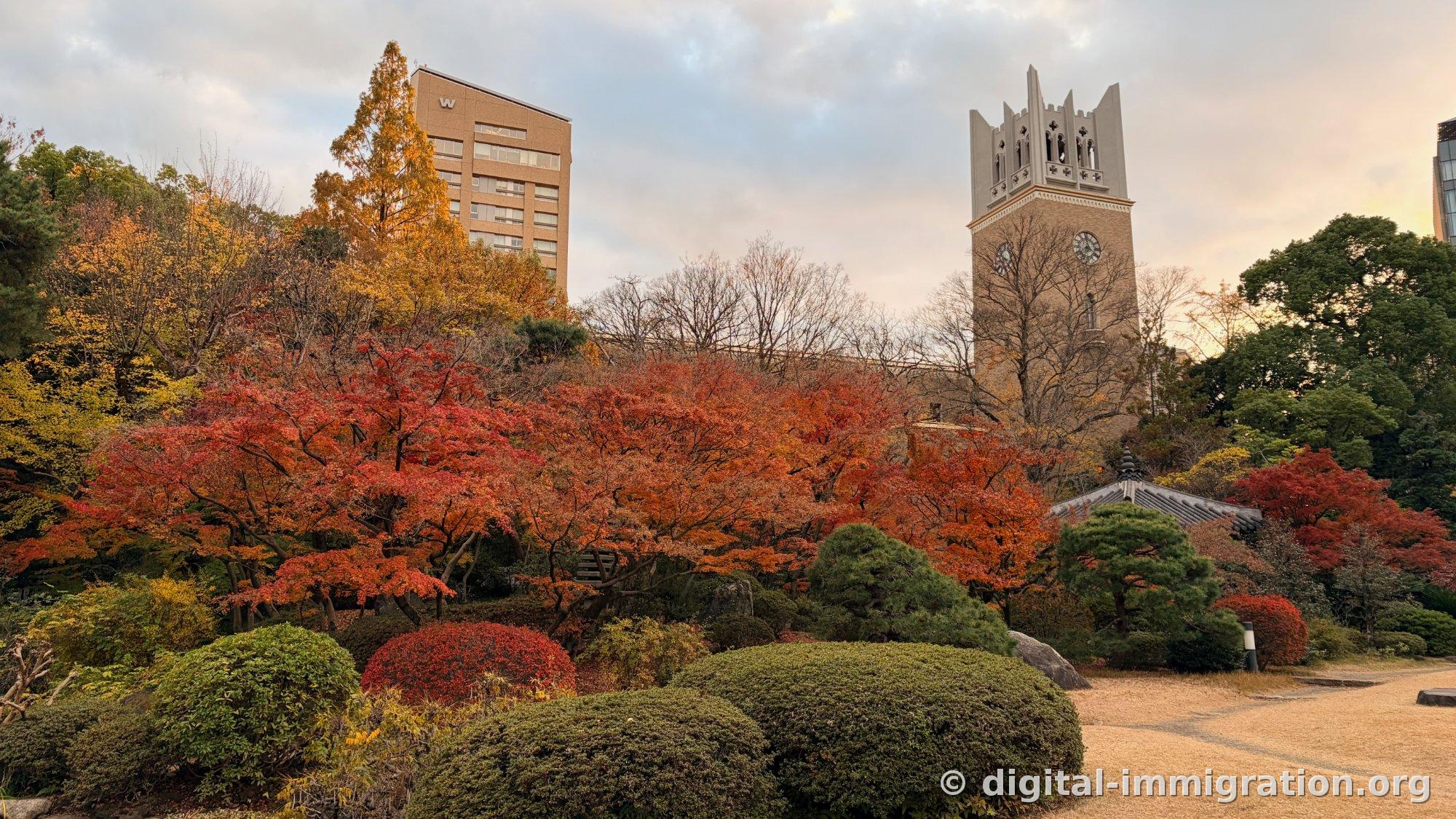
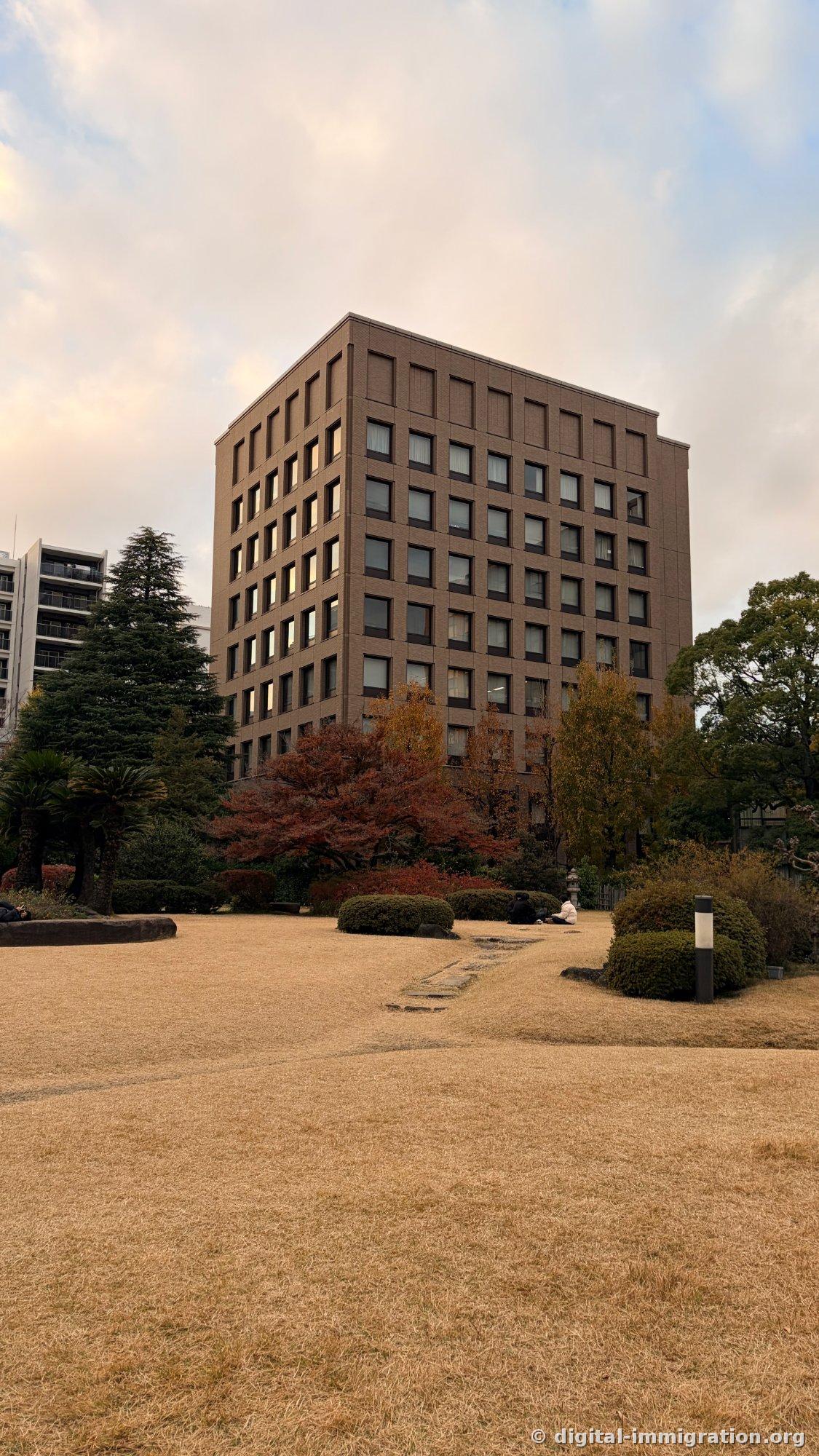
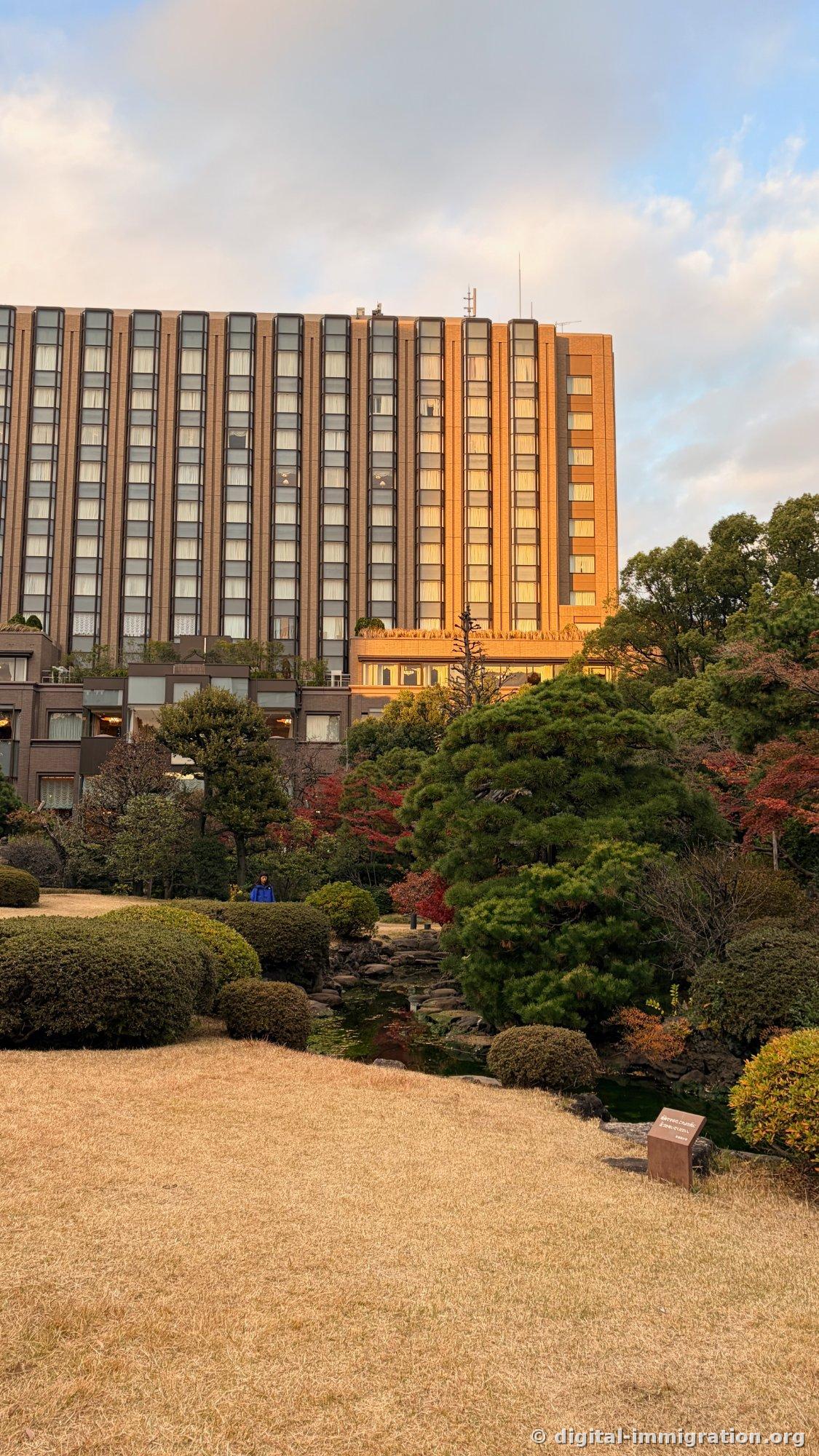
Behind the hall, the Okuma Garden appears. The colors shift here. Instead of ginkgo's yellow come the oranges and reds of maple foliage. Brick-paved walking paths curve gently, with stone lanterns and trimmed shrubs arranged in a Japanese garden style. The scale isn't large—a full loop takes about 15 minutes. The grass had already turned winter-brown and was parched, with a few people sitting to rest.
Thoughts After the Visit
- Timing: This visit was late November. The ginkgos had passed peak and leaves carpeted the ground; the Okuma Garden maples were perfect. To see ginkgo leaves still on trees, mid-November is safer.
- Route: Waseda Station on the Tozai Line → International House of Literature (Murakami Library) → Theatre Museum → Main Street and Okuma Hall → Okuma Garden. It took about two and a half hours of slow walking.
- Murakami Library: Operating hours and entry procedures (including reservation requirements) change, so check the official website before visiting. The basement Orange Cat Café is student-run.
- Etiquette: This is a school, not a tourist destination. It's considerate not to point cameras into lecture halls where students are studying. Some campus areas are under construction with barriers.
- Weather: That day, a single coat was sufficient during daylight, but the wind turned cold after dark. If you plan to see the garden too, a light scarf is worth bringing.
Sitting on a garden bench after finishing my coffee, I thought I would have stayed longer if I'd drunk from a real mug instead of a disposable cup. Next time I'll drink the café coffee inside, then step outside with my hands in my pockets and just walk.
Read next
- From Akihabara's Chuo-dori to the Kanda River: A Record of Tokyo's Electronics District Revisited Multiple Times
Tokyo's Akihabara is a neighborhood where it's hard to say you've seen everything in a single visit. I've come multiple times across different seasons, and each time the signs chan…
Tokyo · Akihabara - Buying a Single ¥300 Year-End Jumbo Lottery Ticket at Nishi-Ginza Chance Center in Tokyo
Exit from the Hibiya exit of Tokyo's Shimbashi Station, walk toward the elevated highway for about three minutes, and suddenly you'll see a line of people stretching along the side…
Tokyo · Nishi-Ginza Chance Center - Ueno Ameyoko, the real magic starts after sunset — an evening walk from the Okachimachi Gate to Ueno Station
Every time I come to Tokyo, my feet find their way to Ueno Ameyoko (アメ横) without fail. This time I entered from the Okachimachi side and worked my way toward Ueno Station. I've met…
Tokyo · Ameya Yokocho Market