Udon-ya Daimon (うどんや 大門) in the Basement of Nakano Broadway — Competition for a Few Counter Seats
From Tokyo's Nakano Station, a five-minute walk through the Senmo shopping arcade brings you to Nakano Broadway. Inside this building, stacked with figures, secondhand watches, and…
Tokyo · Daimon
From Tokyo's Nakano Station, a five-minute walk through the Senmo shopping arcade brings you to Nakano Broadway. Inside this building, stacked with figures, secondhand watches, and manga volumes, sits a single Sanuki udon restaurant. Its name is Udon-ya Daimon. Most first-time visitors walk right past it. The signage is small, and you have to venture into the corridor before the white noren curtain comes into view.
Only a Few Seats — Know What You're Getting Into
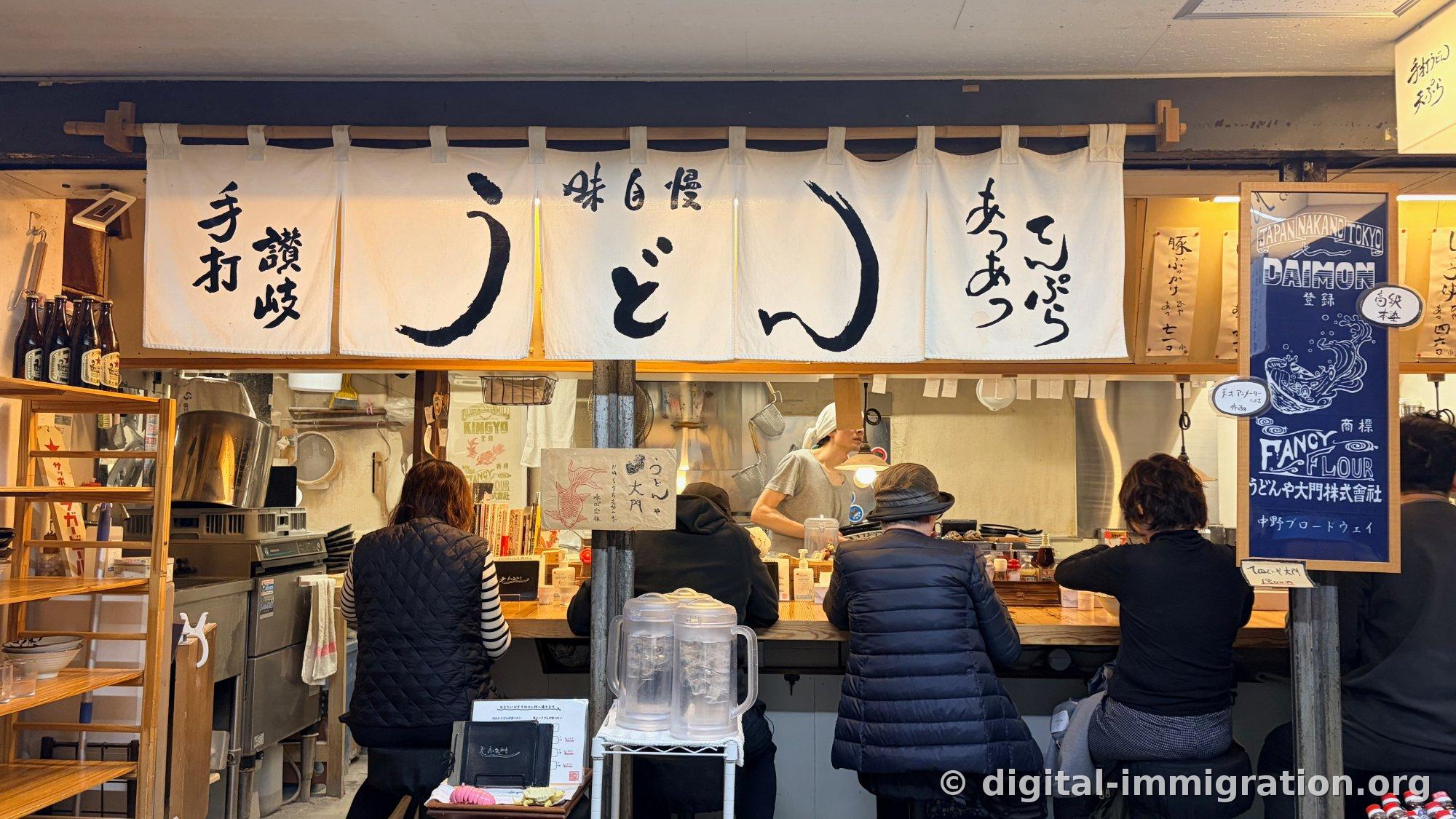
Before coming to this place, you need to understand the waiting situation and seating arrangement. There's just one counter line, and what you see in the photo is practically all the seating. There are no tables. So if four of you come, sitting side by side isn't easy—your group either gets scattered across the counter, or you stand waiting in the corridor for someone's seat to open up.
On the day I went, it was a weekday afternoon, yet six or seven people were standing in the hallway. Because it's inside Broadway, the line doesn't form outside—it stretches along the corridor in the building. There's air conditioning, but nowhere to sit. I stood for about thirty minutes. The turnover is quick—no one lingers over their bowl of udon. Still, if you come during the lunch rush (noon to 1 p.m.), expect to wait longer.
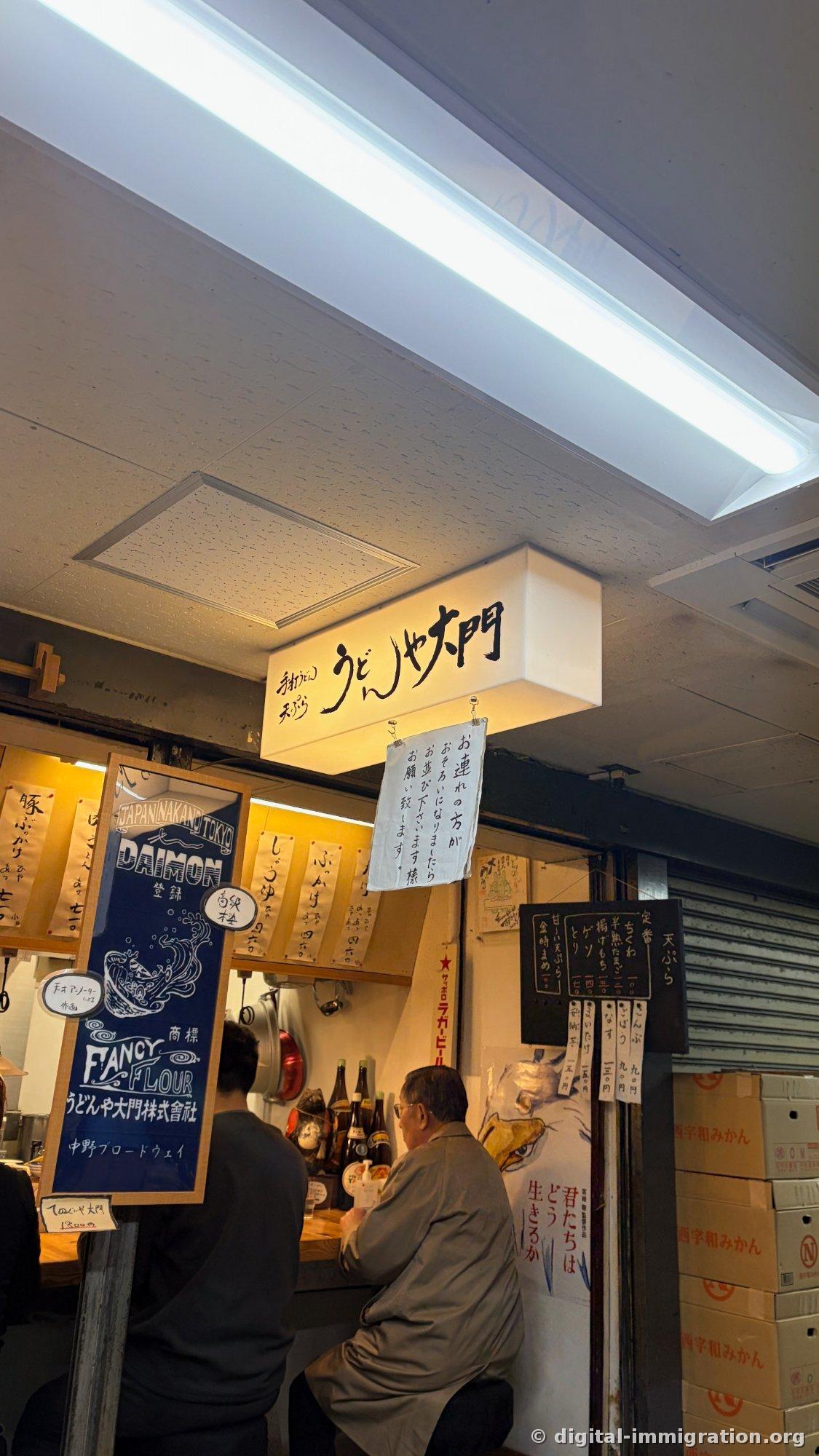
The handwritten notice below the sign tells you everything about this place's character. It says: お連れの方がお揃いになりましたらお並び下さいますようお願い致します—meaning you should only line up once everyone in your party is present. They're politely preventing the practice of one person claiming a seat ahead of time. For a shop running on just a few counter stools, this rule makes perfect sense. If you're alone, you actually have an advantage—the moment one seat opens, you're in.
Ordering — Start With the Paper Menu on the Wall
The menu is split between vertical paper strips on the wall and a blackboard. The vertical brush lettering with numerals written in kanji (七〇, 四六〇) startles first-timers. Basic udon varieties like bukkake (ぶっかけ), shoyu (しょうゆ), and butabakkake (豚ぶっかけ) are on the paper side, while tempura items are on the blackboard.
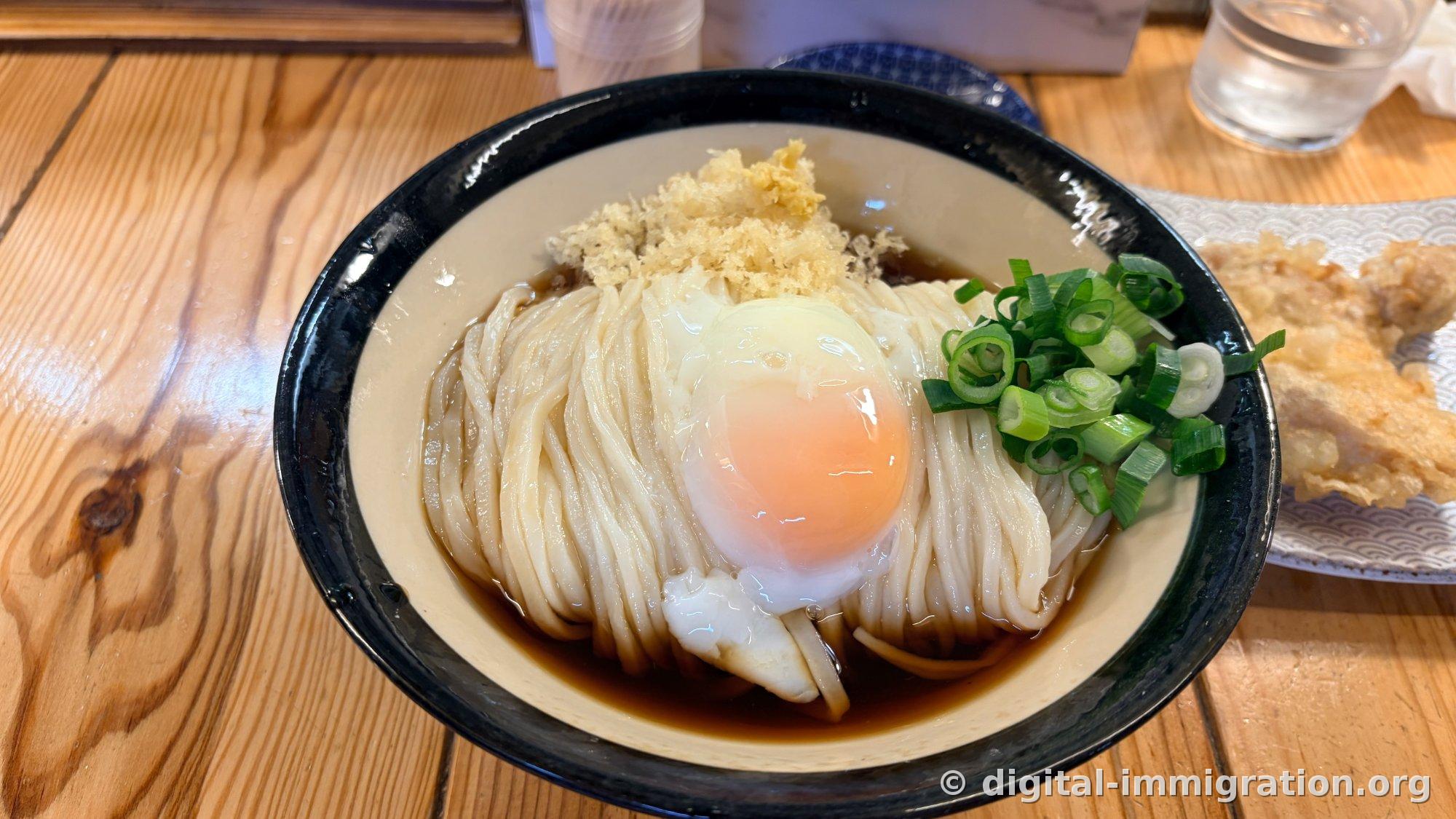
I was struck by what arrived. Atop the lightly-sauced bukkake sat an entire onsen egg, with generous piles of tempura scraps (tenkatsu) and grated ginger alongside. The scallions are cut thick, giving you a satisfying crisp bite.
The Noodles Are the Real Deal
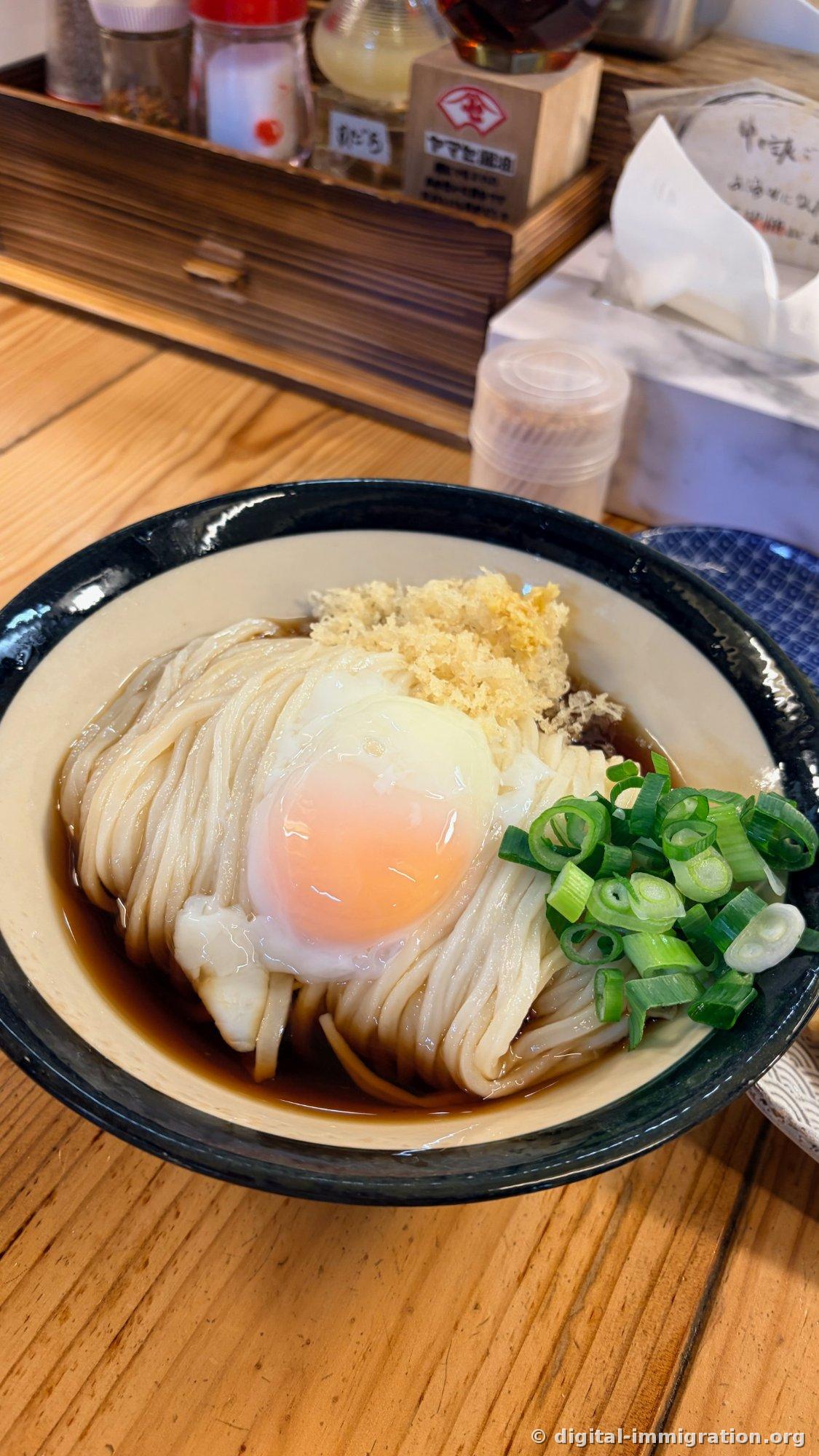
Let's talk about the noodles first—people come here for them. When you lift them with chopsticks, they don't just flop down. They have a springy resilience. The surface is smooth, but when you bite, the interior pushes back with real firmness. This must be the 'koshi' (弾力) that Sanuki udon is famous for.
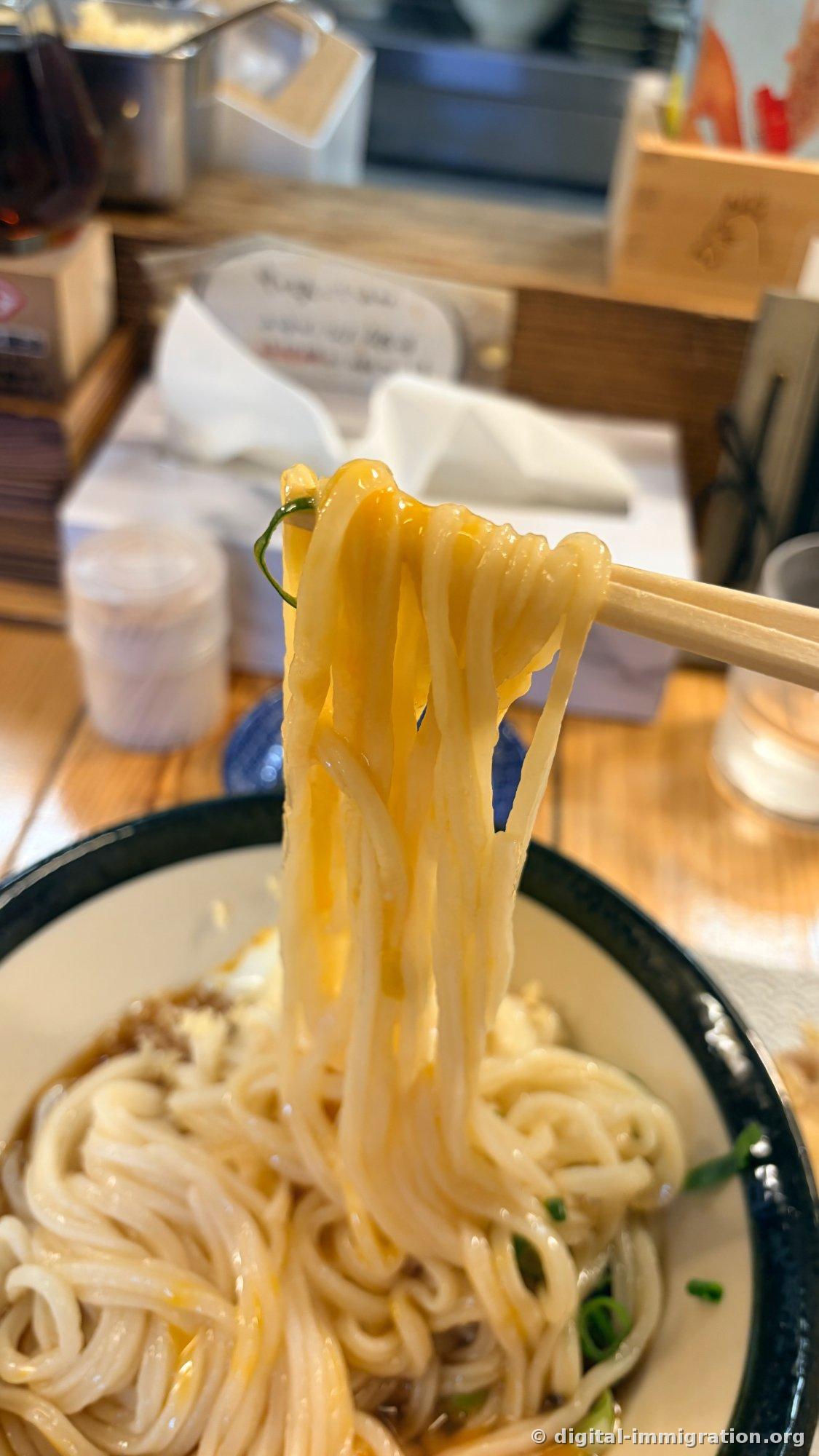
I'd recommend eating in stages. The first few strands, eat them without breaking the yolk—just coated in the soy broth. The wheat aroma rises straight up. Then crack the yolk and mix everything together, and the flavor transforms entirely. What was sharp and salty becomes soft and rich. It's like getting two different dishes in one bowl.
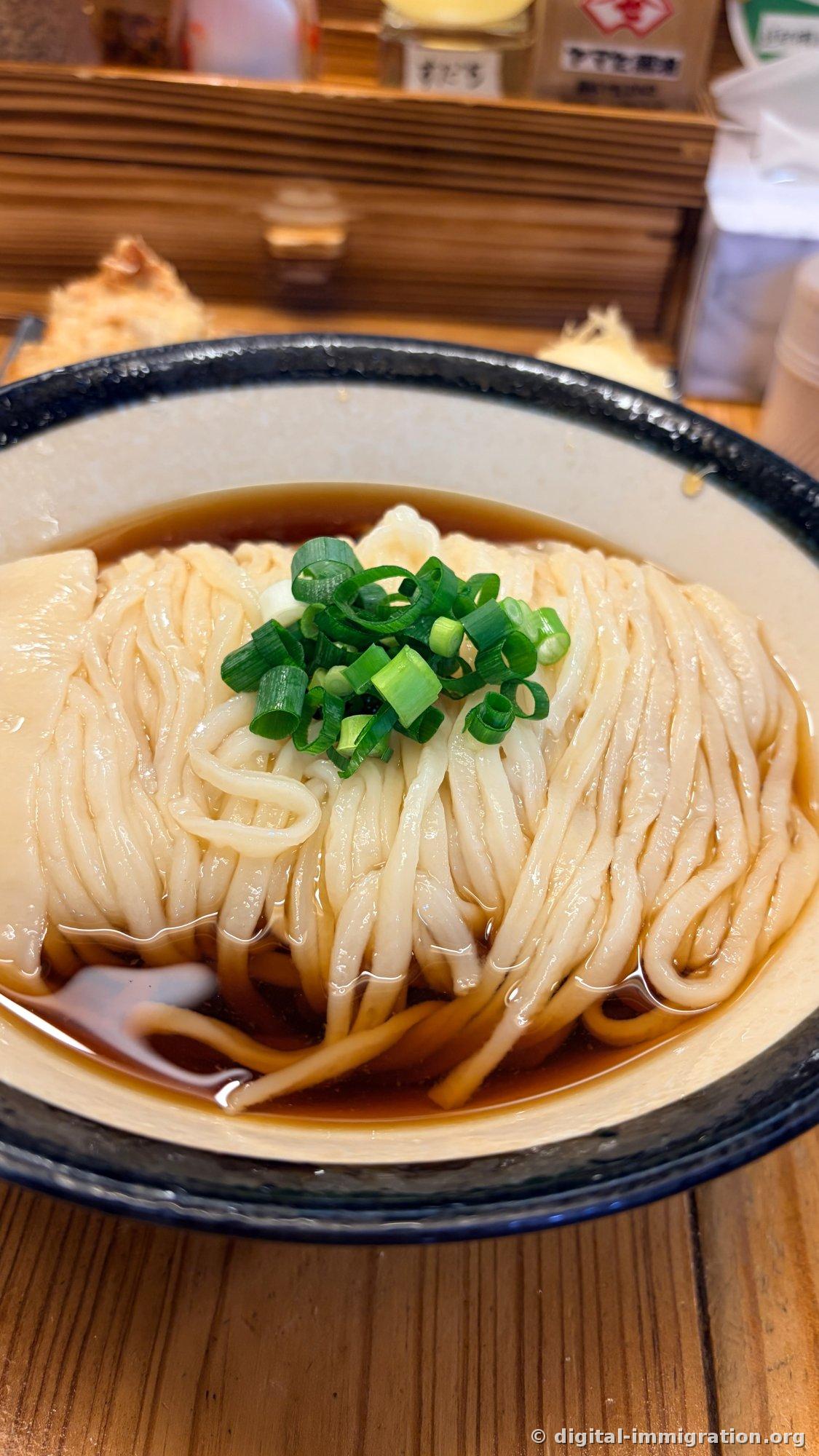
My companion ordered the version with minimal toppings, and actually, this is better for examining the noodles on their own. These were just boiled—the surface still glistens with a slight sheen of transparency. When you pick them up with chopsticks, each strand separates cleanly from the rest.
Tempura Is Ordered Separately
There's a reason 'てんぷら あつあつ' (piping hot tempura) is written large on the noren. It doesn't come with the udon—it's a separate order, made fresh to order. The blackboard lists items like chikuwa, soft-boiled egg, agemochi, squid, chicken, konbu, burdock, eggplant, and shiitake, mostly in the three-digit yen range. I'd recommend checking the current prices on the blackboard itself—since it's handwritten, things change.
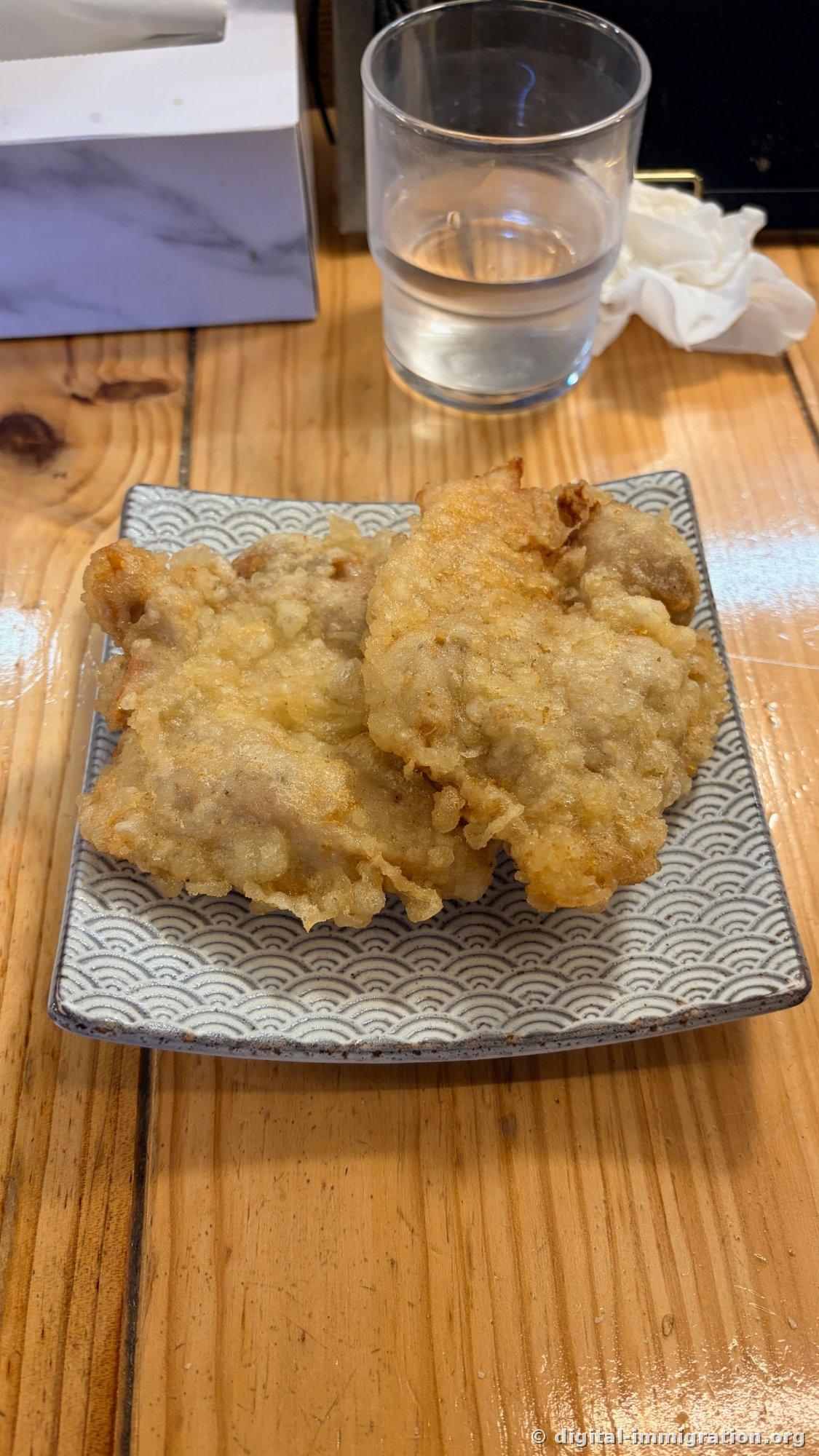
When the tori-ten arrived, steam rose from the plate. The batter isn't thick—crispy outside, but bite into it and the meat comes through immediately. Here's the cross-section:
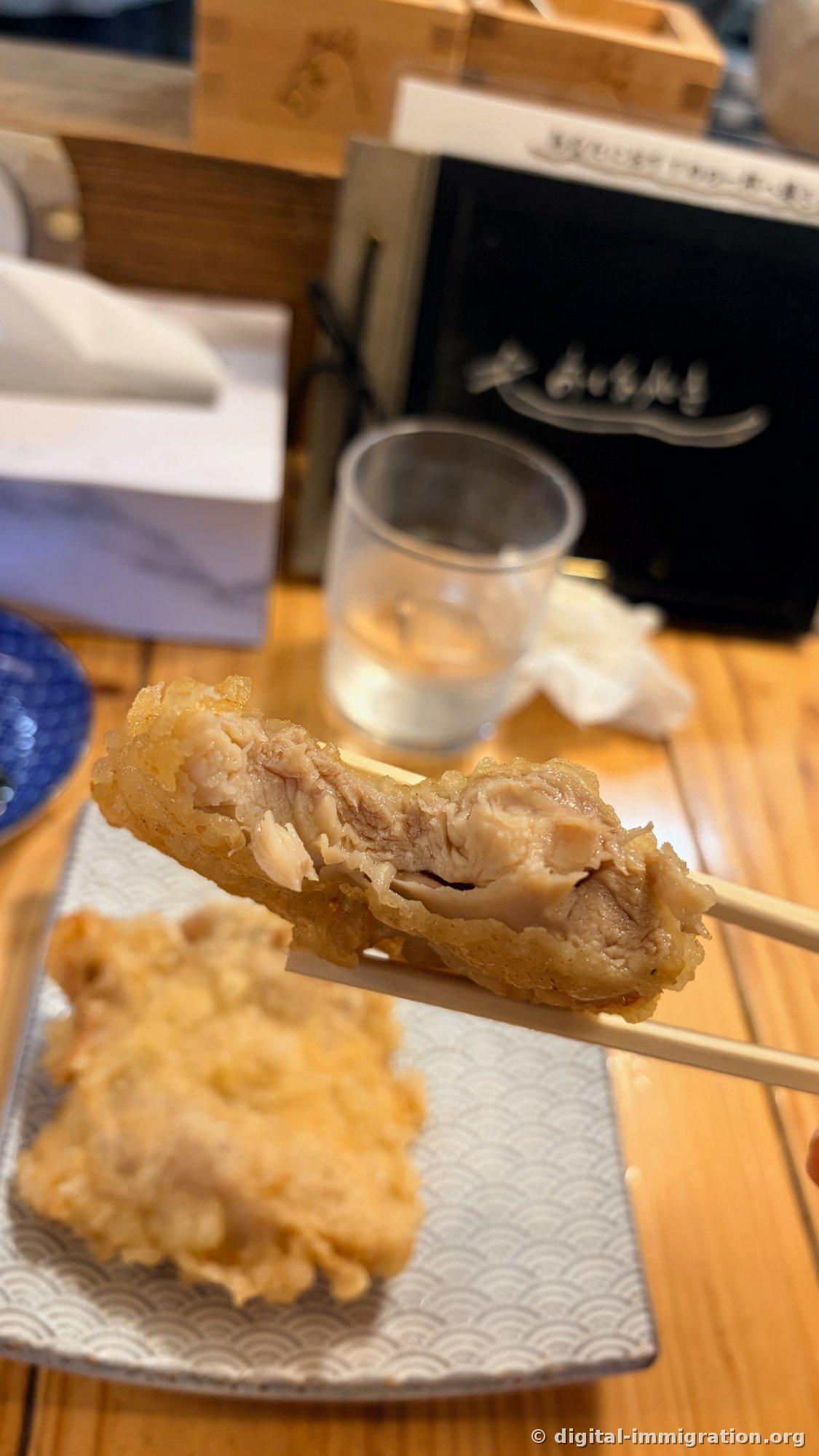
The white meat breaks cleanly along the grain, with juices still visible. The batter doesn't absorb much oil, so even eating both pieces doesn't leave you feeling heavy. A light dusting of salt is best—the udon broth is already salty enough.
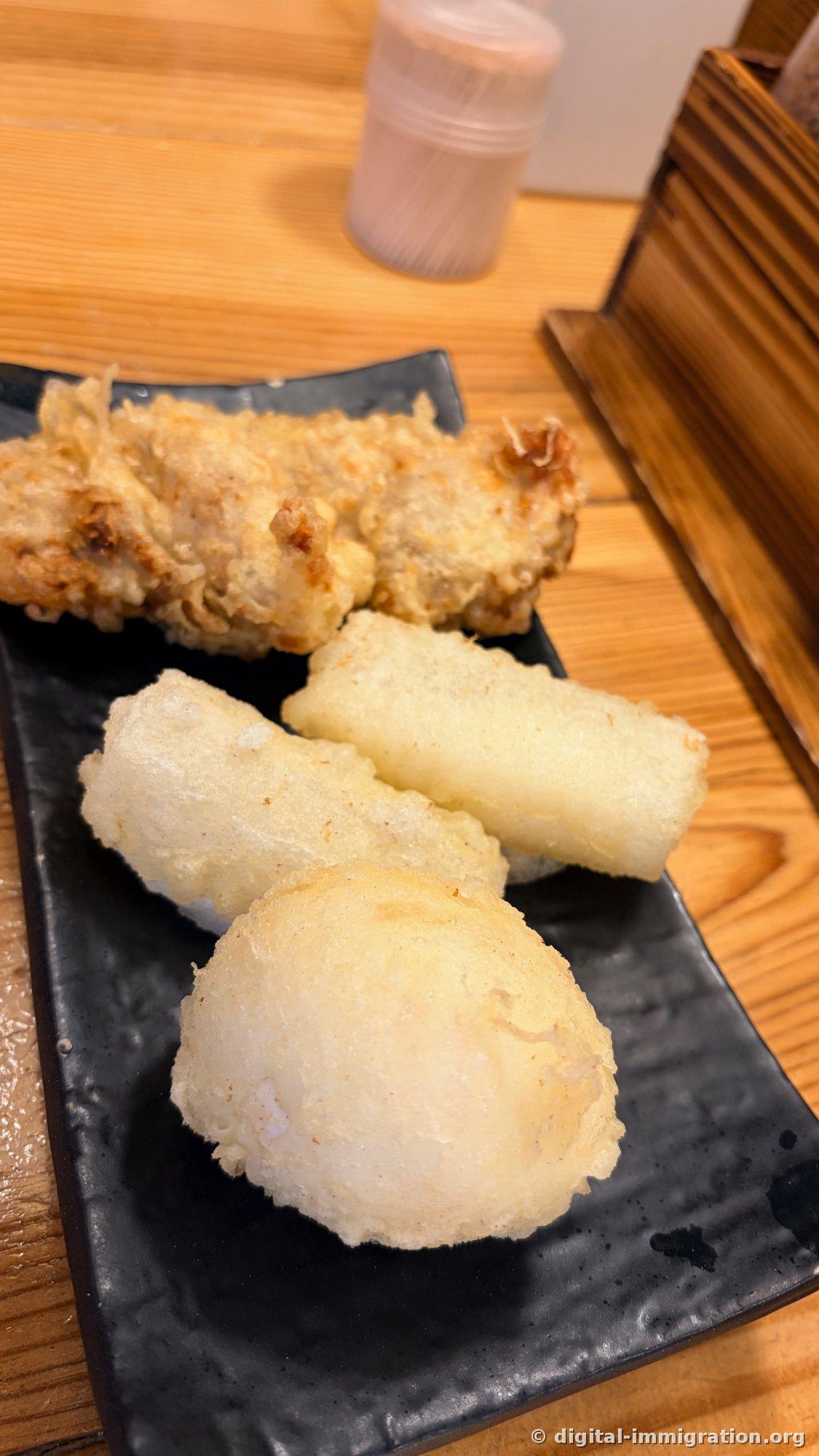
The agemochi we added turned out to be an unexpected discovery. Tempura batter on the outside, but mochi on the inside, so when you break it with chopsticks, it stretches long. You have to eat it right away while it's hot. Once it cools, it hardens. I took too long photographing it and the second piece got stiff. That was my mistake.
Beyond the Counter — Two Turtles and a Totoro Wooden Box
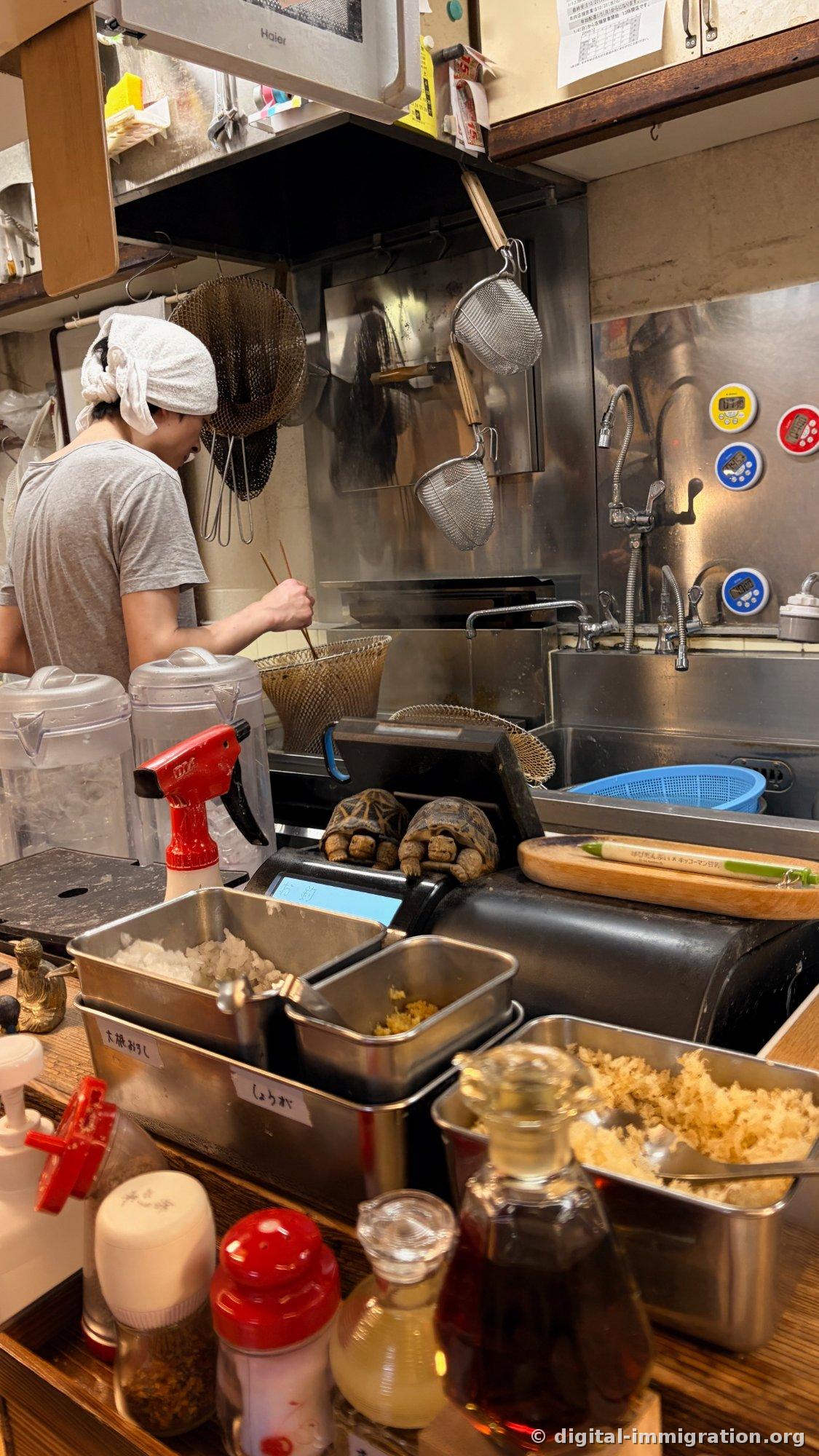
What's charming about this place is that the kitchen is completely open. Sitting at the counter, you can see everything—noodles being boiled, tempura being fried. But there are two turtles sitting on the register counter.
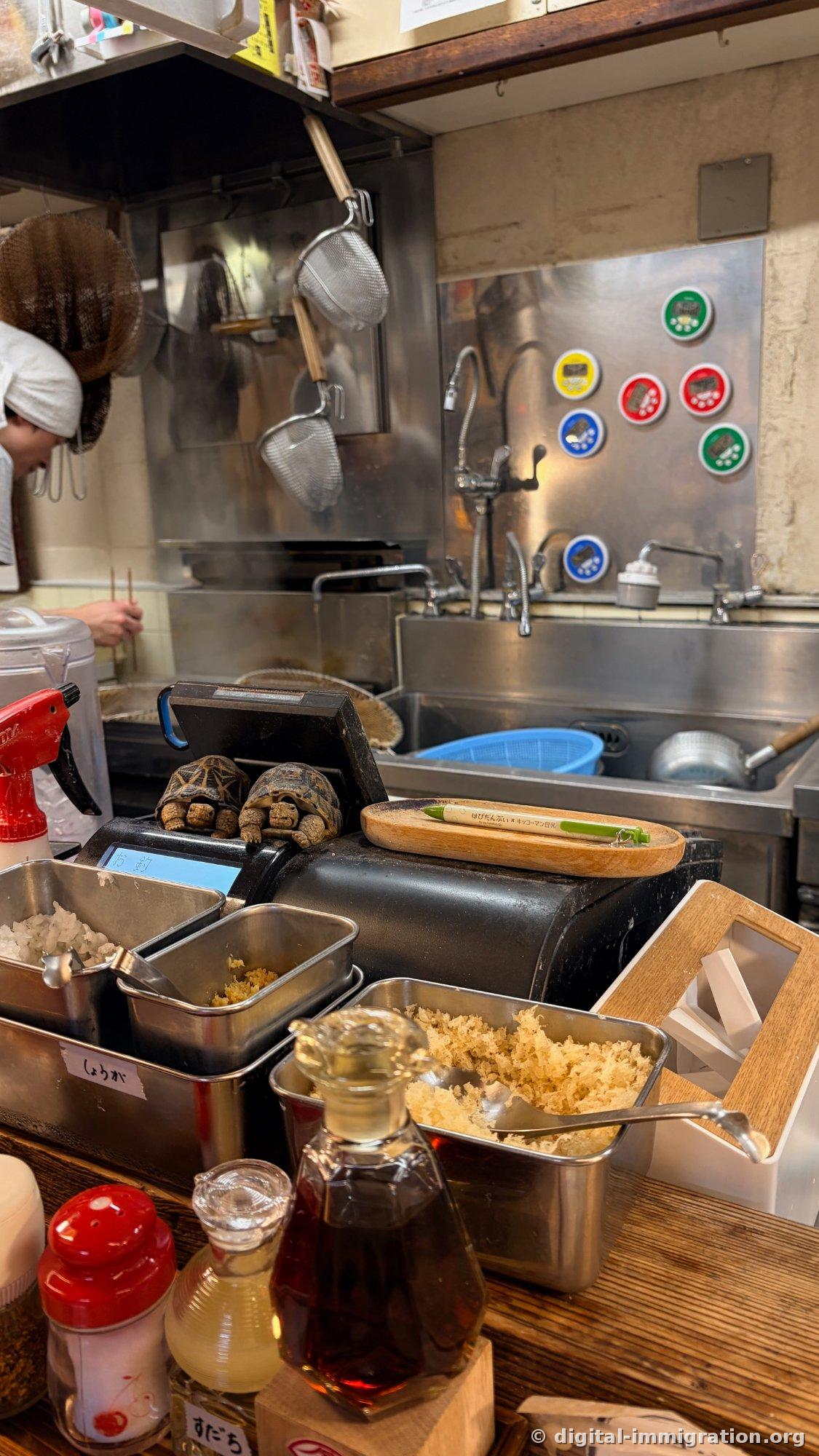
At first I thought they were decorations, but looking closer, they were moving. In front of them, grated daikon, ginger, and tempura scraps sit in labeled stainless steel containers—handwritten labels make it easy to tell what's what. On the wall hang seven or eight colorful timers. Looks like they're timing the cooking of different noodle thicknesses separately.
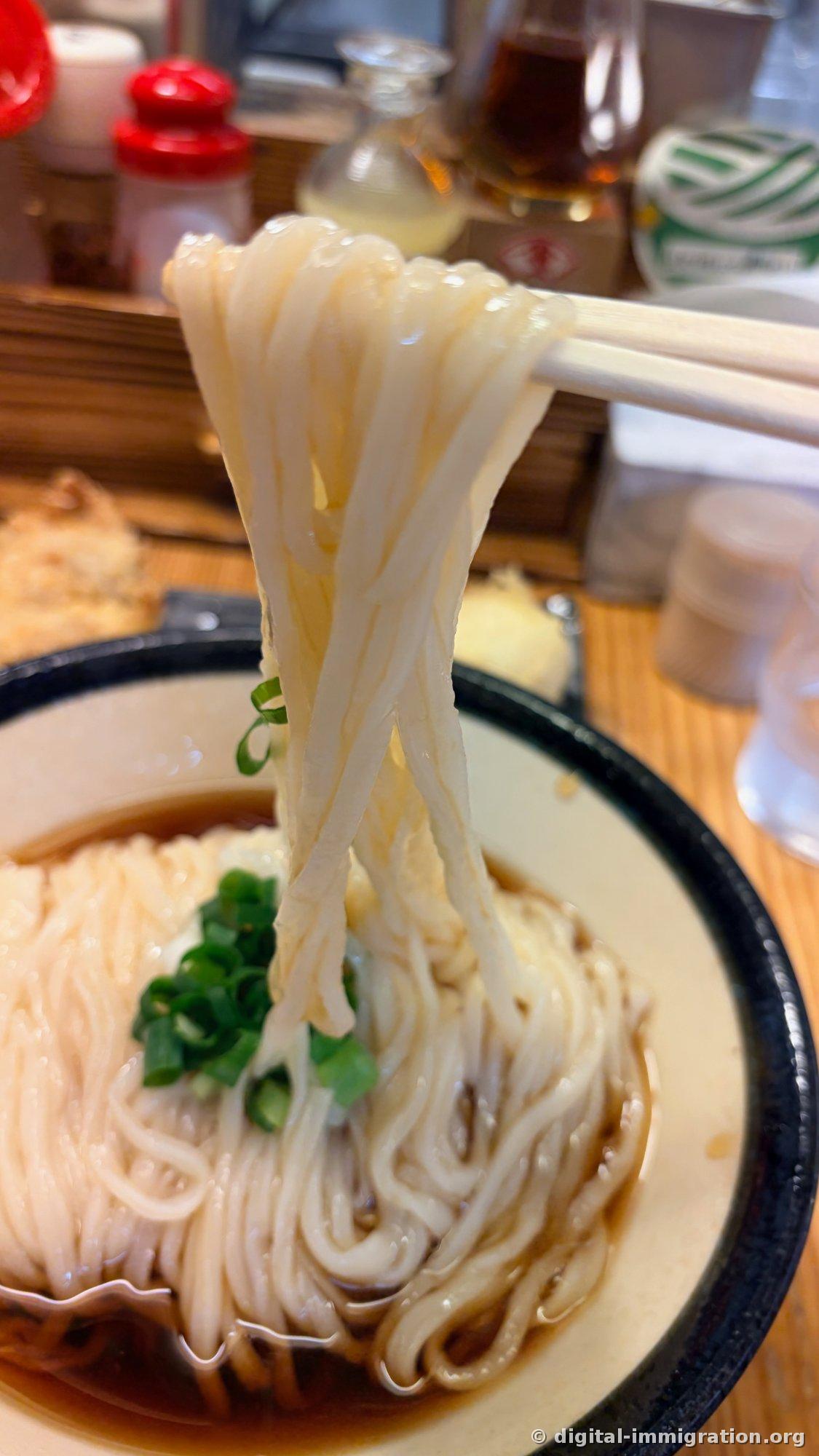
The cook, wearing a white headscarf, fishes out noodles with long chopsticks. The kitchen—if you can even call it that—is less a kitchen than a tight workspace. One person essentially handles the boiling, frying, and plating. That's when you understand why there are so few seats, and why turnover is so fast.
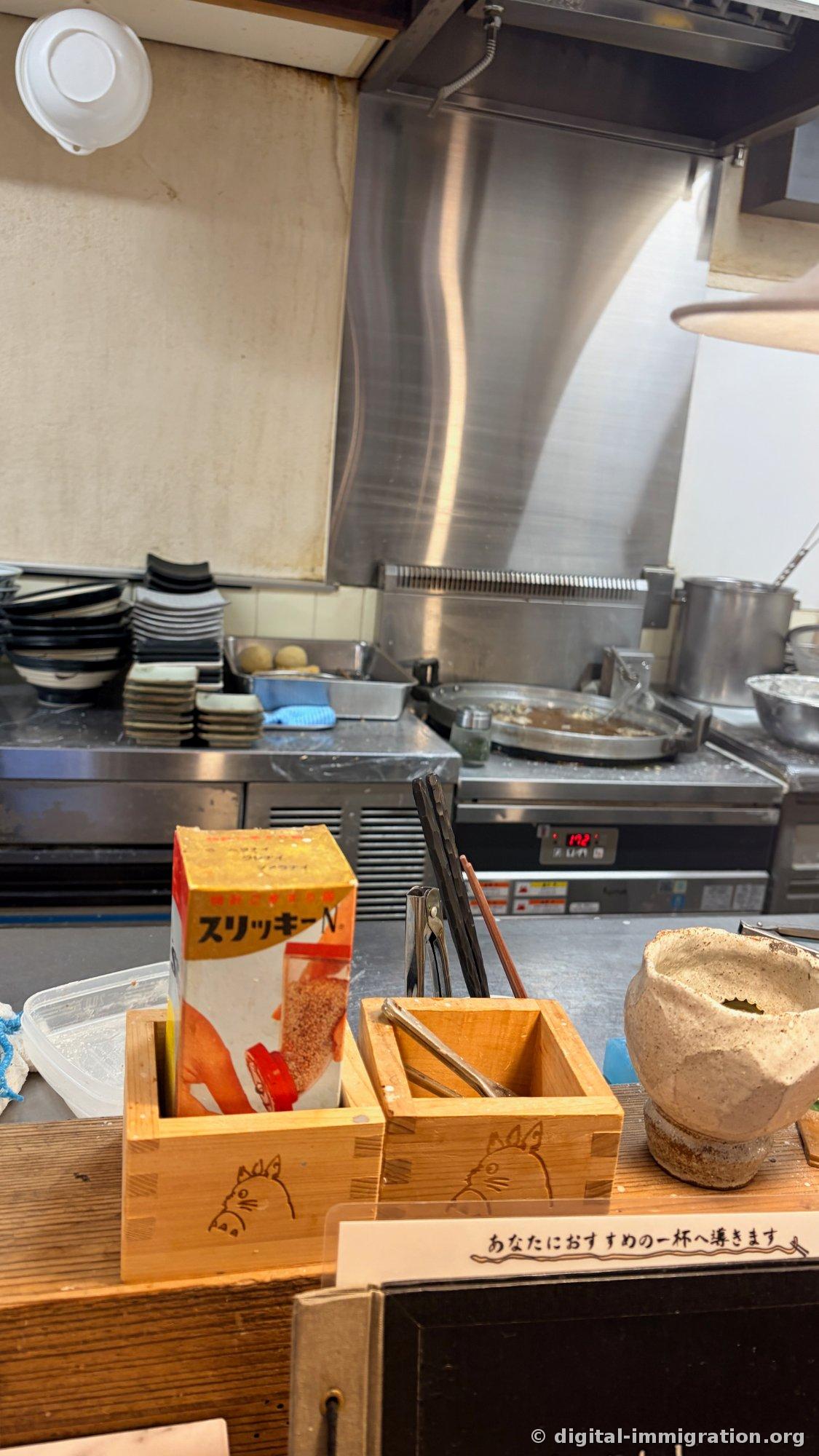
On the counter sit wooden boxes with Totoro faces carved into them. Inside are a sesame grinder and tongs—you can grind your own sesame right into your bowl. A note beside them reads: あなたにおすすめの一杯へ導きます—"We'll guide you to the perfect bowl for you." These small touches feel right for a place inside Nakano Broadway.
Location and How to Get There
From the north exit of JR Nakano Station, head straight along the Senmo shopping arcade for just under five minutes until you reach the Nakano Broadway entrance. Once inside Broadway, head downstairs toward the basement dining area and you'll spot the white noren curtain beside the corridor. The building itself is a maze—it's normal not to find it on your first try. Once you find the stairs down, you're halfway there.
Good things to know before you go:
- Going alone cuts your wait time dramatically. They only need one seat to open up.
- If you have a group, everyone must arrive before you line up. The shop explicitly requests this.
- Don't come with large luggage. Dragging a suitcase through the narrow Broadway corridors while standing for 30 minutes is not recommended.
- Tempura is a separate order—don't just get udon and leave. The fried items are half the experience.
- Hours and prices are based on handwritten notices, so they can change. Check on-site.
If you get hungry while browsing figures in Broadway, don't leave the building to eat somewhere else. Stay put, grit your teeth through a 30-minute wait, and eat here. Next time I'm in Nakano, I'm going right when they open. That'll definitely beat the thirty minutes I spent standing.
Read next
- From Akihabara's Chuo-dori to the Kanda River: A Record of Tokyo's Electronics District Revisited Multiple Times
Tokyo's Akihabara is a neighborhood where it's hard to say you've seen everything in a single visit. I've come multiple times across different seasons, and each time the signs chan…
Tokyo · Akihabara - Buying a Single ¥300 Year-End Jumbo Lottery Ticket at Nishi-Ginza Chance Center in Tokyo
Exit from the Hibiya exit of Tokyo's Shimbashi Station, walk toward the elevated highway for about three minutes, and suddenly you'll see a line of people stretching along the side…
Tokyo · Nishi-Ginza Chance Center - Ueno Ameyoko, the real magic starts after sunset — an evening walk from the Okachimachi Gate to Ueno Station
Every time I come to Tokyo, my feet find their way to Ueno Ameyoko (アメ横) without fail. This time I entered from the Okachimachi side and worked my way toward Ueno Station. I've met…
Tokyo · Ameya Yokocho Market