Two Pieces of Chu-Toro at Tokyo's Tsukiji Tamasuhi: A 4,000 Yen Midday Record
When choosing a sushi restaurant in Tokyo, I always wrestle with the same question. Do I sit at the counter and spend 20,000 yen for omakase, or do I settle for a decent spot in th…
Tokyo · Tsukiji Tamasushi
When choosing a sushi restaurant in Tokyo, I always wrestle with the same question. Do I sit at the counter and spend 20,000 yen for omakase, or do I settle for a decent spot in the 3,000-yen range? This time, I chose the latter, which is why I ended up at Tsukiji Tamasuhi (築地玉寿司). Despite its Tsukiji name, this restaurant has multiple locations throughout Tokyo, and the one where I sat was in the Shinjuku area. The map pin points there too. If you're reading this with plans to walk all the way to the Tsukiji Outer Market alley, check which branch first.
Five Minutes in Front of the Entrance Menu Board
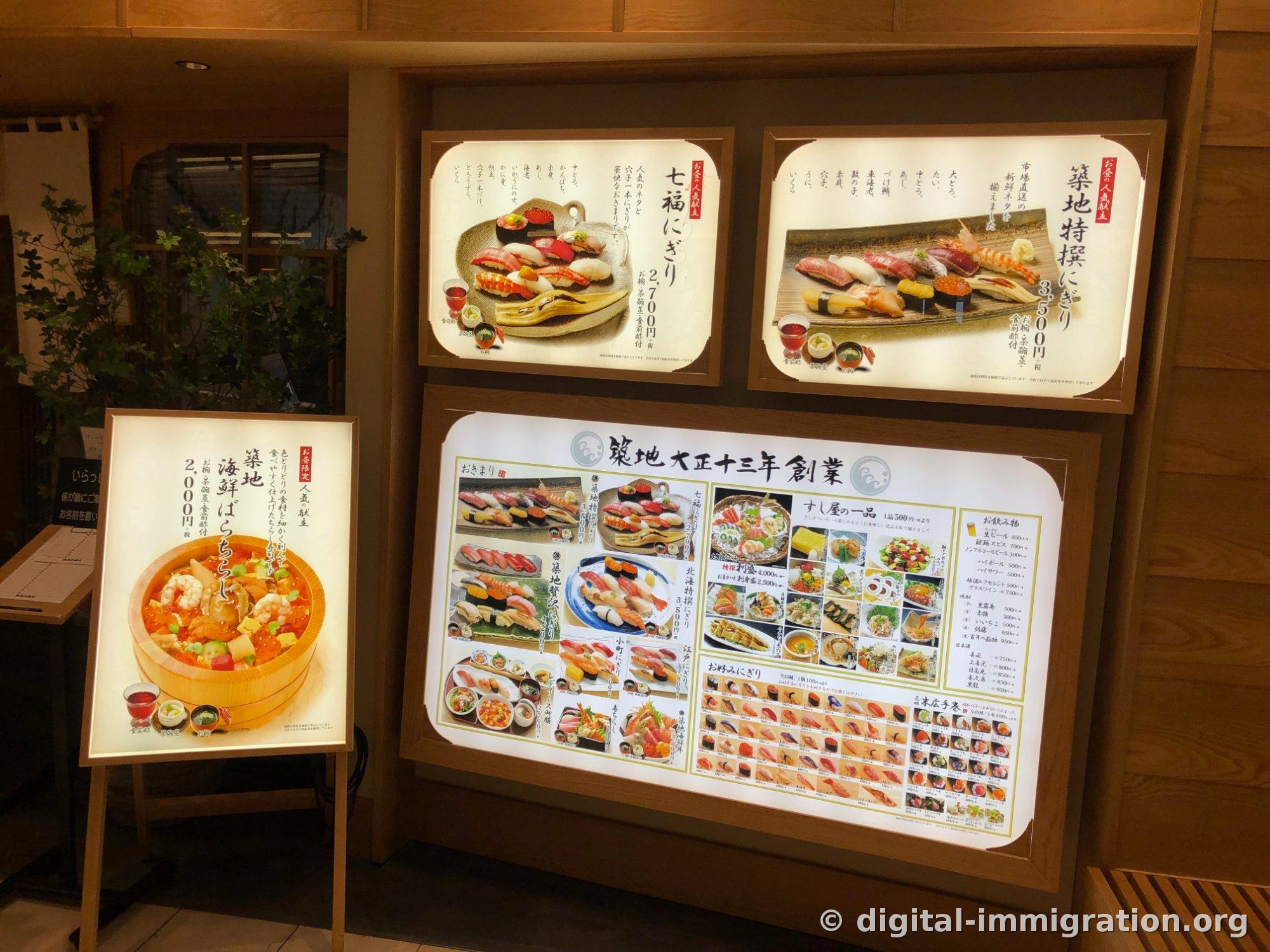
Three light boxes with menus hang in front of the restaurant door—that distinctive Japanese restaurant signage where photos look exactly twenty percent more appetizing than the real thing. I spent some time here deliberating. The popular lunch specials listed were 七福にぎり (Shichifuku Nigiri) at 2,700 yen and 築地特撰にぎり (Tsukiji Tokusen Nigiri) at 3,500 yen. Both came with broth, chawanmushi, and pre-meal vinegar appetizer. On a separate easel to the left, the lunch-only 築地海鮮ばらちらし was 2,000 yen.
The crucial detail was the +税 next to the prices. Everything was tax-excluded, so the actual bill would be ten percent higher. That 3,500-yen set becomes 3,850 yen. If you just scan a Japanese restaurant's menu with your eyes and budget accordingly, you get a slight shock at checkout. The larger menu board below listed sashimi platters (特撰刺盛 4,000 yen, おまかせ刺身盛 2,500 yen), sushi restaurant appetizers from 500 yen, rolls at 200 yen each, draft beer and highballs in the 500-yen range, and Yebisu bottled beer in the 700-yen range. The pricing meant you could add drinks without dramatically inflating the bill. The menu board's center read 「築地 大正十三年創業」—established in Taisho 13, or 1924.
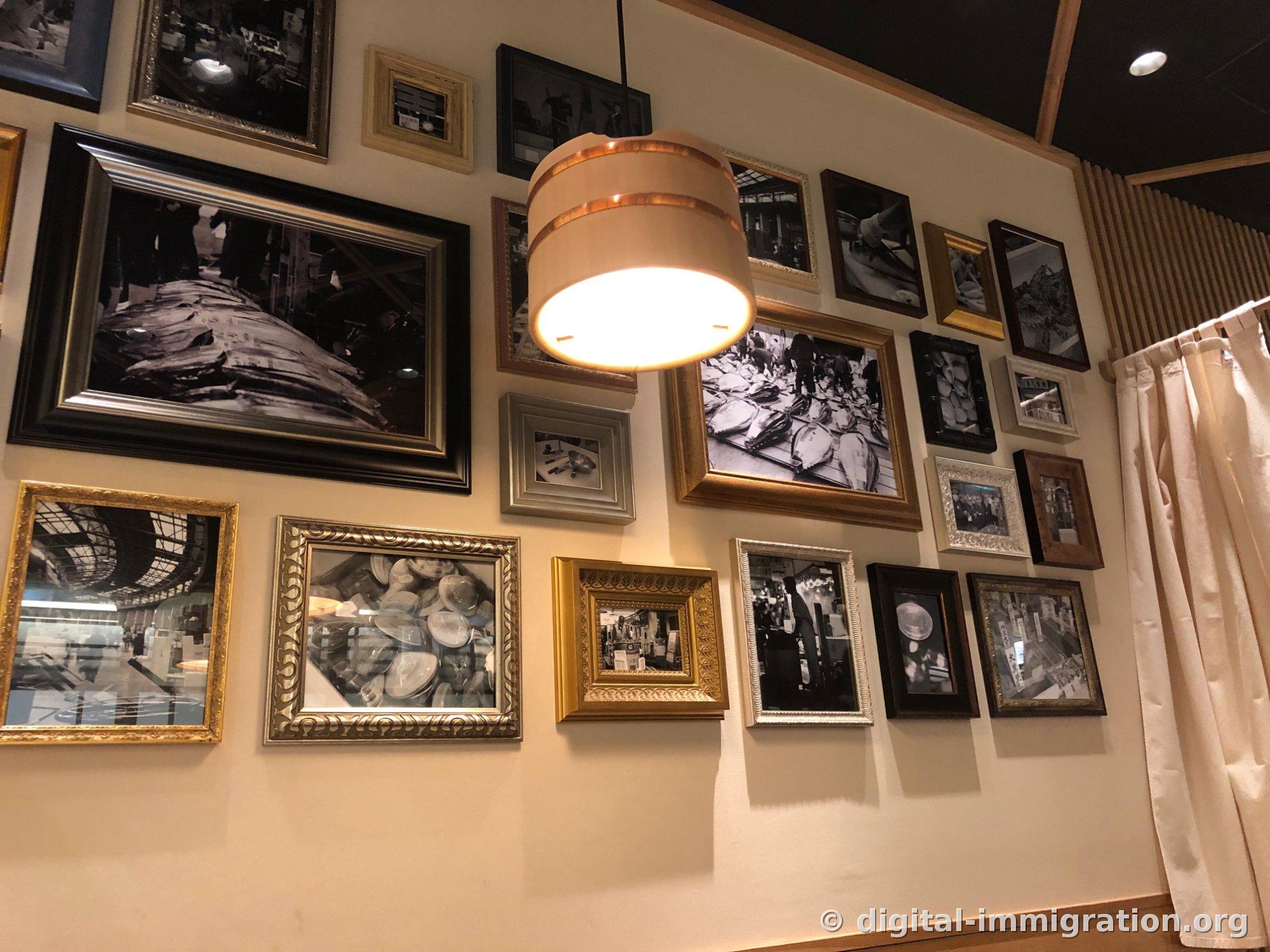
Vintage Black-and-White Photos of Tsukiji Covering One Wall
Inside, one wall is densely covered with framed photographs. The frames vary in size and style, but the content is unified: old Tsukiji Market scenes. Tuna sides lying in rows on ice, brokers hunched over, assigning prices. The cast-iron framework of the auction house's arched roof. Heaps of shellfish piled on wooden boards. One silver frame holds just a few knives.
The ceiling light fixture is shaped like a sushi rice tub (hangiri). It's a wooden barrel with a copper rim, hung upside down exactly as is. I didn't notice it on first sitting; only after looking up did I realize—ah, that's a rice tub. The restaurant doesn't bother explaining such things. Sitting beneath these photos, you can't help but keep thinking about where the tuna you're eating came from and how it got here.
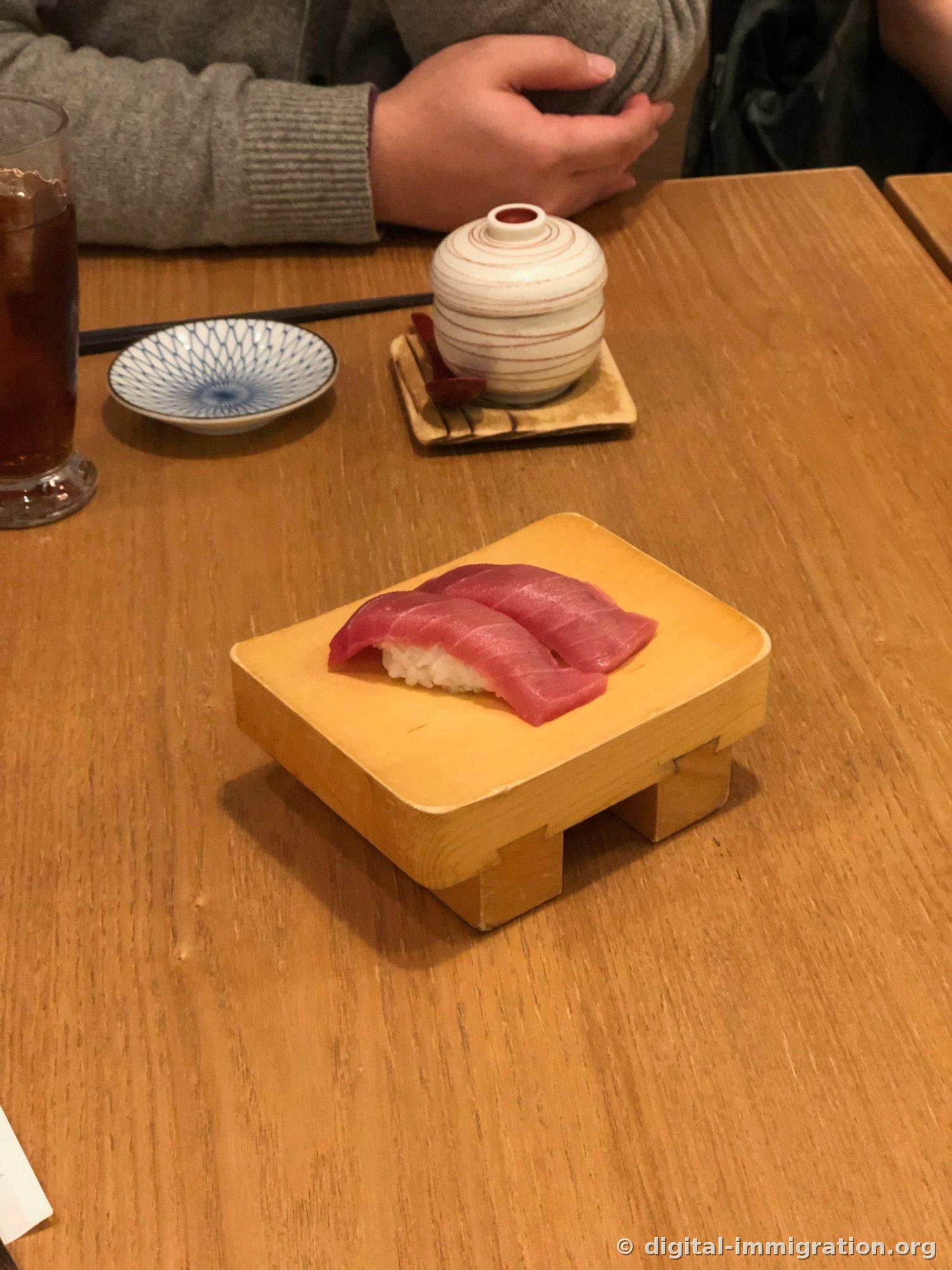
How Two Pieces of Chu-Toro Are Served
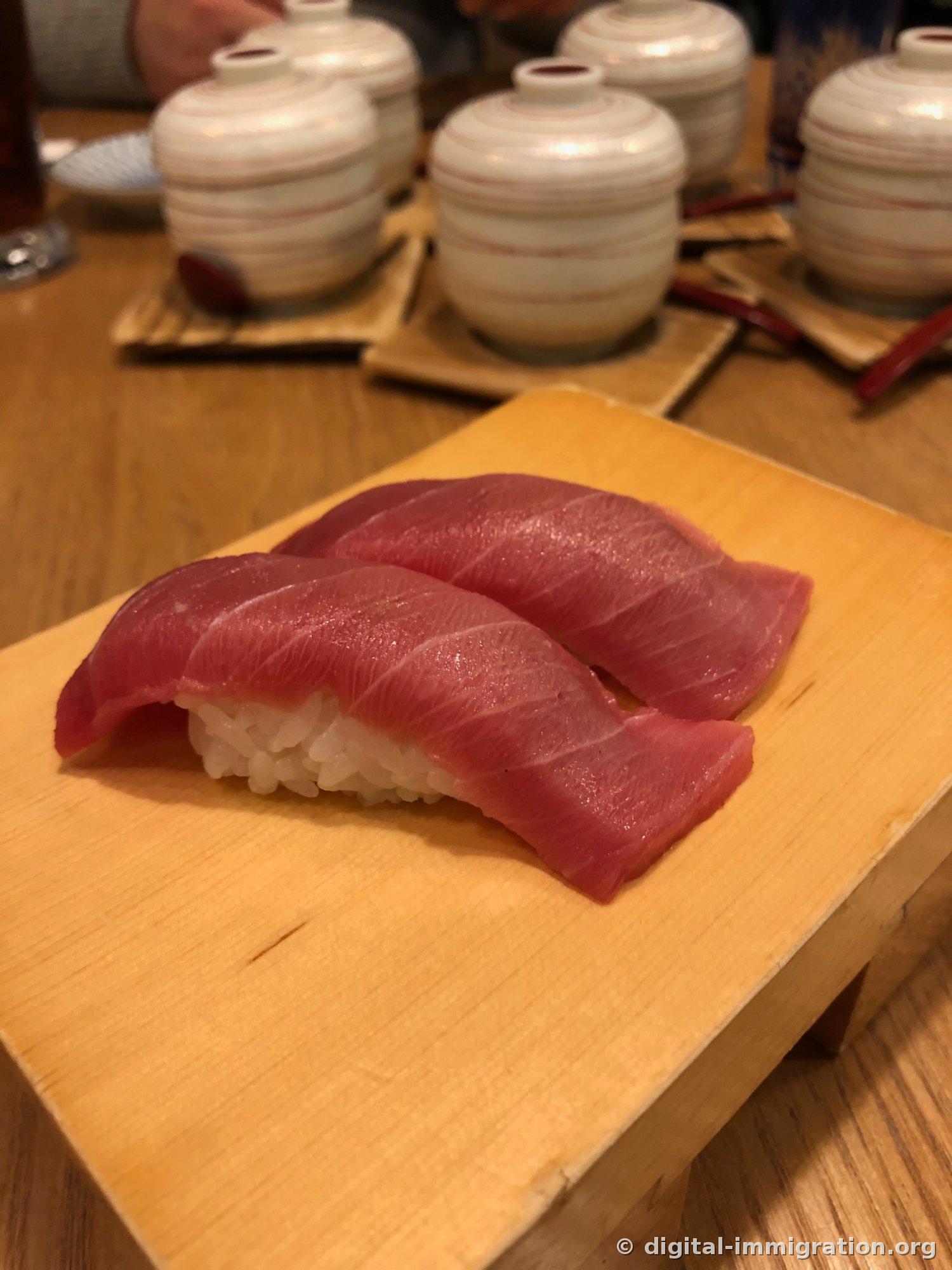
My first order arrived as two pieces of tuna on a wooden geta (stand). Just two pieces, centered on a wide wooden board. Beside it sat a lidded chawanmushi cup on a bamboo rest, with a soy sauce dish and black chopsticks. The white space around the pieces made the plate look almost empty—yet it made the two pieces appear larger. The fish was indeed generously draped over the rice.
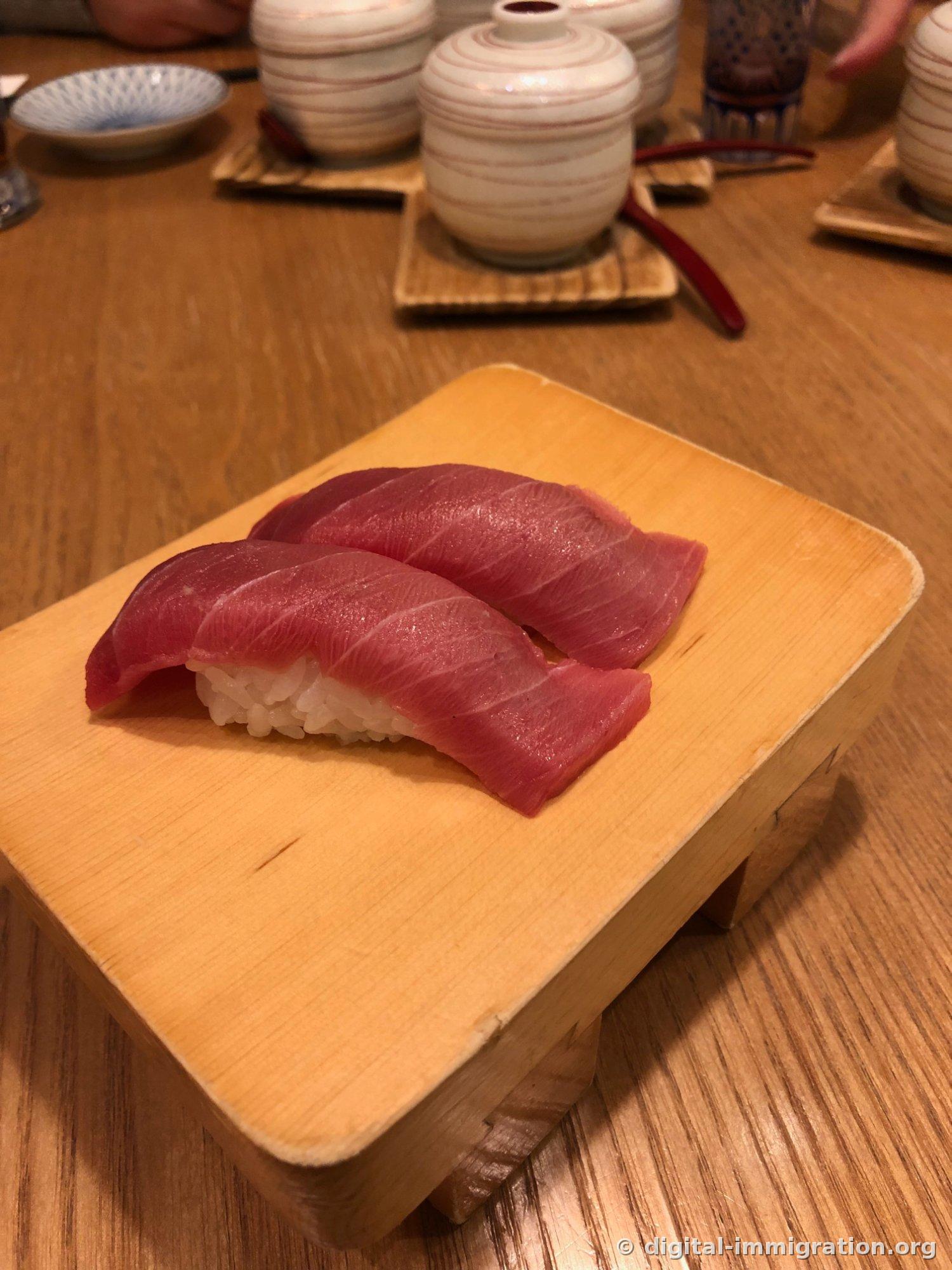
Looking closer, the grain of the flesh was visible. Red akami and white fat layers overlapped in diagonal lines, with pale pink fading at the edges. Chu-toro. The surface shimmered thinly with oil under the light. Placing one piece whole in my mouth, it started cold but began melting from the bottom before I even chewed. The rice was lukewarm and the vinegar assertive. This restaurant's shari emphasizes sourness over sweetness, likely to balance the rich toro.
Before finishing both pieces, I took another photo. In the background, six or so chawanmushi cups in the same pattern lined up in a row—each set came with one, for our whole party. Hot chawanmushi tastes best eaten first, before the sushi arrives. I fiddled with my camera and ended up eating mine lukewarm. Next time, I'll open the lid right away.
One Plate of Assortment—with Sea Urchin and Cod Roe
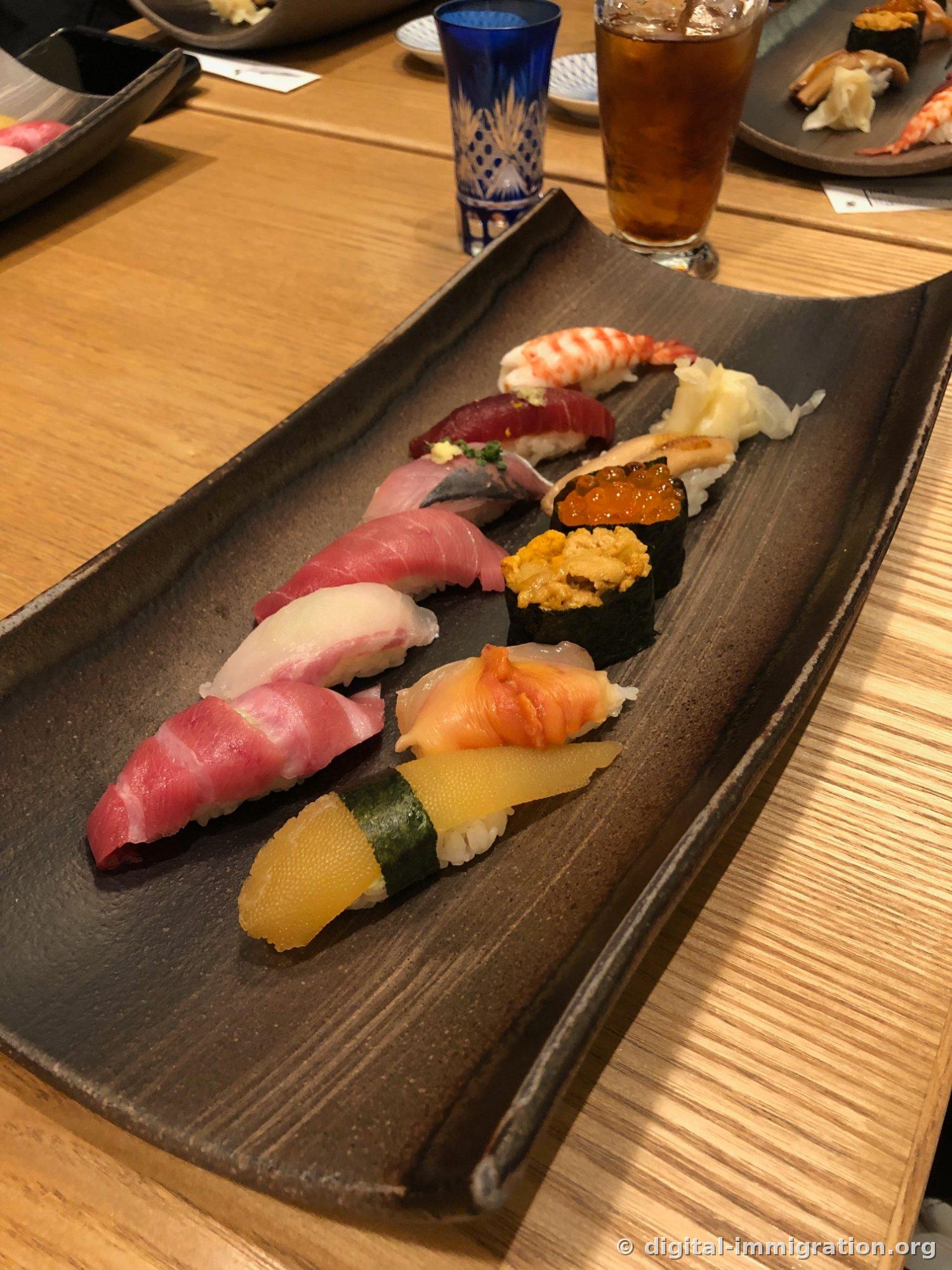
The assortment that came with the set was arranged diagonally on an elongated dark brown ceramic plate. Starting from the lower left: what looked like belly toro, white fish (yellowtail or flatfish), red tuna, mackerel with its distinctive skin pattern like shimesaba, ruby-tinted marinated tuna, and boiled shrimp. Lower right: nori-wrapped cod roe, red shell clams, uni and ikura gunkan wrapped in nori, and one piece of anago.
Here the value of the set became apparent. Few 3,000-yen lunch sets include separate uni and ikura gunkan pieces. The uni grains held their shape, yielding sweetness rather than fishiness. My only disappointment was the mackerel—the vinegar marinade felt slight by my preference, and it balanced only once I added a touch of ginger. The ginger (gari) heaped at the right edge was generous.
Fried Shrimp and Gratin Ordered at the Sushi Restaurant
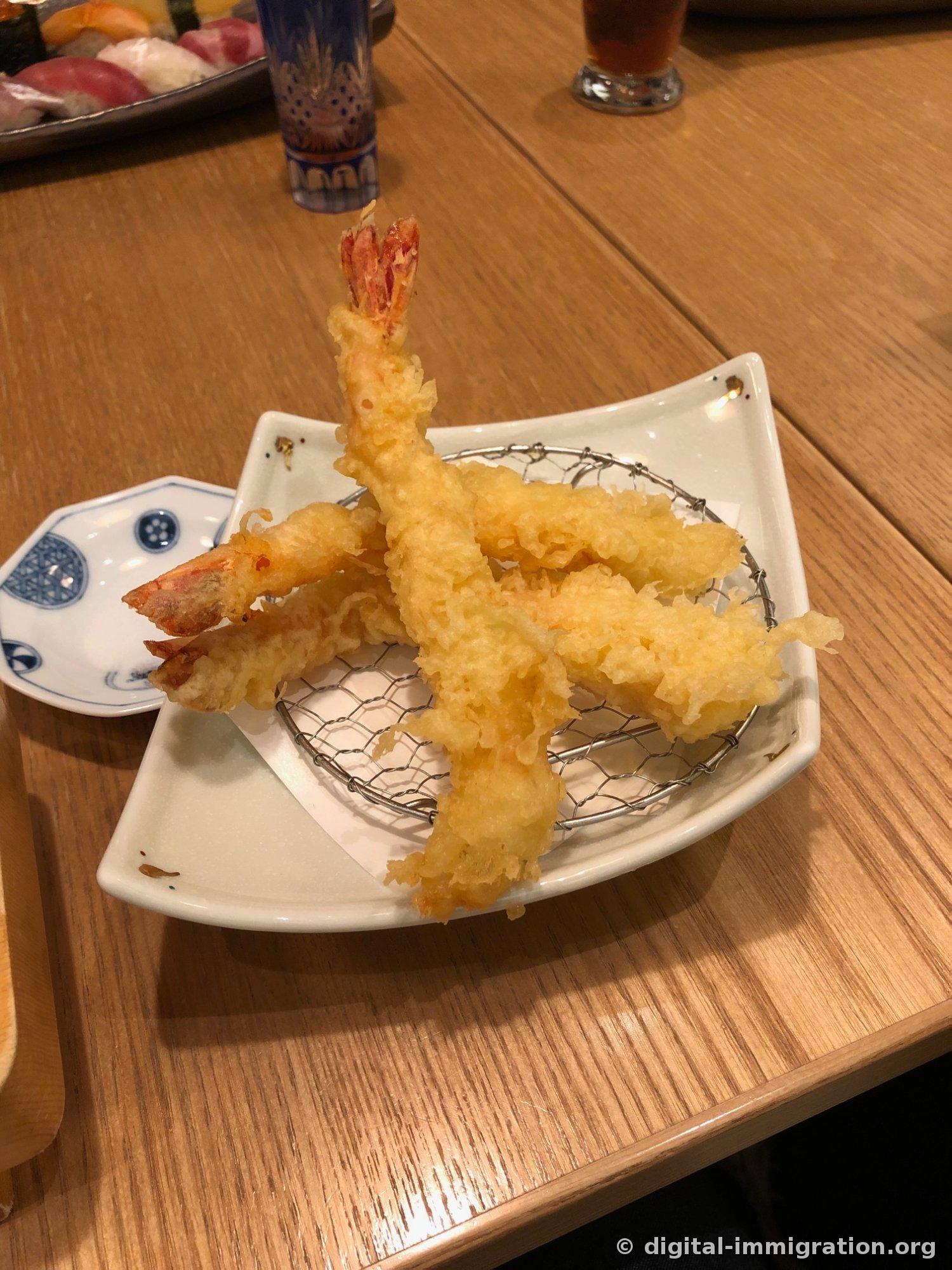
Our party included someone uneasy about raw fish, so we added two side dishes. The fried shrimp arrived on a white square plate with a metal mesh beneath it, standing upright. The batter was thin and wispy—chopsticks picking it up dislodged crumbs. Arranging the tails upward seemed designed to prevent sogginess as it cooled. No salt was provided separately; we dipped it in the soy sauce from an adjacent dish.
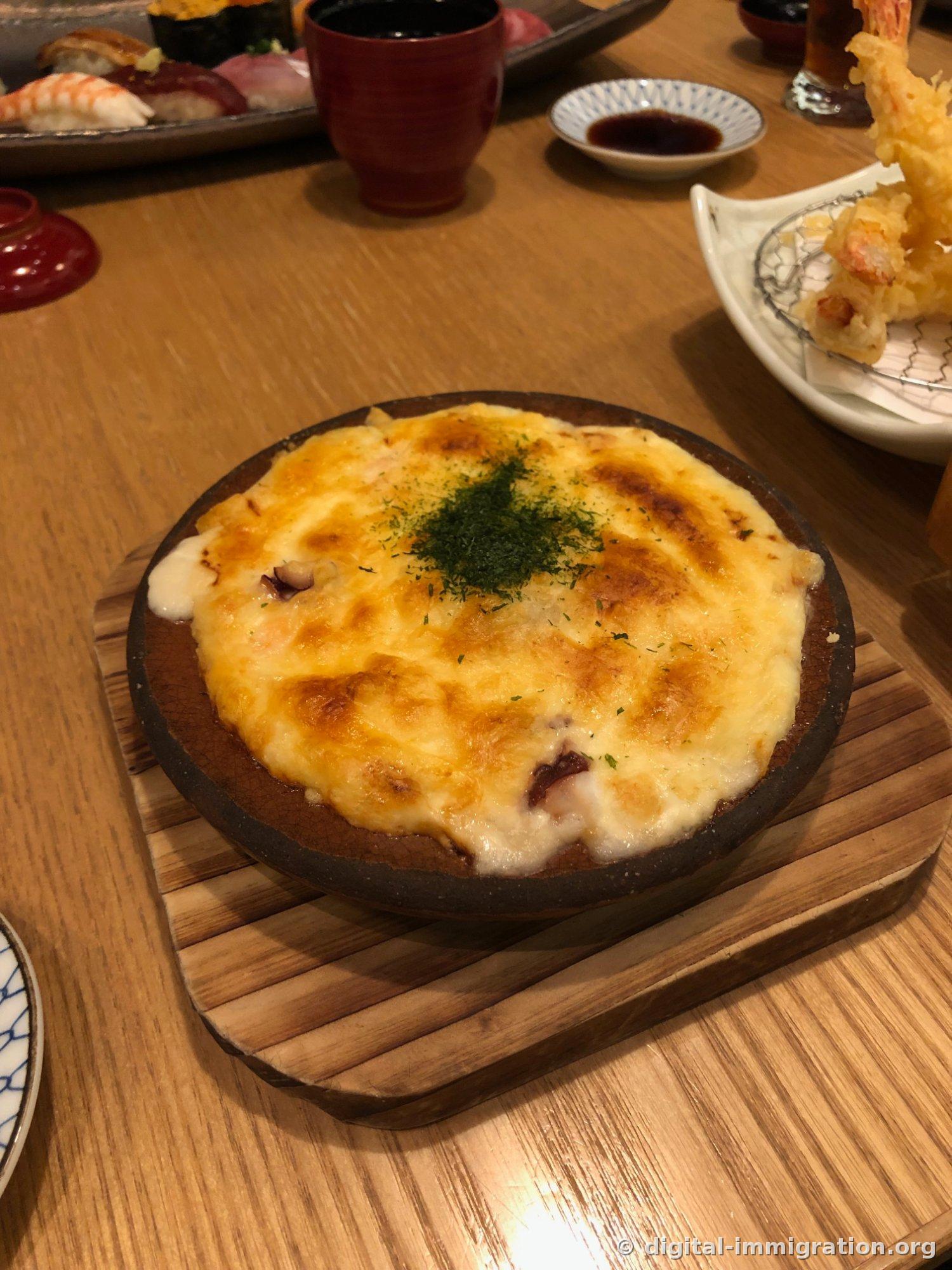
The seafood gratin I ordered second was an unexpected choice. It arrived in a ceramic bowl on a wooden rest, the cheese covering it completely and browned in patches, with a heap of aonori powder down the center. Steam rose from it. Spooning into it revealed squid and shrimp underneath. I wondered why I'd order this at a sushi restaurant, but the raw-fish-averse member of our party ended up clinging to this bowl. However, alternating with sushi made my mouth feel heavy. Better to eat them separately.
Tea and a Bottle with a Korean-Language Label
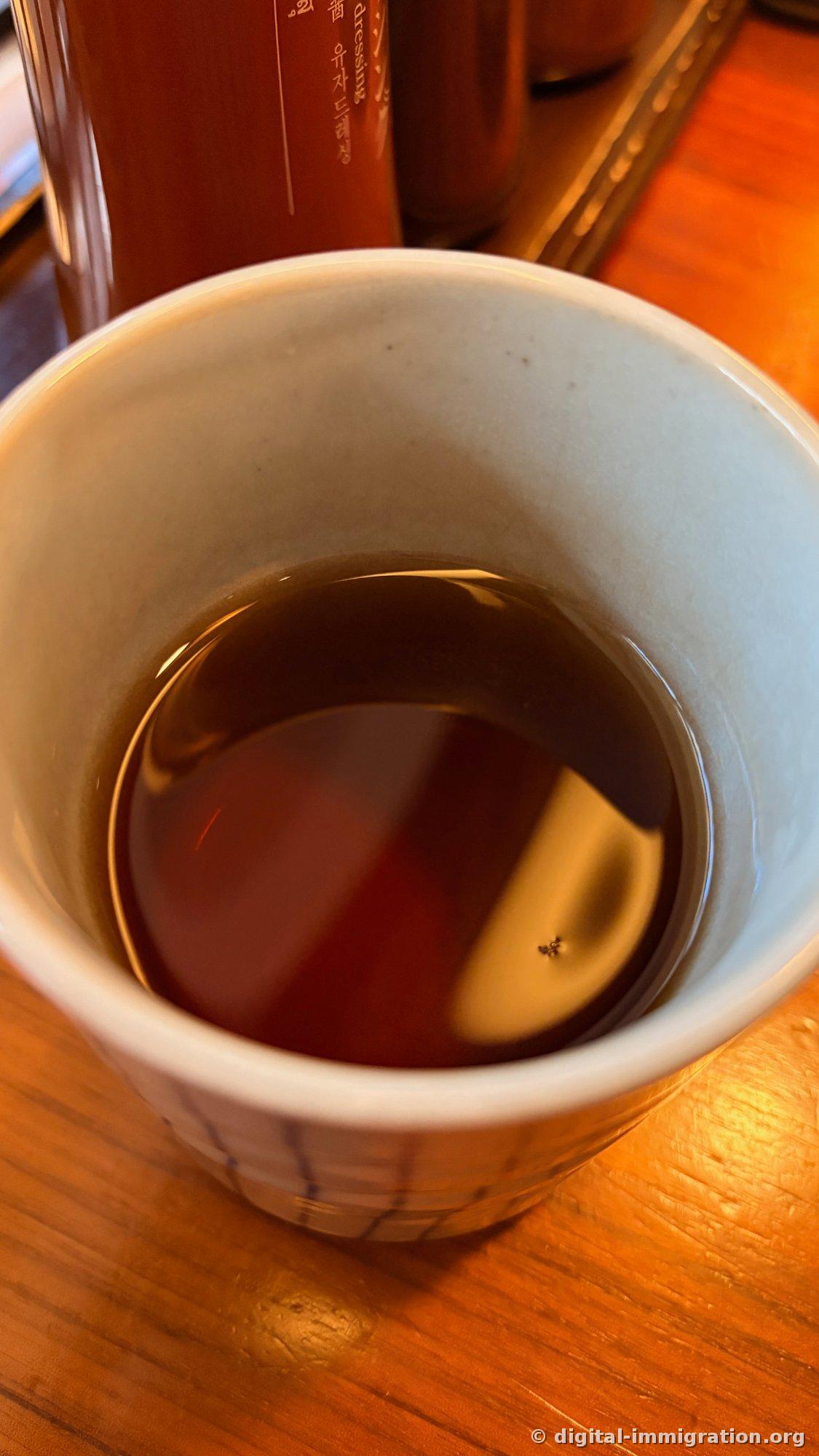
The agari (hot tea) at a sushi restaurant came in a thick ceramic cup, poured generously. A deep hojicha-type color that cleaned the palate after rich toro. While photographing the cup, I noticed Korean characters on a bottle standing behind it. A label reading 「유자 드레싱」 (yuzu dressing). Finding a Korean-language condiment label on a Japanese restaurant table isn't common, so I took a closer look. I never did ask what yuzu dressing had to do with sushi. I've made a note to ask next time.
Location and Practical Information
The branch where I sat is marked on the map below. It's within walking distance east of Shinjuku Station. Since Tamasuhi has multiple locations, searching for 「築地玉寿司 + branch name」prevents getting lost. Branches inside department stores or commercial complexes follow those buildings' hours, so if you're aiming for late evening, verify closing times separately.
Good things to know before visiting:
- All menu prices are tax-excluded (+税). Add ten percent when budgeting.
- Lunch-only specials exist. The barachirashi on the entrance easel at 2,000 yen is the most affordable option.
- Appetizers start at 500 yen, so one sushi set plus one or two side dishes works well. If your party includes someone who won't eat raw fish, fried items or gratin keep things moving.
- The chawanmushi served with sets tastes best while hot.
- There's a wait list sign at the entrance. During lunch rush, you may not get seated immediately.
- The prices listed here were on the menu board when I visited. They may change, so confirm on-site.
When you can't spare 20,000 yen for sushi in Tokyo, getting this caliber of plates in the 3,000-yen range while seated is where this restaurant's value lies. You miss the tension of a craftsman placing each piece in front of you at the counter. Instead, you sit beneath 1920s Tsukiji photographs, watch your table mates shovel in gratin, and leave satisfied and comfortable. That day, that was what I needed.
Read next
- From Akihabara's Chuo-dori to the Kanda River: A Record of Tokyo's Electronics District Revisited Multiple Times
Tokyo's Akihabara is a neighborhood where it's hard to say you've seen everything in a single visit. I've come multiple times across different seasons, and each time the signs chan…
Tokyo · Akihabara - Buying a Single ¥300 Year-End Jumbo Lottery Ticket at Nishi-Ginza Chance Center in Tokyo
Exit from the Hibiya exit of Tokyo's Shimbashi Station, walk toward the elevated highway for about three minutes, and suddenly you'll see a line of people stretching along the side…
Tokyo · Nishi-Ginza Chance Center - Ueno Ameyoko, the real magic starts after sunset — an evening walk from the Okachimachi Gate to Ueno Station
Every time I come to Tokyo, my feet find their way to Ueno Ameyoko (アメ横) without fail. This time I entered from the Okachimachi side and worked my way toward Ueno Station. I've met…
Tokyo · Ameya Yokocho Market