Twelve Skewers at a Shinjuku Alley Izakaya: An Evening at Tokyo Robata-tō Oden Coronagirī Shinjukuten
In Tokyo's Shinjuku, just one block off the main street toward Nishi-Shinjuku, neon signs suddenly crowd together. Robata-tō Oden Coronagirī Shinjukuten is an izakaya in such an al…
Tokyo · Robata Oden Coronagirai Shinjuku-ten
In Tokyo's Shinjuku, just one block off the main street toward Nishi-Shinjuku, neon signs suddenly crowd together. Robata-tō Oden Coronagirī Shinjukuten is an izakaya in such an alley. We arrived just after seven in the evening and already more than half the seats were taken. We had to stand and wait about ten minutes for a table of four. After spending so long traveling through Southeast Asia and returning to Japan for the first time in a while, the first thing you notice is the sound. Unlike the chaotic din of Bangkok or Hanoi restaurants, here even when packed with people, the noise stays low. The clinking of glasses and the sizzle of oil dripping over charcoal could be heard distinctly.
Starting with a Fresh Beer
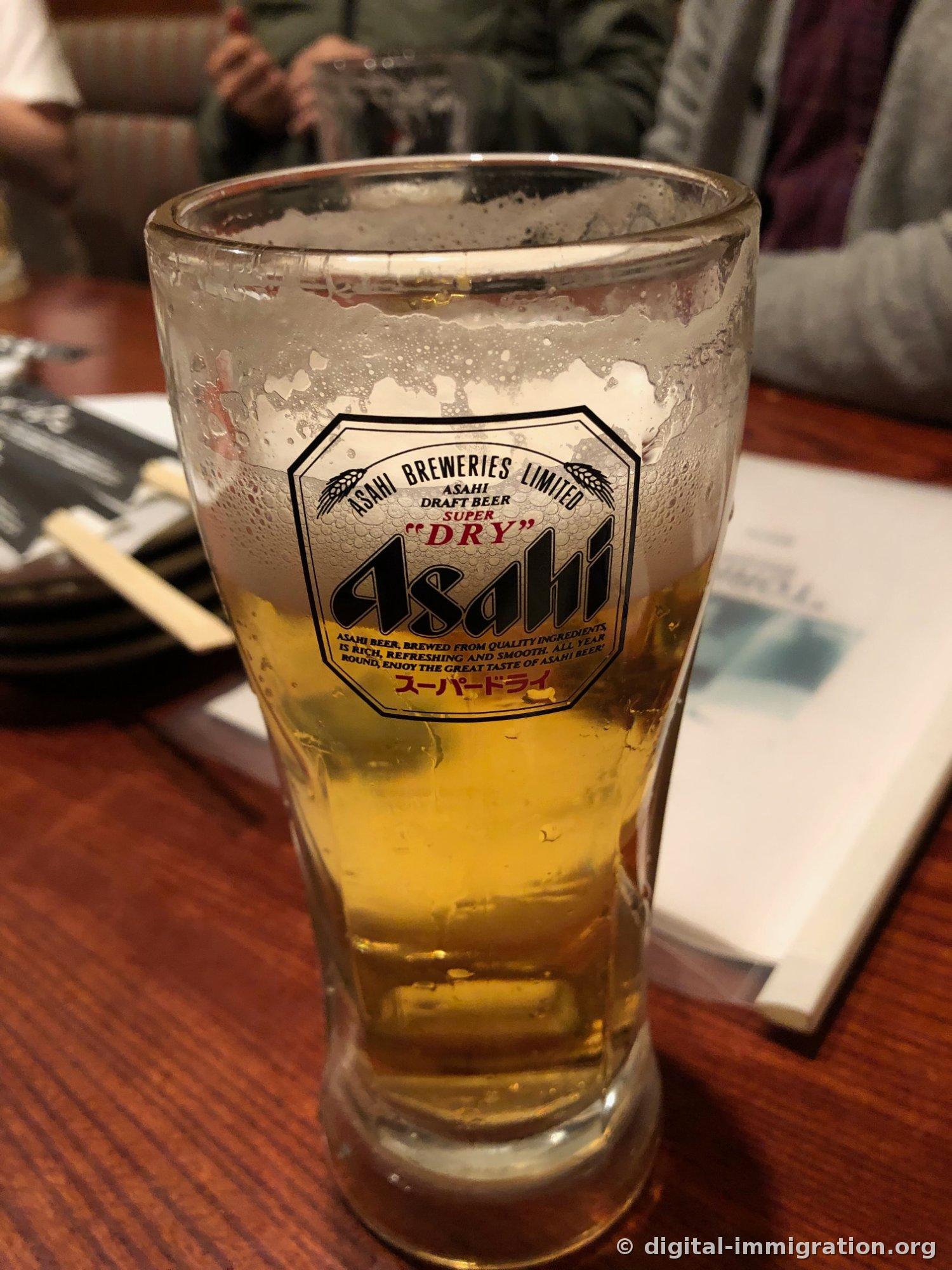
The moment we sat down, we ordered Asahi Super Dry draft beer. The octagonal logo printed on the glass was half-hidden by foam. Only after that first sip did the day feel truly over. A Shinjuku summer evening is humid. The temperature contrast of that first glass, drunk beneath the air conditioning, actually stayed in my memory longer than the food itself.
The part that catches newcomers to a Japanese izakaya off guard is the otoshi—appetizers you didn't order that arrive automatically and get added to your bill like a table charge. You can see in the photo that small dishes keep piling up in the corner of the table, and yes, all of it gets charged. Prices vary by restaurant, so it's best to check your bill when it arrives.
Order Skewers Two or Three at a Time, in Variety
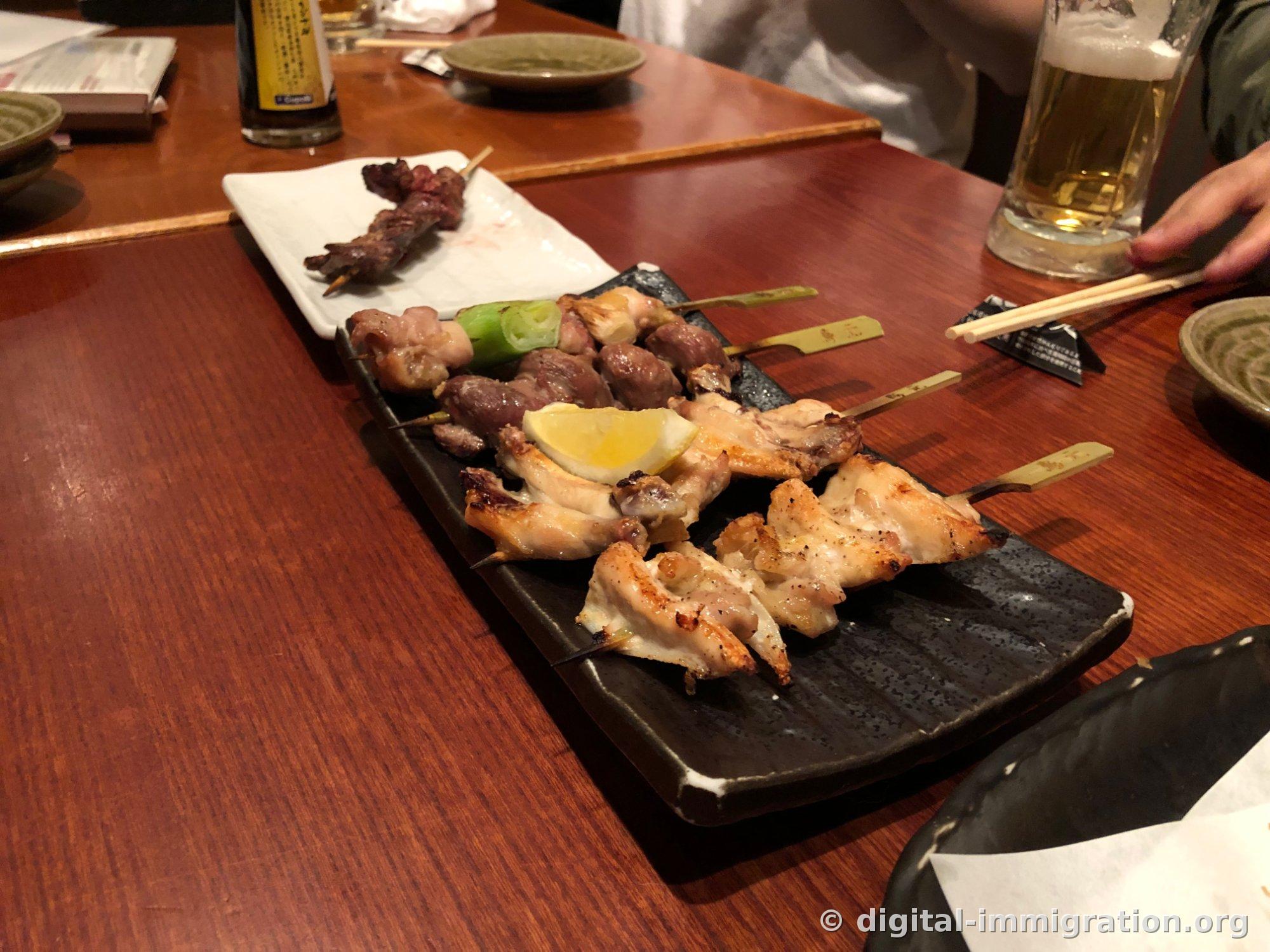
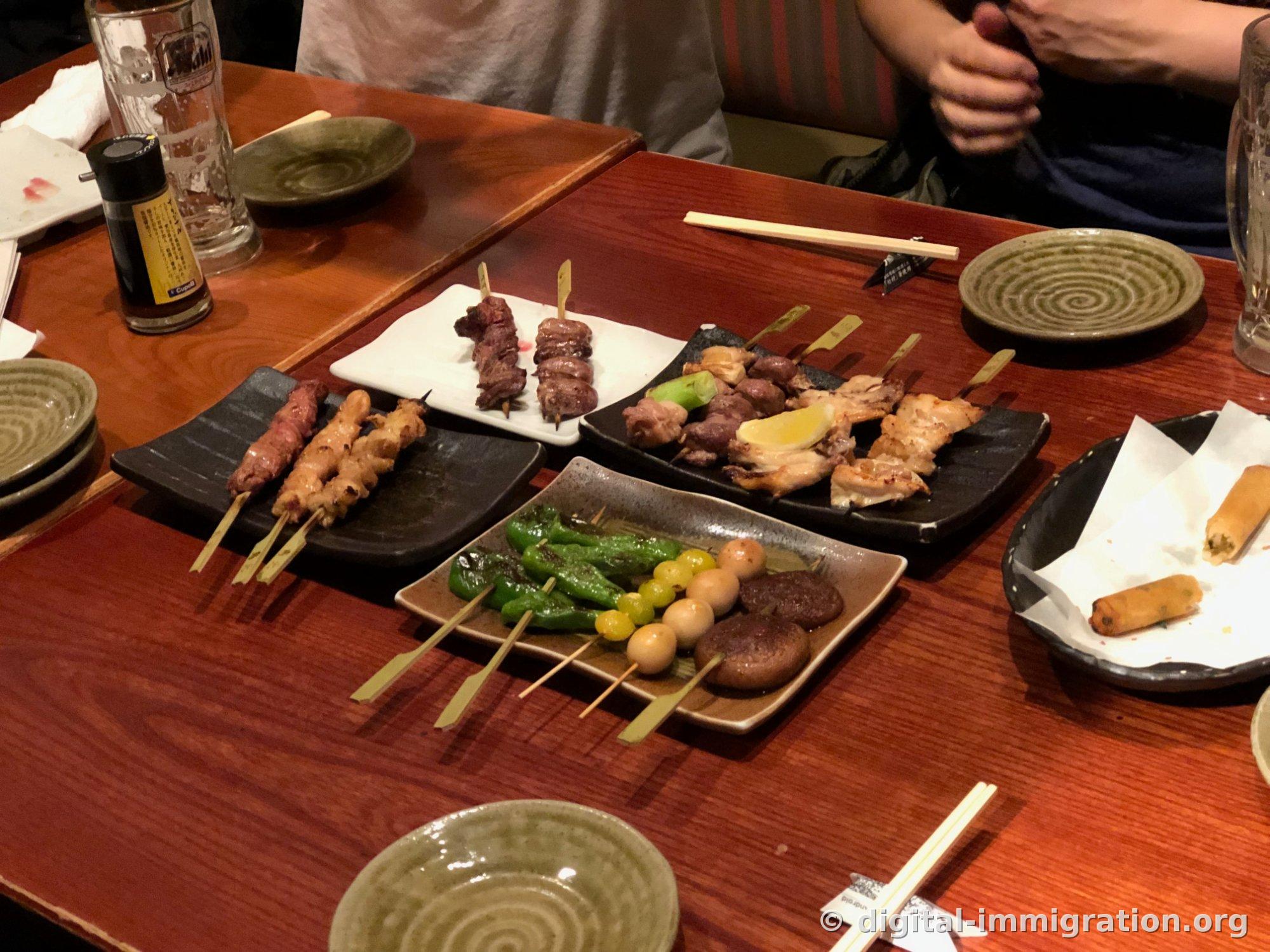
This restaurant does both robata-yaki and oden, so the menu splits into two sections. We started with the yakitori. The first plate that arrived held an assorted selection on a black rectangular dish. From left to right: negima with scallions, deep purple-tinged heart, and chicken breast with the skin crisped to golden brown. A single lemon wedge sat in the center of the plate.
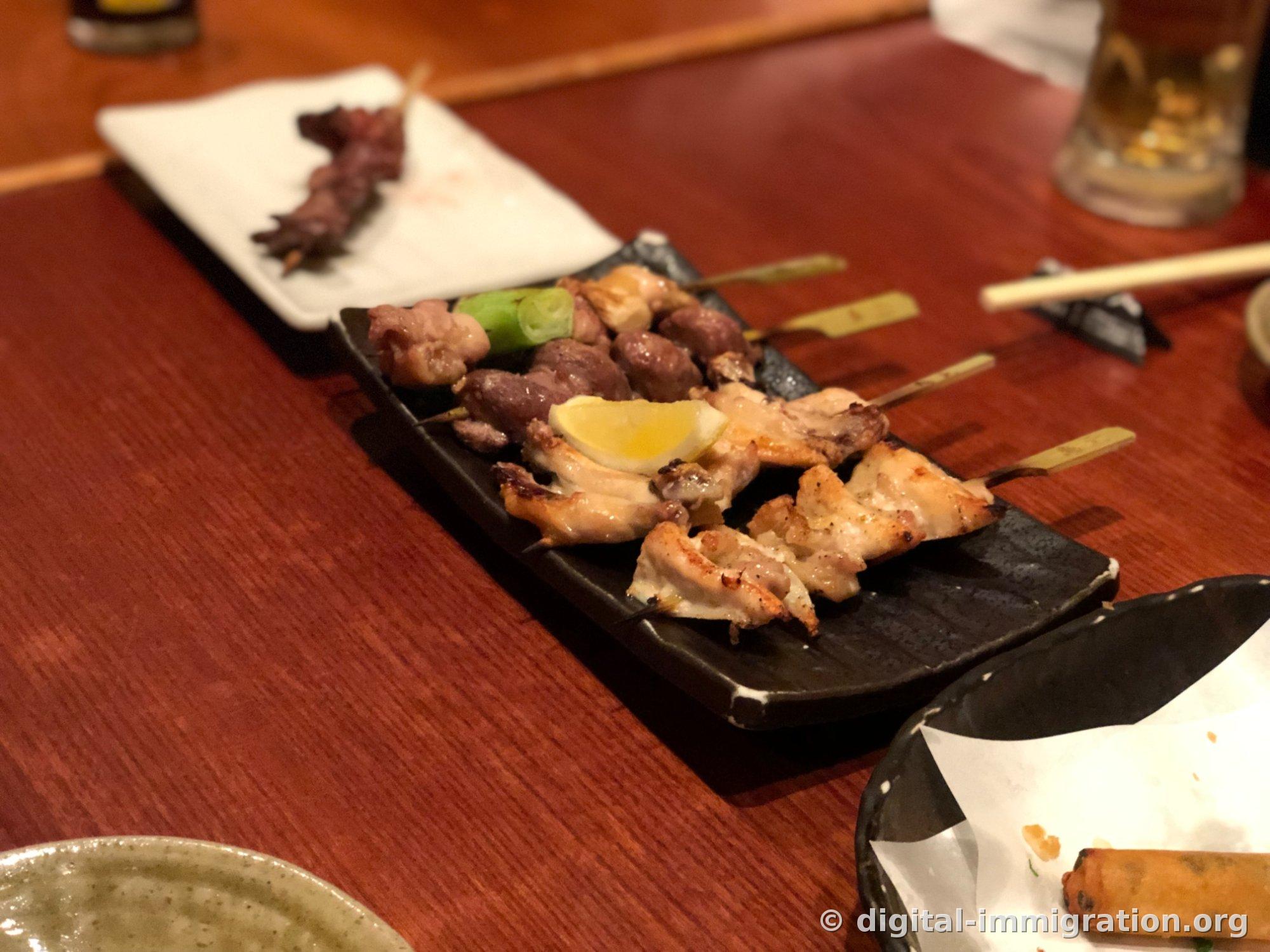
The heart wasn't over-salted. It has a distinctive chew when you bite into it, with almost no gamey flavor. The chicken breast was seared skin-side only so the surface is mottled brown while the inside stays moist. They give you lemon to squeeze on it, but I'd recommend eating the first two skewers plain. You need to understand the baseline salt seasoning first to appreciate what the lemon changes.
Don't Skip the Vegetable Skewers
When all four of us placed our second round of orders, the table got crowded. A white plate with two liver skewers, a black plate on the left with heart and skin again, and in the center a brown plate with four vegetable skewers: shishito peppers, ginkgo nuts, quail eggs, and shiitake mushrooms.
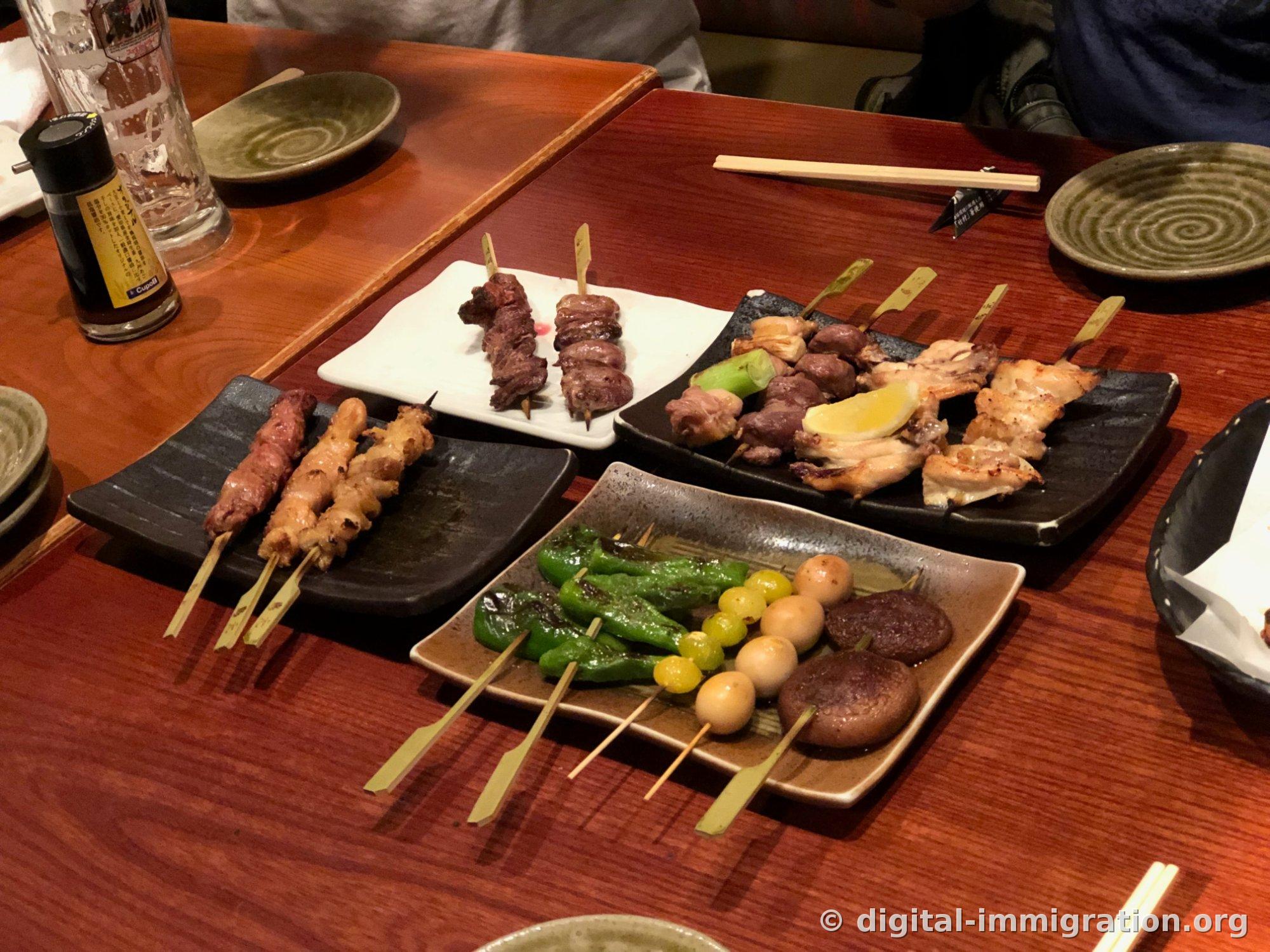
Most first-timers don't order the ginkgo nut skewers, but they were what impressed me most here. The yellow nuts are slightly chewy on the outside but have a powdery, crumbly texture inside. The subtle bitterness pairs beautifully with beer. The shishito is a lottery—supposedly one in ten is spicy, and sure enough, the last one on our plate had some serious heat. The shiitake was grilled whole with just the stem removed, so the juice stays trapped inside and when you bite down, scalding liquid spurts out. Be careful; I got a drop on my shirt.
The black bottle with the yellow label on the table is a soy-based condiment. A few drops on the vegetable skewers and the mushroom aroma just bloomed. The seasoning is fine without it, but I'd recommend leaving the ginkgo plain.
Location and Useful Practical Information
It's within walking distance of Shinjuku Station, but Shinjuku Station has over 200 exits. The time spent wandering inside the station can easily exceed the walking time. It's faster to get above ground first, then open a map. The coordinates below mark the actual spot where these photos were taken.
- It's better to order two or three skewers in variety rather than multiple of the same kind. Each skewer has maybe three pieces of meat, so they disappear quickly.
- Don't place your entire order at once. They grill to order over charcoal one batch at a time, so if you order everything together, it all arrives cold. The second plate in these photos is exactly what happens when you make that mistake.
- Since they also serve oden, I'd recommend finishing with a skewer of daikon or an egg. We were too full from the skewers and never got to it—that's my one regret from that evening.
- Prices vary by season and menu, so check the actual menu board on site. When you get the bill, take a moment to look at the otoshi and table charge line items and you won't be surprised.
- Friday evenings draw a lot of after-work groups. If you want a quieter meal, come on a weekday early in the evening.
Two beers and about twelve skewers, plus one spring roll. Four of us sat there for two hours and never felt rushed. It's surprisingly rare to find a place right in the heart of Shinjuku where you can stretch out this comfortably.
Read next
- From Akihabara's Chuo-dori to the Kanda River: A Record of Tokyo's Electronics District Revisited Multiple Times
Tokyo's Akihabara is a neighborhood where it's hard to say you've seen everything in a single visit. I've come multiple times across different seasons, and each time the signs chan…
Tokyo · Akihabara - Buying a Single ¥300 Year-End Jumbo Lottery Ticket at Nishi-Ginza Chance Center in Tokyo
Exit from the Hibiya exit of Tokyo's Shimbashi Station, walk toward the elevated highway for about three minutes, and suddenly you'll see a line of people stretching along the side…
Tokyo · Nishi-Ginza Chance Center - Ueno Ameyoko, the real magic starts after sunset — an evening walk from the Okachimachi Gate to Ueno Station
Every time I come to Tokyo, my feet find their way to Ueno Ameyoko (アメ横) without fail. This time I entered from the Okachimachi side and worked my way toward Ueno Station. I've met…
Tokyo · Ameya Yokocho Market