Tokyo Odaiba Pommes no Ki (ポムの樹): Hayashi Sauce Hamburger Omelette Rice and the Story of Its Egg
After half a day of walking around Odaiba, I got hungry and ended up at the Pommes no Ki Odaiba branch. It's the chain restaurant that comes to mind first when people think of omel…
Tokyo · Pomnoki Odaiba Store
After half a day of walking around Odaiba, I got hungry and ended up at the Pommes no Ki Odaiba branch. It's the chain restaurant that comes to mind first when people think of omelette rice specialty shops in Japan, and this location sits inside a shopping mall in Odaiba, which draws many families. As you walk through the mall corridor, you see a sign on the right reading "創作オムライス ポムの樹" in green letters, and next to it a large yellow banner advertising KIRIN Draft Beer ¥200 per glass. There's a note that it's limited to customers who order food, and the sign explains it's a self-service style. Two-hundred-yen beer at an omelette rice shop felt like cheating.
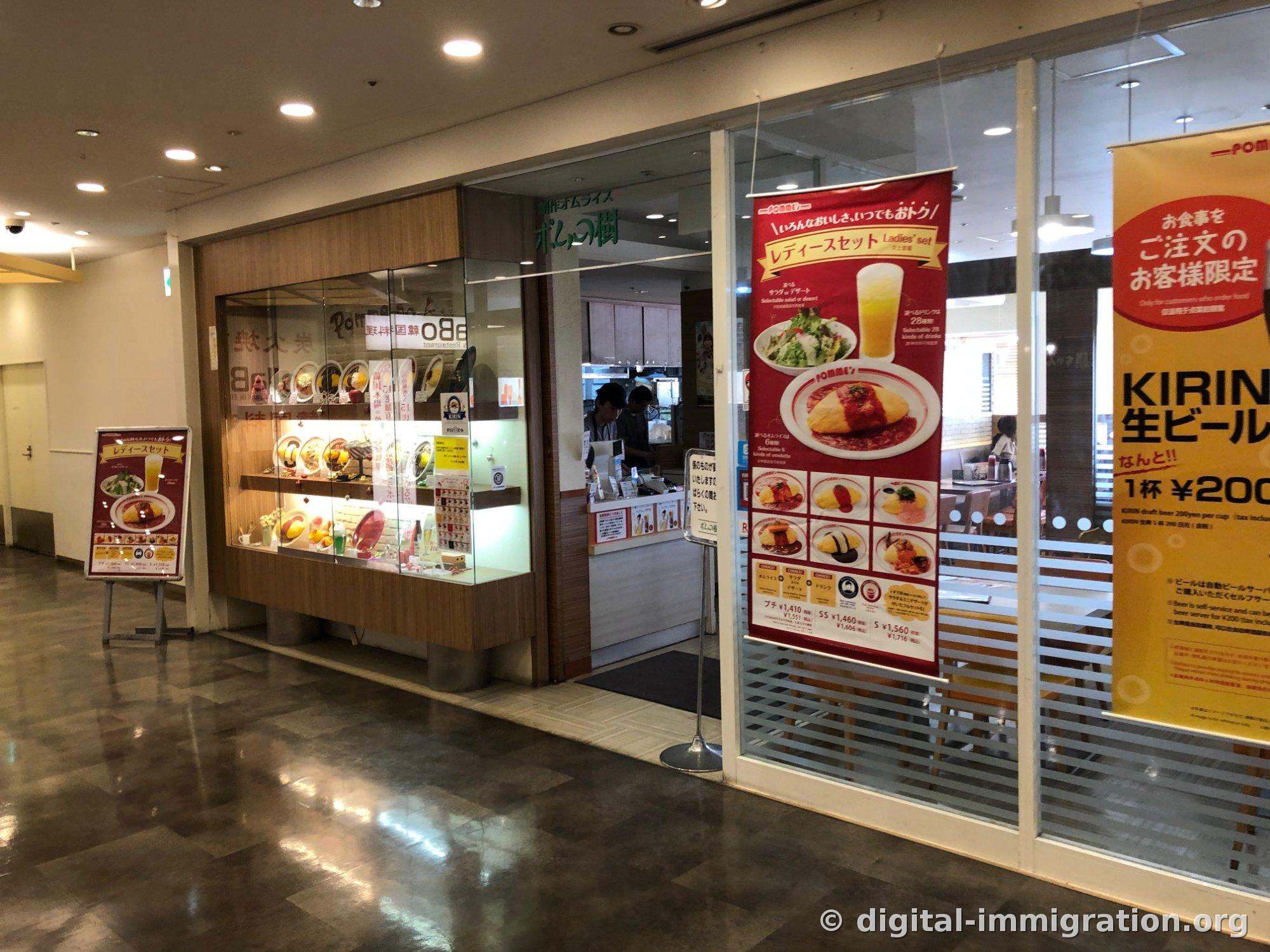
The display case at the entrance is worth seeing
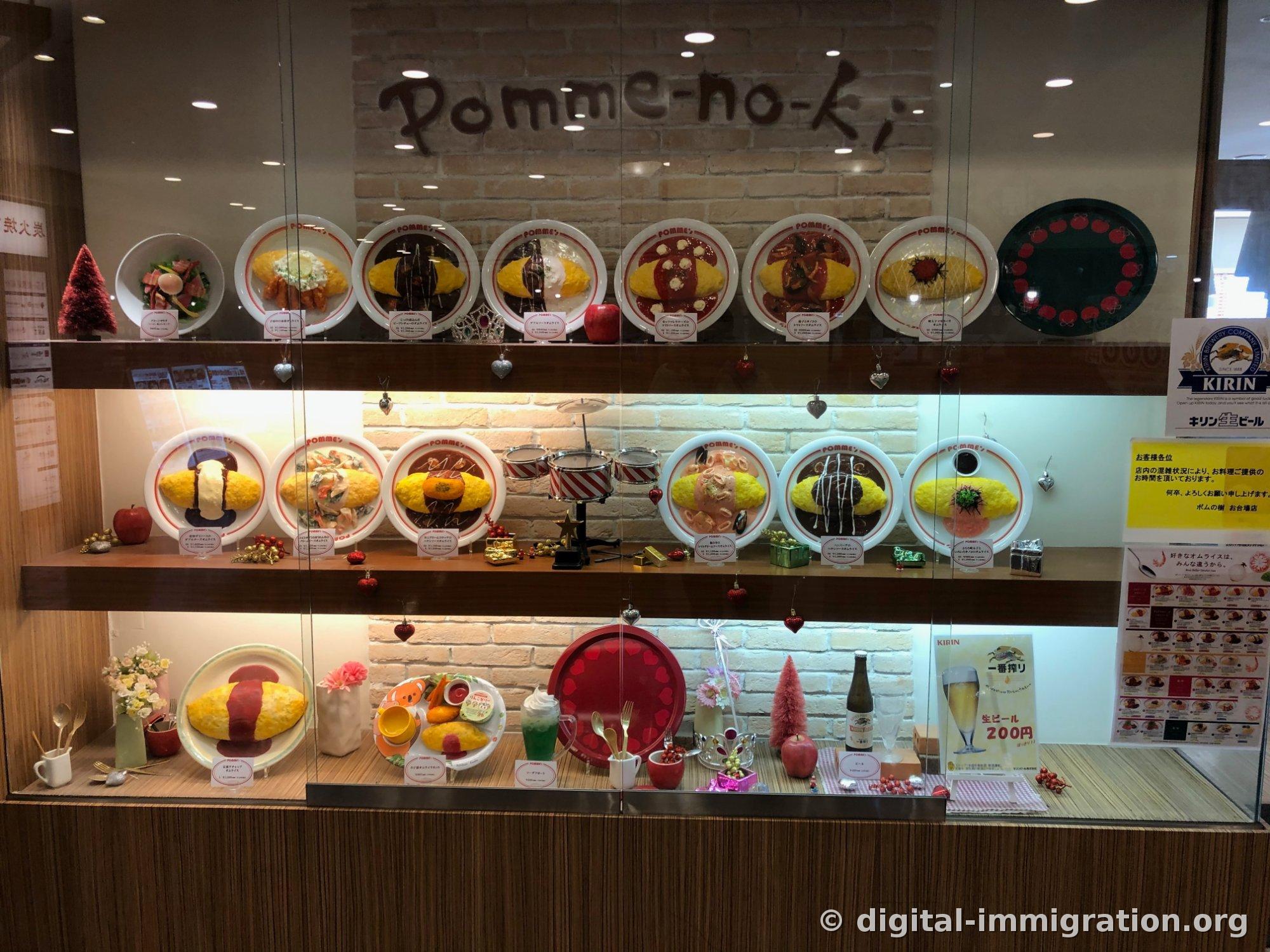
I usually just walk past the food sample displays at Japanese restaurants, but here I stood and looked for a while. On a brick wall, "pomme-no-ki" is written in handwriting style, and about twenty plates of omelette rice models are arranged on three shelves. There's one with demi-glace sauce dripping down, one topped with seafood in cream sauce, and another with cod roe mayo drizzled in a grid pattern—all made as models. Christmas decorations, a miniature drum set, and an apple model are mixed in, making the display case look like a general store. On the right, there's a notice in Japanese explaining that food takes time during busy hours. Our food also took about 15 minutes to arrive after ordering, so it wasn't an exaggeration.
The menu is thick—you choose by sauce type
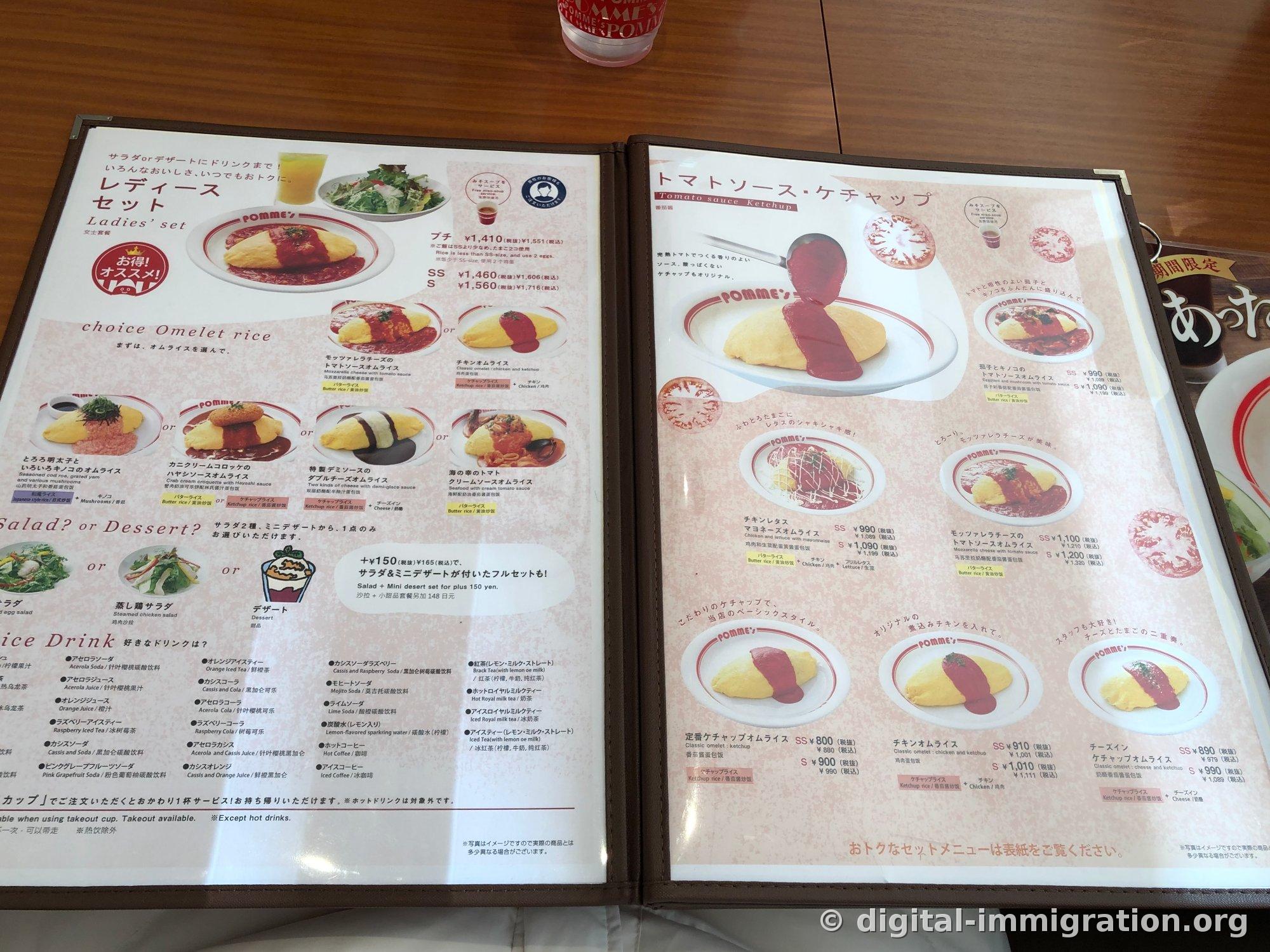
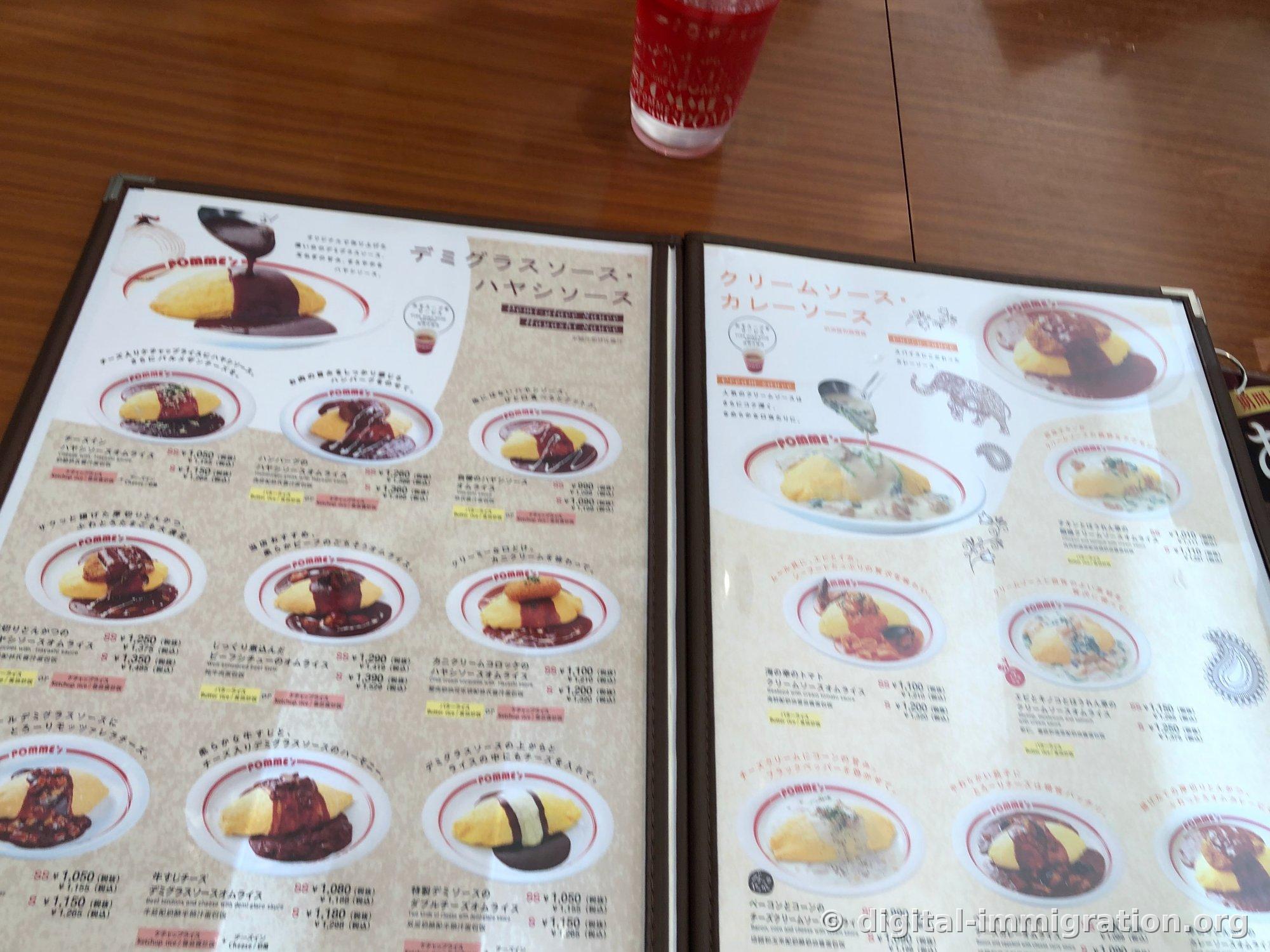
When you sit down, they give you a thick menu bound in a ring binder. This is where first-time visitors get most confused. Pommes no Ki organizes their omelette rice by sauce type. There's a separate page for demi-glace and hayashi sauce, another page for cream and curry sauce, and yet another for tomato and ketchup sauce. And at the front, there's a dedicated page for "創作オムライス (House Original)" where variations like cod roe mayo, okonomiyaki style, and ones topped with crab cream croquettes are gathered.
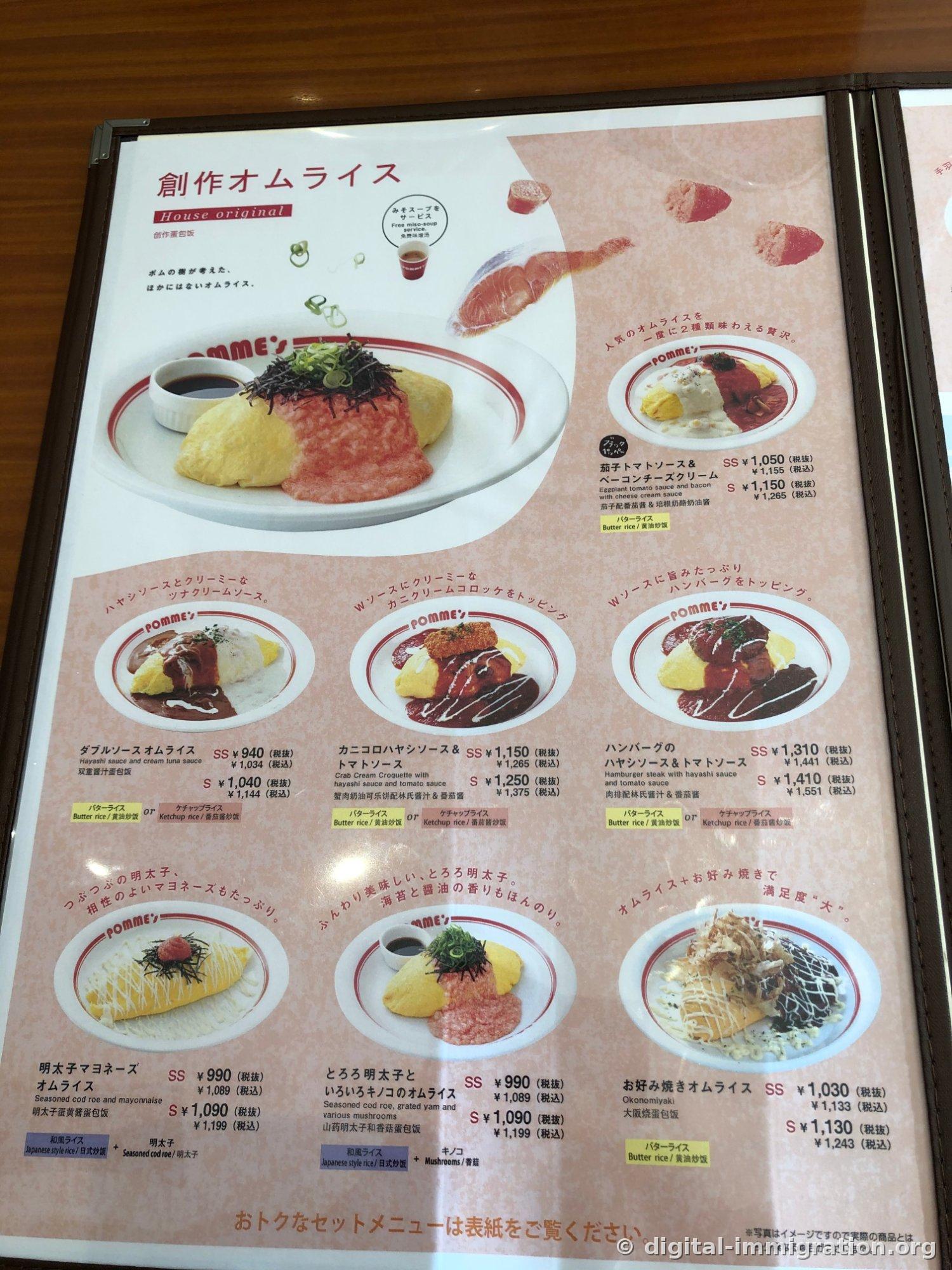
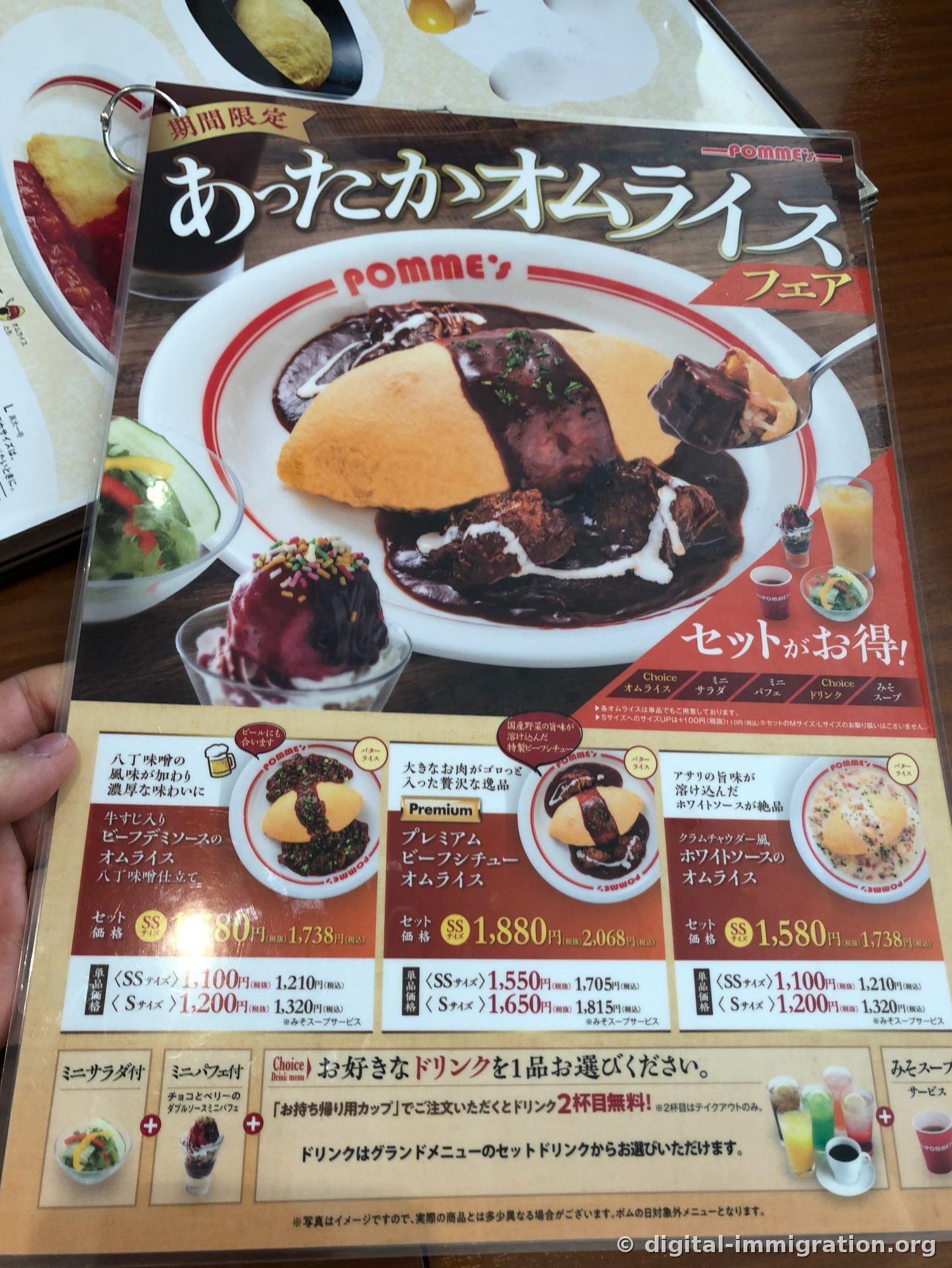
Prices generally range from ¥900–1,300 for SS size (tax excluded), and going up to S adds about ¥100. However, the menu changes seasonally, so it's best to check the actual prices at the restaurant. When I visited, there was a limited-time menu called "あったかオムライスフェア" prominently displayed on the cover. The premium beef stew omelette rice was listed as ¥1,880 for a set (¥2,068 with tax), alongside gyusuji demi sauce omelette rice with hatcho miso and littleneck clam white sauce omelette rice.
Sizes are marked as SS / S / M / L, but there's a trap here. SS is not the smallest. The menu explicitly states that "Petit (プチ)" in the ladies set has less rice than SS and uses two eggs. So if you want to eat a little, go for petit; for a normal meal, SS or S is appropriate. There's a small note saying sets don't come in M or L, so if you want a larger size, you need to order à la carte.
Grab your drink and miso soup first
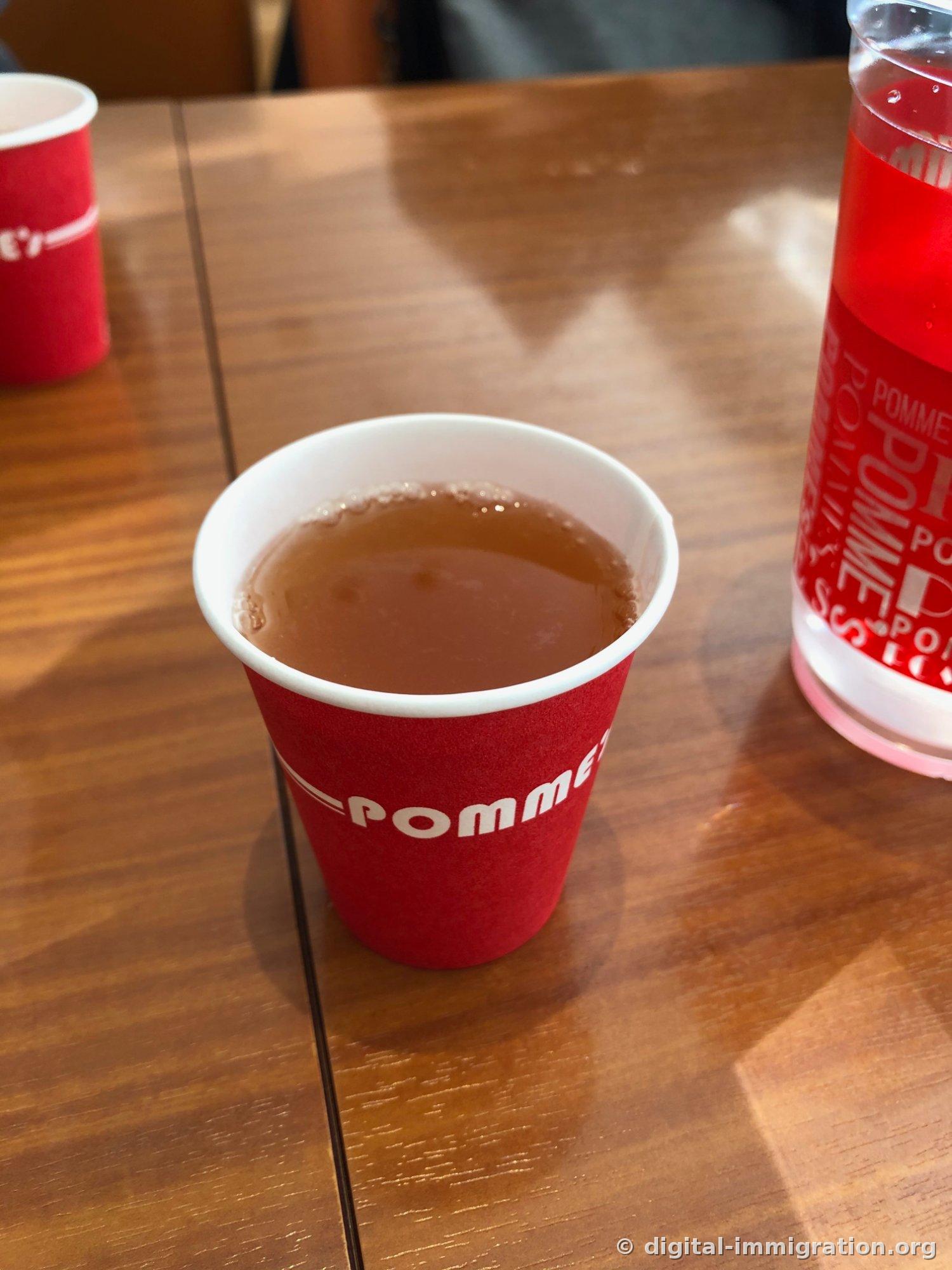
When you order a set, you choose a drink, and many items on the menu have a "miso soup service" label. The miso soup came in a paper cup first, in Pommes no Ki's red logo cup that fits perfectly in your hand. It's clear rather than thick, so it rinses your palate before a rich sauce dish like omelette rice. It came warm and wasn't salty. Next to it was a glass of red-colored drink, like acerola soda. The menu notes that if you order a takeout cup, the second glass is free, which is good to know if you drink a lot.
Location and how to get there
To get to Odaiba, you take the Yurikamome or Rinkai Line, but this location is indoors in a shopping mall, not on the waterfront promenade. When you're walking around outside near Aqua City or Diver City, you get tired from the heat and wind, but coming inside and sitting down is a relief just from the temperature difference. There were several families with strollers, and the seating wasn't cramped. It gets crowded during lunch rush, so it's better to go just before noon or after 2 p.m. The business hours change with the mall's operating hours, so check before you visit.
The main point—the egg is the real deal
I ordered a hayashi and demi sauce omelette rice topped with a hamburger steak. A large plate with the red POMME's logo around the rim came out, with generous dark brown sauce spread across the bottom. On top sat a whole yellow omelette rice, with a chunk of hamburger steak on its back, dusted with sauce and white cream stripes. You could see steam rising.
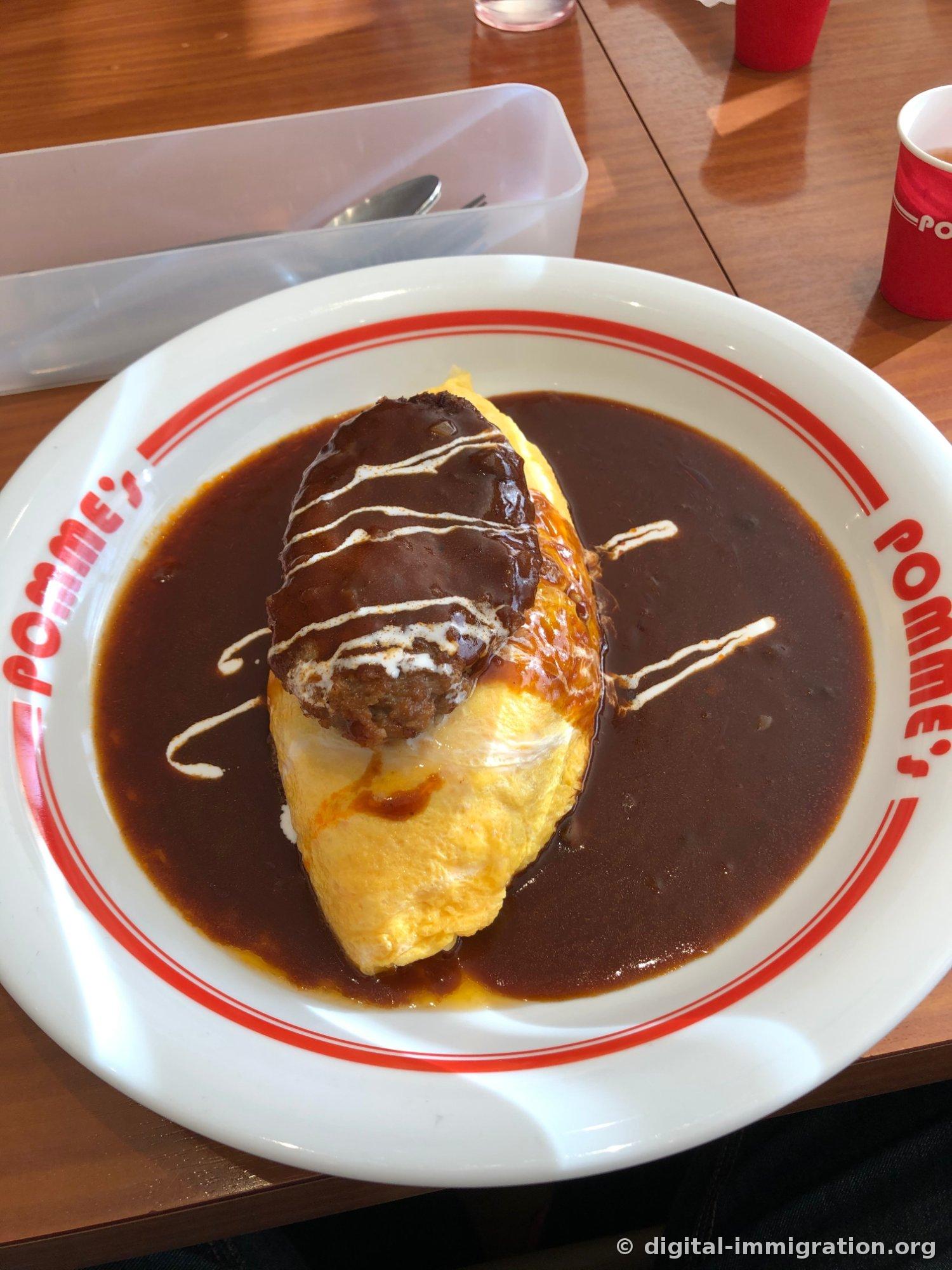
This omelette rice is all about the egg. I've been to many omelette rice restaurants, but few make the egg itself the star like this. The surface is glossy and evenly cooked, forming a thin membrane, but the inside is still undercooked and ripples like water when you touch it with a spoon. The color isn't pale yellow but a deep golden yellow. When you put it in your mouth, it doesn't chew like an omelet—it melts like cream on your tongue. There's no fishy aftertaste typical of eggs, just a subtle butter aroma lingering. What struck me was that even when heavily coated with sauce, the egg flavor doesn't disappear. The rich demi-glace is so strong, yet the egg doesn't get pushed to the background.
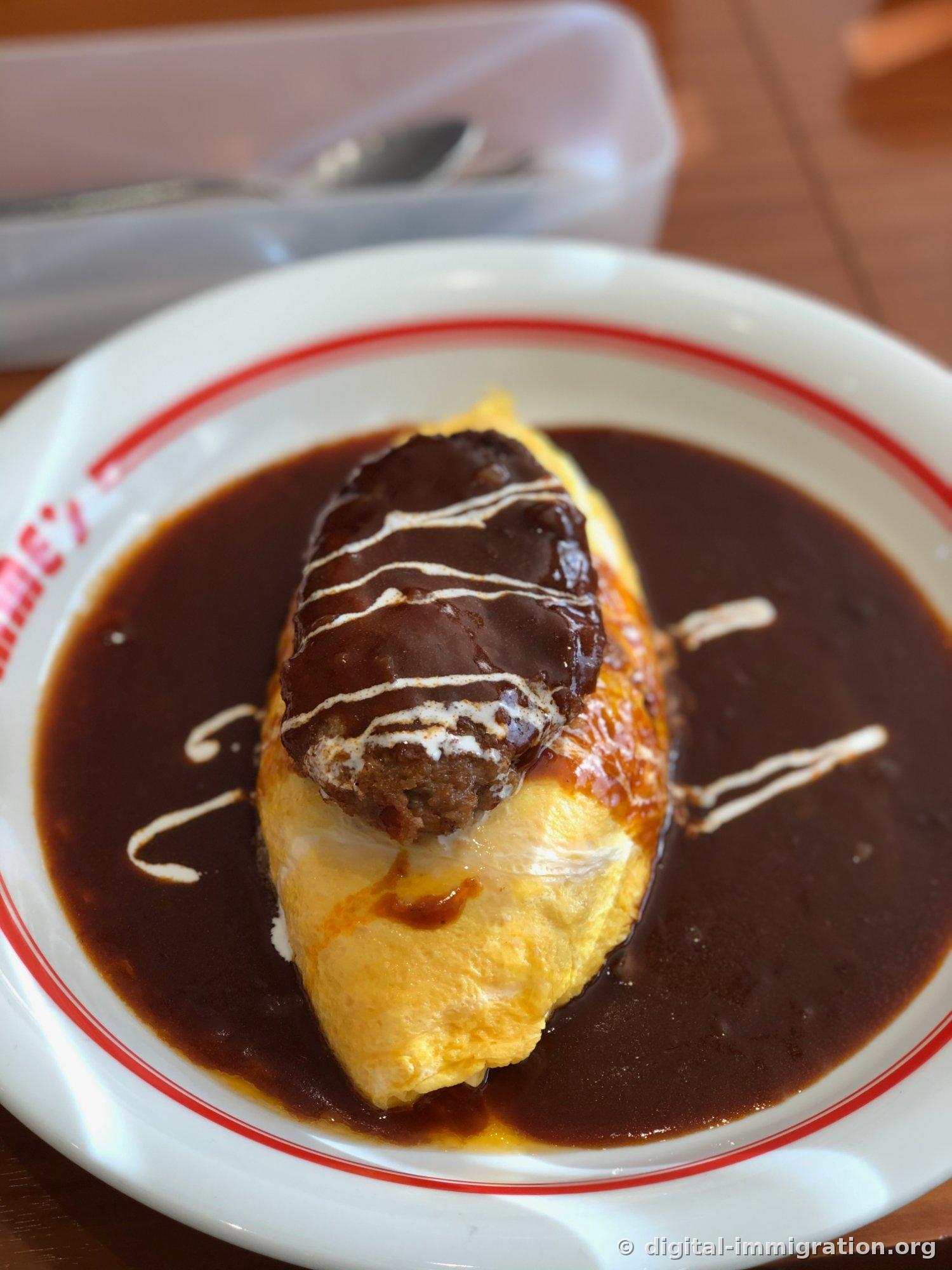
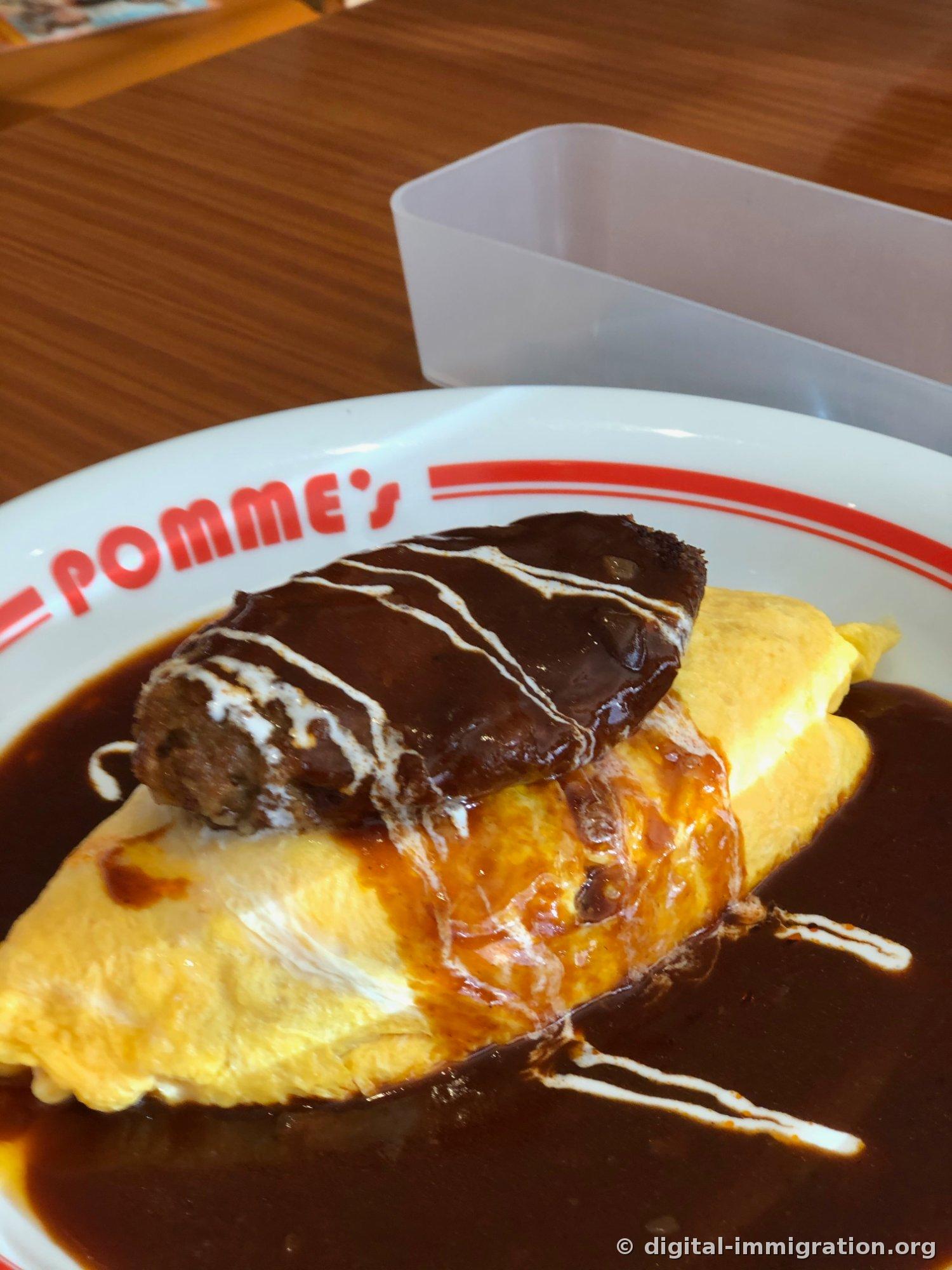
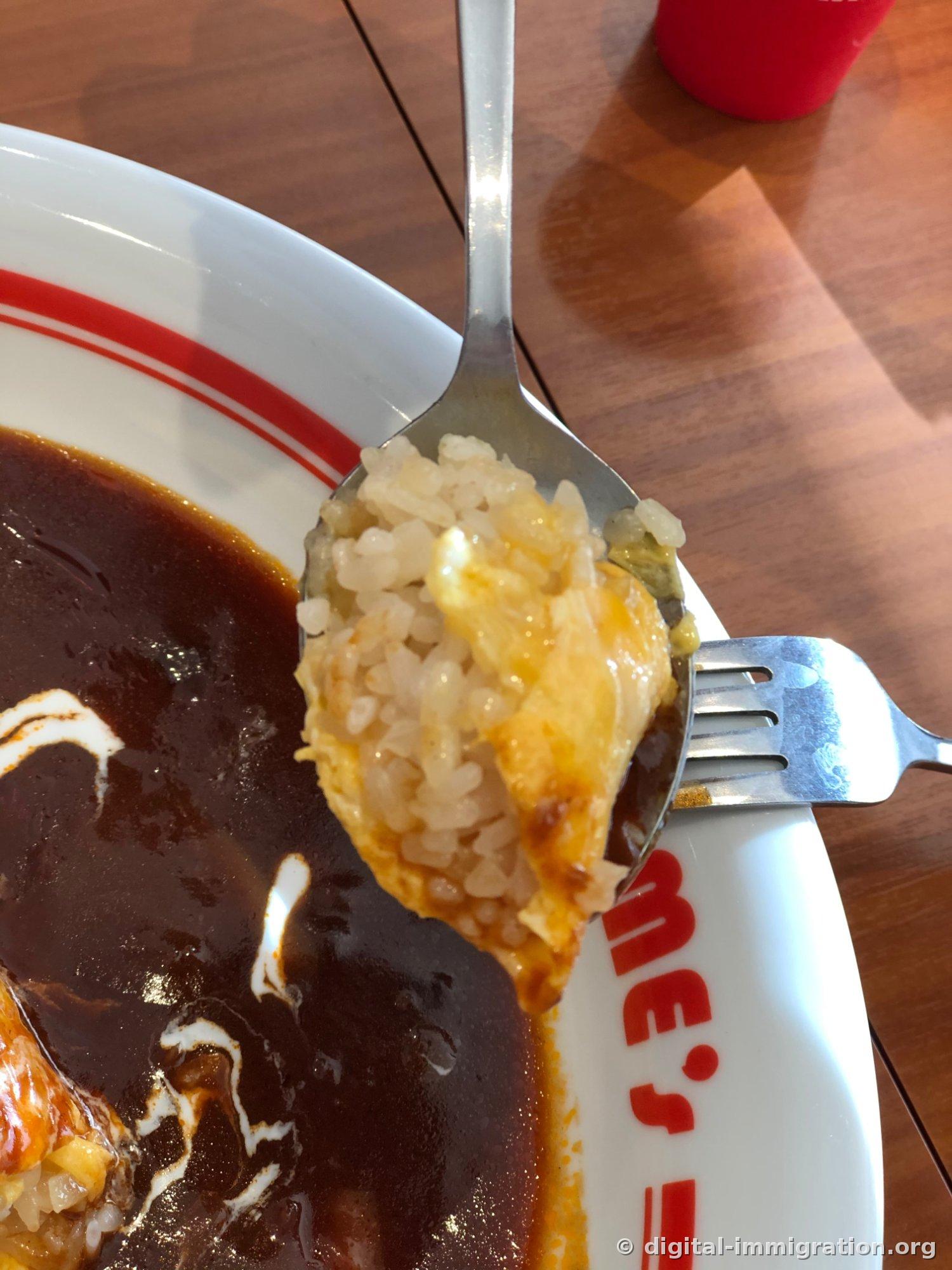
When you use a spoon to break the egg and scoop some rice along with it, you can see the internal structure. The rice isn't white but has a faint yellow tint. Because it's butter rice, it's slightly oily and the grains don't clump—they stay separate. There's not just egg on top of rice; there's an extra layer of half-cooked egg between the egg and rice, so one spoonful brings three different textures. This single spoonful is what makes you want to come back to this place.
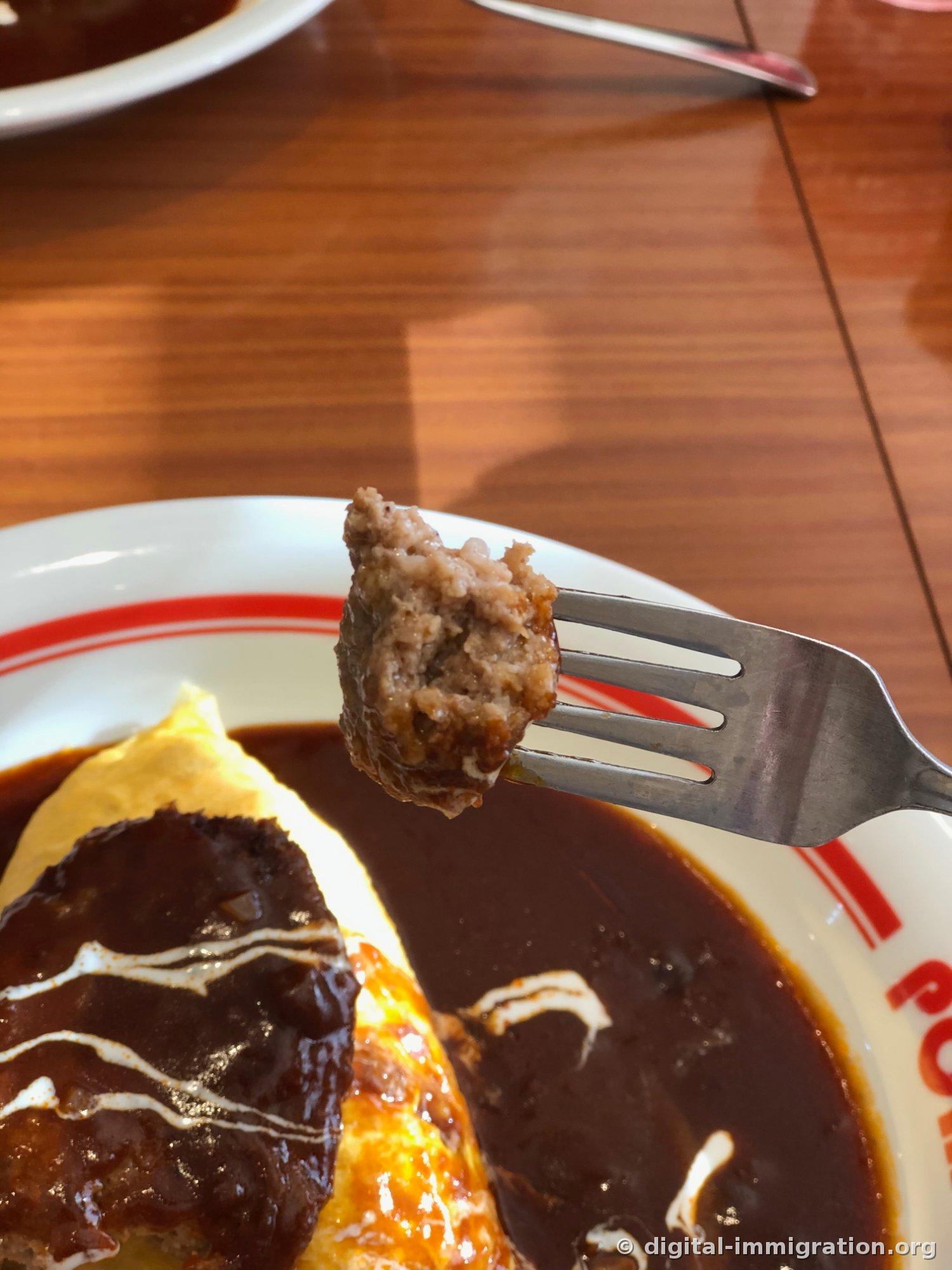
The hamburger steak isn't bad either. When I cut into it with a fork, the inside was evenly cooked to a medium-rare brown, with coarse meat texture still visible. It wasn't dry like a meatball—there was still juice in it. But the demi sauce is so rich that the meat's own flavor gets pretty buried. If you came expecting the meat to be the hero, you might be disappointed. But if you came for the egg and sauce, it's best to think of the meat as a bonus.
Good things to know when eating
- The sauce spreads wide on the plate, so watch your clothes. If it splatters on a white shirt, it's over.
- When the egg cools, that trembling texture disappears. Better to snap a couple of photos and eat right away.
- The cutlery is in a semi-transparent case on the table with spoon, fork, and knife together. No need to call a server.
- If you're alone, SS is fine; if you're sharing between two people, go for S or larger. Petit is smaller than you'd think.
- Prices, sizes, and limited-time menus change seasonally, so checking the in-store menu board is recommended.
If you can't decide what to eat in Odaiba, this place is a safe bet. The sauce varies by taste, but the egg doesn't. Next time I come, I'm thinking of switching it up and trying the white sauce. If the egg is this good, it'll hold up no matter what sauce you put on it.
Read next
- From Akihabara's Chuo-dori to the Kanda River: A Record of Tokyo's Electronics District Revisited Multiple Times
Tokyo's Akihabara is a neighborhood where it's hard to say you've seen everything in a single visit. I've come multiple times across different seasons, and each time the signs chan…
Tokyo · Akihabara - Buying a Single ¥300 Year-End Jumbo Lottery Ticket at Nishi-Ginza Chance Center in Tokyo
Exit from the Hibiya exit of Tokyo's Shimbashi Station, walk toward the elevated highway for about three minutes, and suddenly you'll see a line of people stretching along the side…
Tokyo · Nishi-Ginza Chance Center - Ueno Ameyoko, the real magic starts after sunset — an evening walk from the Okachimachi Gate to Ueno Station
Every time I come to Tokyo, my feet find their way to Ueno Ameyoko (アメ横) without fail. This time I entered from the Okachimachi side and worked my way toward Ueno Station. I've met…
Tokyo · Ameya Yokocho Market