Tokyo Nakameguro Backstreet 'Katsu-an (かつ庵)' — The Best Tonkatsu I've Ever Eaten in Tokyo
I've visited quite a few tonkatsu restaurants in Tokyo. I've been to century-old establishments in Ueno and even the popular line-forming places in the basement of Shinjuku departm…
Tokyo · Katsuichi
I've visited quite a few tonkatsu restaurants in Tokyo. I've been to century-old establishments in Ueno and even the popular line-forming places in the basement of Shinjuku department stores. But if I had to pick just one place I'd want to go back to, it's this small shop in an underground shopping corridor near Meguro River with a single noren curtain hanging at the entrance. The signage reads 'Katsu-an (かつ庵)' in bold brushstrokes, with a drawing of a pig beside it. This isn't a restaurant on the typical tourist route—it's the kind of place where office workers quietly slip in and out during lunch hours.
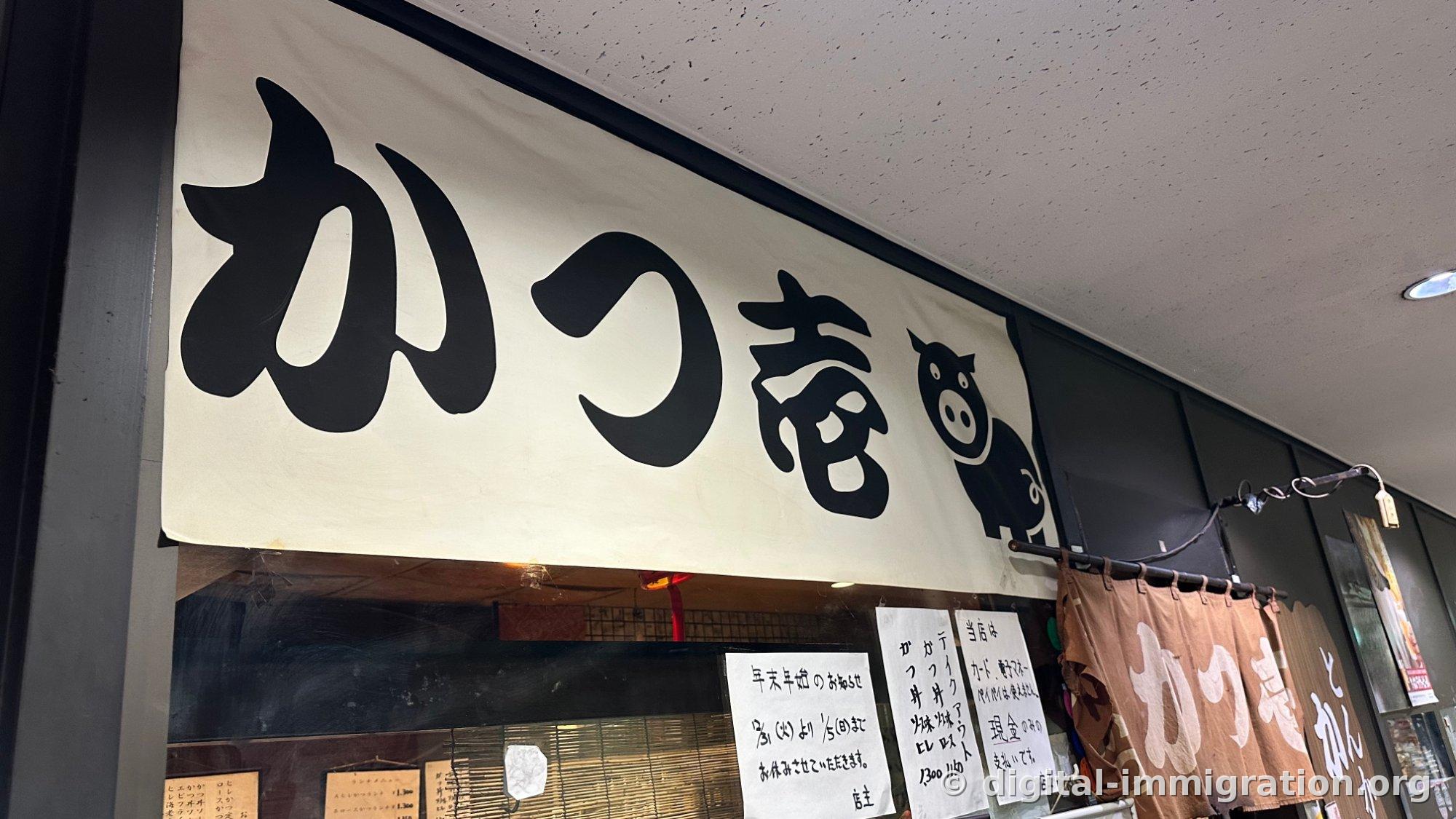
Papers You Should Read Before Entering
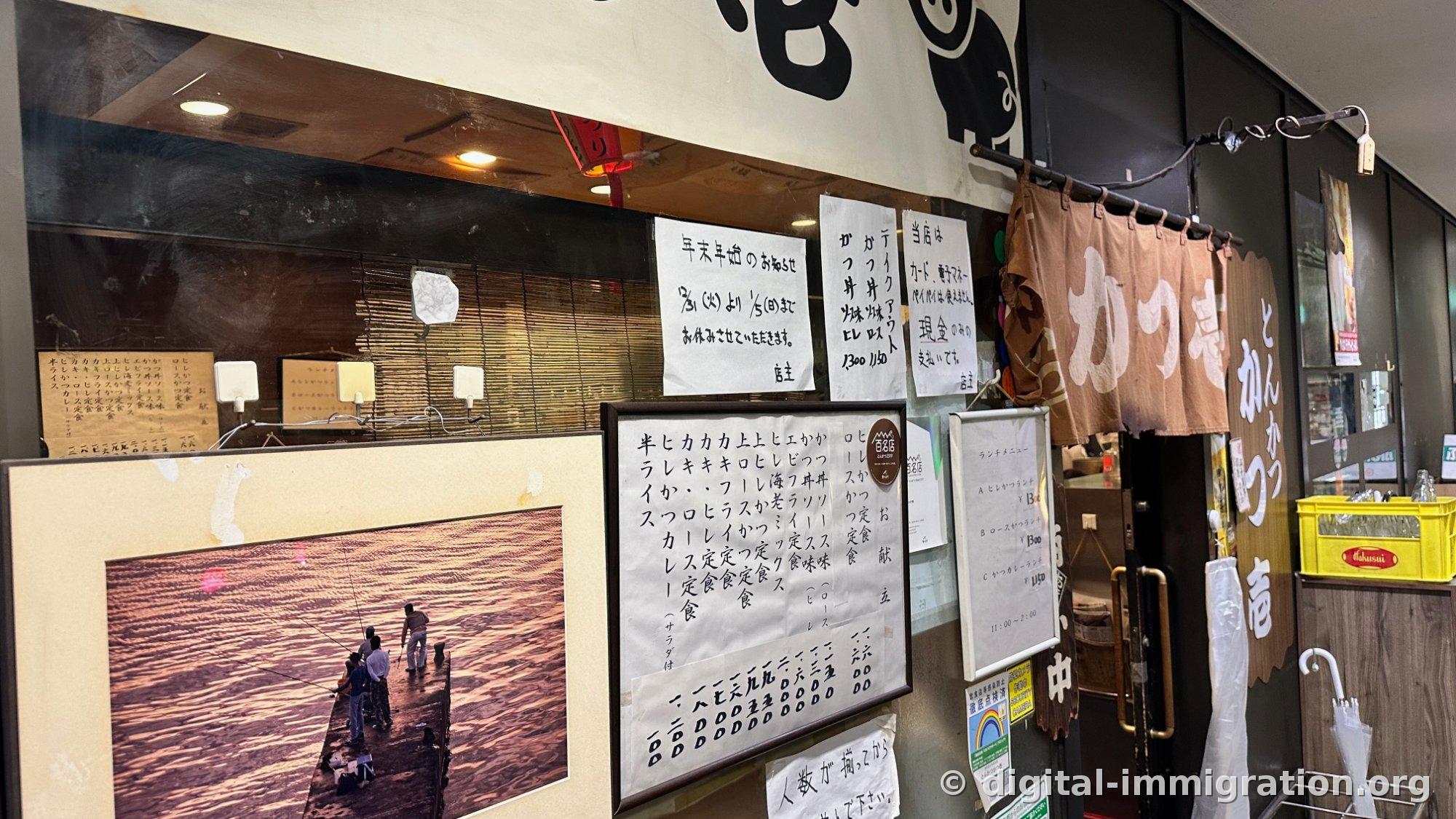
There are several handwritten notice signs posted on the glass entrance and walls. I've actually seen people who didn't read them before entering and ended up disappointed. The most important one is the paper on the right. "当店は カード、電子マネー、ペイペイは使えません。現金のみの支払いです" — it means no cards, electronic money, or PayPay; cash only. These days in Tokyo, many travelers go without cash at all since a single Suica card works at convenience stores and ramen shops alike, but this place is an exception. It's easiest to withdraw yen from an ATM at a nearby convenience store beforehand.
The framed menu on the left is the complete list. Written vertically are ヒレかつ定食 (filet cutlet set), ロースかつ定食 (loin cutlet set), 上ヒレ・上ロース (premium filet and loin), カキフライ (fried oysters), エビフライ (fried shrimp), かつ丼 (cutlet rice bowl), かつカレー (cutlet curry), and 半ヒレかつライス (half filet with rice), with prices listed on the right. The small frame next to it shows the lunch menu: A filet cutlet lunch, B loin cutlet lunch, and C cutlet curry lunch, with hours listed as 11:00–2:00 below. Once lunch hours end, this lineup disappears, so it's best to visit during the day. Another paper showed items available for takeout (cutlet rice bowl, filet, loin) and prices like 1,300 yen, but since they're handwritten, it's hard to match them exactly. Prices change fairly often, so I'd recommend checking on site.
The '百名店' sticker next to the frame also stands out. It indicates this restaurant is on the list of top 100 establishments selected annually by a major Japanese restaurant review site. It's trustworthy because it's based on rankings from actual Japanese diners, not tourist reviews.
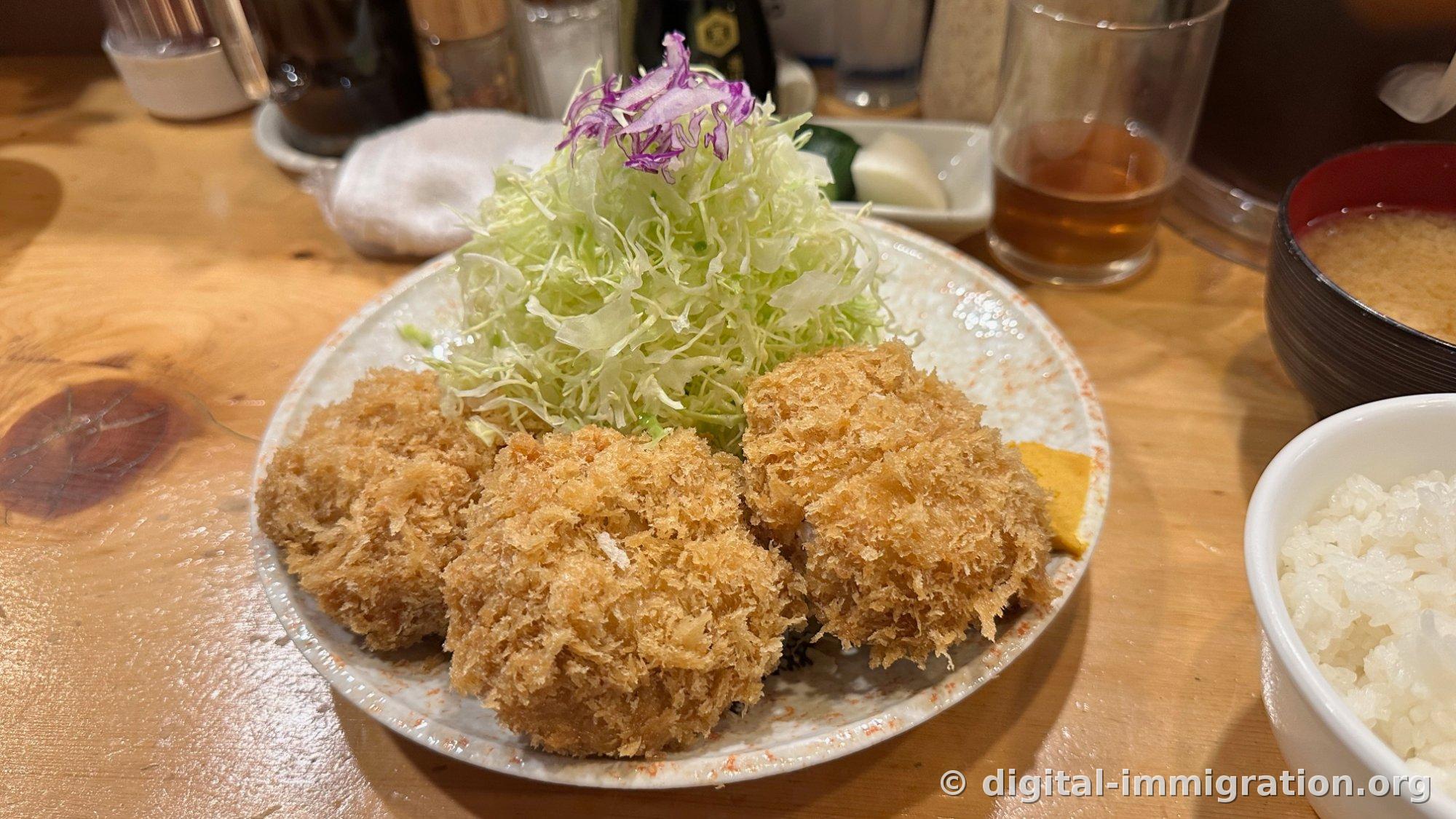
You Can Tell by the Batter — Filet Cutlet Set
I ordered the filet cutlet set. The moment the plate arrived, the batter caught my eye. Rather than a smooth, evenly browned coating, each breadcrumb texture was visible, standing up in tiny peaks. You have to keep the oil temperature low and fry slowly to preserve these peaks. Three pieces were arranged neatly on the plate, with shredded cabbage piled high like a mountain behind them, sliced paper-thin with precision. Alongside were a piece of yellow daikon pickle, pickled cucumber and radish on a separate plate, along with white steamed rice and miso soup served on the side.
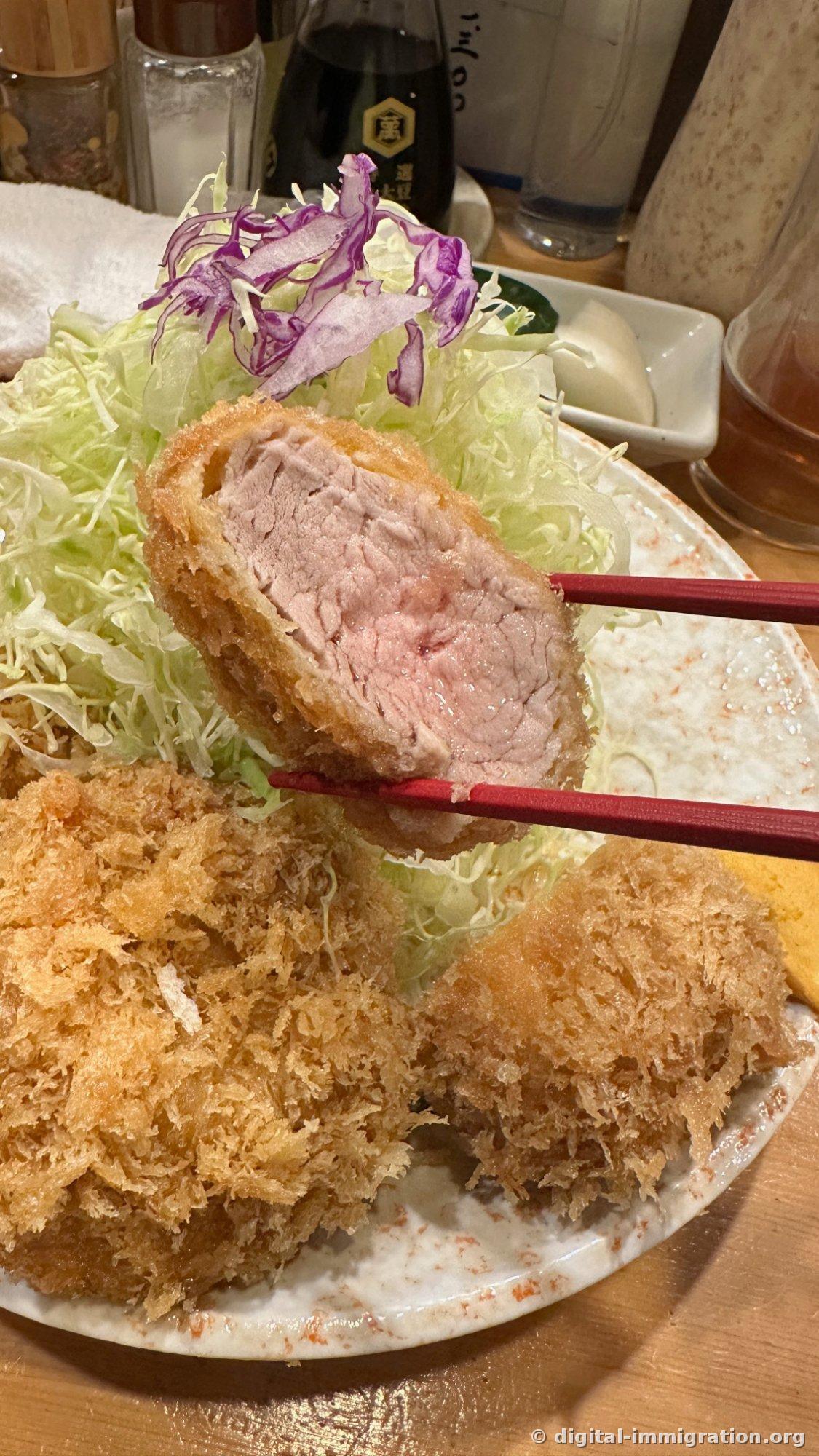
I picked one up with chopsticks to see the cross-section. The center remained a pale pink with visible juices. The texture is completely different from tonkatsu that's cooked through until white and firm. When you chew it, the outside crumbles but the inside is tender, with none of that dry mouthfeel. There's almost no gap between the batter and meat, so it chews as a single piece. The oil isn't heavy; even after eating all three pieces, I didn't feel weighed down.
There's a bottle of sauce, salt, and pepper on the table. I'd recommend eating the first piece plain without anything. The meat is already seasoned, and adding sauce would cover that base seasoning. Starting with salt on the second piece and sauce on the third worked best. If I had to find any fault, it's that the miso soup is ordinary. The cutlet is so strong in flavor that the soup doesn't stand out.
Location and Seating
South of Meguro River, it's walkable distance from Nakameguro Station. Since it's not on a main street but rather tucked inside a shopping arcade, first-time visitors might easily walk past it. If the noren curtain is hanging, it's open; if it's rolled up, it's closed. Fastest approach is to pin the map coordinates and go in thinking you're entering a building.
The shop is cramped. It's counter-focused, so if your party is four or more, it's difficult to find seating. There's a handwritten sign at the bottom of the entrance that reads "人数が揃ってから…" (after your whole party is here), meaning you should line up only after everyone has arrived. You can't save a spot by having one person go in ahead.
- Cash only — no cards, PayPay, or electronic money
- Lunch sets A/B/C available 11:00–2:00
- Line up only after your entire party has arrived
- End-of-year holiday closures are posted separately (the sign in the photo shows closed 12/31–1/5)
- Takeout available (cutlet rice bowl, filet, loin)
Rather than a spot to visit while you're in Nakameguro, this is a place worth taking the subway across town for just to eat their tonkatsu. Next time I'm in Tokyo, I'm planning to try the loin cutlet. I couldn't stop thinking about what the gentleman next to me was eating.
Read next
- From Akihabara's Chuo-dori to the Kanda River: A Record of Tokyo's Electronics District Revisited Multiple Times
Tokyo's Akihabara is a neighborhood where it's hard to say you've seen everything in a single visit. I've come multiple times across different seasons, and each time the signs chan…
Tokyo · Akihabara - Buying a Single ¥300 Year-End Jumbo Lottery Ticket at Nishi-Ginza Chance Center in Tokyo
Exit from the Hibiya exit of Tokyo's Shimbashi Station, walk toward the elevated highway for about three minutes, and suddenly you'll see a line of people stretching along the side…
Tokyo · Nishi-Ginza Chance Center - Ueno Ameyoko, the real magic starts after sunset — an evening walk from the Okachimachi Gate to Ueno Station
Every time I come to Tokyo, my feet find their way to Ueno Ameyoko (アメ横) without fail. This time I entered from the Okachimachi side and worked my way toward Ueno Station. I've met…
Tokyo · Ameya Yokocho Market