Sitting in front of roast beef rice bowl at RedRock's flagship store in a Kobe Sannomiya back alley
There was no need to wonder where to eat dinner in Kobe. A narrow alley branching off from Sannomiya, and among the shuttered shops, a single brightly lit red sign: 「RedRock Kobe m…
Kobe · Red Rock
There was no need to wonder where to eat dinner in Kobe. A narrow alley branching off from Sannomiya, and among the shuttered shops, a single brightly lit red sign: 「RedRock Kobe main store」. It's the flagship branch of RedRock in Kobe, Japan. The signboard displays life-size images of a towering roast beef rice bowl topped with an egg yolk, and a steak rice bowl roasted to a golden brown. It's rare to find a place where photos match reality, but this one came pretty close.
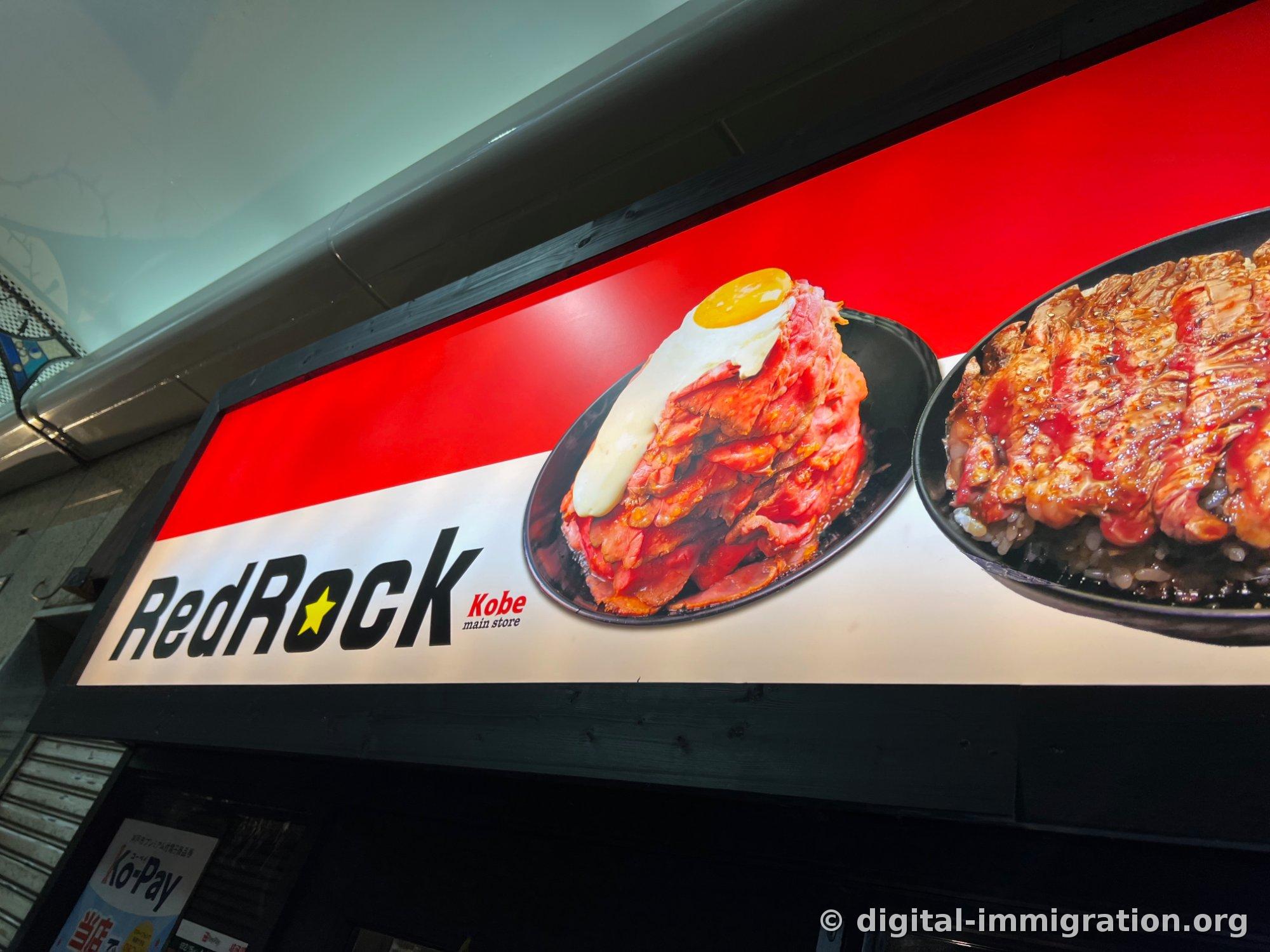
If you see a beef sign in Kobe, just go in
Kobe is a city of beef. Because the Kobe beef name carries such weight, most people think only of expensive teppanyaki restaurants. But if you walk around this neighborhood for a few days, you'll discover the truth. Rice bowls made with beef, donburi dishes, Hamburg steaks, even local Western restaurants—pretty much everything tastes good. It's as if the entire city is infused with expertise in handling cattle. The skills are evident in how the meat is grilled, how sauces are balanced, and the instinct for how much rare center to leave. These sensibilities are baked into the baseline. So in Kobe, when you see a sign for a beef shop, don't spend 30 minutes reading reviews—just walk in. The failure rate is low.
RedRock is in that same lineage. It's not a Michelin-starred fine dining establishment, but a casual rice bowl shop where you line up to order. Yet the quality of the meat and the grilling technique surpass many high-end meat restaurants.
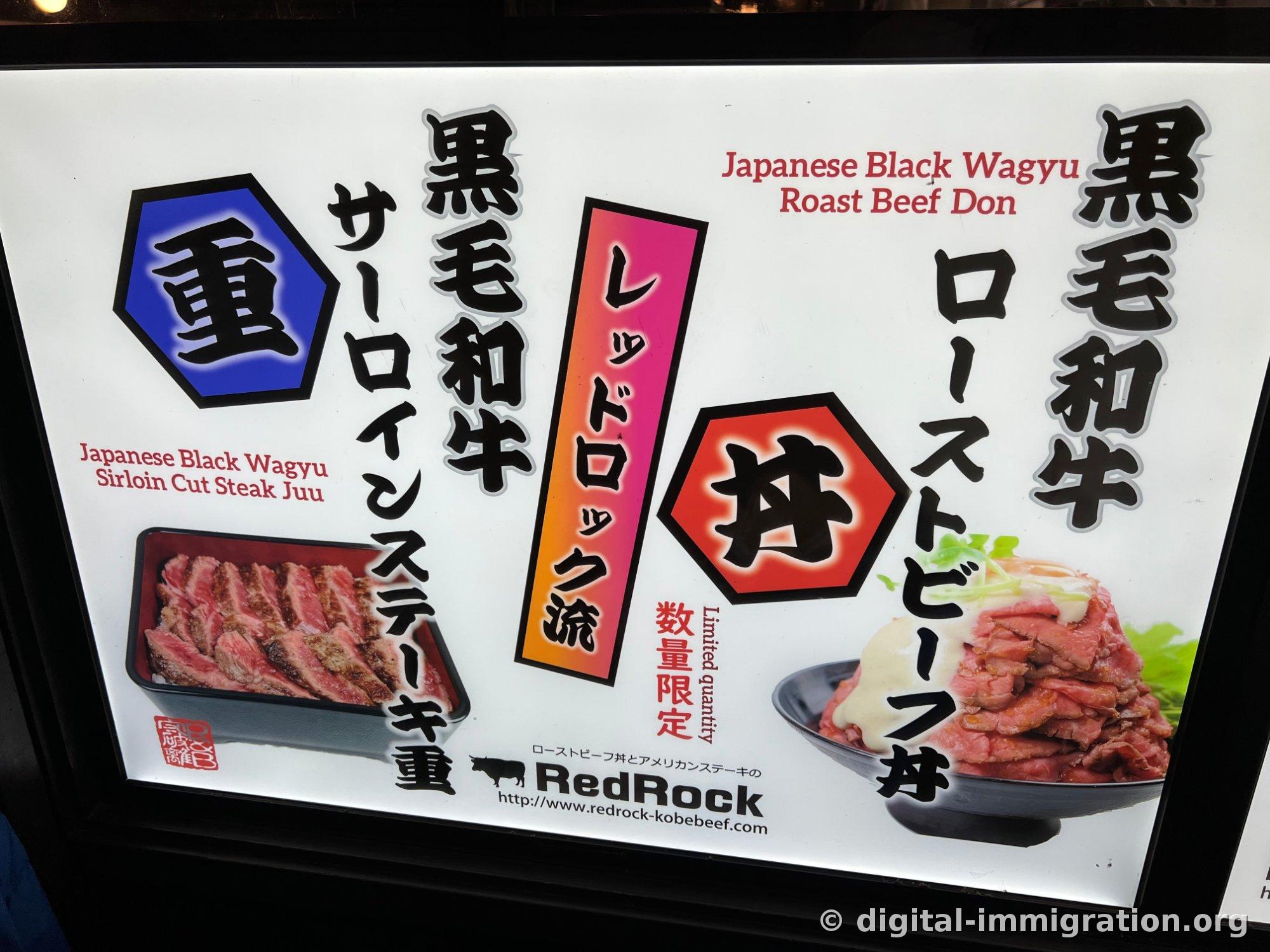
This light box gave me pause. The Kuroge Wagyu line is available in limited quantities, so if you arrive late in the evening, they might be sold out. When we sat down, there were still some left, but I overheard someone at the next table say "that one's finished." If you're specifically aiming for a particular menu item, it's best to come earlier.
Inside the shop—all red walls and a beef cut chart
The interior is cramped. Really cramped. The tables are so close that your elbows nearly touch the person next to you, and you end up laying your coat across your lap. The walls are entirely red, with a poster titled "American Beef Key Cuts" hung up. Thirty-six beef cuts are organized by number, from Chuck Eye Roll to Hanger Steak to Outside Skirt, and below that is a USDA grading chart (Prime, Choice, Select) in diagram form.
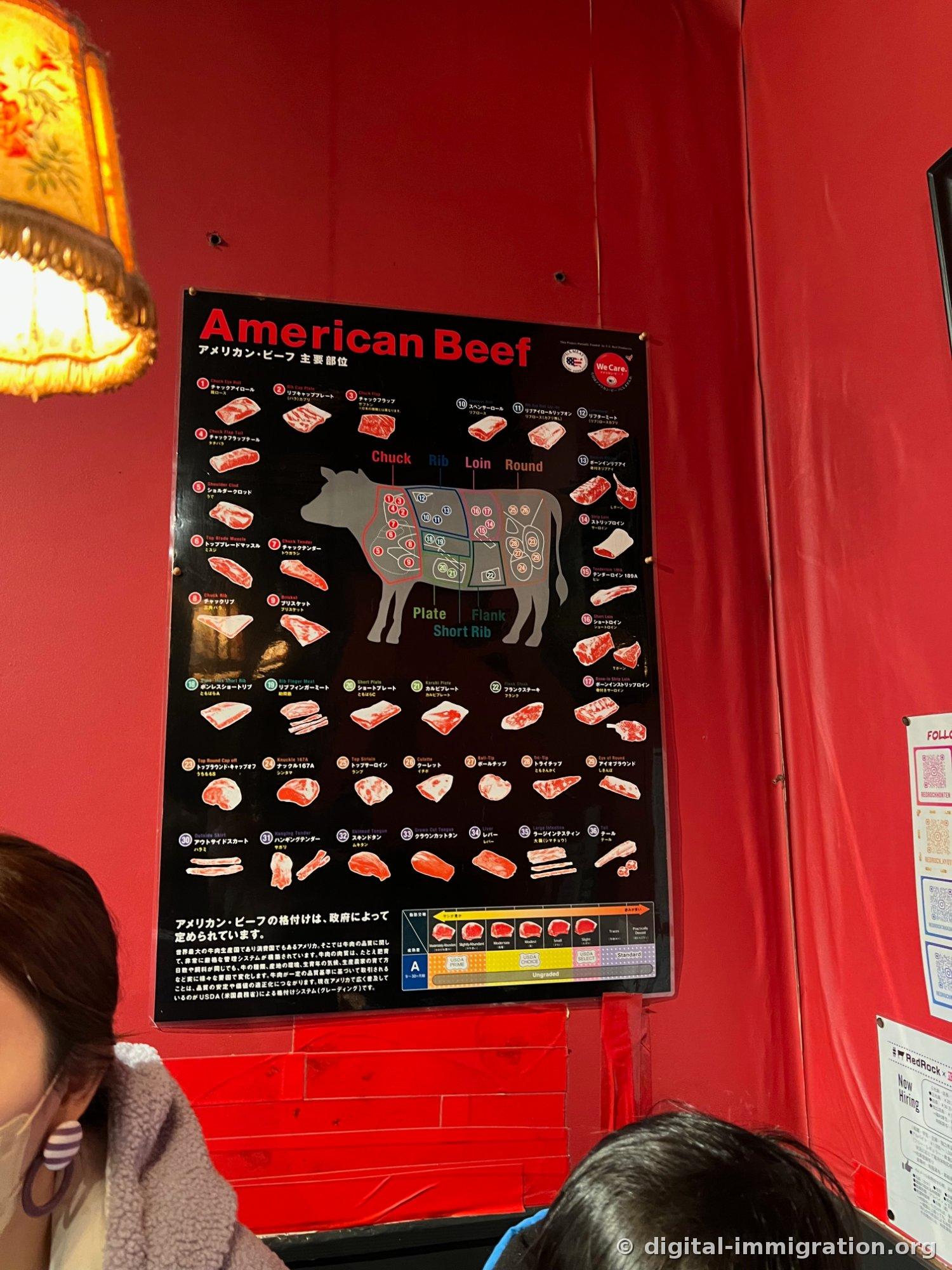
This poster is a subtle hint. It makes it clear that this isn't a restaurant pretending to specialize in Kobe beef, but rather one that uses both American beef and Kuroge Wagyu depending on the dish. I actually appreciated that honesty. It explained why such modest bowls came at this price point with this generous portion.
Roast beef rice bowl—the key is the two sauce lines
The first dish to arrive was the roast beef rice bowl, exactly as depicted on the sign. Sliced roast beef was piled so high in a black bowl that the rice underneath was invisible. A raw egg yolk sat on top, and a white sauce studded with peppercorns flowed down the side. On the opposite edge, a brown sauce seeped through the meat.
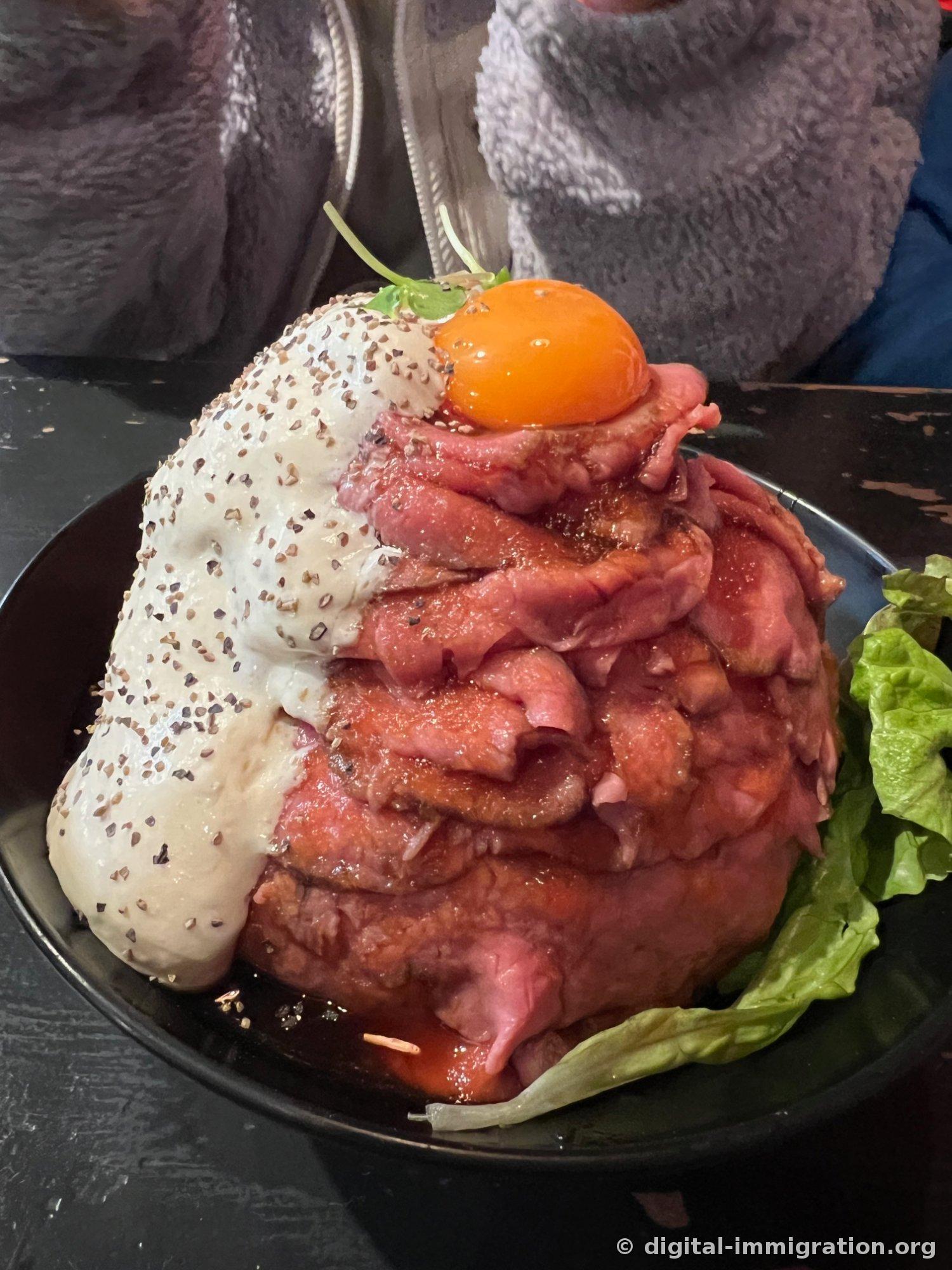
The meat itself came sliced thin, and the distinctive moist pink interior of roast beef stayed intact all the way through. There wasn't a dry patch in sight. The white sauce wasn't yogurt-like and tangy, but rather a rich cream sauce with a whisper of garlic, with whole peppercorns providing crunch. The brown sauce was savory, almost soy-sauce-like. The standard technique is to crush the yolk over everything, blend the sauces together, and drag it all down to the rice. At first I worried the sauce was excessive, but the rice portion turned out to be larger than expected—the balance was perfect.
There was one drawback: the rice gets pressed beneath the meat in the bottom of the bowl, so for the first half of eating, you're getting mostly meat and barely any rice. Only in the second half does sauce-soaked rice start appearing. It's much better to give everything a big toss with your chopsticks from the start to mix the top and bottom. I only figured this out on the second visit.
Steak rice bowl and Hamburg steak—what my companions ordered
My companions opted for the steak rice bowl. This has a completely different character from the roast beef. Thickly sliced steak is seared hard, leaving deep golden-brown marks on the surface, then topped with coarse cracked pepper and radish sprouts. Rice grains peeked out around the edges of the bowl, and the sauce had soaked into them, turning them a golden yellow. I stole a bite—the chew was forceful, with char and pepper coming first, ahead of any beefy juice.
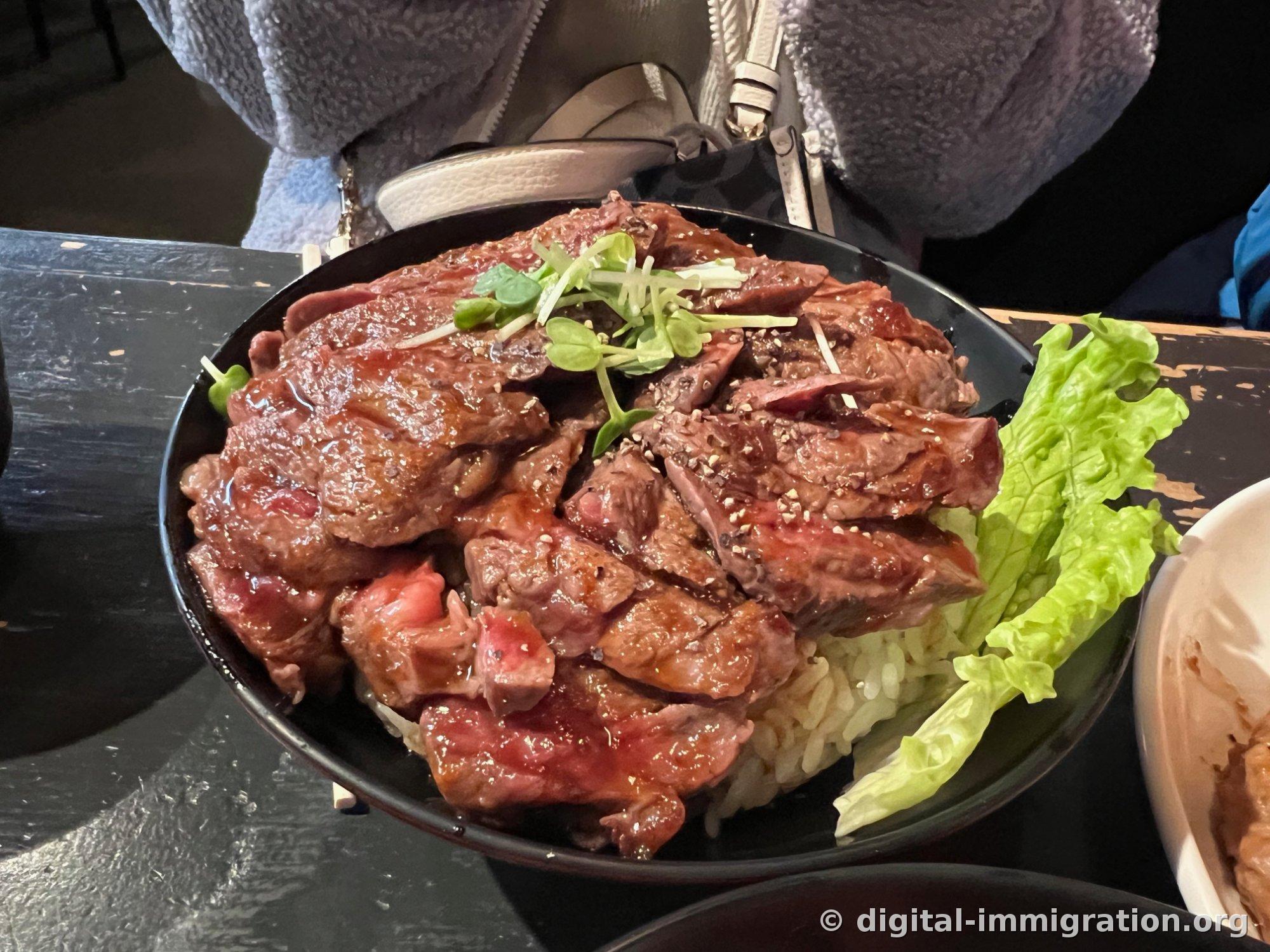
For my child, we ordered the Hamburg steak set meal. A plump Hamburg steak sat on a white plate, accompanied by a soft-boiled egg over rice dusted with pepper, shredded cabbage and lettuce, a potato salad, and a curly pasta topped with ketchup on the side. I was delighted to see the classic composition from Japanese Western restaurants. The Hamburg steak was seared so thoroughly the exterior had adhesive crust, but when split open, juices flowed from within.
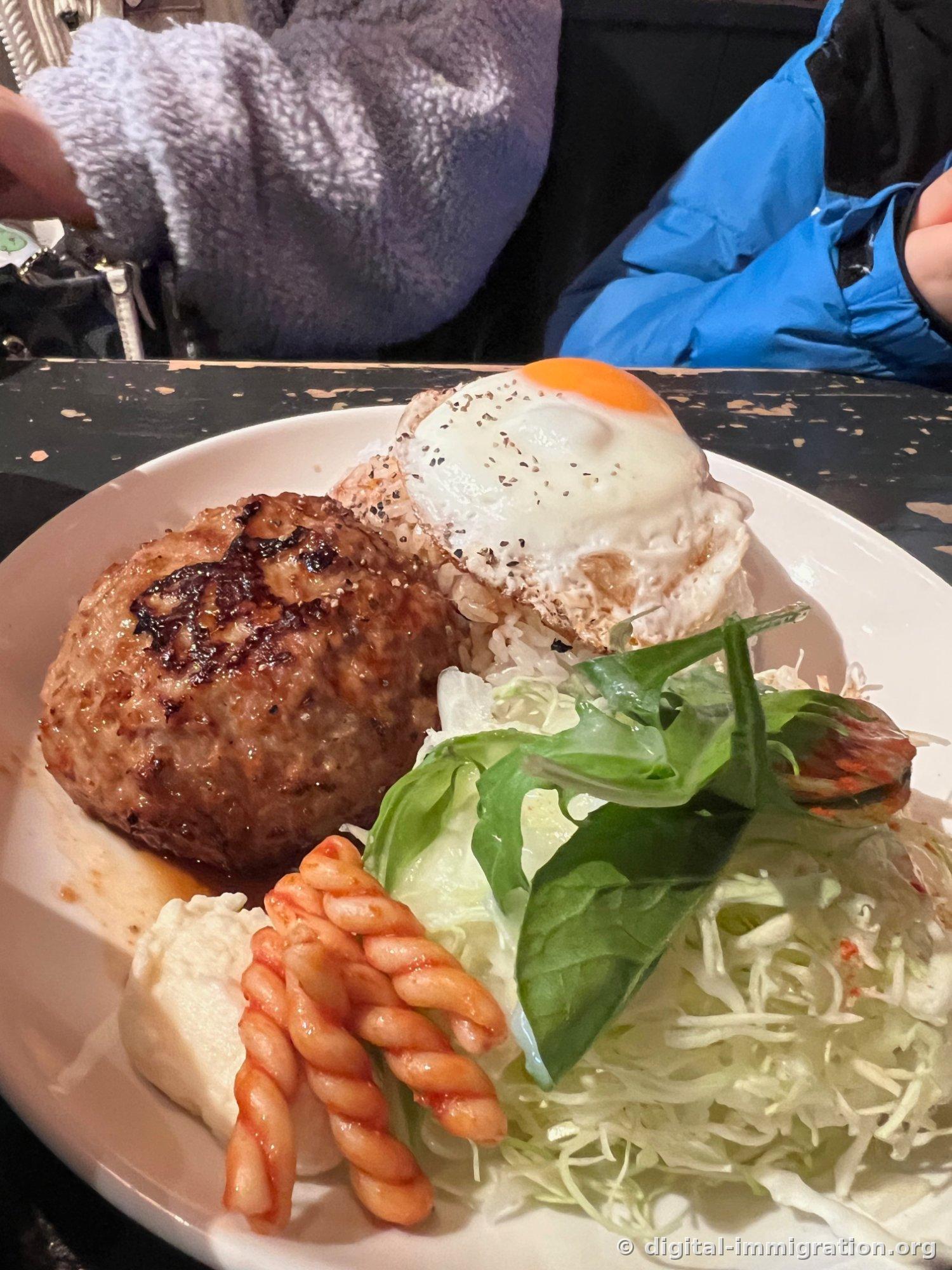
If you're not up for a mountain of meat, or if you're bringing a child, this plate is the safe choice. Nothing spicy, nothing raw.
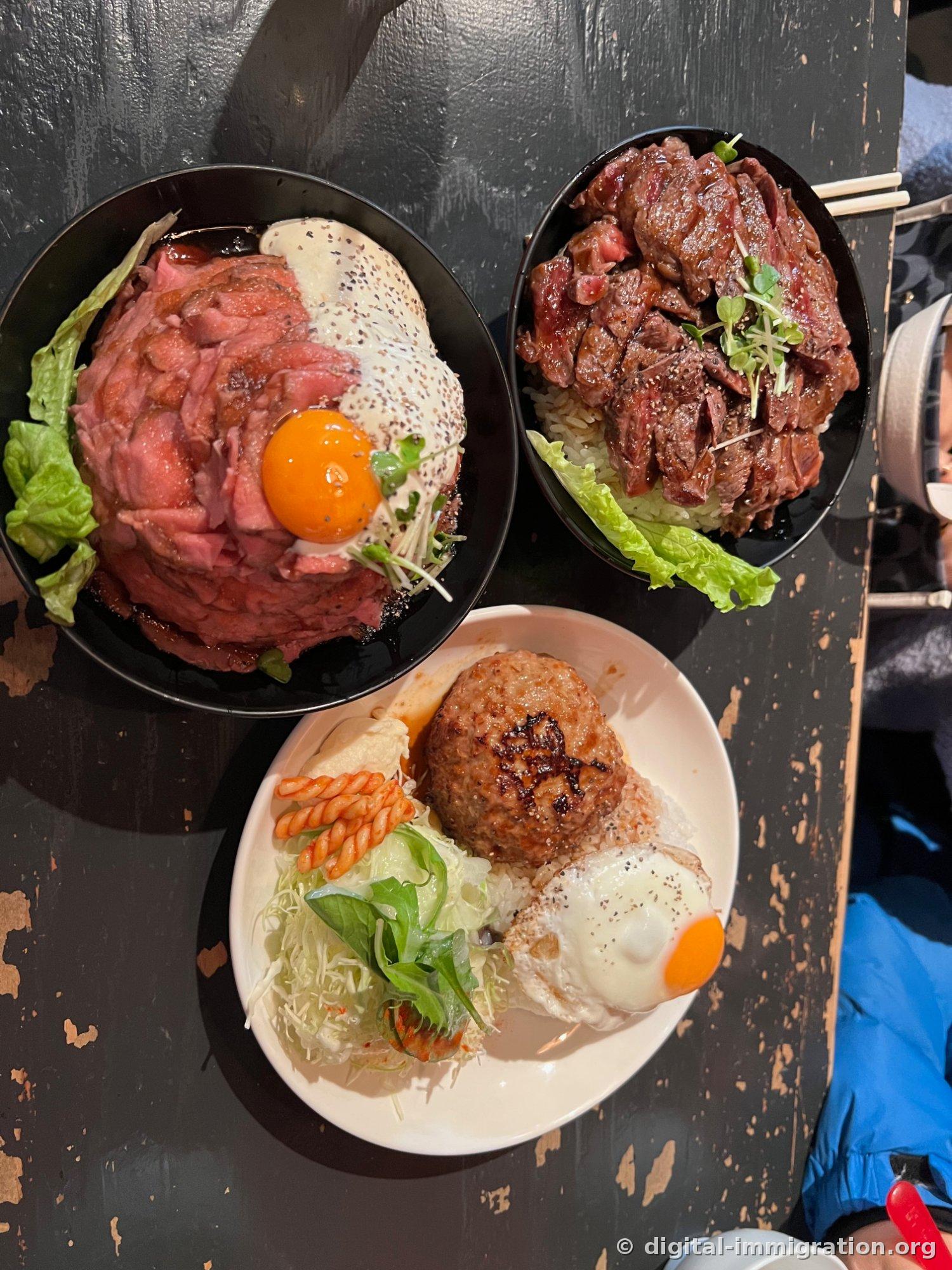
Looking at all three dishes on one table, their personalities are distinct. The roast beef on the left is delicate, with sauce as the star. The steak on the right offers chew and char. The Hamburg is the safe, comforting choice. If you're two people, I'd recommend ordering one roast beef and one steak to share. Order the same thing twice and you'll get bored by the end.
Location and practical tips
The flagship store is within walking distance of Sannomiya Station, nestled in an alley that's easy to walk past without a map. The sign hangs at second-story height, so you need to look up to spot it. The coordinates on the map below are where we actually stood.
- Be prepared to wait in line. Table turnover is quick, but since the shop is small, the wait outside can be long. Avoiding peak dining hours (around noon and 7 p.m.) is your best bet.
- Kuroge Wagyu items have limited stock and sell out late in the evening. If you're targeting those, come earlier.
- Portions are larger than the photos suggest. Be very cautious with larger sizes. It would be a shame to waste food.
- Break the egg yolk first and give everything a thorough mix before you start eating.
- There's nowhere convenient to store luggage. This isn't the place to drag a rolling suitcase.
- Prices, hours, and payment methods change seasonally, so it's best to confirm on-site. There was a 'Ko-Pay' sticker on the sign, but it's safer to directly ask whether cards are accepted.
Walking back out through the alley, what lingered on my palate wasn't the grease of beef, but the pepper aroma of that white sauce. My earlier conviction—that you can trust any beef shop in Kobe—was confirmed all over again at this place.
Read next
- From Akihabara's Chuo-dori to the Kanda River: A Record of Tokyo's Electronics District Revisited Multiple Times
Tokyo's Akihabara is a neighborhood where it's hard to say you've seen everything in a single visit. I've come multiple times across different seasons, and each time the signs chan…
Tokyo · Akihabara - Buying a Single ¥300 Year-End Jumbo Lottery Ticket at Nishi-Ginza Chance Center in Tokyo
Exit from the Hibiya exit of Tokyo's Shimbashi Station, walk toward the elevated highway for about three minutes, and suddenly you'll see a line of people stretching along the side…
Tokyo · Nishi-Ginza Chance Center - Ueno Ameyoko, the real magic starts after sunset — an evening walk from the Okachimachi Gate to Ueno Station
Every time I come to Tokyo, my feet find their way to Ueno Ameyoko (アメ横) without fail. This time I entered from the Okachimachi side and worked my way toward Ueno Station. I've met…
Tokyo · Ameya Yokocho Market