Shinjuku Butadaigaku (豚大学) — An Evening of Regret After Ordering the 700g 'Graduate School' Bowl
There's a restaurant that survives on pork bowls alone in a back alley of Shinjuku, Tokyo. The restaurant is called Butadaigaku, written in kanji as 豚大学—literally "pig university."…
Tokyo · Buta Daigaku Shinjuku
There's a restaurant that survives on pork bowls alone in a back alley of Shinjuku, Tokyo. The restaurant is called Butadaigaku, written in kanji as 豚大学—literally "pig university." They call their branches "校舎 (school building)," and even name their sizes like university years. At first I thought it was childish wordplay, but standing in front of the door looking at the menu, I understood why they chose this name. The tiers increase based on how much meat is piled on top of the rice.
The Red Door and the 500-Yen Lunch Box
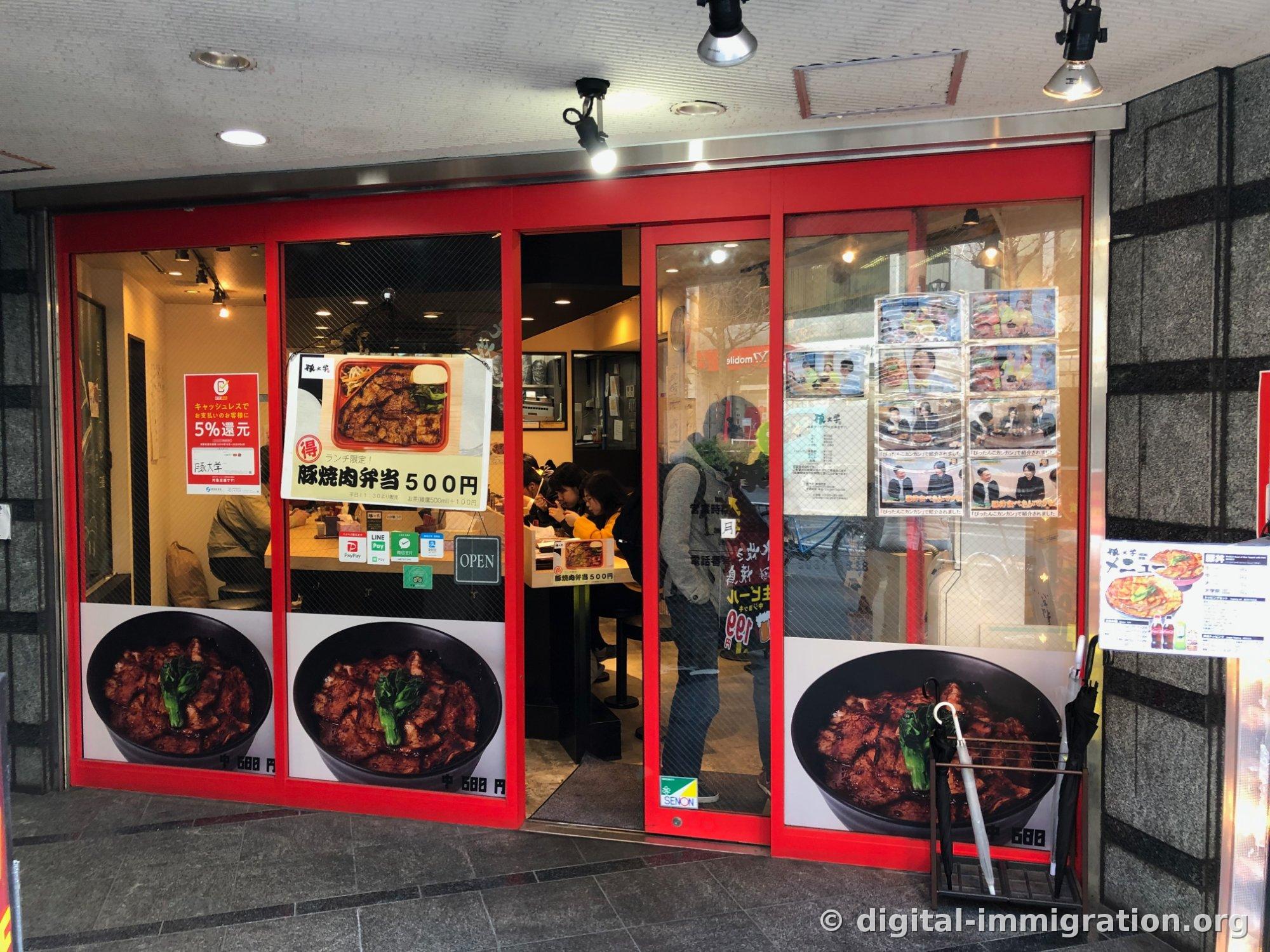
The shop is on the first floor with floor-to-ceiling windows framed by red frames. At the bottom of the glass is a life-size photo covered with a black bowl full of meat, with "中 600円" written next to it. 600 yen in the middle of Shinjuku. This single number explains why there's a line at lunchtime. You can see straight through to customers sitting at the counter inside. A piece of paper on the glass says "豚焼肉弁当 500円 ランチ限定"—this is a bento sold from 11:30 on weekdays. I saw quite a few people buying it and leaving in a hurry.
The electronic sign next to the entrance reads "全国丼グランプリ 2連続金賞受賞 ~豚丼部門~"—a two-time gold award winner in the national rice bowl grand prix pork bowl category. Below that is "大学院 1120円"—this is the restaurant's largest size. Business hours are also posted on the bottom of the sign: 11:00~22:00 on weekdays, and 11:00~15:00 and 16:30~20:15 on weekends and holidays. If you're planning to go in the evening on weekends, be careful about this break time. The information is based on when I visited, so I recommend checking on-site to see if it's still the same.
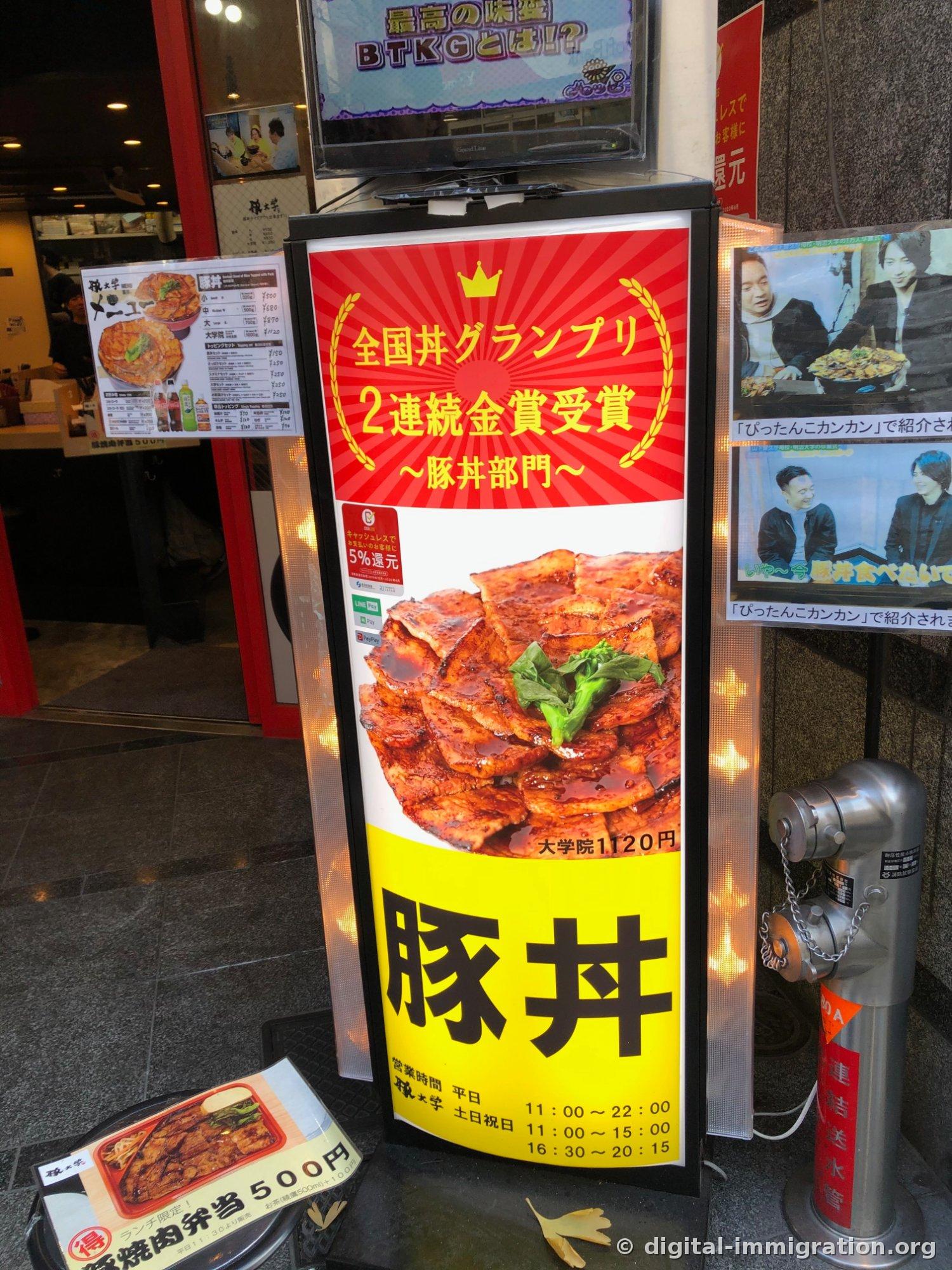
Looking closely at the menu board on the left, you can see the size system: 並 (Regular) 300g for 500 yen, 中 500g for 680 yen, 大 (Large) for 870 yen, and 大学院 (Graduate School) 1000g for 1120 yen. It's unclear whether the gram count includes rice or just the meat, but looking at the actual servings, it seems to include rice. Either way, getting a 300g bowl for 500 yen is uncommon in this neighborhood's prices.
Inside: A Blackboard That Serves as Both Menu and Announcement Board
Inside, a U-shaped counter surrounds the kitchen, and one wall is completely covered with a green chalkboard. "豚大学 新宿校舎" is written in chalk, and a large drawing of a pig wearing glasses is next to it. The date appears to be updated by hand each day—it showed "1月 10日 (金)" and even a "日直" (day monitor) section. They've really recreated a classroom atmosphere.
On white paper to the right of the blackboard is posted "豚大学 五か条" (The Five Principles of Pig University). From the first to fifth principle, messages like "don't leave anything," "scrape it all in," "finish it all" are written in vertical brush script. The last principle was something like "元気になって帰るべー" (go home feeling energized). When a restaurant posts things like this on the wall, they almost never serve bad food.
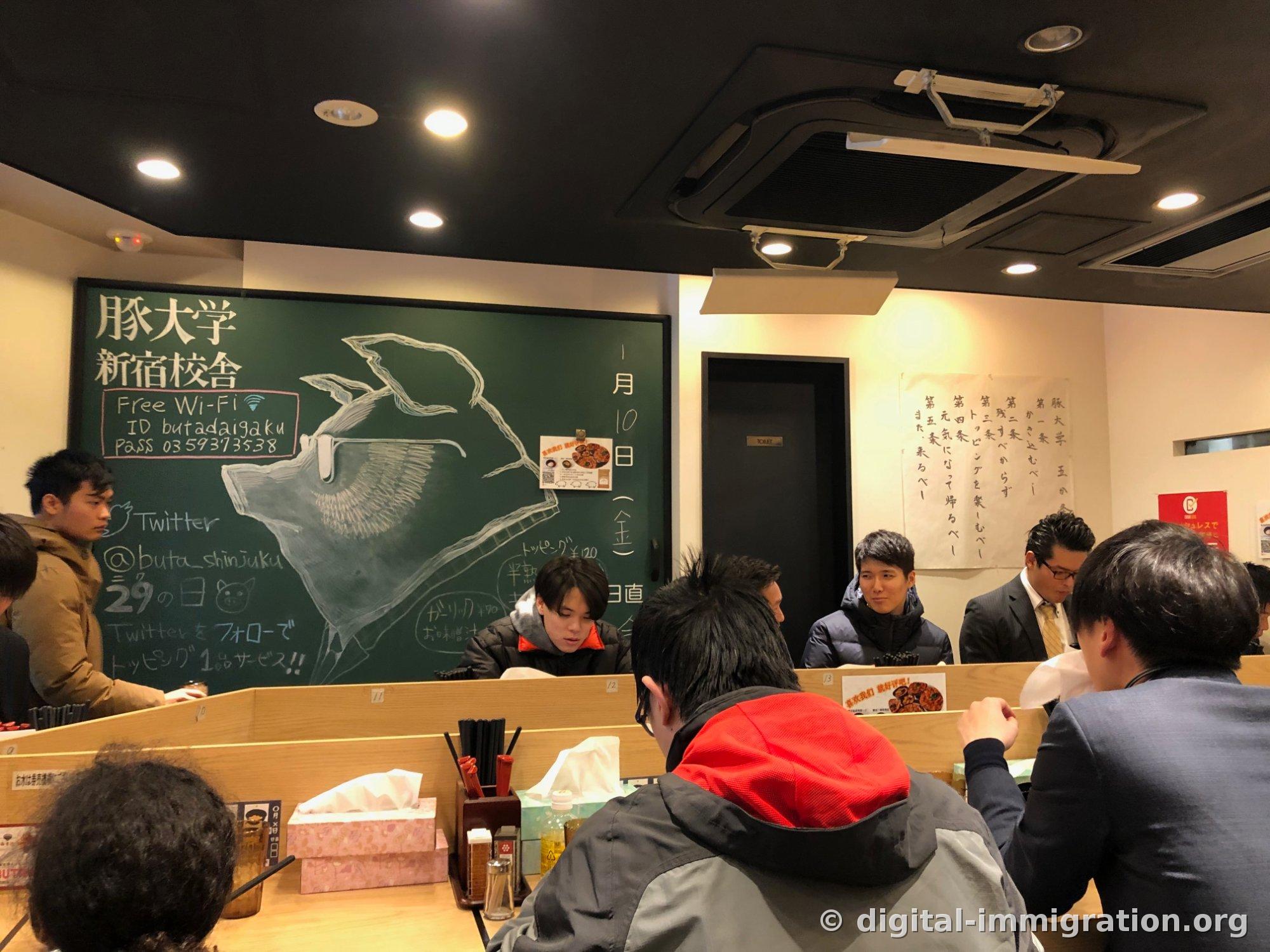
The blackboard also contains practical information. The Wi-Fi ID is butadaigaku, and the password is the shop's phone number. There's also a prominent note saying "Follow us on Twitter for one free topping." The 29th of each month is specially marked as "29(にく)の日" (Niku/Meat Day), a common event at Japanese meat restaurants due to the pun on the number 29. If you go on the right day, something special apparently happens.
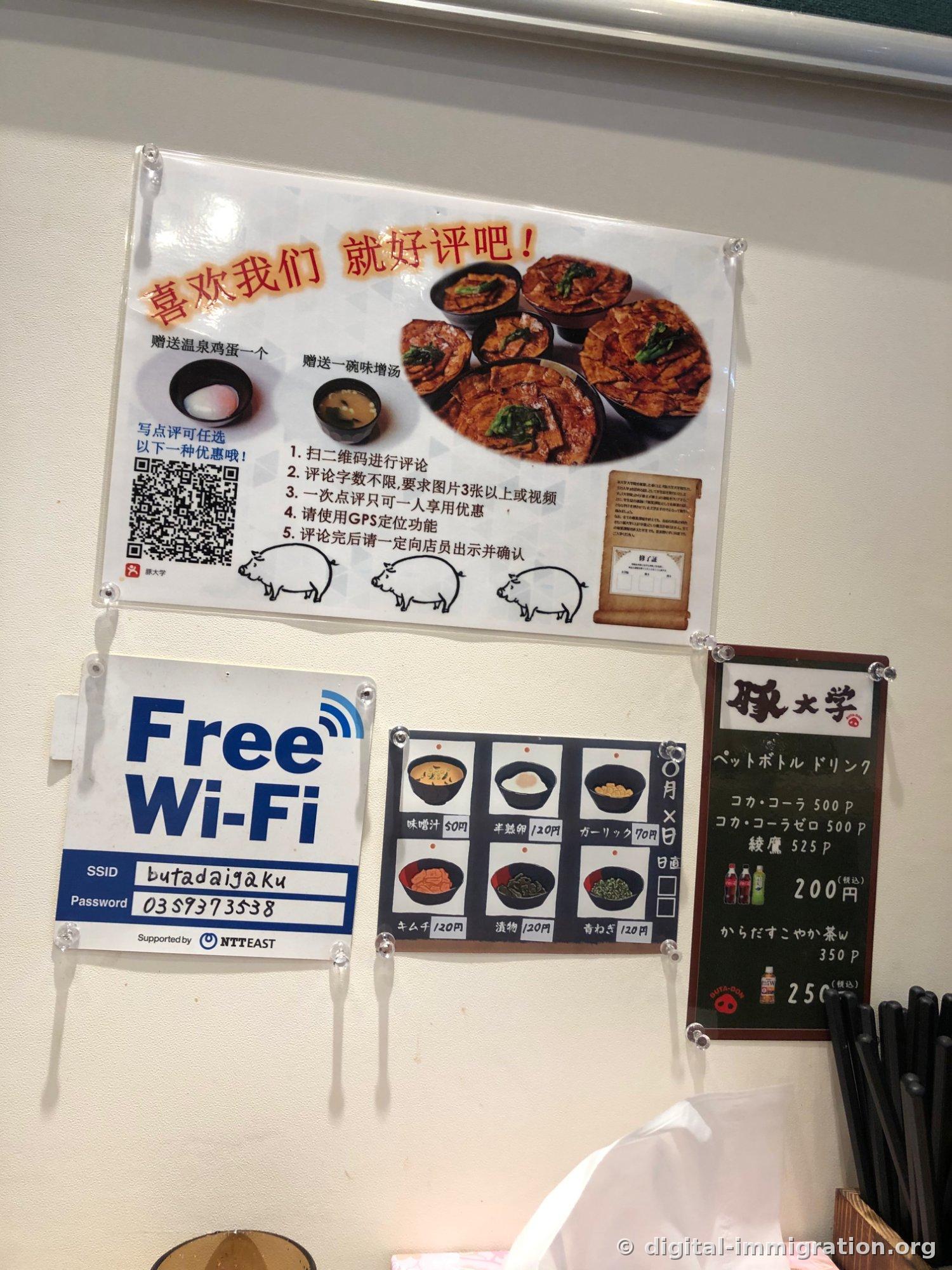
On the wall next to the counter is a topping price list with illustrations. Miso soup 50 yen, soft-boiled egg 120 yen, garlic 70 yen, kimchi 120 yen, pickled vegetables 120 yen, scallions 120 yen. Bottled drinks include Coca-Cola 500ml for 200 yen, Ayataka green tea for around 200 yen. There's also an information sheet in Chinese explaining that if you write a review, you get a free hot spring egg or miso soup. The conditions are quite specific: at least 3 photos or video, GPS enabled, and show it to a staff member when finished.
One Bowl of 中 (Medium) and Spicy Seasoning Without Broth
About five minutes after ordering, a black bowl arrived. This is the 中 (medium) size. You can barely see the rice. Thick slices of pork belly, about palm-sized, are layered and fill the entire width of the bowl, with a handful of blanched vegetables in the center. No broth—just meat, rice, and greens. The simple composition lets the quality of the meat speak for itself.
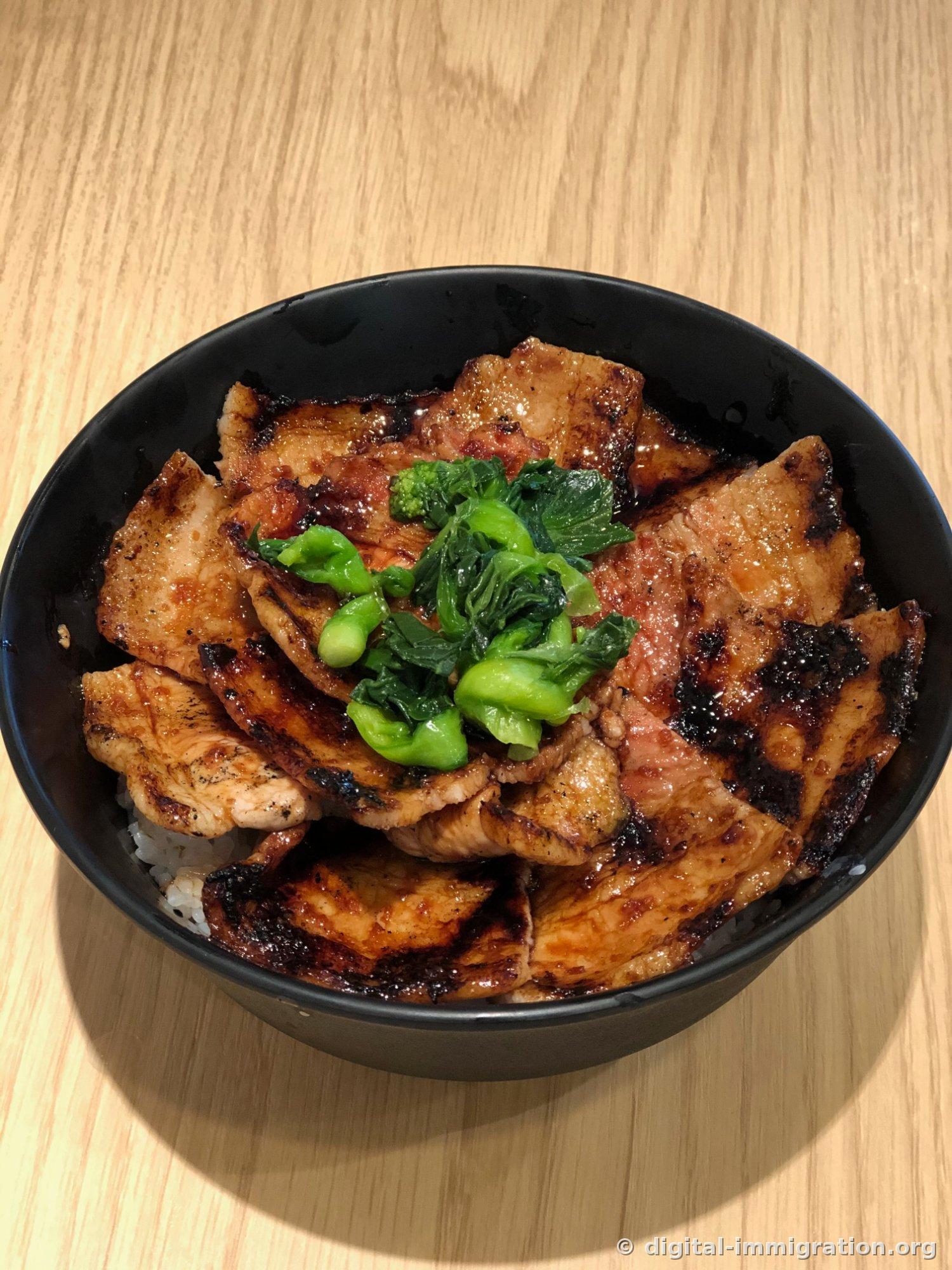
Up close, you can see the meat's edges are charred black in places. It's not a mistake—it's intentionally seared on high heat. That bitter char balances the sweet-salty sauce. The surface glistens with oil and sauce, and the smell of charcoal wafts up. When you pick up the meat with chopsticks, it doesn't droop but retains good elasticity.
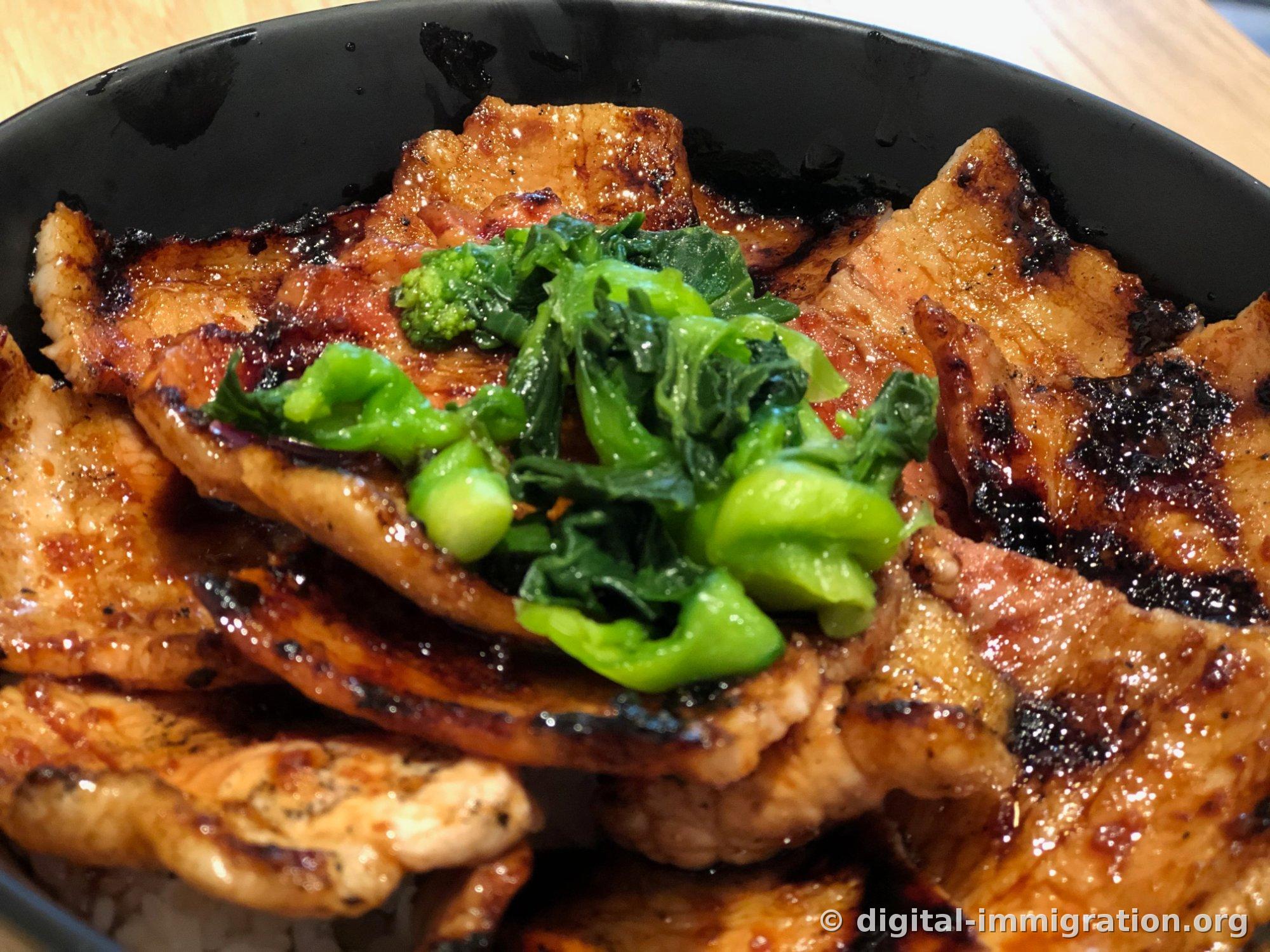
The seasoning is spicier than expected. One or two pieces taste sweet, but after three or four, a tingle rises from the back of your tongue. The peppery heat combined with the sauce's sweetness means if you keep eating just the meat without rice, your throat dries out quickly. But that spice prevents the pork belly fat from becoming cloying. Unlike Korean-style heat from gochugaru, this is a layered combination of salt, sweetness, and pepper that leaves a long aftertaste. Things balance out when you take a big spoonful of rice and push it in together with the meat. After finishing a 500g medium, I couldn't eat anything else for a while. The portions really are generous.
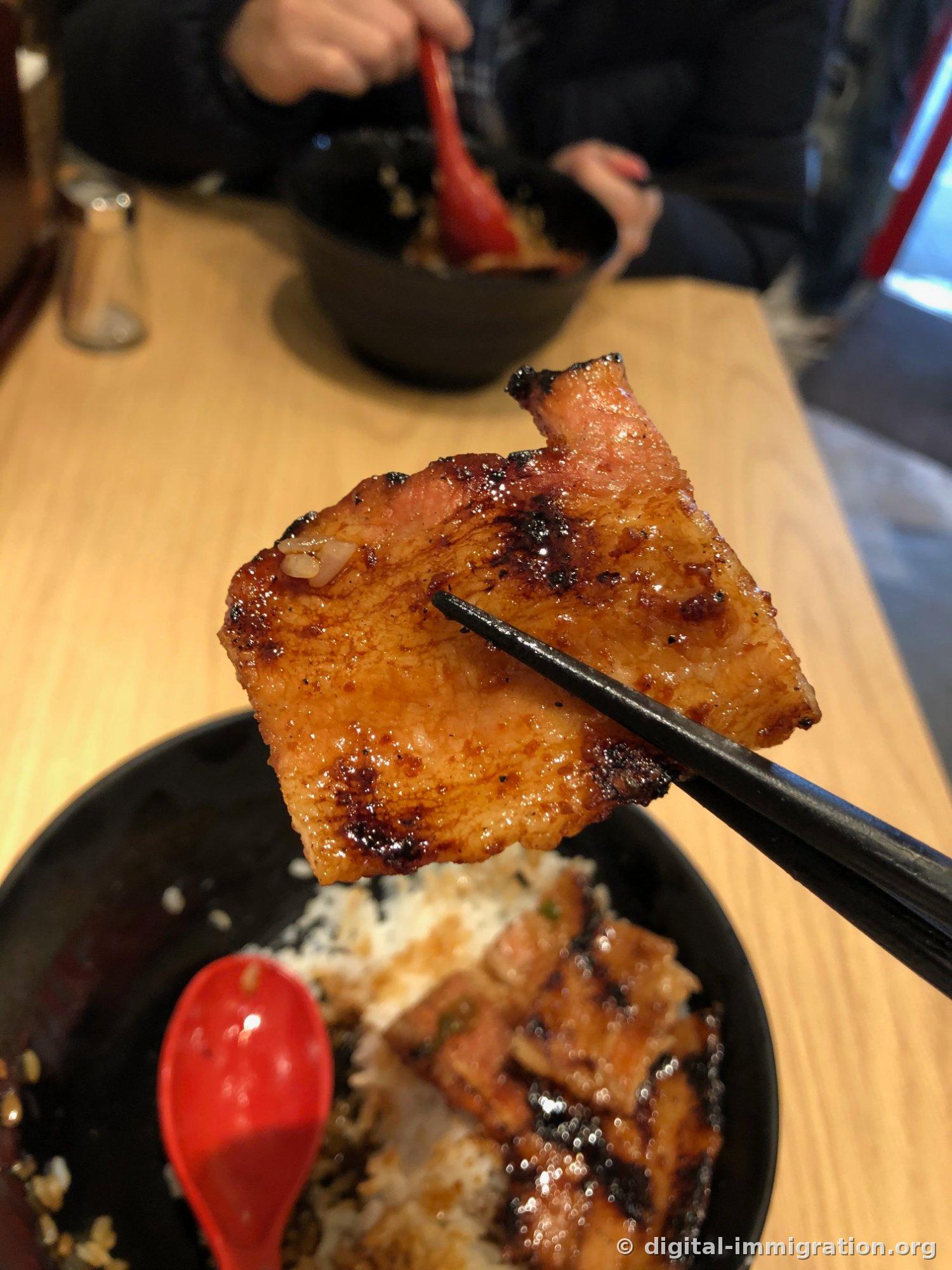
A red plastic spoon comes with the chopsticks, and it's surprisingly important. It's meant to scrape up the sauce and remaining rice at the bottom of the bowl. If you only use chopsticks, you'll end up leaving sauce-soaked rice uneaten at the end. It's no accident that the Five Principles on the wall include "scrape it all in."
How to Get There and Practical Tips
It's within walking distance from Shinjuku Station. Since it's on the first floor deep in an alley lined with office buildings, not on a main street, it's hard to find without a map. It's faster to plug the photo coordinates directly into a map app and navigate from there.
Here's what I learned from actually visiting.
- Go one size smaller than you think. Even 並 (regular) at 300g is plenty by Korean standards. 中 (medium) at 500g is for people with big appetites. 大学院 (graduate school) at 1000g—I can't recommend it unless you're there for photos. I saw someone at the next seat leave about half of their 大学院 bowl unfinished.
- Always add miso soup for 50 yen. Since there's no broth in the bowl itself, the spicy seasoning keeps building up. For 50 yen, it opens up your palate.
- This restaurant is optimized for solo dining. It's centered around counter seating, so if there are two or more of you, you'll sit next to each other. The turnover is fast—it's not a place to linger.
- They accept many payment methods. PayPay, LINE Pay, UnionPay, and Alipay stickers are on the door. You don't need cash.
- Watch out for weekend break time. According to the sign, they close at 15:00 and reopen at 16:30 on Saturdays, Sundays, and holidays. Going at an awkward time could mean a wasted trip.
- If you visit at lunch, the 500-yen bento is worth considering. It's listed as available from 11:30 on weekdays, and adding a 500ml drink costs an extra 100 yen.
It's not fancy. They write the date in chalk on a blackboard, post papers on the wall, and pile meat in bowls. But the experience of filling your belly for 600 yen in Shinjuku is uncommon. Next time, I'm ordering miso soup first and going with a regular size.
Read next
- From Akihabara's Chuo-dori to the Kanda River: A Record of Tokyo's Electronics District Revisited Multiple Times
Tokyo's Akihabara is a neighborhood where it's hard to say you've seen everything in a single visit. I've come multiple times across different seasons, and each time the signs chan…
Tokyo · Akihabara - Buying a Single ¥300 Year-End Jumbo Lottery Ticket at Nishi-Ginza Chance Center in Tokyo
Exit from the Hibiya exit of Tokyo's Shimbashi Station, walk toward the elevated highway for about three minutes, and suddenly you'll see a line of people stretching along the side…
Tokyo · Nishi-Ginza Chance Center - Ueno Ameyoko, the real magic starts after sunset — an evening walk from the Okachimachi Gate to Ueno Station
Every time I come to Tokyo, my feet find their way to Ueno Ameyoko (アメ横) without fail. This time I entered from the Okachimachi side and worked my way toward Ueno Station. I've met…
Tokyo · Ameya Yokocho Market