Shinjuku Alleyway Stameshi Dondon, A Full Belly From One Bowl of Chicken Katsu Don
After 8 p.m. in Shinjuku, Tokyo, when your stomach is hungry but you're tired of waiting in line. That night was no exception. One block down a side street from the main road, I en…
Tokyo · Stameshi Dondon Shinjuku
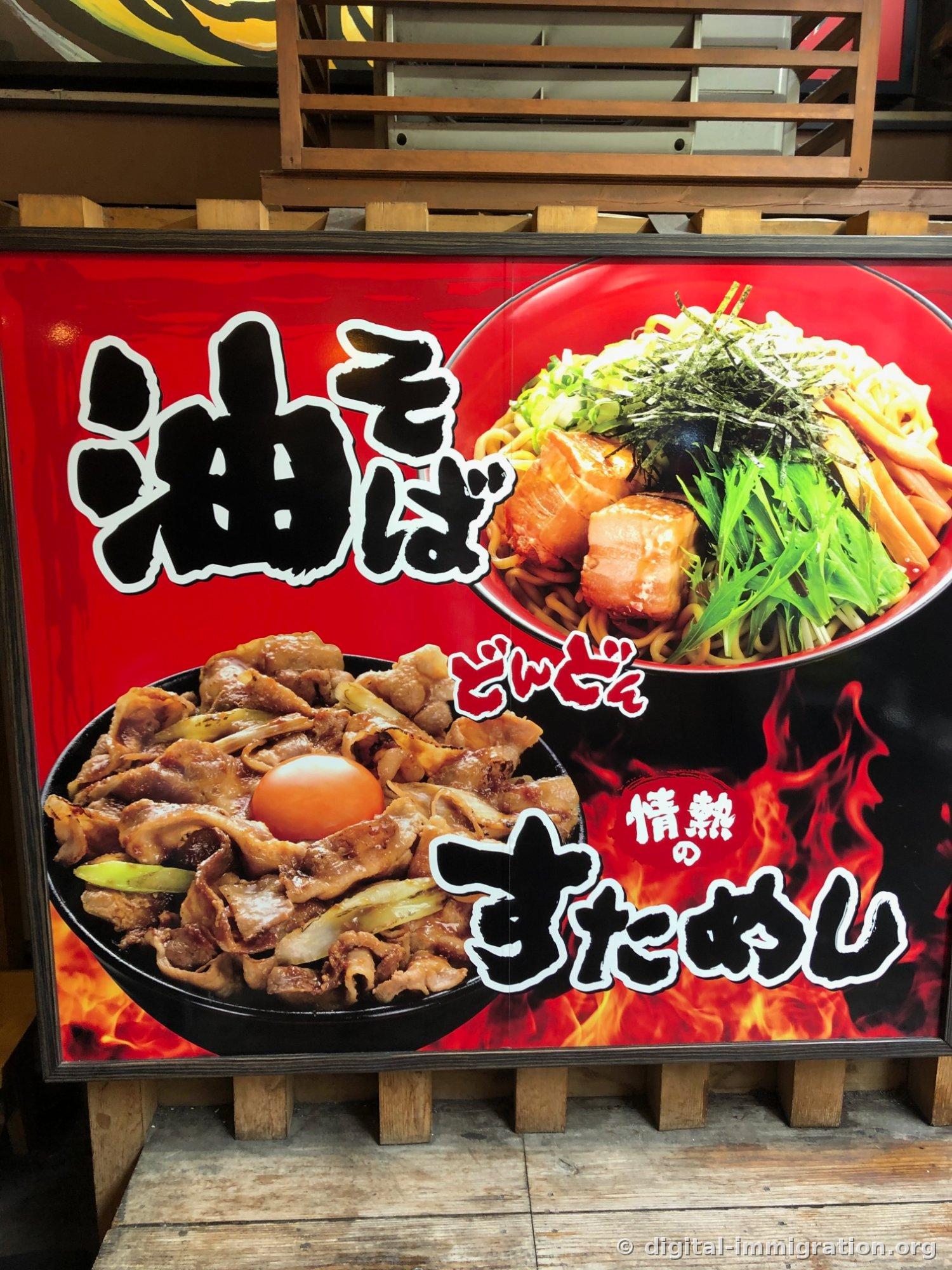
After 8 p.m. in Shinjuku, Tokyo, when your stomach is hungry but you're tired of waiting in line. That night was no exception. One block down a side street from the main road, I entered 情熱のすためし どんどん (Passion's Stameshi Dondon) Shinjuku Branch with the red signboard—it wasn't planned, just something that caught my eye. On the standing sign in front of the door, there were large photos of abura-soba and stameshi against a fiery background, and I actually found this loud signboard trustworthy. In Tokyo, shops like this are generally cheap, have generous portions, and are convenient to eat alone.
The Inside is Loud, and I Liked That
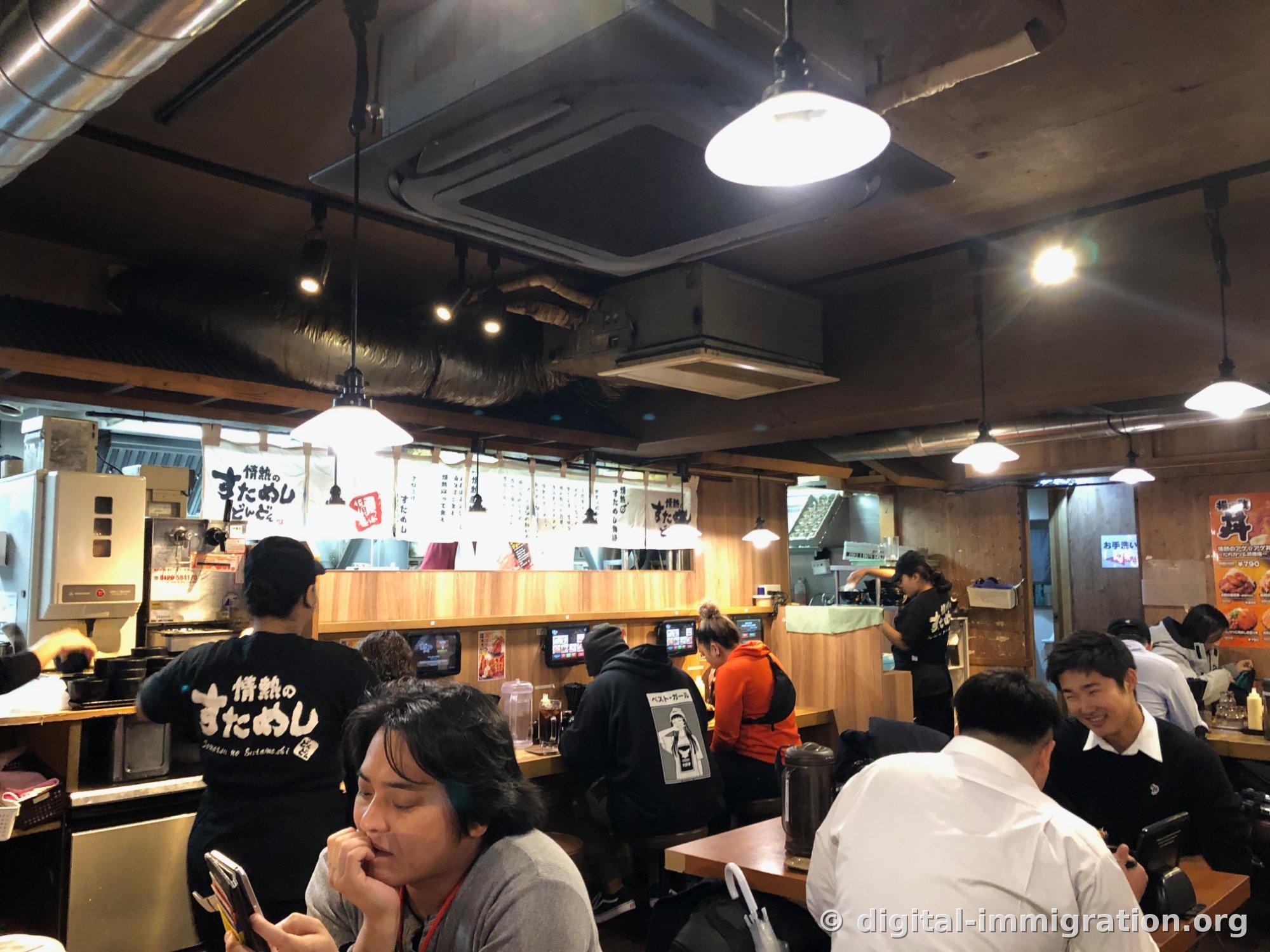
As soon as you open the door, the smell of frying oil and caramelized soy sauce hits you. The ceiling is unfinished as-is. Exposed silver ducts run across it with incandescent bulbs hanging low beneath. Above the kitchen, white noren curtains hang in rows, and staff members move about in black t-shirts with 情熱のすためし printed large on the back.
About half the customers were dining alone. People sitting at the counter in hoodies with their phones, office workers in white shirts who seemed to be stopping by on their way home from work. It was far from the atmosphere of tourists crowding in to take photos. It's more like a local neighborhood spot where people come to eat. The seating is close together—you can hear the chopstick sounds of the person next to you.
Ordering is Done via Tablet, and There's an English Menu
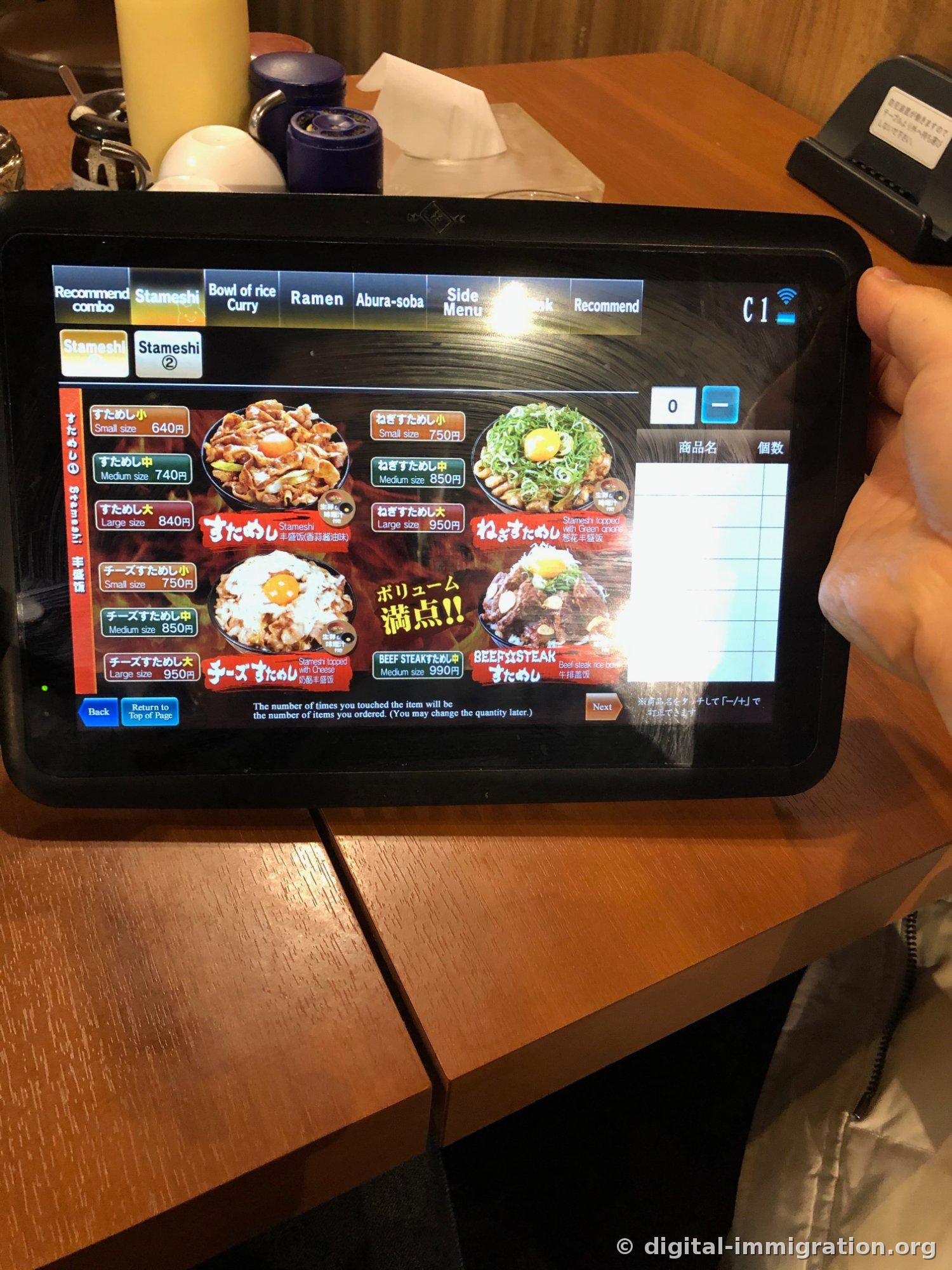
Once you sit down, they give you a tablet. The top tabs are divided with English: Recommend combo, Stameshi, Bowl of rice·Curry, Ramen, Abura-soba, Side Menu, Drink. Since there are English labels, you won't get lost even if you don't know Japanese. Items you select appear in real-time on the right side of the screen, and if you tap the same menu multiple times, the quantity increases accordingly.
When I opened the stameshi tab, the prices were as follows.
- Stameshi (すためし) Small 640 yen / Medium 740 yen / Large 840 yen
- Green onion stameshi (ねぎすためし) Small 750 yen / Medium 850 yen / Large 950 yen
- Cheese stameshi (チーズすためし) Small 750 yen / Medium 850 yen / Large 950 yen
- BEEF STEAK stameshi (すためし) Medium 990 yen
The screen showed that stameshi comes with a raw egg and miso soup. At Tokyo prices, a rice bowl around 700 yen that comes with an egg and soup is a good deal.
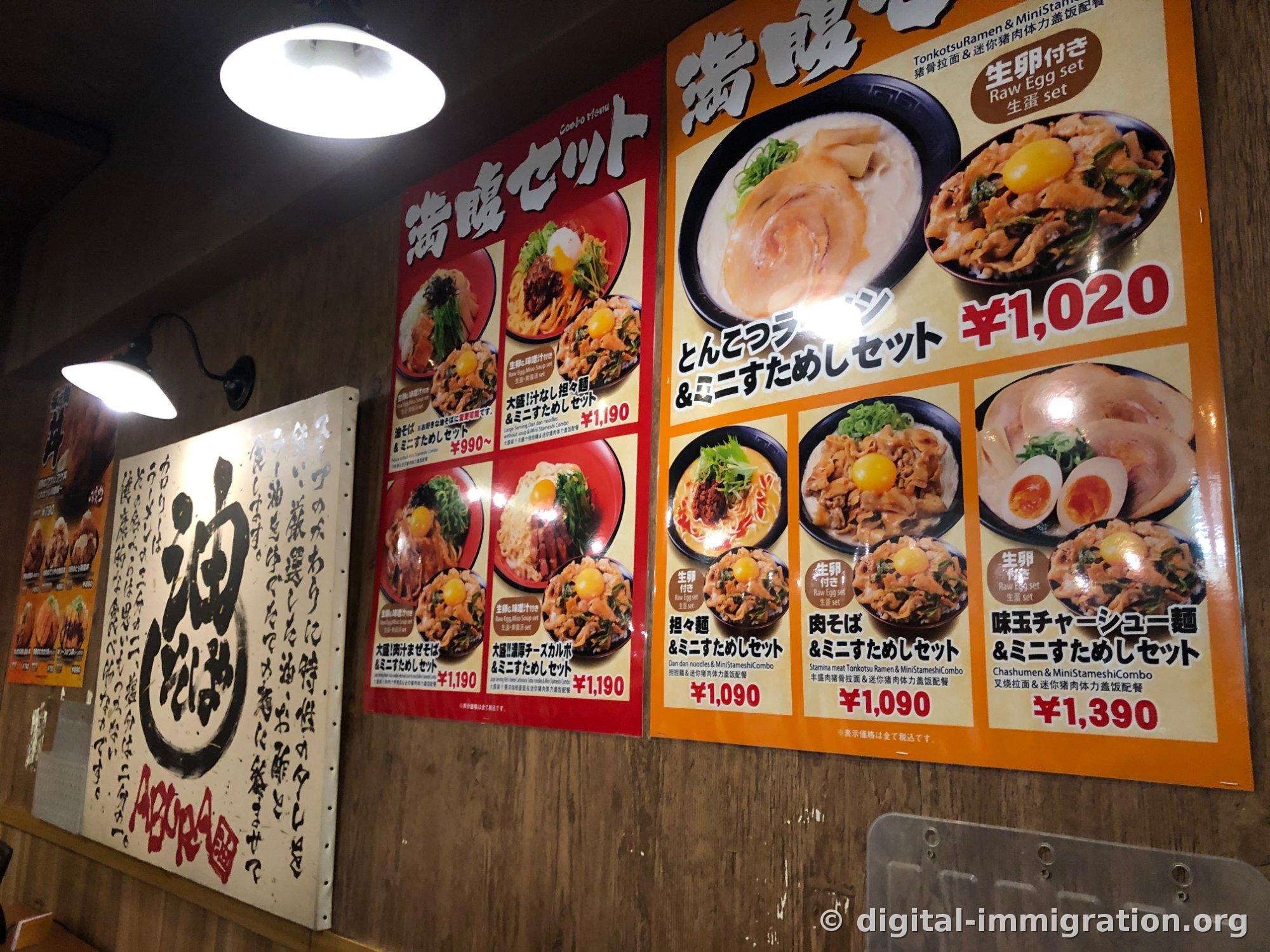
There were also paper posters on the wall. The Manpuku Set (満腹セット) particularly caught my eye, with a tonkotsu ramen and mini stameshi set at 1,020 yen. Tantanmen set and niku soba set at 1,090 yen each, and aji tama chashu men set at 1,390 yen. The abura-soba series sets on the left red poster start at 990 yen, with oomori (大盛) sets at 1,190 yen. If you want to eat both noodles and rice, this side of the menu makes sense price-wise. However, these prices were what were posted on the wall the day I visited, so it's safer to confirm at the actual location whether they're still the same.
What Arrived Was Chicken Katsu Don
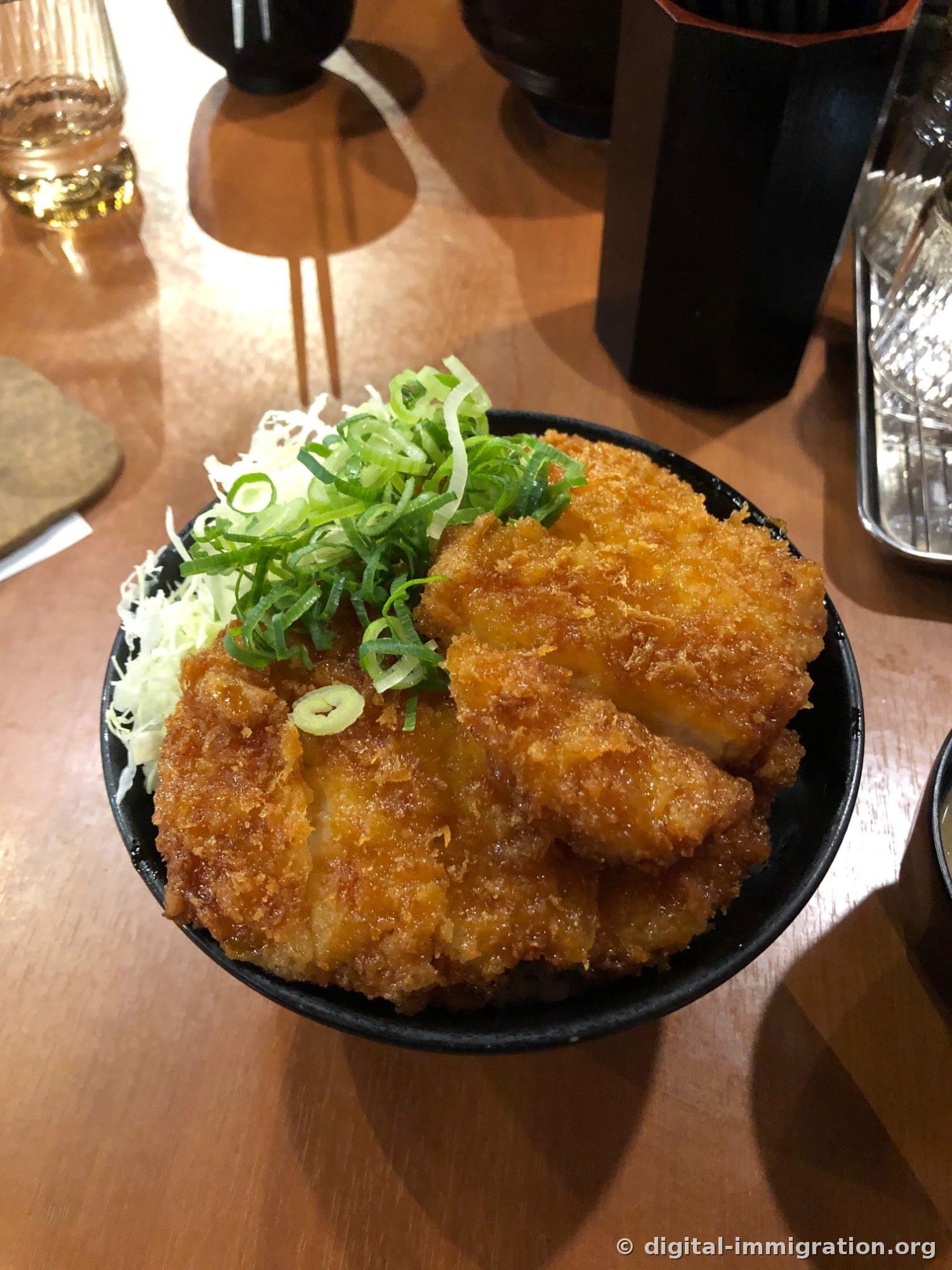
What I ordered wasn't a meat rice bowl but a fried topping rice bowl. The composition was rice in a black bowl, thick-cut katsu sliced and placed on top, then shredded cabbage and finely chopped green onions piled high. The breading wasn't a dark brown—it was a bright golden color, which already showed from looking at it that it was freshly fried.
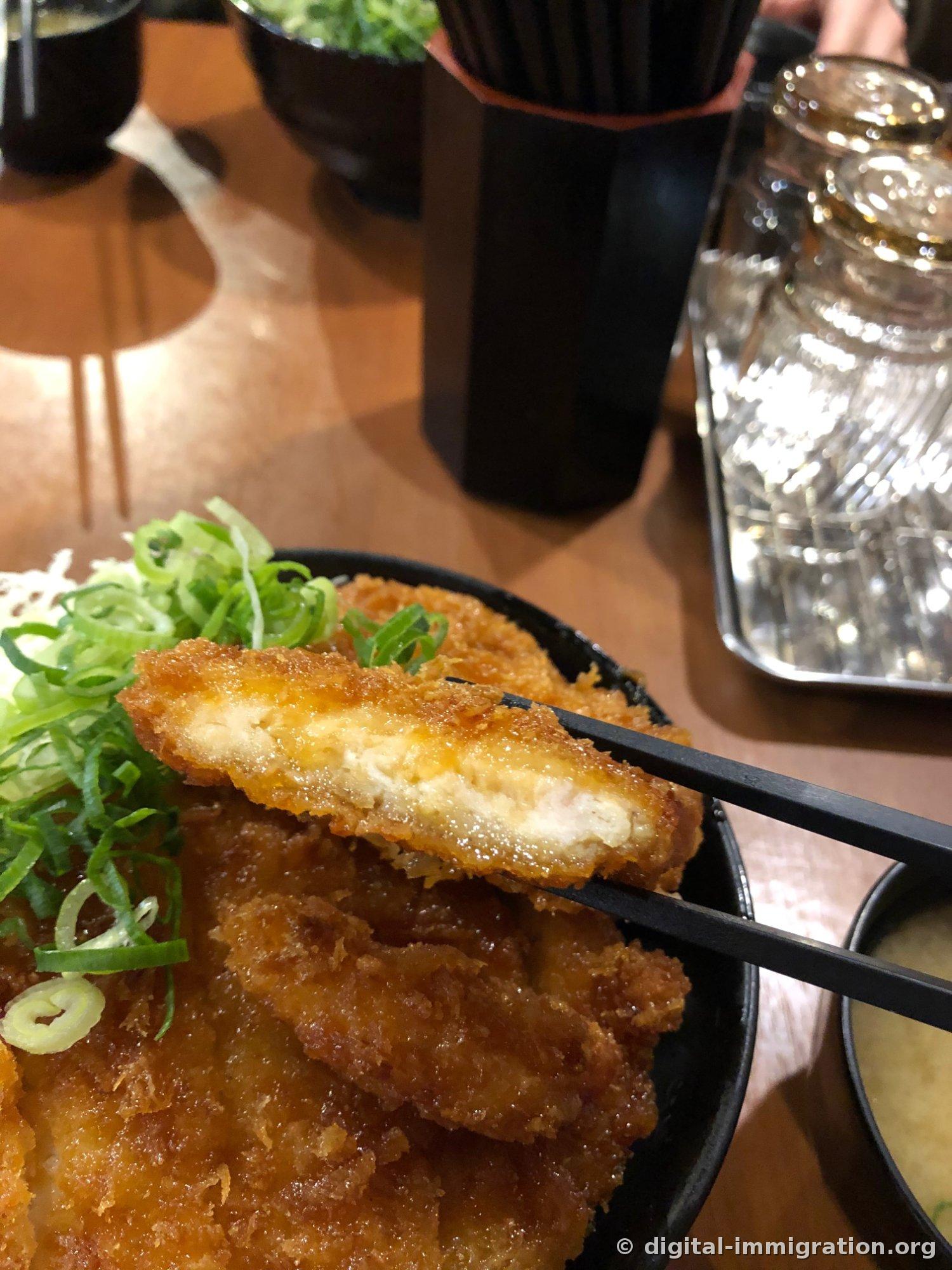
I picked up one piece and looked at the cross-section. The breading was about 3-4mm thick, and the meat inside was cooked white while maintaining its grain structure. When you bite it, the outside makes a crispy sound while the inside stays moist without being dry. The sauce wasn't applied thickly but just thinly spread over the fried top, so the crispiness lasted all the way through. If you eat it with the green onions, the greasy flavor is interrupted once. The difference between including them or not is quite significant.
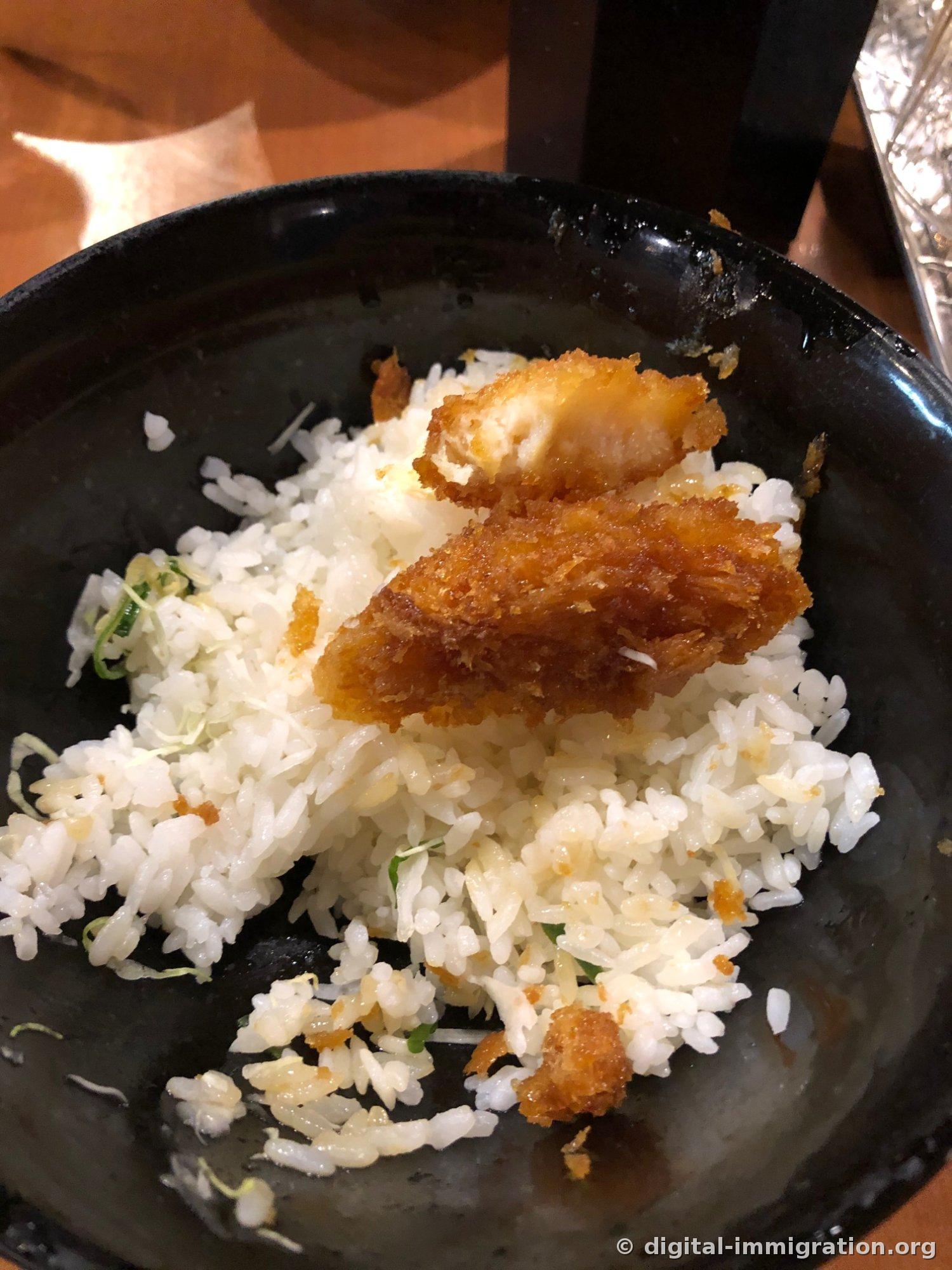
There was one downside though. The amount of rice is more than the amount of fried topping. After finishing the fried katsu, there's a lot of rice remaining, and from that point you have to get by with the sauce-soaked rice below and remaining green onion crumbs. I intentionally left the last two pieces to place on top of the rice and eat together. If you find rice burdensome, it's better to order the Small size from the start. Since there's only a 100 yen difference between sizes, there's no reason to push yourself to get the Medium.
Location and How to Get There
It's within walking distance from Shinjuku Station. You need to go into an alley away from the main road, so it's easy to pass by without looking at a map. The trick to finding it is simple. Just look for a standing sign with black calligraphy on a red background. This red stands out even among the yakitori shop and izakaya signs. The coordinates of the photographed location are marked on the map below.
Good to Know If You're Visiting for the First Time
- The ordering tablet has English tabs. You almost never need to raise your hand and call staff.
- Water bottles, sauce, and shichimi are already on the table. Water is self-service.
- It's a comfortable structure for eating alone at the counter. There's only room for luggage at your feet, so bringing a suitcase would be inconvenient.
- The raw egg that comes with stameshi is meant to be mixed with the rice. If raw egg is uncomfortable, it's better to remove it beforehand.
- It's recommended to confirm business hours and current prices on-site. Wall poster and tablet prices often change.
If you're having a night in Shinjuku where you need to fill your stomach with a hot meal without reservations, without waiting in line, and for under 1,000 yen, this place is the right call. It's not the kind of place to go for a grand culinary experience. It's a place where you open the door when you've been walking all day and need to fill your stomach with fried food and rice.
Read next
- From Akihabara's Chuo-dori to the Kanda River: A Record of Tokyo's Electronics District Revisited Multiple Times
Tokyo's Akihabara is a neighborhood where it's hard to say you've seen everything in a single visit. I've come multiple times across different seasons, and each time the signs chan…
Tokyo · Akihabara - Buying a Single ¥300 Year-End Jumbo Lottery Ticket at Nishi-Ginza Chance Center in Tokyo
Exit from the Hibiya exit of Tokyo's Shimbashi Station, walk toward the elevated highway for about three minutes, and suddenly you'll see a line of people stretching along the side…
Tokyo · Nishi-Ginza Chance Center - Ueno Ameyoko, the real magic starts after sunset — an evening walk from the Okachimachi Gate to Ueno Station
Every time I come to Tokyo, my feet find their way to Ueno Ameyoko (アメ横) without fail. This time I entered from the Okachimachi side and worked my way toward Ueno Station. I've met…
Tokyo · Ameya Yokocho Market