Osaka's Tsutenkaku: The Day the Tower Slider Made a Bigger Impression Than the Observation Deck
Standing in the middle of the Shinsekai arcade, Tsutenkaku fills your entire view at the end of the alley. Every time I came to Osaka, I'd walk past this spot, but this time, bring…
Osaka · Tsutenkaku Tower
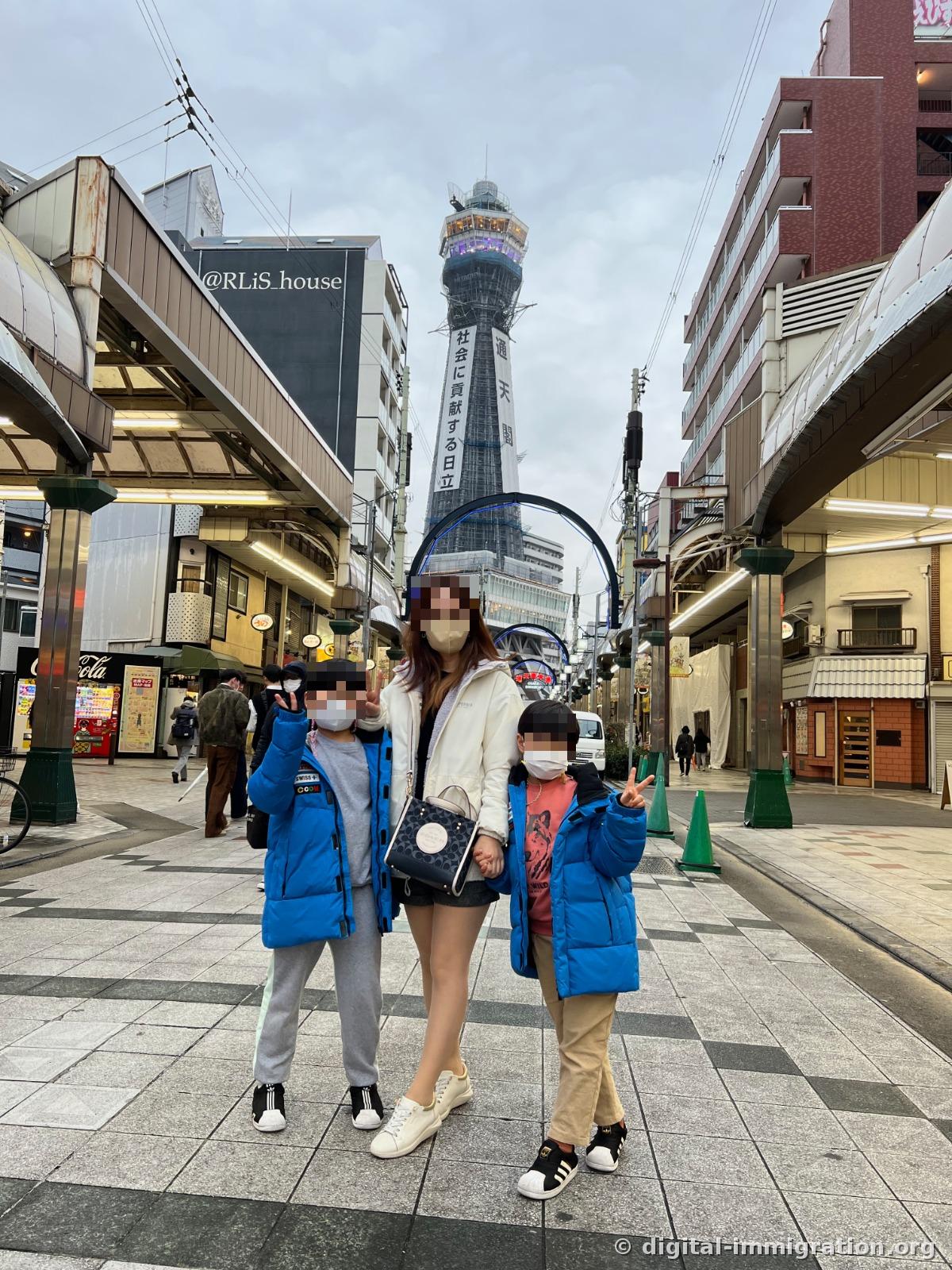
Standing in the middle of the Shinsekai arcade, Tsutenkaku fills your entire view at the end of the alley. Every time I came to Osaka, I'd walk past this spot, but this time, bringing two kids along, I finally bought tickets. It was a cloudy winter afternoon, and the arcade floor tiles were wet. As I was positioning myself for a photo, I had to step aside several times for bicycles coming from behind.
Buying a Ticket and Going Up
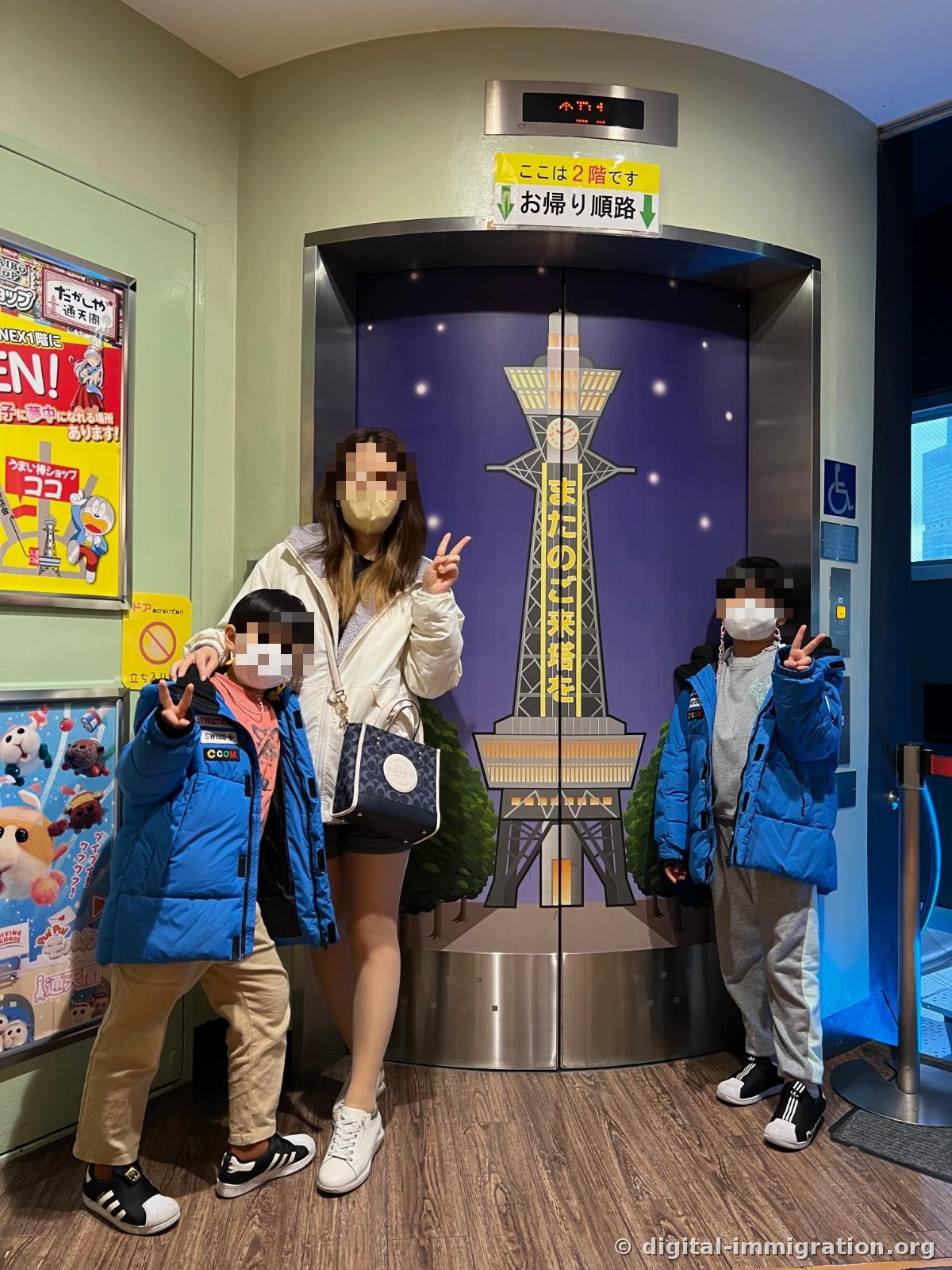
The ticket counter and entrance start underground. You don't take the elevator all the way to the top at once—you switch elevators midway, so it can be a bit confusing on your first visit. The staff member gestures to organize the line, so you just follow along. The elevator doors you use to come down have an illustration of Tsutenkaku at night and "Please visit us again (またのご来塔を)" on them, and above that is a yellow piece of paper taped up saying "This is the 2nd floor." These handwritten-style signs create this tower's characteristic vintage feel.
Osaka Viewed from the Observation Deck
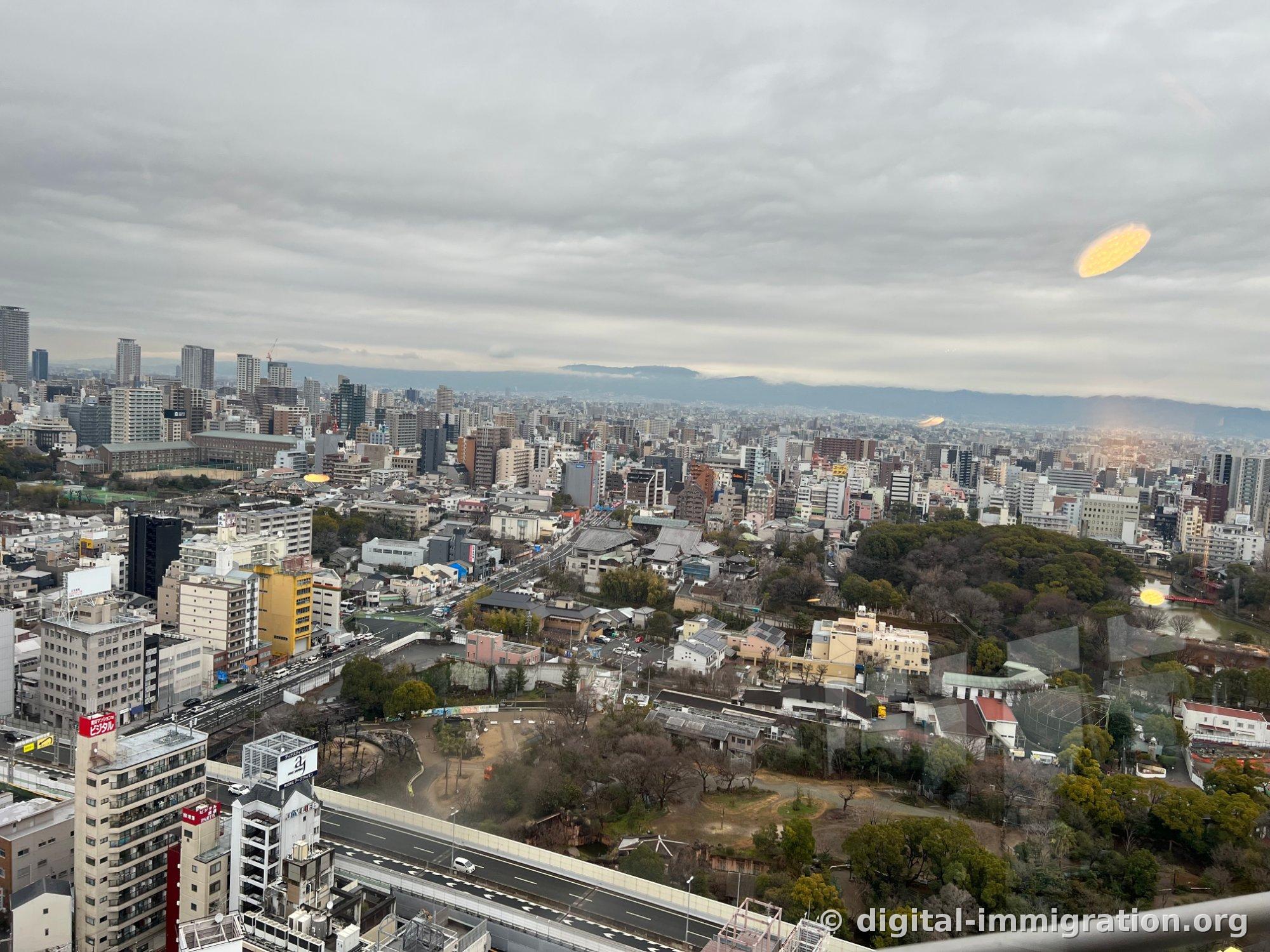
Stepping onto the observation floor, the entire circle around you is the city behind glass. To the west, Abeno Harukas is cut off in the hazy sky, and below runs the Hanshin Expressway like a gray ribbon. That day, clouds hung low, and the mountain ridges were half-buried in mist. Compared to clear-day photos, it's disappointing, but instead, the city's gray tones came alive entirely.
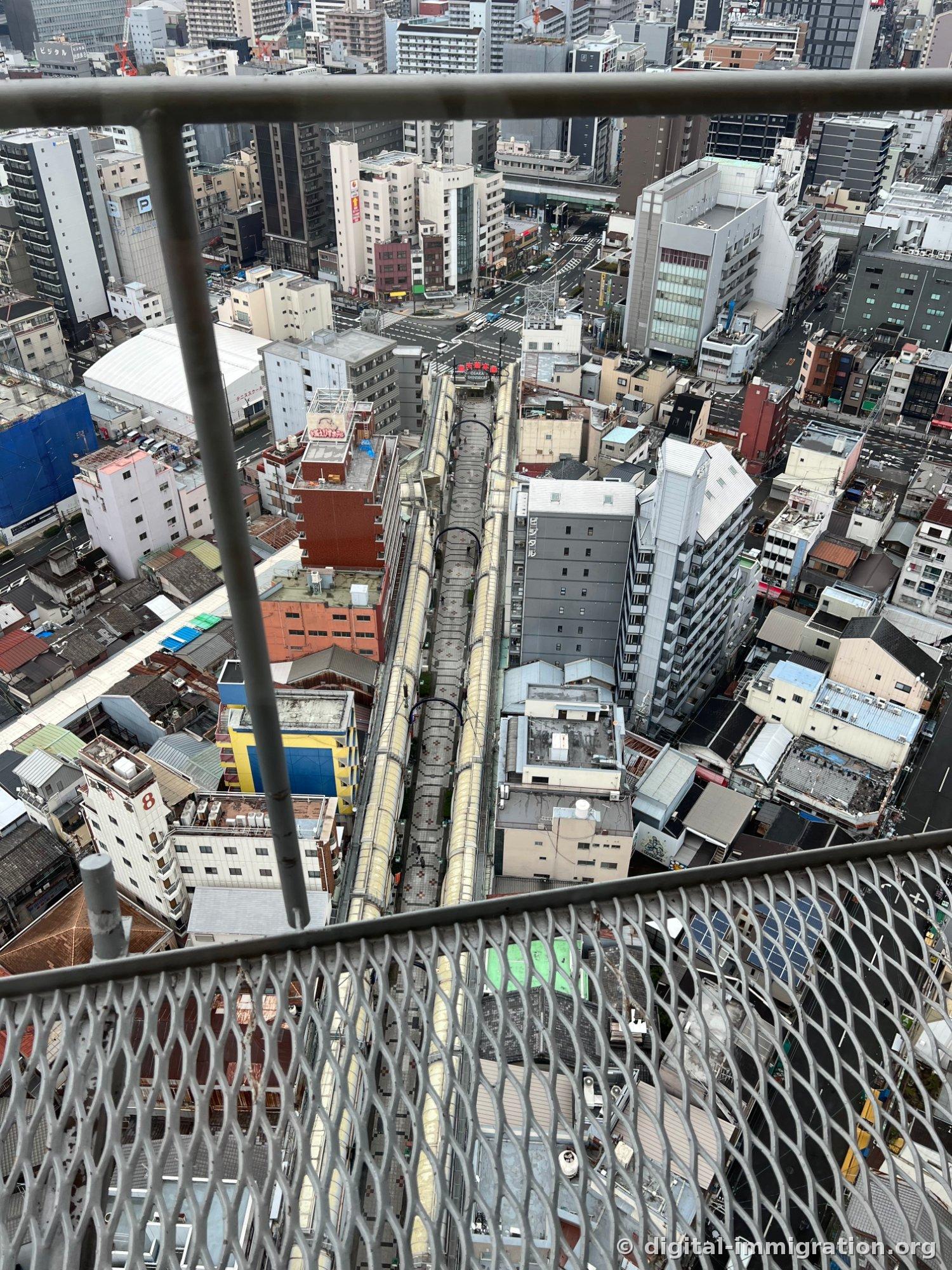
Where I stood the longest was near the floor. On the outdoor deck below, looking down through the mesh fence at the Shinsekai arcade, people walking below are reflected through the glass roof. That's the same spot where we were taking photos earlier. With my line of sight dropping straight down, my legs tensed up. If you have a fear of heights, you should skip this angle.
Getting there isn't difficult. It's about a five-minute walk from Ebisuchō Station on the Sakaisuji Line or Dobutsuenmae Station on the Midosuji Line, and you can also walk straight through the arcade from JR Shin'imamiya Station. The street itself is already worth seeing, so I recommend walking slowly from the moment you exit the subway.
Seven Gods Circling the Observation Floor
In front of the observation deck's glass windows, there's a glass case at each compass direction, and inside each sits a wooden statue of one of the Seven Lucky Gods. Their round bodies and cartoon-like faces initially made me think they were merchandise, but the wood grain came alive with lighting from below—they were quite carefully crafted sculptures. Photographing them with the city outside the windows as a backdrop gets both the statues and Osaka in one frame.
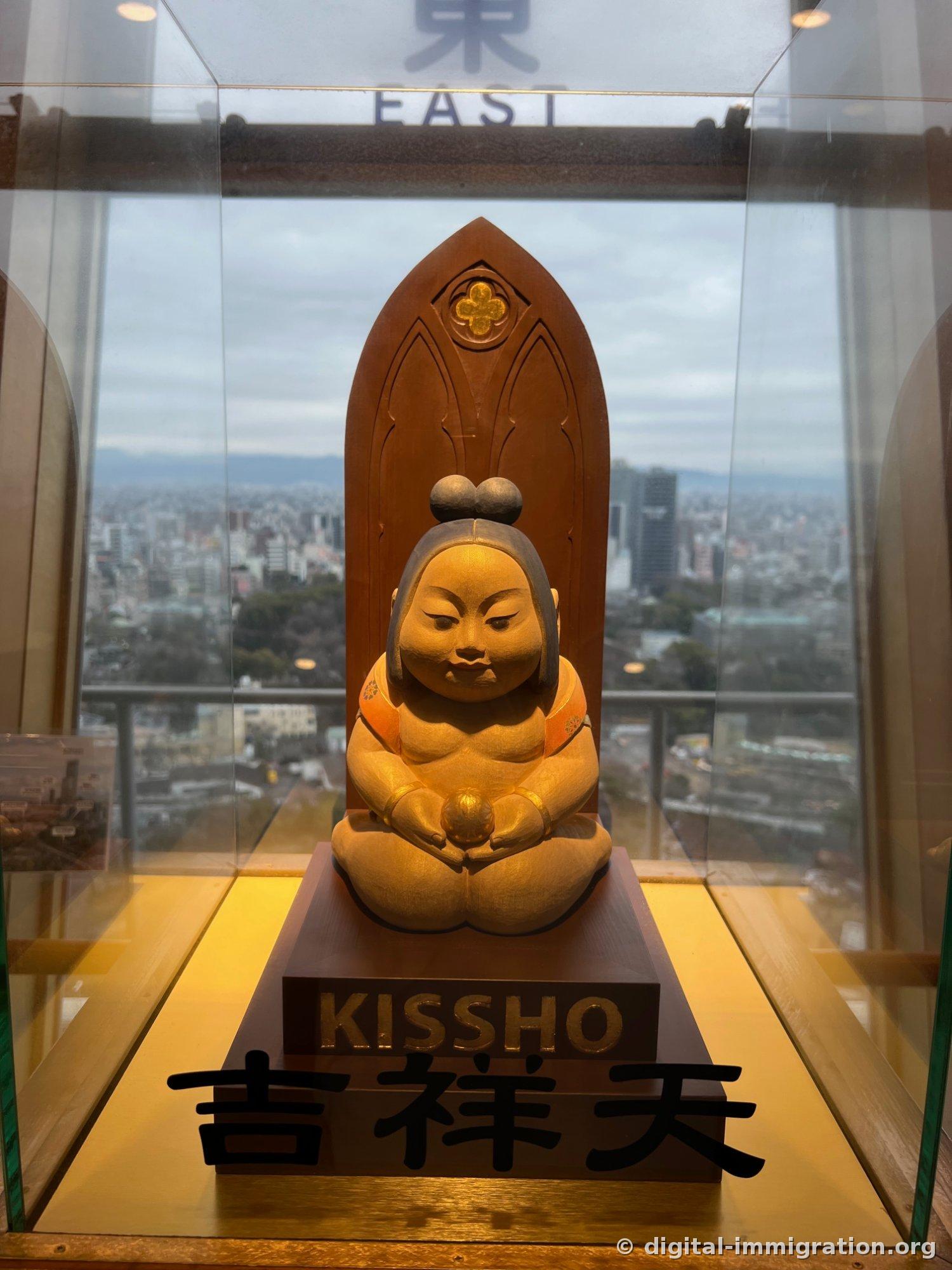
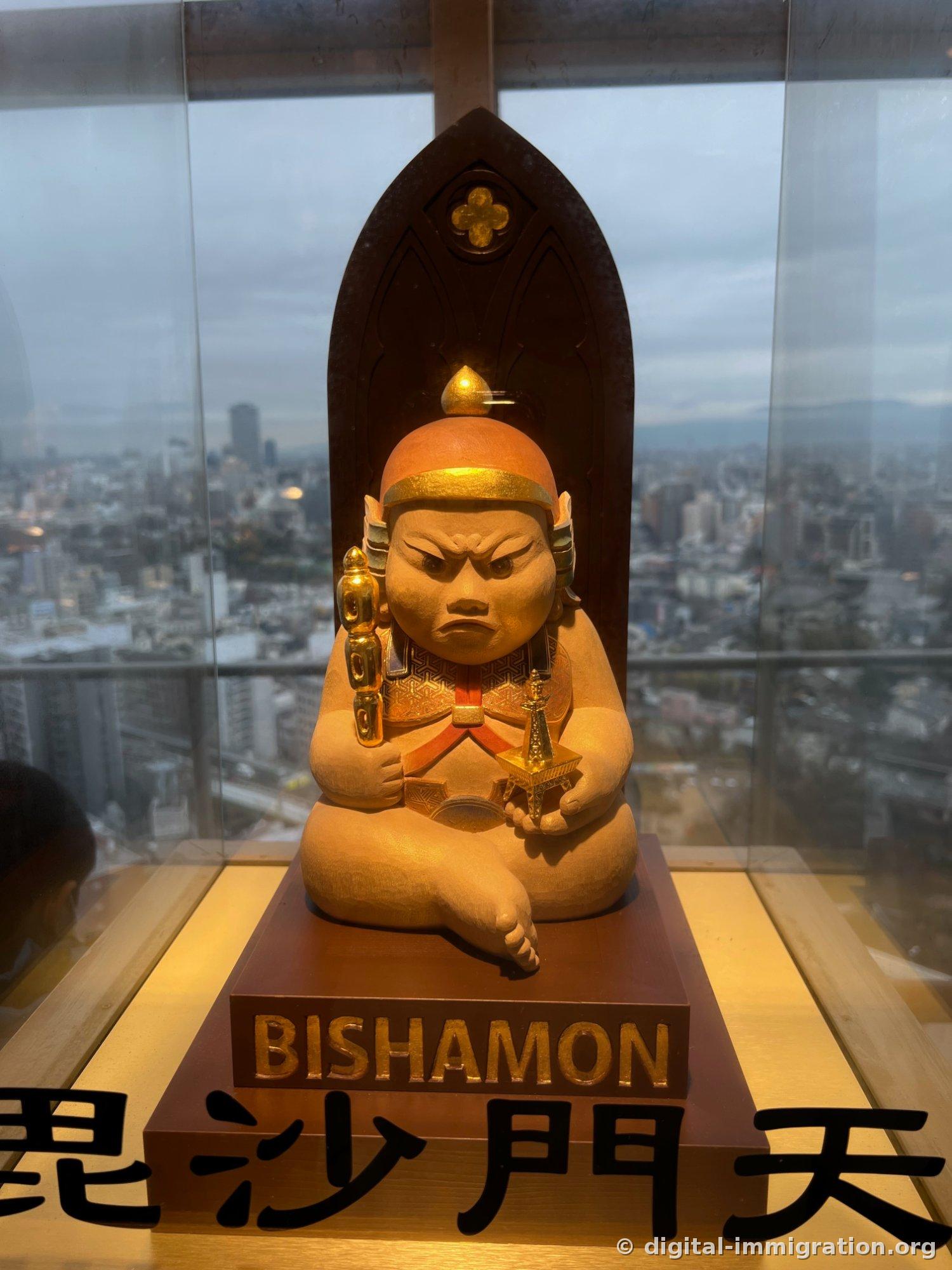
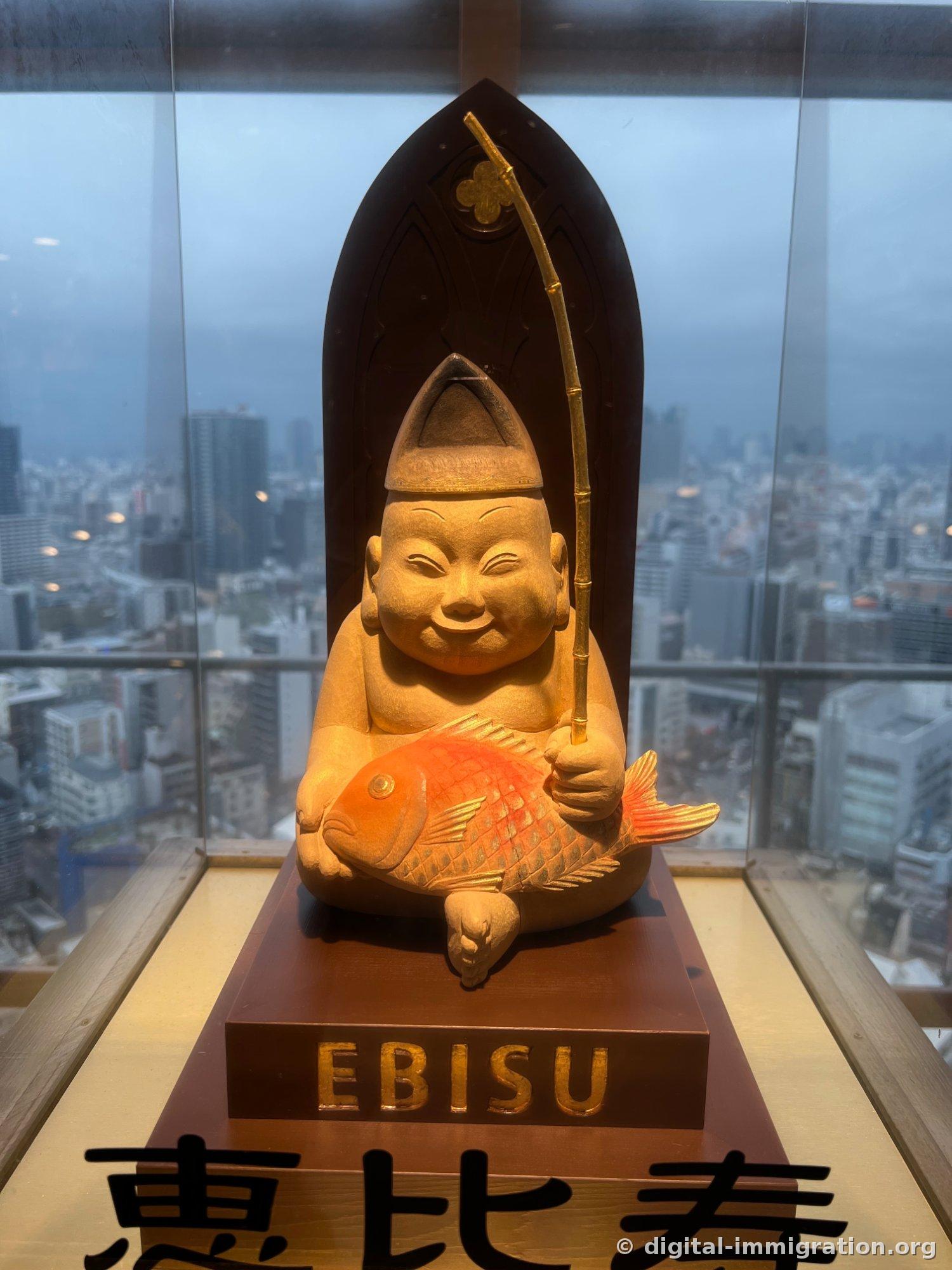
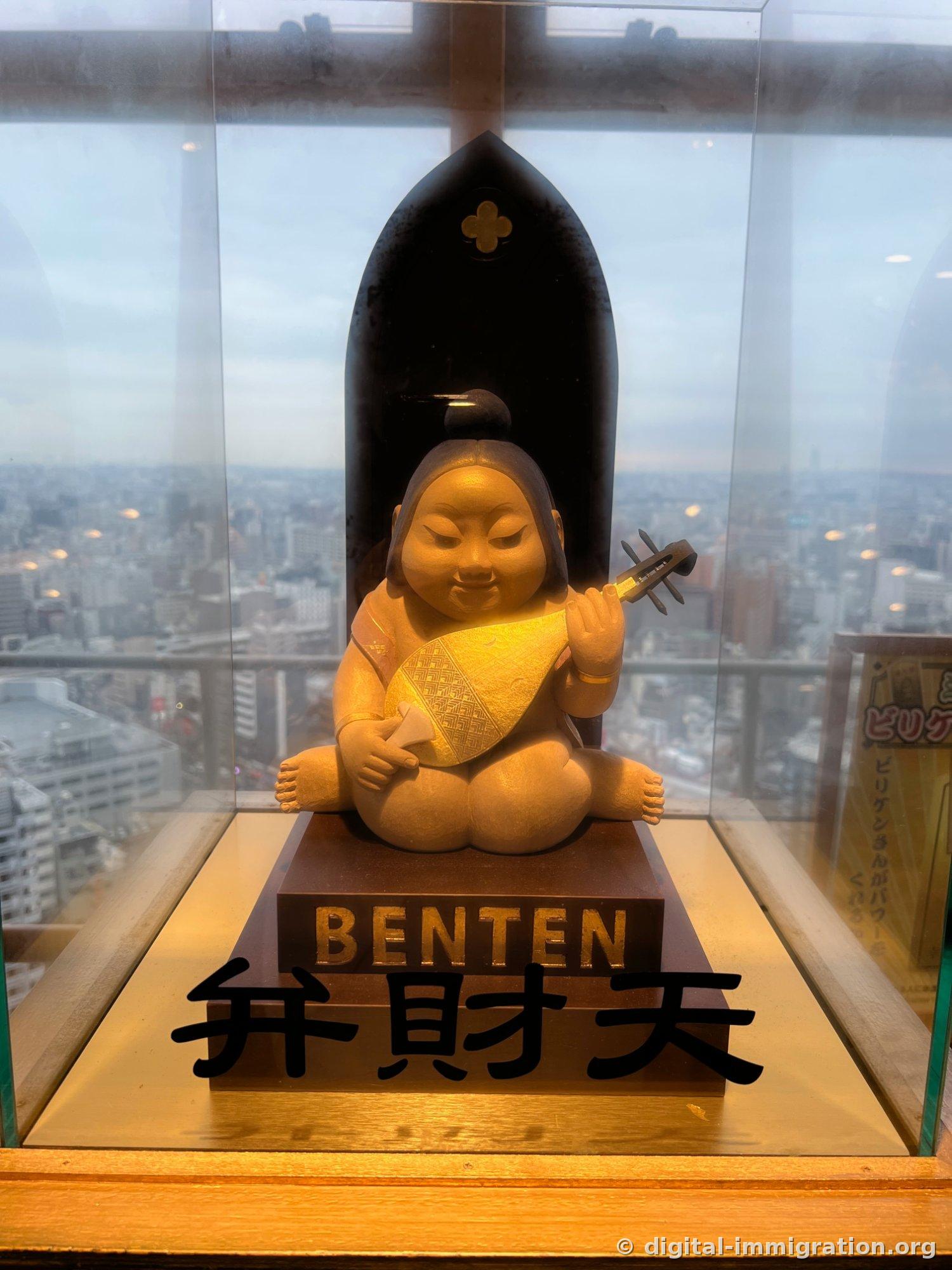
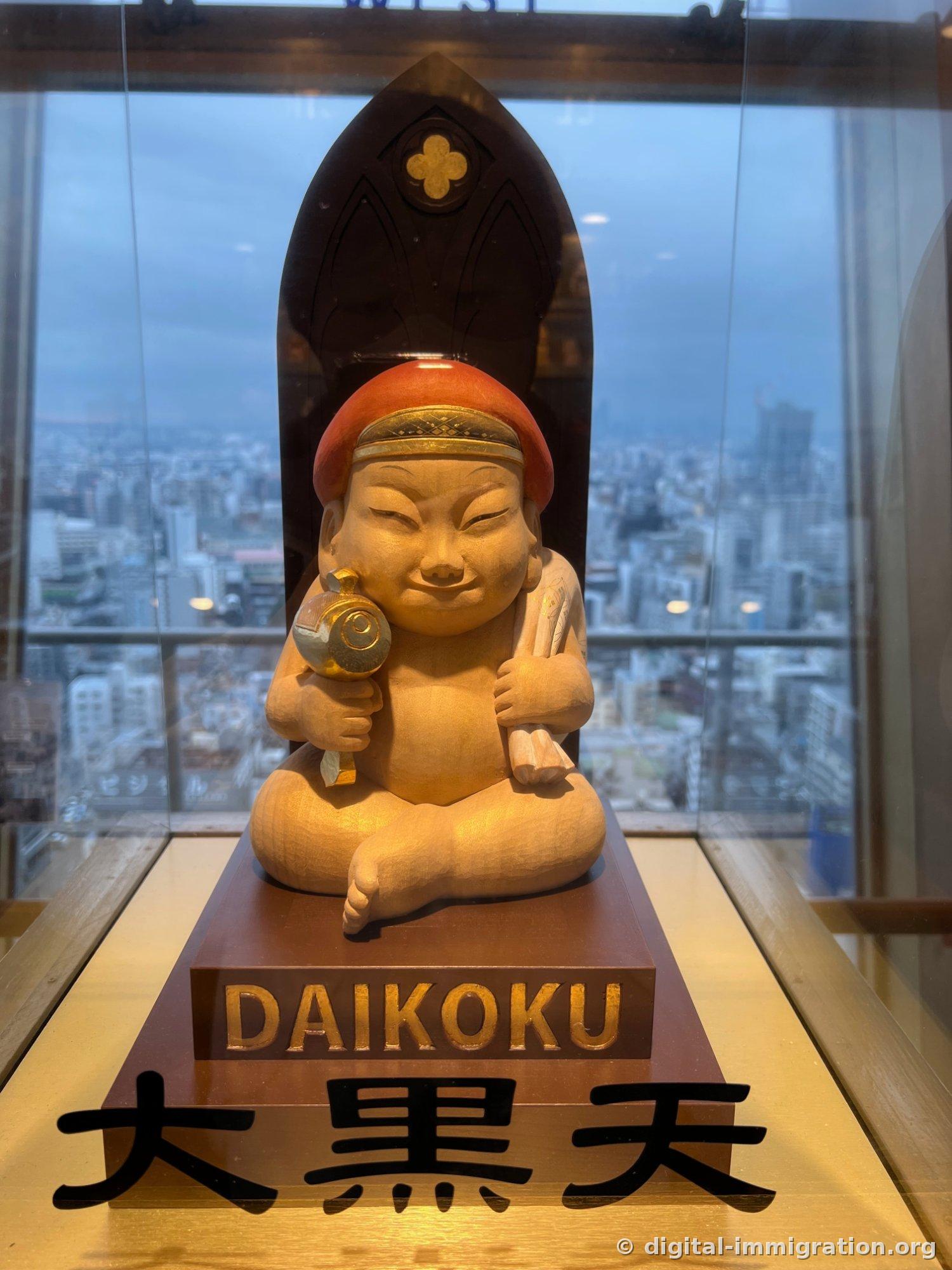
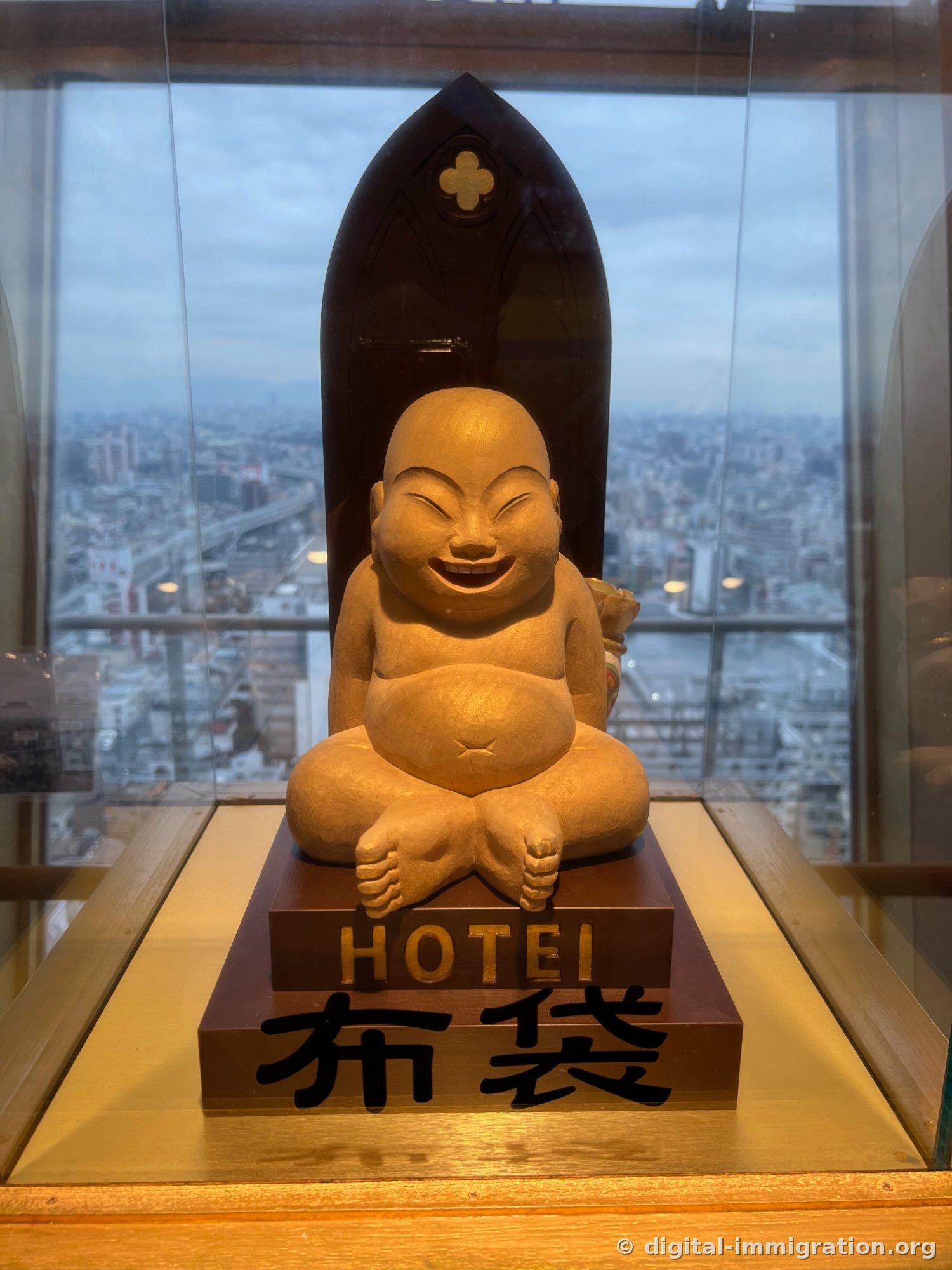
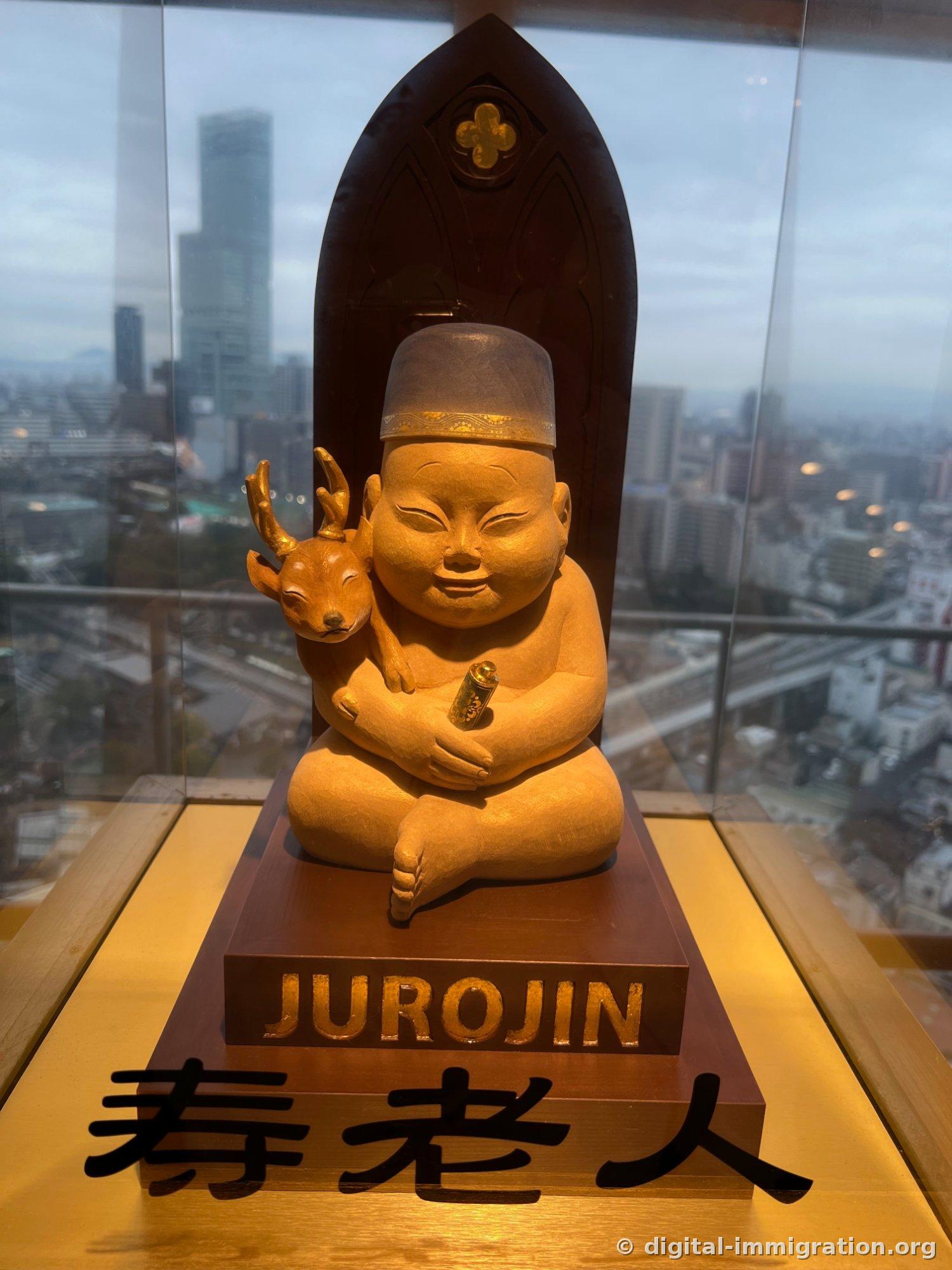
The Old Shinsekai Revealed Below the Observation Floor
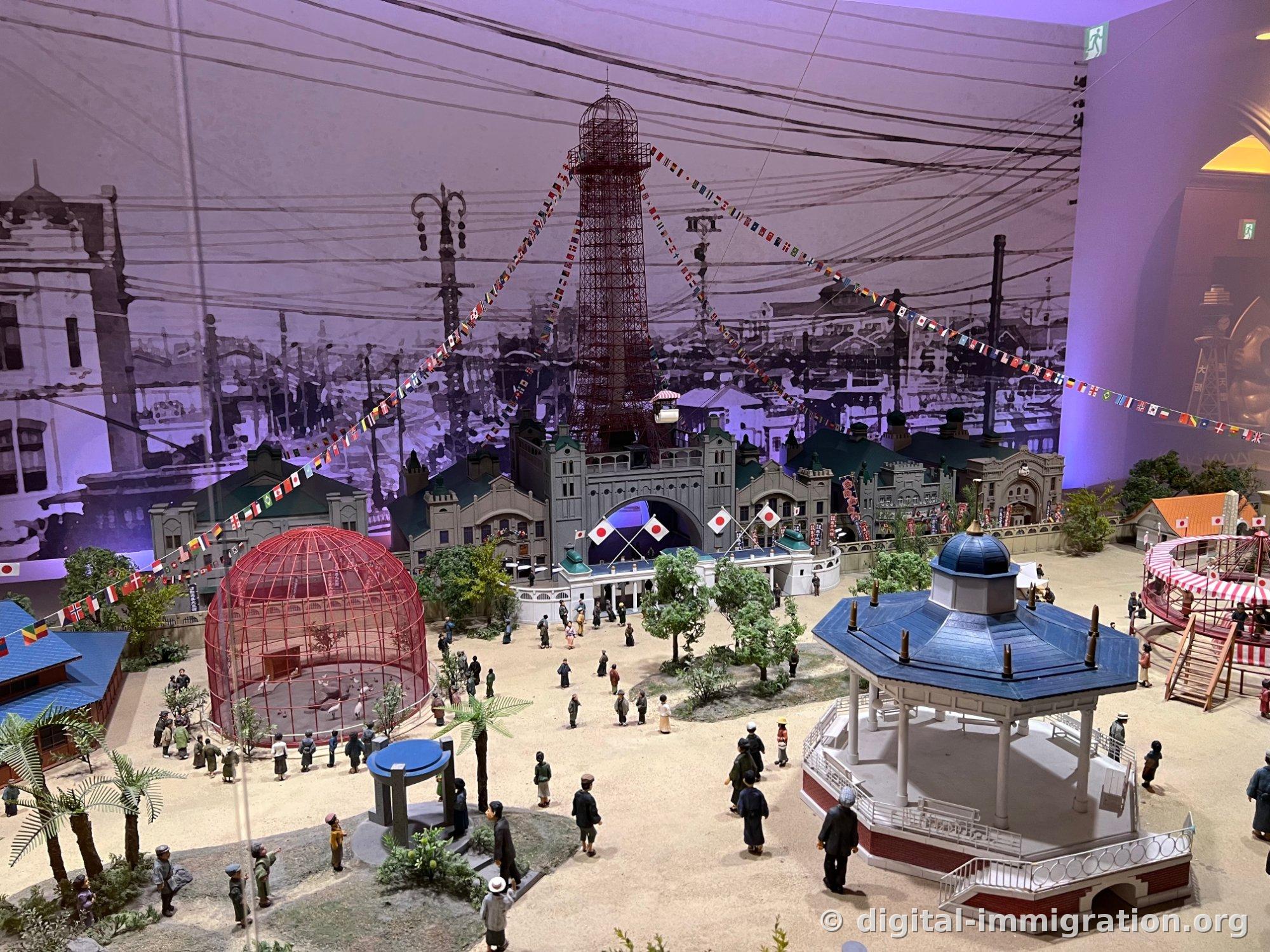
Going down the stairs from the observation floor, there's a diorama room recreating the original Tsutenkaku and Luna Park. The lighting is purple, so photos don't turn out well, but looking closely, each figure is different. There's even a flamingo in a birdcage, an octagonal pavilion, and flags from around the world, so the kids stopped here for a while. You learn here that the tower you're standing in is the second one.
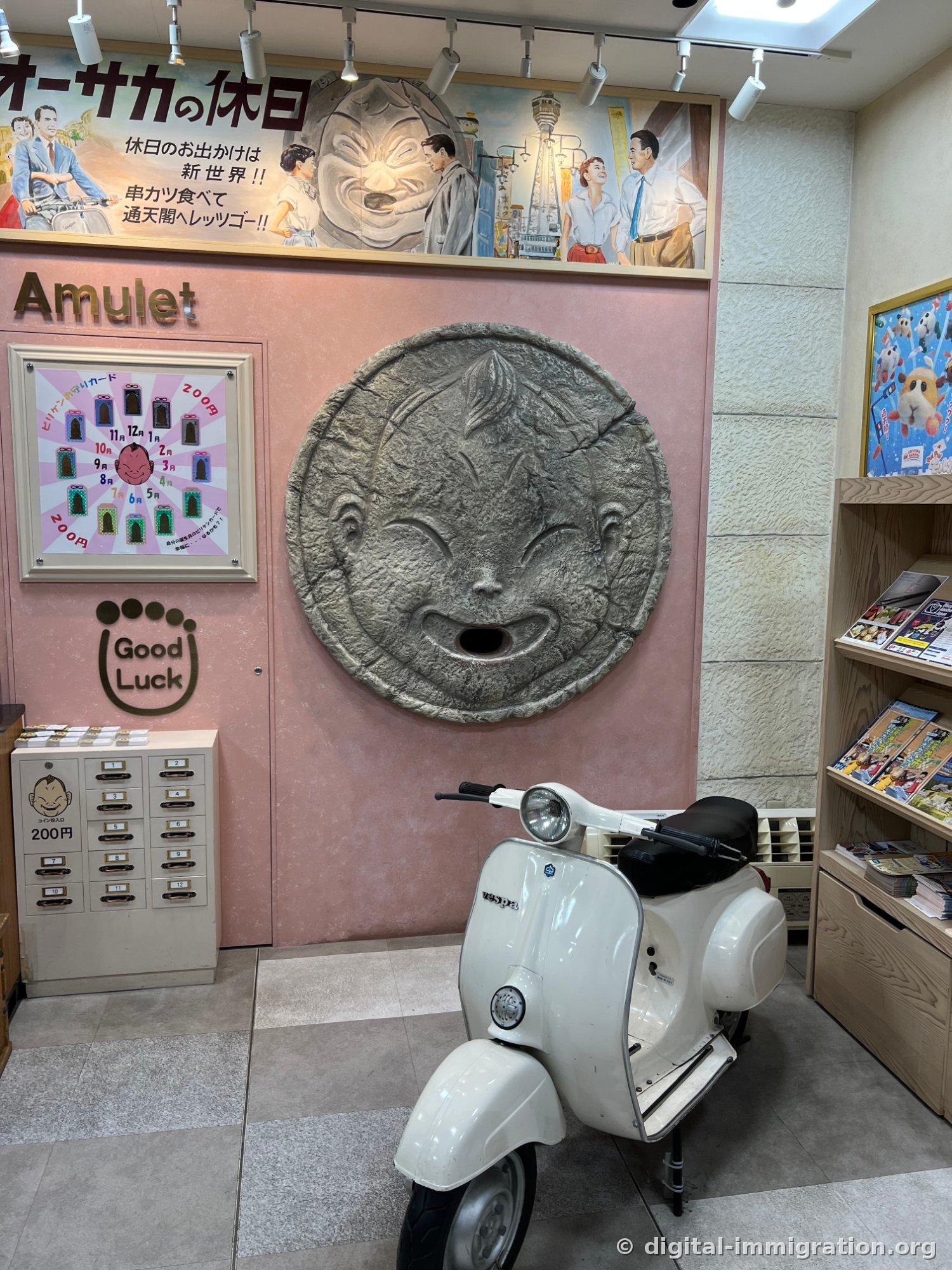
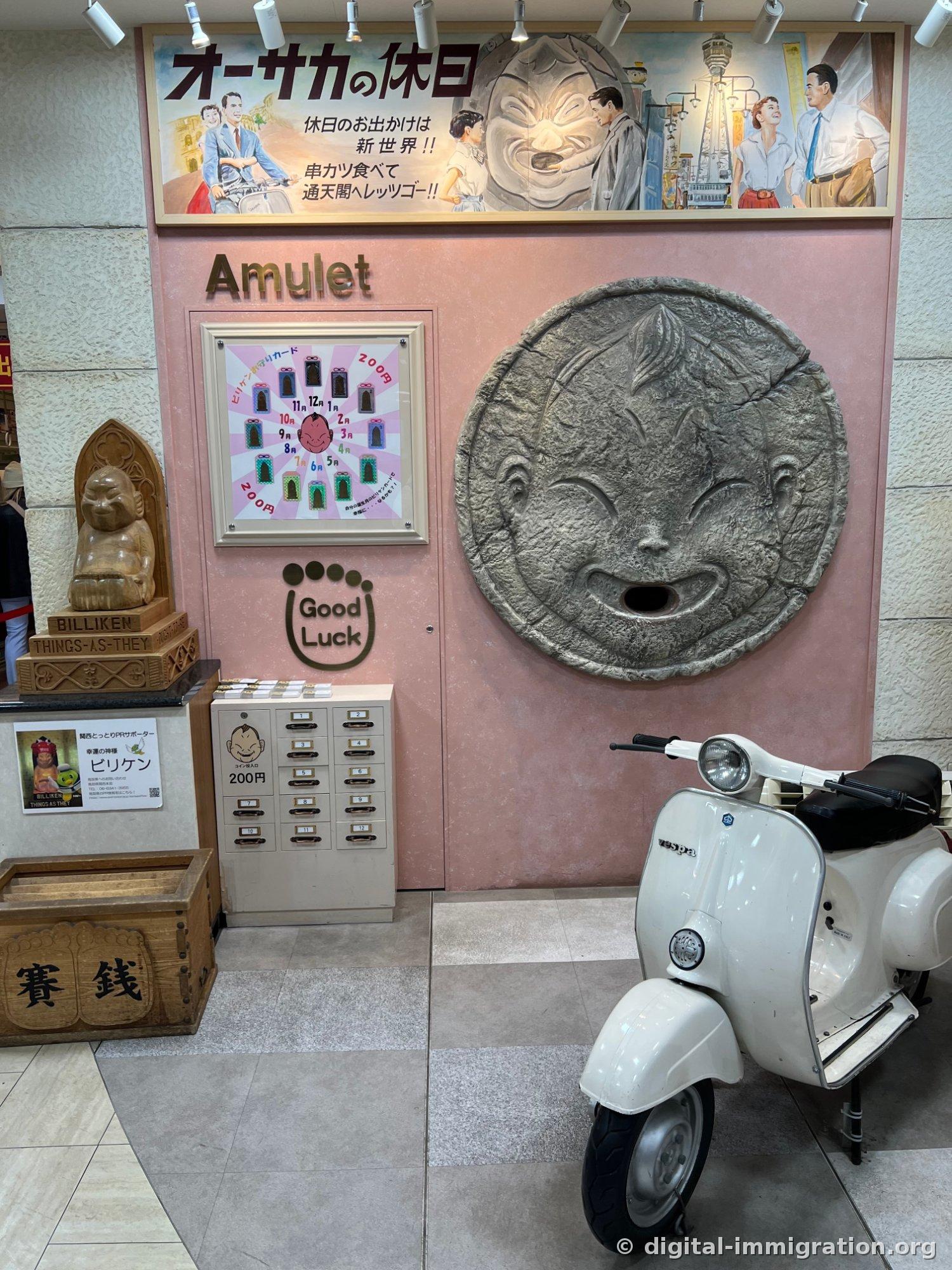
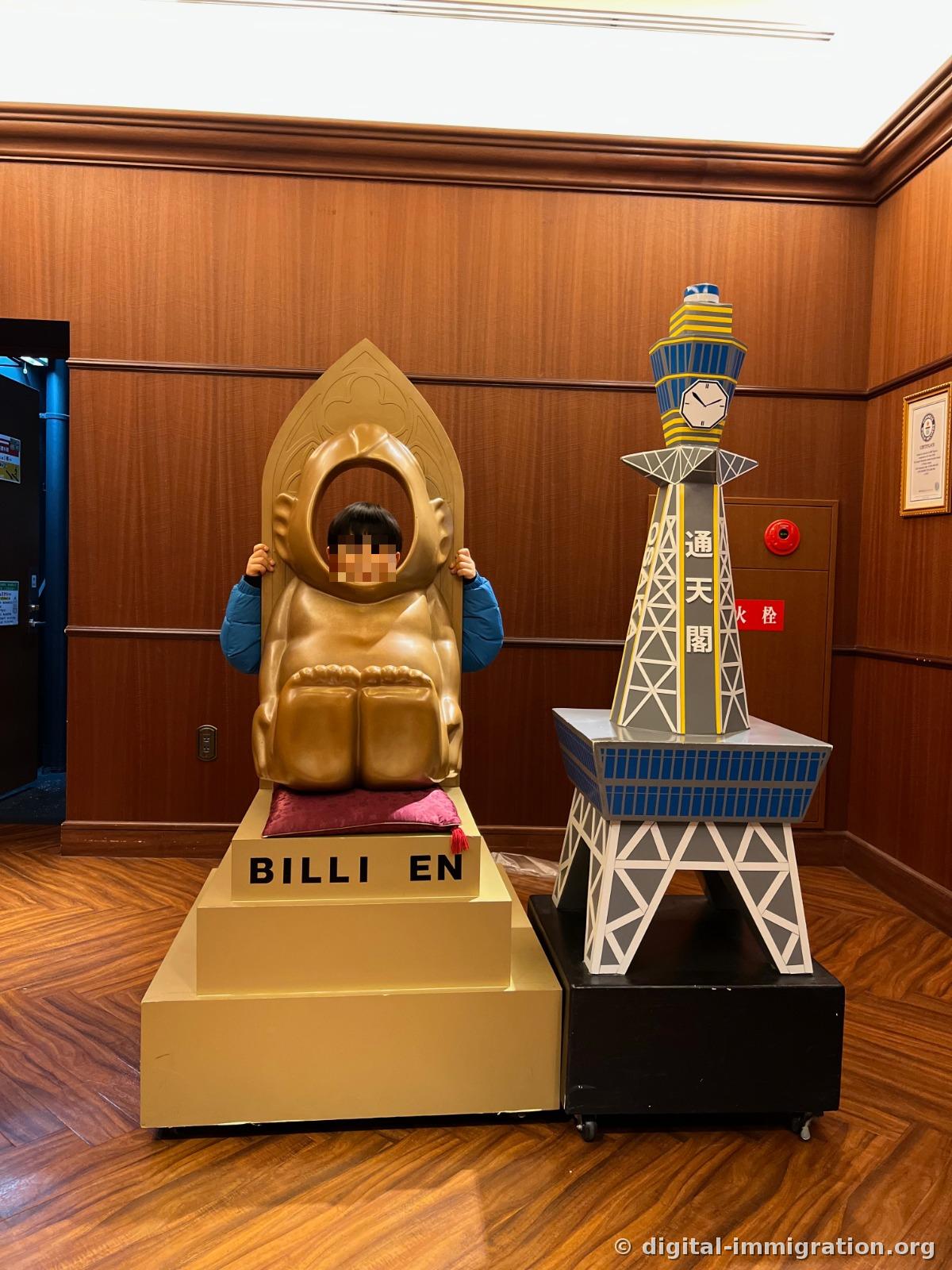
Inside the same floor is a Billiken corner. This is the lucky god whose feet you rub to make wishes come true. A large face relief is set into the wall, and below it sits a white Vespa, which together with the wall painting above reading "An Osaka Holiday / Eat Kushikatsu and Let's Go to Tsutenkaku!" makes the intent clear. It's a Roman Holiday parody. The drawer beside it is a charm-dispensing machine—you get a 200-yen Billiken amulet card by selecting the one matching your birth month.
The Floor Taken Over by Glico and Candy Characters
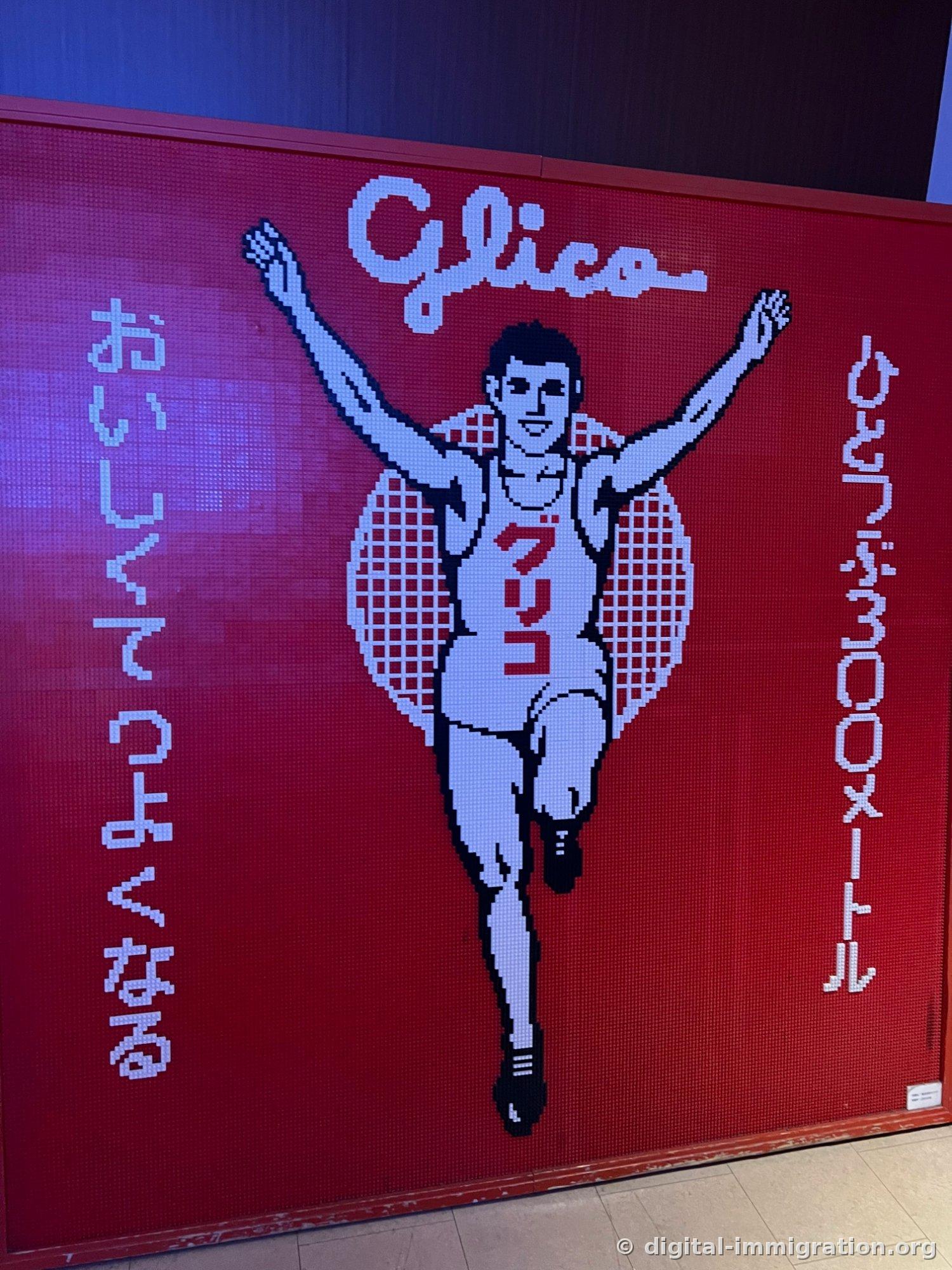
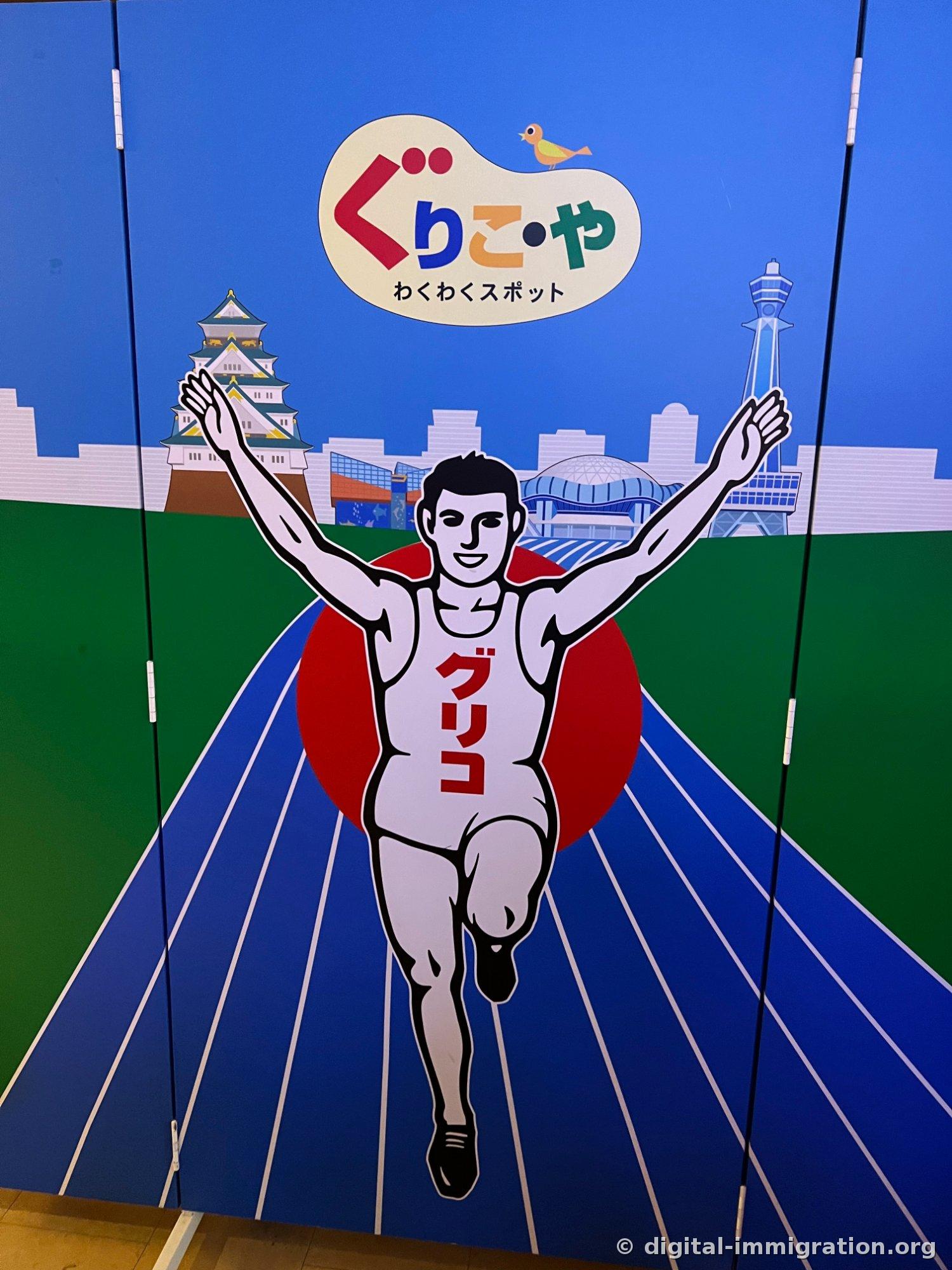
Inside the tower, there's a dedicated Glico exhibition space. The runner familiar from the Dotonbori sign hangs here as a large red pixel panel covering one wall, and beside it the vintage slogan "Delicious and energizing / One piece covers 300 meters" is written as is. Since Glico is an Osaka company, it's natural they have a place in this tower.
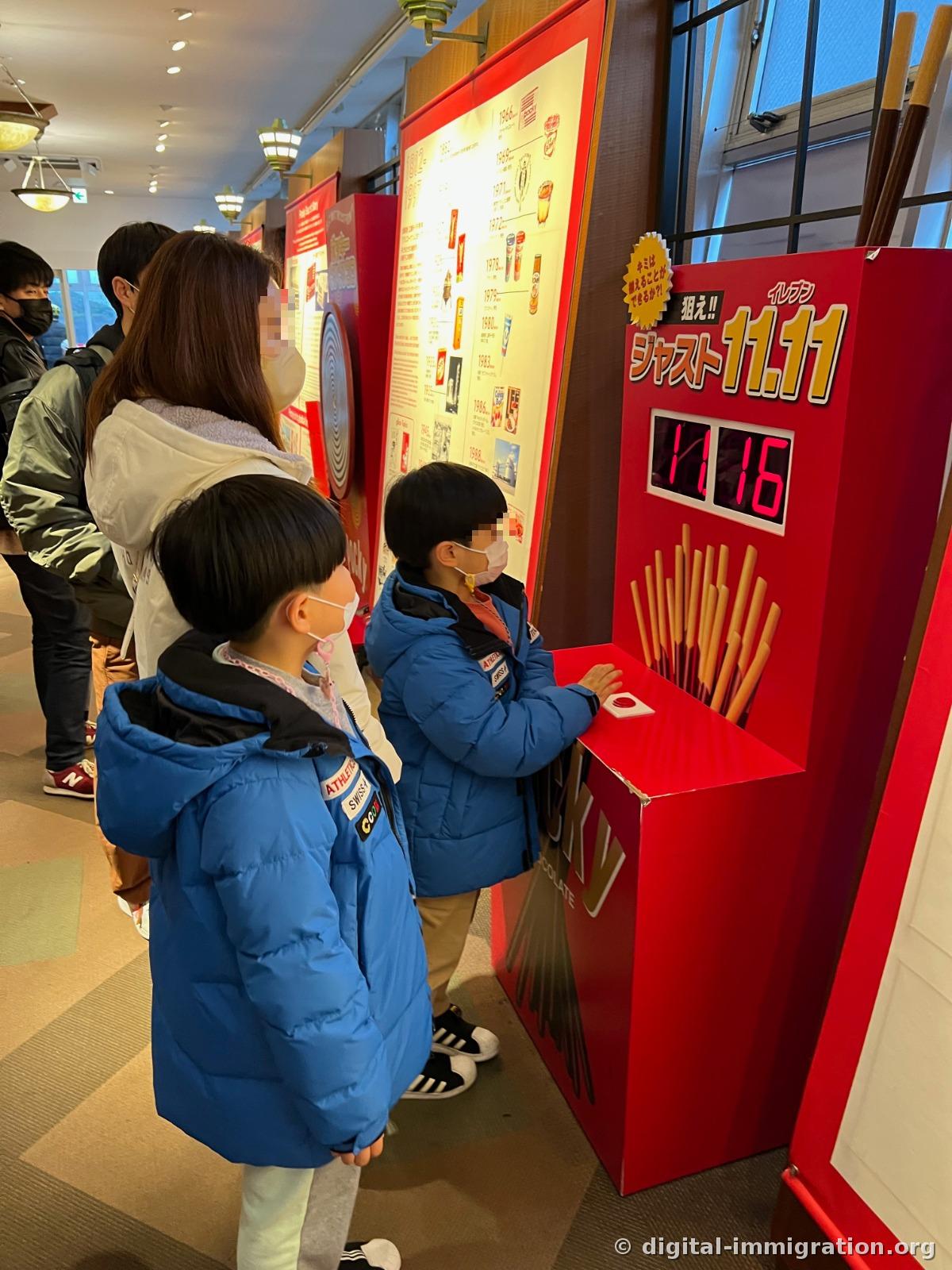
What kept the kids longest was the Pocky game. It's a simple device where you press a button to stop a timer at exactly 11.11, and my older one stopped it at 11.16 and gave up. While the adults read the Glico product timeline next to it, the kids kept pressing the button.
The Tower Slider — You'll Regret It If You Don't Ride
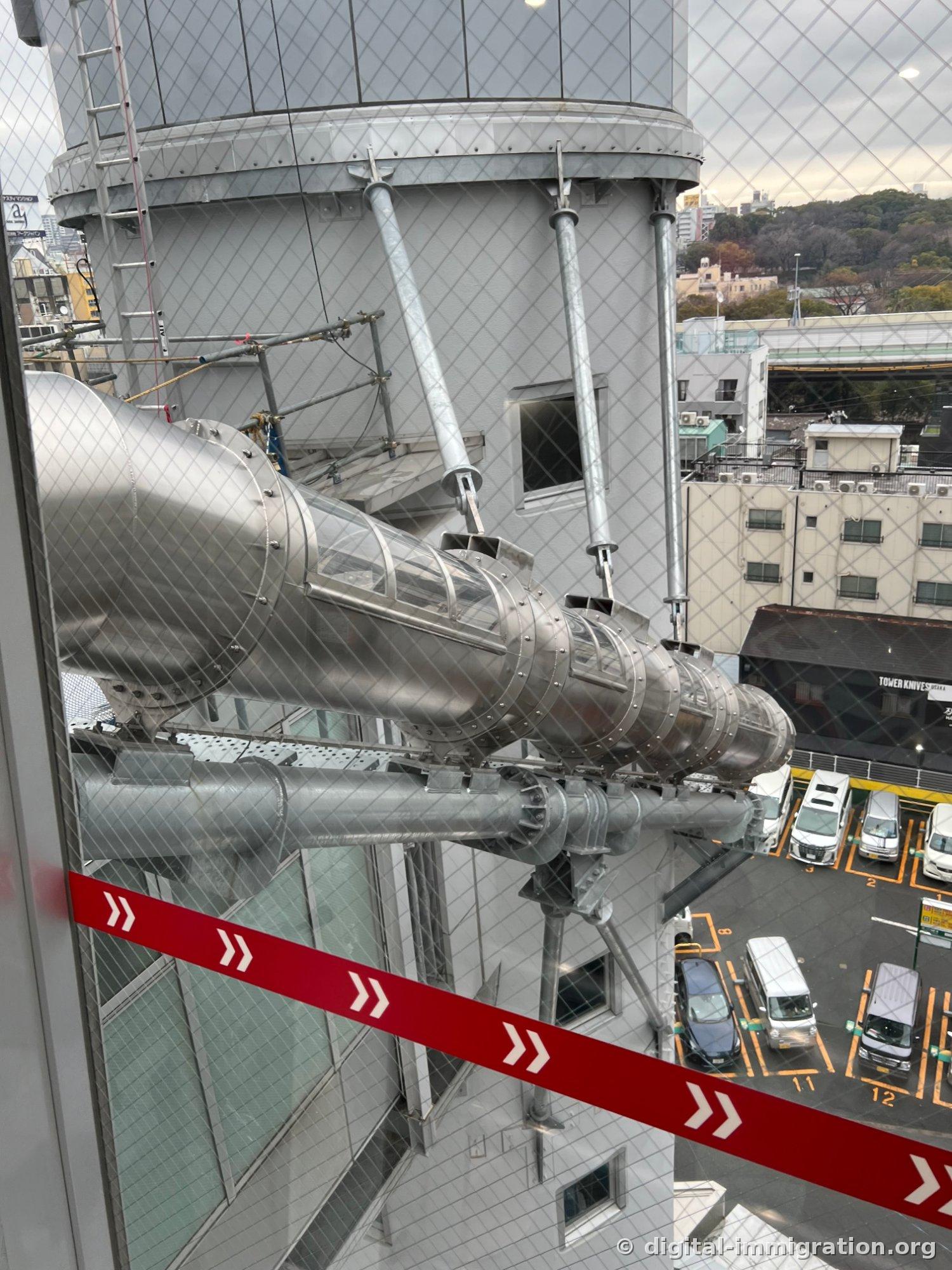
This is the payoff of the day. There's a slide that spirals down around the outside of the tower from the observation floor to the level below, and first you see a silver tube coiling down in a spiral through the windows. There are transparent sections in the middle where you can see people passing through inside. Once you see that, there's no way you won't want to ride.
The starting point is a red room with a traffic light completely attached. The green, yellow, and red LEDs are actually lit, and they only turn green once the person ahead of you has completely exited. The staff member lays out a mat and helps position you. They gesture to keep your knees up, close your arms to your chest. Beside it is a metal basket holding helmets, and the thermometer on the wall read 21°C and 39% humidity.
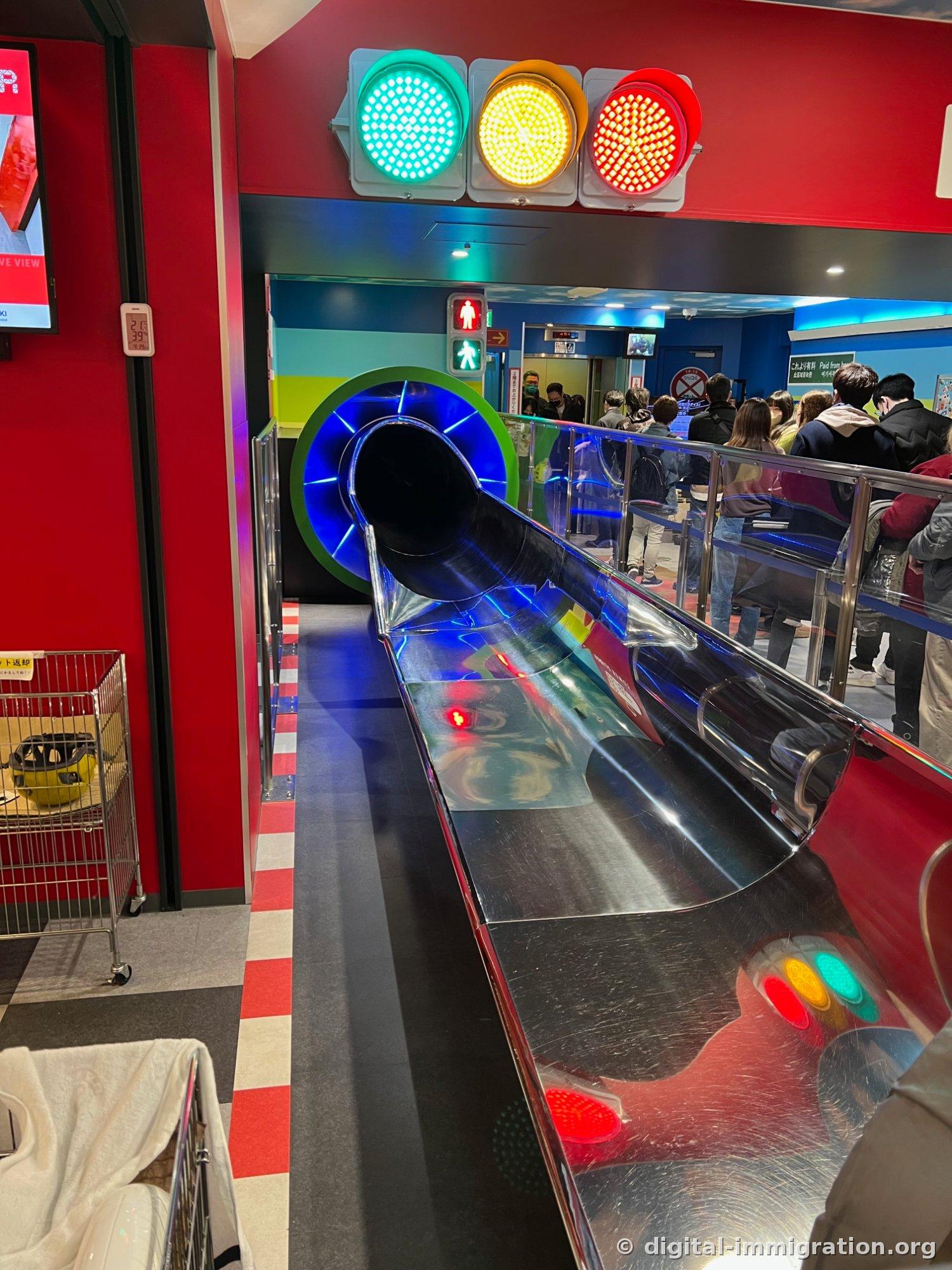
The moment you enter the blue circular opening, your vision goes dark and you immediately start accelerating. At the first curve, my body was flung outward. Because it's stainless steel, there's almost no friction, so it's much faster than expected. After circling through the darkness several times, the transparent section suddenly flashes the sky and Shinsekai roofs, and that's the best part. My scream came out during that section. It takes less than 30 seconds to arrive. It feels short, but that's how dense it is.
If you're thinking of just seeing the view and going down, think again. What stays in your body's memory at this tower is the slider.
Things to know when riding: The slider has a separate fee from the observation deck admission, and there are height and age restrictions, so young children may not be allowed (check on-site). You need to empty your pockets completely, and no cell phone photography is allowed. If you're wearing a skirt or thin stockings, friction can cause rubbing, so pants are better. The line got longer in late afternoon—when we stood there, there were about twenty people ahead, and we waited about 15 minutes.
Thoughts After the Visit
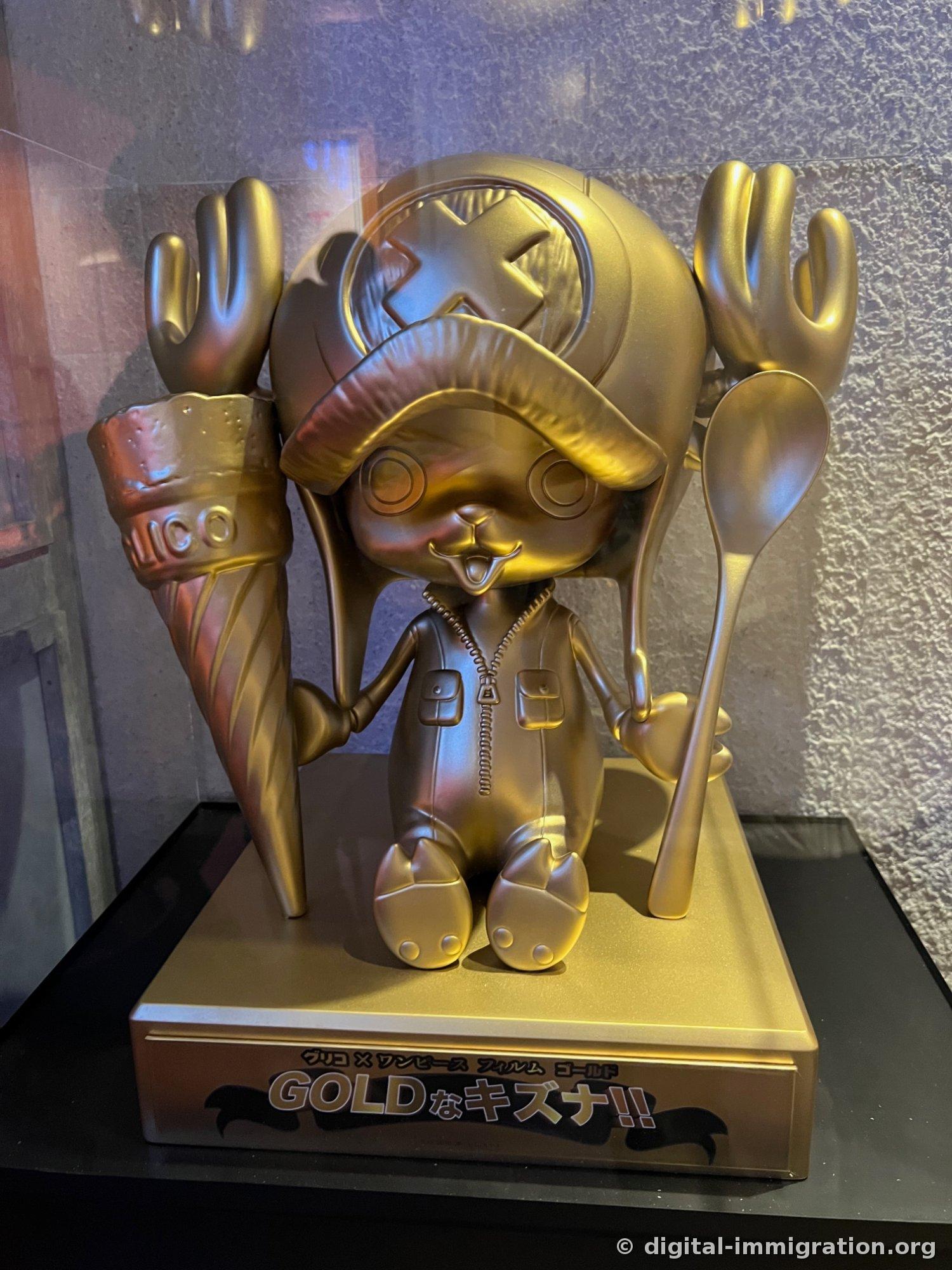
Tsutenkaku isn't a tower that competes on height. Abeno Harukas stands right beside it, taller, and by observation views alone, it's better. Instead, this place has Seven Lucky Gods wooden statues, an old Luna Park diorama, Billiken, the Glico runner, and a slide spiraling down the outside of the tower—layered upon each other. It's less an organized tourist site than a neighborhood landmark that's had things stuck to it over a century-plus.
Coming out to the arcade, the smell of frying oil hit me from a kushikatsu shop. With my heart still pounding from the slider, I was managing the kids' repeated "one more time" requests while selecting a restaurant for dinner. Next time, I'm thinking of coming at dusk on a clear day.
Read next
- From Akihabara's Chuo-dori to the Kanda River: A Record of Tokyo's Electronics District Revisited Multiple Times
Tokyo's Akihabara is a neighborhood where it's hard to say you've seen everything in a single visit. I've come multiple times across different seasons, and each time the signs chan…
Tokyo · Akihabara - Buying a Single ¥300 Year-End Jumbo Lottery Ticket at Nishi-Ginza Chance Center in Tokyo
Exit from the Hibiya exit of Tokyo's Shimbashi Station, walk toward the elevated highway for about three minutes, and suddenly you'll see a line of people stretching along the side…
Tokyo · Nishi-Ginza Chance Center - Ueno Ameyoko, the real magic starts after sunset — an evening walk from the Okachimachi Gate to Ueno Station
Every time I come to Tokyo, my feet find their way to Ueno Ameyoko (アメ横) without fail. This time I entered from the Okachimachi side and worked my way toward Ueno Station. I've met…
Tokyo · Ameya Yokocho Market