Osaka Honmachi Tsurutontan (つるとんたん Honmachi Branch): A Record of the Day I Couldn't Eat Mentaiko Cream Udon
When choosing an udon restaurant in Osaka, I'm always torn. Should I go with the tourist-filled spots in Dotonbori, or venture into the office district backstreets? This time I cho…
Osaka · Tsurutontan
When choosing an udon restaurant in Osaka, I'm always torn. Should I go with the tourist-filled spots in Dotonbori, or venture into the office district backstreets? This time I chose the latter. Tsurutontan in a quiet corner of Honmachi. Exit Honmachi Station on the Yotsubashi subway line, head one block in from the main road, and you'll find a wooden signboard hanging under tile-roofed eaves. Written in brushstroke calligraphy: '麺匠の心つくし つるとんたん'. It's a completely different atmosphere from the glossy Dotonbori branch.
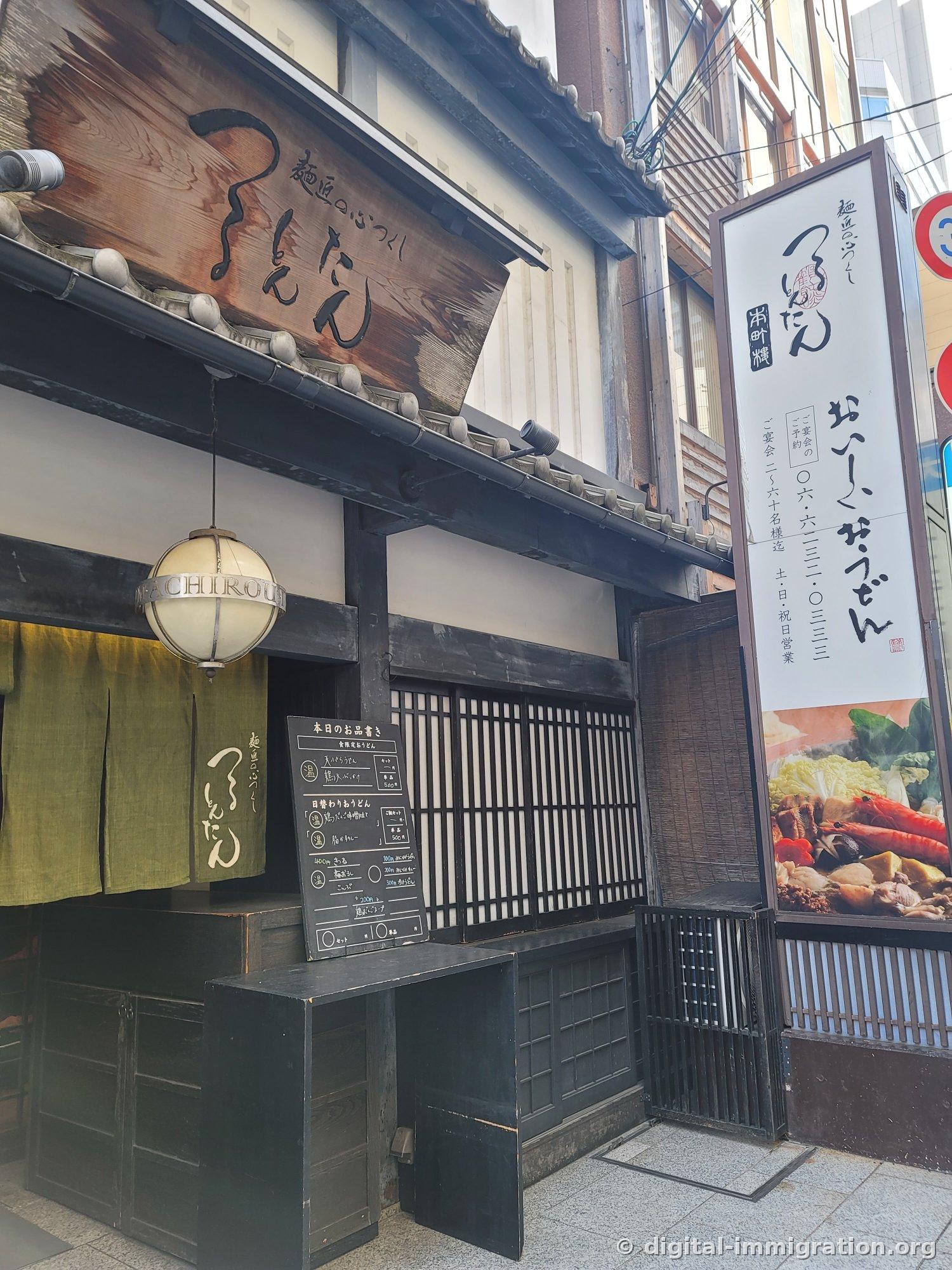
Read the slate board first
The most common thing first-time visitors miss is the black chalkboard by the door. People often mistake it for decoration and walk past, but it's actually the limited and daily specials board. On the day the photo was taken, the board listed tempura and chicken karaage sets for an extra 500 yen under '食限定おうどん' (limited quantity), and the '日替わりおうどん' (daily changing udon) section showed chicken meatball miso and curry options. The standard noodle portion is 400g, with options to reduce or increase by 200g marked separately. Don't be alarmed by the 400g figure—that's before cooking, so it's actually just slightly more than a standard Korean bowl of udon. If you're planning to order rice too, 200g is plenty. I didn't know this and ordered the standard size, which felt a bit heavy toward the end.
On the standing sign to the right of the restaurant are the phone number and '2〜60名様迄', '土・日・祝日営業'—meaning they're also open on weekends and holidays. This notation is quietly important since Honmachi is a weekday office district where restaurants often close entirely on weekends. If you find yourself in this neighborhood for Sunday lunch, this place becomes one of your few options. That said, seasonal menus and hours vary by location, so it's worth checking before you visit.
Egg udon served in a clay pot
I ordered warm udon with beaten egg. It arrives in a black ceramic pot that feels surprisingly heavy when you pick it up. Golden egg spreads like clouds across the broth, topped with a sheet of nori and a handful of finely chopped green onion. The broth has that pale Kansai hue. Looking at the color alone, I thought it would taste bland, but the moment you lift a spoonful, the aroma comes first, followed by the seasoning. It's not salty. If you're used to Tokyo's darker, intense soy-based broths, this might feel a bit mild at first.
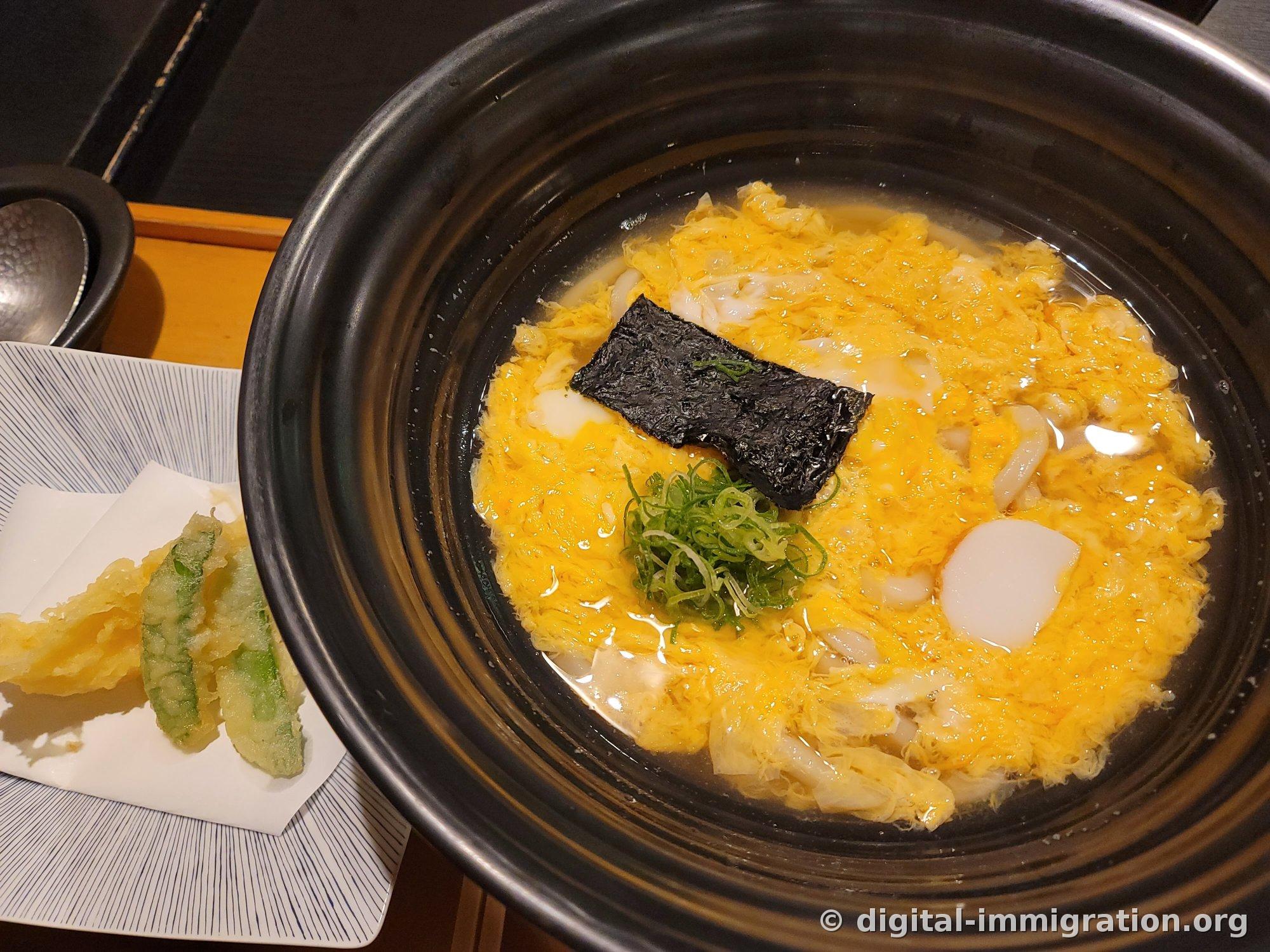
The noodles are the real deal. They lift with substance when you grab them with chopsticks, with a silky exterior but a firm bite inside. If you leave them in the clay pot too long, they'll absorb broth and soften, so you should eat the noodles first thing. The fried shishito peppers on the side have thin batter that doesn't stay crispy long, so eat those first too. The lesson here is that this restaurant rewards quick hands—you need to eat things in the order they arrive.
Mentaiko Cream Udon—The dish I didn't get to eat
I'll be honest: I didn't eat the mentaiko cream udon (明太クリームうどん) this time. I only got to steal one chopstickful from someone else's plate. But that single bite is why I'm writing this.
On a wide teal plate sits a modest nest of noodles. The cream sauce is tinted a pale apricot from the mentaiko, topped with julienned cucumber, chunks of mentaiko roe, and hair-thin strips of nori. It arrives cold—a smart move for a summer day in Osaka. The cream isn't heavy like a pasta sauce; each bite of mentaiko roe bursts with just the right amount of salt. The cucumber's purpose becomes clear once you taste it—as the cream coats your mouth, that crisp bite resets your palate.
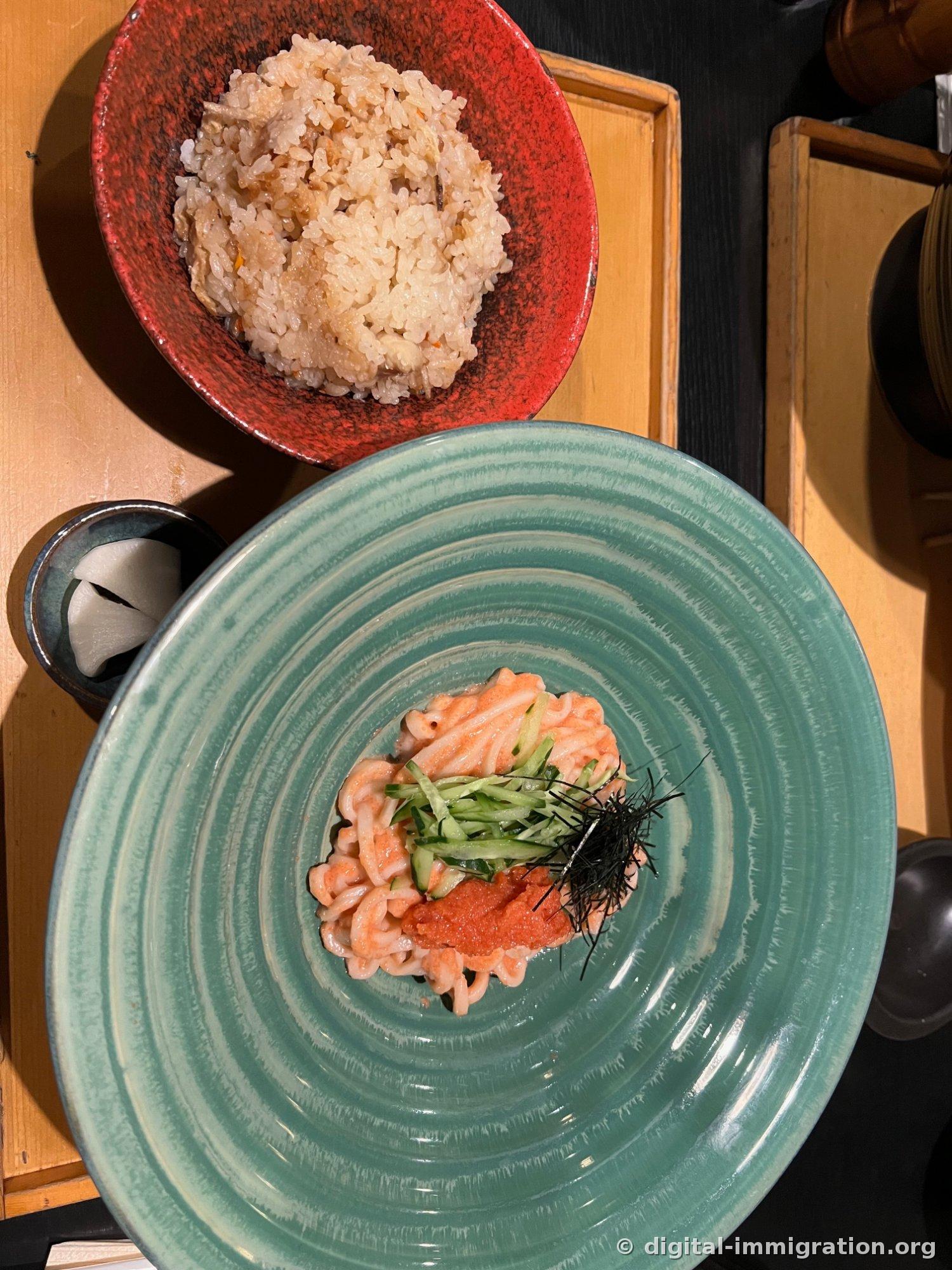
The portion looks small relative to the plate size. In the photo, the noodles sit in a tidy circle in the center of the wide dish. But that's a visual illusion—the cream sauce creates more satiety than a broth-based udon despite appearing modest. Still, one adult eating just this and leaving would be unsatisfied. That's why the red bowl of mixed rice in the back is a good pairing. The rice is cooked in soy sauce with finely chopped ingredients and isn't overly salty, making it perfect to alternate with spoonfuls of cream. The pickles in the small dish on the left serve the same purpose.
Next time I'm in Osaka, I'm getting a full bowl of this. Having only tasted the broth udon at Tsurutontan means you've only experienced half the restaurant—that's the conclusion I drew from one borrowed chopstickful.
Location and Getting There
It's within walking distance of Honmachi Station. Since the Midosuji, Yotsubashi, and Chuo lines all pass through, you can reach it in one trip from either Namba or Umeda. That said, Honmachi Station has many exits and a sprawling underground, so if you surface and head the wrong direction, what should take five minutes can easily turn into ten. Skip the underground maze—just head aboveground and pull up a map.
The alley is quiet, so even when you spot the sign, you might wonder if you've got the right place. The tile-roofed eaves and light green noren are your landmarks. From the main road, you'll spot the vertical standing sign first.
Good to know before you go
- Choose your noodle portion: 200g, 400g, or 600g. Go with 200g if you're adding rice or fried items on the side.
- Check the slate board by the door for limited and daily specials before entering. Once inside, you'll only see the regular menu.
- The most satisfying approach is ordering one cold cream-based dish and one warm broth-based dish to share.
- The sign notes they're open weekends and holidays—useful in an office district where weekend dining options are scarce.
- Prices and hours vary by location and season. Check before visiting.
Honmachi isn't a tourist destination. During lunch, people in ties flood in and vanish within thirty minutes. Squeezing into that window with a clay pot of udon in hand—that's my favorite time in this city.
Read next
- From Akihabara's Chuo-dori to the Kanda River: A Record of Tokyo's Electronics District Revisited Multiple Times
Tokyo's Akihabara is a neighborhood where it's hard to say you've seen everything in a single visit. I've come multiple times across different seasons, and each time the signs chan…
Tokyo · Akihabara - Buying a Single ¥300 Year-End Jumbo Lottery Ticket at Nishi-Ginza Chance Center in Tokyo
Exit from the Hibiya exit of Tokyo's Shimbashi Station, walk toward the elevated highway for about three minutes, and suddenly you'll see a line of people stretching along the side…
Tokyo · Nishi-Ginza Chance Center - Ueno Ameyoko, the real magic starts after sunset — an evening walk from the Okachimachi Gate to Ueno Station
Every time I come to Tokyo, my feet find their way to Ueno Ameyoko (アメ横) without fail. This time I entered from the Okachimachi side and worked my way toward Ueno Station. I've met…
Tokyo · Ameya Yokocho Market