Okinawa's Manzamo: 30 Minutes Standing Without an Umbrella in Front of the Elephant Rock
I arrived at Manzamo on the west coast cliffs of Onna Village in Okinawa just after noon. It's roughly an hour's drive north from Naha Airport along Route 58 by rental car, and the…
Okinawa · Manzhaumo
I arrived at Manzamo on the west coast cliffs of Onna Village in Okinawa just after noon. It's roughly an hour's drive north from Naha Airport along Route 58 by rental car, and the moment I stepped out of the parking lot, my first thought was, "There's no shade." Manzamo is a coastal cliff carved by waves from Ryukyu limestone, and above it is basically grassland. There's almost no section with tree shade. All I'd brought that day was a hat, and to make a long story short, that was a miscalculation.
An Umbrella Isn't Optional—It's Essential Gear
The walking path loops around the cliff's edge. A slow stroll takes 20–30 minutes; stop to take photos and it's 40. The sun beats down directly on your head the entire time. The wind from the sea is strong enough that the perceived temperature feels bearable, but the problem is the UV. The wind dulls your sense of heat, so you end up standing longer than you realize. That evening, looking in the mirror at my lodging, the back of my neck and forearms were bright red.
Looking around, local tourists and tour groups from Taiwan and Hong Kong alike had a parasol in hand. Japanese people aren't unusual for using parasols in summer—here it's just survival gear. That said, on windy days umbrella-style parasols flip inside out, so it's better to use one with sturdy ribs. If you don't have a parasol, at least bring a wide-brimmed hat and sunscreen—go with that combination at minimum.
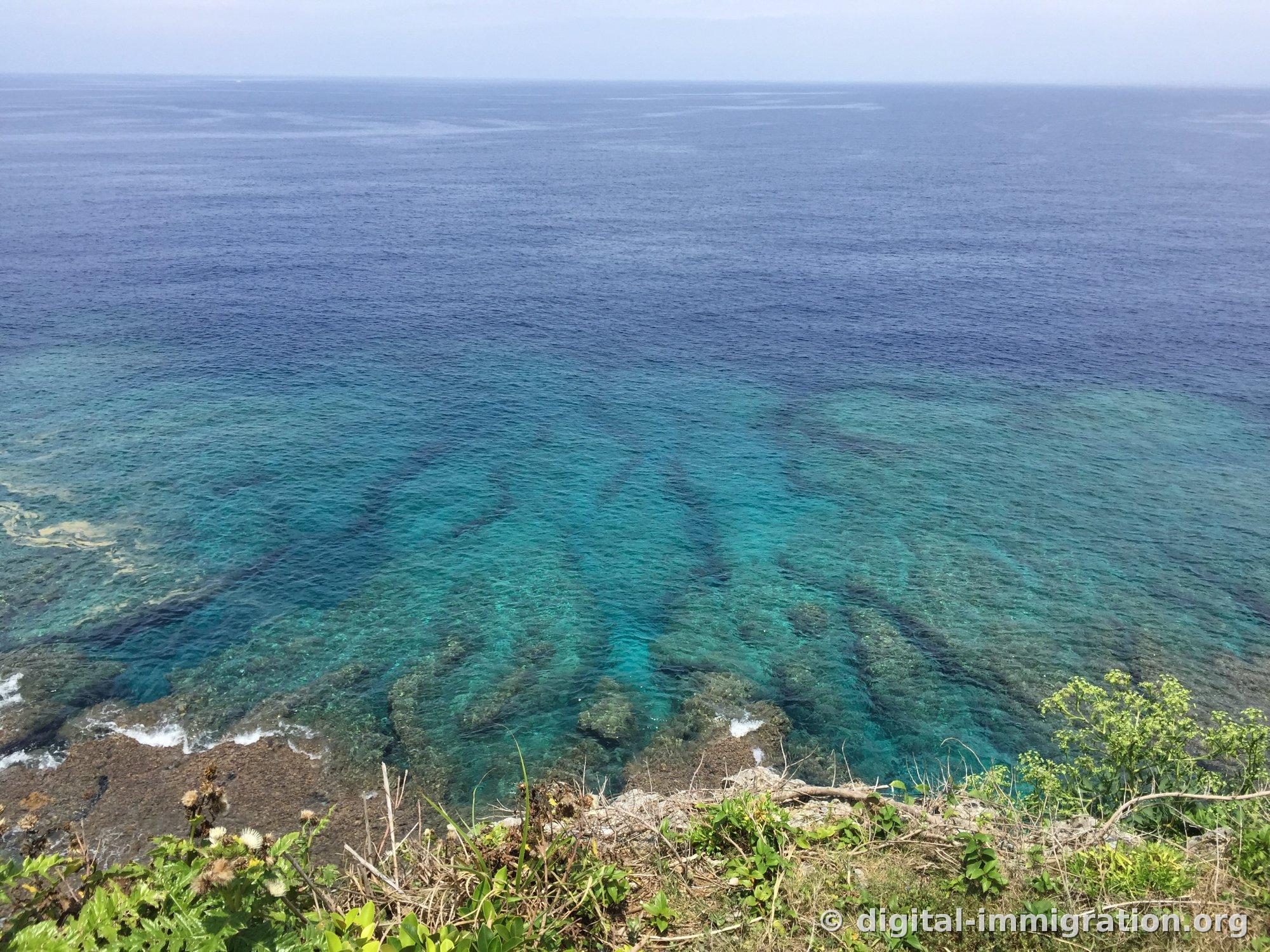
Looking down from inside the railing, the water separates into layers. Close to your feet, coral and rocks show through, making it turquoise; just a bit further out, it drops abruptly to deep navy. The boundary line is sharp enough to see clearly. The sound of waves hitting the rocks carries up to the cliff top, and because of the height, the sound seems to arrive one beat late.
The Elephant Rock—Get the Angle Wrong and It's Just a Rock
Manzamo's signature is undoubtedly the elephant rock. It's named for resembling an elephant's profile with its trunk dipped in water, and that's where first-time visitors make their biggest mistake. If you walk the path clockwise, you only see the back of the rock at first. There's a long stretch where you think, "This is an elephant?" The angle where the elephant shape becomes clear is from the opposite side, viewing the rock from the side while standing on the grassy hill.
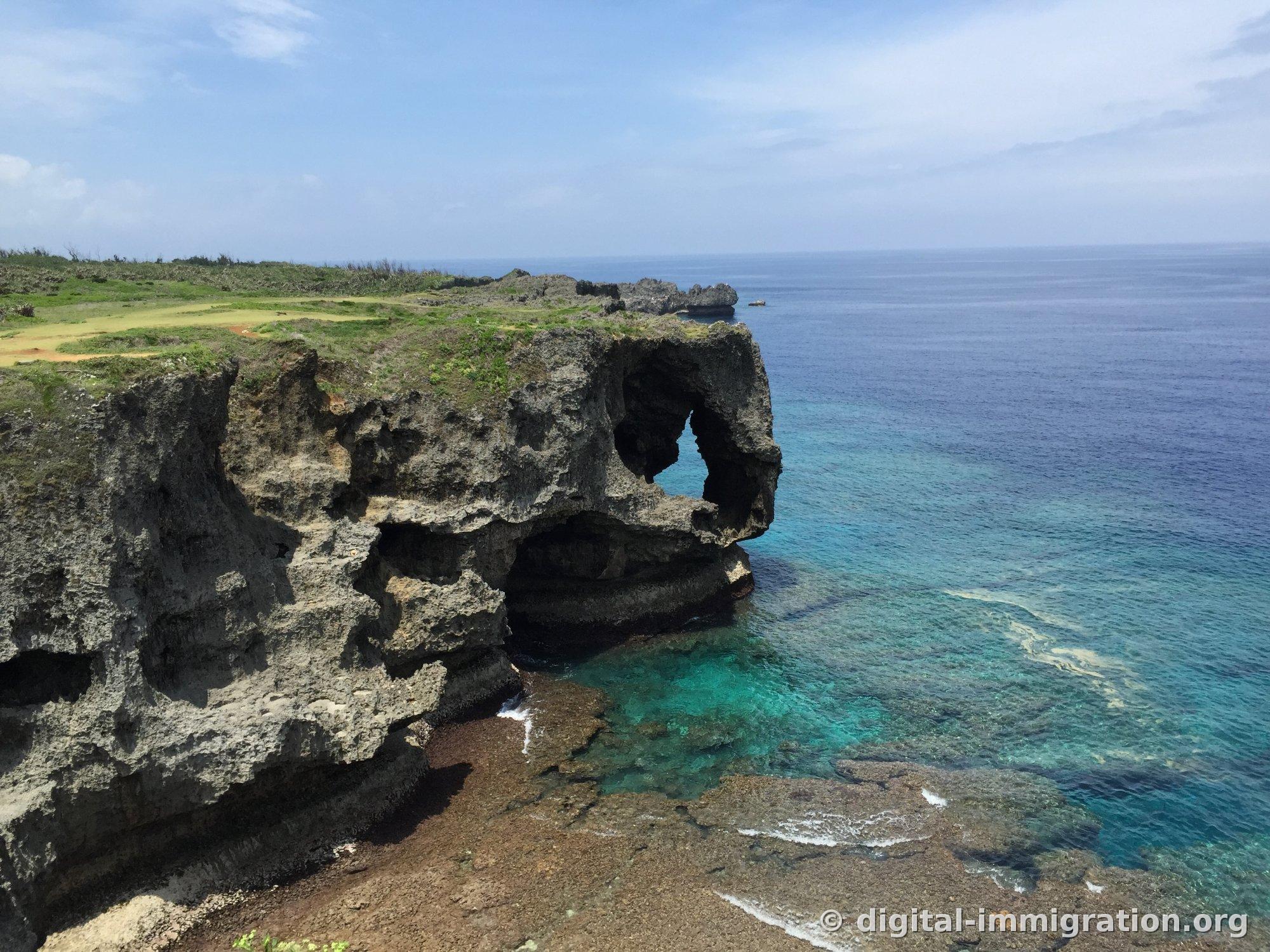
The actual rock is larger than it appears in photos. The sea shows through the arch-like hole beneath the 'trunk,' and the opening is large enough for several people to fit through. The rock's surface isn't smooth but has the distinctive texture of limestone—riddled with holes like a honeycomb. Grass and shrubs cover the top of the cliff thinly. Because the rock is gray, on cloudy days it blends with the sky and looks flat. The shape is clearest late morning to noon, when the sun is over the sea.
During busy times, lines form at the elephant rock's photo spot. When a tour bus arrives, 20–30 people occupy the space at once, so it's better to stroll the opposite side for about five minutes until the bus leaves. There's no need to squeeze in and shoot over someone's shoulder.
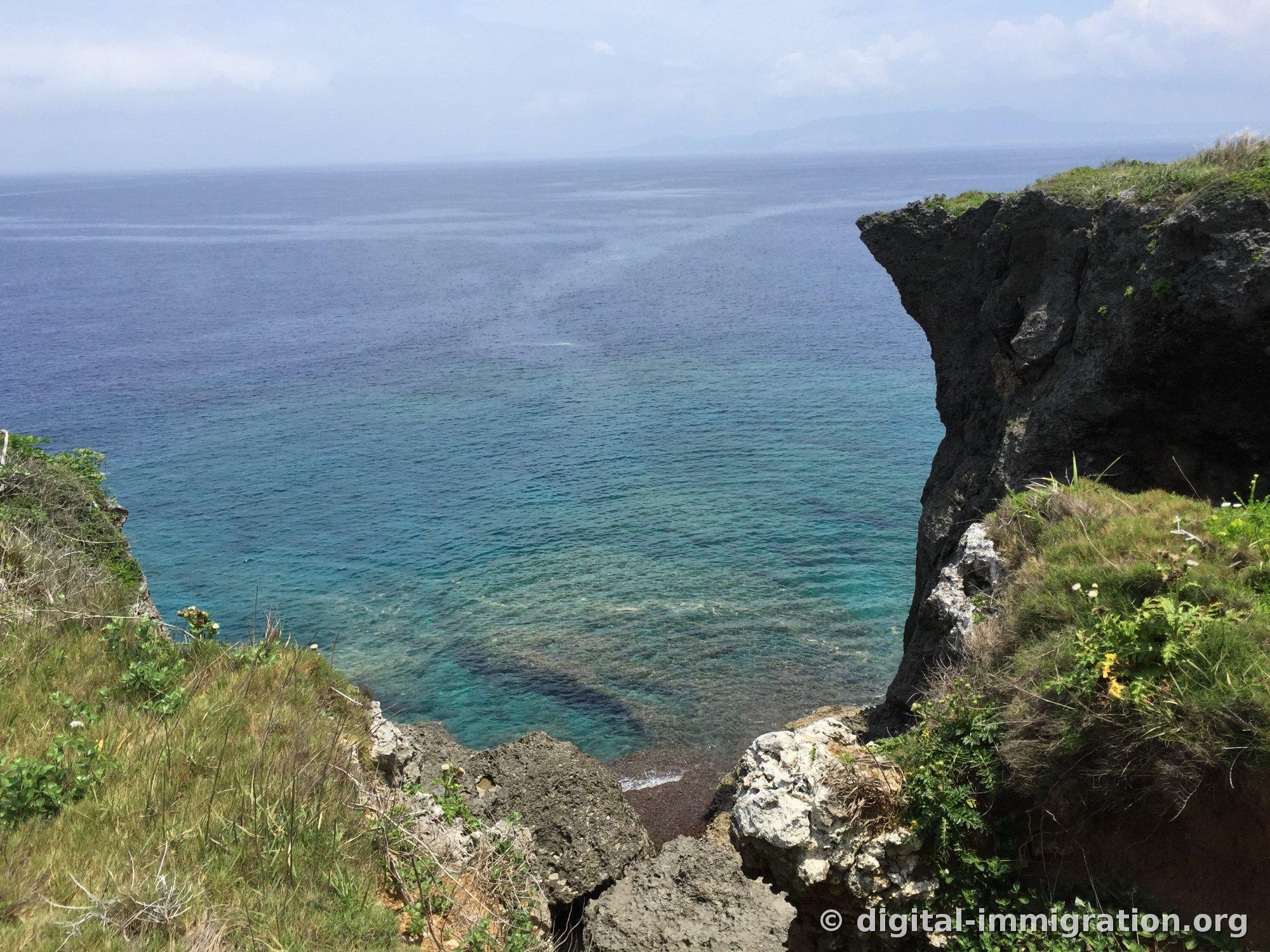
What You'll See on the Cliff Promenade
Surprisingly many visitors see just the elephant rock and leave within five minutes—but that means missing half of it. If you continue walking the path in the opposite direction, you reach a section where the entire Onna coast spreads out. White sand beaches, resorts, and the low ridge of mountains toward Yanbaru all fit in one frame.
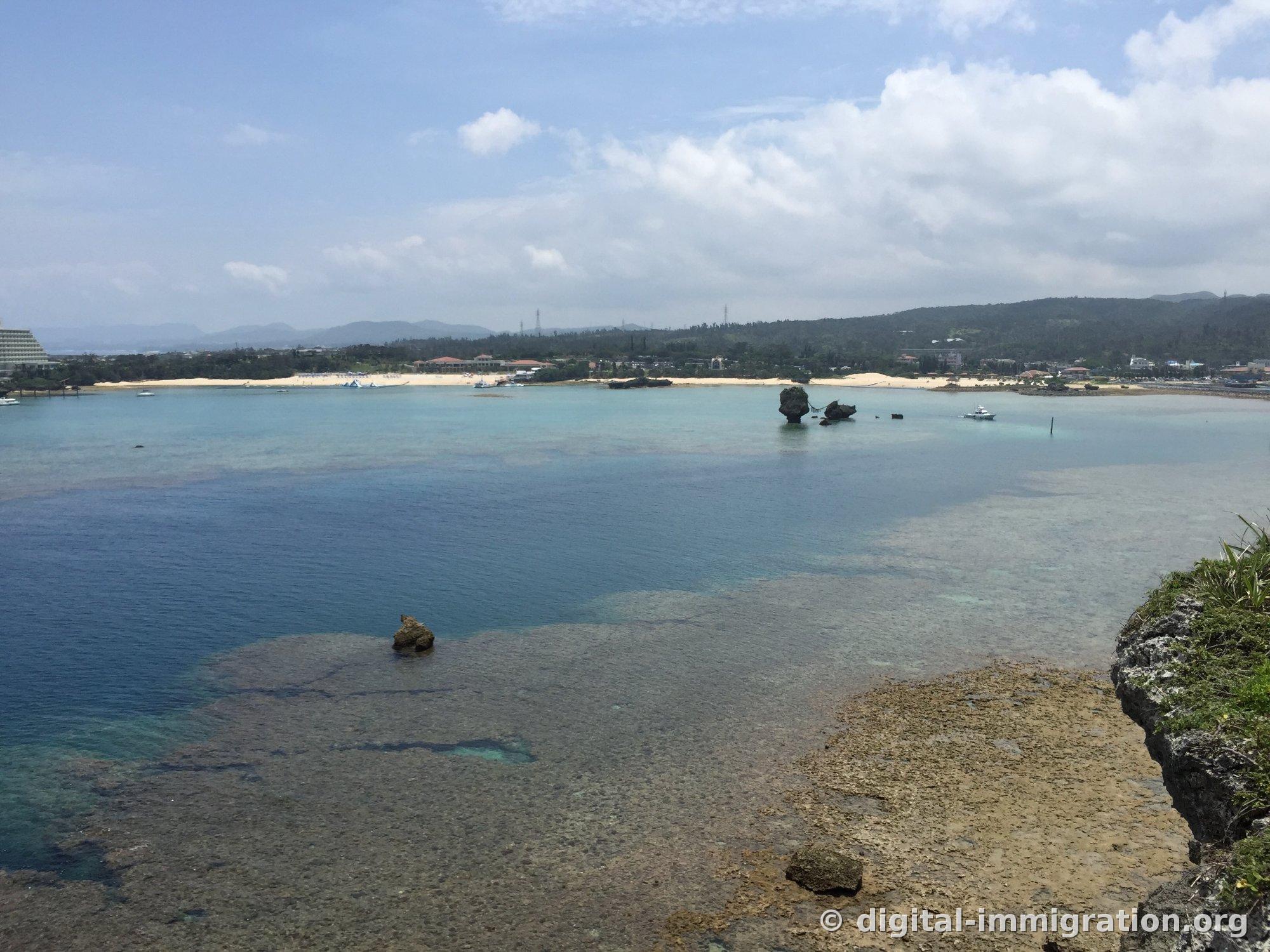
The blue triangles floating on the water are inflatable bounce structures for water activities. The sound of boats coming and going carries here on the wind. The cliff top is quiet while the bay below is busy. It's the same ocean, but with a different temperature.
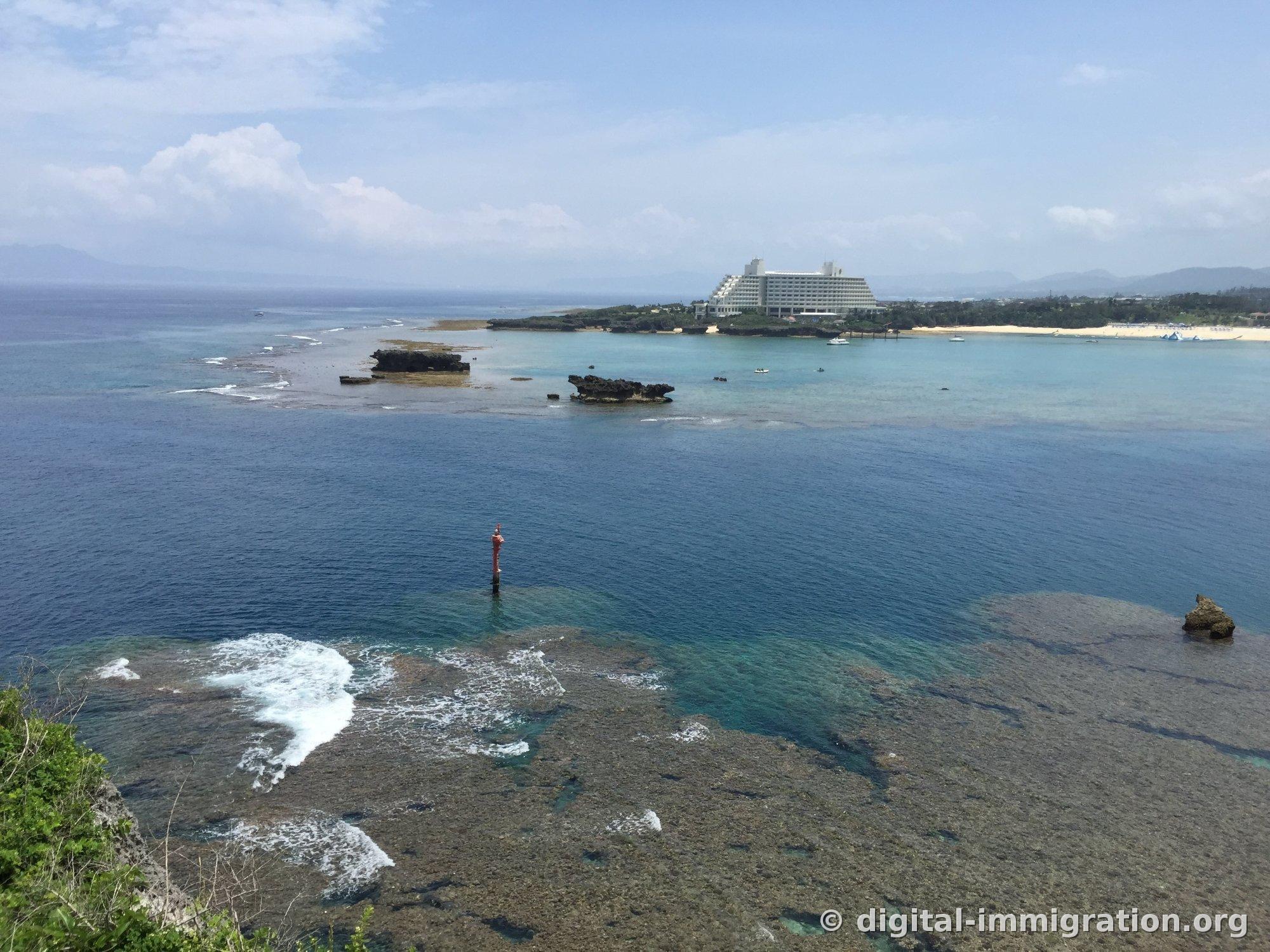
The red column in the center of the photo is a navigation marker indicating the channel where boats enter. Using that column as a reference, the inside is a knee-deep coral zone, and the outside drops off sharply. The line where waves break white is exactly that boundary. From above, you immediately understand why snorkeling points cluster only inside that zone.
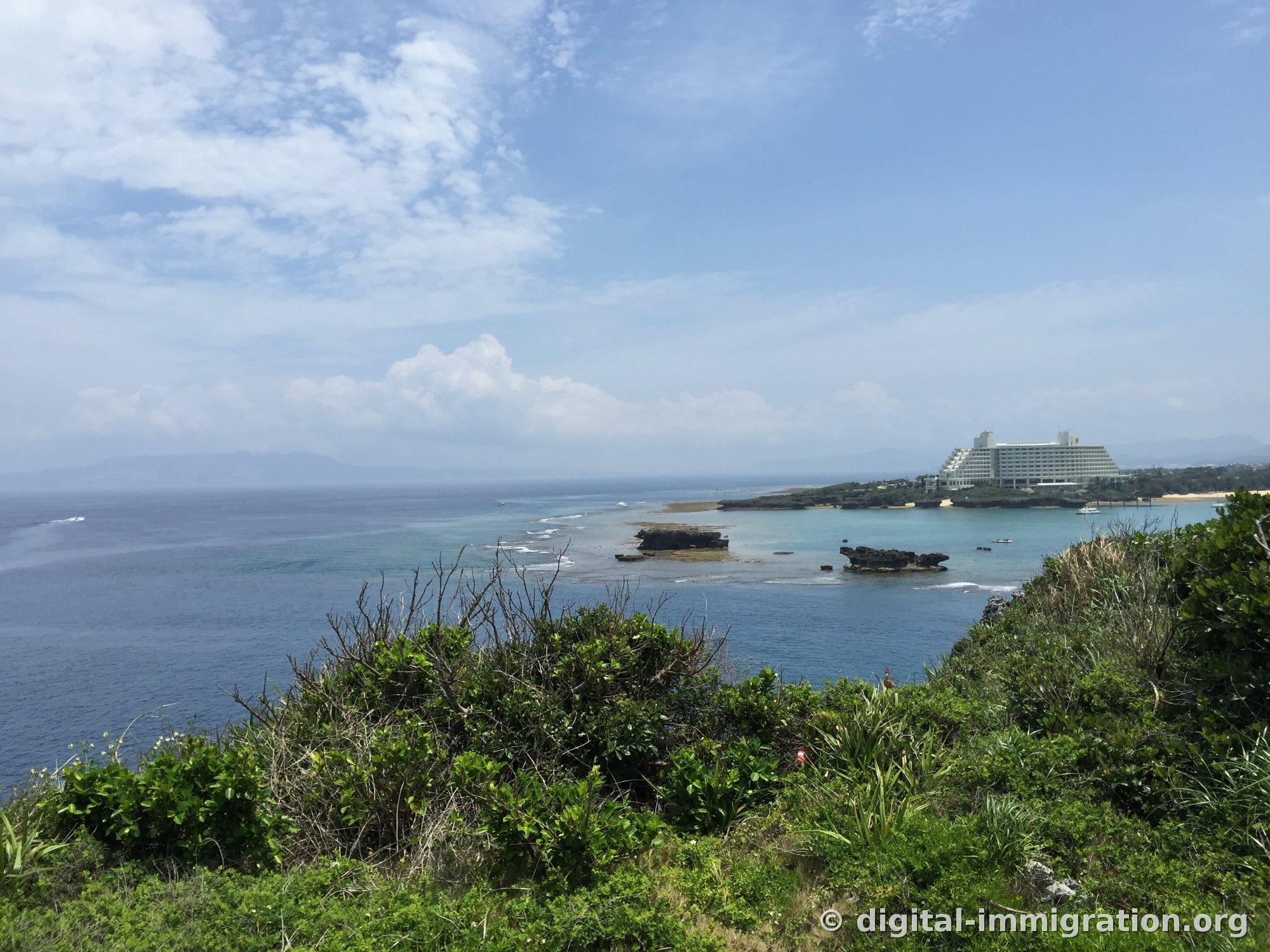
Shrubs grow waist-high at the end of the path. If you've come with a small child, your view will be blocked in this section—it's better to hold them up or move to an open area. I've seen people try to stand their kids on the railing, but with the cliff dropping over 20 meters below, I wouldn't recommend it.
Location and How to Get There
Manzamo sits in the heart of Onna, midway along Route 58 between Naha and Churaumi Aquarium. It's perfectly positioned to slot in during the morning on your way north or the afternoon on your way back. A rental car is the standard, and from Naha, most people take the route via the Kinawan or Yaka interchange. You can also reach it by bus, but considering the walk from the stop and bus frequency, a rental car is far more convenient.
From the parking lot to the cliff promenade, you walk uphill through commercial facilities. It takes less than five minutes on foot. Admission, parking fees, and operating hours have changed multiple times since the facility was rebuilt, so it's safer to check the official information right before your visit. There's no guarantee that what was true when I visited will still be the same.
What to Pack Before You Go
- A parasol or wide-brimmed hat—there's almost no shade along the entire walk
- A hat strap that won't blow away, or be prepared to hold it in your hand
- Apply sunscreen once before you leave and once more during your walk
- A bottle of water—there are no vending machines midway along the path
- Sneakers rather than sandals—the ground is uneven, with mixed grass and stone
If you think of this as a place where you just see the elephant rock and leave, it might feel underwhelming. In reality, many people just take photos and head back within 10 minutes. But if you stand at the cliff's edge and spend time watching the water color change in the coral zone below, you'll understand in your body why the old Ryukyu king called it 'a plain where ten thousand could sit.' To endure that time, you ultimately need a parasol. I made do without one, and the back of my neck burned all evening.
Read next
- From Akihabara's Chuo-dori to the Kanda River: A Record of Tokyo's Electronics District Revisited Multiple Times
Tokyo's Akihabara is a neighborhood where it's hard to say you've seen everything in a single visit. I've come multiple times across different seasons, and each time the signs chan…
Tokyo · Akihabara - Buying a Single ¥300 Year-End Jumbo Lottery Ticket at Nishi-Ginza Chance Center in Tokyo
Exit from the Hibiya exit of Tokyo's Shimbashi Station, walk toward the elevated highway for about three minutes, and suddenly you'll see a line of people stretching along the side…
Tokyo · Nishi-Ginza Chance Center - Ueno Ameyoko, the real magic starts after sunset — an evening walk from the Okachimachi Gate to Ueno Station
Every time I come to Tokyo, my feet find their way to Ueno Ameyoko (アメ横) without fail. This time I entered from the Okachimachi side and worked my way toward Ueno Station. I've met…
Tokyo · Ameya Yokocho Market