Okinawa Churaumi Aquarium: I Rearranged My Day to Watch a Whale Shark Stand Upright and Feed for 15 Minutes
The Churaumi Aquarium, located in the Marine Park at the tip of the Motobu Peninsula in northern Okinawa, takes about two hours by car from Naha Airport. If you're staying in the s…
Okinawa · Okinawa Churaumi Aquarium
The Churaumi Aquarium, located in the Marine Park at the tip of the Motobu Peninsula in northern Okinawa, takes about two hours by car from Naha Airport. If you're staying in the south, it consumes half a day of travel time. Yet I went back a second time. For one reason alone: the whale shark feeding time. On my first visit, I missed the timing and only saw them swimming around, and I regretted it ever since.
From Parking Lot to Entrance, Farther Than You'd Think
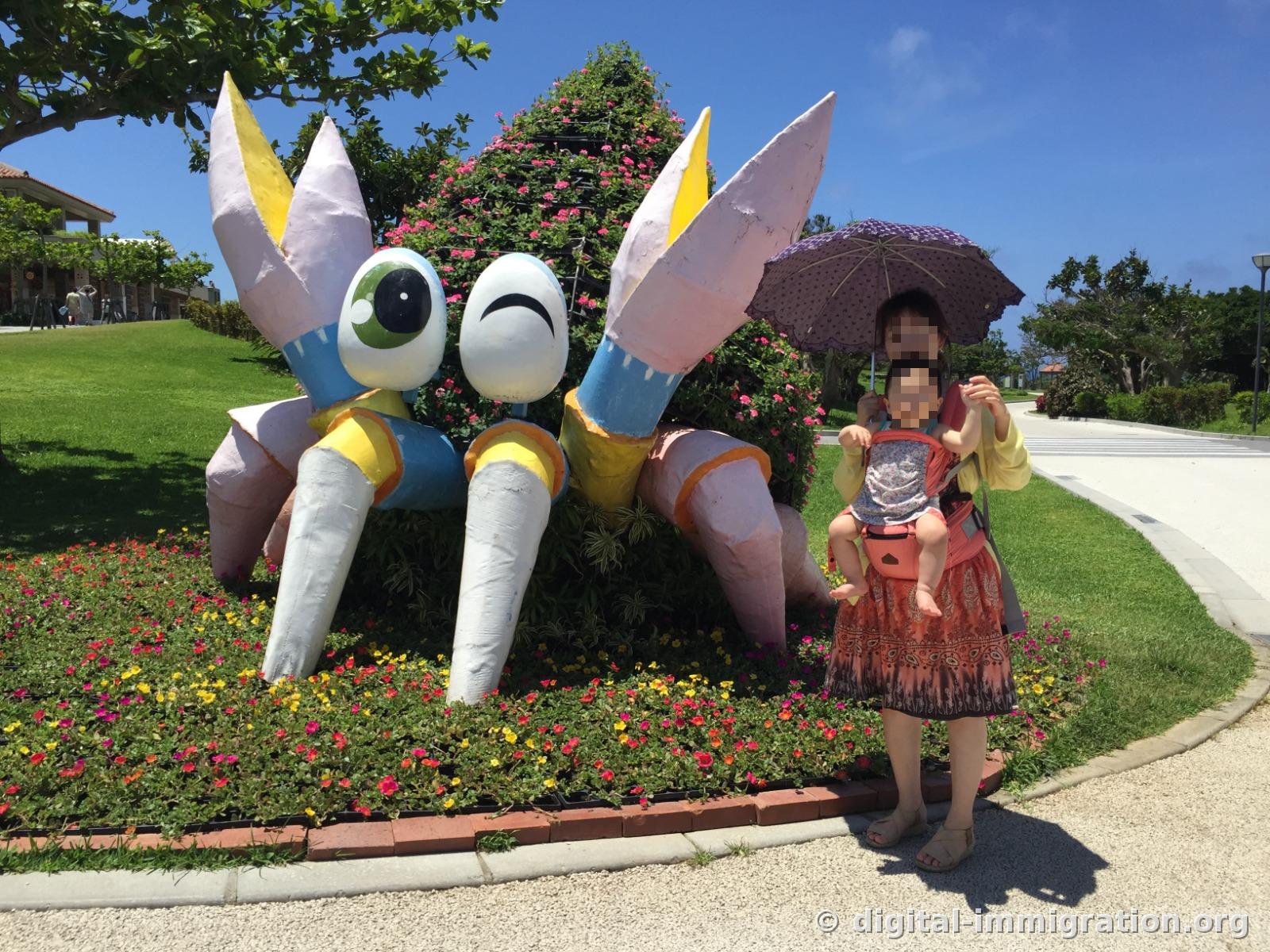
There's this sculpture standing on the path as you walk down from the parking lot. It's unclear if it's a shrimp or crab with bulging eyes, but the portulaca flowers planted below are in full bloom, so all the kids stop here. You need to brace yourself for Okinawa's midday sun in June. I walked without a parasol and got my neck sunburned.
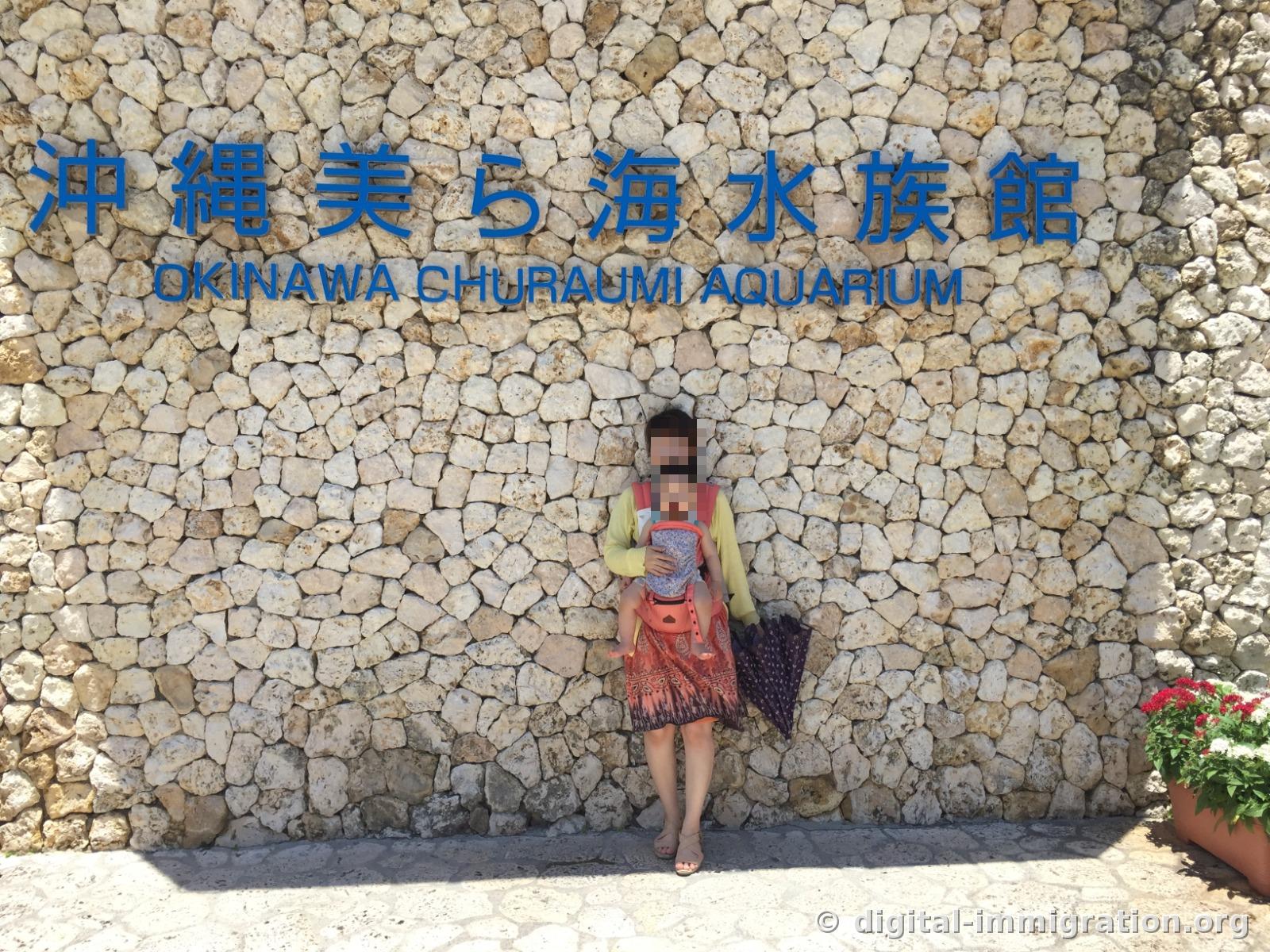
Built from Ryukyuan limestone, a wall displays the characters for Churaumi Aquarium in blue letters. This is essentially the prime photo spot, but since the wall faces west, afternoon light hits head-on and your face comes out dark. We shot just after noon, so we fared better.
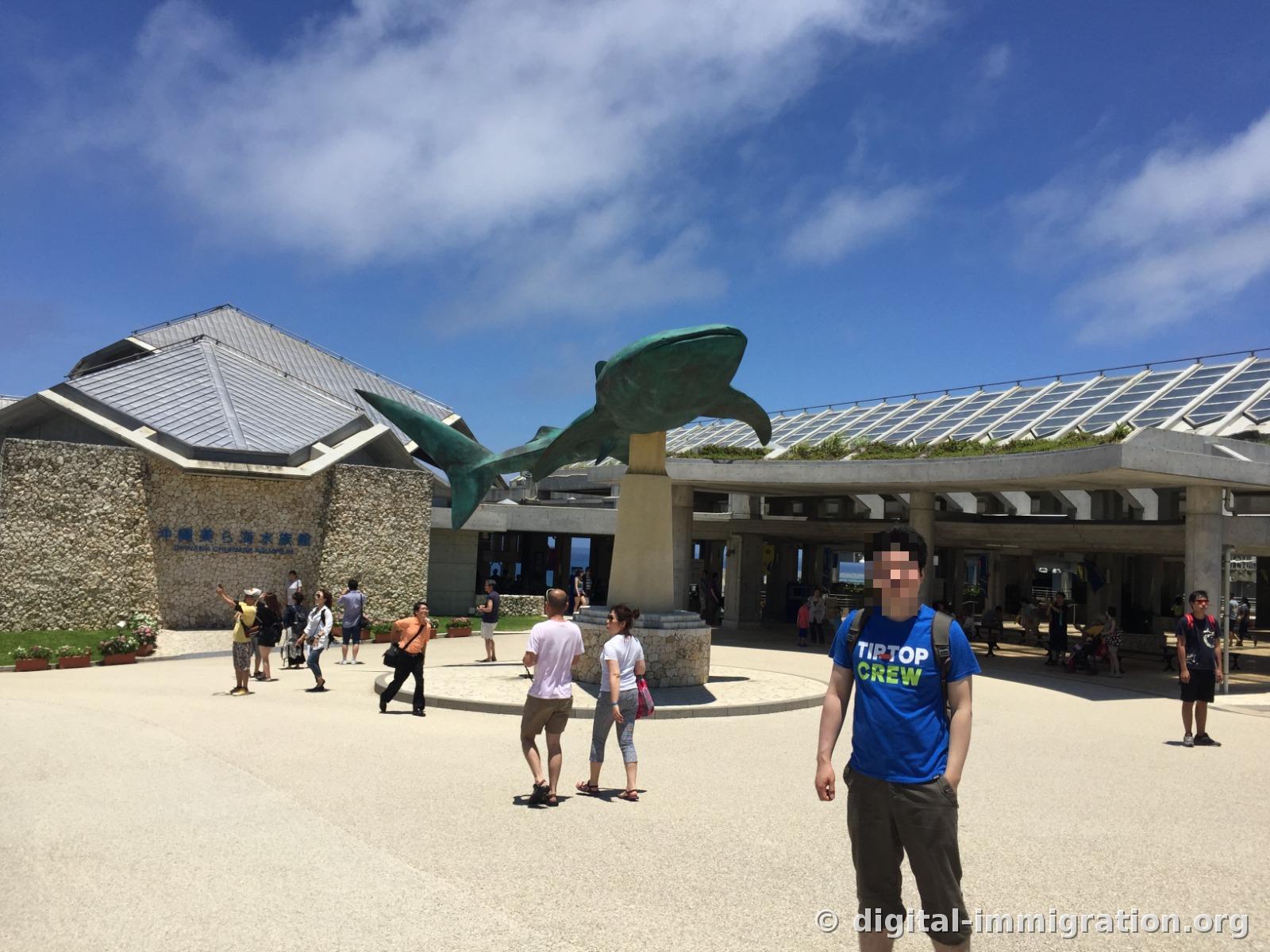
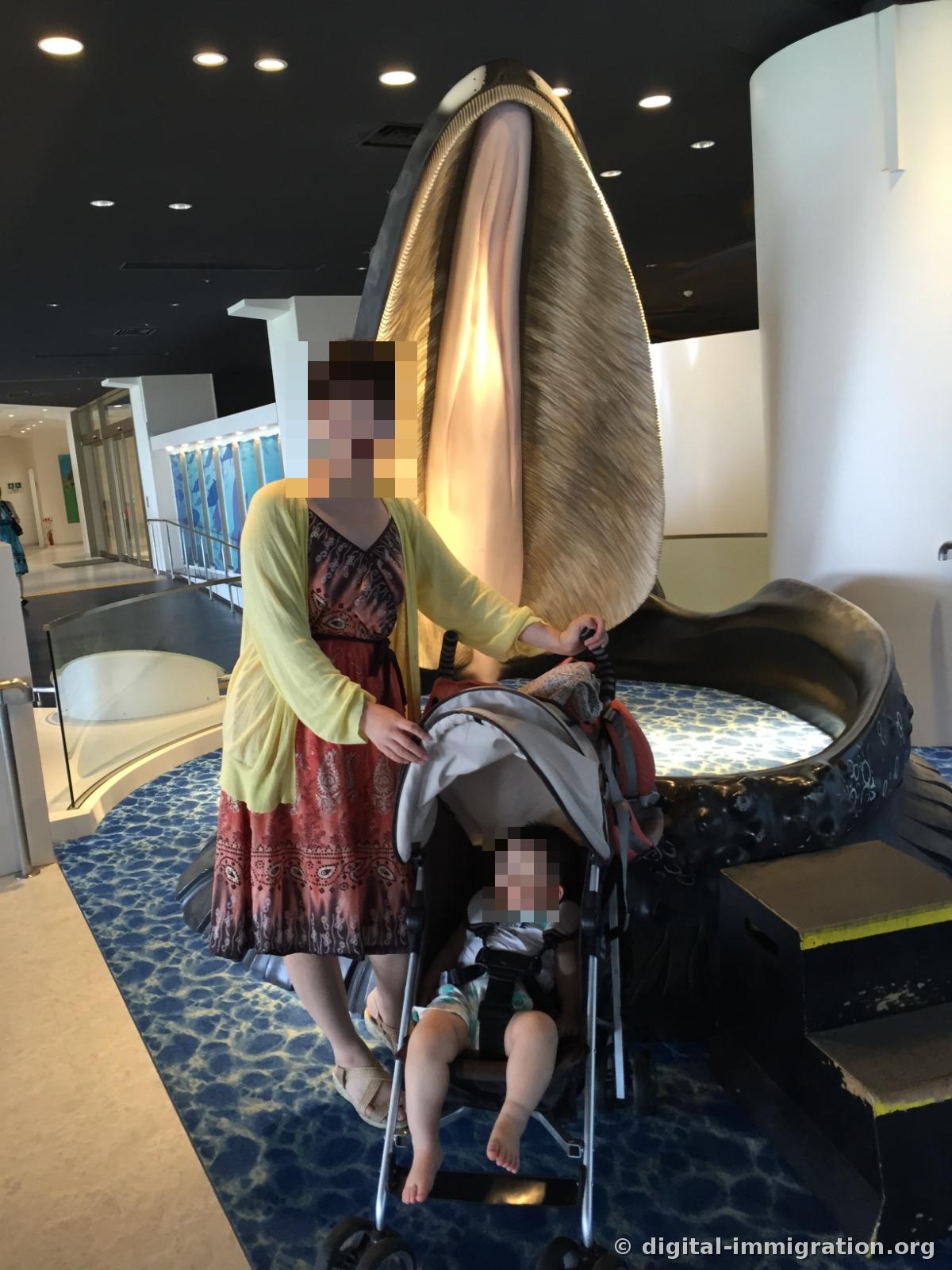
Beyond the sign, a spacious plaza opens up with a bronze whale shark sculpture reaching toward the sky. The glass-roofed structure visible in the back is the main aquarium building. What's interesting is that this aquarium has its entrance on the fourth floor, and you proceed downward through the exhibits. Standing in the plaza, the building looks low, but once inside, the depth drops dramatically.
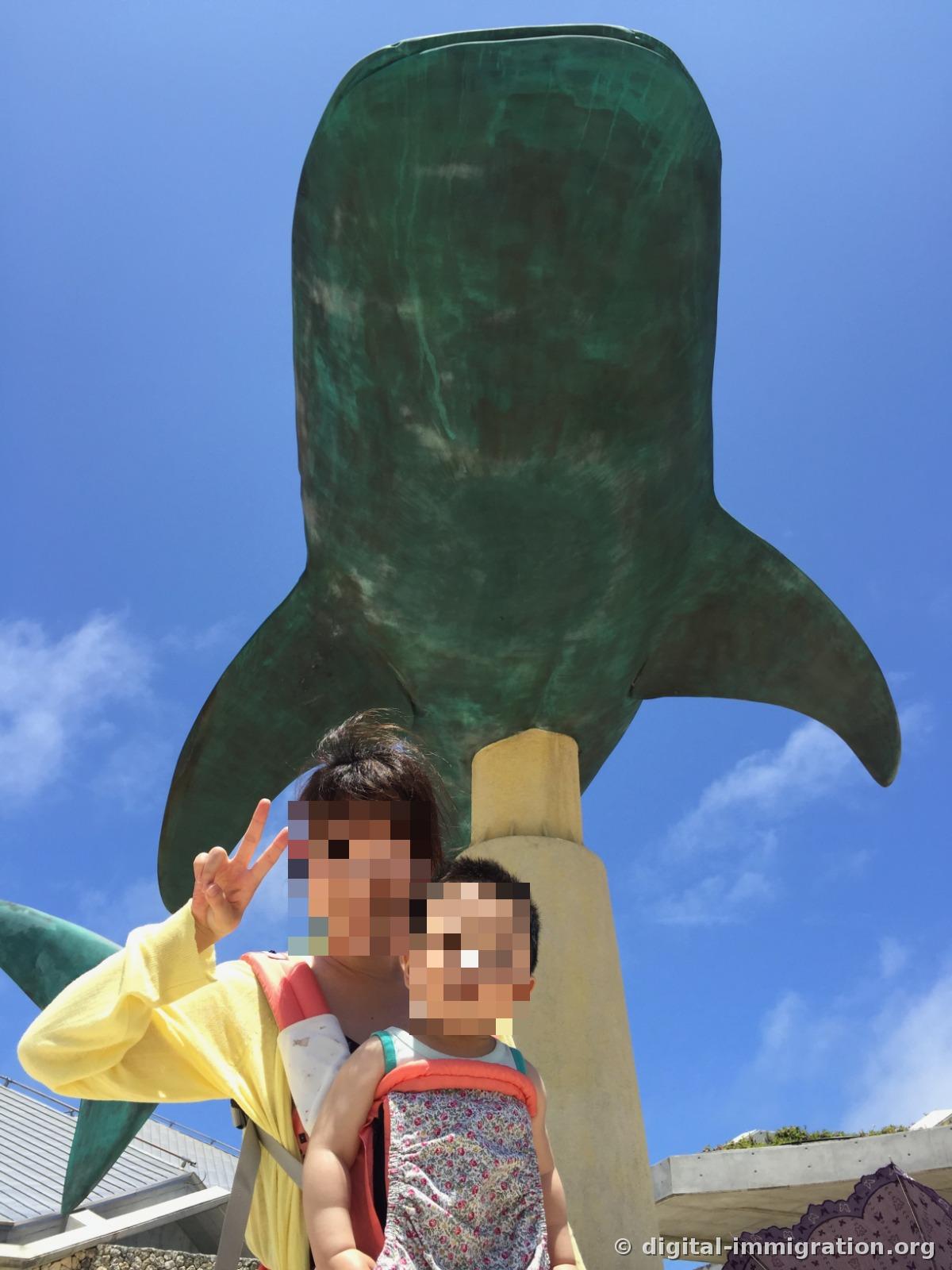
If you photograph it from directly below the sculpture looking up, the white belly and tail fin cut across the sky. You'll see the real whale shark from this same angle inside, and when you look at the sculpture again after seeing the actual fish, your sense of scale changes completely.
Location and How to Get There
The aquarium is located at 424 Ishikawa, Motobu Town, nestled along the coastline within the Marine Park. Without a rental car, you can take the Yanbaru Express Bus from Naha Bus Terminal or the airport, or catch Express Bus 117 from Naha Airport and get off before the memorial park—budget about three hours one way. By car, exit at Kyoda IC at the end of the Okinawa Expressway and take National Route 505 for about 40 minutes. We departed from Naha, stopped at Nakijin Castle ruins along the way, and arrived in the afternoon.
Parking starts from Lot P7, and the spots closest to the aquarium fill up quickly during peak hours in the afternoon. The moment you park farther away, the distance you have to push a stroller uphill stretches significantly. We parked lower down and had to walk up, and our child cried from heat exhaustion once.
The Ino Touch Pool: Holding Starfish Barehanded
When you enter through the fourth floor entrance, the first thing you encounter is a shallow tank. In Okinawan dialect, the shallow water inside the coral reef is called 'ino,' and they've recreated that environment exactly. You can put your hands in the water and touch starfish and sea cucumbers directly. The water is lukewarm, and the starfish feel rough like sandpaper. The black sea cucumbers are heavier than you'd expect when you hold them, and they stretch out limply.
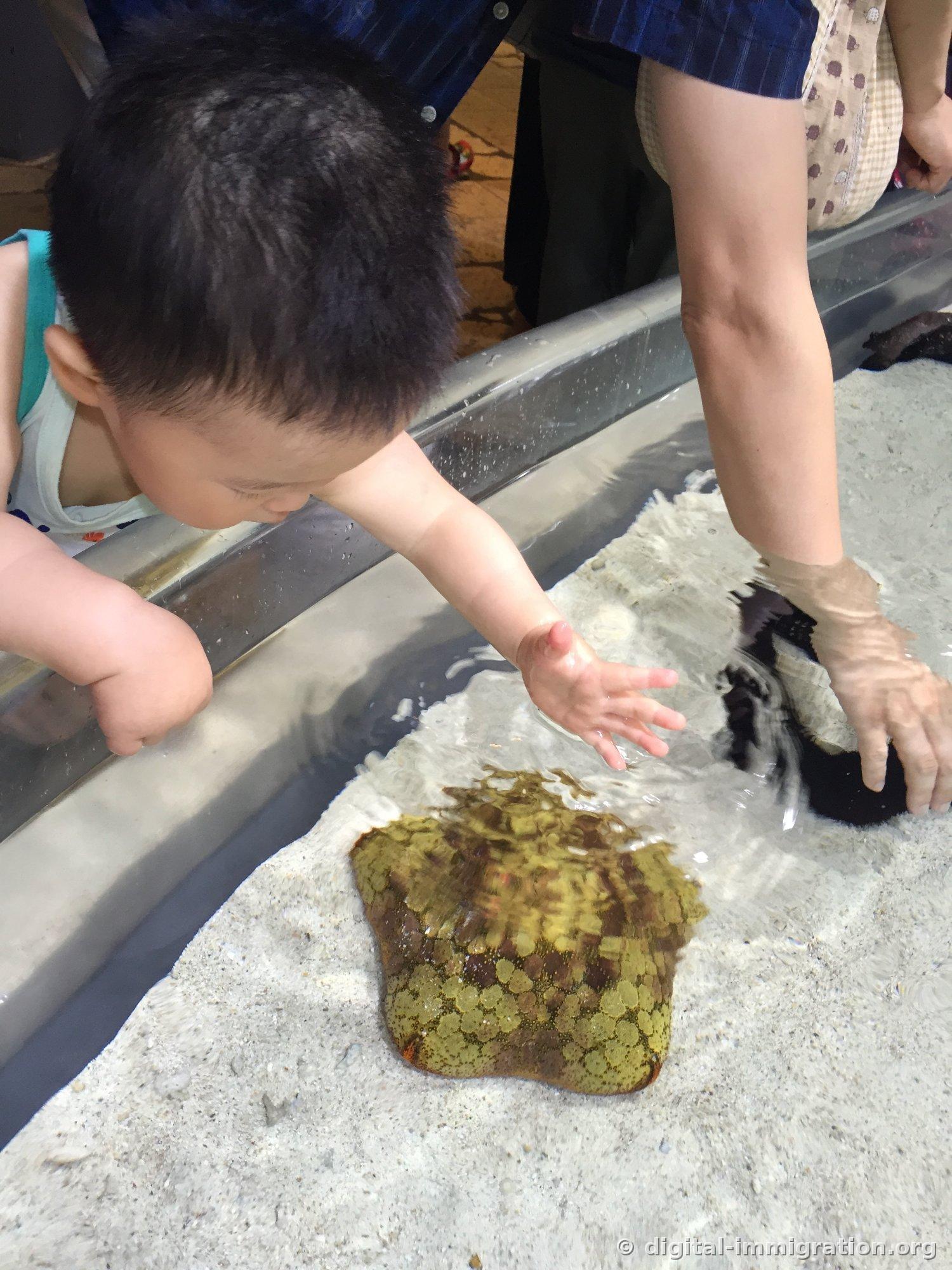
Staff members rotate the creatures every few minutes. They disinfect children's hands before they enter the water and briefly instruct them not to squeeze too tightly when removing their hands. There are times when the line gets long, so it's best to visit right after entering the aquarium.
Sea of Kuroshio — An Hour Passes Without Thinking in Front of the Glass
As you descend the stairs, the lighting drops sharply, and dark corridors open with tank windows on both sides. A manta ray glided right past the glass here. I remember the back of my child staring motionless, holding their breath.
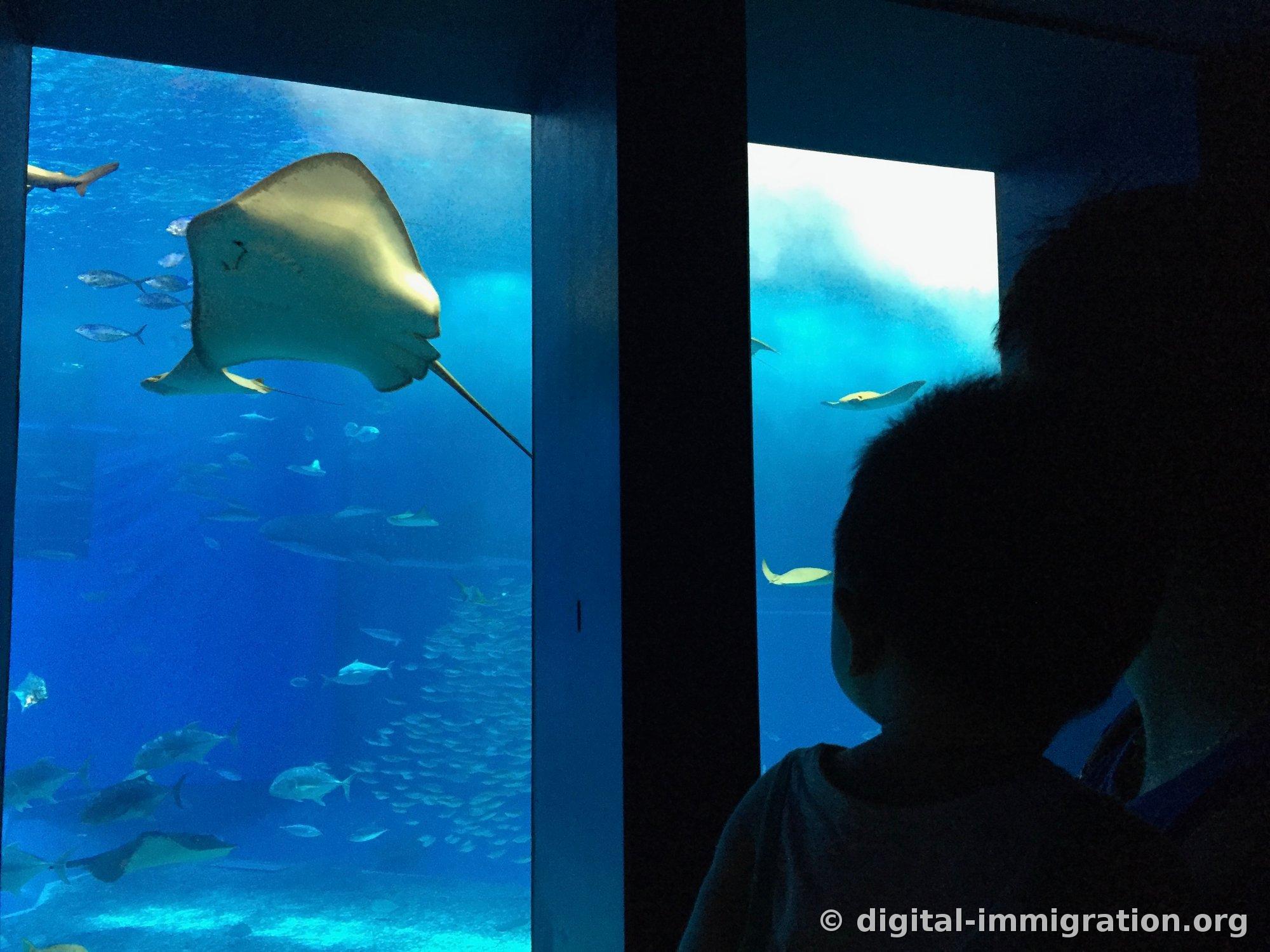
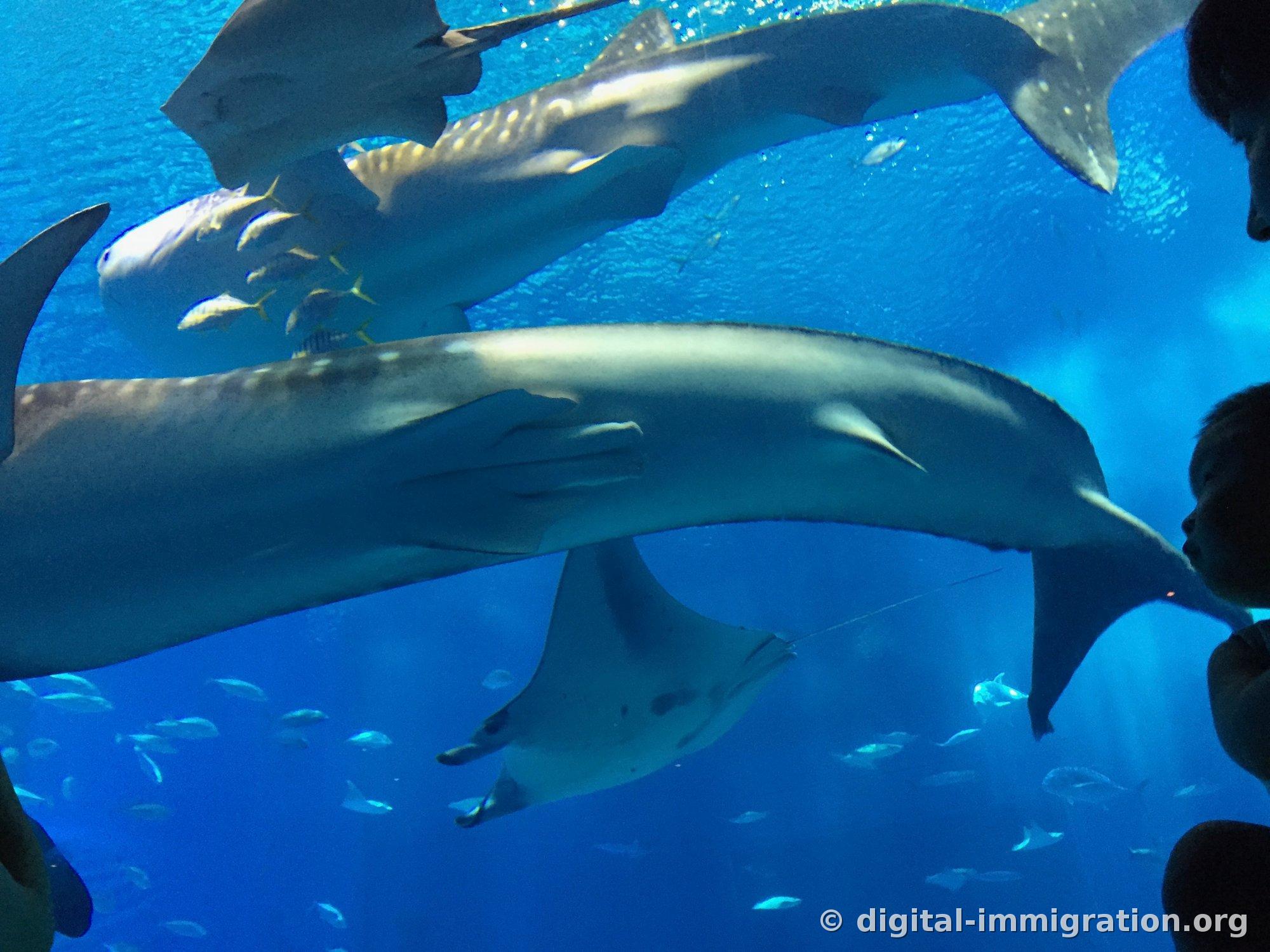
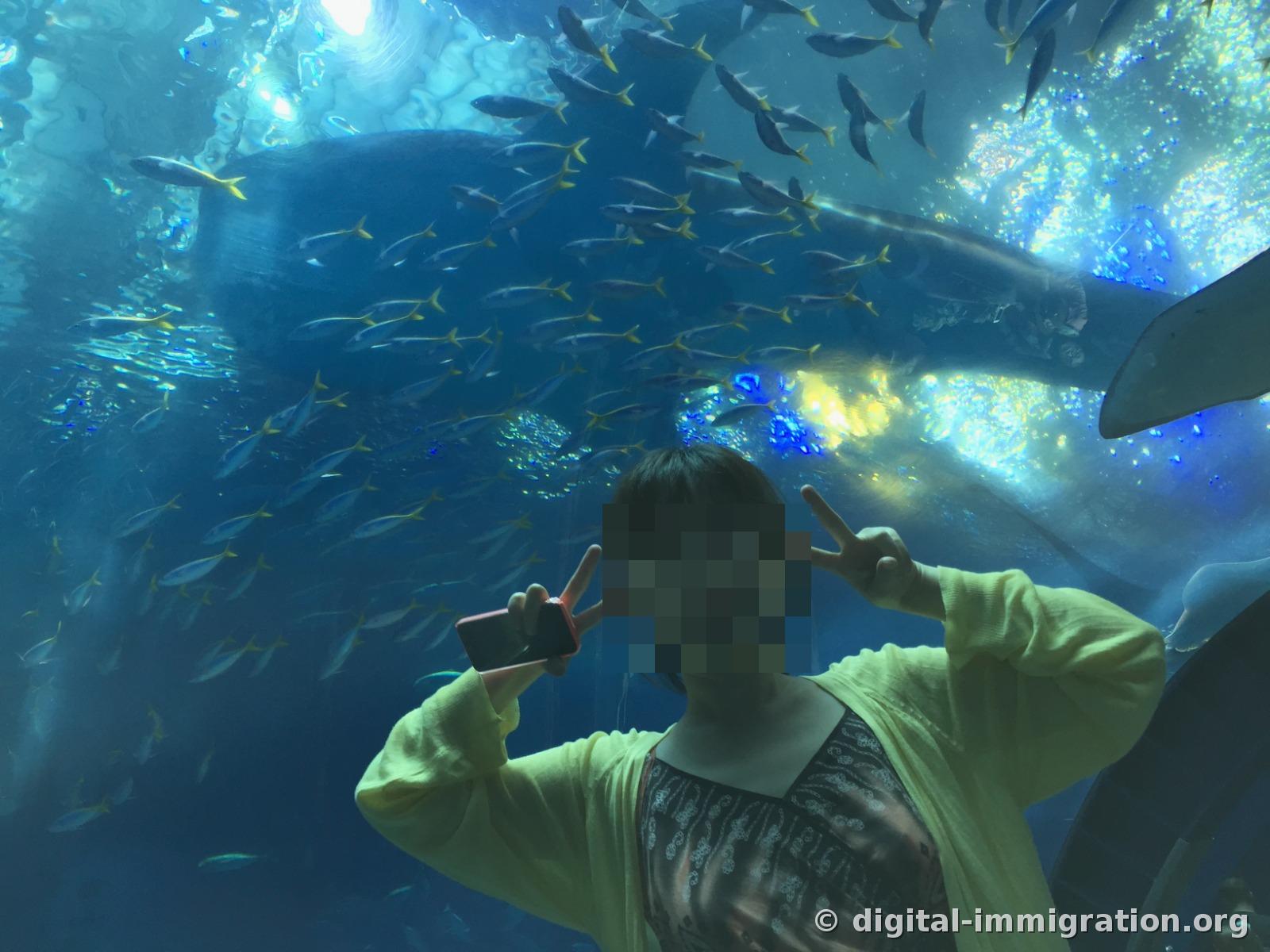
The main tank, 'Sea of Kuroshio,' has a depth of 10 meters with acrylic panels over 60 centimeters thick. Those numbers don't really give you a sense of the scale, but standing in front of the glass, the far end looks hazy and blurred. That's how much water is in there. Moments when the whale shark, manta rays, and large fish pass simultaneously at the same level keep occurring.
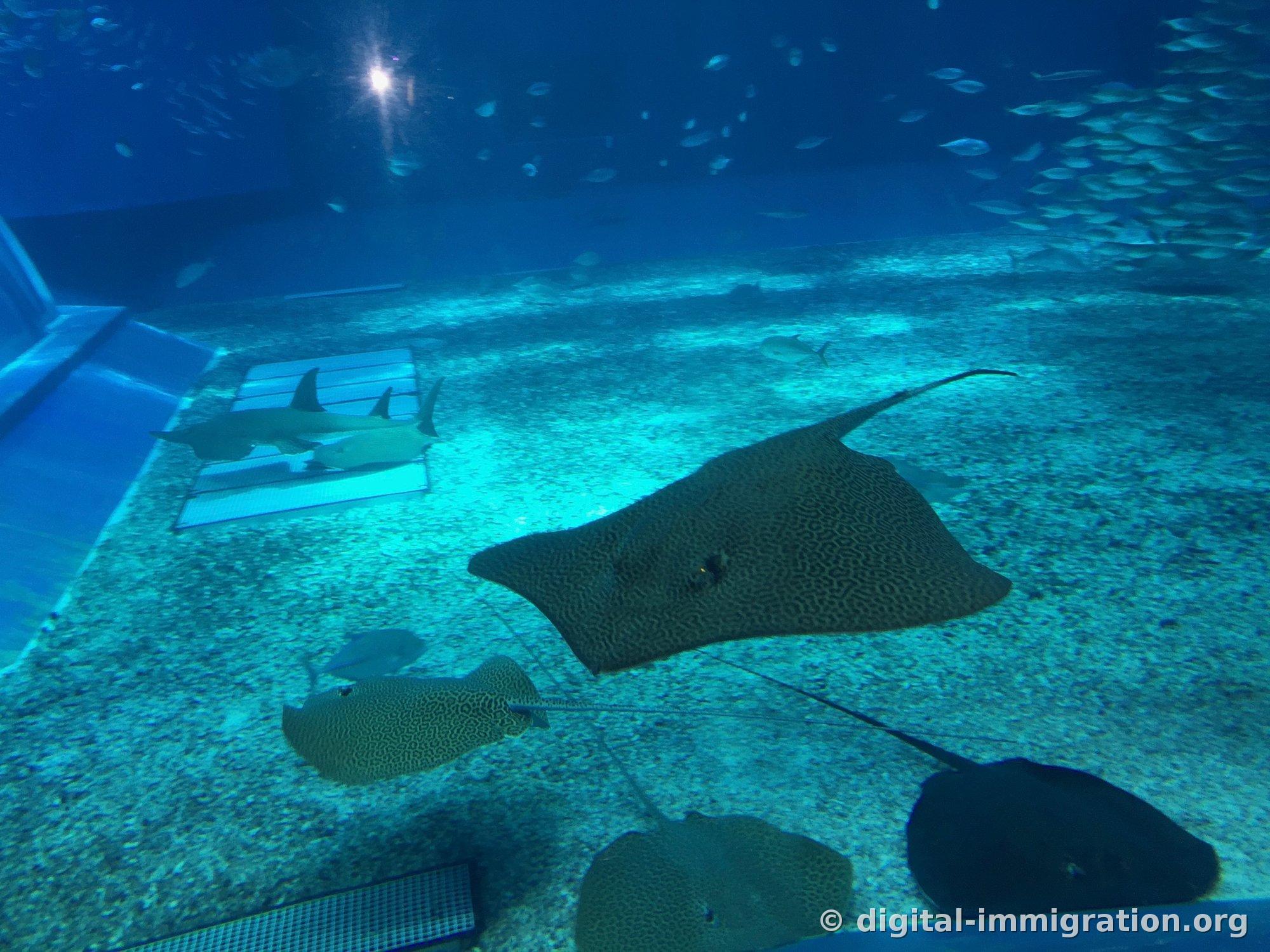
Since the main tank has multiple viewing levels, you see the same tank from different angles at least three times. From the upper walkway looking down, rays sprawl across the sandy bottom, and sharks rest on white platforms with only their fins raised. If you only look at the front glass and move on, you'll miss this view.
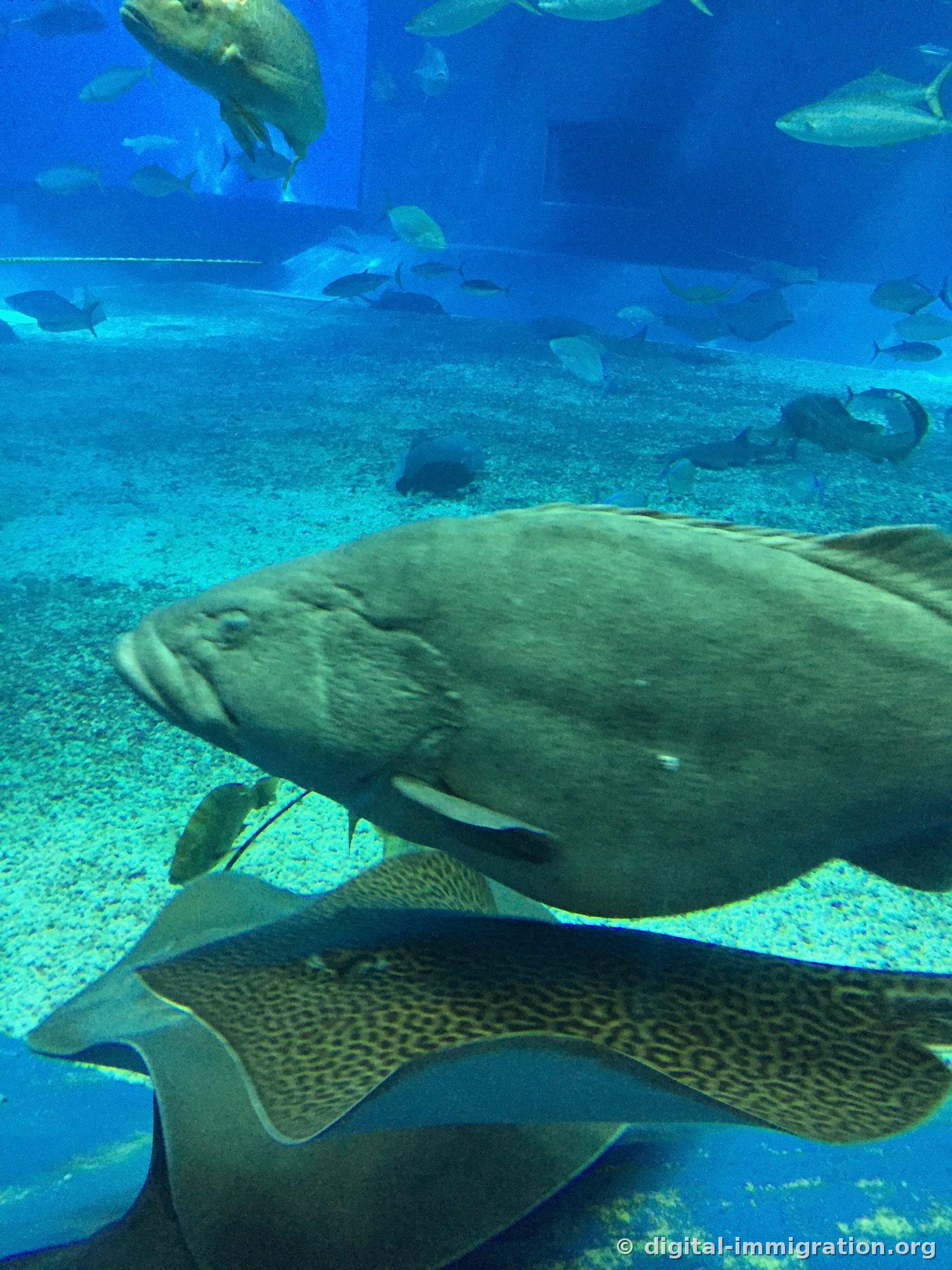
The bottom is home to a giant grouper. Its head alone is the size of an adult's torso, and the wrinkles around its mouth look like an old man's face. As this fish passed in front of the glass, a spotted eagle ray crossed in front below it. The size difference between the two is starkly apparent.
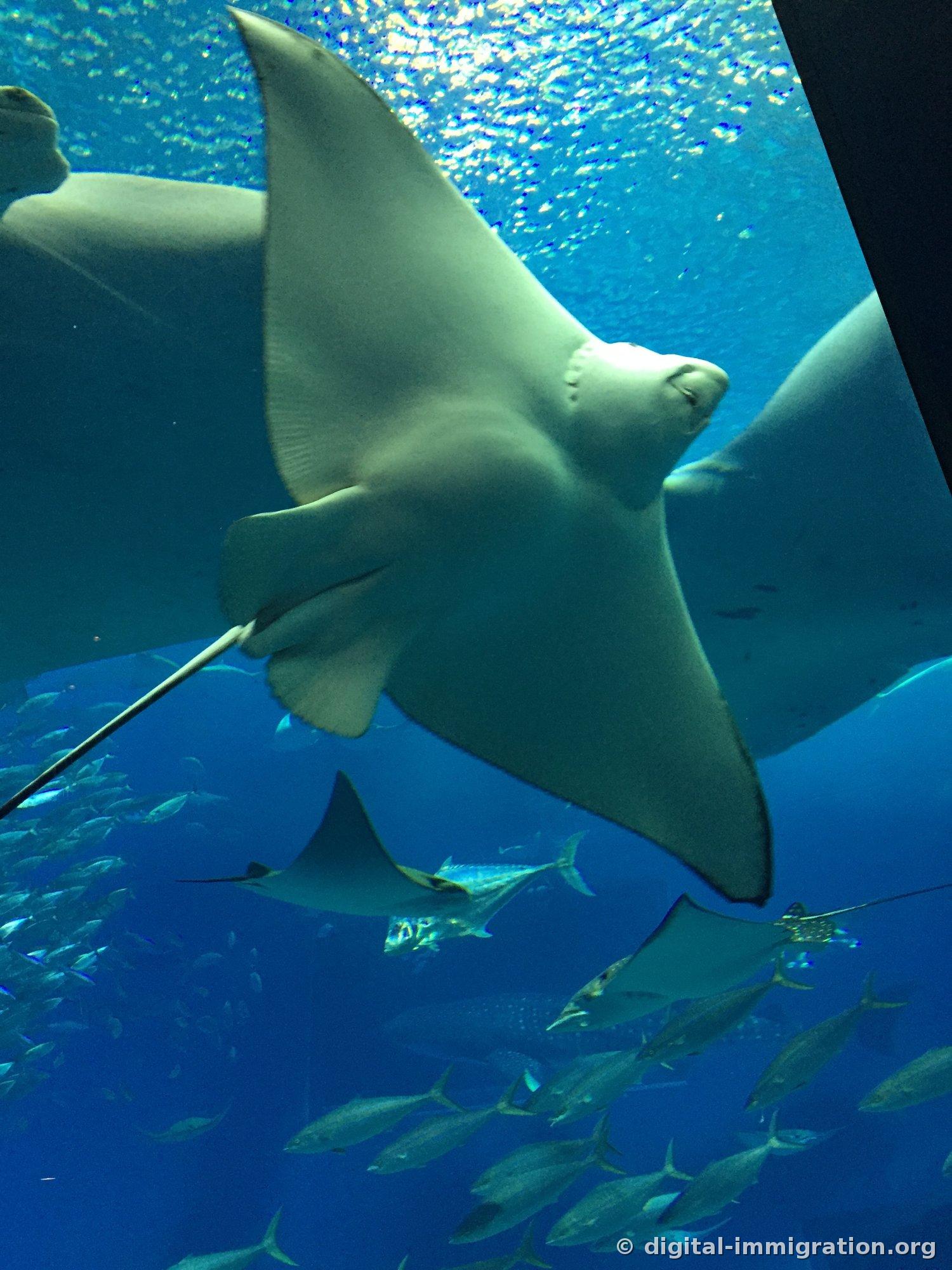
Don't miss the angle of looking up at a manta ray's belly from below. The white underside with its mouth and gill slits lined up looks like a smiling face. Interestingly, what the children enjoyed most wasn't actually the whale shark but this view.
If you're taking photos, turn off the flash. It reflects off the glass, ruining both your photo and others' views. It's dark in front of the main tank, so even slight hand movement blurs the image. The best approach is to hold the lens almost against the glass and take the shot while holding your breath.
Whale Shark Feeding — Standing Vertical
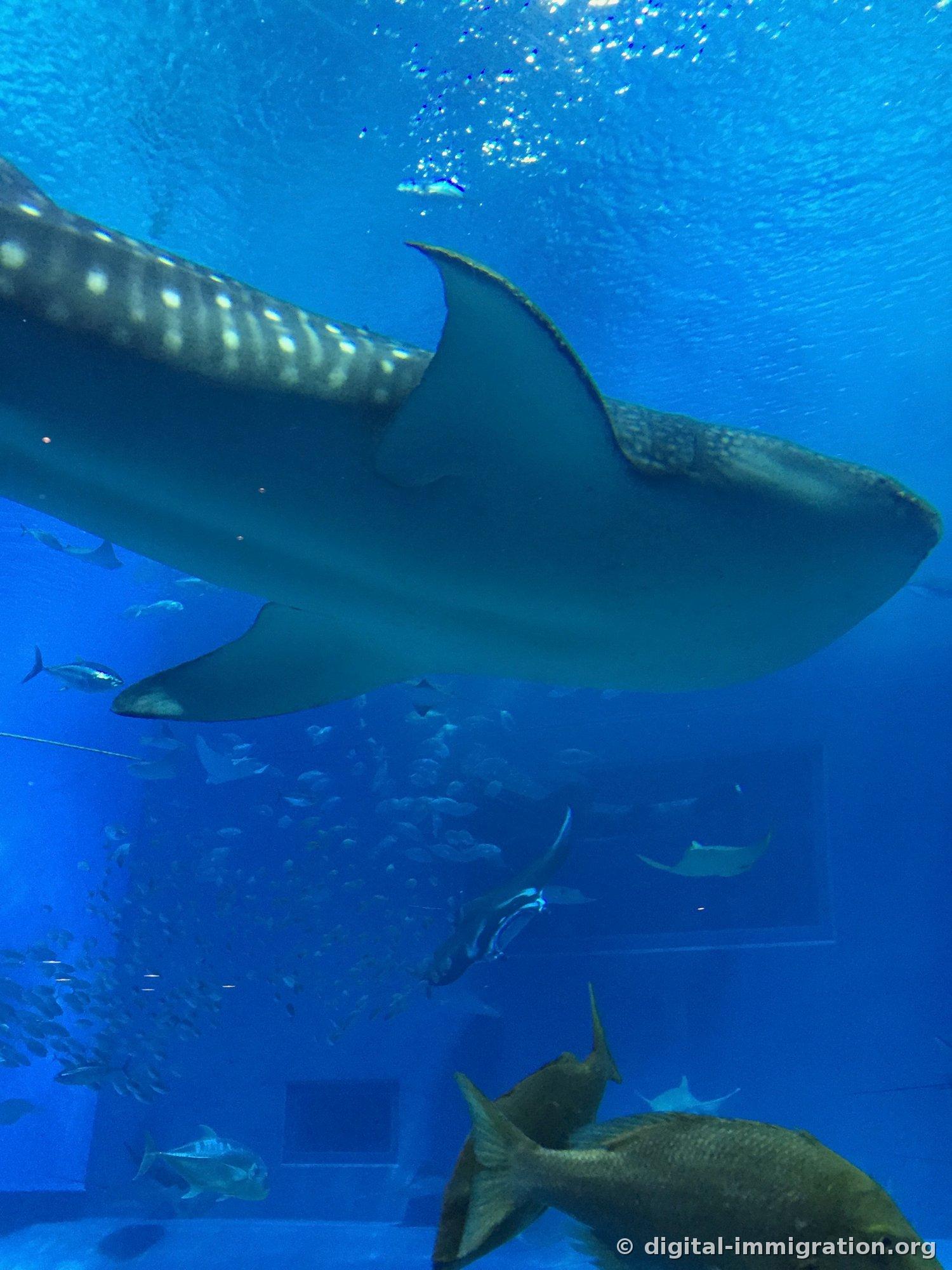
This is the core of this whole story. Whale sharks normally swim horizontally in a leisurely manner. But at feeding time, they position their bodies almost vertically. With their tail down and head up, they open their mouth wide and suck in water and food in one go. When the keeper releases krill at the surface, a body over five meters long stands like a pillar below it. Standing in front of the glass, the white belly completely fills your view.
Feeding happens several times a day, concentrated in the afternoon. The times change slightly each year and may be cancelled depending on circumstances, so definitely get the day's schedule from the information desk on the fourth floor when you enter. The official website also posts the day's program. If you don't check and just follow the flow, you'll miss it nine times out of ten.
- Claim your spot right in front of the main tank's glass 20 minutes before it starts. If it's 10 minutes before, you're already three rows back.
- The best spot is center stage, a couple of steps back from the glass. If you're too close, the entire vertical body won't fit in your view.
- If you bring a child, move the stroller to the side and hold them. At sitting height, they'll only see the back of the person in front.
- Just before feeding, the school of fish's movement noticeably speeds up. That's your signal.
Taking a Photo Inside the Megalodon Jaw Model
Beyond the main tank, entering the shark exhibition area, there's a reconstructed megalodon jaw model. They've even laid down a platform so people can enter and take photos. An adult holding a child can fit inside with room to spare vertically. Real fossil teeth are displayed on pedestals on both sides, and one is the size of a palm.
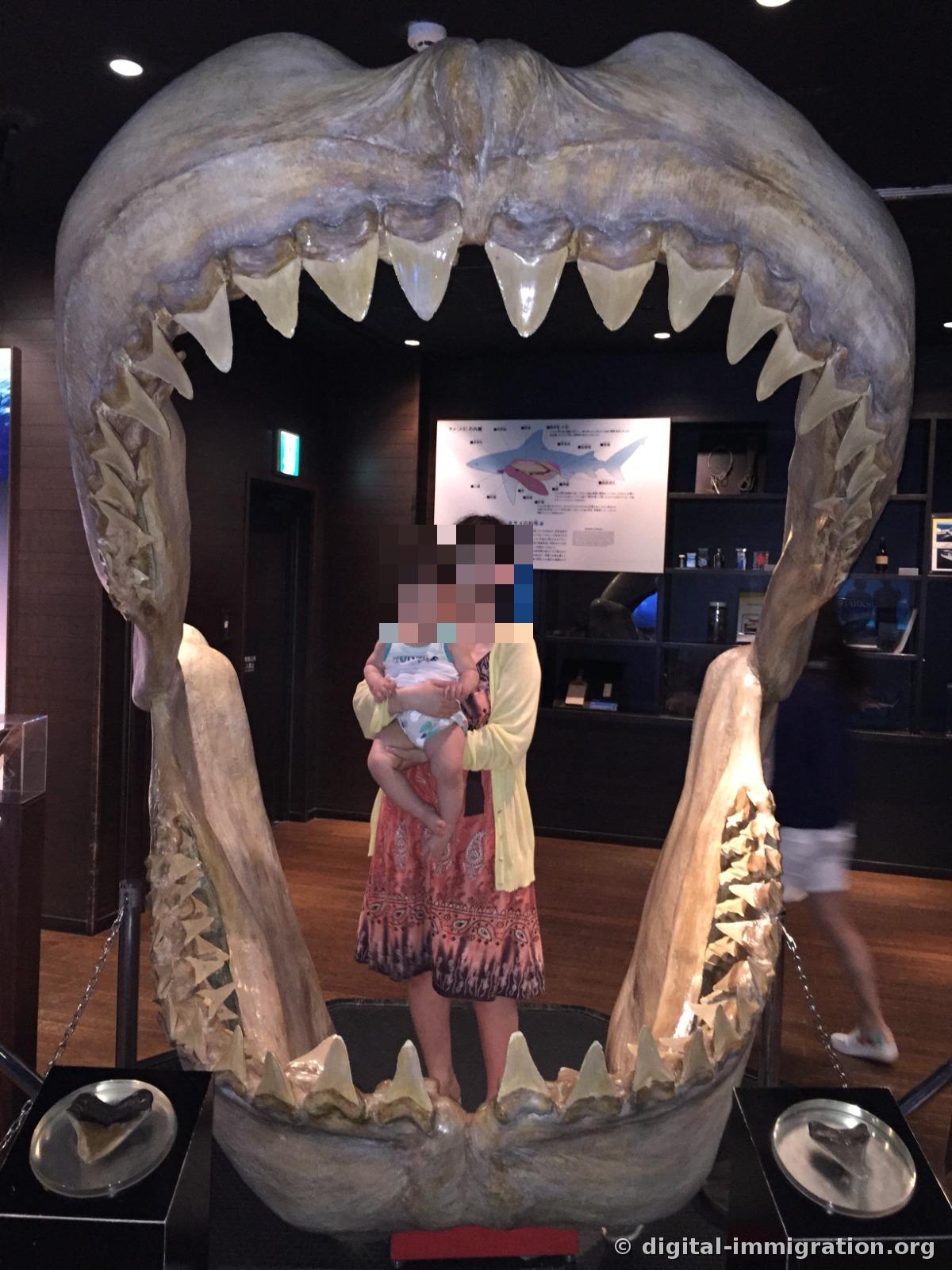
The lighting is dim and the walls dark in this area, making photos difficult. If you stand inside the jaw, light falls from above, so faces are a bit more visible.
Whale Shark Mouth Model — The Feeding Posture We Just Saw
In one corridor, there's a life-sized model of just the front part of a whale shark's head. It's fixed with its mouth open upward, and you can clearly see the dense filter plates inside. When it sucks in food, it spits out water and filters krill through these plates. After seeing the vertical feeding posture in the main tank, viewing this model helps you immediately understand what the inside of that mouth looked like. It's better to see the feeding first, then come here.
Outdoor Tanks Outside the Aquarium — Free to View
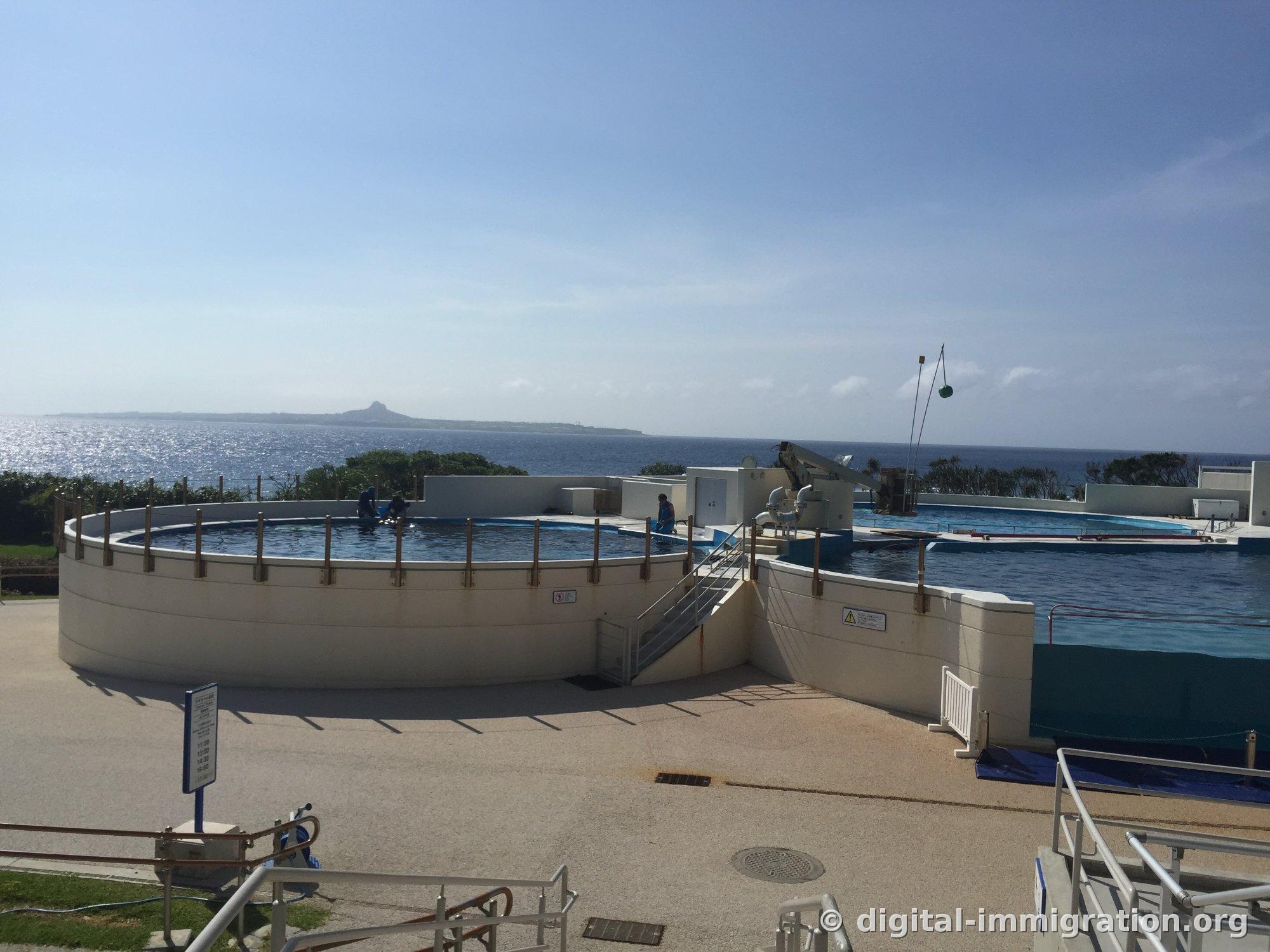
When you exit after viewing, outdoor tanks continue toward the sea. Okichan Theater with dolphins, the Sea Turtle House, and the Manatee House can all be viewed without an aquarium ticket. The blue information board displayed performance times that day as 11:00, 13:00, 14:30, and 16:00. Times vary by season and day, so on-site confirmation is necessary.
Beyond the tanks, Gusuku Mountain on Ie Island rises sharply. After spending two or three hours in the dark inside, this blue hits your eyes hard when you come out. There are a few benches, but there's almost no shade, making it difficult to sit for long in midsummer midday.
If I Go Again, I'd Plan It Like This
- Get the day's program schedule from the fourth floor right upon entry, and plan your route backward based on the whale shark feeding time.
- Work your way down through the touch pool → coral tank → main tank in order, but definitely return to the front of the main tank 20 minutes before feeding time.
- After seeing the feeding, viewing the shark section and the whale shark mouth model provides better understanding.
- The Ocean Blue Café next to the main tank has views of the tank. There are only a few seats and turnover is slow.
- You can skip the ticket counter line by buying tickets in advance at convenience stores or rental car agencies. Check the rates and discount conditions before booking, as they change.
- The interior is quite cool. Even in summer, bring a light jacket. If you're bringing a child, a baby carrier is more convenient than a stroller in many areas.
On the second visit, I finally saw that scene. A body over five meters long standing vertically in the water, silently opening and closing its mouth, with just one pane of glass between us. It was barely three minutes. Four hours of round-trip driving was crystallized into those three minutes.
Read next
- From Akihabara's Chuo-dori to the Kanda River: A Record of Tokyo's Electronics District Revisited Multiple Times
Tokyo's Akihabara is a neighborhood where it's hard to say you've seen everything in a single visit. I've come multiple times across different seasons, and each time the signs chan…
Tokyo · Akihabara - Buying a Single ¥300 Year-End Jumbo Lottery Ticket at Nishi-Ginza Chance Center in Tokyo
Exit from the Hibiya exit of Tokyo's Shimbashi Station, walk toward the elevated highway for about three minutes, and suddenly you'll see a line of people stretching along the side…
Tokyo · Nishi-Ginza Chance Center - Ueno Ameyoko, the real magic starts after sunset — an evening walk from the Okachimachi Gate to Ueno Station
Every time I come to Tokyo, my feet find their way to Ueno Ameyoko (アメ横) without fail. This time I entered from the Okachimachi side and worked my way toward Ueno Station. I've met…
Tokyo · Ameya Yokocho Market