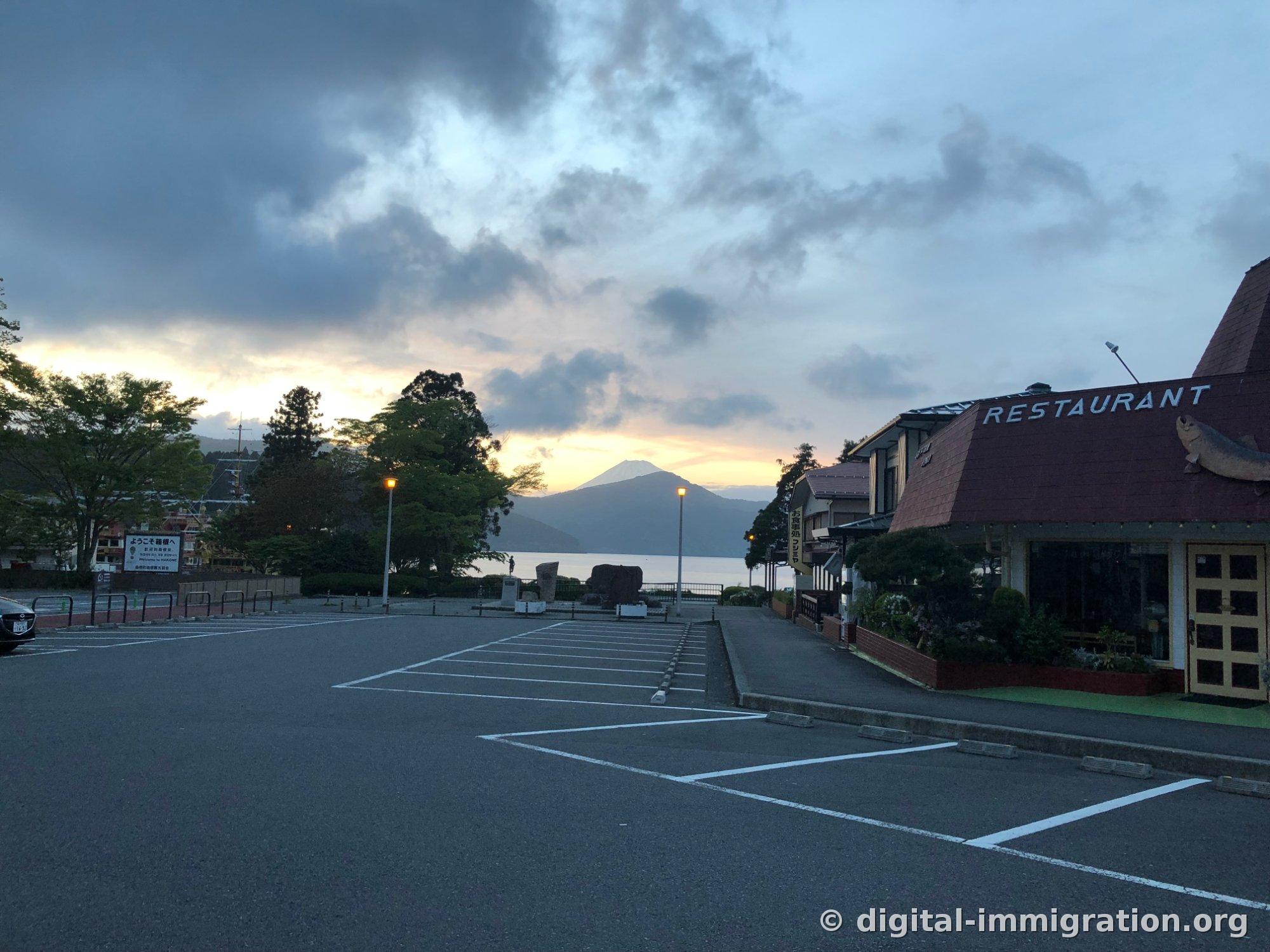
Lake Ashi Motohakone, Mount Fuji rises directly ahead from the parking lot at sunset
I arrived at Lake Ashi (芦ノ湖) in Hakone, Kanagawa Prefecture, in the early evening. During the day I'd been around the Owakudani side, but the clouds grew thick and I gave up on Mou…
Kanagawa · Lake Ashi
I arrived at Lake Ashi (芦ノ湖) in Hakone, Kanagawa Prefecture, in the early evening. During the day I'd been around the Owakudani side, but the clouds grew thick and I gave up on Mount Fuji. The moment I parked the car at a parking lot near Motohakone Pier and got out, the western sky split open. An orange band spread beneath the clouds, and above it, a single mountain rose precisely from behind a dark ridge. It was Mount Fuji.
Mount Fuji across the lake, this angle is the whole reason
The reason Lake Ashi is known as a Mount Fuji viewpoint is simple. Standing on the northeastern shore of the lake, Mount Fuji fits precisely between the southwestern ridges. There are no buildings blocking the view, and water fills the entire bottom half of the frame. It's different in character from other viewpoints where only the mountain is captured large. Here, you get a single shot of the mountain perched on the water.
Walking about twenty steps from the parking lot toward the lake, there's a railing, and in front of it stand a statue and two large pieces of volcanic rock. The composition looking through them was best. As a street light switched on, a single orange glow entered the frame, which actually added warmth to the image.
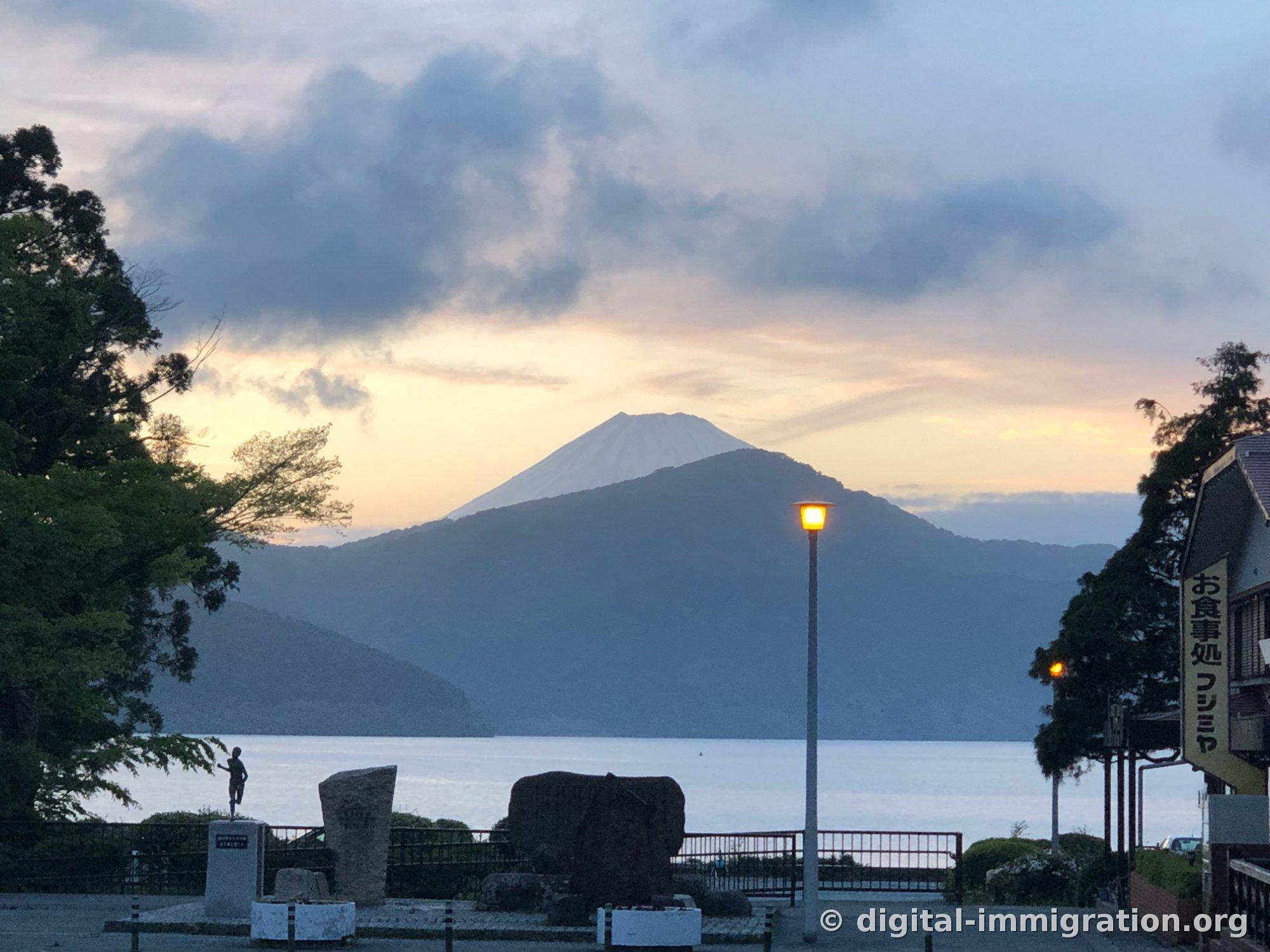
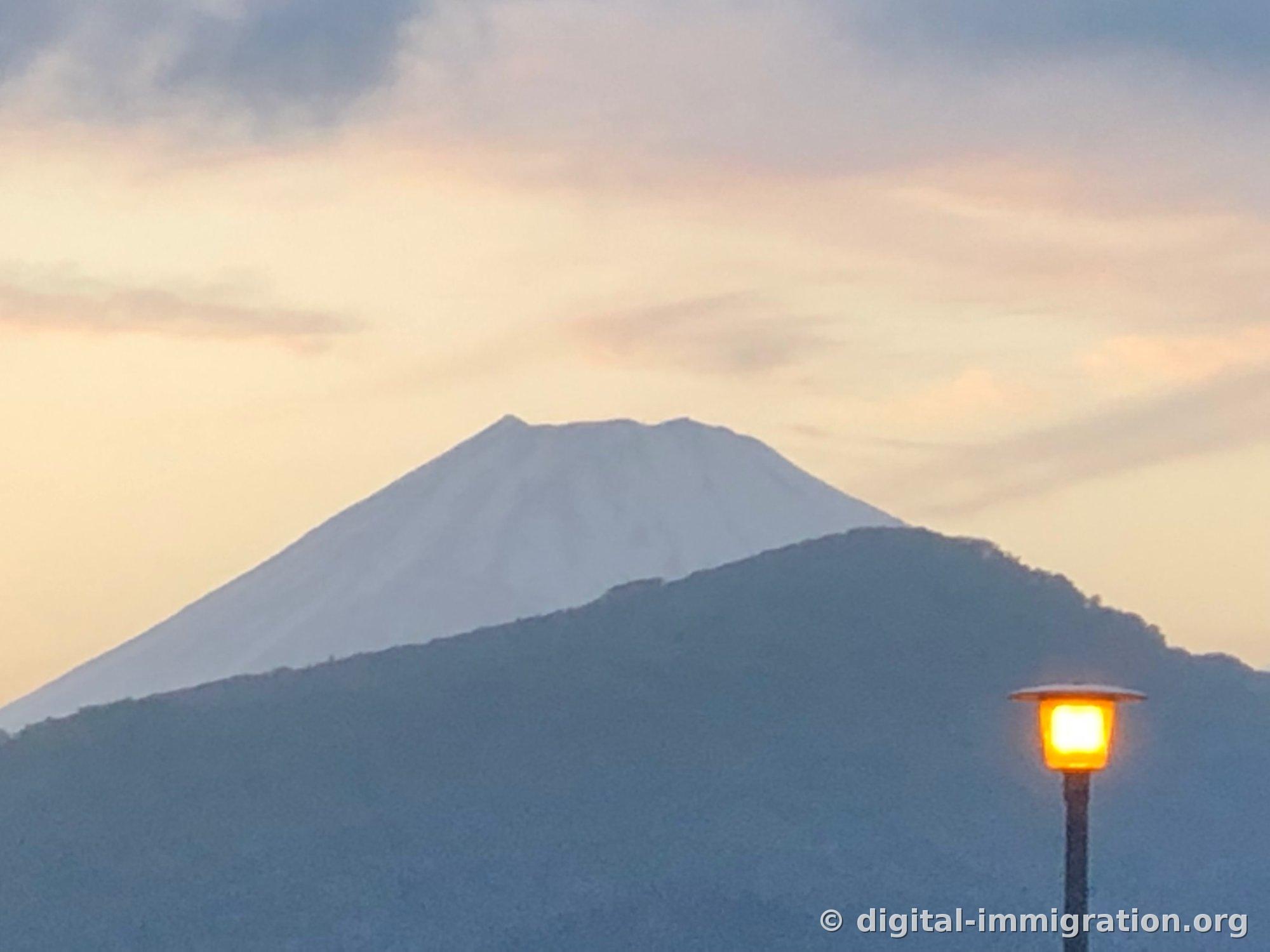
I zoomed in on the summit. The boundary between the snow-covered part and the dark ridge below cuts like a knife. Even though it was late May, the summit remained white. A street light at the lower right caught in the frame; I tried moving a few steps to exclude it, but decided it was better to leave it in.
Capture wide across the water and you get a different picture
Using a wide lens from the same spot gives a completely different photograph. The coniferous ridge on the left spreads darkly, and the ripple-free water surface catches the sunset light directly. Mount Fuji remains small but distinct in the center of the frame. This is the scene that feels most like Lake Ashi.
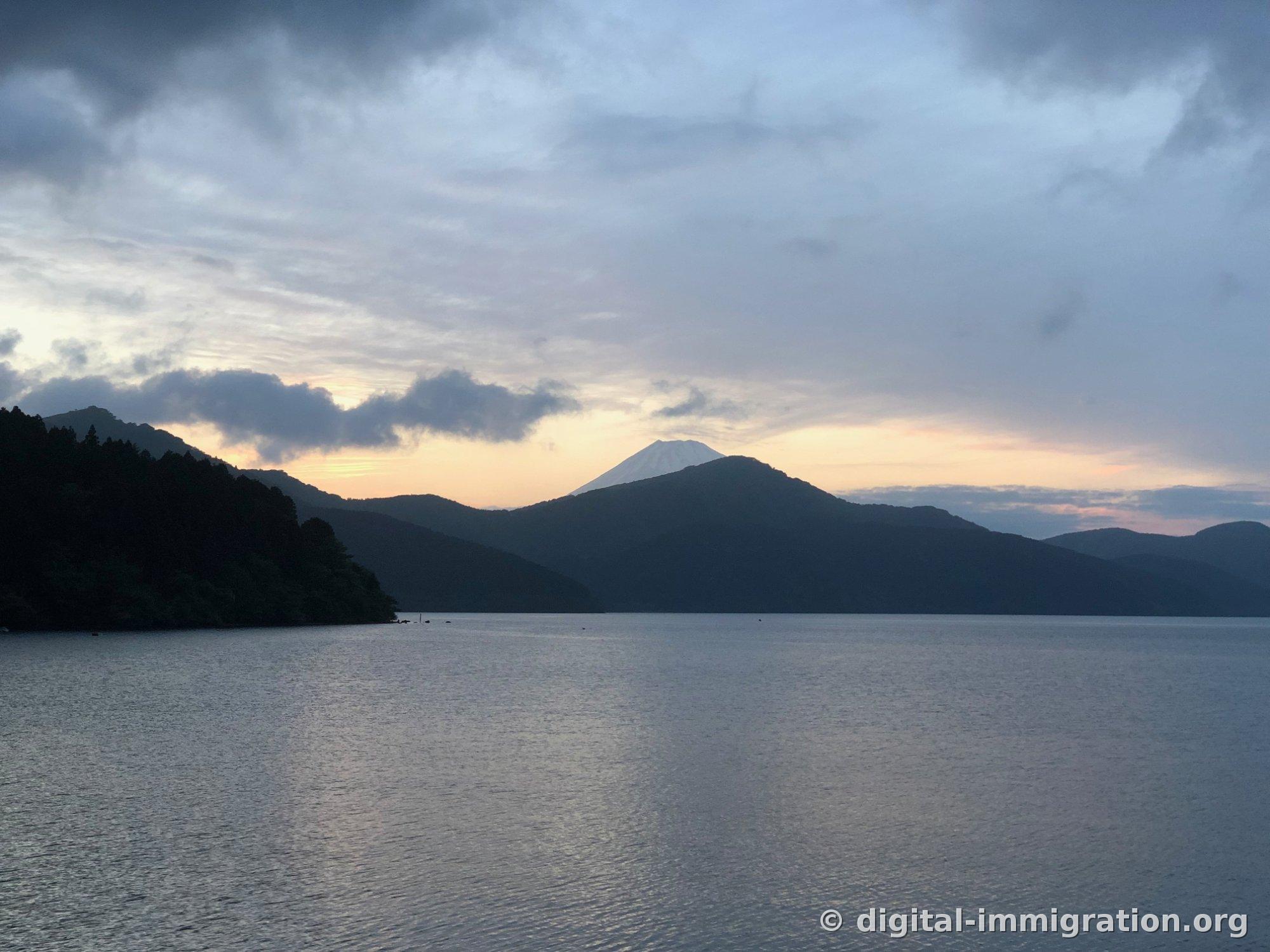
You need to catch a day with gentle winds to get this shot. During the day, wind blows quite strongly across the lake, creating ripples that kill the reflection. Often, the wind subsides around 30 minutes before the sun completely sets.
When the pirate ship is still moored
Walking toward the Motohakone Port pier, the Hakone Pirate Ship is moored there. The vessel, covered with gilded decorations, sits on the dark water, and Mount Fuji is visible in the distance to the right. As a tourist cruise ship, it draws crowds during the day, but after operations end, the ship sits quietly, which actually makes for better photographs.
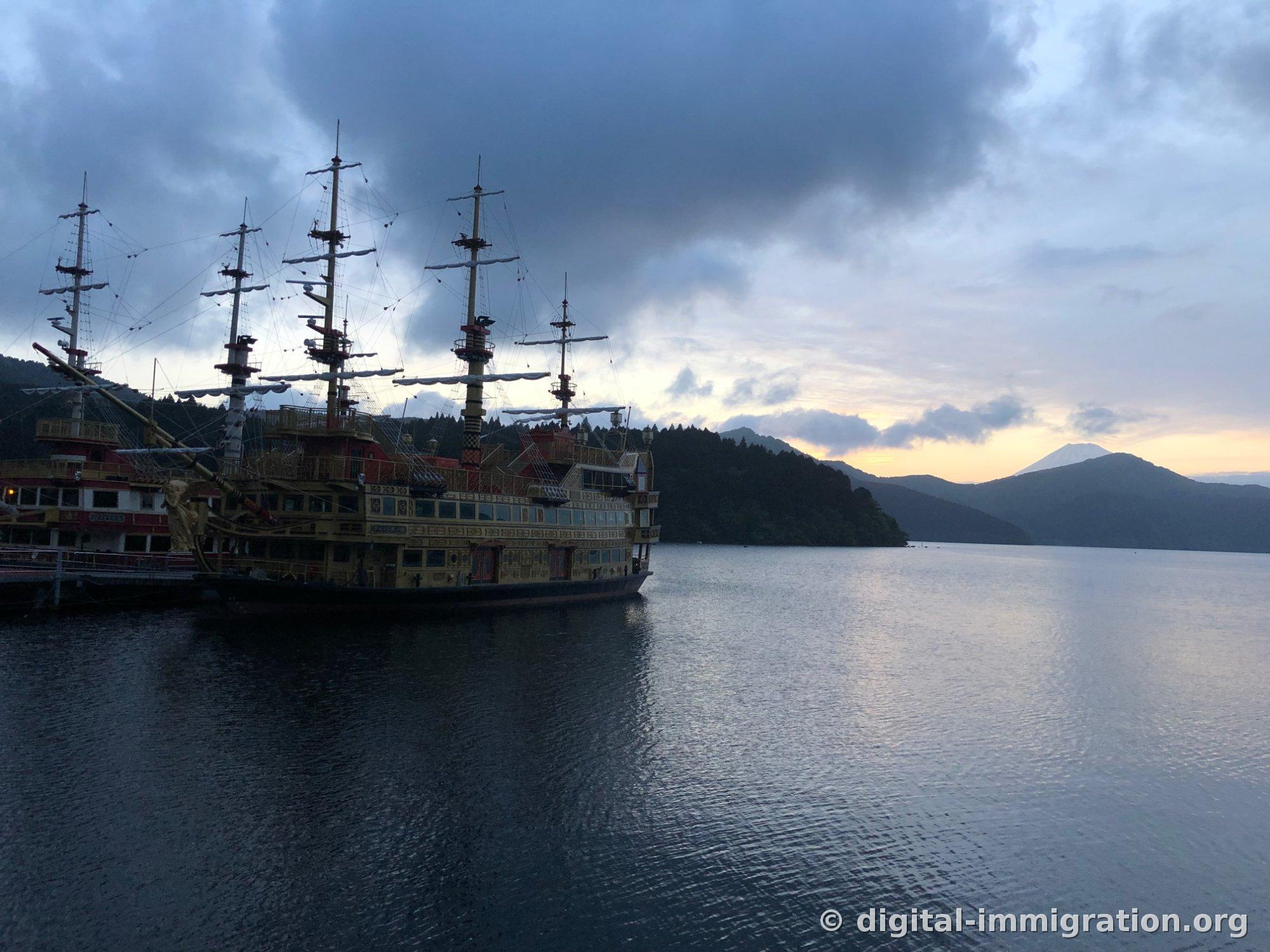
To ride the ship, you need to come during the day. Since operating hours and fares change with the season, it's best to check the day-of pier bulletin board or official information.
Location and access — the parking lot is the viewpoint itself
The spot where I stood was on the eastern shore of the lake, at a parking lot with a sign reading 'ようこそ箱根へ / Welcome to HAKONE'. Inside, there's a RESTAURANT building with a red roof and a fish sculpture on the wall. Since it was evening, the parking spaces were nearly empty, but during the day this area is packed. For anyone coming to see the view, this is important: the place where you park your car and the place where you see Mount Fuji are essentially the same spot. You don't need to carry bags and climb a hill.
Without a car, you can take the Hakone Tozan Bus from Odawara or Hakone-Yumoto stations heading toward Motohakone/Hakone-machi. It's only a few minutes' walk from the bus stop to the lakeshore. Many people use the Hakone Free Pass, and if you plan to use bus, pirate ship, and cable car together, it's worth calculating. However, if you're only taking one or two sections, individual fares might be cheaper, so it's better to decide your route first.
The opposite side of the lake, the face of a cloudy day
The next morning was completely different. Clouds settled down to the mountainside, and there was no trace of Mount Fuji. Walking along the road by the shopping district, moisture remained on the pavement, and shops with vertical signs reading 'わかさぎ' (smelt) were preparing to open. One vending machine, one small car passing by—that was all there was at that hour.
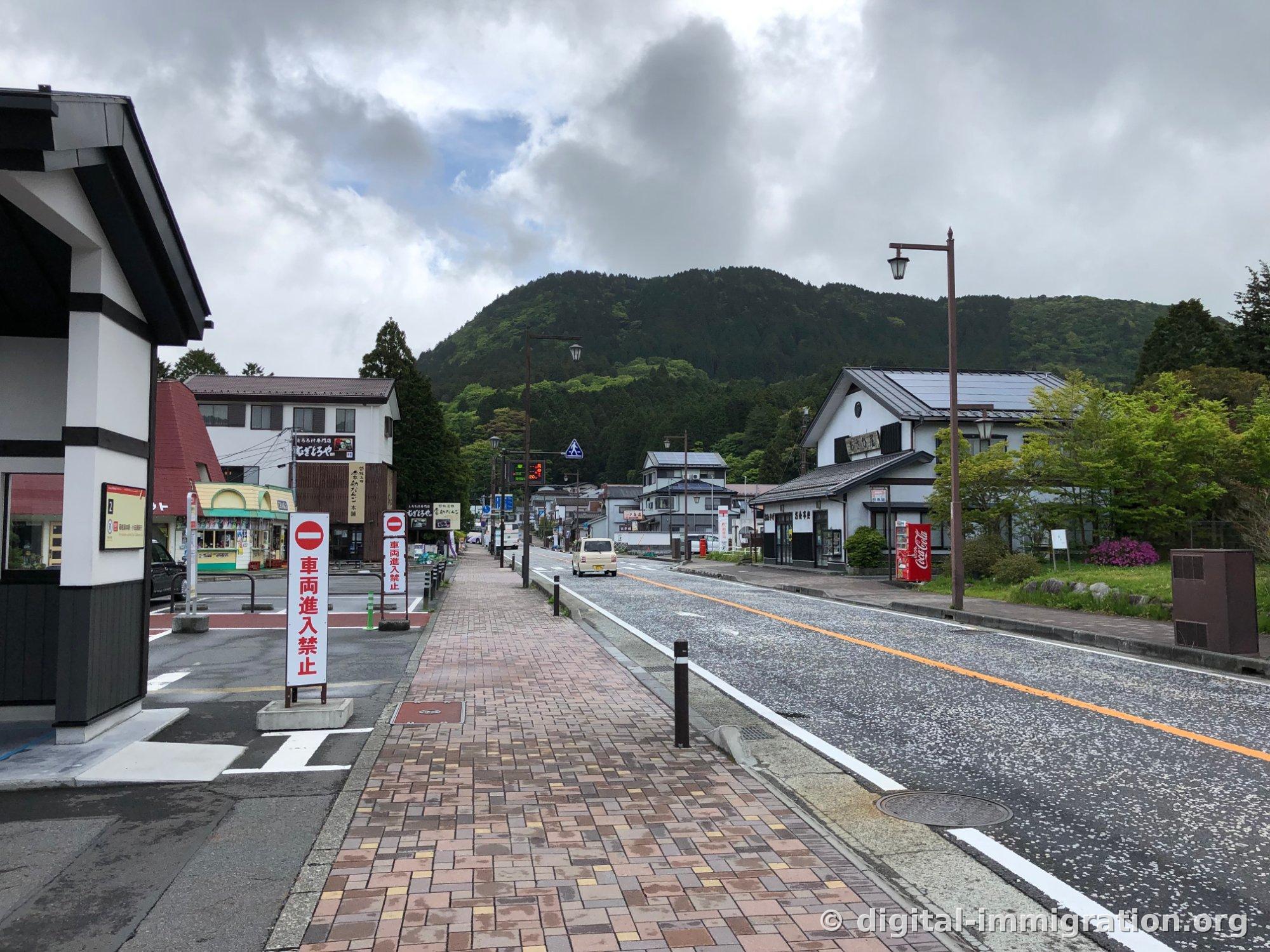
I've been to Hakone many times, but days when Mount Fuji is clearly visible are fewer than half. In summer especially, water vapor rises during the day and often obscures the mountain. Early mornings, around sunset, and days when the air is washed clean after rain had the highest probability. The earlier photos all showed nothing during the day, then suddenly opened in the evening.
Good to know before you go
- The window to see Mount Fuji is brief. The color drains completely within 10-20 minutes after the sun sets. If you want to claim a spot, you should arrive at least 40 minutes before sunset.
- The lakeside elevation is around 700 meters, so the perceived temperature drops sharply in the evening. Even though it was late May, a thin jacket was necessary.
- If you plan to zoom in on the summit with a telephoto lens, you'll need some kind of support—not necessarily a tripod, but at least something to rest your arm against the railing. Once it gets dark, any camera shake stays in the shot.
- Many restaurants in the area close early in the evening. It's best to check hours on site.
If I return, I'll park at the same lot an hour before sunset and just sit there until the street lights come on. I won't know if Mount Fuji will show itself that day until I arrive, but Lake Ashi in that moment of unveiling isn't something I'd trade for any other viewpoint.
Read next
- From Akihabara's Chuo-dori to the Kanda River: A Record of Tokyo's Electronics District Revisited Multiple Times
Tokyo's Akihabara is a neighborhood where it's hard to say you've seen everything in a single visit. I've come multiple times across different seasons, and each time the signs chan…
Tokyo · Akihabara - Buying a Single ¥300 Year-End Jumbo Lottery Ticket at Nishi-Ginza Chance Center in Tokyo
Exit from the Hibiya exit of Tokyo's Shimbashi Station, walk toward the elevated highway for about three minutes, and suddenly you'll see a line of people stretching along the side…
Tokyo · Nishi-Ginza Chance Center - Ueno Ameyoko, the real magic starts after sunset — an evening walk from the Okachimachi Gate to Ueno Station
Every time I come to Tokyo, my feet find their way to Ueno Ameyoko (アメ横) without fail. This time I entered from the Okachimachi side and worked my way toward Ueno Station. I've met…
Tokyo · Ameya Yokocho Market