Konpira Cha-ya Near Nakameguro, Tokyo: Curry Udon Is Complete Only When You Add All the Toppings
When choosing an udon restaurant in Tokyo, I usually avoid curry udon. If the broth is thick, it kills the noodle flavor, and if it splatters on your clothes, the whole day is ruin…
Tokyo · Konpira Cha-ya
When choosing an udon restaurant in Tokyo, I usually avoid curry udon. If the broth is thick, it kills the noodle flavor, and if it splatters on your clothes, the whole day is ruined. But I heard several times that this place—Konpira Cha-ya (こんぴら茶屋)—is different, so I walked over from the Meguro River side and pushed open the door around lunchtime. To get straight to the point: if you're going to order curry udon here, don't hold back on the topping options. If you only order the basic and leave, you might as well not have eaten here at all.
The Atmosphere Inside and What You See as Soon as You Sit Down
When you sit at the counter, a black appetizer menu board is at eye level. Names like conger, cucumber salad, tofu flakes, cured mackerel, fried mountain yam, and small fish tempura are listed vertically, with prices starting around 490 yen. I noticed non-alcoholic beer at 970 yen and items at 300 yen. It's more like an izakaya that also serves udon, where you can drink during the day, than a pure udon shop. In fact, there was a customer who came alone in the afternoon, ordered one appetizer, and was tilting glasses.
It's good to note the condiment bottles on the table in advance. A bottle of Kyoto shichimi with a red cap (marked with 京) stands alongside a pepper shaker. Since the curry udon is already well-seasoned, it's better not to sprinkle it from the start, but rather to add a little shichimi later, about halfway through.
A Bowl of Curry Udon—This Is What You Get When You Add All the Options
When ordering, I was deliberating over each topping one by one, so I just asked them to add everything they could. This is the bowl that came out. One large piece of fried tofu, an egg with firm whites like soft-boiled, thinly sliced meat, and finely chopped scallions. The broth is a thick brown color with a thin layer of oil floating on the surface.
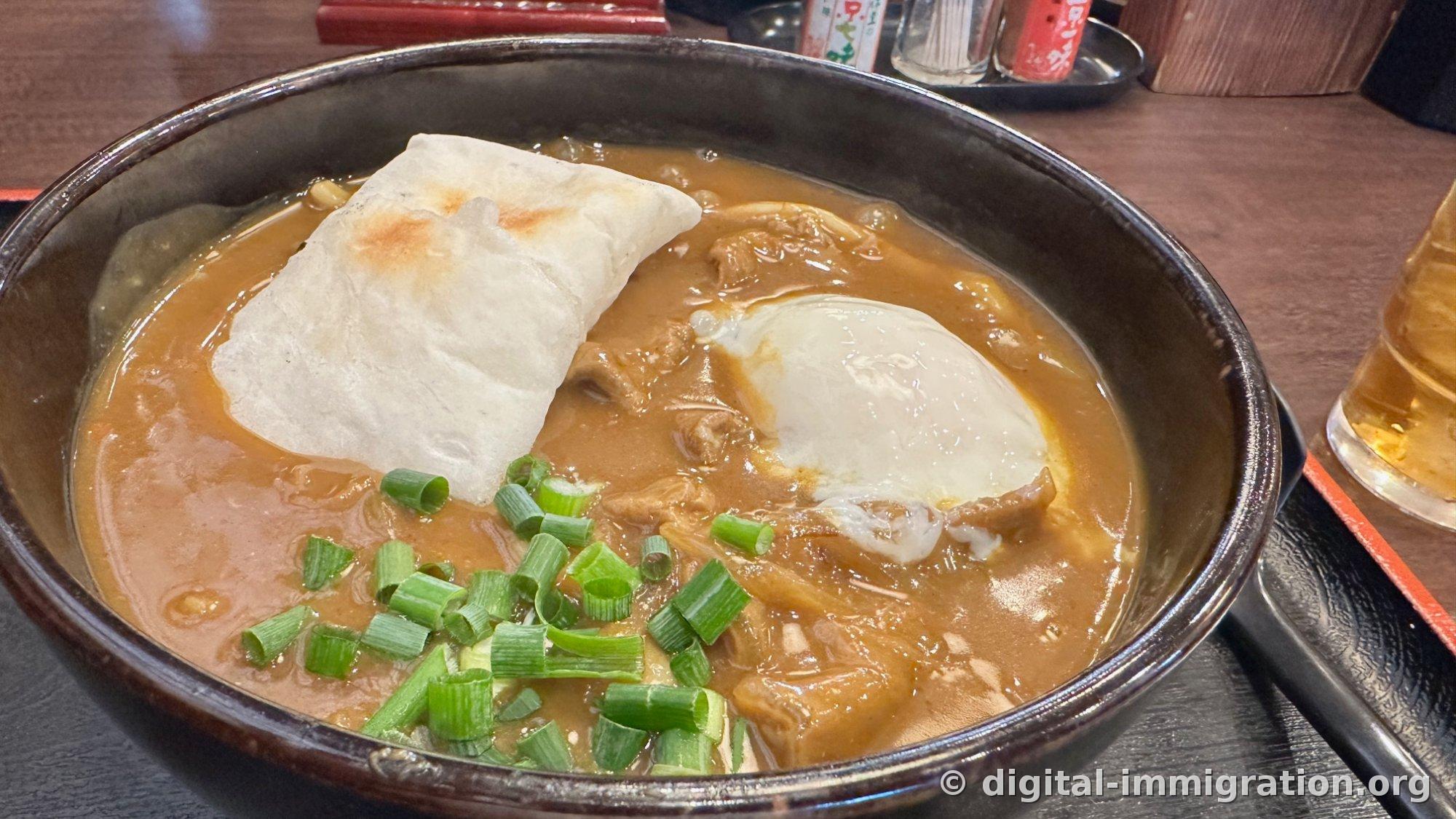
The fried tofu has slight press marks on the surface, so it's clear it wasn't just boiled but once fried. At first, don't touch it—leave it soaking in the broth—but around the middle, when you break it apart with your chopsticks, the curry has soaked all the way through to the inside. This was the best part of this restaurant's curry udon. The egg has firm whites and a yolk that's still half-liquid inside, so when you break it and mix it into the broth, the heat mellows a step and it becomes soft. The order matters. If you break it from the start, you'll miss the curry's own spice flavor.
The meat is thinly sliced and scattered throughout the broth, but the quantity isn't large. If you're expecting a lot of meat, you might be disappointed. The real stars of this bowl are, above all, the noodles and the broth.
The Noodles Are Thick, and the Broth Won't Let Go of Them
When you lift up the noodles, that's the restaurant's true face. The Sanuki-style noodles, which vary in thickness, pull up the broth entirely. They don't drip and fall between your chopsticks—rather, the curry clings to the noodle surface like a coating.
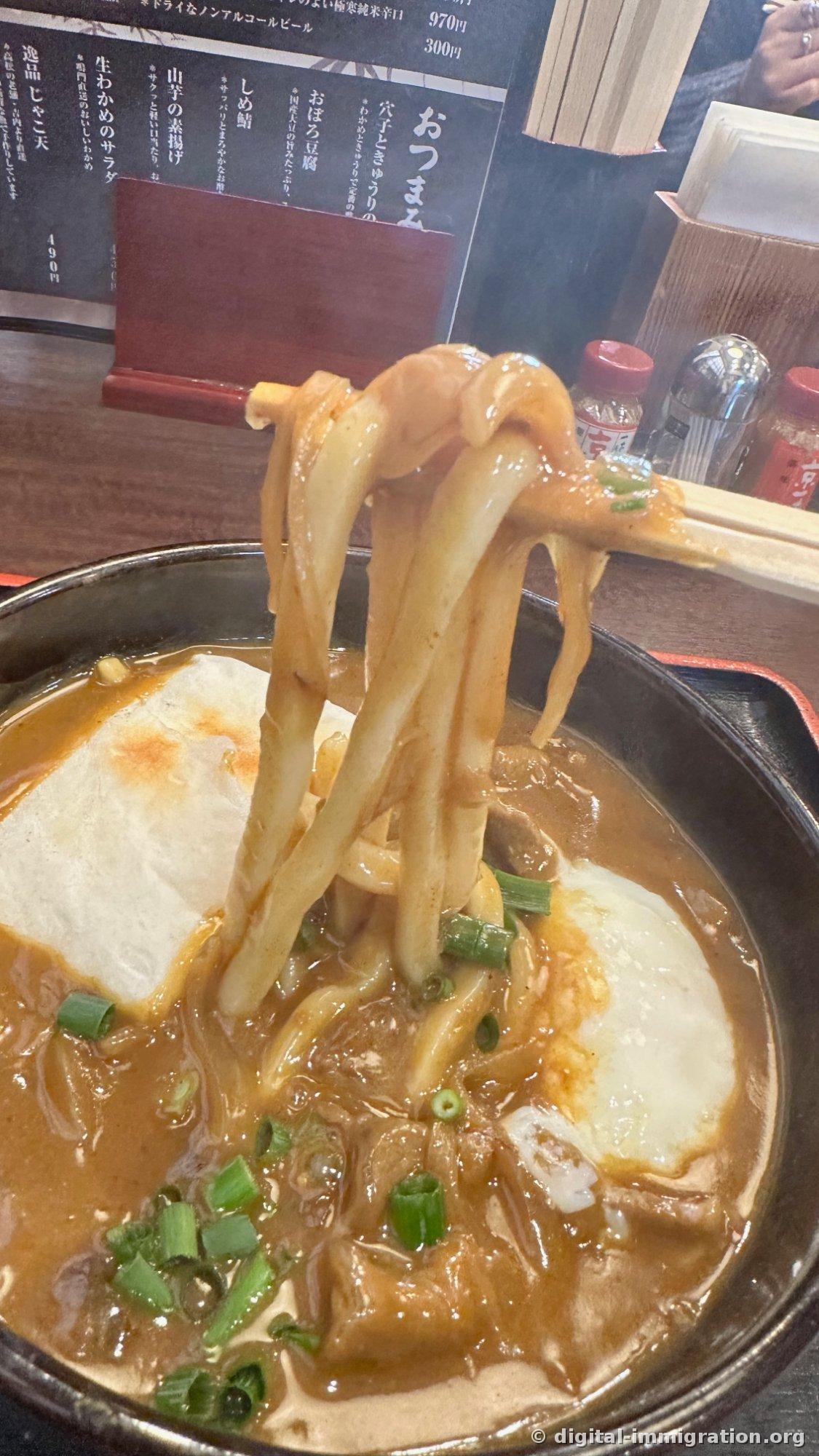
When you chew, the outside is slippery and the inside holds firm. Even soaked in curry broth for a long time, it doesn't fall apart. But with this thickness and viscosity combination, it splatters. I actually got splattered twice. This isn't a place to wear white to, and it's better to lay a napkin or paper towel on your lap. The restaurant had plenty of paper napkins.
The taste emphasizes dashi over the sweetness of Japanese curry roux. Bonito comes first, with spices following behind. It's not particularly spicy. Someone used to spicy curry back in Korea might find it bland, which is why the shichimi is on the table.
A Cup of Tea and Hot Broth
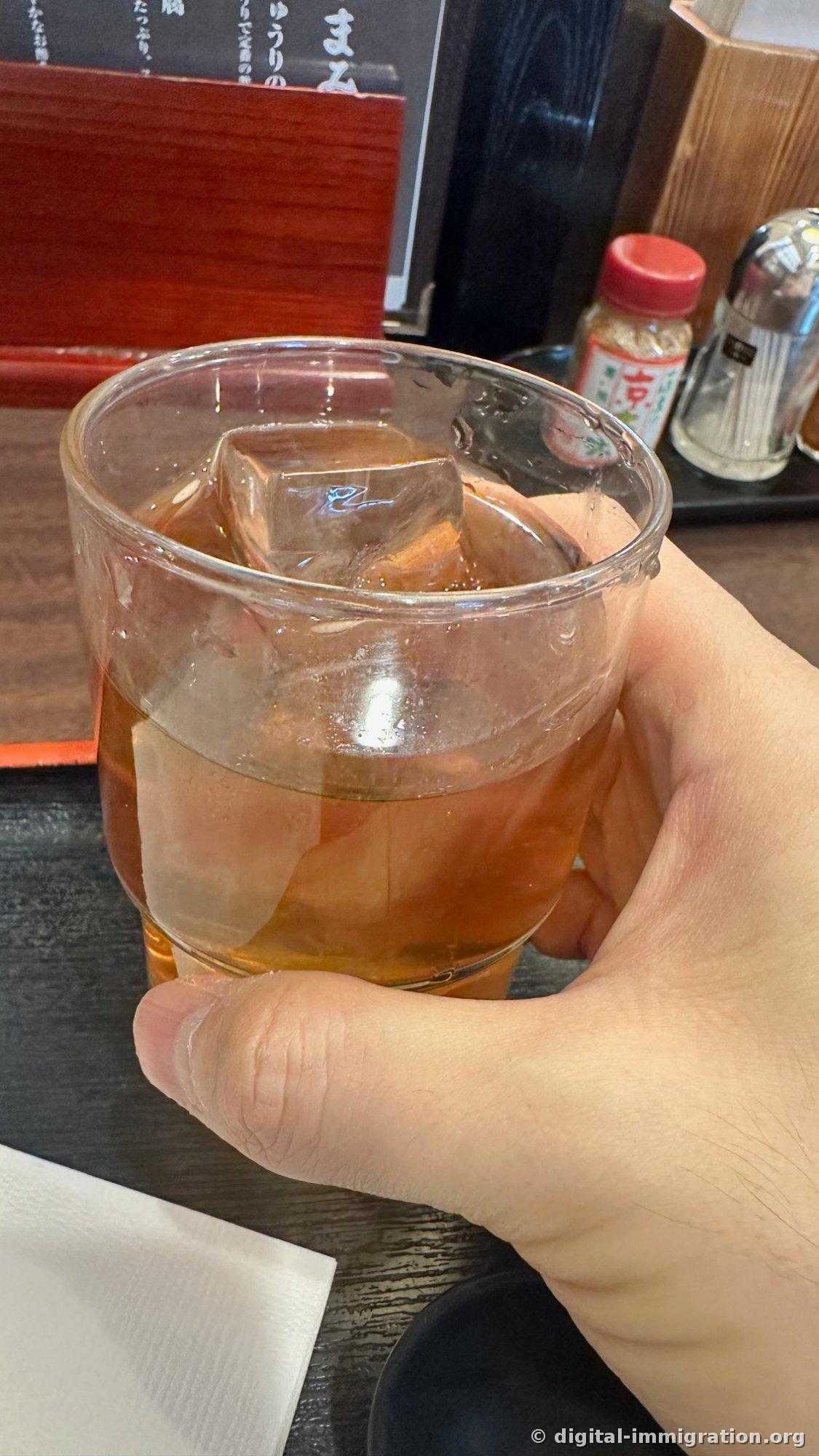
What came with it was iced hojicha tea. Large cubic ice cubes clinked inside the glass, and water was already beading on the surface. The curry udon stays hot longer than you'd expect. The bowl is thick, so heat doesn't escape easily. After a few spoonfuls of broth, your palate gets numb, and that's when you need this tea.
Location and How to Get There
Based on where the photos were taken, it's within walking distance from the Meguro River promenade in the Meguro ward area of Tokyo. It's not a fancy shop facing the main street but tucked away in an alley, so if you try to find it without a map and just by intuition, you'll walk past it once. With limited seating, there are lines during the lunch rush (12–1 PM). I arrived a bit early and was seated right away.
Next Time, Here's How I'll Order
- Always add fried tofu and egg to the curry udon. The flavor of the fried tofu absorbing the broth is the heart of this restaurant.
- Break the egg after eating about halfway through. Experience the curry's true flavor first, then finish soft.
- Don't sprinkle shichimi from the start. The seasoning is already strong.
- Since day drinking is possible here, it's fine to order one appetizer first (like small fish tempura or fried mountain yam) and get the udon after.
- Prices and hours change seasonally, so it's recommended to check in advance before visiting. The menu prices in the photos are based on when I went.
There are countless udon restaurants in Tokyo, and honestly, there are more famous ones for their noodle quality alone. But if you like the curry broth and noodles clinging to each other, Konpira Cha-ya is worth it. After finishing the bowl, looking at the curry stains left on the plate, I thought I'd made the right choice adding all the options.
Read next
- From Akihabara's Chuo-dori to the Kanda River: A Record of Tokyo's Electronics District Revisited Multiple Times
Tokyo's Akihabara is a neighborhood where it's hard to say you've seen everything in a single visit. I've come multiple times across different seasons, and each time the signs chan…
Tokyo · Akihabara - Buying a Single ¥300 Year-End Jumbo Lottery Ticket at Nishi-Ginza Chance Center in Tokyo
Exit from the Hibiya exit of Tokyo's Shimbashi Station, walk toward the elevated highway for about three minutes, and suddenly you'll see a line of people stretching along the side…
Tokyo · Nishi-Ginza Chance Center - Ueno Ameyoko, the real magic starts after sunset — an evening walk from the Okachimachi Gate to Ueno Station
Every time I come to Tokyo, my feet find their way to Ueno Ameyoko (アメ横) without fail. This time I entered from the Okachimachi side and worked my way toward Ueno Station. I've met…
Tokyo · Ameya Yokocho Market