I tried the tsukemen with offal at Tatsuya (龍の家) on Otaki-bashi Street in Shinjuku—a Tokyo-exclusive specialty
Walk west from Shinjuku Station along Otaki-bashi Street (小滝橋通り) and you'll find ramen shops lined up one after another. Somewhere in that row is the Shinjuku branch of Tatsuya (龍の…
Tokyo · Tatsunonya (Dragon's House) Shinjuku Branch
Walk west from Shinjuku Station along Otaki-bashi Street (小滝橋通り) and you'll find ramen shops lined up one after another. Somewhere in that row is the Shinjuku branch of Tatsuya (龍の家), whose home base is in Fukuoka. The sign, carved from solid wood with the three characters 龍の家 in black, hangs over an orange noren curtain. The shop is accessed by going down about four steps from street level—a semi-basement structure. First-timers often pause at those stairs, uncertain. You have to read the sign posted next to the door to know where to line up.
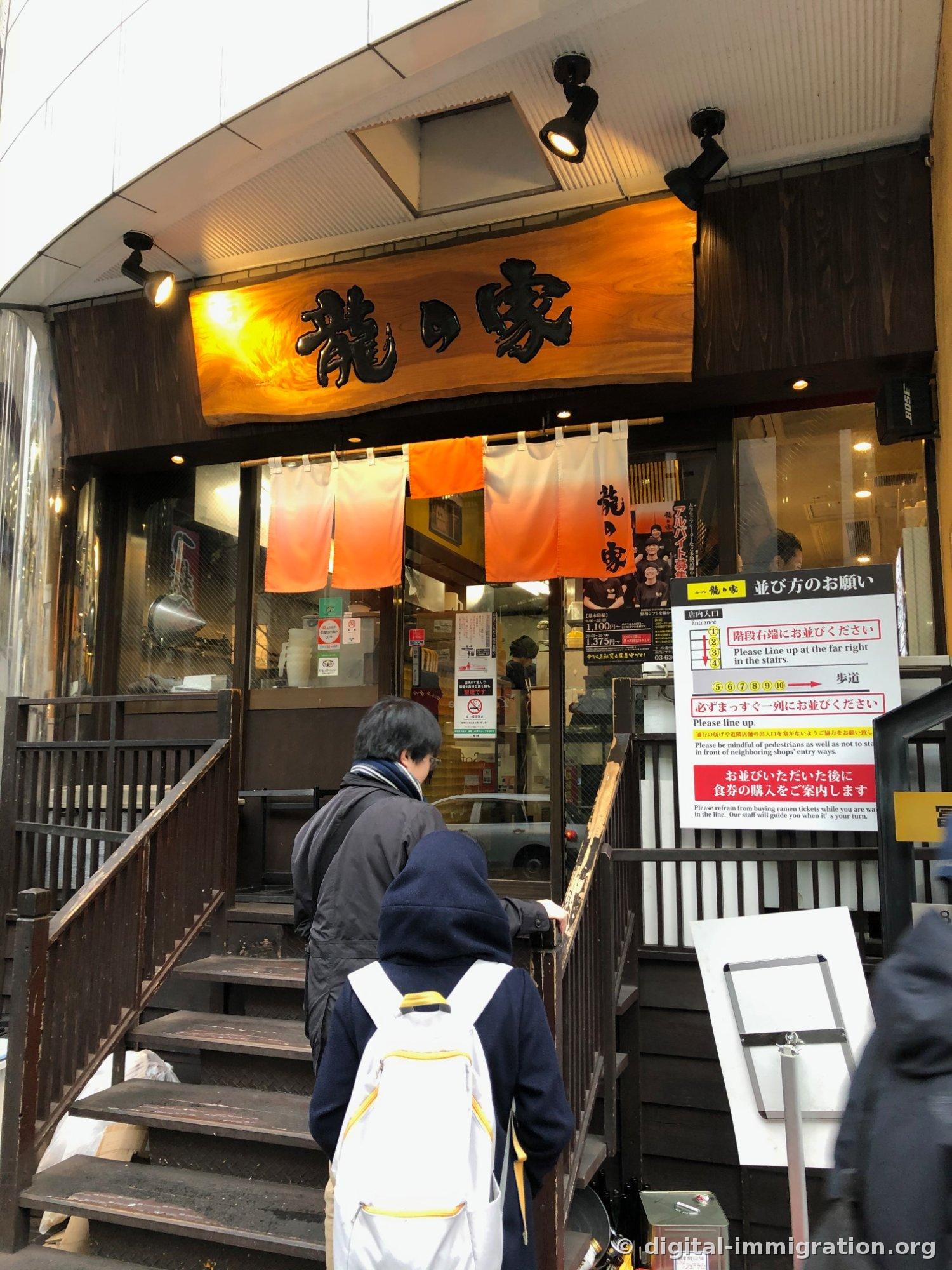
Start by reading how to queue
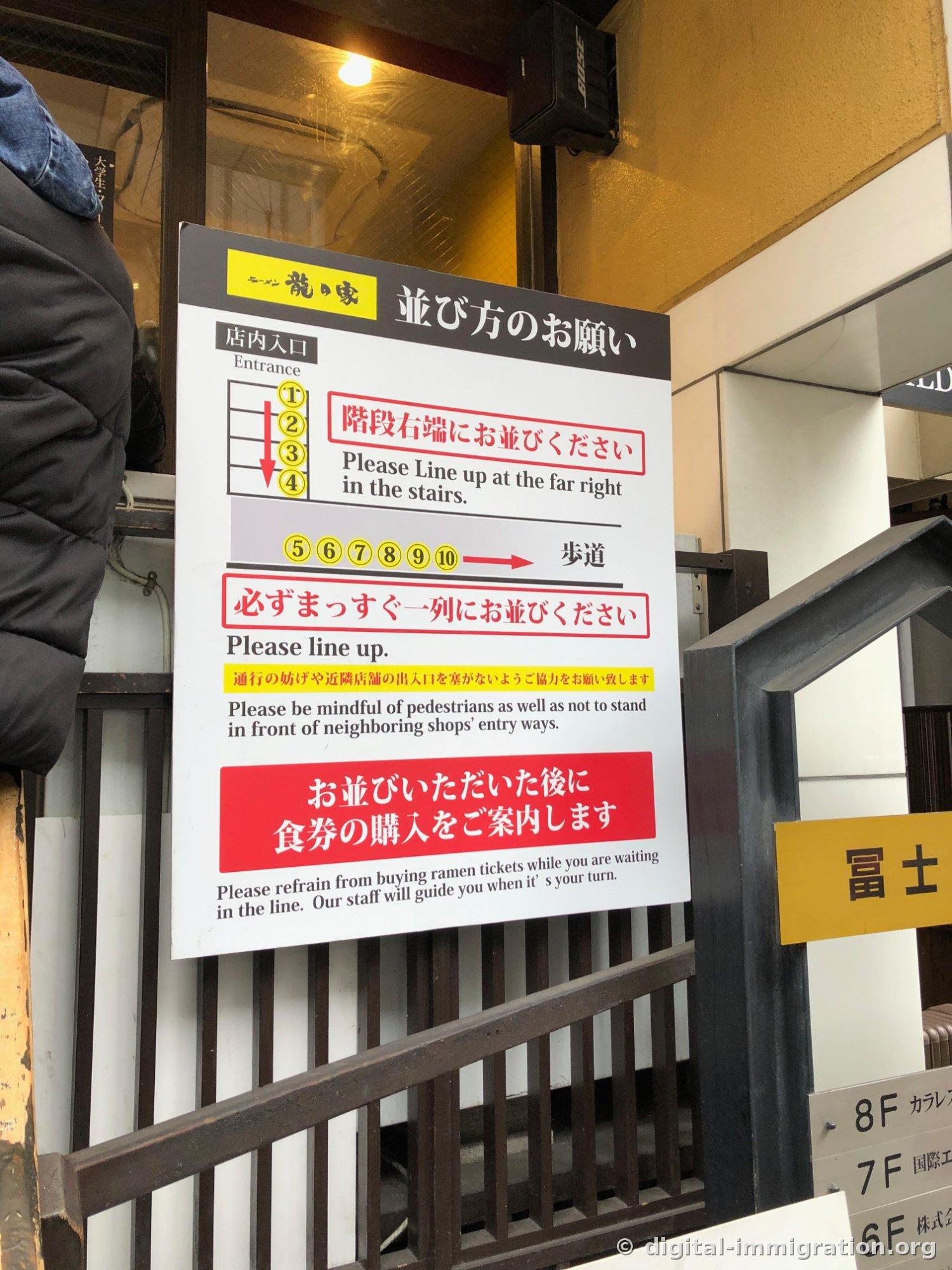
A large sign is attached to the staircase railing. It shows that numbers 1-4 stand at the right end of the stairs, and 5-10 form a line along the sidewalk. The easy-to-miss detail is the red box below: "Please purchase a ticket after your order is called"—meaning don't go inside to buy your ticket while waiting in line. I tried to go in first and was stopped with a gesture by staff. When it's your turn, an employee will call you.
The sign also has English text reminding people not to block the sidewalk or stand in front of neighboring shops' entrances. Otaki-bashi Street has a narrow sidewalk; if just ten people line up, it blocks pedestrian traffic. You need to stand against the wall.
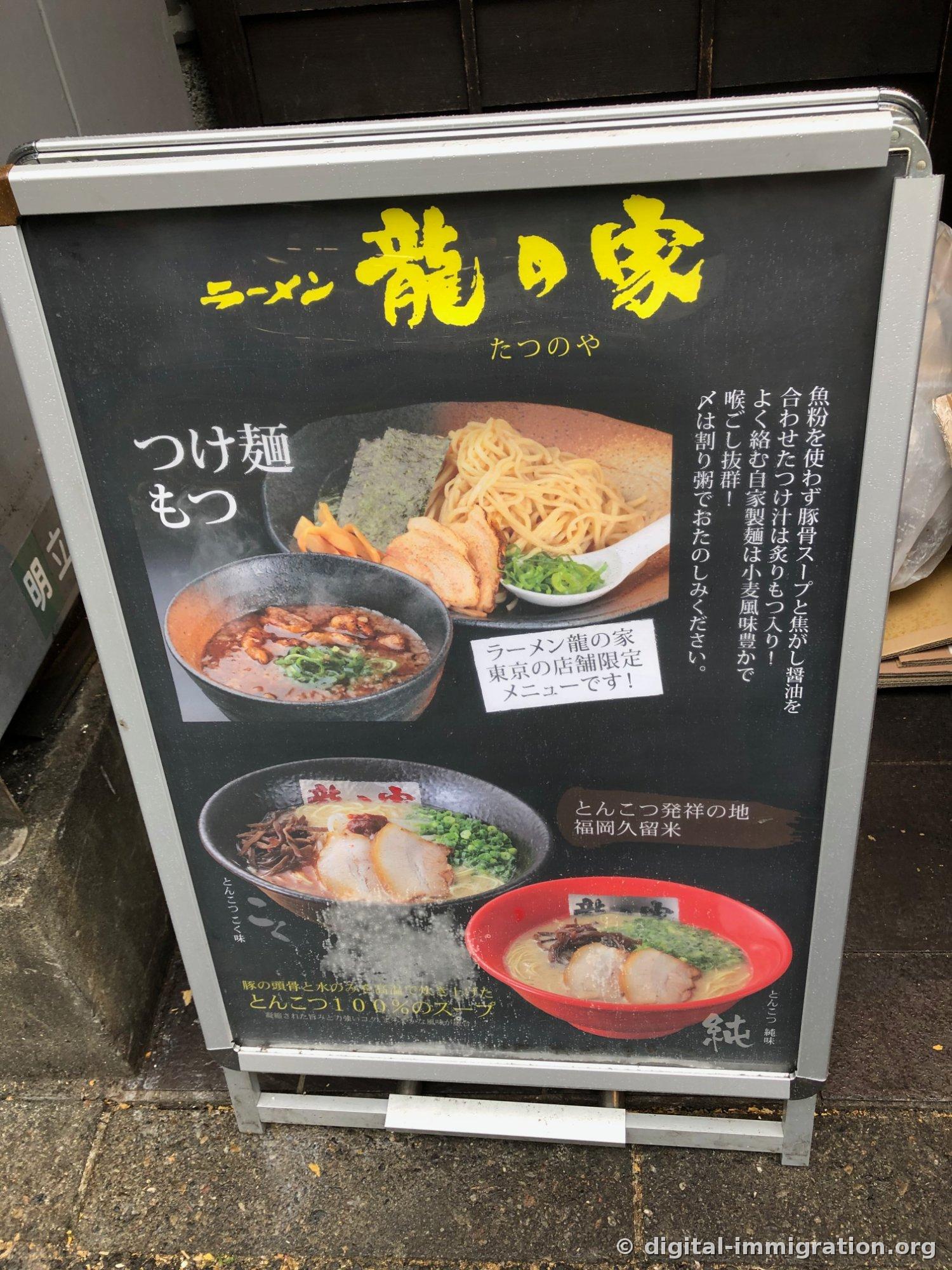
The A-frame sign outside is essentially a menu summary. The top half is entirely a photo of tsukemen with offal (つけ麺もつ), with a handwritten note posted next to it: "Exclusive menu at Ramen Tatsuya's Tokyo location." This means they don't sell it at the home branch. Reading the description, it explains that the dipping sauce (tsukejiru) is made by combining pork bone broth with burnt soy sauce (焦がし醤油) without using fish powder, and topped with charred offal. The noodles are made in-house, and the finish (〆) is warikayu—even the sign includes instructions to finish with rice porridge. Below are the home menu items: two types of tonkotsu (pork bone)—kokuumi and junmi.
Deciding in 3 seconds at the ticket machine
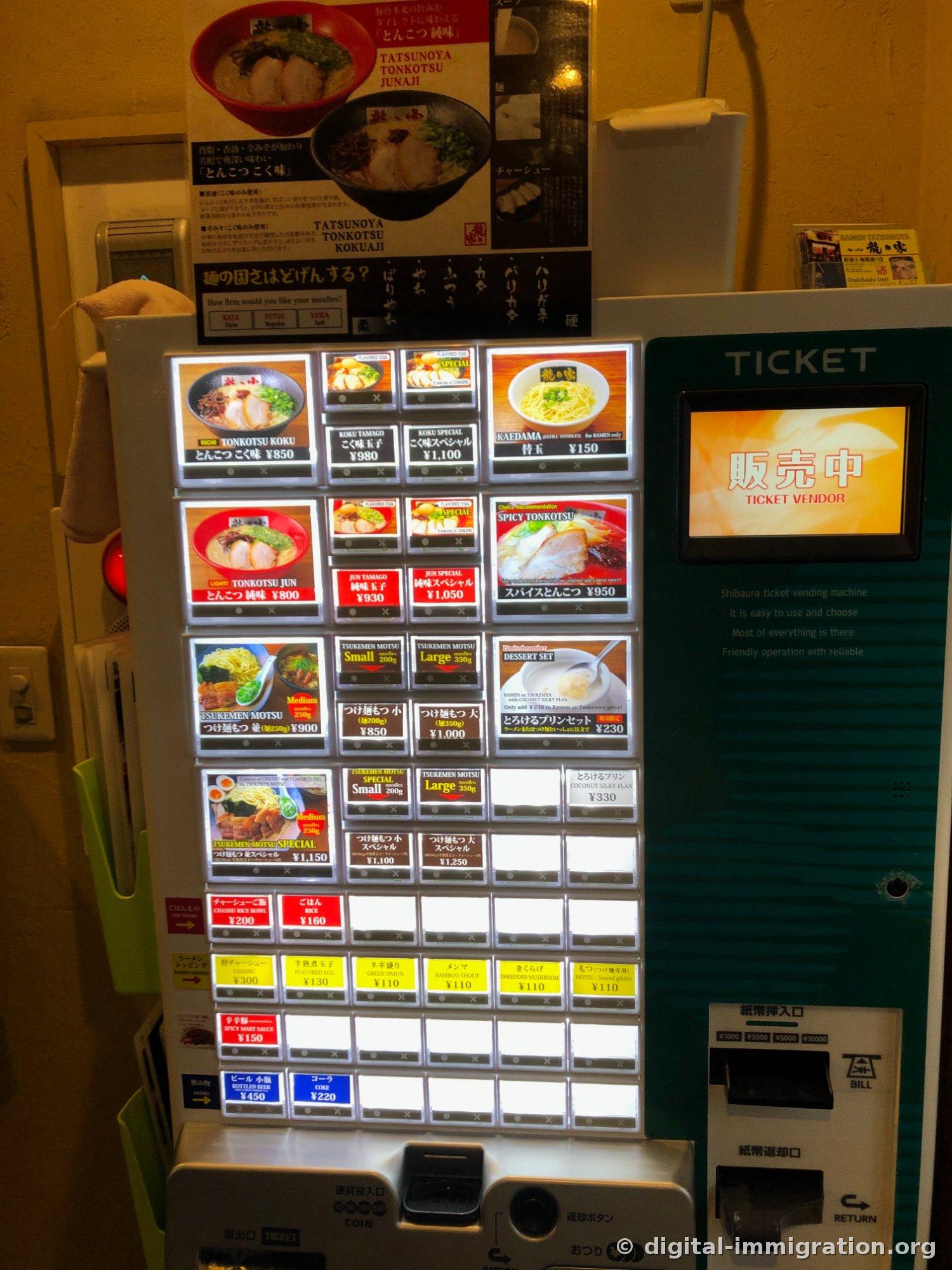
Inside, there's a ticket vending machine on the left wall. The buttons are densely packed, which looks overwhelming at first glance, but there are really only two things to decide: ramen or tsukemen, and noodle quantity.
When I visited, prices were as follows: Tonkotsu kokuumi ¥850, tonkotsu junmi ¥800, spice tonkotsu ¥950. Tsukemen with offal comes in three sizes—small 200g ¥850, regular 250g ¥900, large 350g ¥1,000. The special with five slices of chashu and a soft-boiled egg is ¥1,100·¥1,150·¥1,250 respectively. Kaedama (extra noodles) is ¥150 but clearly marked as ramen-only, so if you're ordering tsukemen, it's better to choose a generous portion from the start. Toppings: soft-boiled egg ¥130, green onion, menma, wood ear mushroom ¥110 each, chashu ¥300. Extra offal for ¥110 is tsukemen-exclusive. Bottled beer ¥450, cola ¥220. A dessert set adds coconut pudding for just ¥230 with ramen or tsukemen (¥330 individually). Prices may change, so check locally.
Above the machine is a separate noodle firmness chart. From softest to hardest: harigane—barikata—kata—futsu—yawa—bariyawa. This applies only when ordering ramen, so it doesn't apply to tsukemen.
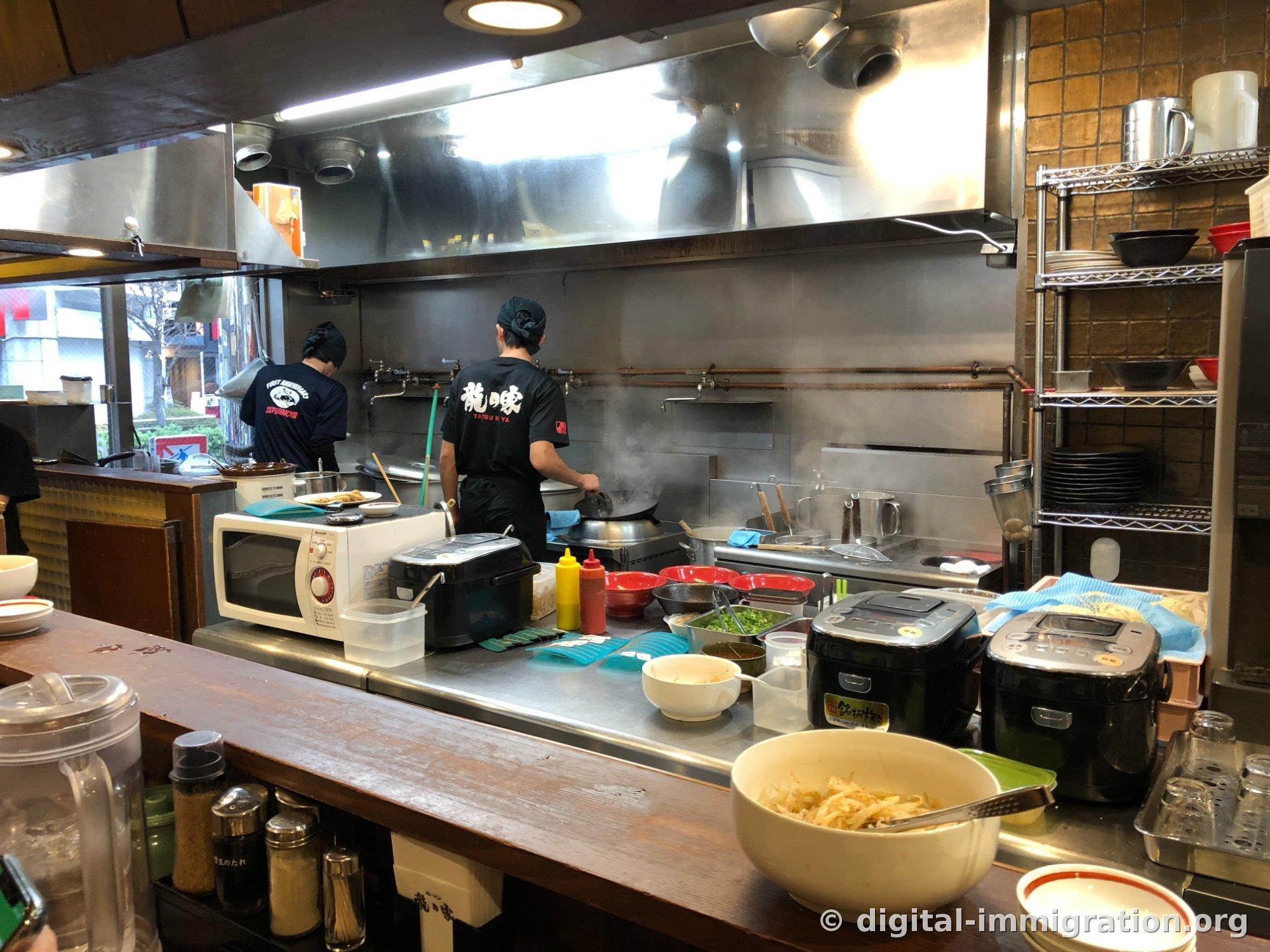
Seating is mainly counter-style. Once seated, you can see the entire kitchen. Two staff members wearing black T-shirts with the 龍の家 logo work in front of the stove, steam continuously rising from the wok. Three rice cookers line the counter, along with a green onion dish and sauce bottles, with pepper, garlic, and egg dipping sauce within arm's reach. It's a narrow, hot, bustling honest ramen shop kitchen.
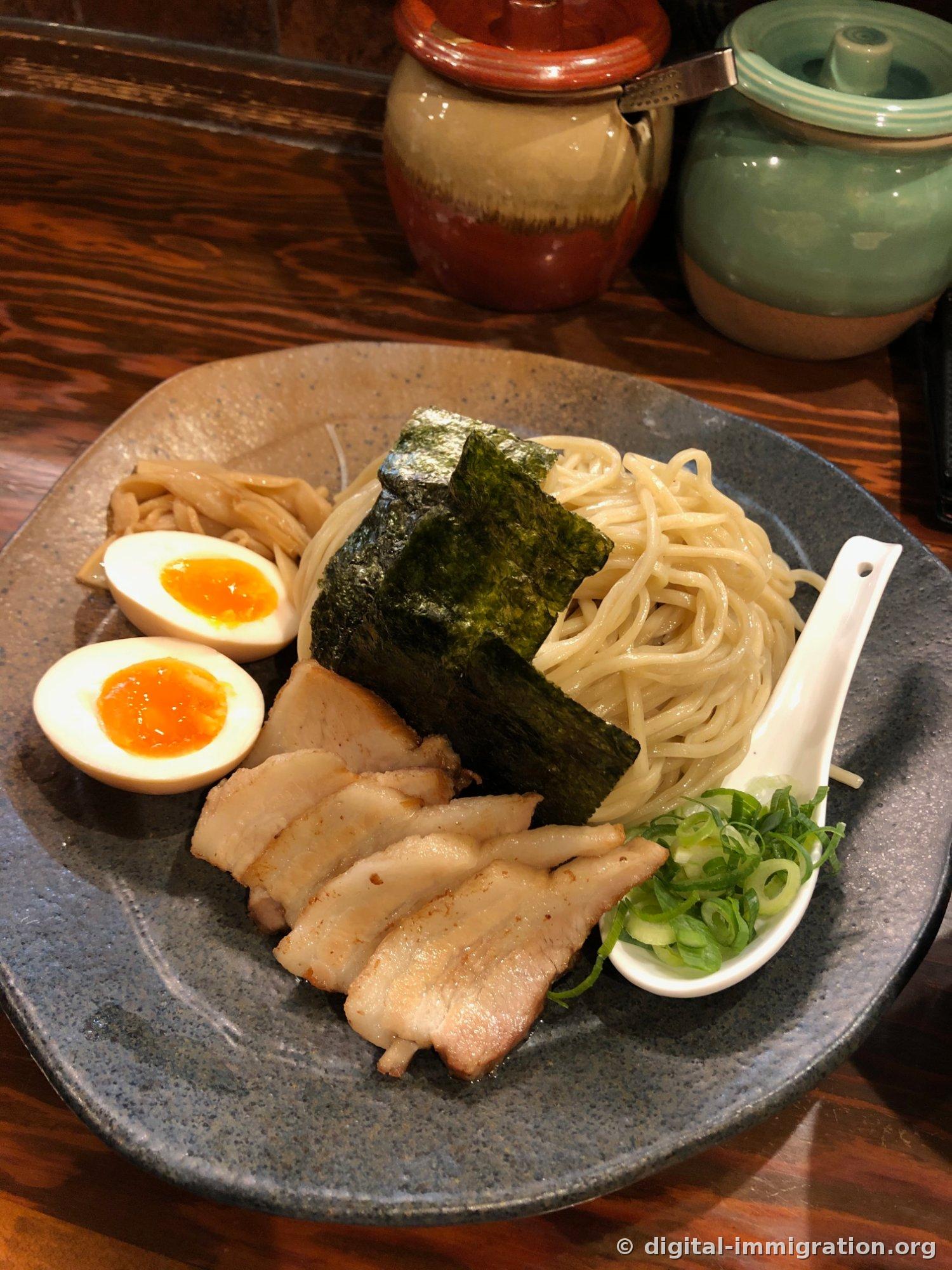
I think this is the finest tsukemen I've had
The noodle plate came first. On a gray ceramic plate, the noodles are wound into a single nest with a large sheet of nori standing on top. To the left, menma and a soft-boiled egg cut in half with two halves, in the center four slices of chashu, and on the right in a white ceramic spoon sits finely chopped green onion. The egg yolk, translucent like jelly and half-set, caught the light. Just looking at this plate tells you this isn't a hastily made place.
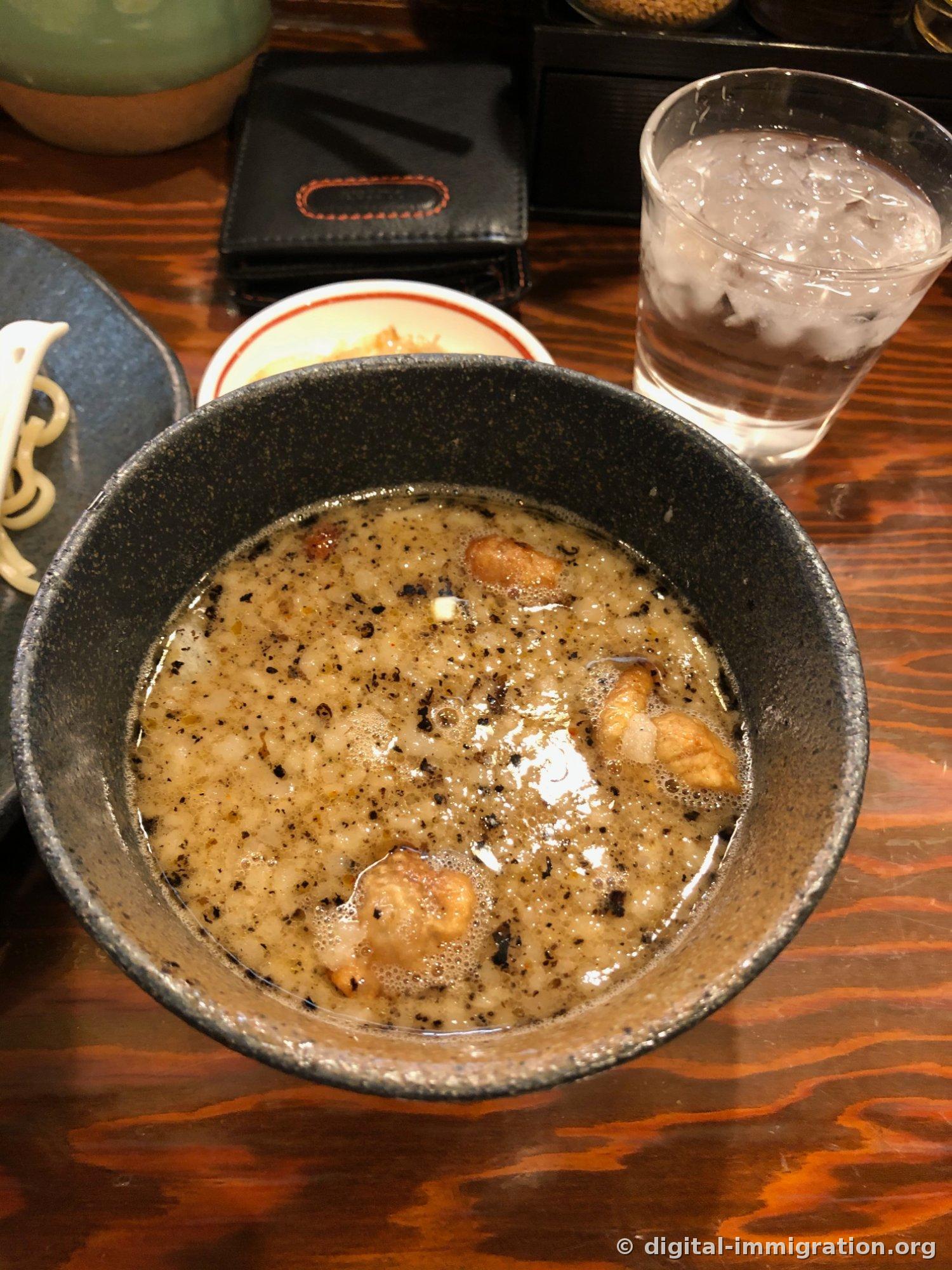
The tsukejiru arrives, and I was honestly startled at first sight. It's not the typical brown fish-broth dipping sauce. The surface is milky and thick, with black granules floating throughout—evidence of burnt soy sauce. Between them float pieces of charred offal, golden from the flame. The aroma hits you first: the rich pork-bone scent topped with the acrid tang of burnt soy. One spoonful tastes salty. But that's correct for tsukejiru—it's the right concentration for dipping noodles in.
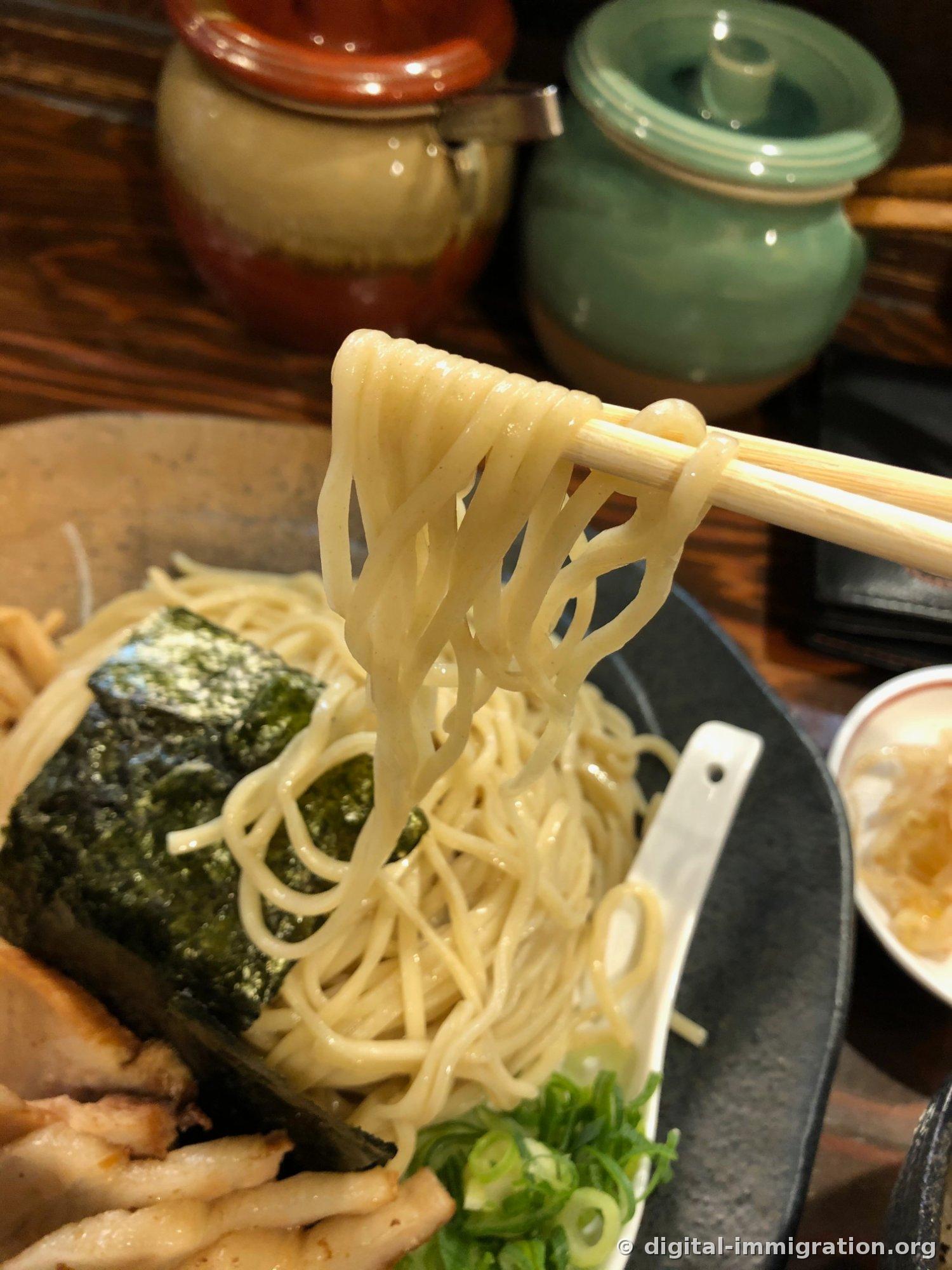
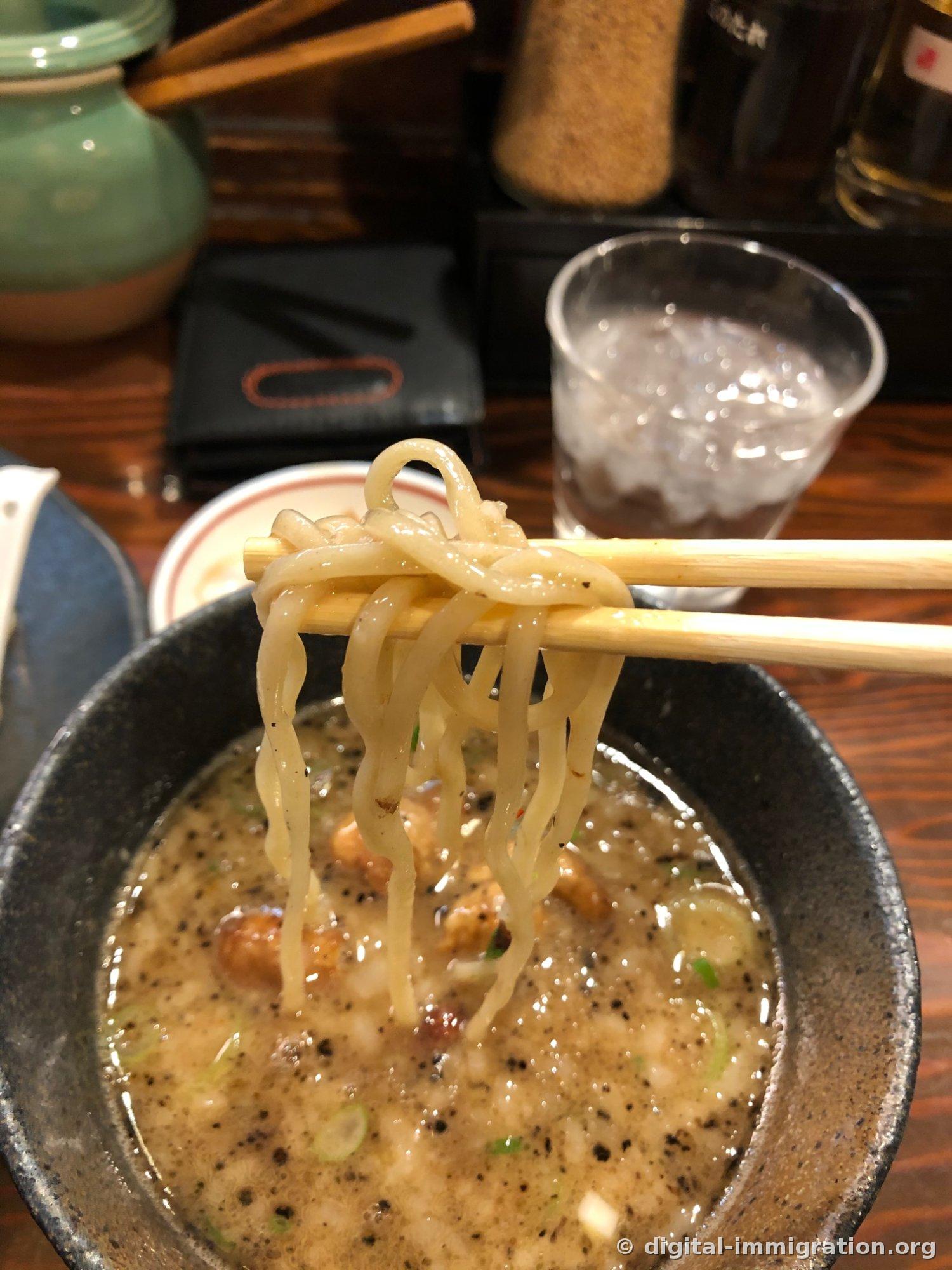
The noodles are thin and straight. True to the Fukuoka style, they're closer to regular ramen thickness than thick tsukemen noodles, but since they're house-made, you get a strong wheat aroma when you bite. Lifted with chopsticks, they don't break but come up with elasticity. The surface retains some moisture, so the dipping sauce doesn't cling too heavily—it feels calculated.
When you dip and lift, the thick broth clings evenly to the noodles. Black soy granules visibly dust the strands. The burnt soy bitterness hits your palate first, followed by the sweetness of pork fat, finishing with the chew of offal. That's when I understood what "no fish powder" meant. The characteristic fishy aftertaste of fish-powder tsukemen is completely absent. Instead, the burnt aroma fills that space.
I believe this is the finest tsukemen I've eaten in Tokyo. For a while the trend was udon-thick noodles with fish-bone tonkotsu, but this shop takes a completely different approach. Thin noodles, burnt soy, offal. That's the trinity it bets on. If you can only eat one tsukemen in Shinjuku, come here.
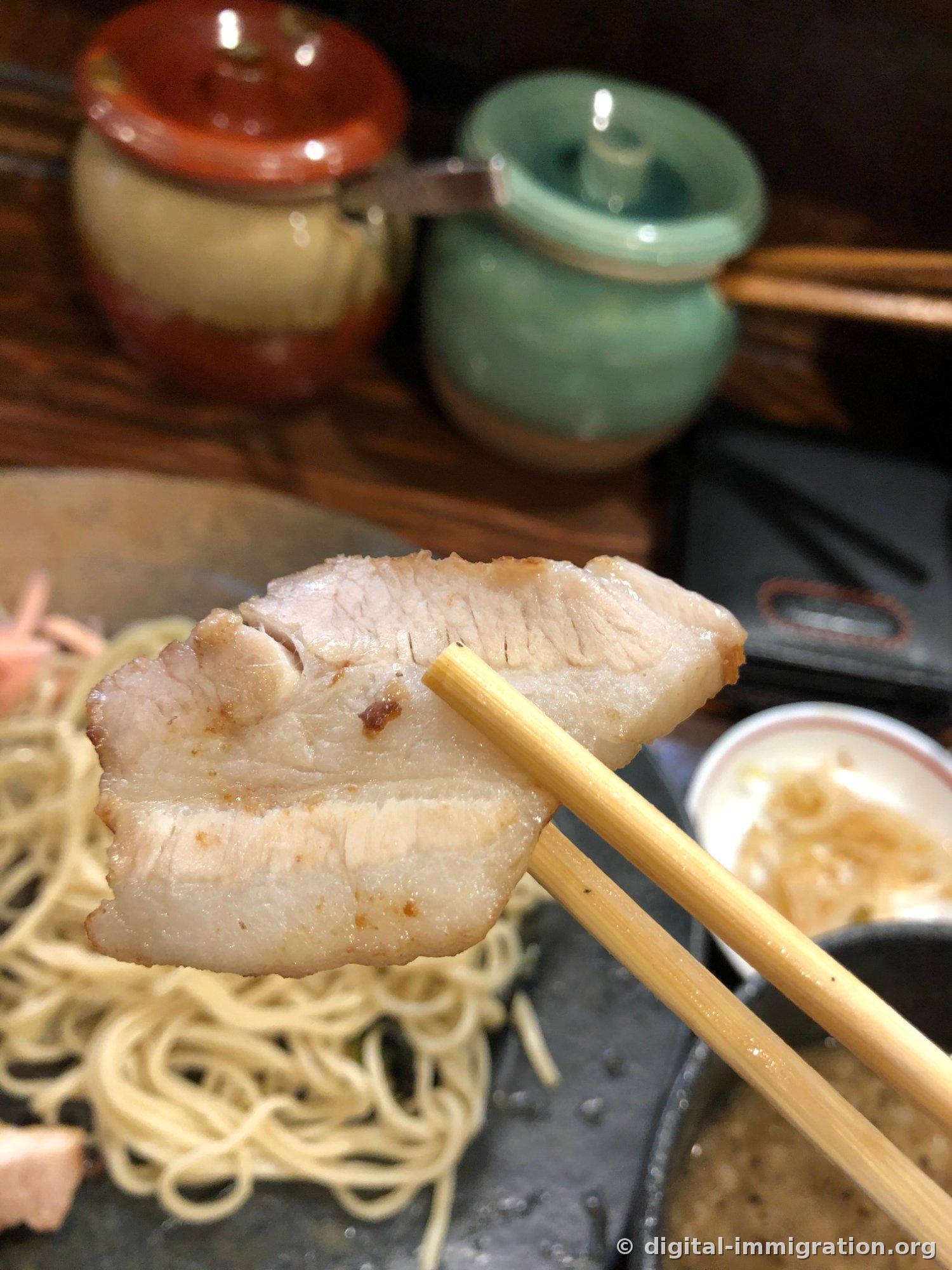
The chashu is thick-cut pork belly, seared on the outside only. The fat layers have cooked to a translucent state—tender enough that it stretches slightly when picked up with chopsticks. Dipped in the tsukejiru, the fat melts into the broth, intensifying it with each bite. If I had to name one drawback, it's that the chashu arrives at room temperature, not hot—the fat's aromatics aren't fully developed. Dip it in the broth for about thirty seconds before eating, and it improves significantly.
Finish with rice porridge—and location
As the sign states, this restaurant's tsukemen finishes with warikayu (割り粥). After eating the noodles, you pour rice porridge into the remaining tsukejiru and drink it—staff will guide you. Because the broth is so salty, without this step you'd throw away more than half the tsukejiru. Most first-timers miss this detail. Even if you don't see a separate button on the ticket machine, just ask staff.
For location, head north from the west exit of Shinjuku Station along Otaki-bashi Street. About 8-10 minutes on foot. This street itself is a ramen battleground, with shop signs on both sides continuously, but Tatsuya's up those stairs with a large wooden sign—hard to miss. Next door is a mixed-use building with signs for "8F Karaoke," "7F International..." by floor.
In summary:
- Line up first, and only go to the ticket machine when staff calls you.
- Tsukemen with offal is Tokyo-location exclusive. They don't have it at the home branch.
- Kaedama at ¥150 is ramen-only, so with tsukemen you need to decide your noodle portion from the start. For most men, regular 250g is comfortable; if you're hungry, go for large 350g.
- Don't forget to finish with rice porridge after eating.
When I came down the stairs after eating, the line had grown to about six people. During the evening rush, it would be much longer. If you can adjust your timing, that's ideal.
Read next
- From Akihabara's Chuo-dori to the Kanda River: A Record of Tokyo's Electronics District Revisited Multiple Times
Tokyo's Akihabara is a neighborhood where it's hard to say you've seen everything in a single visit. I've come multiple times across different seasons, and each time the signs chan…
Tokyo · Akihabara - Buying a Single ¥300 Year-End Jumbo Lottery Ticket at Nishi-Ginza Chance Center in Tokyo
Exit from the Hibiya exit of Tokyo's Shimbashi Station, walk toward the elevated highway for about three minutes, and suddenly you'll see a line of people stretching along the side…
Tokyo · Nishi-Ginza Chance Center - Ueno Ameyoko, the real magic starts after sunset — an evening walk from the Okachimachi Gate to Ueno Station
Every time I come to Tokyo, my feet find their way to Ueno Ameyoko (アメ横) without fail. This time I entered from the Okachimachi side and worked my way toward Ueno Station. I've met…
Tokyo · Ameya Yokocho Market