Gotokuji in Setagaya, Tokyo: A Thousand Cats and the Wait for Goods
Gotokuji, nestled in a residential neighborhood in Setagaya Ward, Tokyo, has a confusing name. Everyone calls it the "cat shrine," but technically it's not a shrine—it's a Soto Zen…
Tokyo · Gokoku-ji
Gotokuji, nestled in a residential neighborhood in Setagaya Ward, Tokyo, has a confusing name. Everyone calls it the "cat shrine," but technically it's not a shrine—it's a Soto Zen temple. Instead of a torii gate, there's a wooden sanmon gate, and visitors don't clap their hands in prayer. Yet this temple has become Tokyo's most famous cat destination, all because white beckoning cats dedicated in one corner are stacked literally by the thousands.
I arrived around eleven on a weekday morning. It's about a ten-minute walk from Gotokuji Station on the Odakyu Line, or about five minutes from Miyanosaka Station on the Tokyu Setagaya Line. I took the Setagaya Line, and the two-car tram-like train alone shifts the vibe so noticeably that you feel the change from central Tokyo immediately.
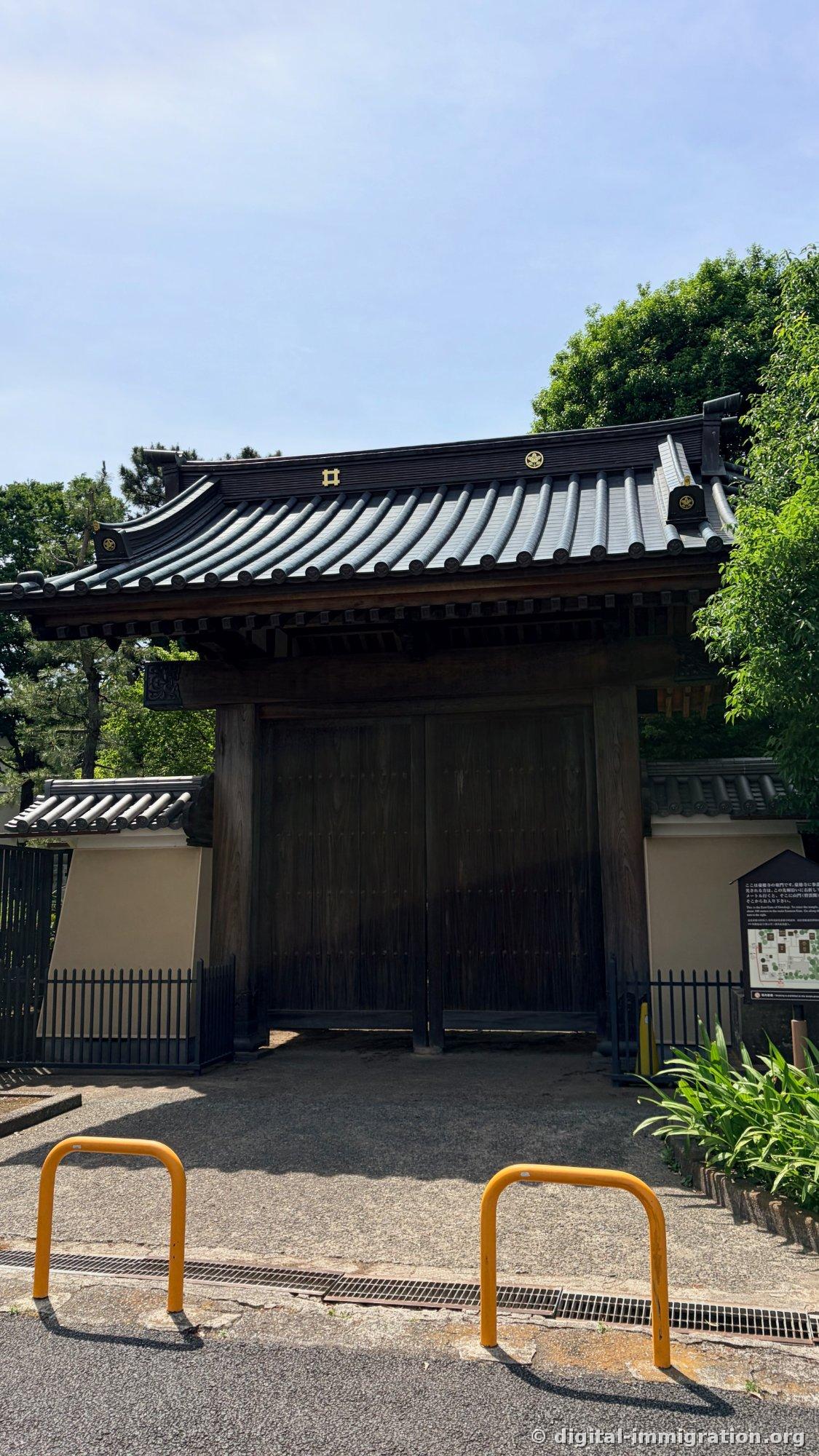
First-time visitors often make the mistake of lingering at this east gate. Sometimes map apps direct you here, but the door is locked and the notice board beside it explains: "This is the east gate. Visitors seeking to pray should proceed about 100m along the path ahead and enter through the sanmon gate." I made that wrong turn myself. Walk left along the fence and the actual main entrance soon appears.
Beyond the sanmon, the noise fades
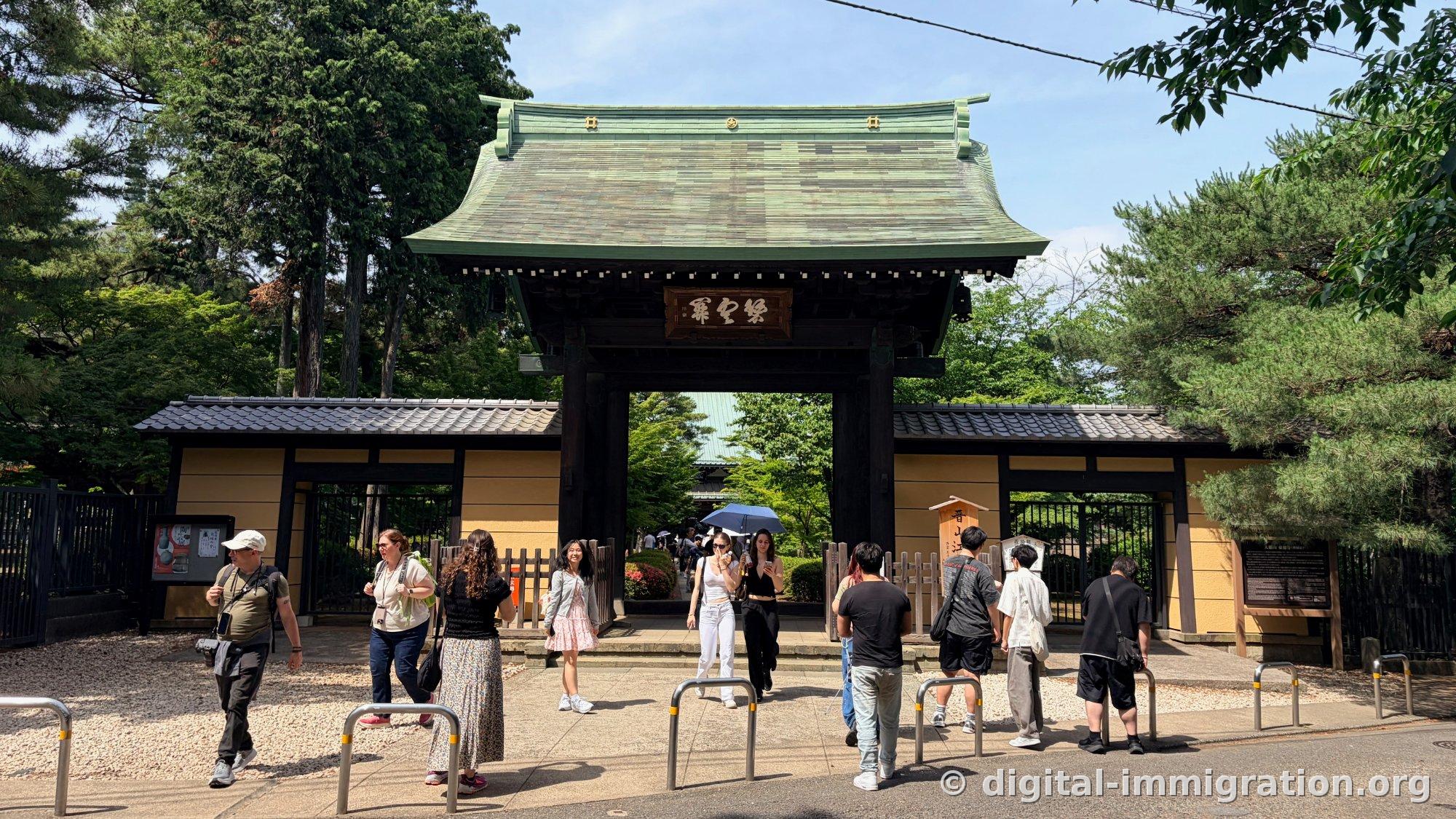
The sanmon roof is the color of copper oxidized by time. The temple's name hangs from the entablature, and standing beneath the gate, the path beyond frames itself like a painting. Many people stop here to take photos. What's striking is how traffic noise from the street outside drops sharply the moment you cross the threshold. Only cicadas and the crunch of gravel remain.
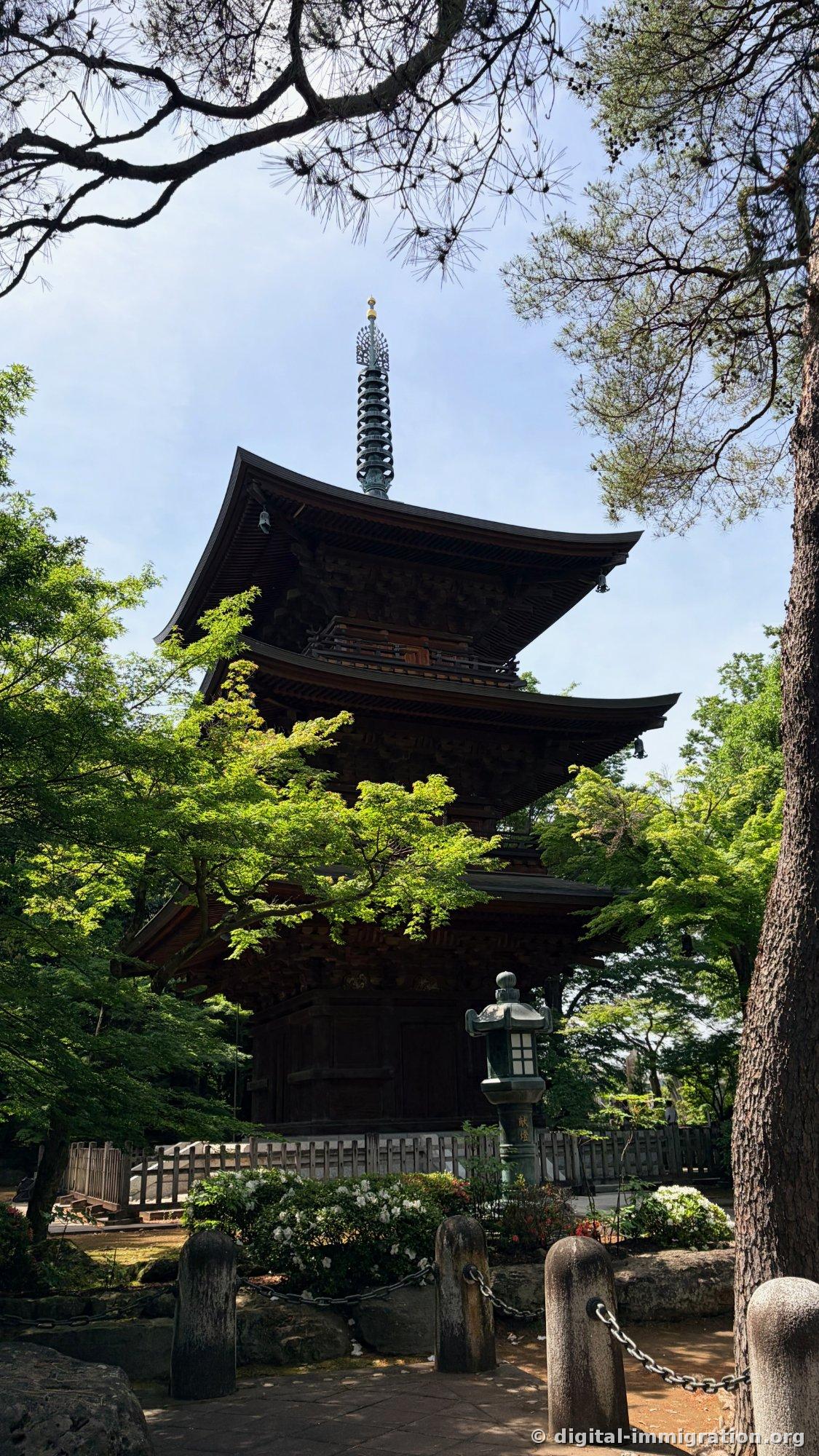
The three-tiered pagoda is a relatively recent structure, its wood still deep in color. I heard that cats are carved in relief on the pagoda's body and spent a long time looking up trying to see them, but the tree shade and angle defeated my eyes. A telephoto lens would have made the difference.
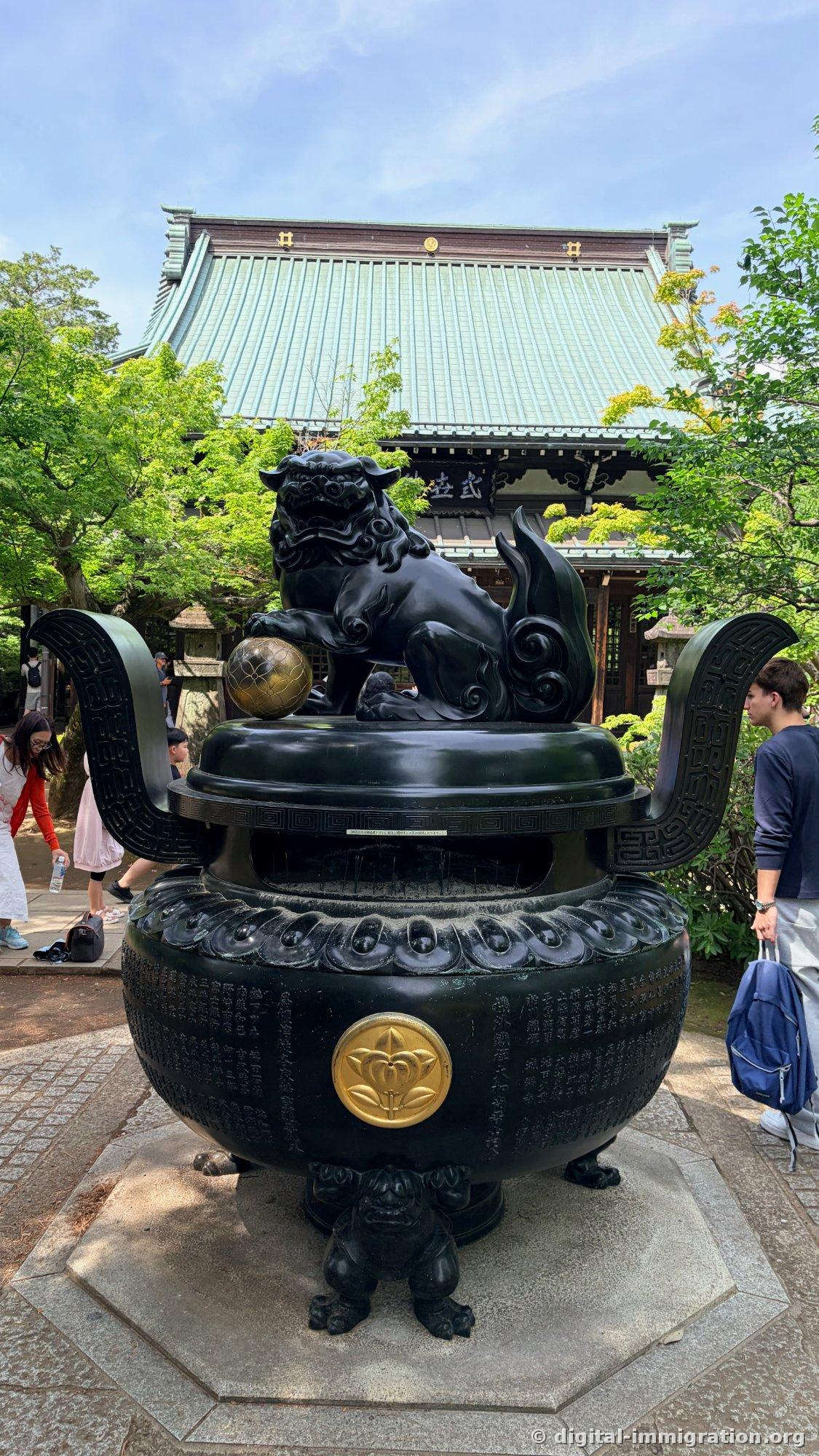
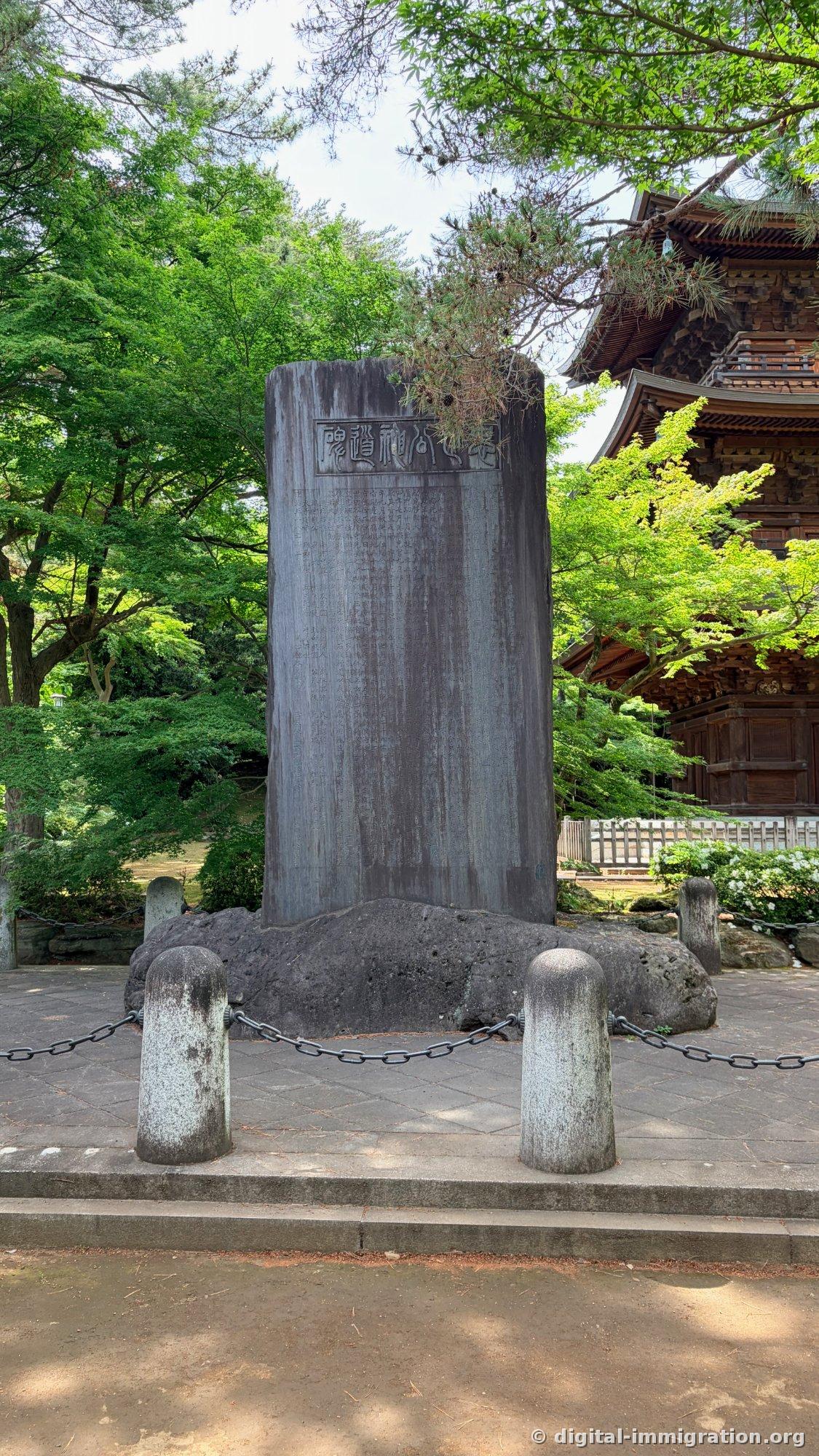
The burner's body is densely inscribed with donors' names, and its golden front pattern is the crest of the Ii clan. Gotokuji was the ancestral temple of the Ii clan of Hikone during the Edo period, and the tomb of Ii Naosuke—remembered for the Ansei Purge—also stands within the grounds. If you leave having seen only the cats, you've missed half the temple.
The cat goods line is longer than you'd expect
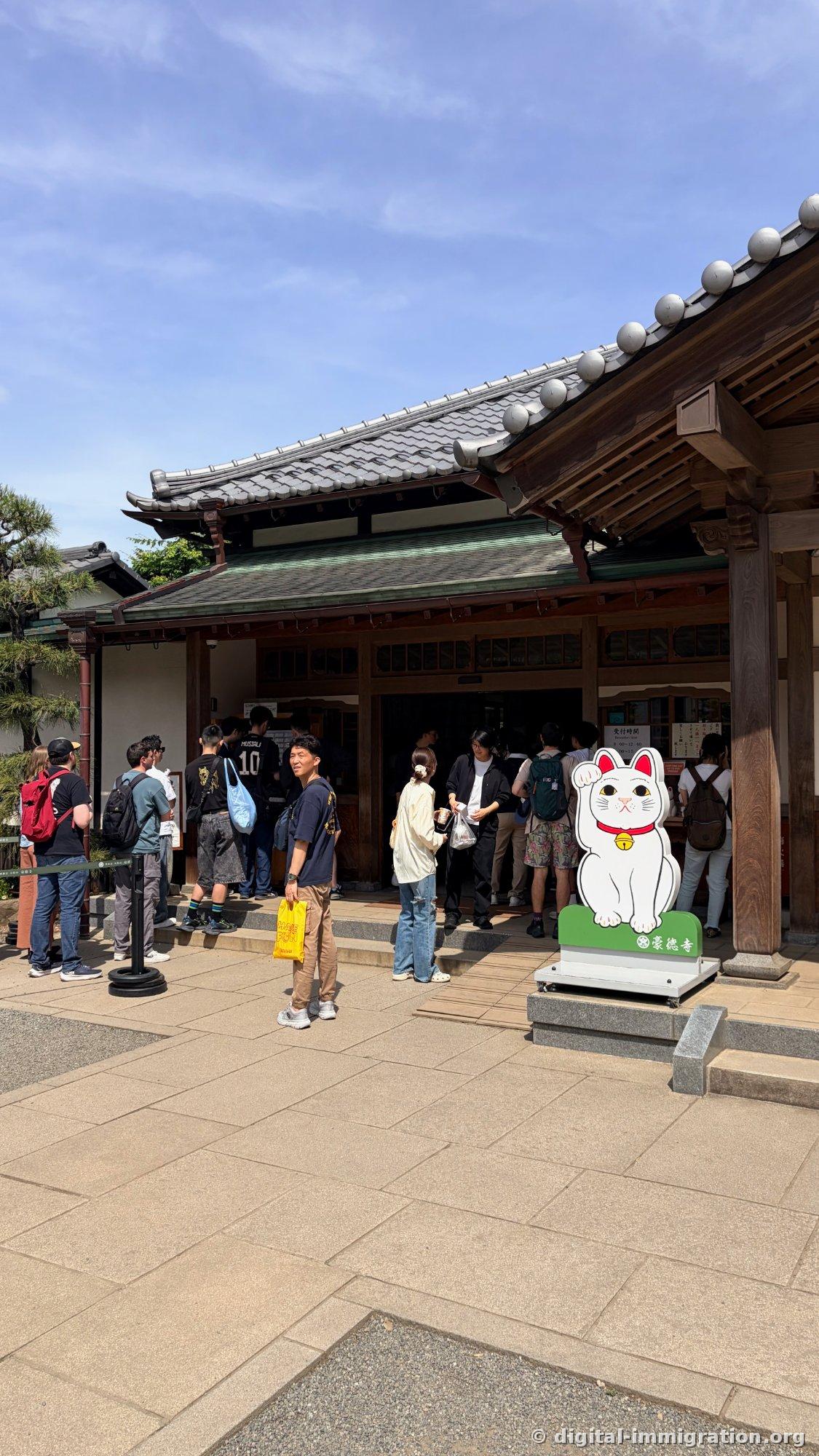
This is the busiest spot in the temple. It's the window commonly known as where the "cat shrine sells cat goods"—though it's actually the temple's offering hall. I underestimated the queue. There seemed to be only about ten people ahead of me, but it took about twenty minutes for my turn to arrive. There's a reason. The beckoning cat figurines are divided by size, so people stand before the window deliberating over "which is better, this one or that one." On top of that, the line for goshuin (temple stamps) overlaps at the same counter. Most payments are cash, so there's time spent on change.
- Have coins and thousand-yen bills ready in your hand. I saw someone who pulled out a card and got pushed back in line.
- Read the size and price chart posted on the side before you join the line, so you won't waste your turn deliberating. Prices and reception times are posted—verification on-site is recommended.
- The figurines are ceramic, so they're heavy and break easily. If you buy a larger size, you'll need a bag with packing material.
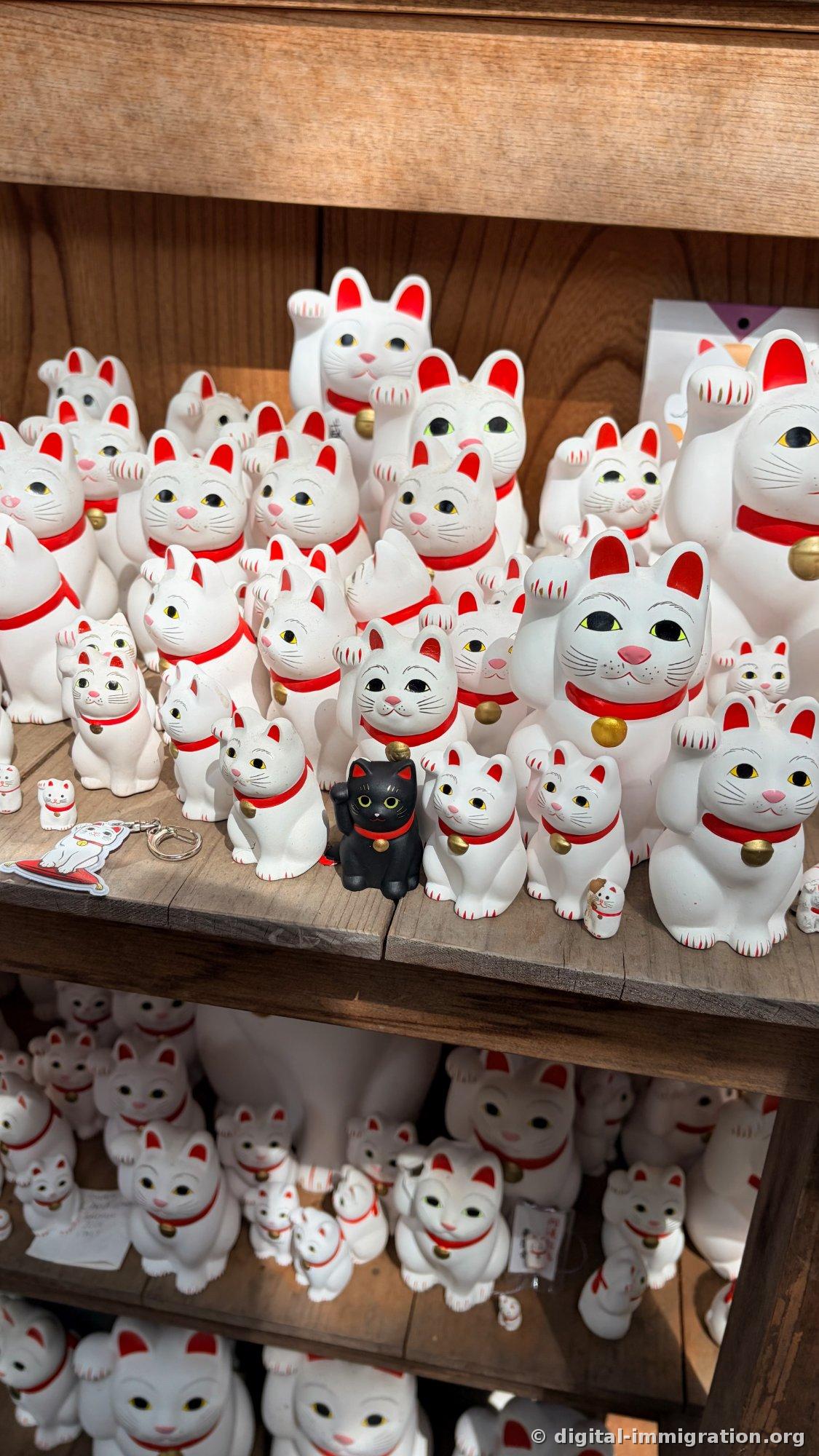
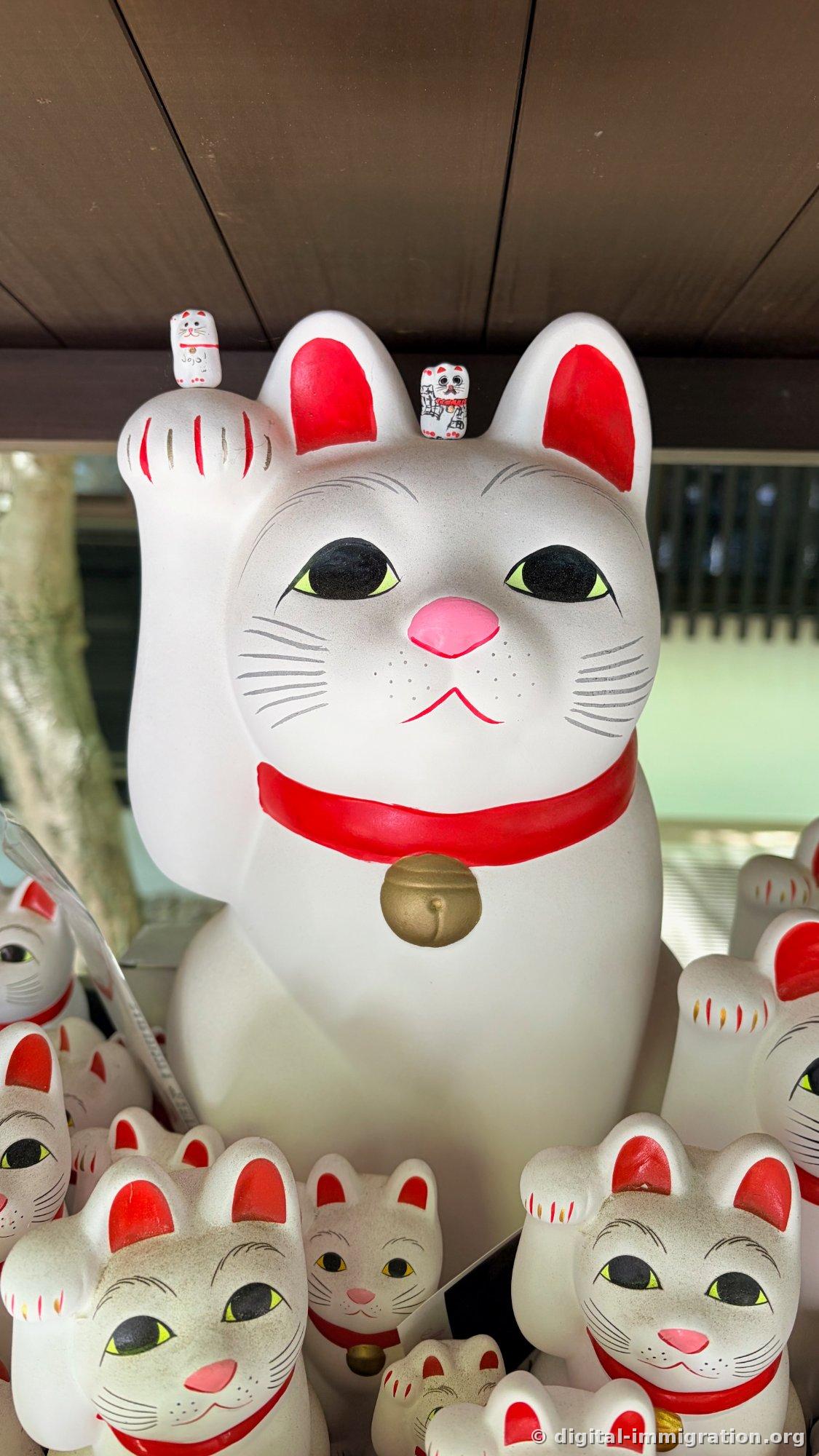
The figurines here have their right paw raised. Just one paw is up, and unlike typical maneki-neko at tourist spots, they hold no coins or sea bream. According to the temple's explanation, they beckon good fortune but let you bring your own wealth. Perhaps that's why this empty-handed form stayed with me longer. The black cat definitely stands out among all those white ones.
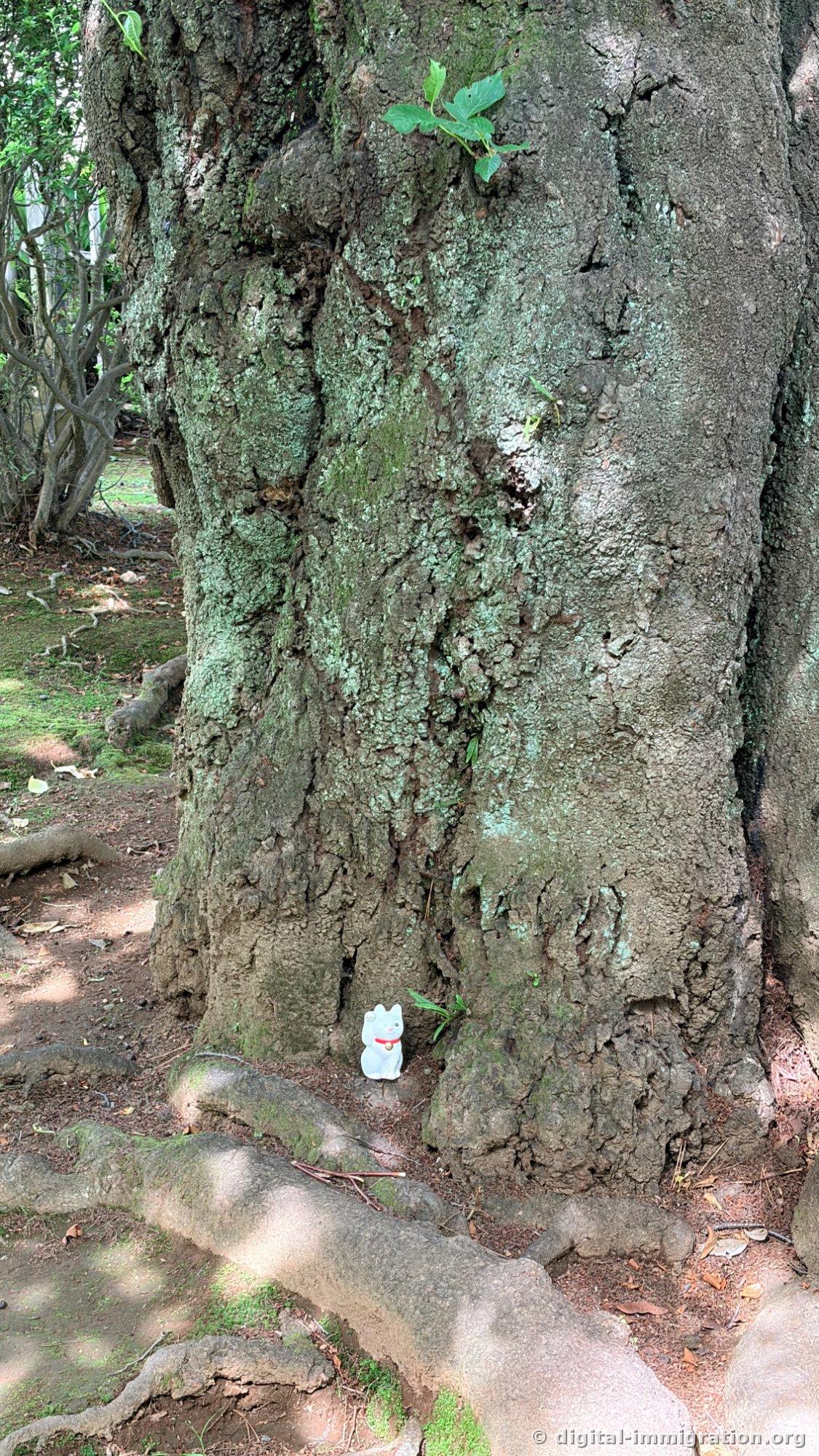
These moments are scattered throughout the grounds. Small cats quietly placed by someone elsewhere—under tree roots, in stone crevices, beside lanterns, nowhere near the official offering stands. Keep your eyes on the ground as you walk and they keep appearing. I stood longest before this ancient tree.
Getting there
Miyanosaka Station on the Setagaya Line is closest. Exiting the ticket gate and walking through the alley takes about five minutes before you see the fence. From Gotokuji Station on the Odakyu Line, it's about a ten-minute walk through shopping streets. I prefer that route because there are cafes and bakeries near the station. There is a parking lot for visitors, but spaces are limited, and since it's in a narrow residential neighborhood, driving is not recommended. There is no admission fee.
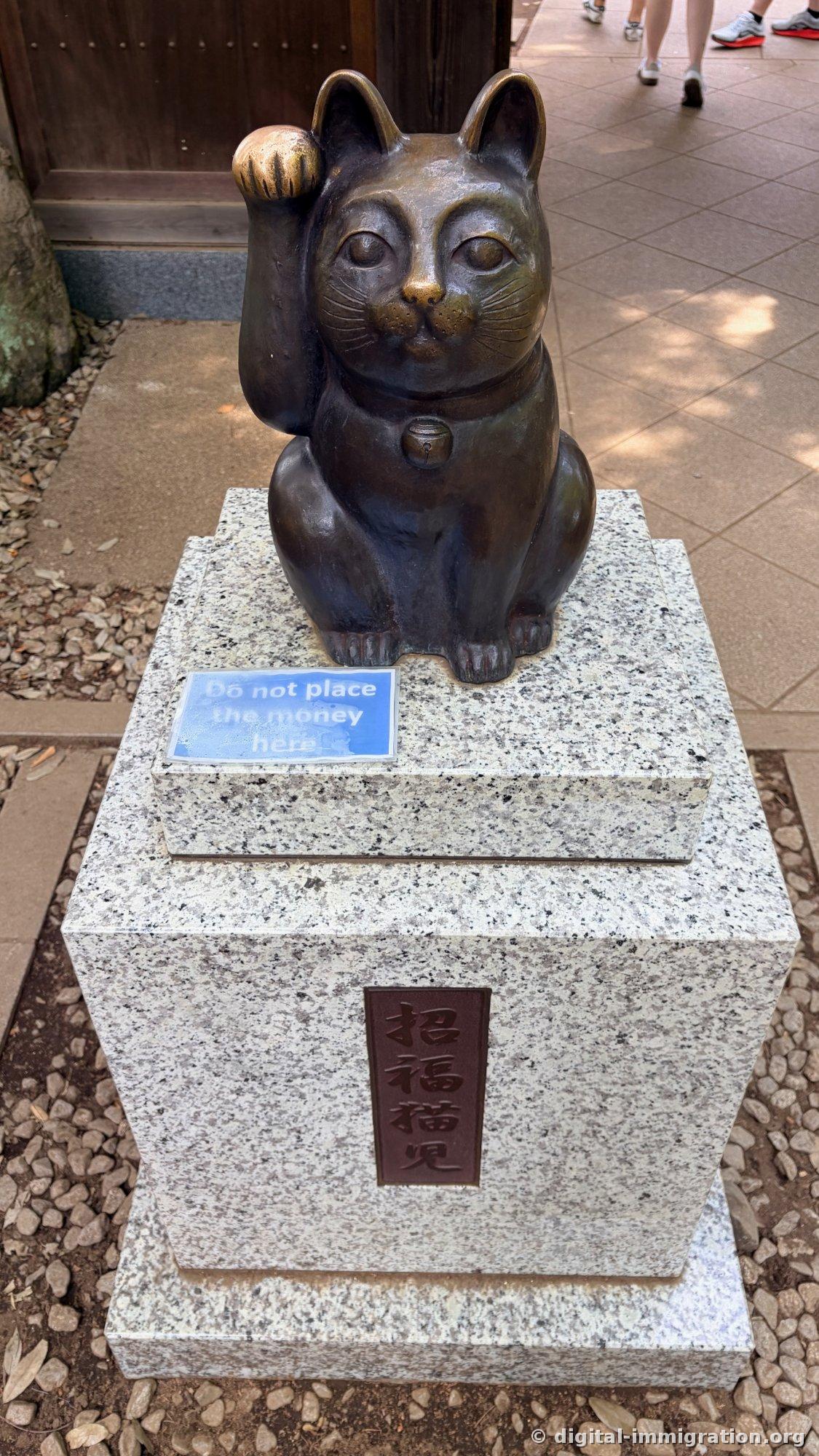
The blue notice on the base stood out. People must leave coins on it often enough that they had to post that sign. You could indeed see coin impressions on the gravel around the statue. How people pray varies by country—it shows itself in details like these.
The offering stand—photos are less overwhelming than the real thing
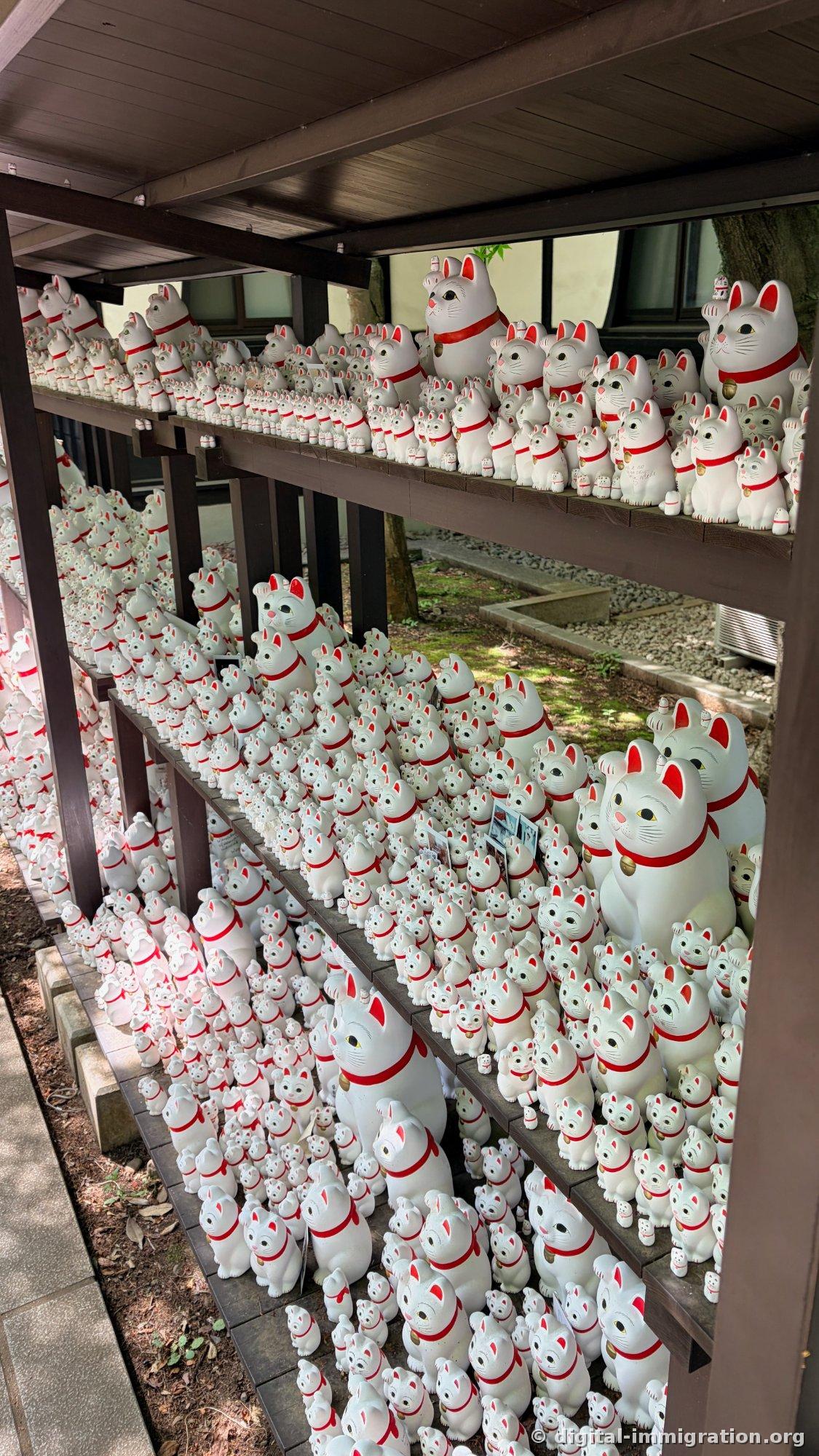
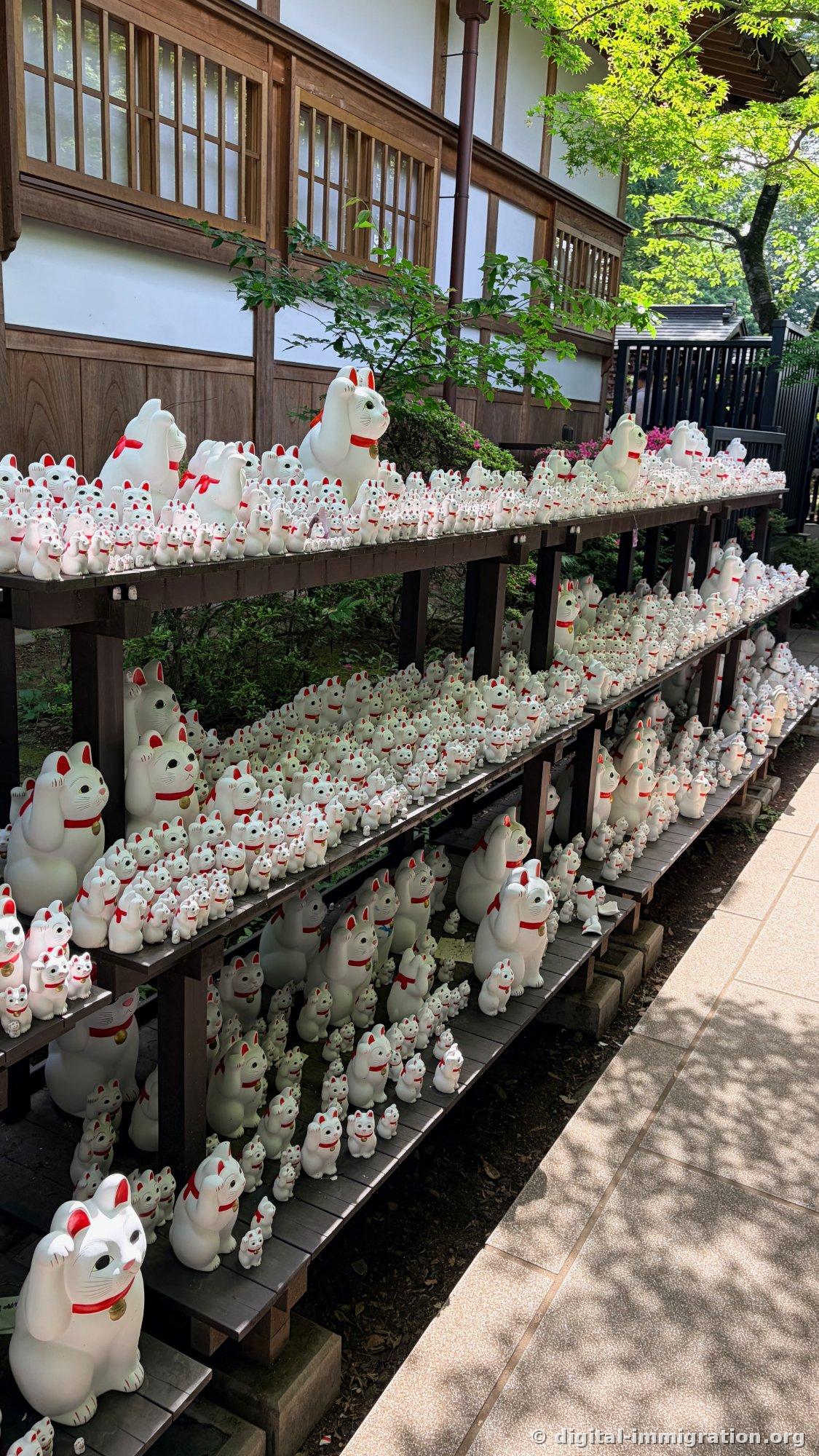
The real thing is far denser than what photographs show. Large cats in front hide those behind them—just ears poking out. Some have peeling paint, others are chipped. New and old mix together, their whites subtly different. When midday sun shines directly at noon, white ceramic reflects and your photos blow out. The shot I took under tree shade at the left end came out best.
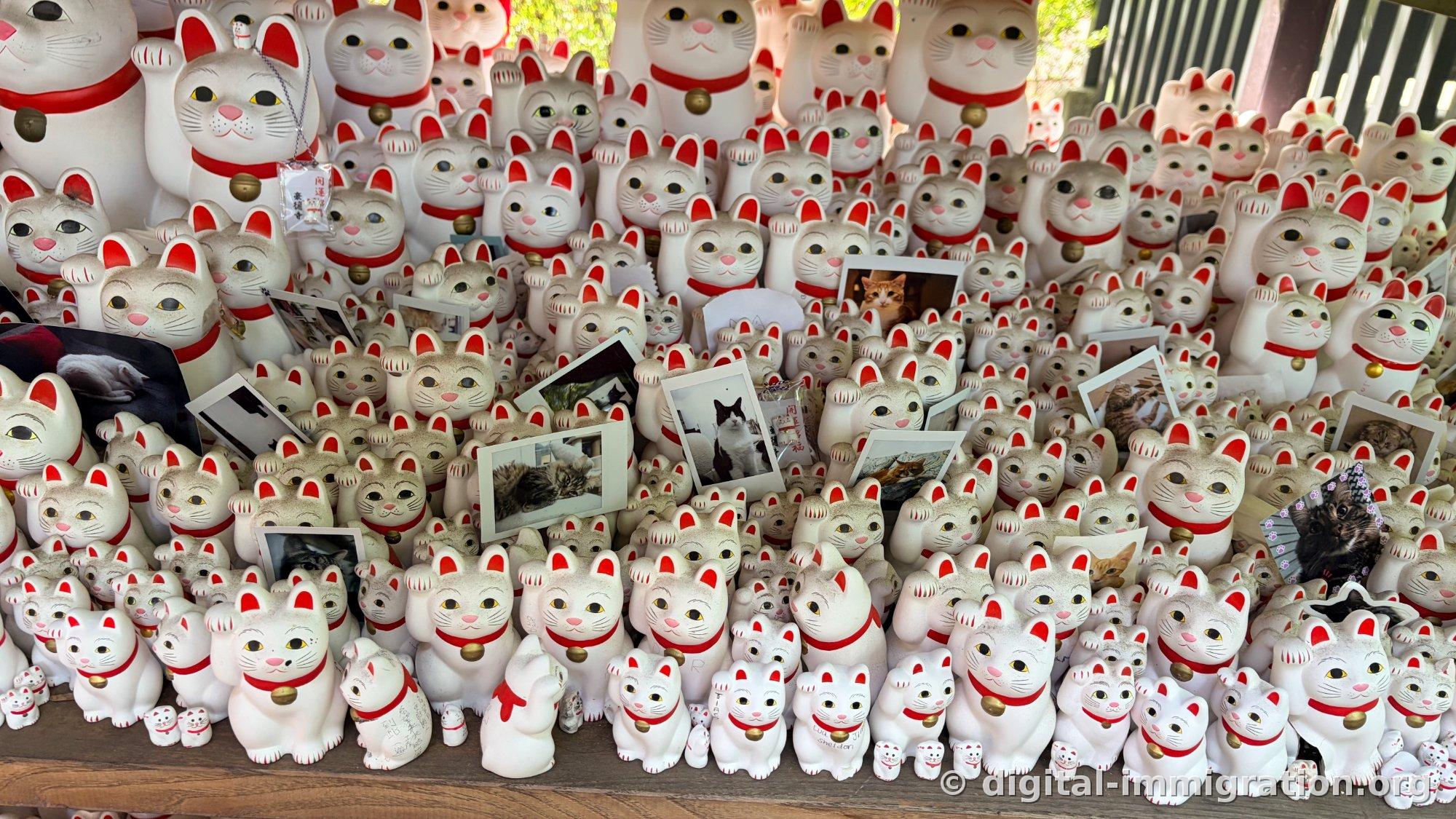
Only after seeing this photo did I understand what this place truly is. Polaroid photos of real pets stand among the figurines. A sleeping calico. A cat glaring at the camera named Cheese. A black cat with a ribbon. Many figurines had names written on their bellies. Most of them must be cats that have passed on. I came thinking this was just a tourist spot, but I fell silent standing before these rows.
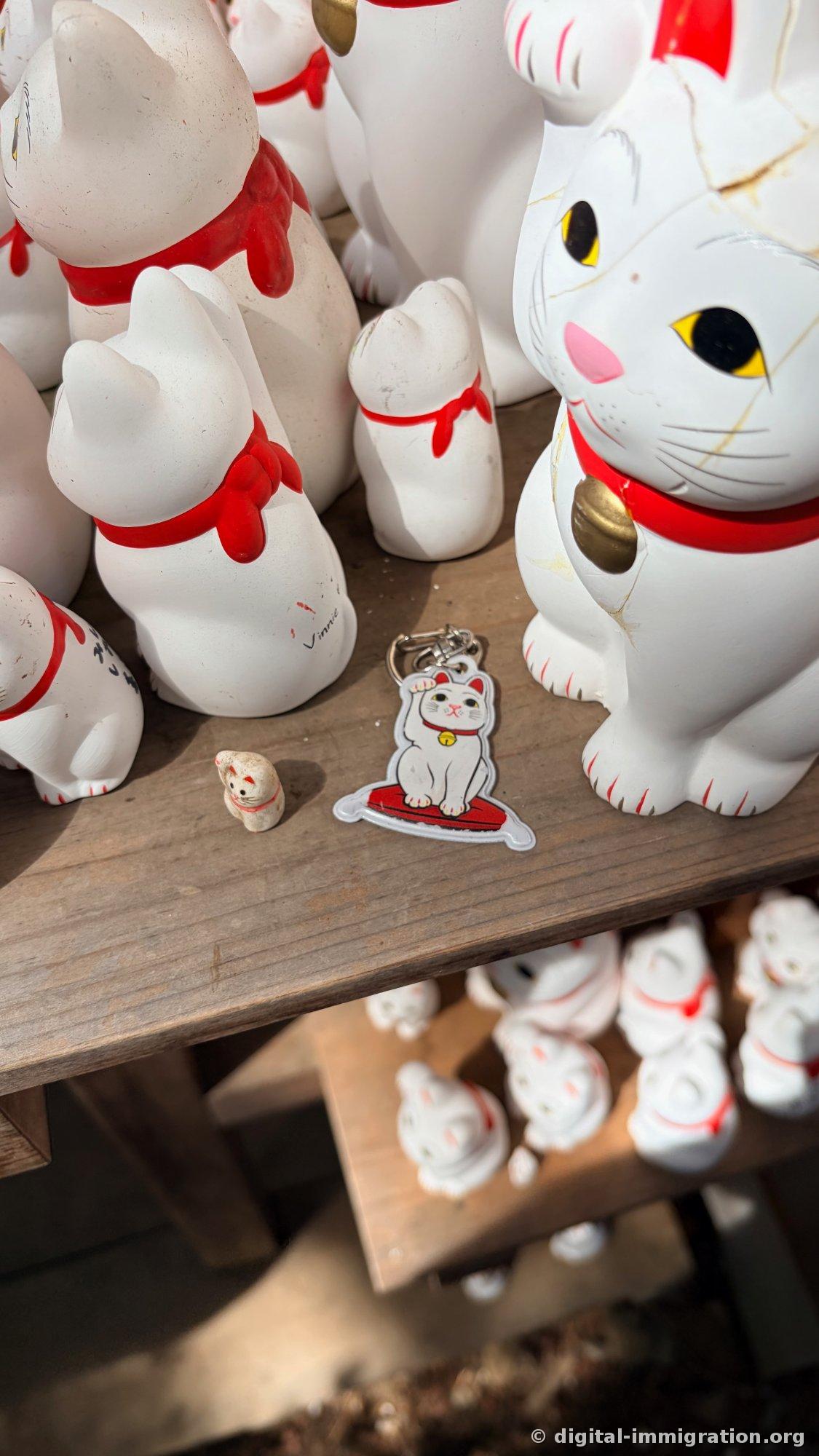
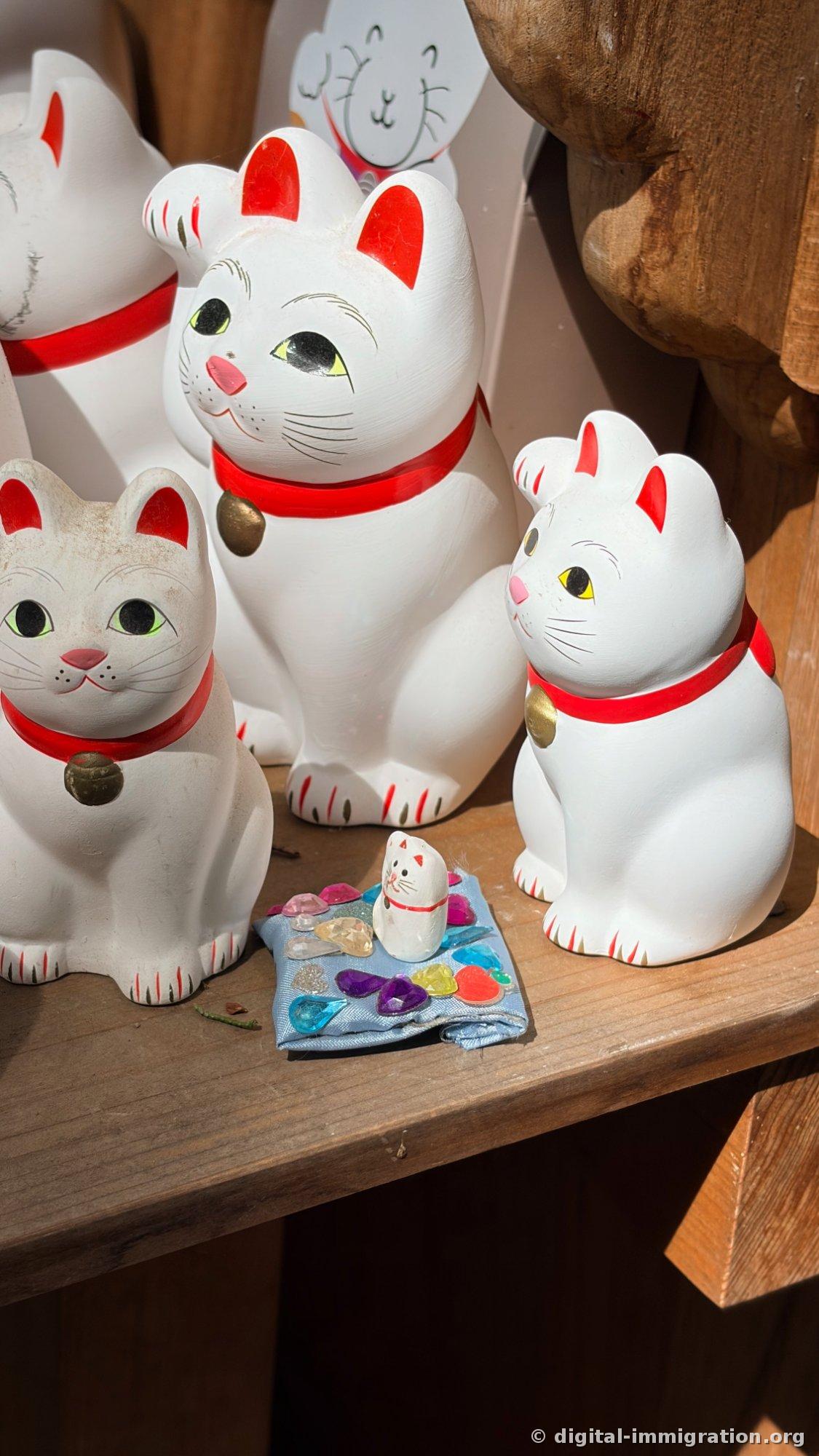
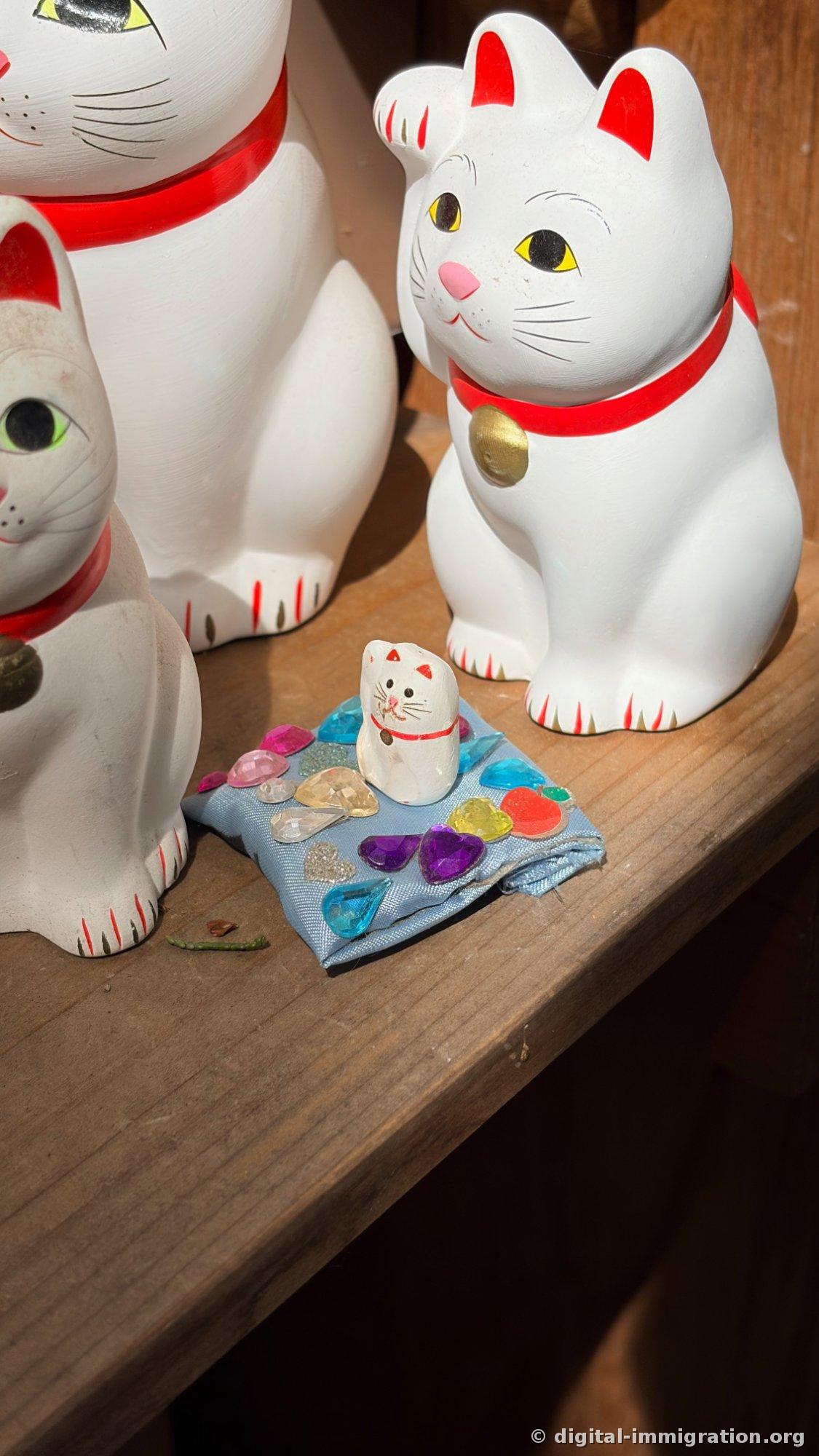
Someone made a cushion for one of the smallest figurines. They folded cloth into a small square and attached plastic gems one by one. It's not something sold at the temple. To find things like this, one pass around the stand isn't enough—you have to crouch down and lower your eyes. My knees ached, but it was worth it.
Ema and omamori
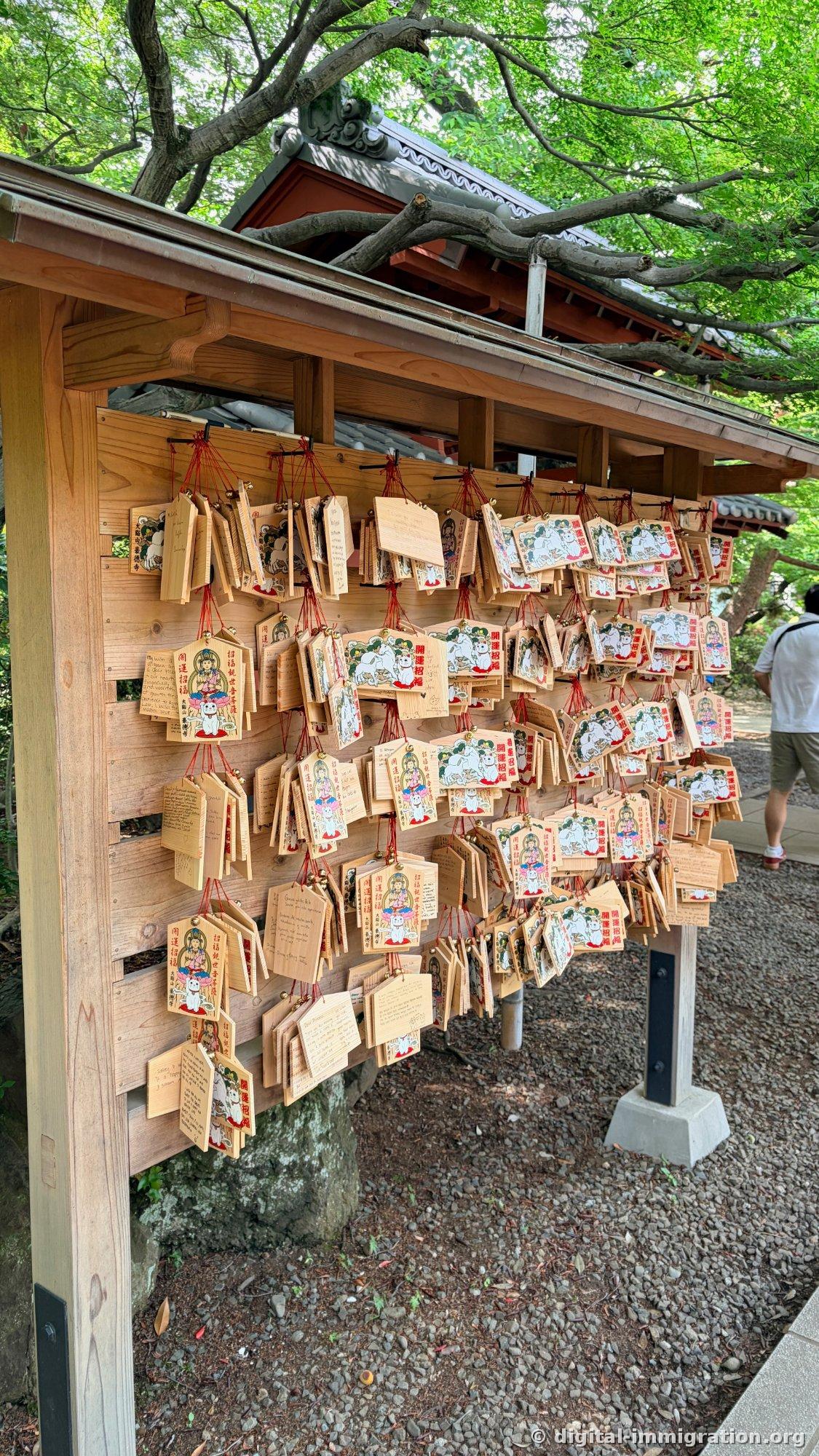
There were two types of ema plaques. Some with Kannon depicted, others with cats. Red strings hold them, with small bells attached that chime when wind stirs them. I saw wishes in English, Chinese, Thai, and Korean. Time disappears reading through them.
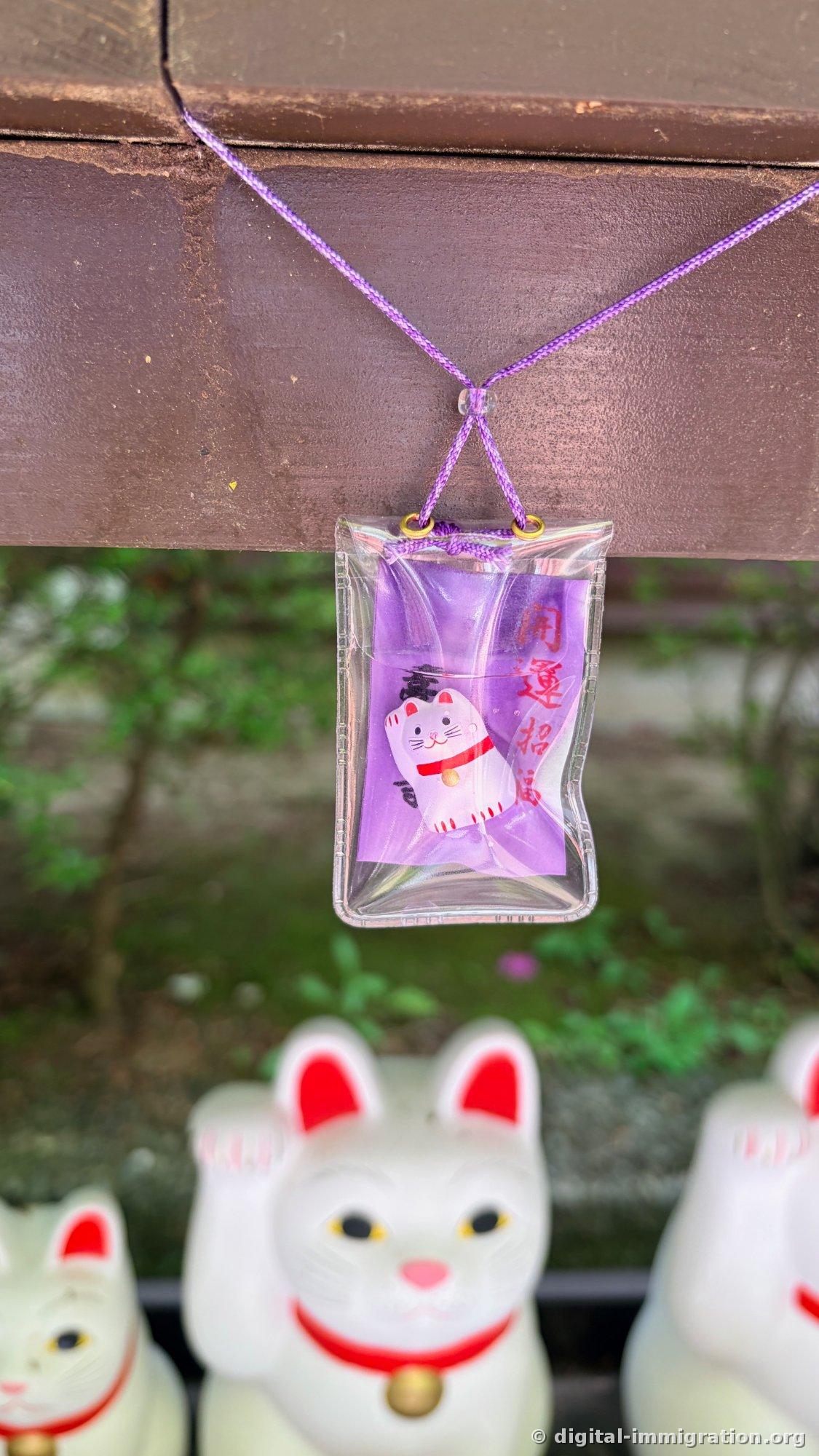
Omamori are lighter than figurines and don't take up luggage space. If you're uncertain about carrying ceramic, this is the practical choice. I brought a small-sized figurine and one of these omamori.
Good to know before you go
- Noon is the busiest time. If you want to photograph the stand without crowds, go right after opening.
- The offering hall queue and temple visit are separate. If the line is long, take a walk around the grounds first—it's better use of time.
- There are no vending machines or shops inside the grounds. In summer, bring water. When I visited in the morning, my shirt was soaked.
- This is a temple, and it holds the Ii clan burial grounds. It's respectful to avoid tripods and loud voices in the burial area.
- Don't touch or move dedicated figurines. Someone's beloved cat's name might be written on them.
On the way out, I turned back once from beneath the sanmon gate. All the white cats had their right paws raised the same way. As the two-car Setagaya Line tram carried me back toward the city center, the ceramic figurine in my bag clicked softly with each movement.
Read next
- From Akihabara's Chuo-dori to the Kanda River: A Record of Tokyo's Electronics District Revisited Multiple Times
Tokyo's Akihabara is a neighborhood where it's hard to say you've seen everything in a single visit. I've come multiple times across different seasons, and each time the signs chan…
Tokyo · Akihabara - Buying a Single ¥300 Year-End Jumbo Lottery Ticket at Nishi-Ginza Chance Center in Tokyo
Exit from the Hibiya exit of Tokyo's Shimbashi Station, walk toward the elevated highway for about three minutes, and suddenly you'll see a line of people stretching along the side…
Tokyo · Nishi-Ginza Chance Center - Ueno Ameyoko, the real magic starts after sunset — an evening walk from the Okachimachi Gate to Ueno Station
Every time I come to Tokyo, my feet find their way to Ueno Ameyoko (アメ横) without fail. This time I entered from the Okachimachi side and worked my way toward Ueno Station. I've met…
Tokyo · Ameya Yokocho Market