Fukutaya (ふくだ屋), an Alley Restaurant Near Tokyo's Meguro River — Soba and Katsudon I Didn't Know Until Opening the Lid
It was an alley in a residential neighborhood west of Tokyo, tucked away toward Higashiyama from Nakameguro where the Meguro River flows. Completely removed from the tourist areas,…
Tokyo · Fukudaya
It was an alley in a residential neighborhood west of Tokyo, tucked away toward Higashiyama from Nakameguro where the Meguro River flows. Completely removed from the tourist areas, even the storefront sign was quiet, and the only people passing by were locals on bicycles. Well past lunch time and hungry enough to eat anywhere, I spotted a soba shop with only ふくだ屋 written on a wooden sliding door. As it turned out, this became the most memorable meal of my entire Tokyo trip.
Before Opening the Red Lacquered Lid
I sat down and saw handwritten menus on the wooden walls, with the owner boiling noodles behind the counter. It was quiet except for the air conditioner and the sound of broth bubbling. When my order arrived, I was momentarily confused about what I'd ordered. A bright red lacquered lid covered a bowl entirely, sitting on a lacquered tray.
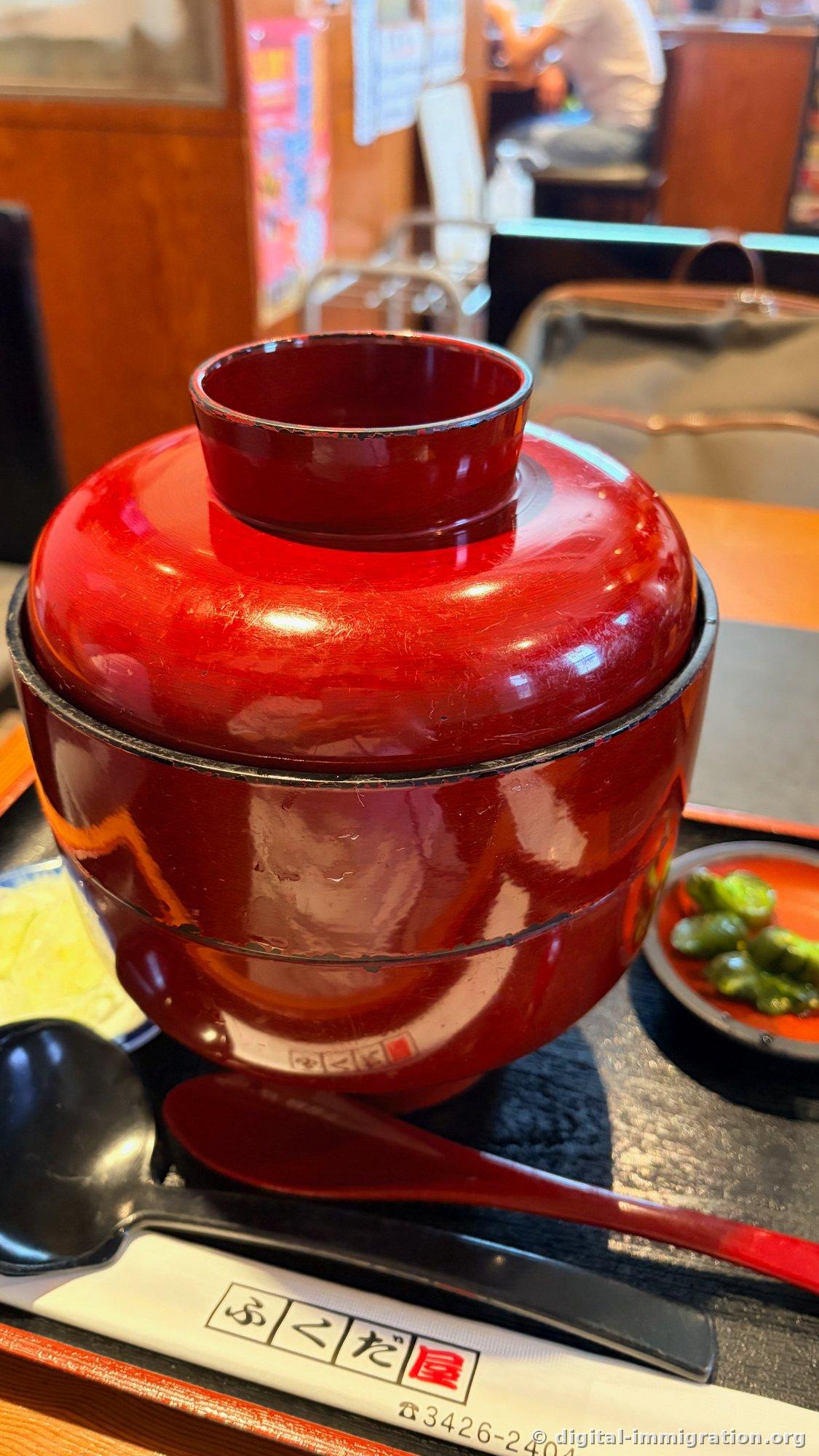
The chopstick wrapper had the restaurant's name and phone number printed on it. These days, even in Tokyo, far fewer restaurants use such wrappers. Beside the bowl were three or four pieces of green pickled pepper in a small dish, and pickled daikon on the opposite side. Because the lid had trapped the steam, when I opened it, the aroma of dashi broth and egg rose up to my face.
Soba Where Fried Crumbs Cloud the Broth
The soba that came with it was warm kake soba generously topped with fried crumbs (tenkasu). The toppings were simply a bundle of blanched spinach and one slice of pink spiral fish cake. It wasn't an elaborate presentation. But after tasting a spoonful of the broth, my impression changed.
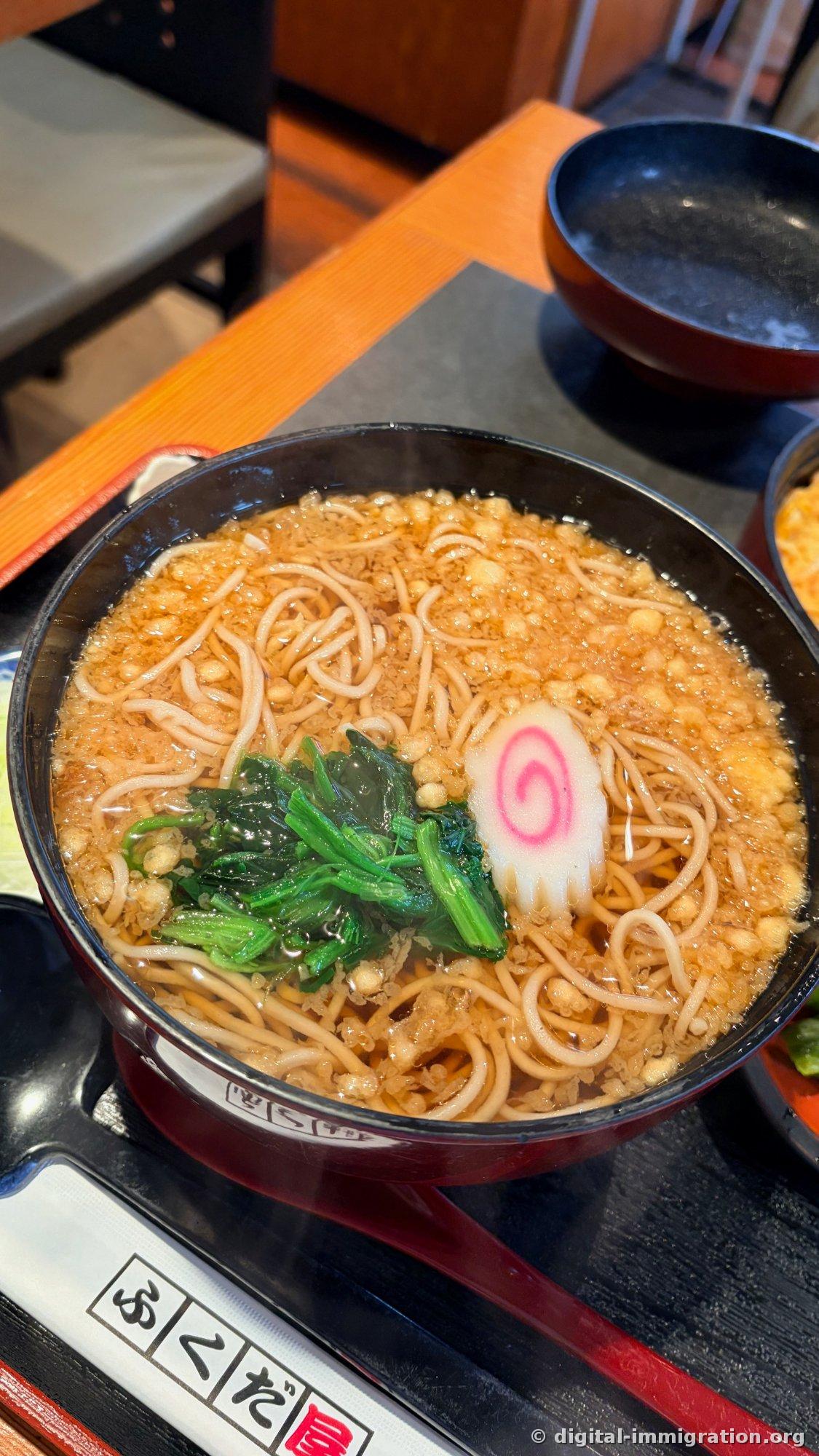
The broth looked dark enough to be salty, but it wasn't. Bonito aroma takes the lead, with soy sauce supporting from behind. I often hear that Tokyo soba broth is saltier than Kansai style, but this was much gentler than that reputation. The noodles were thick and chewy like machine-made noodles, with a pale grayish tone. If you come expecting hand-pulled ten-wari soba, you'll be disappointed. Instead, the fried crumbs gradually cloud the broth, and the flavor intensifies as you continue eating—that's the real joy of this bowl. By the time I was halfway through, the broth's taste had noticeably changed from the beginning.
What I Wished Was Different While Eating
- The tenkasu absorbs the broth quickly, so if you eat slowly, the noodles become soggy toward the end. It's better to tackle the soba first.
- The toppings are really minimal. I should have asked if I could add another fried item.
- I checked the price at the register but didn't note the exact amount. It wasn't significantly different from typical soba shop prices in this neighborhood. On-site verification recommended.
Katsudon with Egg Half-Cooked
When I opened the lid, it was katsudon. It's hard to convey in a photo, but the egg wasn't fully set—the egg whites were still flowing semi-translucently in places. A thin layer of egg white covered the tonkatsu, with the yolk mingled with onions and spread widely over the rice.
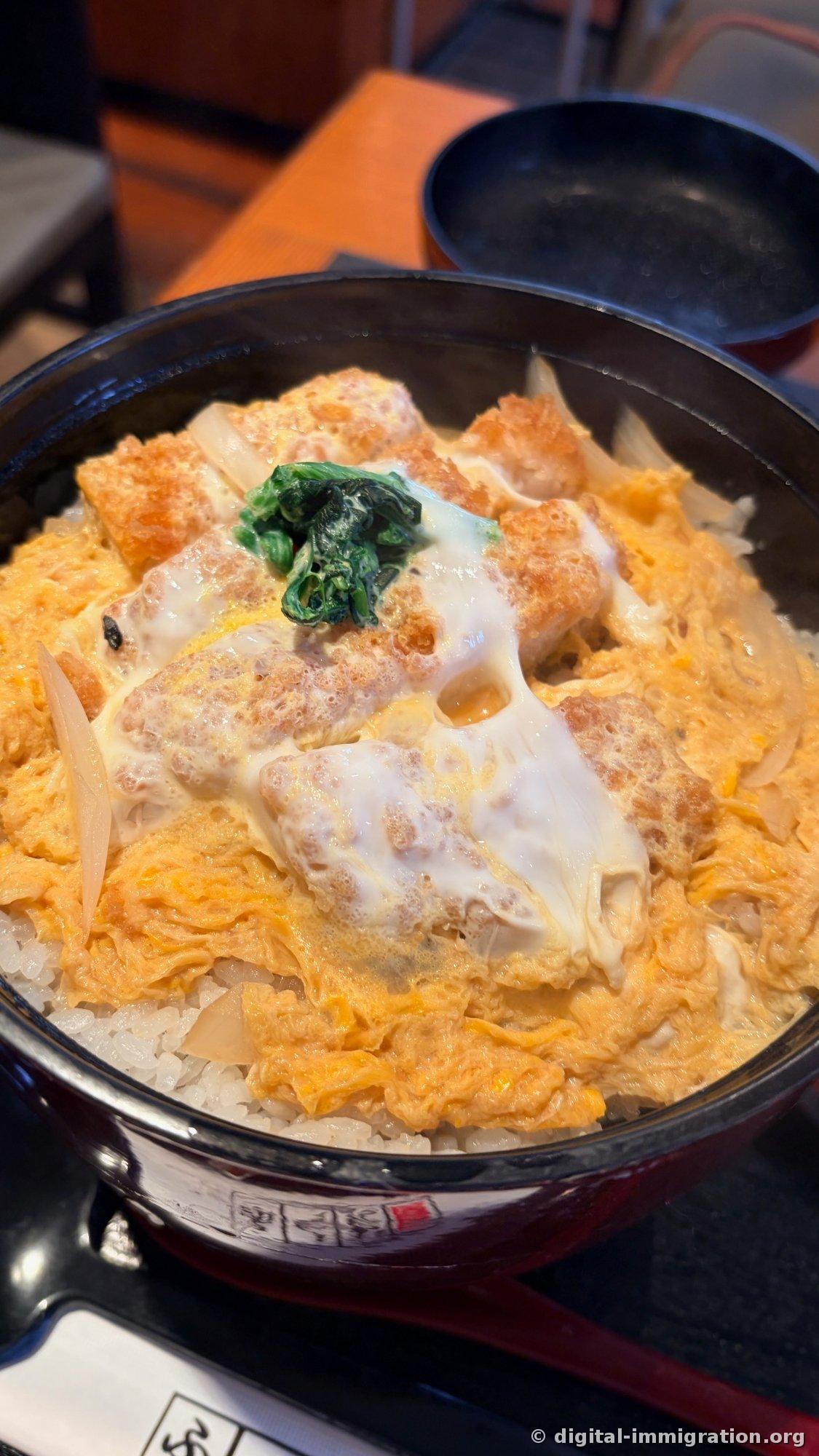
The most common failure in katsudon is when the fried coating absorbs all the broth and becomes mushy, but here the edges of the coating were still alive. The breading fell away when I picked it up with chopsticks. The meat was thin, not thick. If you come expecting a hefty loin cutlet, you'll be disappointed, but because it's thin, the egg, onions, and dashi flavors penetrated the meat evenly. The rice was slightly firm-textured, and since the sauce didn't seep all the way to the bottom, it never became mushy.
What was truly surprising was that the dashi in the soba broth and the dashi in the katsudon egg were from the same lineage. If you eat a bite of soba with a chopstick and then take a spoonful of katsudon, the flavors connect seamlessly. I had a prejudice that donburi sold at soba shops were hastily prepared sides, but here I could feel that both dishes came from the same chef working with the same dashi. I never expected to find this kind of pairing at an alley restaurant not on any tourist list.
Location and How to Find It
The location is around Higashiyama in Meguro Ward. It's about a 10-minute walk from Nakameguro Station, and roughly the same distance from Ikezuriohashi Station. It's tucked away one block from the main road in a residential alley, so you'll pass right by if you don't have a map open. In fact, I passed it once and had to turn back. There's no eye-catching sandwich board in front; just a small sign above the wooden sliding door.
Here are some things good to know before visiting.
- I wasn't able to confirm the hours or days off. Many neighborhood soba shops have a break time after lunch, so it's safer to avoid around 3 PM. On-site verification recommended.
- I also couldn't confirm whether they accept cards. Established shops of this size often take cash only, so it's reassuring to bring yen in cash.
- The menu is just handwritten Japanese on the wall. There's no English menu or picture menu. Knowing just a few characters like katsudon (カツ丼) and soba (そば) is enough to order without problems.
- The shop is small. It's just a counter and a few tables, so there can be a wait during lunch rush. I went late in the afternoon and was seated right away.
- If you're planning a Meguro River walk or a Nakameguro café tour, it's good to add to the end of that route. This is an area where tourist density drops significantly.
When you're tired of competing for reservations at Tokyo's famous restaurants, a place like this is the answer. When I walked back out into the alley, I saw the man at the next table folding up his newspaper and standing. He moved at the speed of someone who comes every day. Next time I stay in this neighborhood, I'm planning to visit again early in the morning.
Read next
- From Akihabara's Chuo-dori to the Kanda River: A Record of Tokyo's Electronics District Revisited Multiple Times
Tokyo's Akihabara is a neighborhood where it's hard to say you've seen everything in a single visit. I've come multiple times across different seasons, and each time the signs chan…
Tokyo · Akihabara - Buying a Single ¥300 Year-End Jumbo Lottery Ticket at Nishi-Ginza Chance Center in Tokyo
Exit from the Hibiya exit of Tokyo's Shimbashi Station, walk toward the elevated highway for about three minutes, and suddenly you'll see a line of people stretching along the side…
Tokyo · Nishi-Ginza Chance Center - Ueno Ameyoko, the real magic starts after sunset — an evening walk from the Okachimachi Gate to Ueno Station
Every time I come to Tokyo, my feet find their way to Ueno Ameyoko (アメ横) without fail. This time I entered from the Okachimachi side and worked my way toward Ueno Station. I've met…
Tokyo · Ameya Yokocho Market