From the Bus Stop to Ginkaku-ji, 500m Across the Bridge Is Half the Course — A Winter Visit to Kyoto's Ginkaku-ji
When a Kyoto city bus arrives at the Ginkakuji-michi (銀閣寺道) stop, it's easy to expect the temple to be right in view, but in reality nothing is visible yet. After getting off and c…
Kyoto · Kinkaku-ji
When a Kyoto city bus arrives at the Ginkakuji-michi (銀閣寺道) stop, it's easy to expect the temple to be right in view, but in reality nothing is visible yet. After getting off and checking the map, the destination is only a 5-7 minute walk away. But this short stretch turned out to be the most memorable part of the day. It's the path that runs along a canal at the base of the Higashiyama hills—specifically, the uphill section that connects the northern end of the Philosopher's Path (Path of Contemplation) to the main gate of Ginkaku-ji.
From the Moment You Step Off and Cross the Bridge
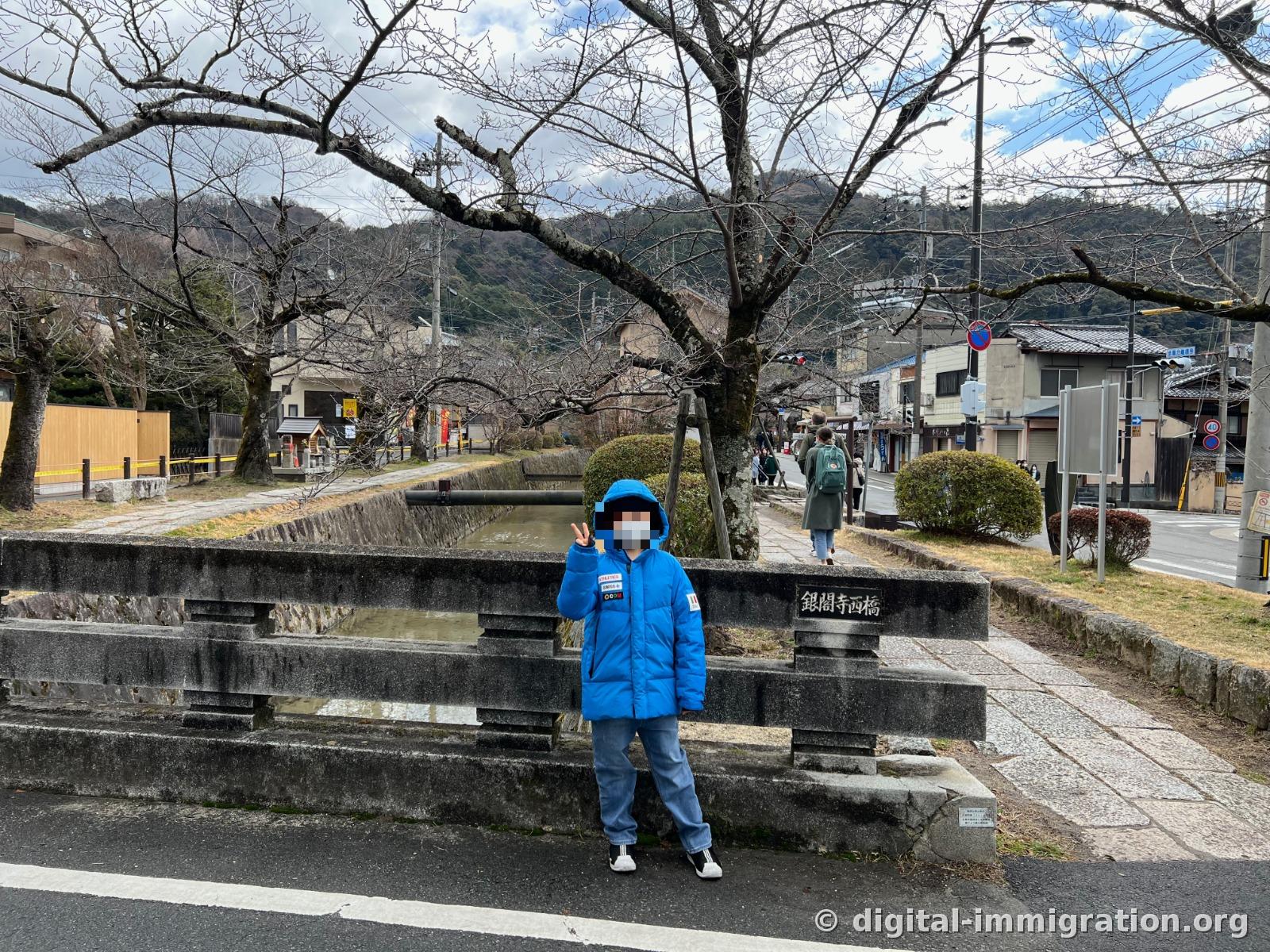
As soon as you get off the bus, a small stone bridge crosses the canal. The railing is engraved with 銀閣寺西橋 (Ginkakuji Nishi Bridge), so I confirmed the name as I crossed. Late February meant the cherry trees on both sides of the canal were completely bare. Branches without leaves or flowers cut across the sky, the canal water flowed shallowly, and behind us the Higashiyama ridge sat in ash-gray tones. Someone who came only after seeing photos of cherry blossom season might be disappointed, but I preferred the Philosopher's Path in this season. There were so few people that no one rushed me while I took photos on the bridge.
After crossing the bridge, the path narrows and becomes a shopping arcade. The asphalt slope continues climbing gently, with old wooden houses on the left and shops on the right. When we passed through, Kyoto Tsukemono Kommatsu (京漬物 小松) had its shop door open. Pickled vegetables in wooden barrels had price tags of ¥500 and ¥600, and a customer was actually bending down in front of one of the barrels choosing items. Next to it were flags for 'Nama Yatsuhashi' (生八ッ橋), 'Onigiri' (おにぎり), and curiously, a blue BOSS coffee vending machine and a red Coca-Cola vending machine.
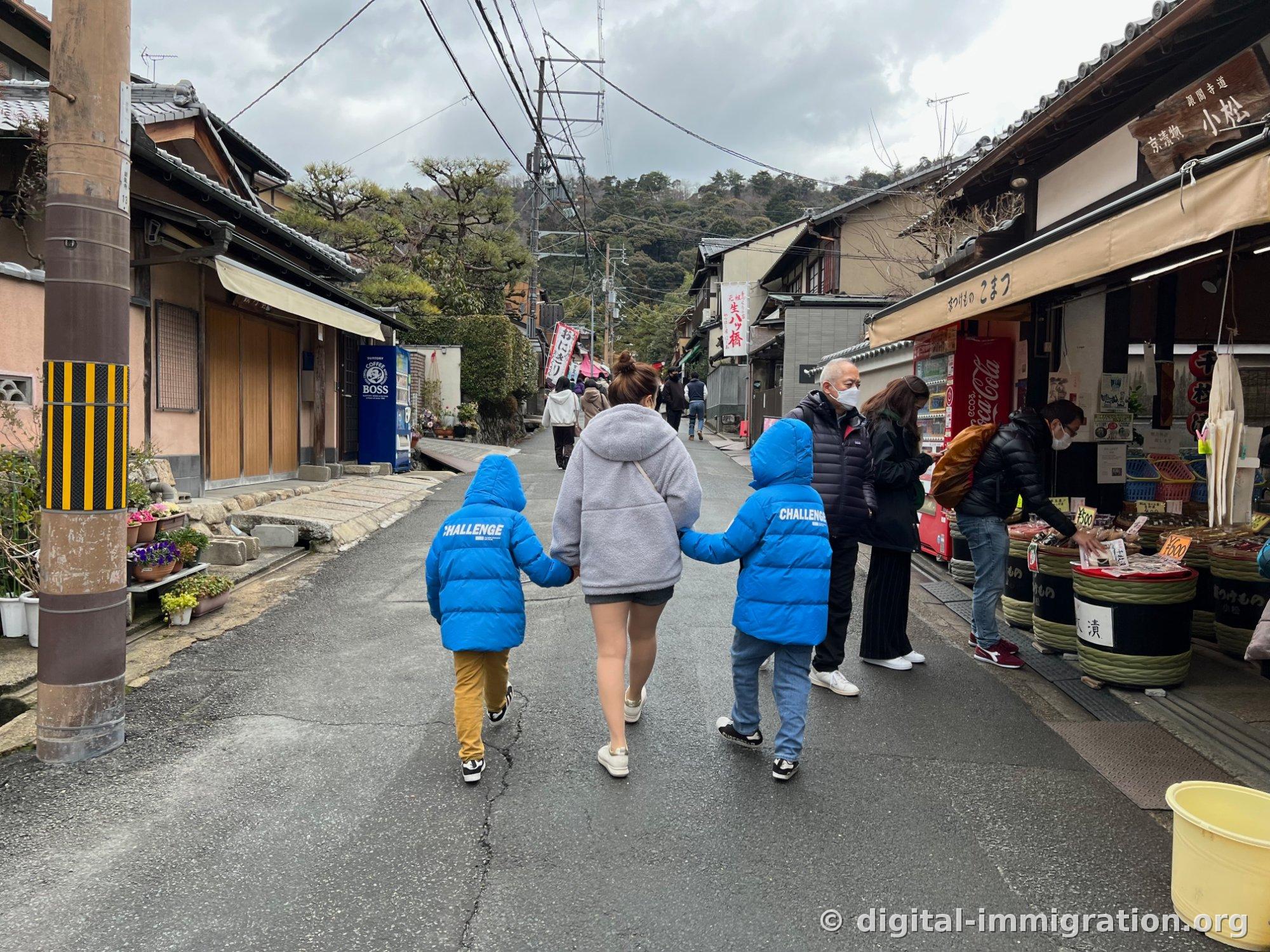
This uphill section is more breathless than it appears. Though gentle-looking, it keeps climbing steadily. I'd recommend taking a rest here if traveling with a stroller or someone with knee problems. Several shops offer samples of pickled vegetables, which is nice for standing and having a bite while taking a sip of water.
Before the Main Gate, a Stone Monument Engraved with 慈照寺
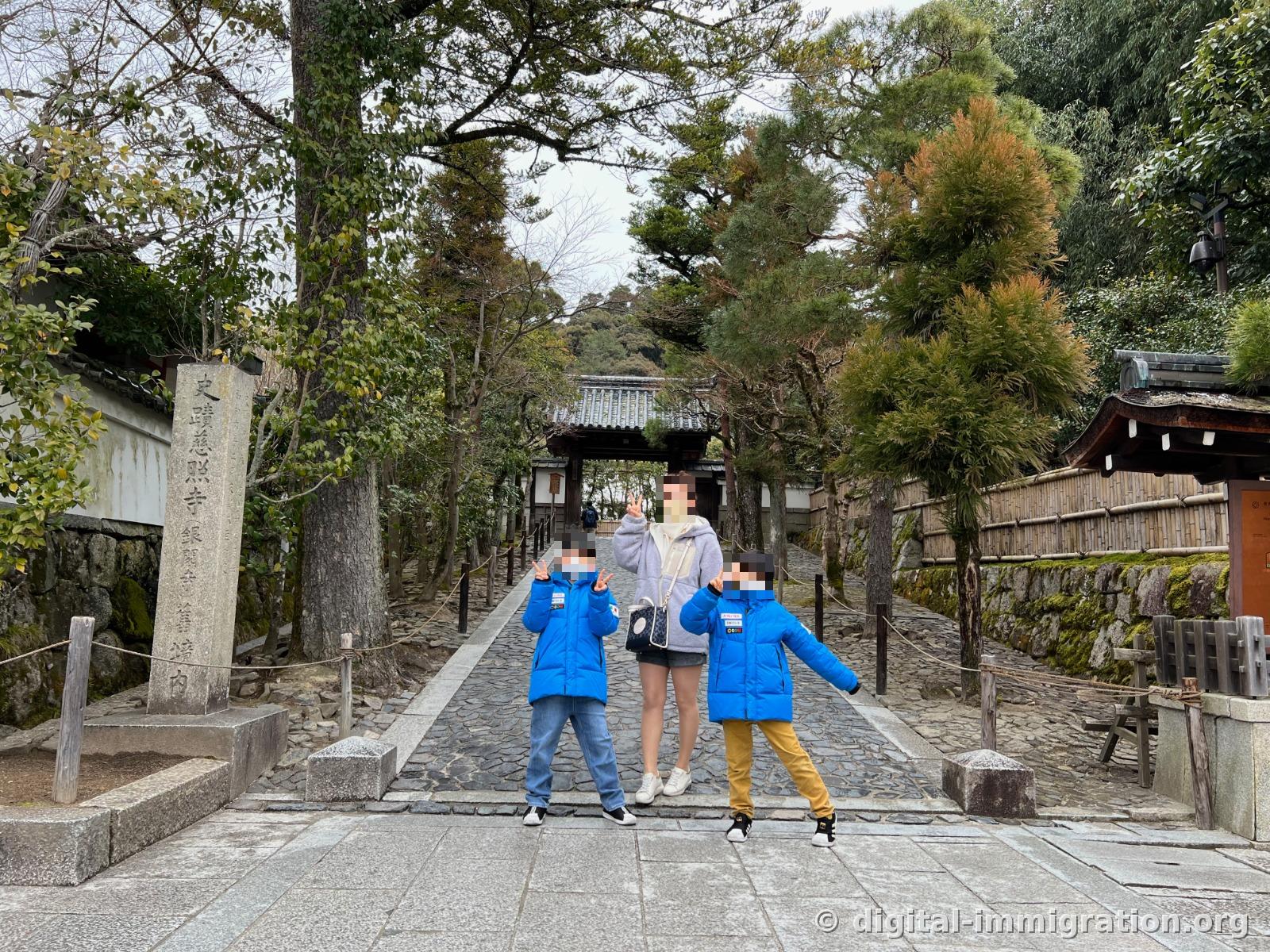
Once the shopping arcade ends, it suddenly becomes quiet. A large stone monument stands on the left engraved vertically with Historic Site Jisho-ji (Ginkaku-ji) Former Temple Grounds (史蹟 慈照寺(銀閣寺) 舊境内). This was where I first learned that the official name of Ginkaku-ji is Jisho-ji (慈照寺). Beyond it, a gravel-paved pilgrimage path extends straight to the main gate, with bamboo fences and moss-covered stone walls on both sides. When you take a photo from here, the roof tiles of the main gate fit perfectly in the background, so everyone stops walking.
Beyond the main gate lies the famous Ginkakuji-gaki (銀閣寺垣) hedge. Tall hedges and bamboo fences taller than a person create a narrow passage where you can barely see the sky. You must pass through this section to buy your ticket. The moment you emerge from the narrow path, the view opens dramatically—the intentional design is obvious, but the effect works regardless.
The Sand Garden and Moon-Viewing Platform — What Catches Your Eye Before the Pavilion
Right after entering, the first thing you encounter isn't a building but sand. The white sand raked into wave patterns—the Ginshadan (Silver Sand Garden) (銀沙灘)—and beside it, sand piled into a cone shape: the Kōgetsu-dai (Moon-Viewing Platform) (向月台). In photos it looked small, but in person it's about chest-height for an adult. The surface was packed smooth like concrete, and I wondered how they maintained this shape. I wanted to ask what happens on rainy days, but there was no one to ask.
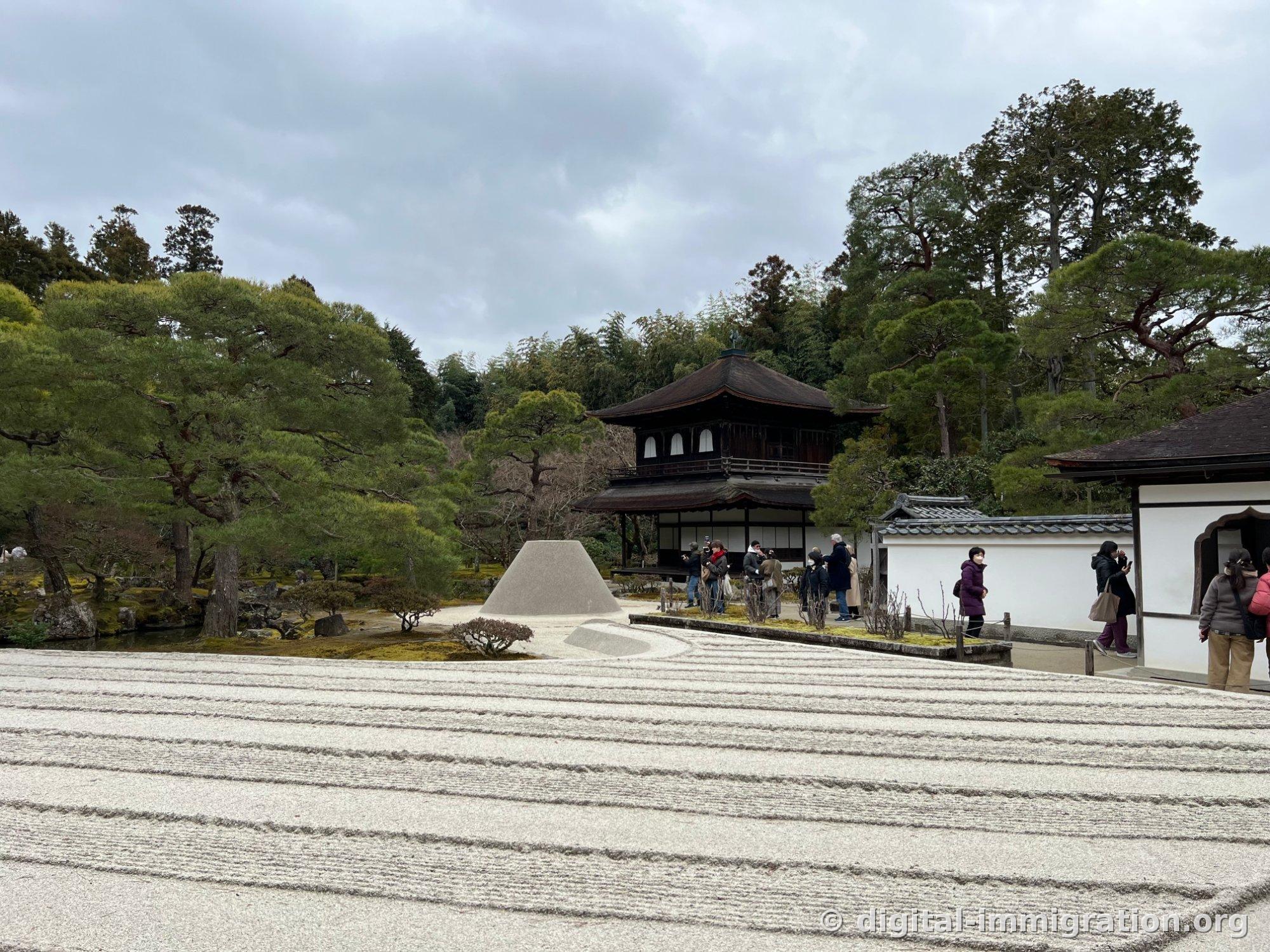
Following the path beside the sand, you reach the Kanon Hall—what people commonly call the 'Silver Pavilion'. The name is Silver Pavilion, but it's not silver at all. It's just weathered black wood. It's a fact I'd heard before that it was never covered in silver leaf, but seeing it up close, the grain and patina of the wood seemed to be the entire essence of this building. A bronze phoenix stands atop the two-story eaves looking up at the sky, and the second-floor windows are arch-shaped with white paper. There's not a single detail of flashy ornamentation.
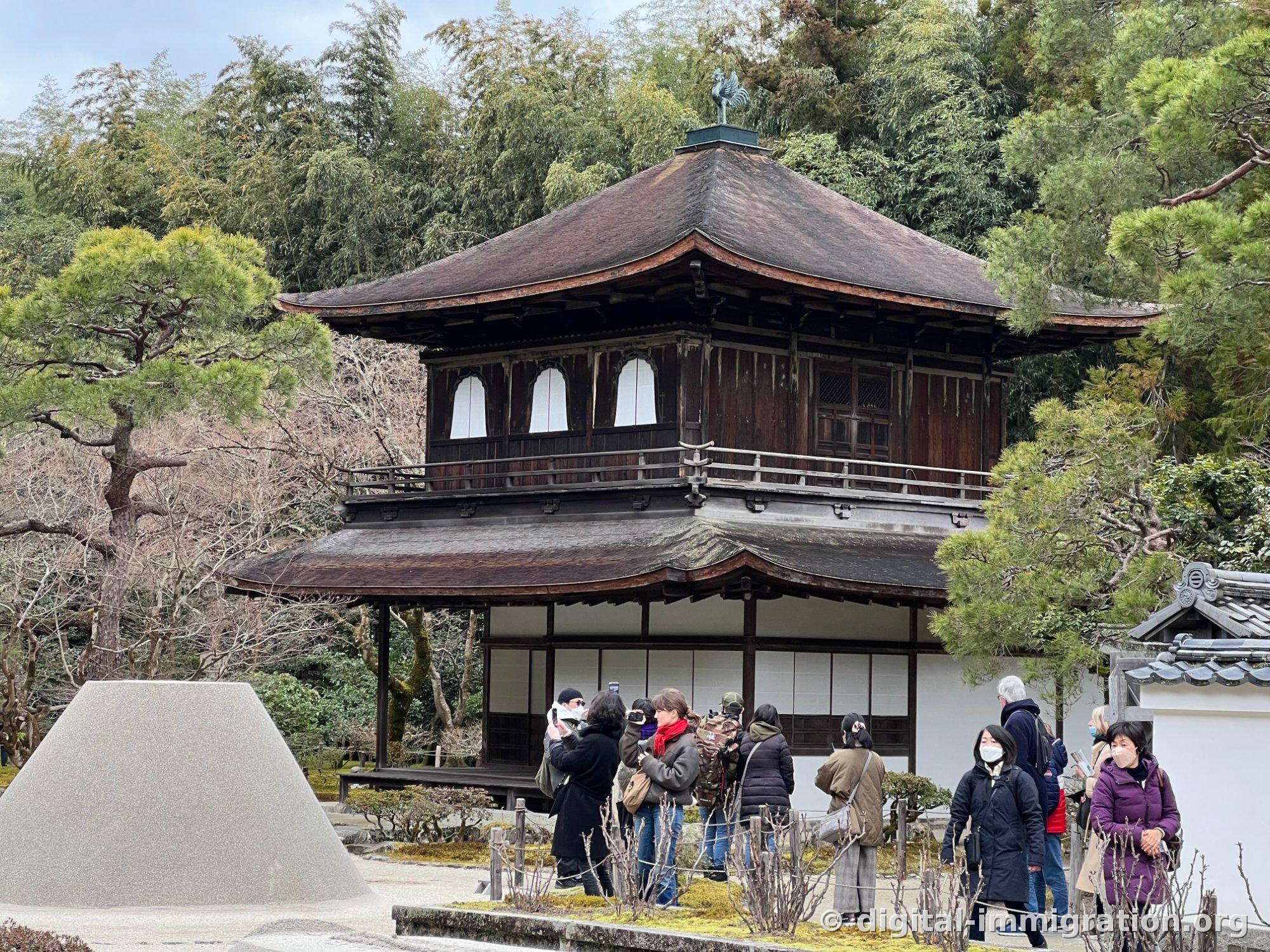
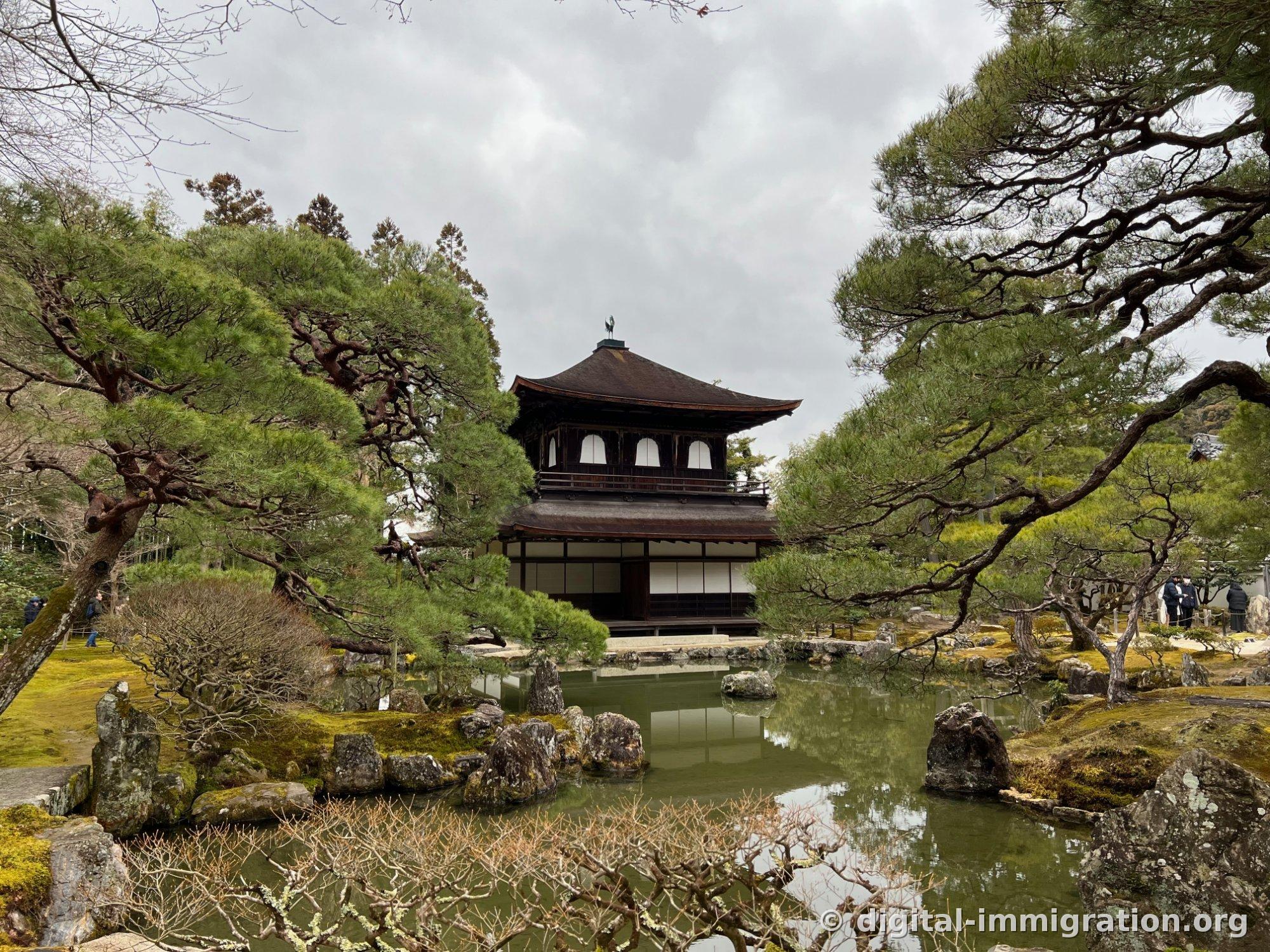
Following the path around, you reach a viewing spot across the pond where you can see the entire structure. This is where the crowds gather most. Pine branches frame the view, and the building is reflected upside-down in the surface of Kyōkoku-chi Pond (錦鏡池). Because it's the season of bare trees, the building is actually less obscured by branches.
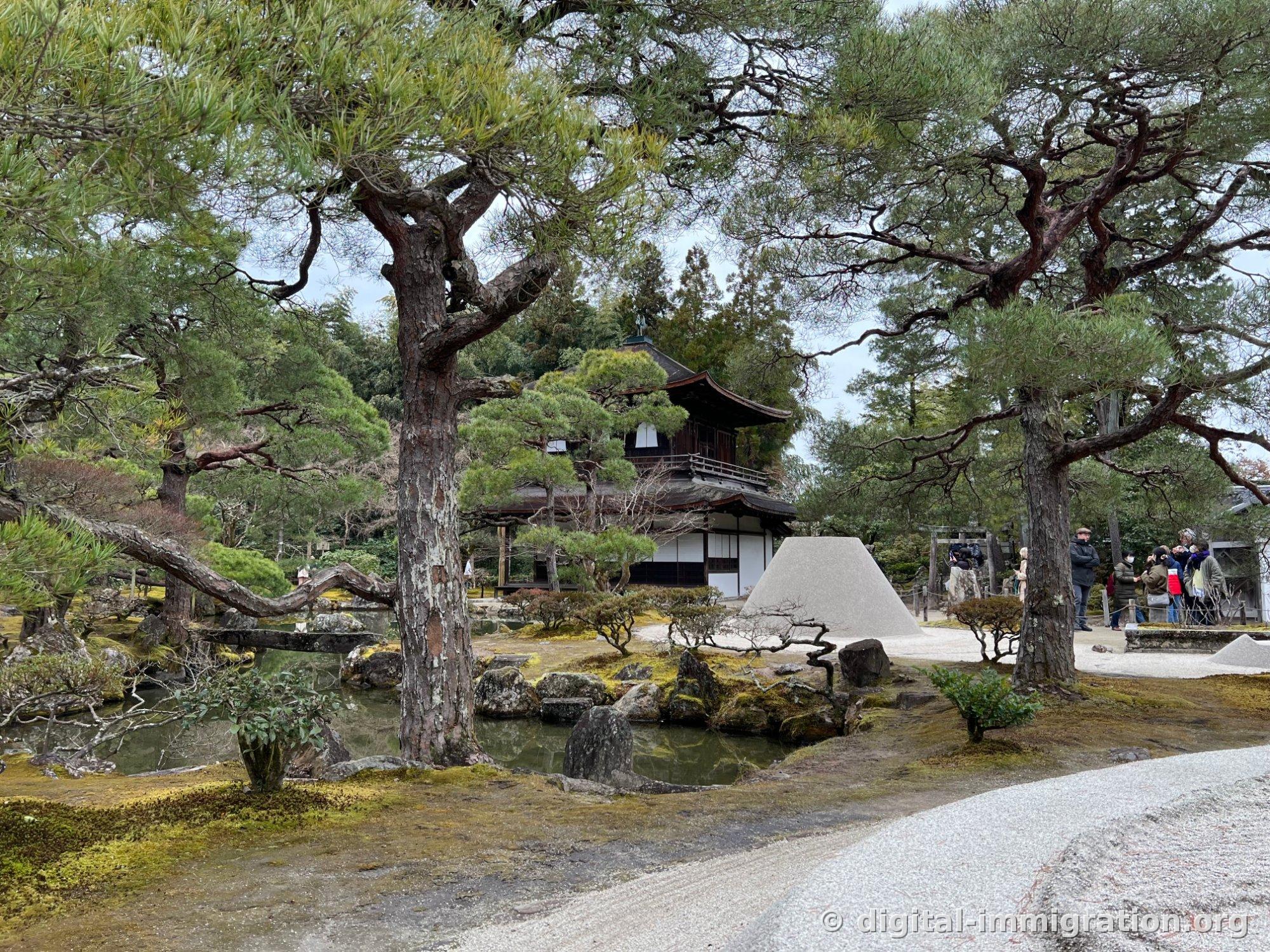
The same building looks different when viewed from a slight distance through the pine trees. There's a spot where the moss-covered ground, half-submerged rocks, and the white Moon-Viewing Platform behind all fit into a single frame. That's when it becomes clear that the entire garden is a unified design.
The Bamboo Bridge and the Hillside Trail — It's a Mistake to Turn Back Here
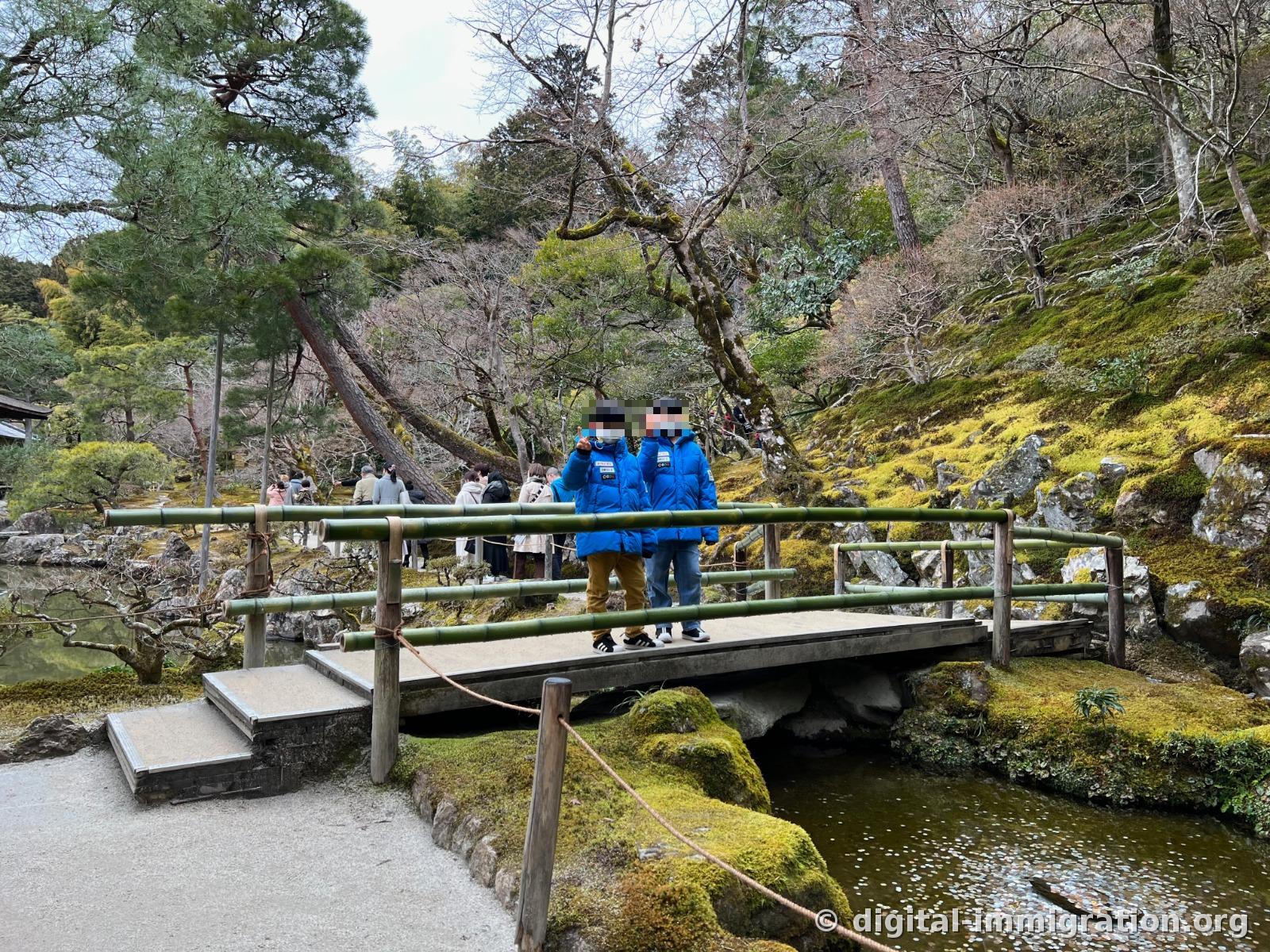
Beyond the pond, a low bridge with railings made of woven bamboo appears. Water flows below an embankment thickly covered in moss, and the deck width is just enough for two people to pass. The children insisted on stopping here for photos, so we stood there for quite a while.
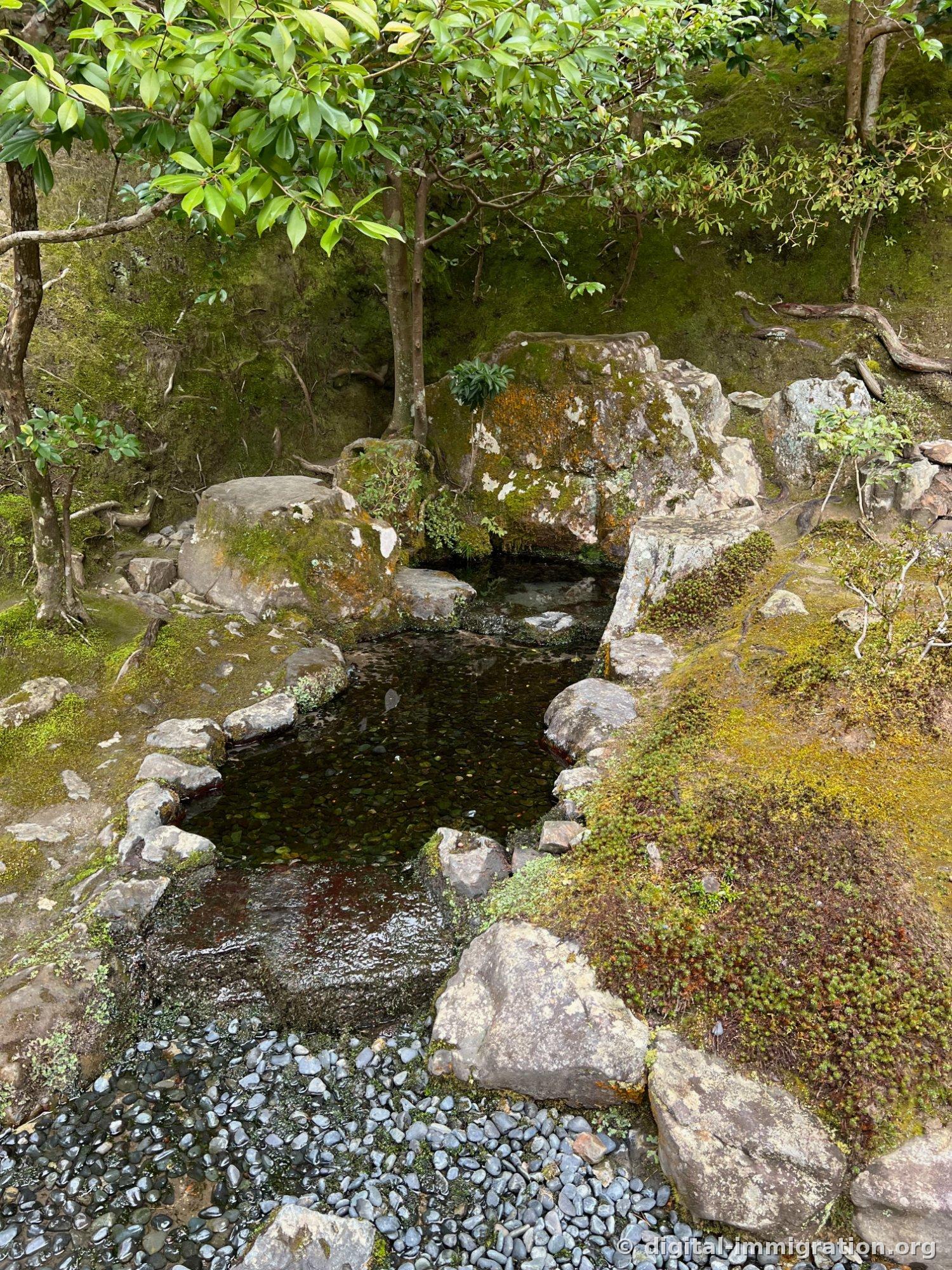
Past the bridge, you reach what's called Ocha-no-i (お茶の井), a spring. A small pool collects water between rocks, with fallen leaves settled at the bottom. According to tradition, this is where Ashikaga Yoshimasa drew water for making tea. Without signage you'd mistake it for just a puddle, so I recommend checking the marker before passing. The moss on the surrounding rocks was so deep in color that it was hard to tell the season from photos.
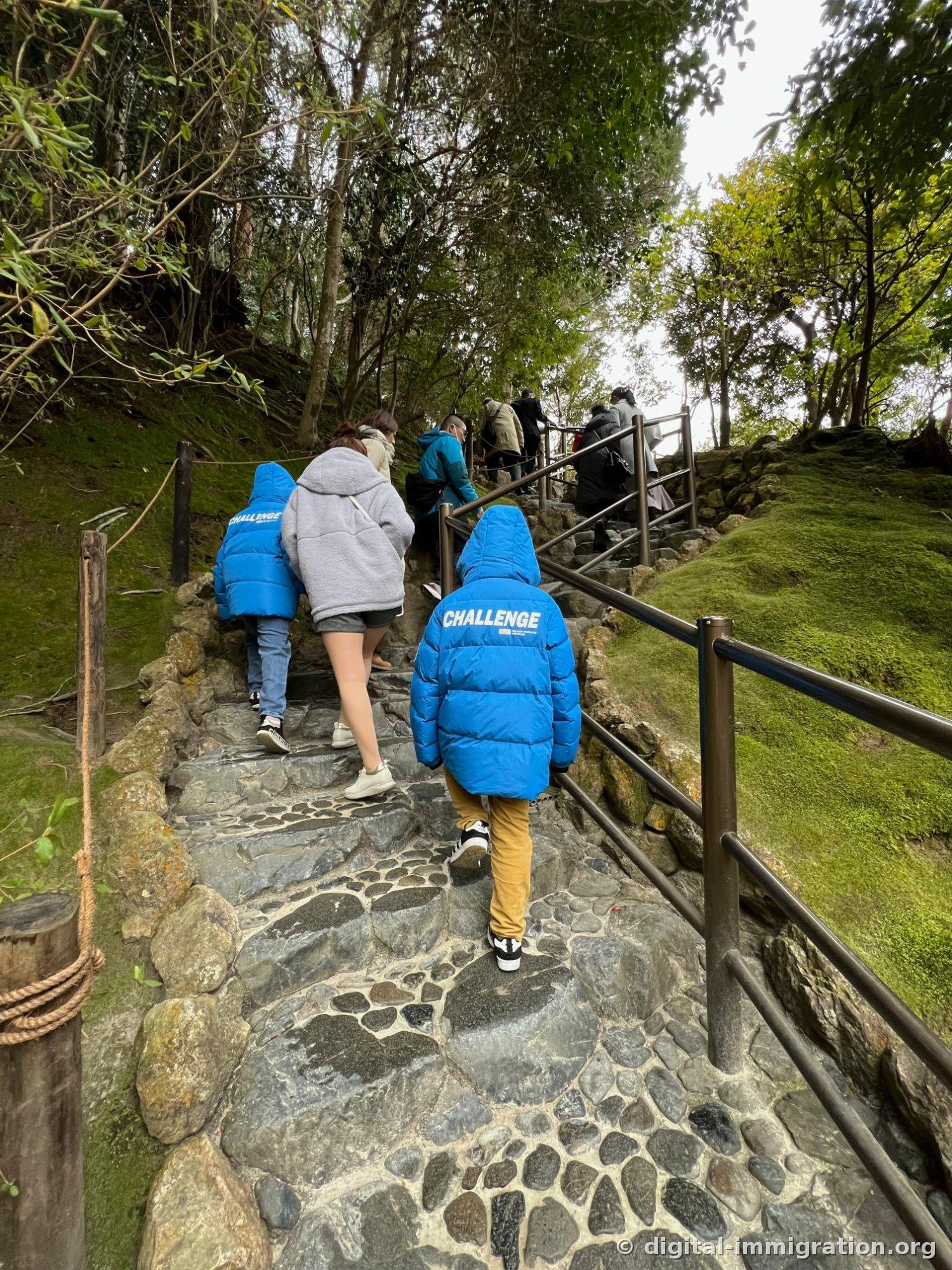
From here, stone steps climb into the back hillside. This section is the hidden main event of the temple. Made from natural stones, each step has different dimensions and the surfaces are slippery from moisture. You have to line up behind others and climb together, making it hard to stop midway. Shoes with heels are definitely something to avoid. Our children led the way, practically running up, while I followed behind holding the railing.
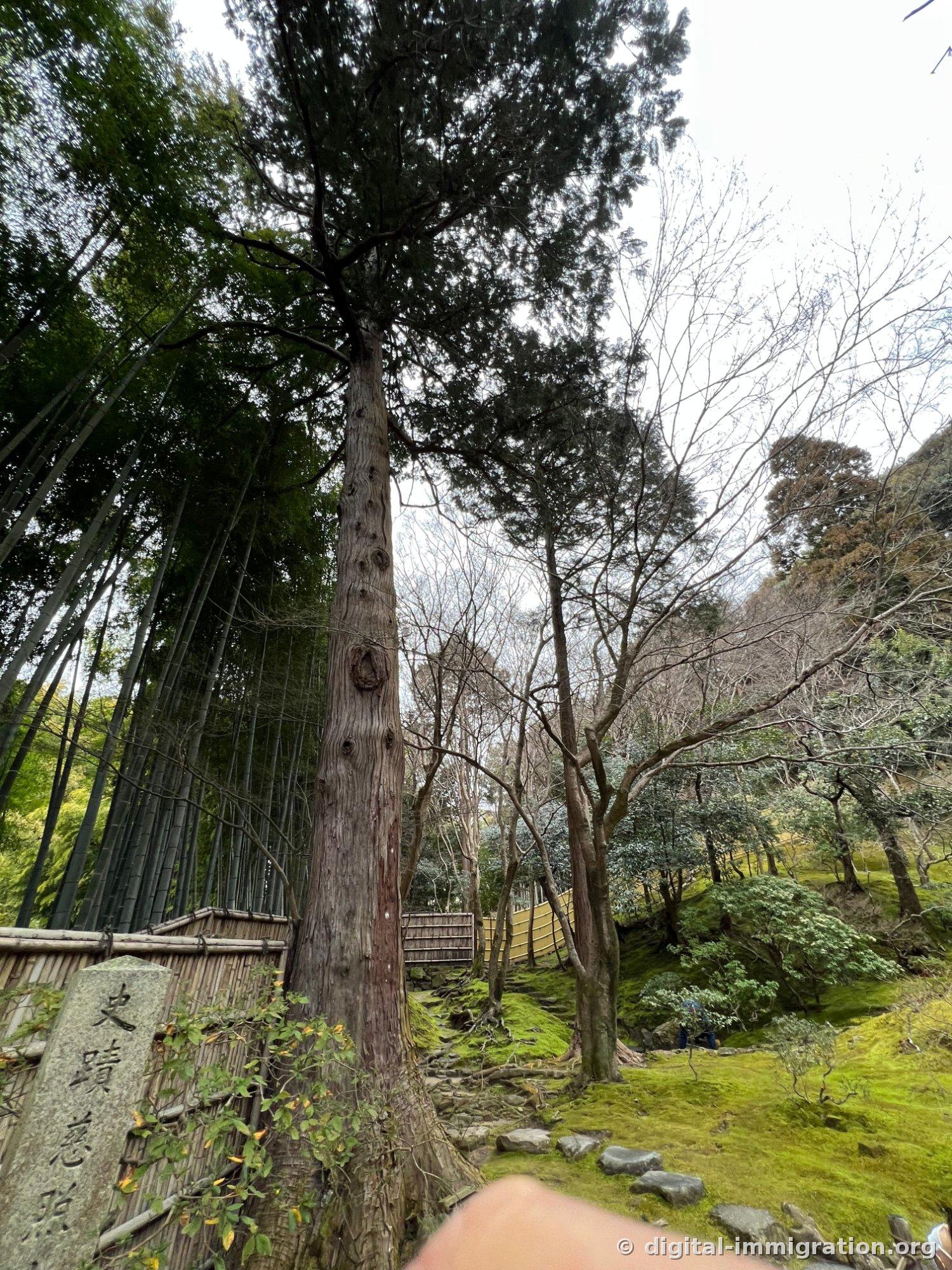
Climbing partway up, I lifted my head once. On the left is a bamboo grove, in the center stands a single tall cryptomeria tree, and below spreads a yellow-green moss field. Even the stone monument below is engraved with 'Historic Site Jisho-ji' (史蹟 慈照寺). Unlike the neat garden in the temple grounds, here the mountain is just a mountain. This contrast makes the hard climb worthwhile.
From the viewpoint at the summit, you can see the Kanon Hall roof, the sand garden, and the western part of Kyoto city all at once. The descent path curves around the opposite side and connects back toward the garden. Since the entire tour route is one-way, you can't go back, so you have to see everything as you go.
How to Get There and What Actually Helped
- By bus: From Kyoto Station or the Gion area, take the Kyoto Bus and get off at 'Ginkakuji-michi' (銀閣寺道) or 'Ginkakuji-mae' (銀閣寺前). If you get off at Ginkakuji-michi, cross the west bridge and walk up through the shopping arcade for 5-7 minutes. The path itself is worth seeing, so I deliberately got off at Ginkakuji-michi.
- Combined with the Philosopher's Path: The area around Ginkaku-ji's west bridge is the northern end of the Philosopher's Path. If you walk north along the canal from the Nanzen-ji direction, you naturally arrive at the main gate of Ginkaku-ji. Alternatively, you can see Ginkaku-ji first and walk south—it's the same route.
- Shoes: The back hillside stone steps are wet and slippery. Sneakers with traction are recommended.
- Route flow: One-way only. Sand garden → Kanon Hall → Bamboo bridge → Ocha-no-i spring → Back hill → Descent. You can't go back.
- Crowds: People gather mainly at two spots: the front of the Kanon Hall and across the pond. Early morning is better.
- Admission fee and hours: These change seasonally, so check the official information before visiting.
I spent less than an hour inside the temple. But now flipping through the photos, my eyes linger longest on the canal under bare cherry trees and the uphill path lined with pickle barrels. Not skipping those 5 minutes on foot by taking a taxi turned out to be the best decision of this visit.
Read next
- From Akihabara's Chuo-dori to the Kanda River: A Record of Tokyo's Electronics District Revisited Multiple Times
Tokyo's Akihabara is a neighborhood where it's hard to say you've seen everything in a single visit. I've come multiple times across different seasons, and each time the signs chan…
Tokyo · Akihabara - Buying a Single ¥300 Year-End Jumbo Lottery Ticket at Nishi-Ginza Chance Center in Tokyo
Exit from the Hibiya exit of Tokyo's Shimbashi Station, walk toward the elevated highway for about three minutes, and suddenly you'll see a line of people stretching along the side…
Tokyo · Nishi-Ginza Chance Center - Ueno Ameyoko, the real magic starts after sunset — an evening walk from the Okachimachi Gate to Ueno Station
Every time I come to Tokyo, my feet find their way to Ueno Ameyoko (アメ横) without fail. This time I entered from the Okachimachi side and worked my way toward Ueno Station. I've met…
Tokyo · Ameya Yokocho Market