Filling Your Belly Without Fish at Kyoto Kura Sushi — Plates Piled High with Corn Mayo, Tuna Mayo, and Char Siu
I walked into Kura Sushi on the residential side across the Katsura River in western Kyoto on a weekday afternoon at 2:30 PM. Not in the touristy Gion or Nishiki Market area, but a…
Kyoto · Kurashiki
I walked into Kura Sushi on the residential side across the Katsura River in western Kyoto on a weekday afternoon at 2:30 PM. Not in the touristy Gion or Nishiki Market area, but a roadside location where locals drive in. One person in our group doesn't eat sashimi at all. Every time we came to Japan, choosing a restaurant was difficult because of this person, but this time I just pushed for a conveyor belt sushi place anyway. As it turned out, that person ate the most.
Even Without Eating Fish, Plates Stack Up
Flipping through the Kura Sushi menu on a tablet, nearly half of it isn't fish. Fried items, mayo rolls, meat sushi, udon, ramen, curry, desserts—they're all just one line away. You won't see someone who can't eat sashimi just nibbling on rice for lack of options here.
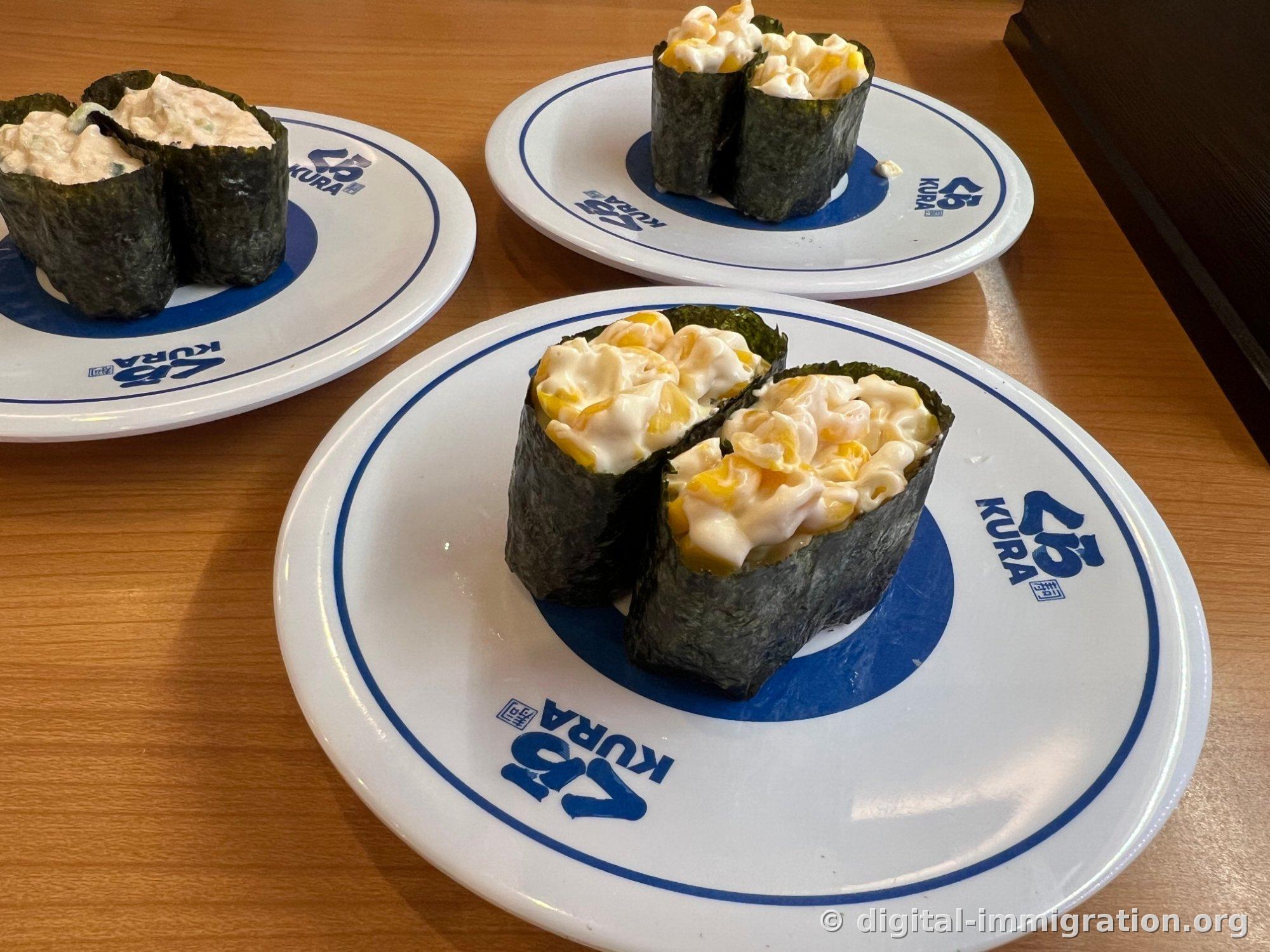
The first thing we ordered was the corn mayo roll. Corn mixed with mayo and wrapped in nori. When it came out, our group laughed. Is this even sushi?, they joked. After one bite, we ordered two more plates. The corn kernels are crisp and not mushy, and the mayo is that distinctly Japanese kind with a slightly tangy edge, so it's not overly rich. You need to eat it right away before the nori gets soggy, so you should grab them as soon as they arrive. The plate in the upper left of the photo is tuna mayo, and the other two are corn mayo.
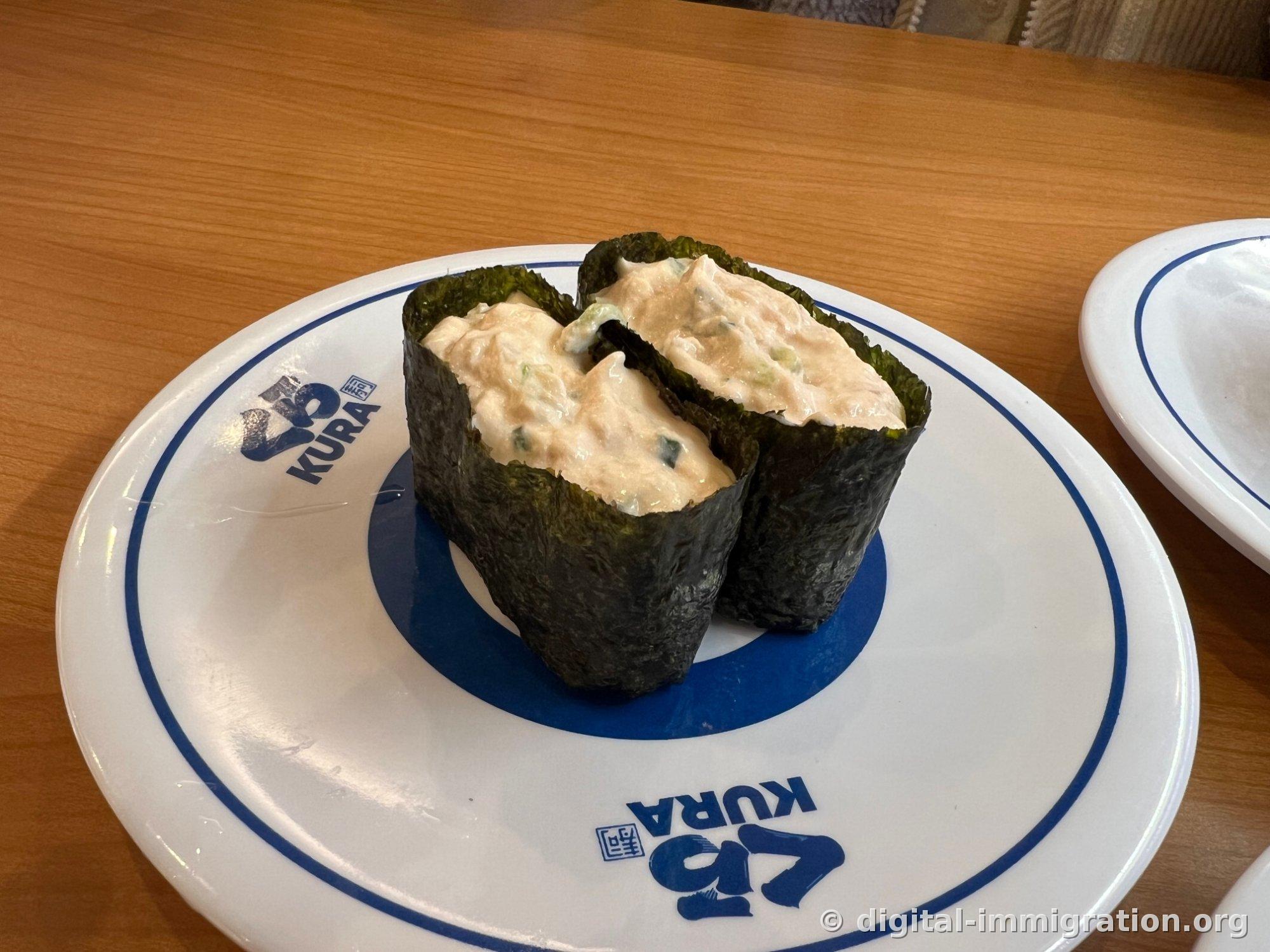
We ordered an extra plate of tuna mayo separately. It's made with canned tuna mixed with mayo and diced cucumber, not raw tuna, so even people who don't eat sashimi can grab it without hesitation. In fact, our group said "This just tastes like tuna kimbap?" and cleared both pieces. The cucumber cuts through the richness of the mayo with its crunch. The nori is thick with a satisfying chew, and the rice has a subtle sweetness to it.
The Real Winner Was the Meat Sushi
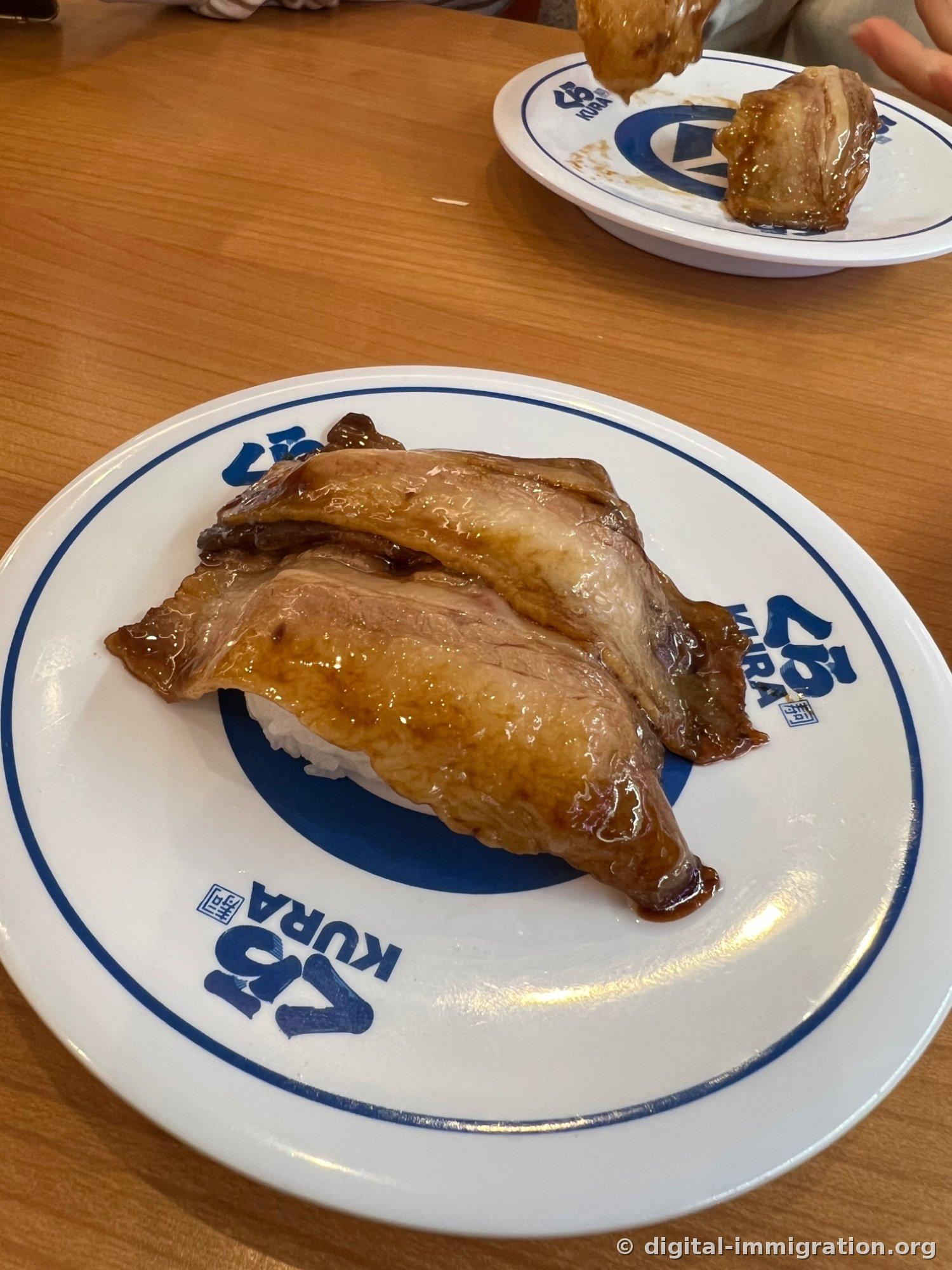
When the char siu sushi arrived, the mood at the table changed. Two large slices of pork covered it so much the rice was barely visible, glazed with a shiny soy-based sauce. The surface had char marks as if torched, and it gave off a sweet aroma from those charred bits. It's from the belly with thin layers of fat, so the oil seeps out as you chew, and the rice soaks it up beautifully. The person who doesn't eat sashimi ate four plates of this on their own.
Pair it with the shrimp tempura and you completely forget you're at a sushi restaurant. The batter is thin and crispy, so it doesn't feel overly greasy. However, it gets soggy after a while, so it's better to order via tablet to get it fresh off the line.
The Presence of One Bowl of Chawanmushi
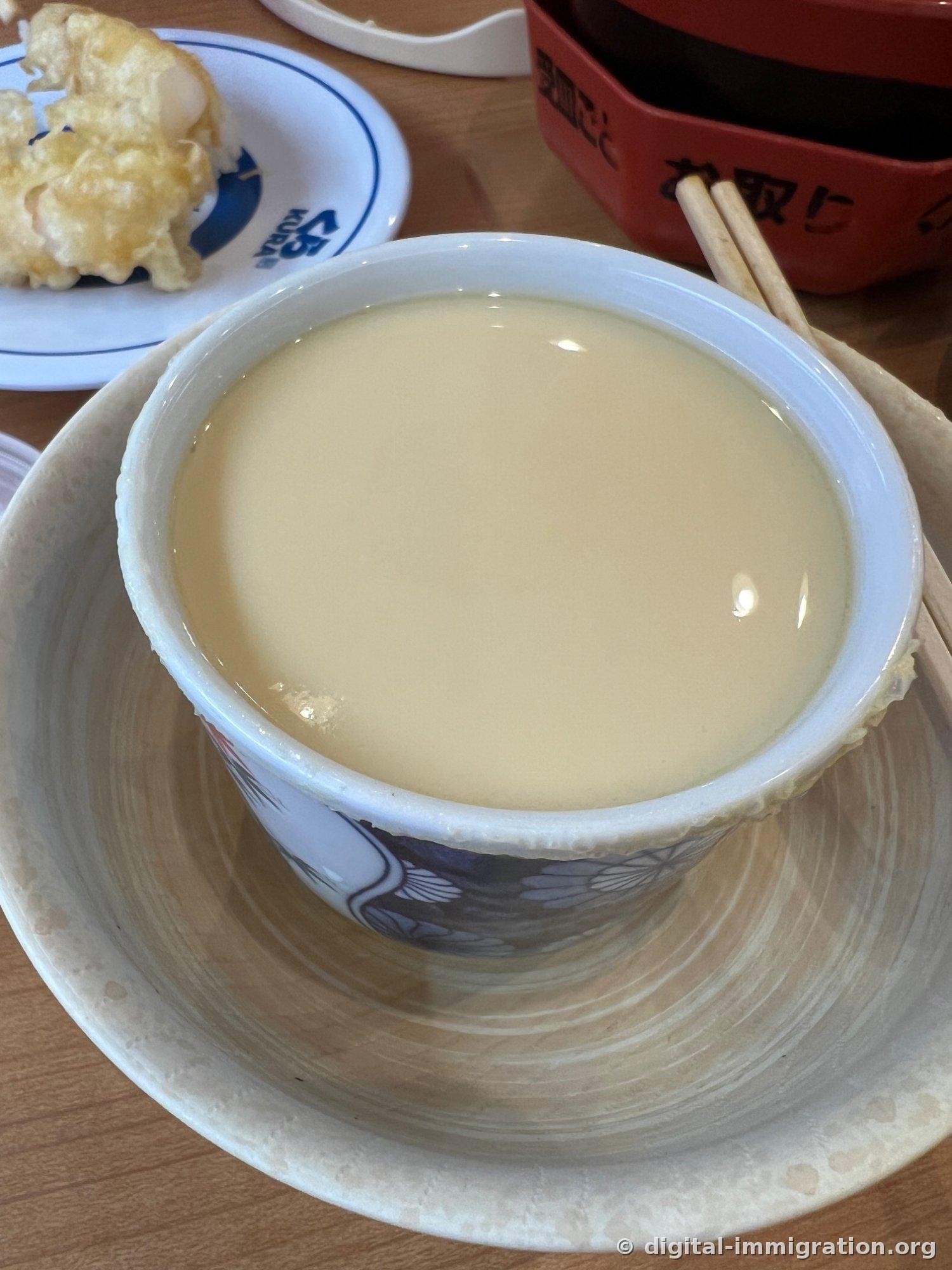
The chawanmushi we ordered when we were getting full was the quiet star of the day. When you lift the lid, steam rises, and the surface is smooth like glass. When you put a spoon in, it parts effortlessly. The dashi broth is deeply flavored and cleanses your palate after all that mayo. It's hot, so if you're in a rush you'll burn the roof of your mouth. I actually did.
Payment and Value
At Kura Sushi, standard plates are all the same low price, with only special items priced separately. When you put finished plates in the slot beside your table, they're automatically counted, and a lottery game appears on the screen every five plates. Kids want to insert plates just for that lottery. Even with over a dozen plates plus chawanmushi and tempura, the per-person cost wasn't heavy. Prices vary by location and season, so I recommend checking the menu board on site.
Taking someone who doesn't eat sashimi usually means digging through menus at every restaurant, but we didn't have to here. That's the real value of this place.
Location and How to Get There
This location isn't in central Kyoto, but in a residential area west of the Katsura River. It's slightly off the main tourist route, so there was barely any wait. It's a good spot to stop by on your way back to the city after visiting Arashiyama. You'll need to walk from the bus or train station, so it's better to check a map beforehand.
Good to Know Before You Go
- Get a ticket number at the machine by the entrance and wait. Many locations have Korean language support on the screen where you select party size and seating type (table/counter).
- Order via the tablet at your seat. Your orders are much better than what goes around the conveyor. Freshly made items come via a separate rail line directly to you.
- Dishes on the rail are covered with a transparent dome. You push it up with your hand to remove it, which can be confusing at first.
- Finished plates must go in the slot beside your table to be counted. If you just stack them, the bill won't add up correctly.
- Lunch rush (noon–1 PM) and after 6 PM have long waits. 2–4 PM is the most relaxed time.
I'll definitely go again next time I'm in Kyoto. The best thing about this place is that it doesn't matter whether you like sashimi or not.
Read next
- From Akihabara's Chuo-dori to the Kanda River: A Record of Tokyo's Electronics District Revisited Multiple Times
Tokyo's Akihabara is a neighborhood where it's hard to say you've seen everything in a single visit. I've come multiple times across different seasons, and each time the signs chan…
Tokyo · Akihabara - Buying a Single ¥300 Year-End Jumbo Lottery Ticket at Nishi-Ginza Chance Center in Tokyo
Exit from the Hibiya exit of Tokyo's Shimbashi Station, walk toward the elevated highway for about three minutes, and suddenly you'll see a line of people stretching along the side…
Tokyo · Nishi-Ginza Chance Center - Ueno Ameyoko, the real magic starts after sunset — an evening walk from the Okachimachi Gate to Ueno Station
Every time I come to Tokyo, my feet find their way to Ueno Ameyoko (アメ横) without fail. This time I entered from the Okachimachi side and worked my way toward Ueno Station. I've met…
Tokyo · Ameya Yokocho Market