Descending into Shinjuku's backstreet basement to experience genuine buckwheat noodles at Teuchi Soba Daian (手打ちそば 大庵)
Walking near Shinjuku Station in Tokyo, you'll often find buildings with an izakaya on the ground floor and several shops layered above and below it. The place I visited that day h…
Tokyo · Teuchi Soba Daian
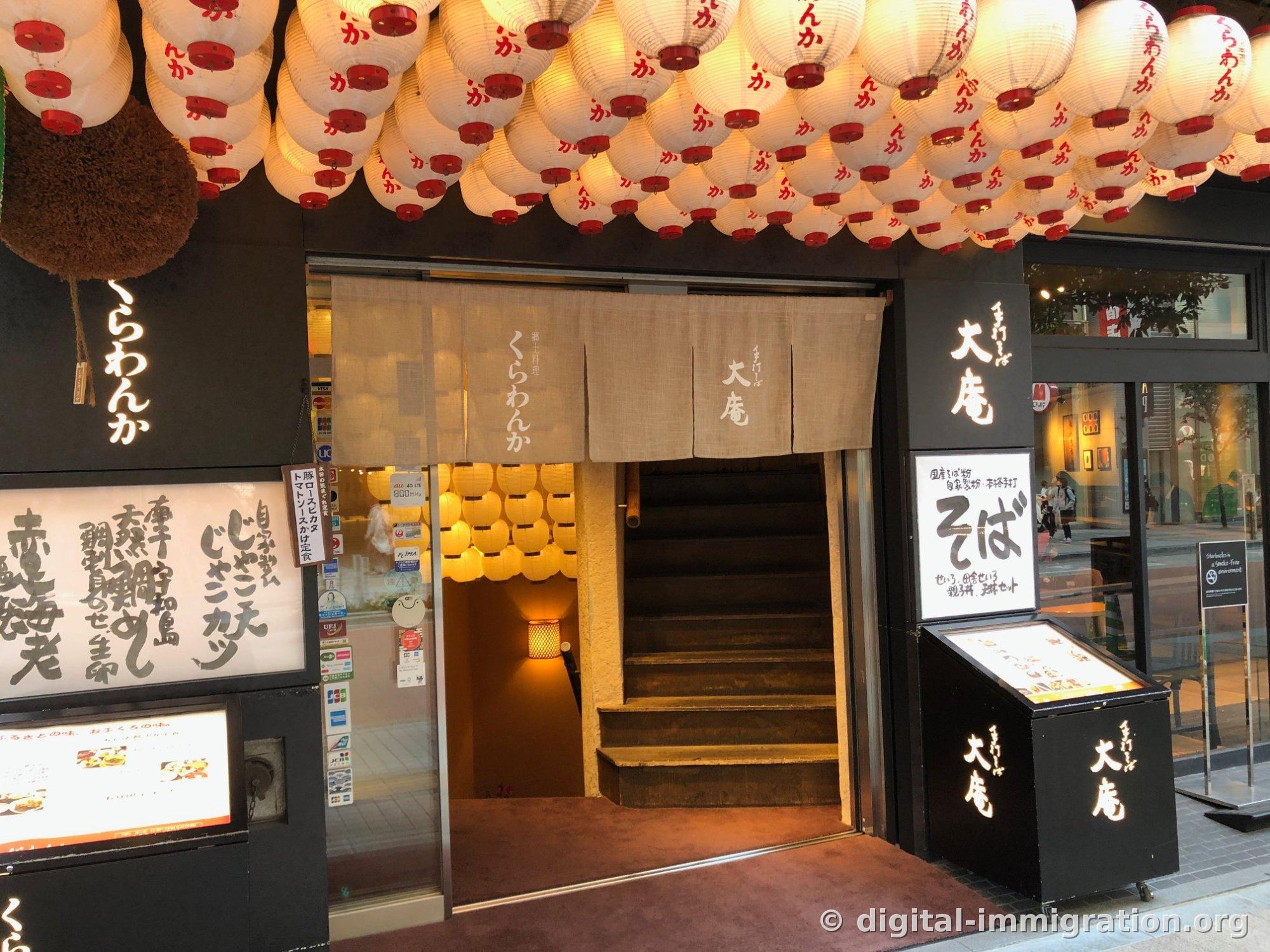
Walking near Shinjuku Station in Tokyo, you'll often find buildings with an izakaya on the ground floor and several shops layered above and below it. The place I visited that day had this same structure. What catches the eye from the street is a small local restaurant called くらわんか with red paper lanterns hanging densely, but to its right, on a black pillar, is written in white brushstrokes: 手打ちそば 大庵. If you're here for soba, you need to look for these characters. Stairs just inside the noren curtain lead down, and first-time visitors often mistake this entrance for the izakaya and pass right by.
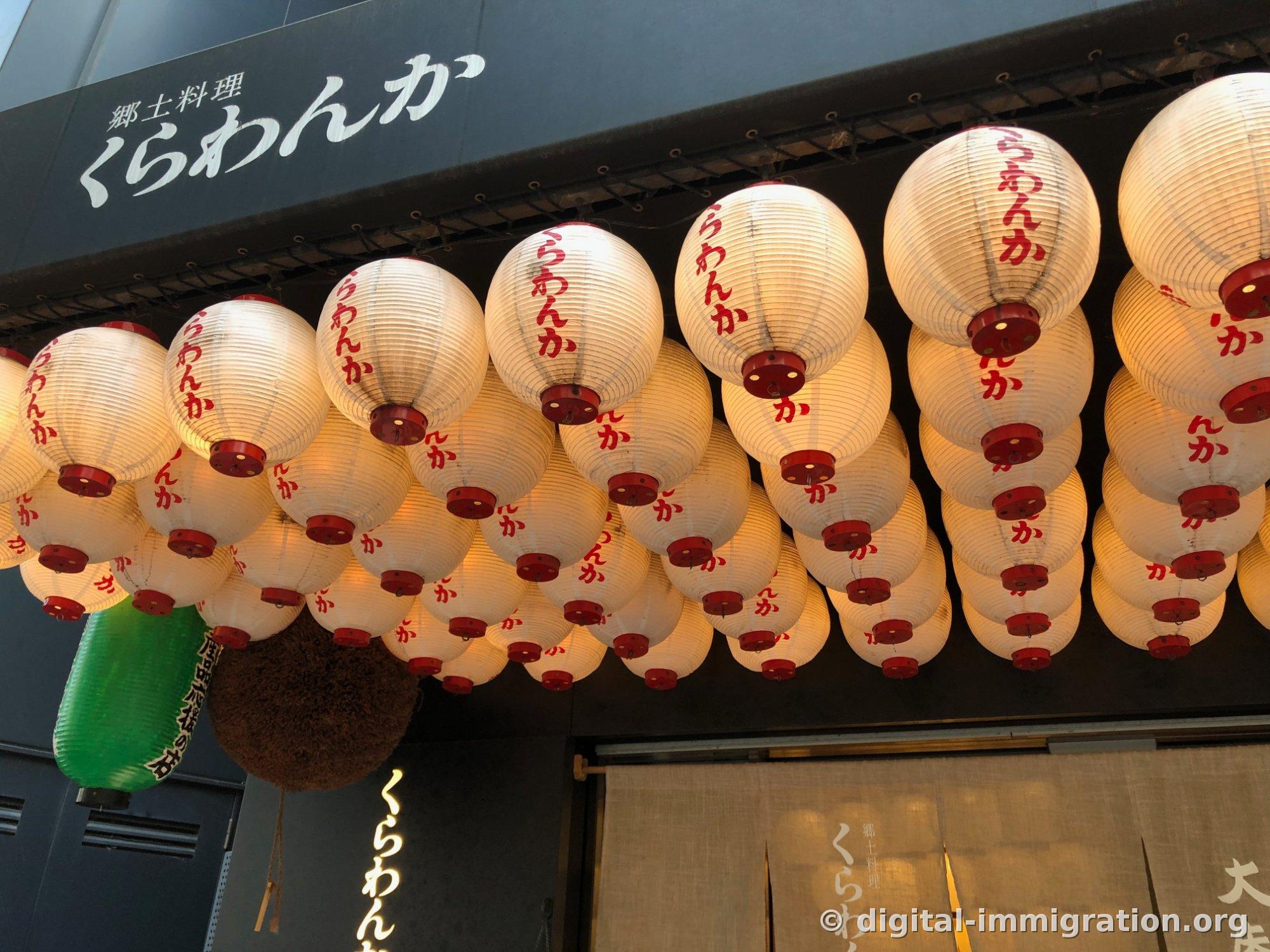
Looking up at the lanterns, all five characters read 「くらわんか」. It's before 6 PM, yet the lights are already on, casting the paper's characteristic yellowish glow onto the sidewalk. The brown clump in the lower left of the photo is a sugitama (a bundle of cedar leaves marking a sake bar). The fastest way to find this restaurant in this alley isn't to memorize the address—it's to remember this cluster of lanterns.
The sound disappears when you go down the stairs
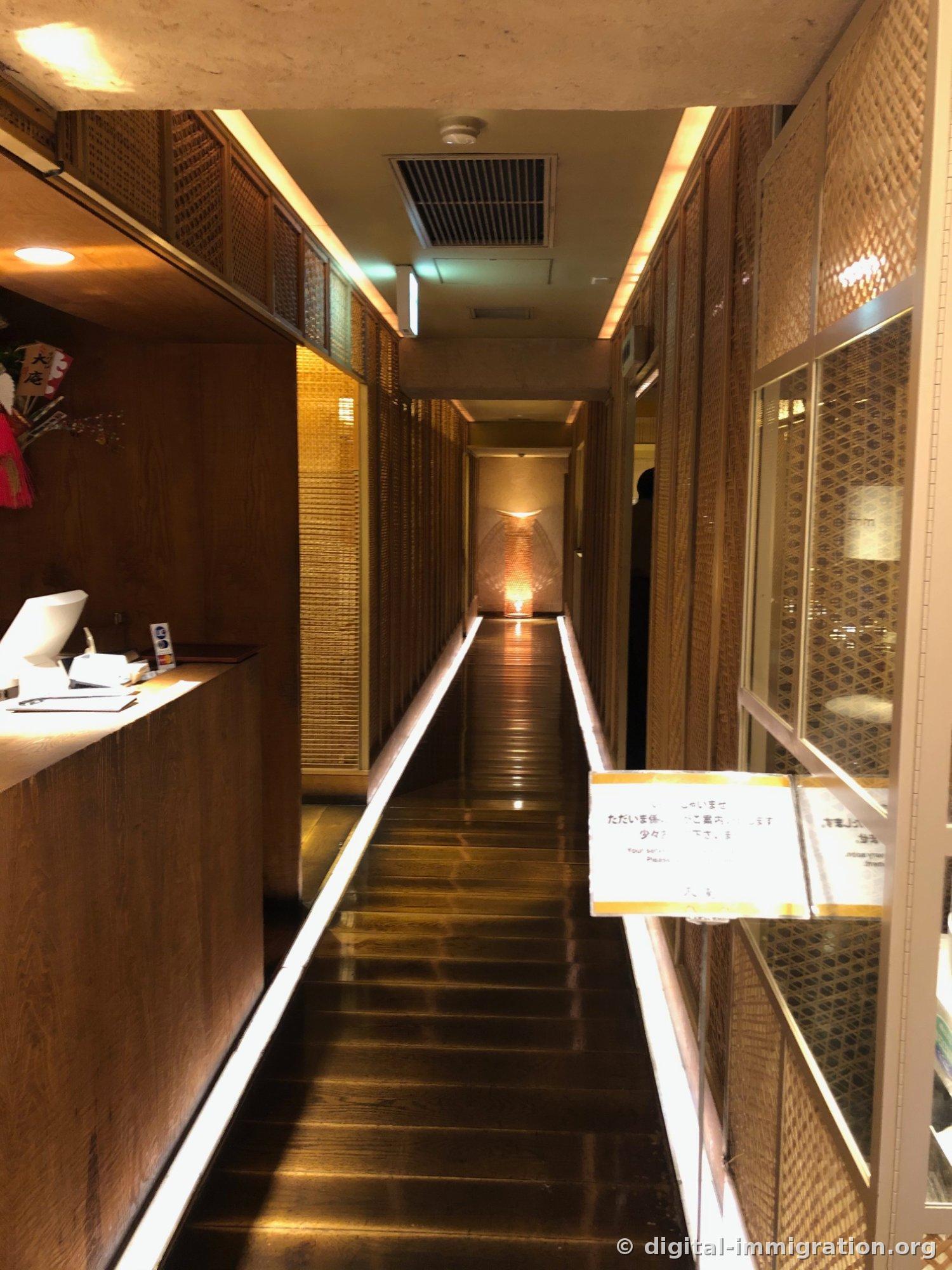
Once you reach the bottom, the atmosphere changes entirely. A darkly lacquered wooden hallway extends inward, and the walls on both sides are finished with loosely woven bamboo mat, allowing light to seep through the gaps. At the end of the corridor, a single lamp casts its reflection long across the floor, and this reflected light makes the passage seem longer than it actually is. Beside the register stands a sign reading 「Our staff will show you to your seat, please wait a moment」. Rather than finding a seat yourself, you wait here.
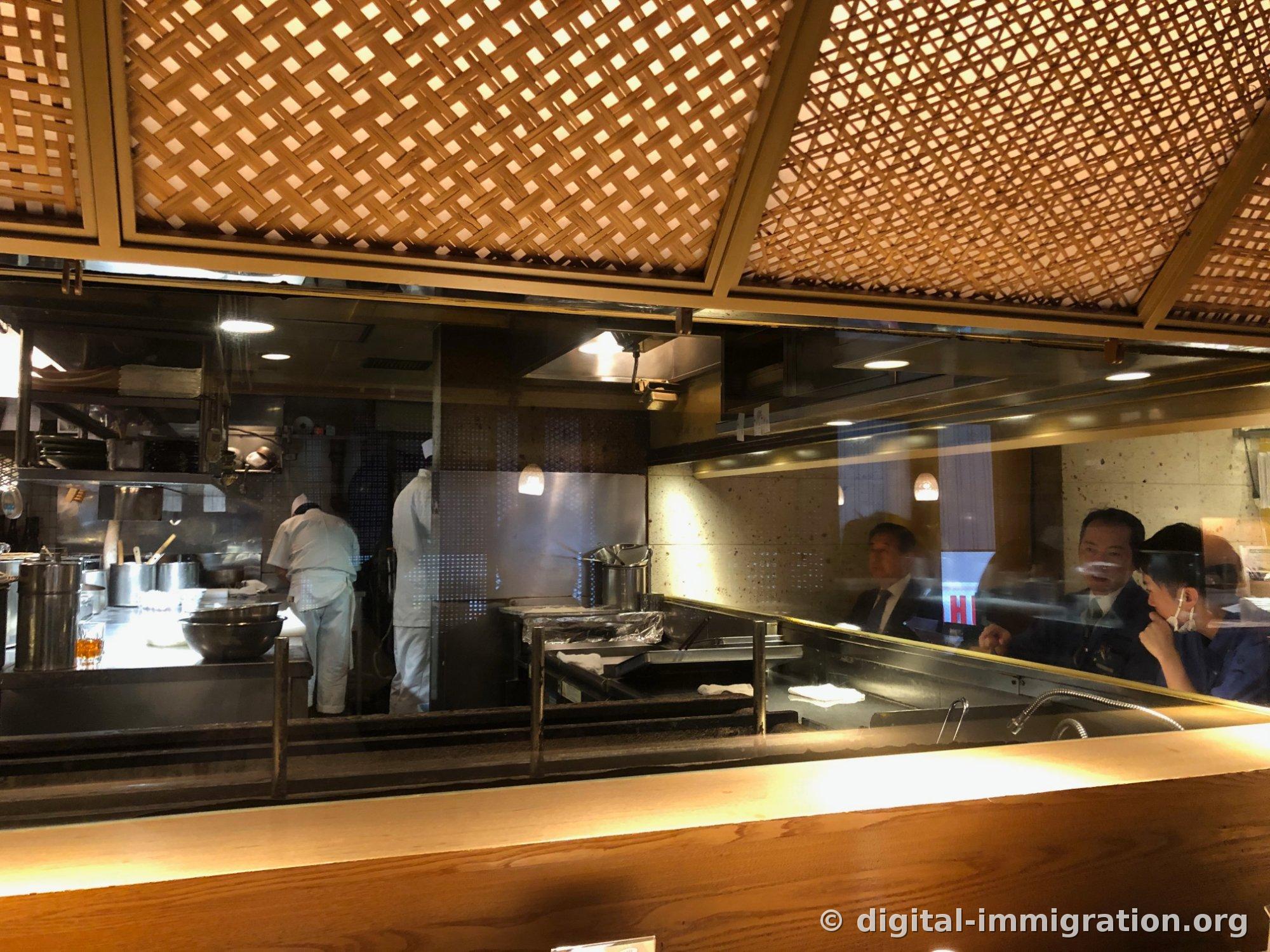
From the counter seats, you can see the kitchen straight through the glass. Two people in white chef's uniforms and white hats work with their backs to you, with stainless steel bowls and pots lined up. The ceiling here also has thick bamboo woven into it. On the glass, customers in business suits at tables behind are reflected and overlapping. Just from this reflection, you can tell this is a restaurant with a high proportion of office workers on their way home from work.
Five minutes after being seated
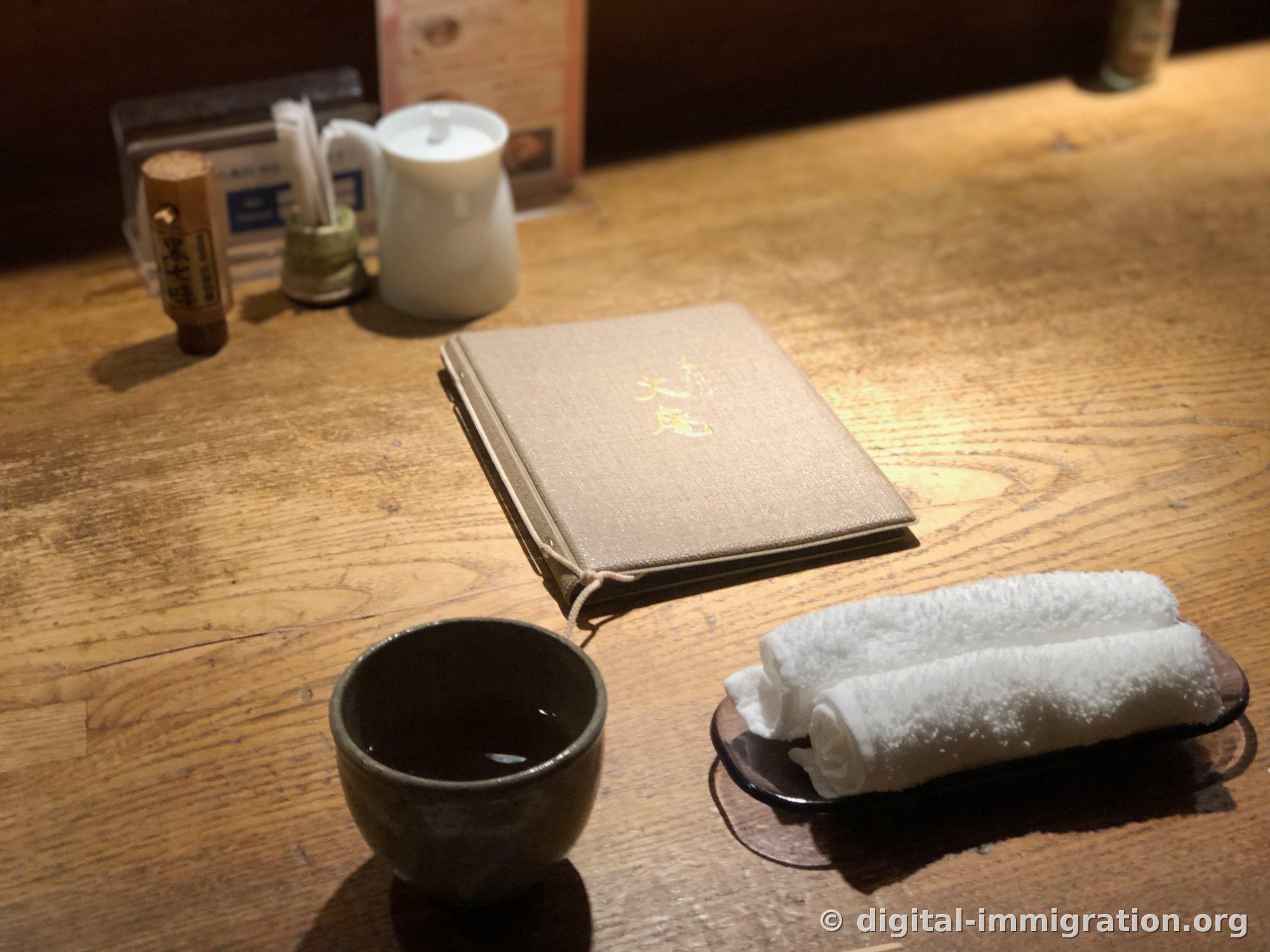
The table is made of thick wood with the grain clearly visible. As soon as you sit, a menu book engraved with 大庵 in gold lettering, a ceramic tea cup, and two hot towels on a black stand are placed in front of you. Next to them are already set out a shichimi container, toothpicks, and a white kettle for soba broth. The towels were still hot enough to steam.
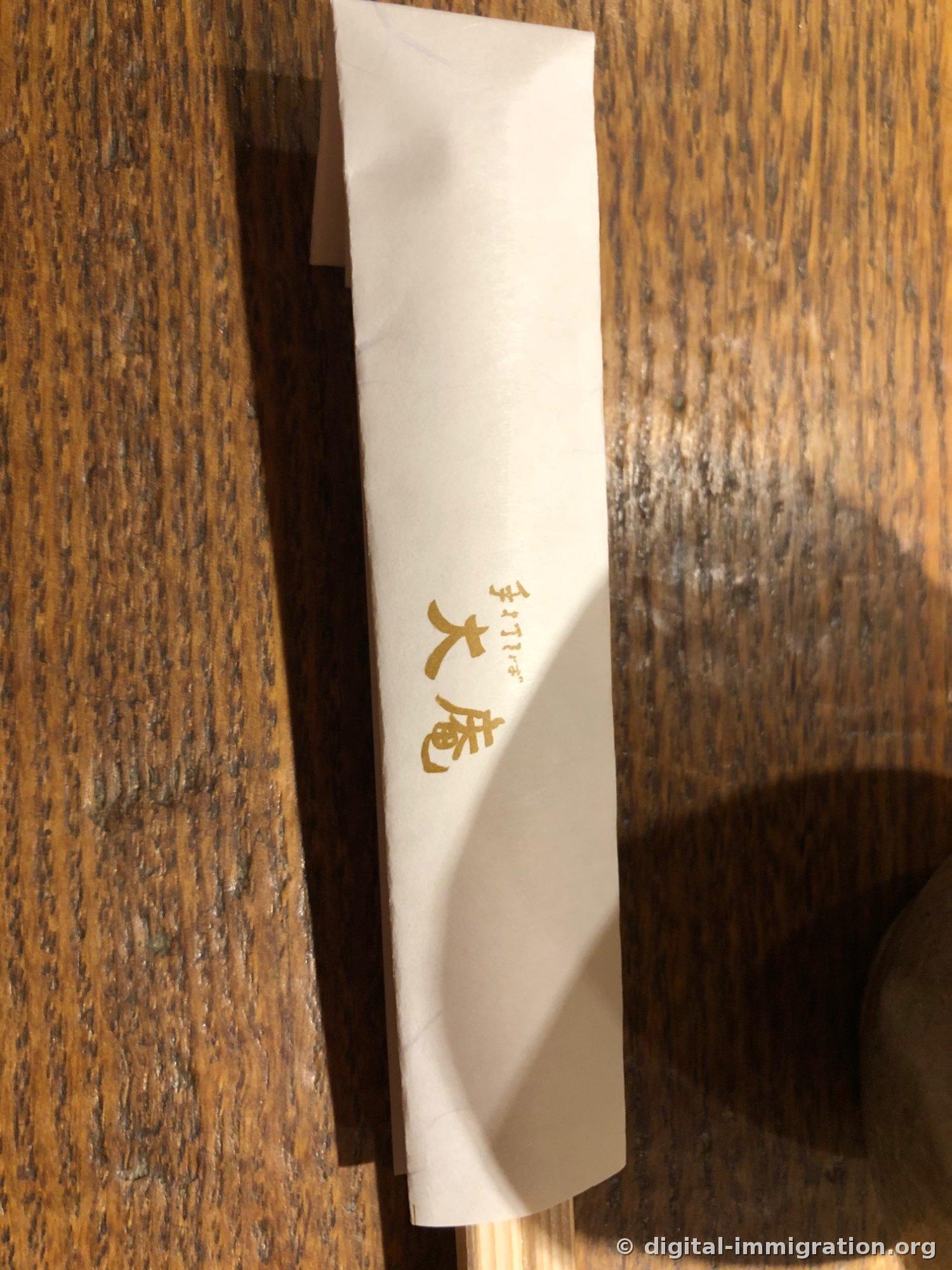
Even the chopstick wrapper has the same gold lettering. From my experience, restaurants that don't cut corners on details like this usually don't cut corners on the noodles either.
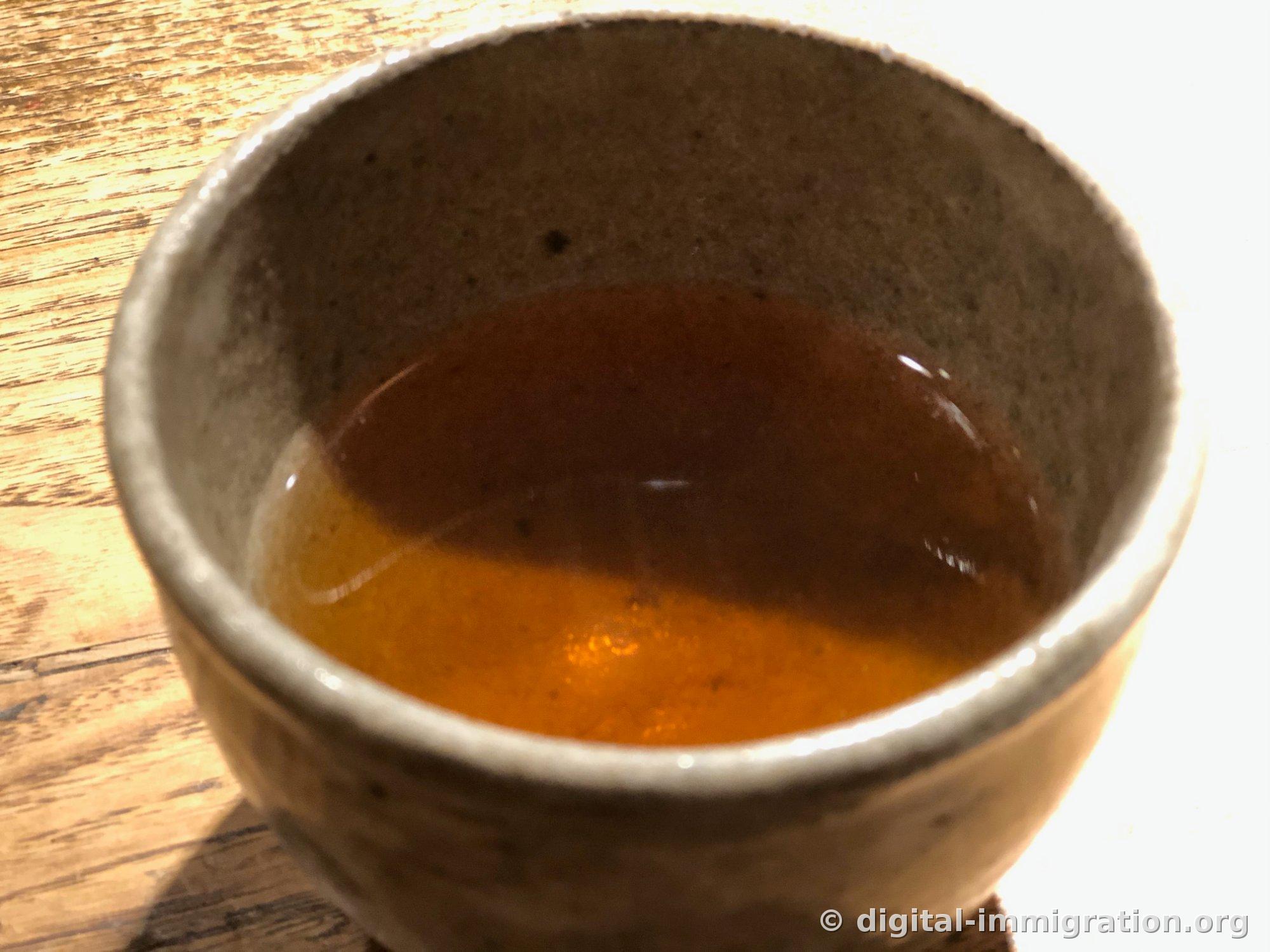
The tea arrives in a ceramic cup as a dark brown. In photos the color looks very dark, but when you drink it, it's not astringent—it's savory. I emptied this cup a couple of times while waiting for the soba.
Prices as seen on the menu
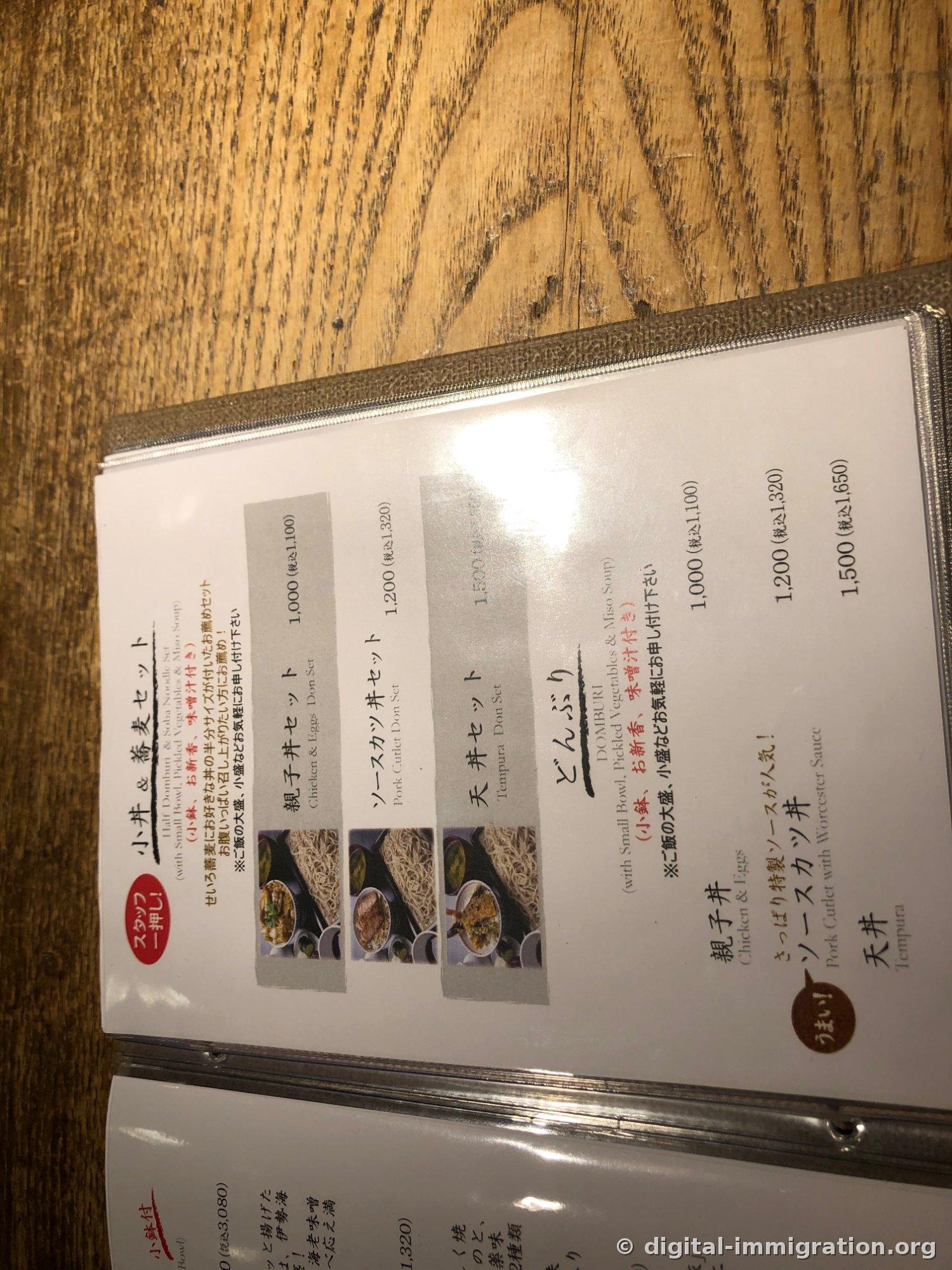
What the staff was pushing most was the 「小丼 & 蕎麦セット」—a seiro soba paired with a mini rice bowl. It comes with a small vegetable side dish, pickles, and miso soup. Transcribing from what's in the photo:
- Oyakodon Set — the price is obscured by light reflection in the photo (the single oyakodon on the same page is ¥1,000 / ¥1,100 with tax)
- Sauce Katsudon Set — ¥1,200 (¥1,320 with tax)
- Tendon Set — ¥1,500 (¥1,650 with tax)
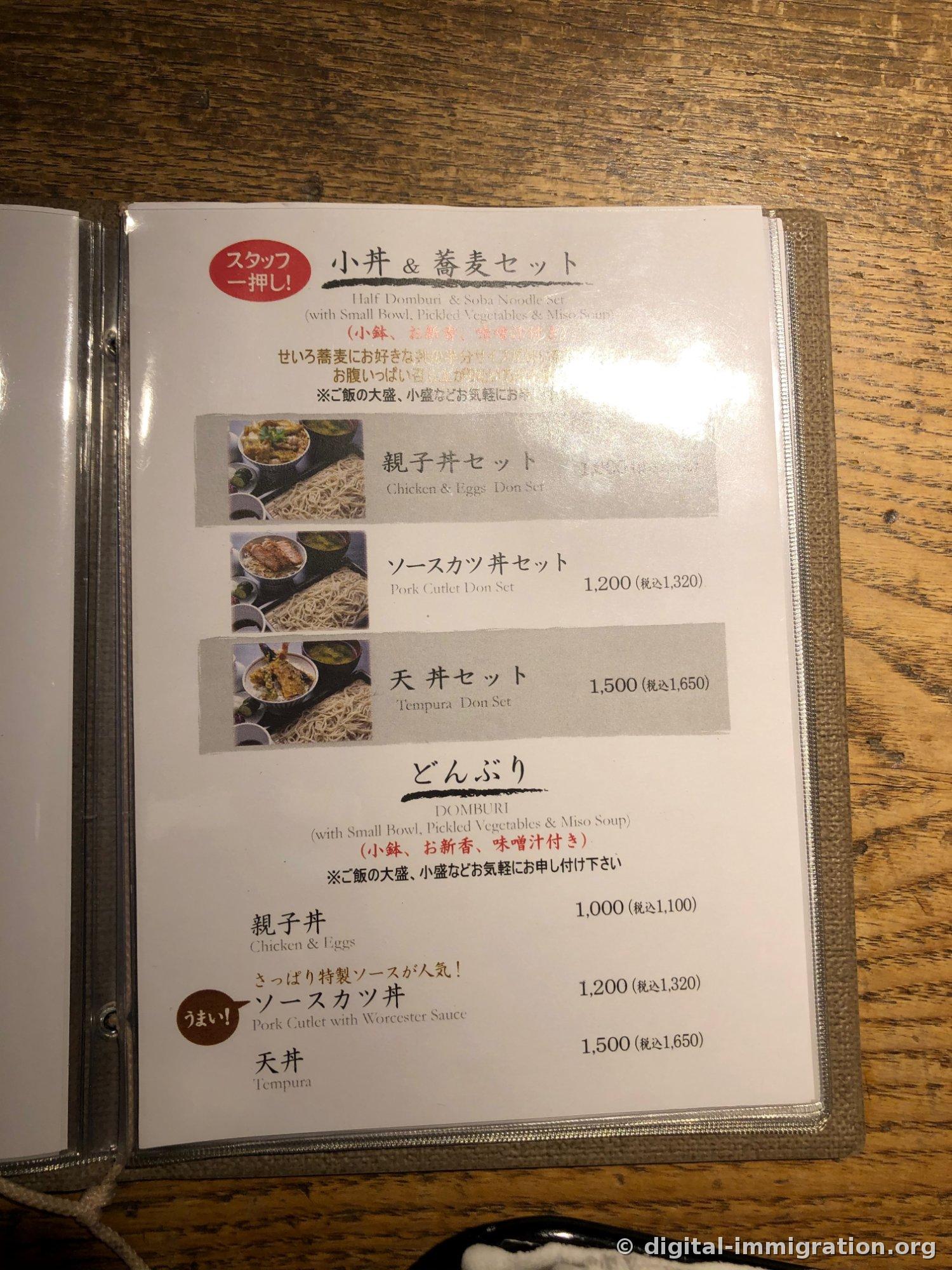
I took another photo of the same page from a different angle. Because it's sideways, the text is rotated, but the single どんぶり prices below are clearer here (oyakodon ¥1,000 / sauce katsudon ¥1,200 / tendon ¥1,500, each ¥1,100·¥1,320·¥1,650 with tax). There's a note saying you can request extra rice or less rice at no additional charge.
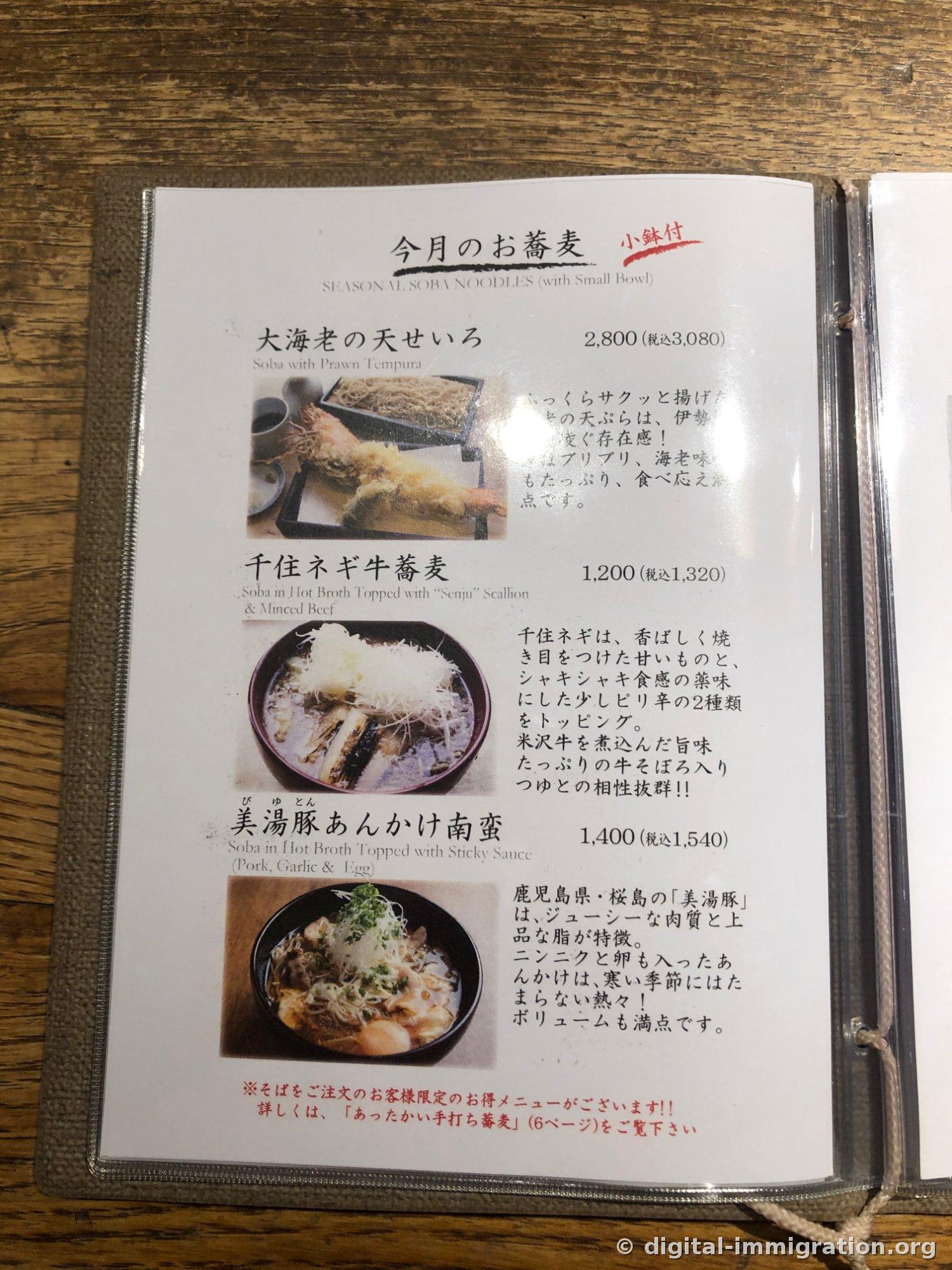
The 「今月のお蕎麦」 page changes seasonally. The day I visited, it featured three dishes: 大海老の天せいろ with large shrimp tempura at ¥2,800 (¥3,080 with tax), 千住ネギ牛蕎麦 topped with Senju leek and Yonezawa beef at ¥1,200 (¥1,320 with tax), and 美湯豚あんかけ南蛮 made with Kagoshima Sakurajima-raised pork belly at ¥1,400 (¥1,540 with tax). There's a note explaining that the leek is served two ways—grilled and raw. Since this page changes with each season, it's best to check it in person when you visit.
Location and how to find it
Based on the shooting coordinates, it's a walkable distance from the east exit shopping district of Shinjuku Station. Since the soba shop sign on ground level is small, even when the map app points you to the spot, you'll find yourself looking around. Follow this visual progression: large cluster of lanterns → white characters on the right black pillar → noren → stairs, and you won't get lost. Since you're underground, cell signals can be weak, so it's better to check the map before descending the stairs.
The essence of buckwheat noodles — why you come to this place
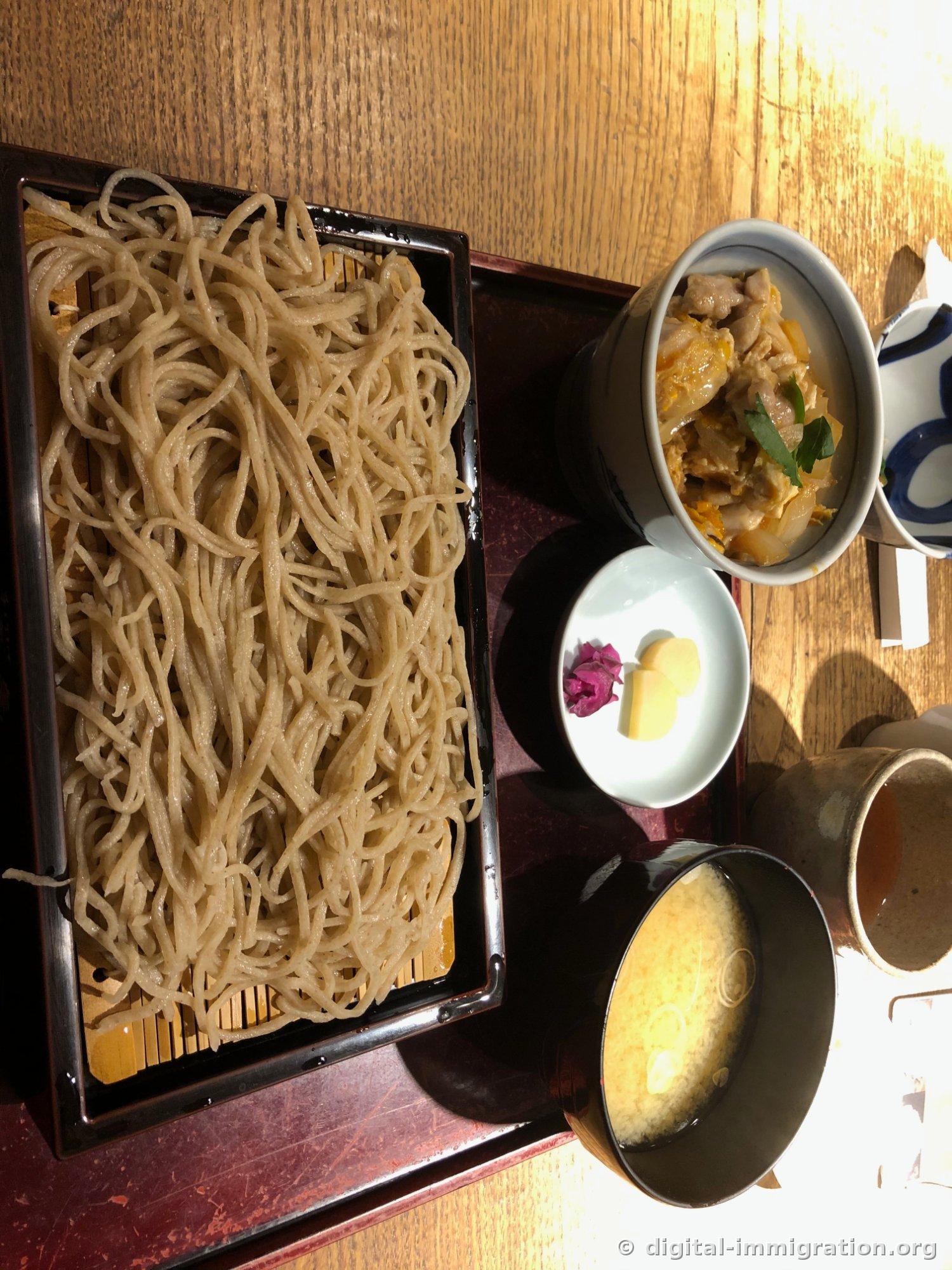
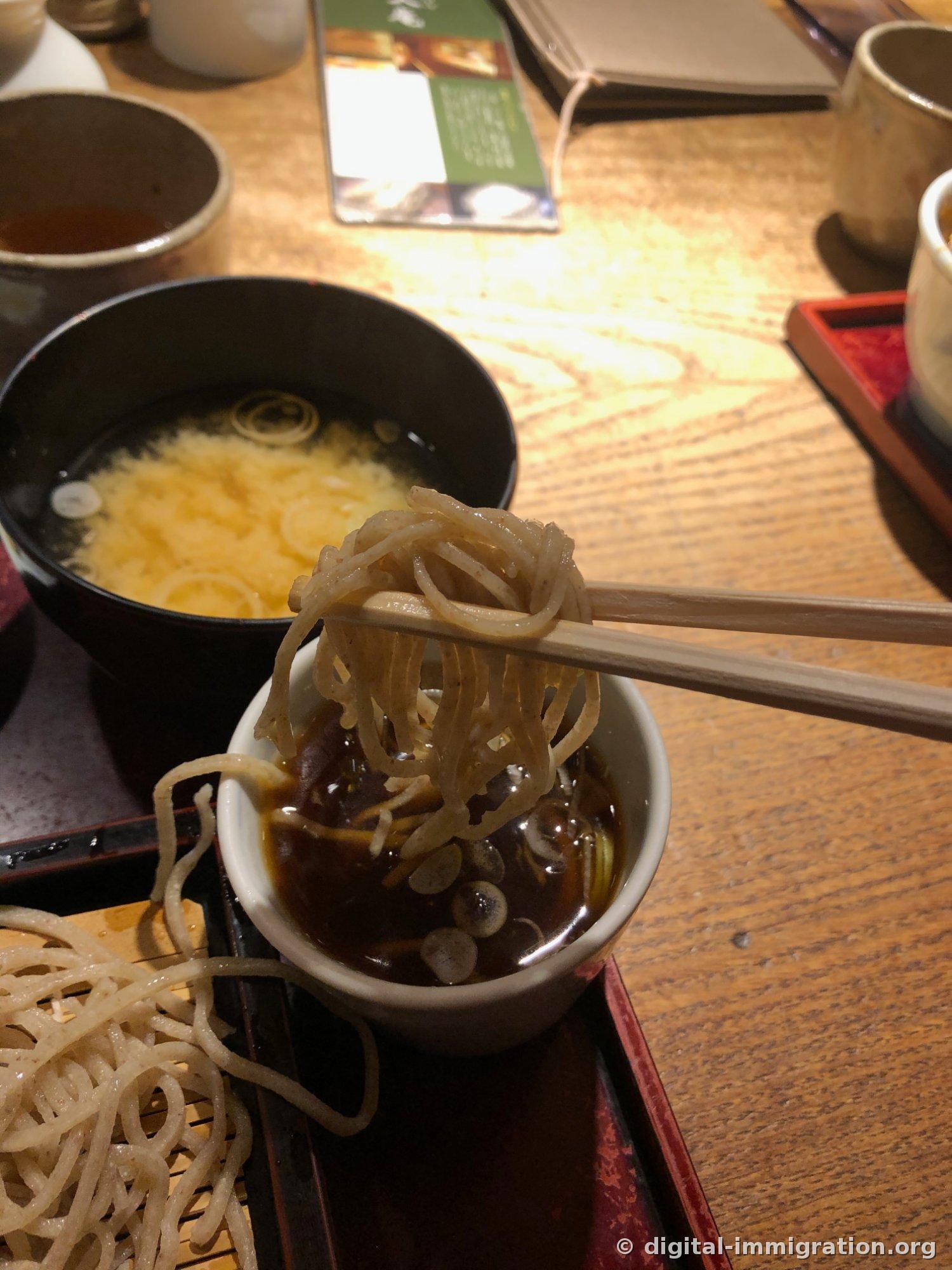
I ordered the oyakodon set. On a red lacquered tray: a bowl of seiro soba, a mini oyakodon, a plate of pickles, and miso soup all at once. The noodles caught my eye first. The color isn't white. Against a grayish-white base, black specks are densely packed—this is the color you get when using buckwheat flour ground with the husk still on. The thickness varies slightly, slightly uneven. You don't get this with machine-made noodles.
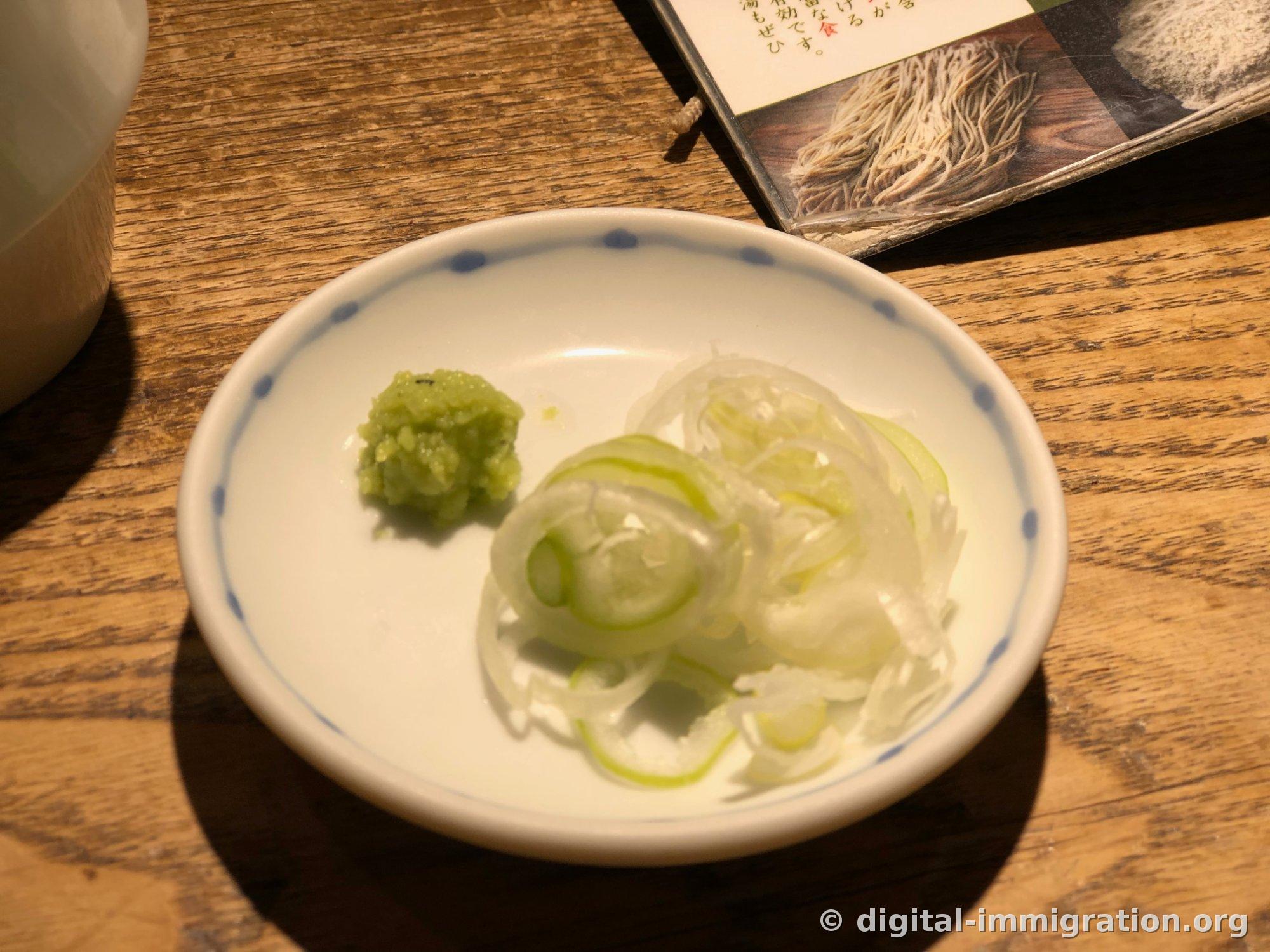
Condiments arrive on a separate small plate: a lump of freshly grated wasabi and white negi (Japanese leek) cut into extremely thin threads. The leek is so delicate that when you put it in the tsuyu, it dissolves immediately. I recommend eating the first few bites of noodles plain, with nothing added. For the wasabi, placing a bit on top of the noodles before dipping it in the tsuyu preserves more of its aroma.
Lifting the noodles reveals this soba restaurant's true character. Buckwheat husk fragments are scattered across the noodle surface, and they hold their weight without breaking, dangling from the chopsticks. When you chew, they break cleanly at first, then leave a rough texture. As you swallow, the buckwheat aroma rises through your nose—this is an aroma that only comes from freshly cooked, chilled noodles. Lukewarm soba will never produce this smell. You should eat half of it within three minutes of it arriving.
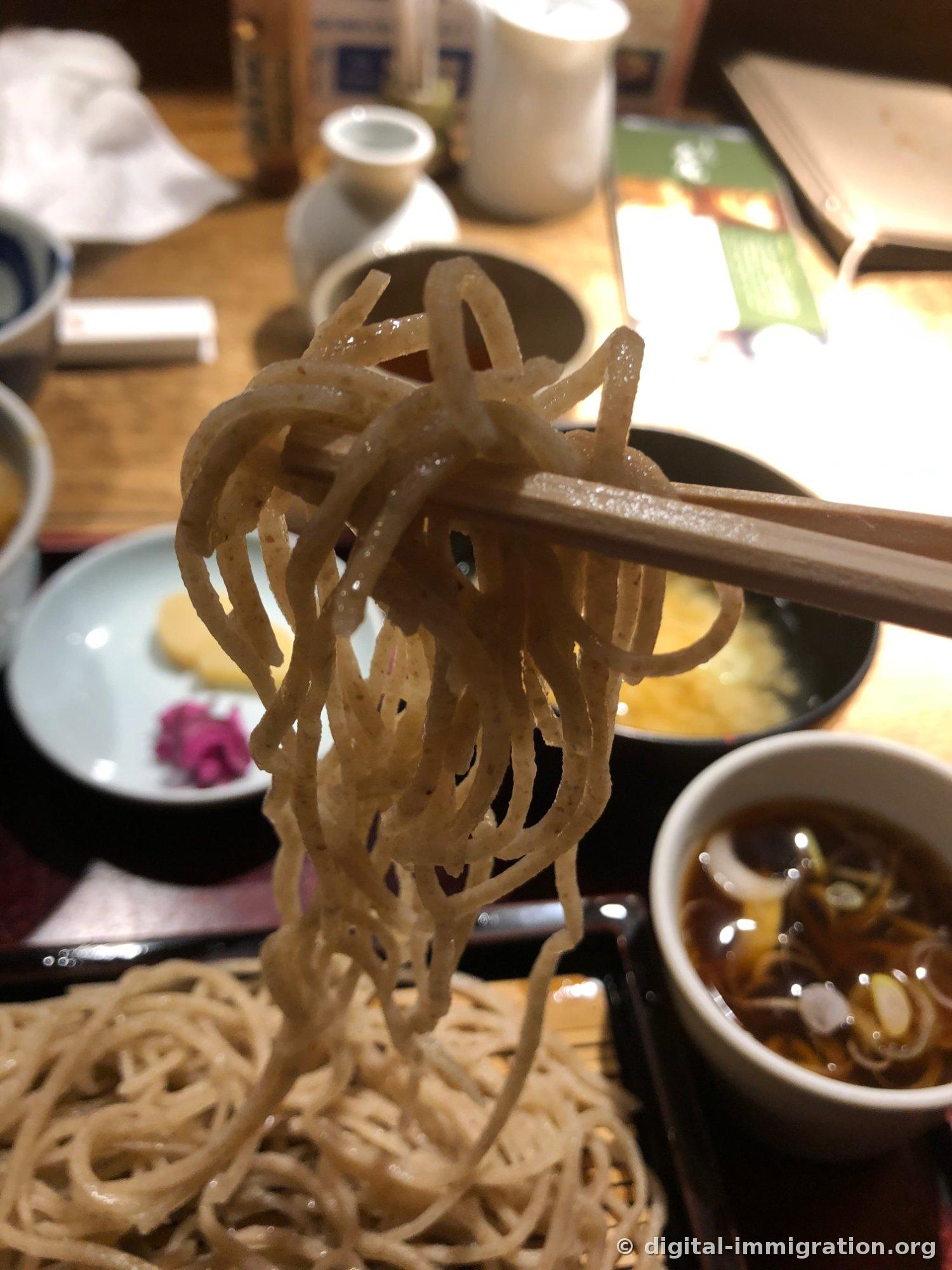
The tsuyu is on the strong side. True to Kanto style, it's salty and bonito aroma leads. If you dunk the entire noodle, the buckwheat flavor gets buried, so that common advice to wet only the last third actually applies here. I tried dunking one batch whole and tasted the difference immediately when dipping only the ends on my second bite. It was clear.
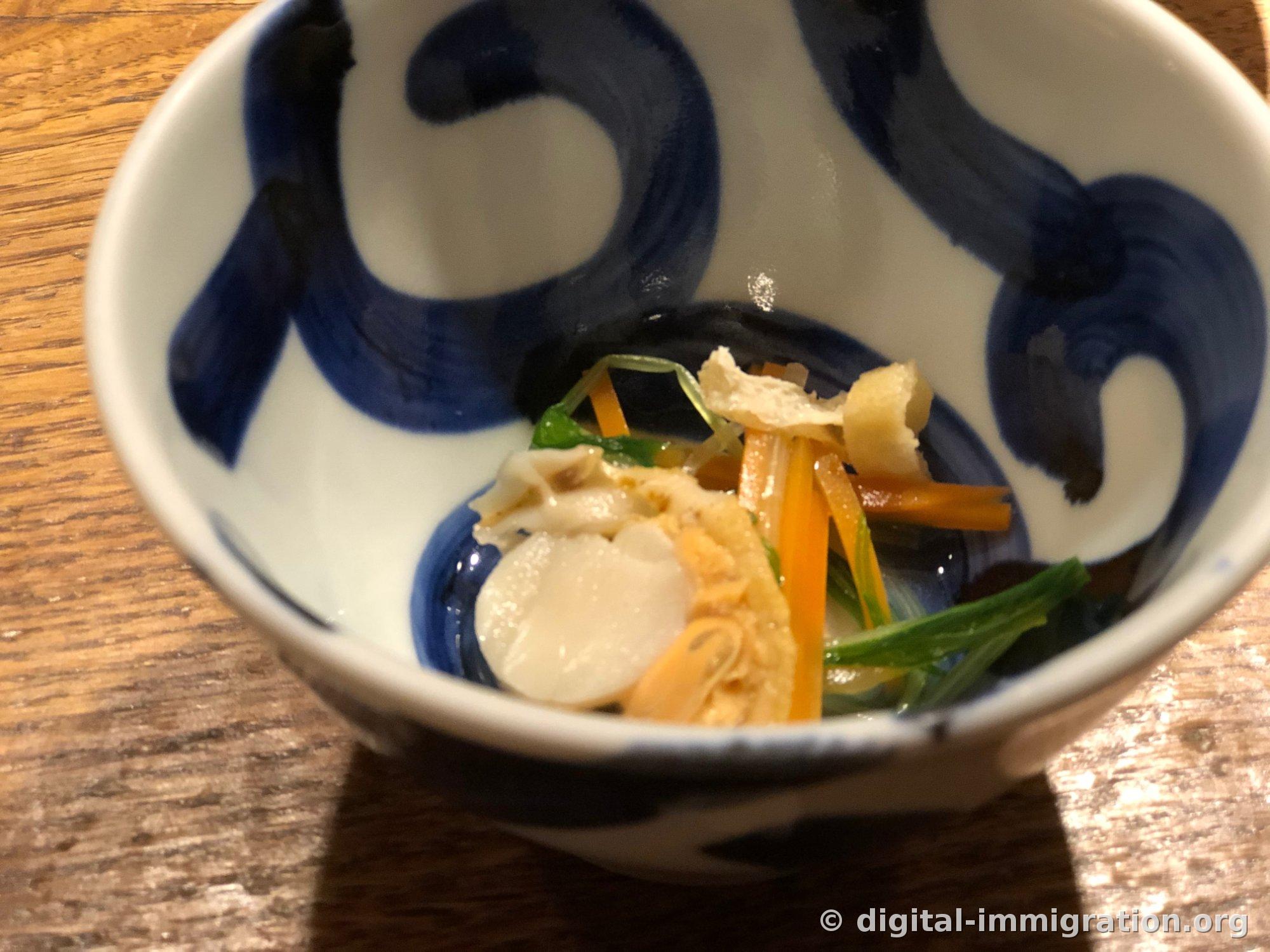
The kobachi side dish that came with the set wasn't halfhearted either. In a bowl with blue whirlpool patterns: clam meat, thinly sliced daikon, shredded carrot, fried tofu, and leafy greens braised in clear broth. The seasoning is very light, which made it perfect to alternate with the strong tsuyu.
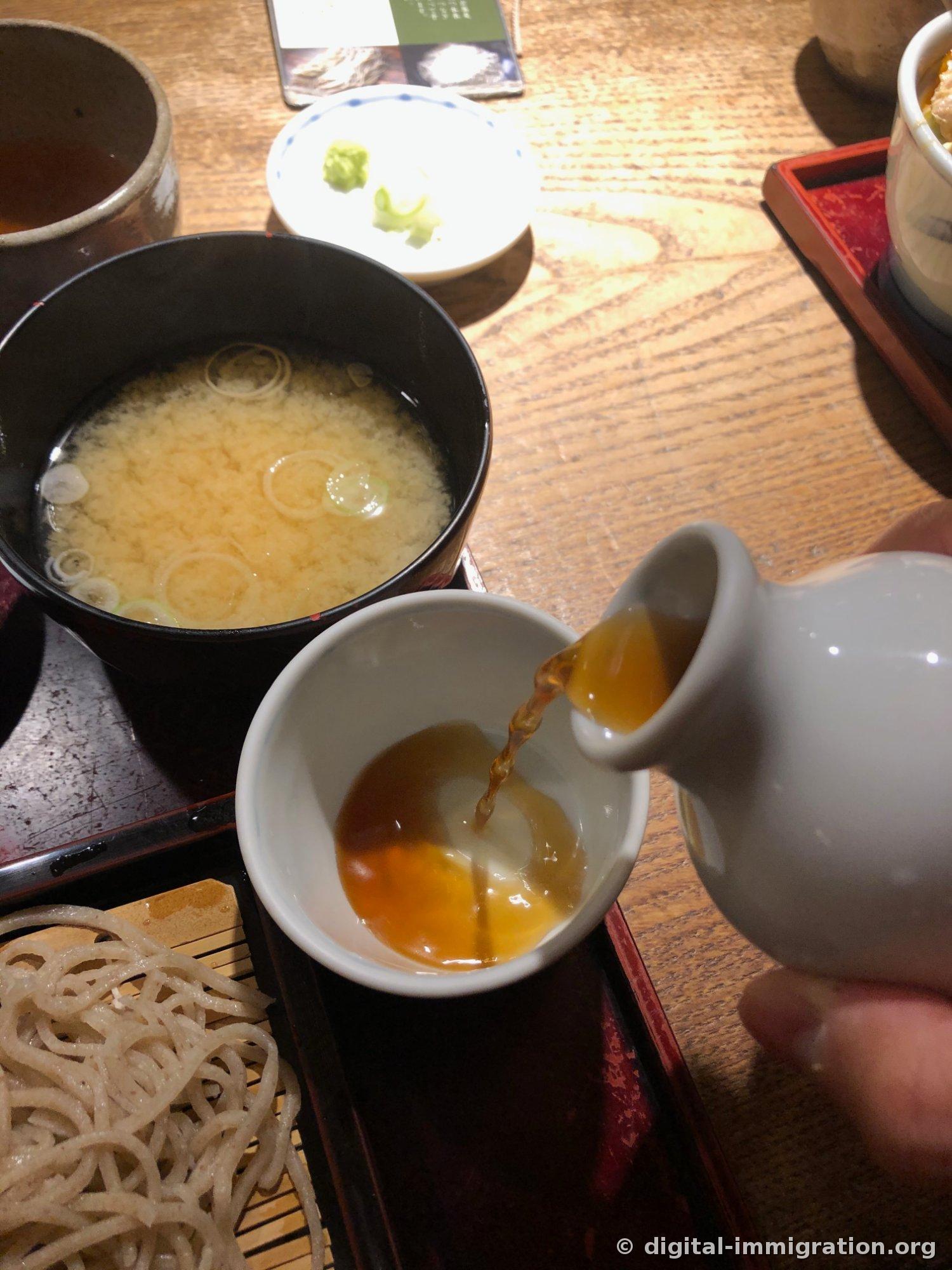
After finishing the noodles, you pour the soba broth from the white kettle into the remaining tsuyu. The cloudy, lukewarm broth mixes with the dark tsuyu, separating into two layers in the cup before slowly becoming one. This moment—when you drink it—is the best part of eating at a soba restaurant. The saltiness dissolves, leaving only the distinctive grain aroma of buckwheat cooking water. Since the restaurant already sets the kettle on the table without being asked, even first-time visitors won't miss this step.
For next time you visit
- The street-level sign belongs to the local restaurant. The soba is downstairs. Look for the stairs inside the noren.
- When you order a set, you get a regular soba portion with a mini rice bowl attached. If you're not very hungry, a single seiro soba is plenty.
- The menu explicitly states you can request more or less rice at no extra charge.
- The "This Month's Soba" page changes regularly. The three dishes listed above are from when I visited.
- If you sit at the counter, you can see the kitchen. If you're dining alone, this is worth requesting.
- I didn't confirm the business hours or days off. Since office workers flock here during the evening, checking in person is recommended.
Climbing back up the basement stairs and standing on the street, the light from the lanterns upstairs was still bathing the sidewalk in yellow. If you want to properly taste soba in Shinjuku, this staircase is worth descending.
Read next
- From Akihabara's Chuo-dori to the Kanda River: A Record of Tokyo's Electronics District Revisited Multiple Times
Tokyo's Akihabara is a neighborhood where it's hard to say you've seen everything in a single visit. I've come multiple times across different seasons, and each time the signs chan…
Tokyo · Akihabara - Buying a Single ¥300 Year-End Jumbo Lottery Ticket at Nishi-Ginza Chance Center in Tokyo
Exit from the Hibiya exit of Tokyo's Shimbashi Station, walk toward the elevated highway for about three minutes, and suddenly you'll see a line of people stretching along the side…
Tokyo · Nishi-Ginza Chance Center - Ueno Ameyoko, the real magic starts after sunset — an evening walk from the Okachimachi Gate to Ueno Station
Every time I come to Tokyo, my feet find their way to Ueno Ameyoko (アメ横) without fail. This time I entered from the Okachimachi side and worked my way toward Ueno Station. I've met…
Tokyo · Ameya Yokocho Market