Dazaifu Tenmangu on a Rainy Day, Two Hours from Sando Shopping Street to the Main Hall
When I got off at Dazaifu Station on the Nishi-Tetsu train from Fukuoka Tenjin, it was already raining too heavily to navigate without an umbrella. Stepping out of the alley in fro…
Dazaifu · Dazaifu Tenmangu
When I got off at Dazaifu Station on the Nishi-Tetsu train from Fukuoka Tenjin, it was already raining too heavily to navigate without an umbrella. Stepping out of the alley in front of the station, the approach path to the shrine begins immediately, and at the end stands Dazaifu Tenmangu, which enshrines Sugawara no Michizane, the god of scholarship. This is a shrine that parents of exam candidates visit from throughout Kyushu, but on this day, the shopping street was about half filled with tourists holding vinyl umbrellas. Thanks to the rain, the stone pavement was darkened and wet, which actually made for excellent photographs.
What You Meet Before the Shrine — The Sando Shopping Street
A common mistake for first-time visitors to Dazaifu is to look at the shrine first and then browse the shopping street on the way out. The order is reversed. This street itself is the attraction, and the shrine visit is actually quite brief. Exiting the station, a stone torii stands immediately ahead, and beneath it shops with plum blossom-patterned noren are lined up on both sides. Every shop sign bears the four characters '梅ヶ枝餅 (umegaemochi)'—without exaggeration, about seven out of ten shops sell this.
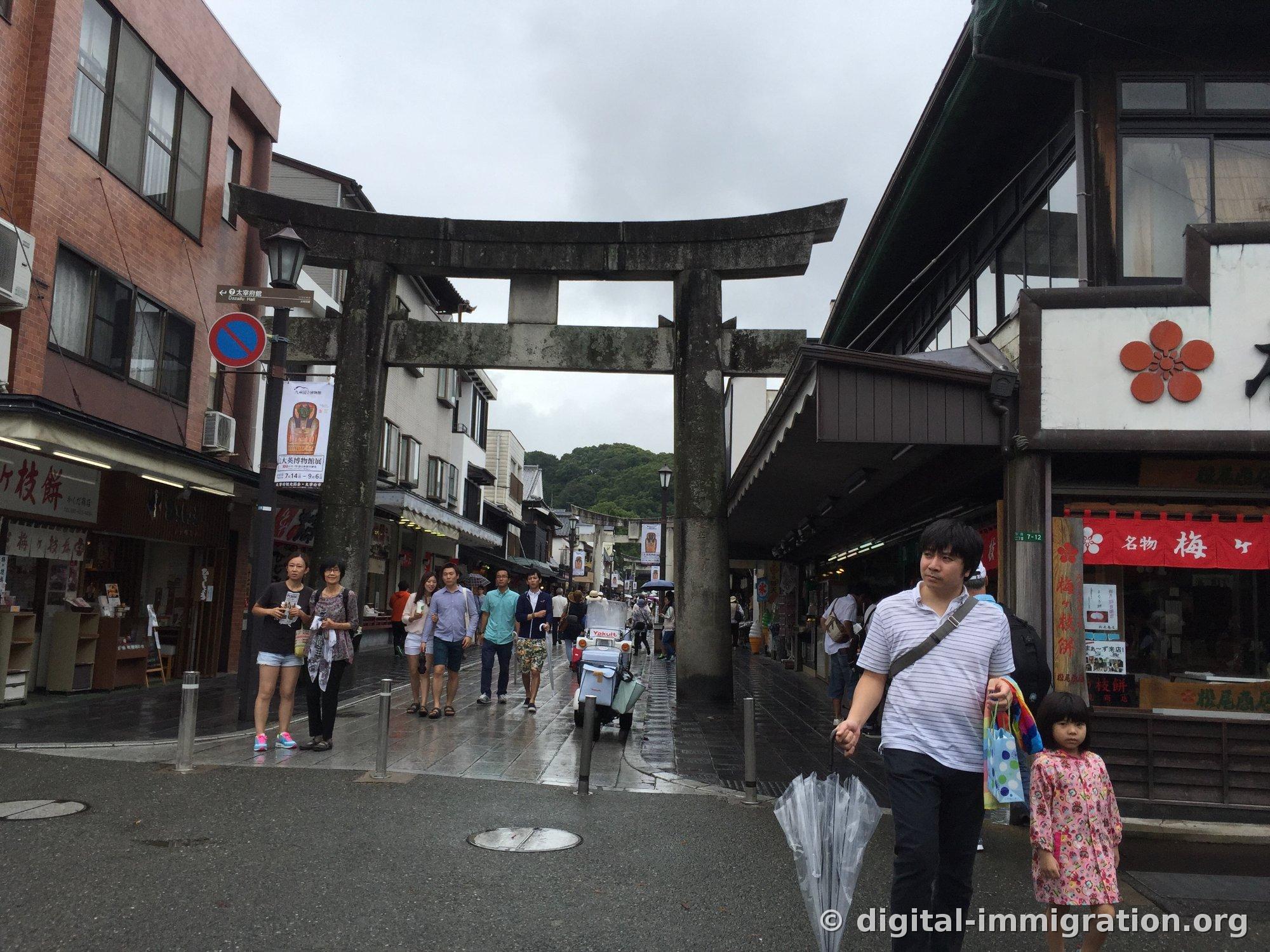
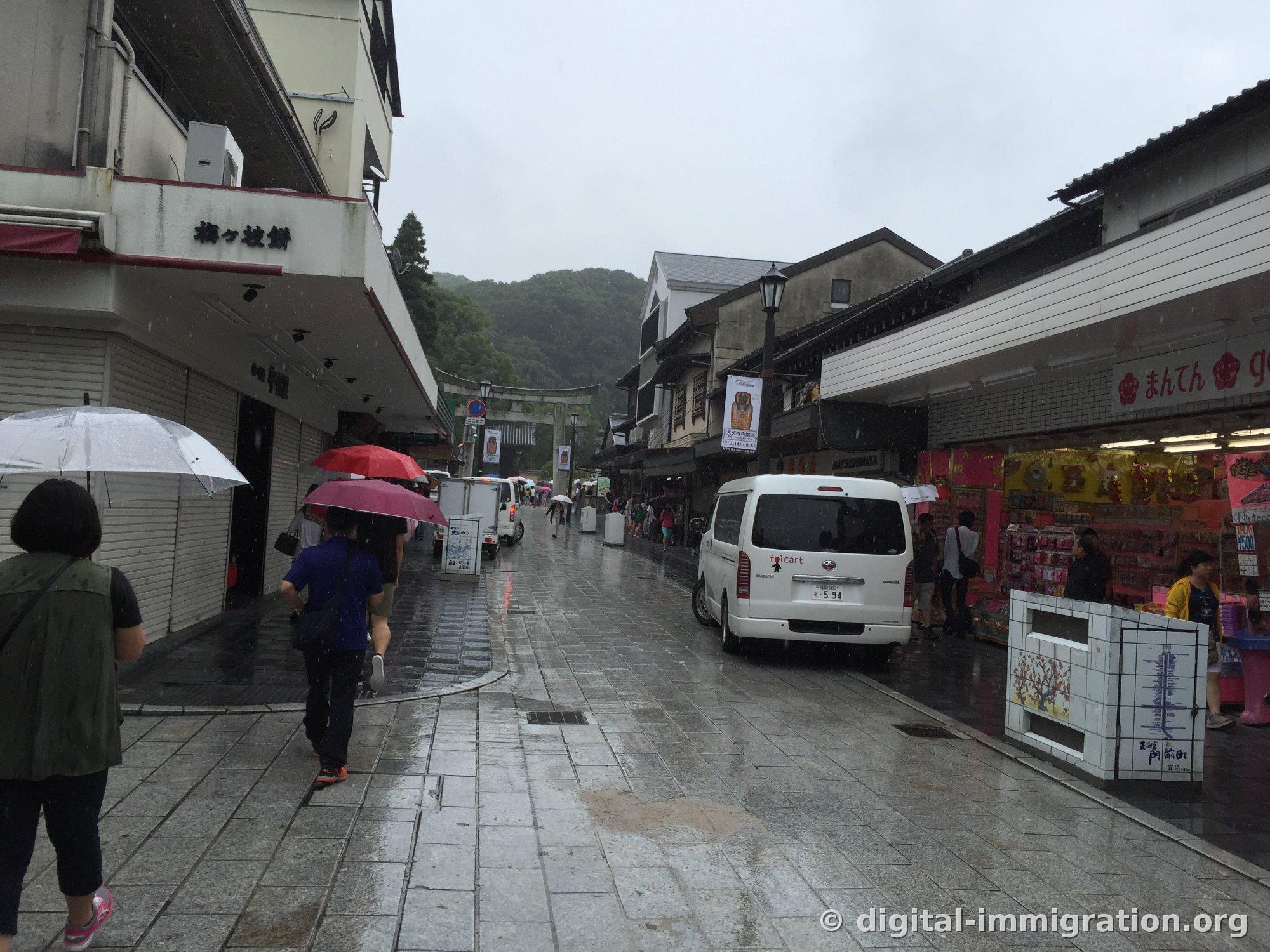
During heavy downpours, some shops had their shutters half-closed. Still, Yakult carts made their rounds, and children gathered in front of arcade game shops. The shopping street doesn't have the overly polished feel of a tourist destination—it retains a sense of everyday life.
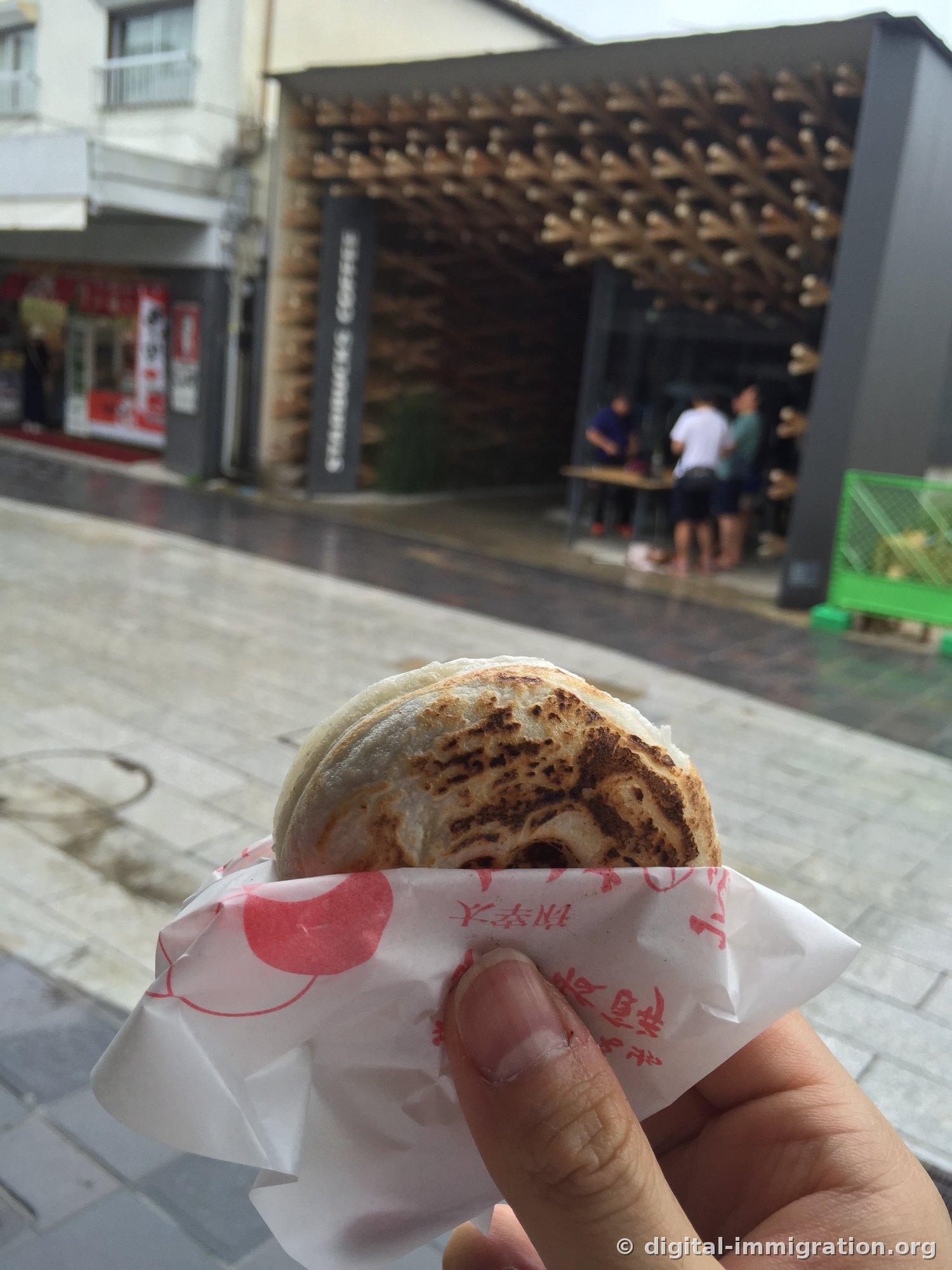
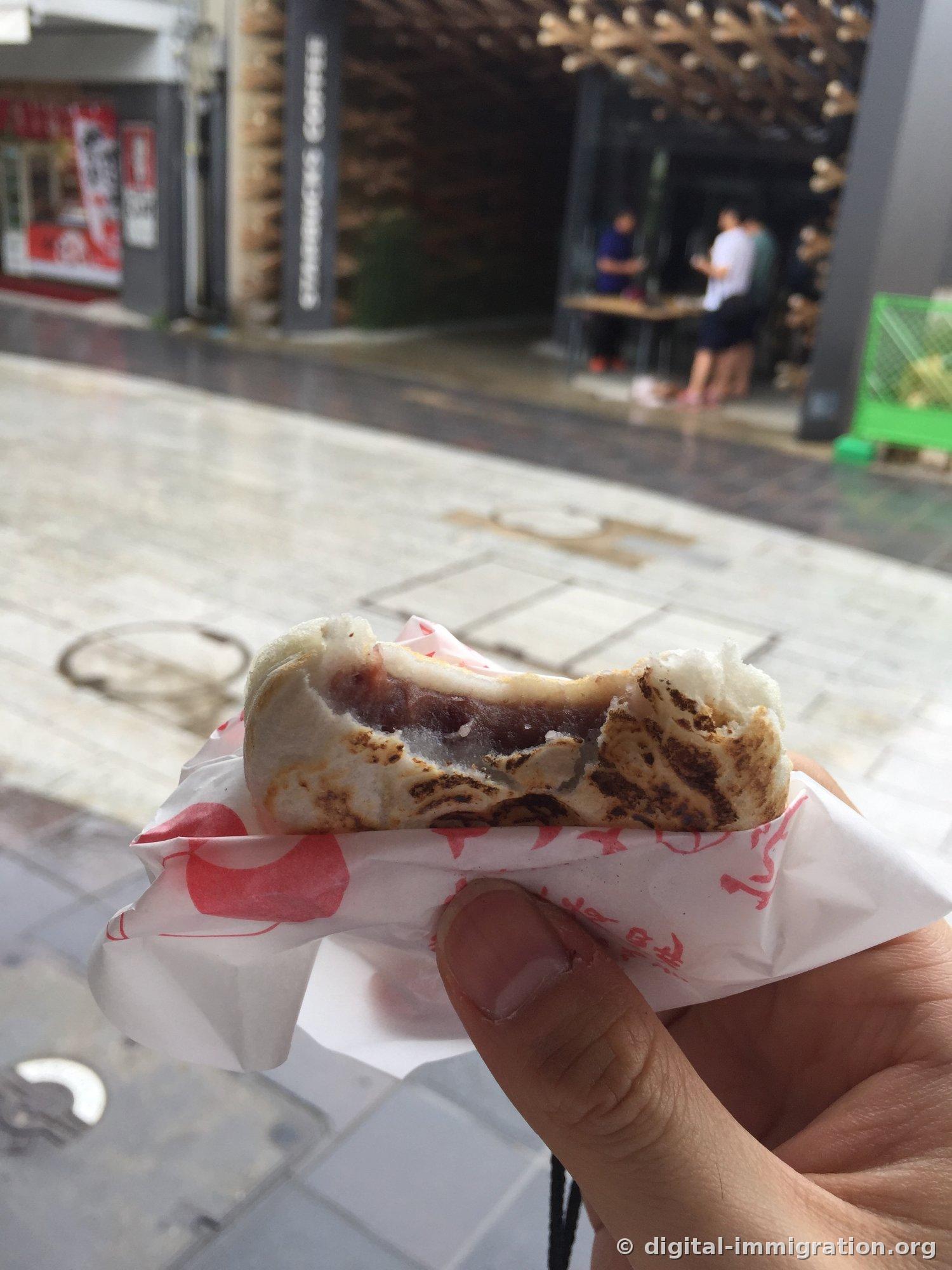
Umegaemochi is grilled on a griddle right before you. The paper was so hot when I received it that I had to shift my grip. The exterior was pressed and charred by the griddle, and when I bit into it, the red bean filling was fully exposed. The sweetness wasn't overwhelming, and the beans retained their texture, so two were easy to manage. Once cooled, the taste definitely diminishes, so it's best to buy and eat while walking. Prices vary slightly between shops, so checking on-site is recommended.
A Starbucks Worth Not Missing
Midway along the shopping street stands a building with timber extending in all directions. It's Starbucks Dazaifu Tenmangu Omote-Sando. Even if you have no intention of getting coffee, I'd say it's worth entering. Thousands of wooden beams are interlocked in a lattice structure, with no visible nails or metal brackets—wood holds wood. From outside, the building appears to lean forward as if about to topple, but once you step inside, those beams converge overhead like a tunnel.
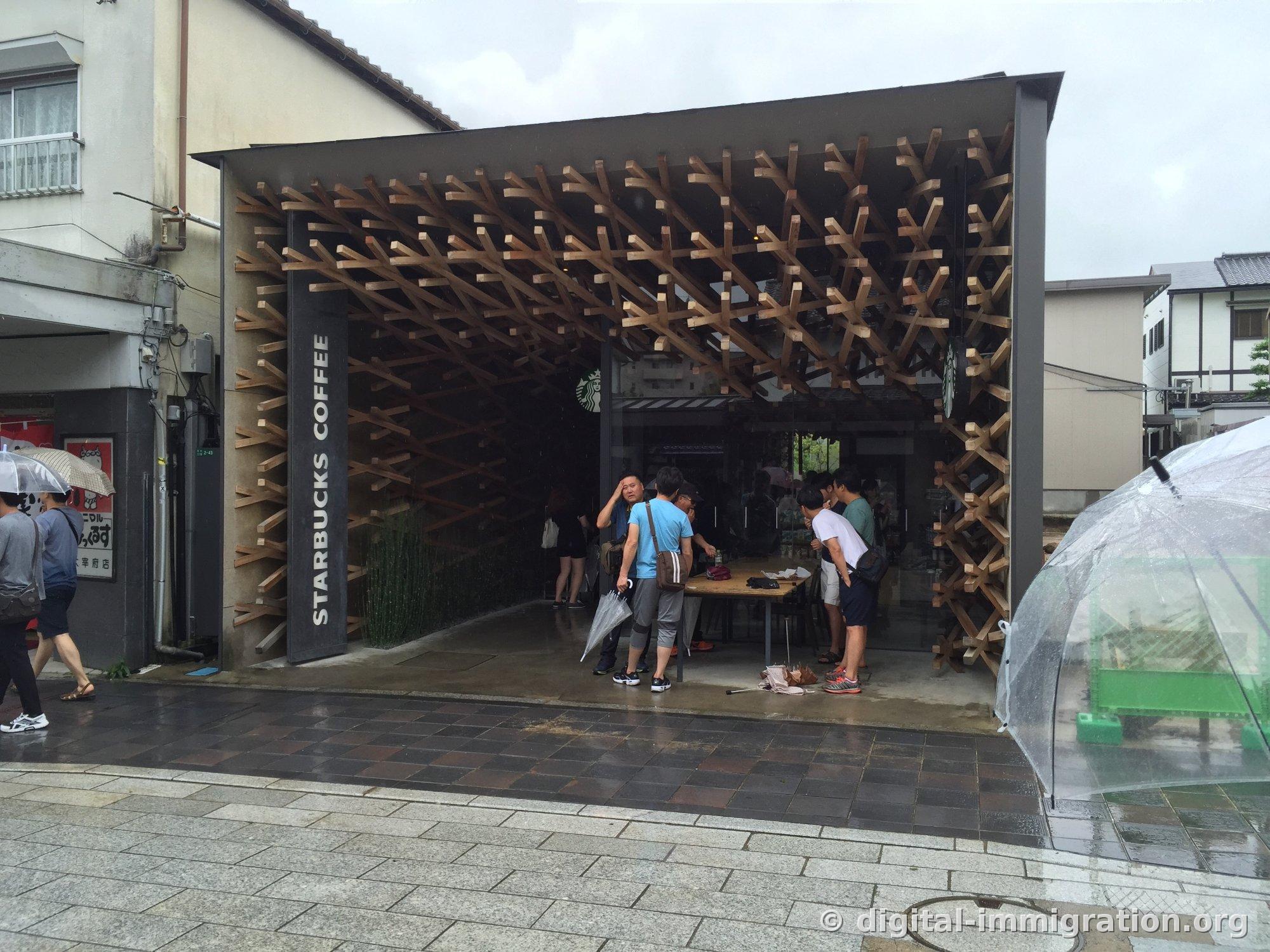
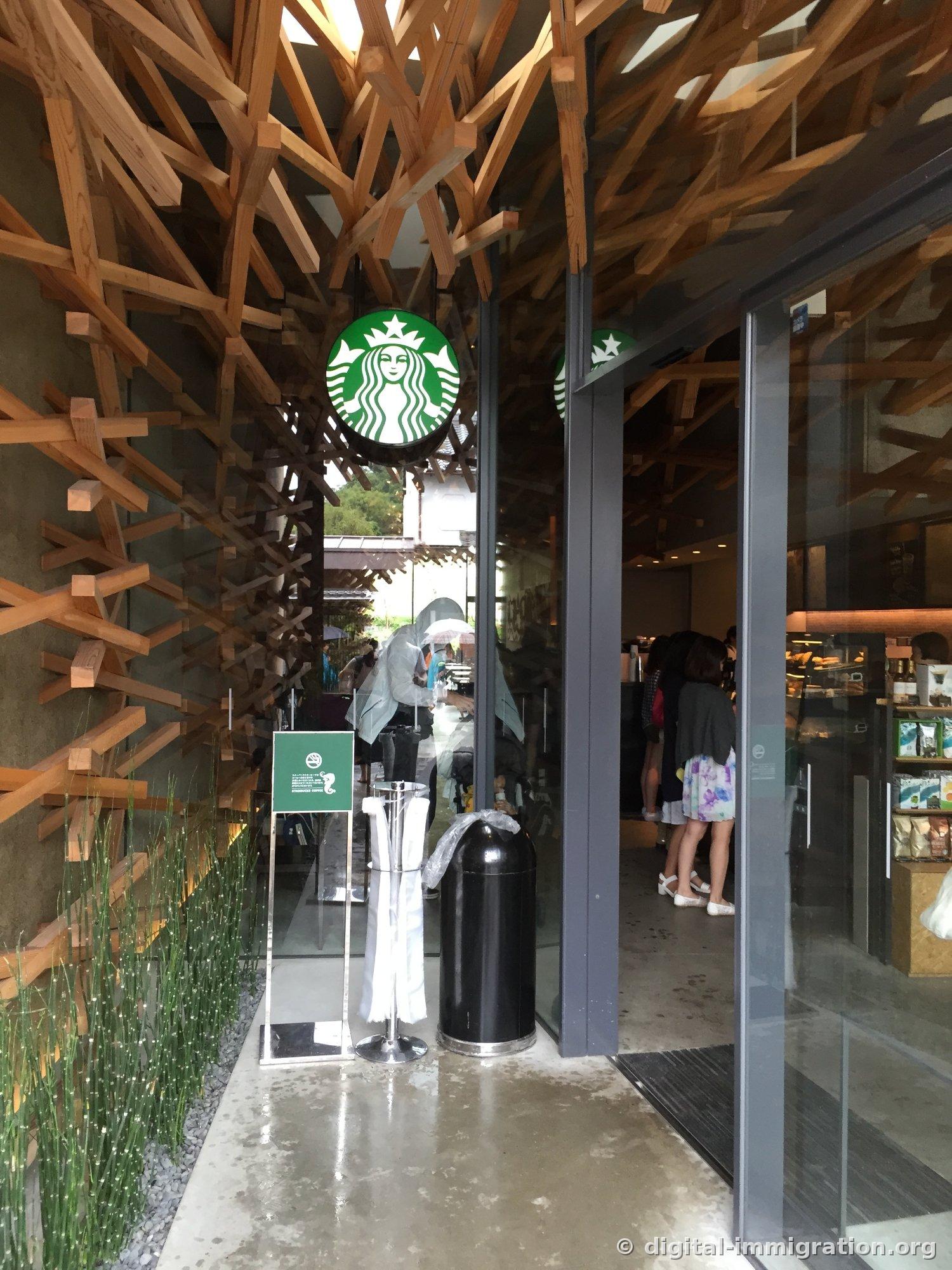
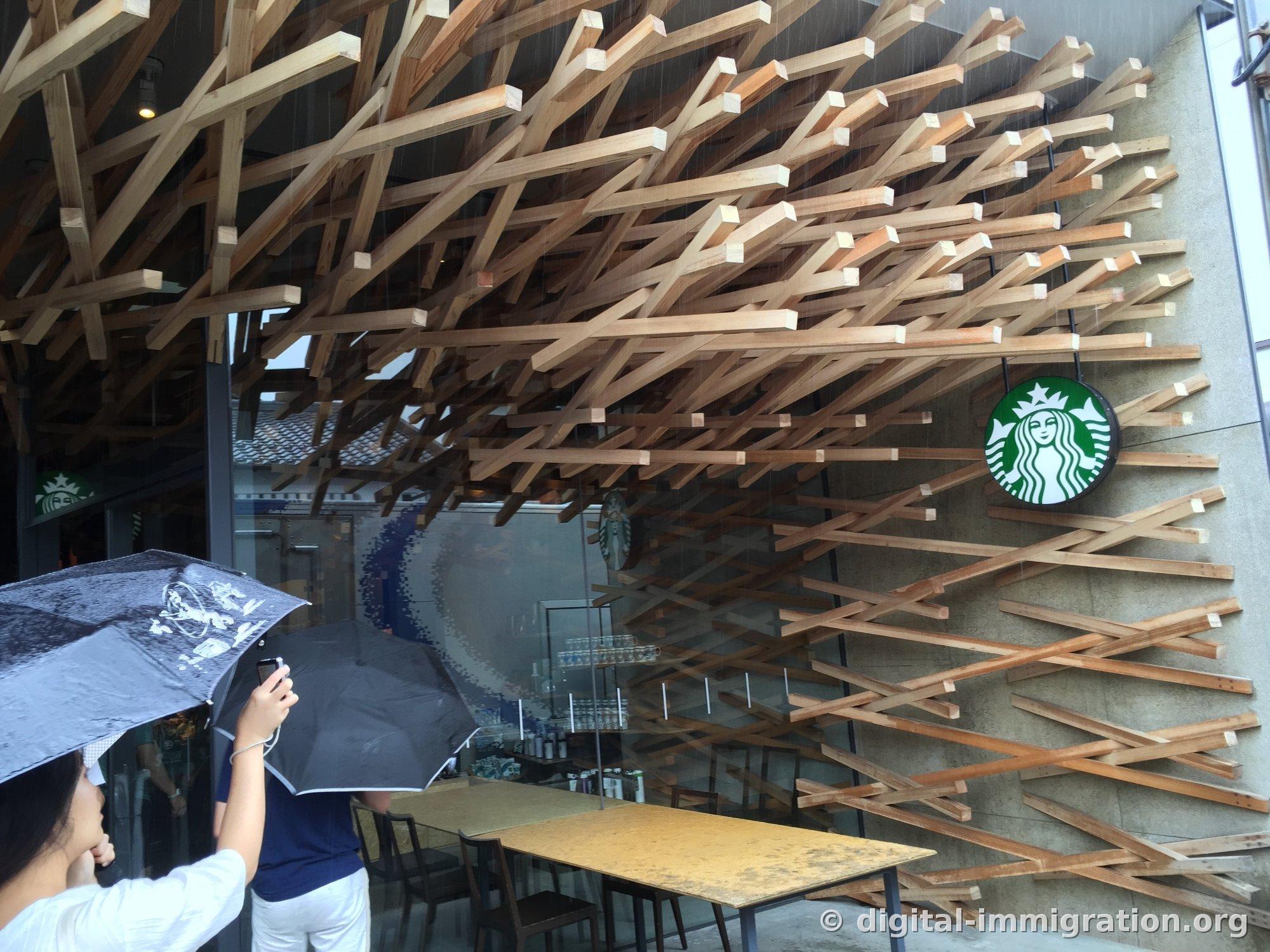
There's a drawback though. Space is limited, and turnover is slow, so on weekend afternoons you can't find a seat. I ended up taking photos from outside and left. For photography purposes, early morning before crowds gather is better.
Location and Access — How to Get There and How Far to Walk
From Nishi-Tetsu Dazaifu Station to the main hall is about a 5-10 minute walk straight along Sando. There's only one path, so there's no risk of getting lost, and the incline is gradual enough that strollers and elderly visitors have no problem. However, once inside the shrine grounds, the Daikoubashi bridge has quite steep stone steps, so those with mobility issues should take the alternative flat path nearby instead of crossing the bridge. From Tenjin or Hakata, transferring at Nishi-Tetsu Futsukaichi Station is standard.
Into the Shrine Grounds — Torii, Sacred Cows, and Three Bridges
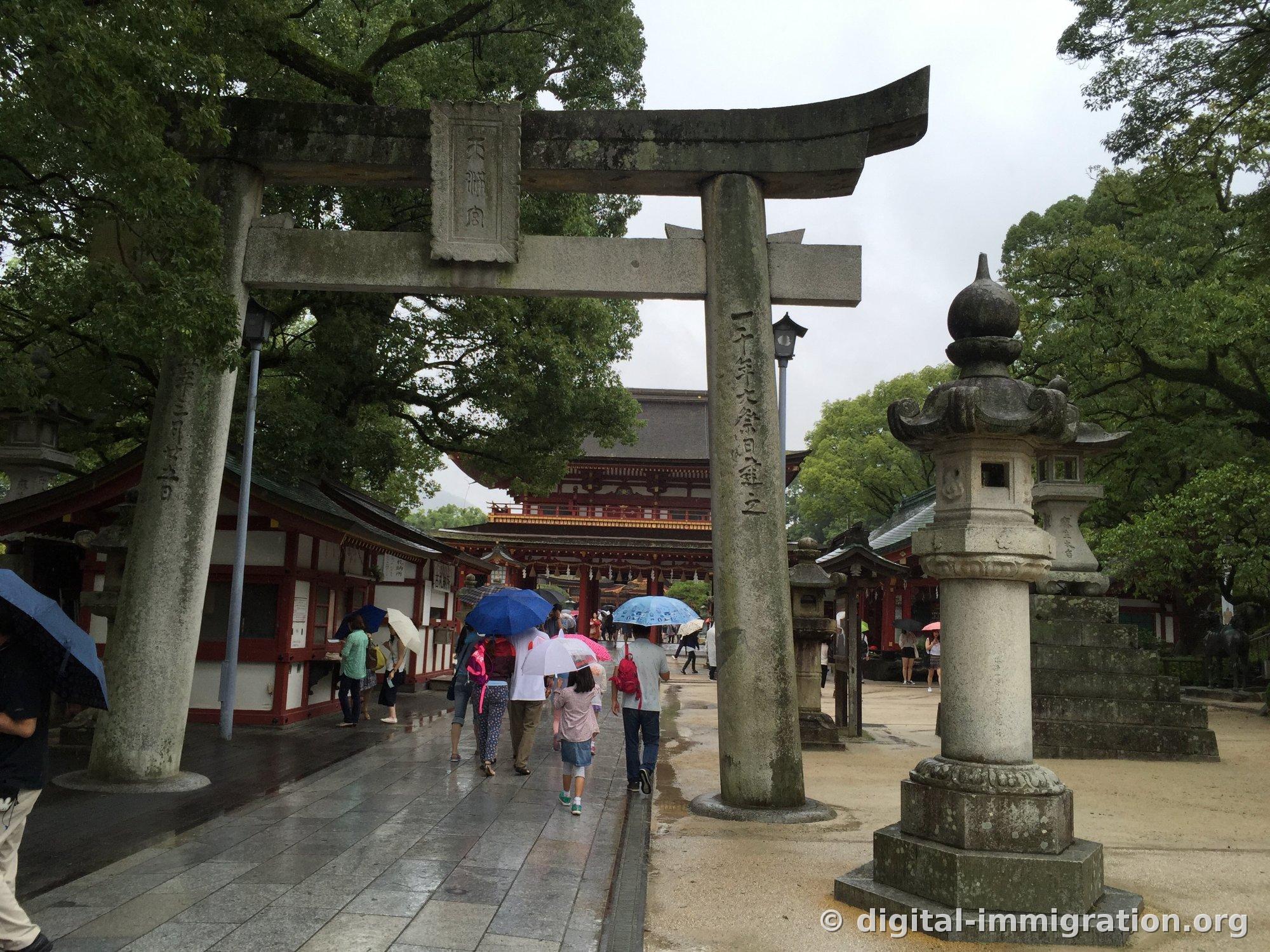
At the point where the shopping street ends stands a moss-covered stone torii. From here the sound changes. The hawking of shopkeepers abruptly stops, leaving only the sound of raindrops on leaves.
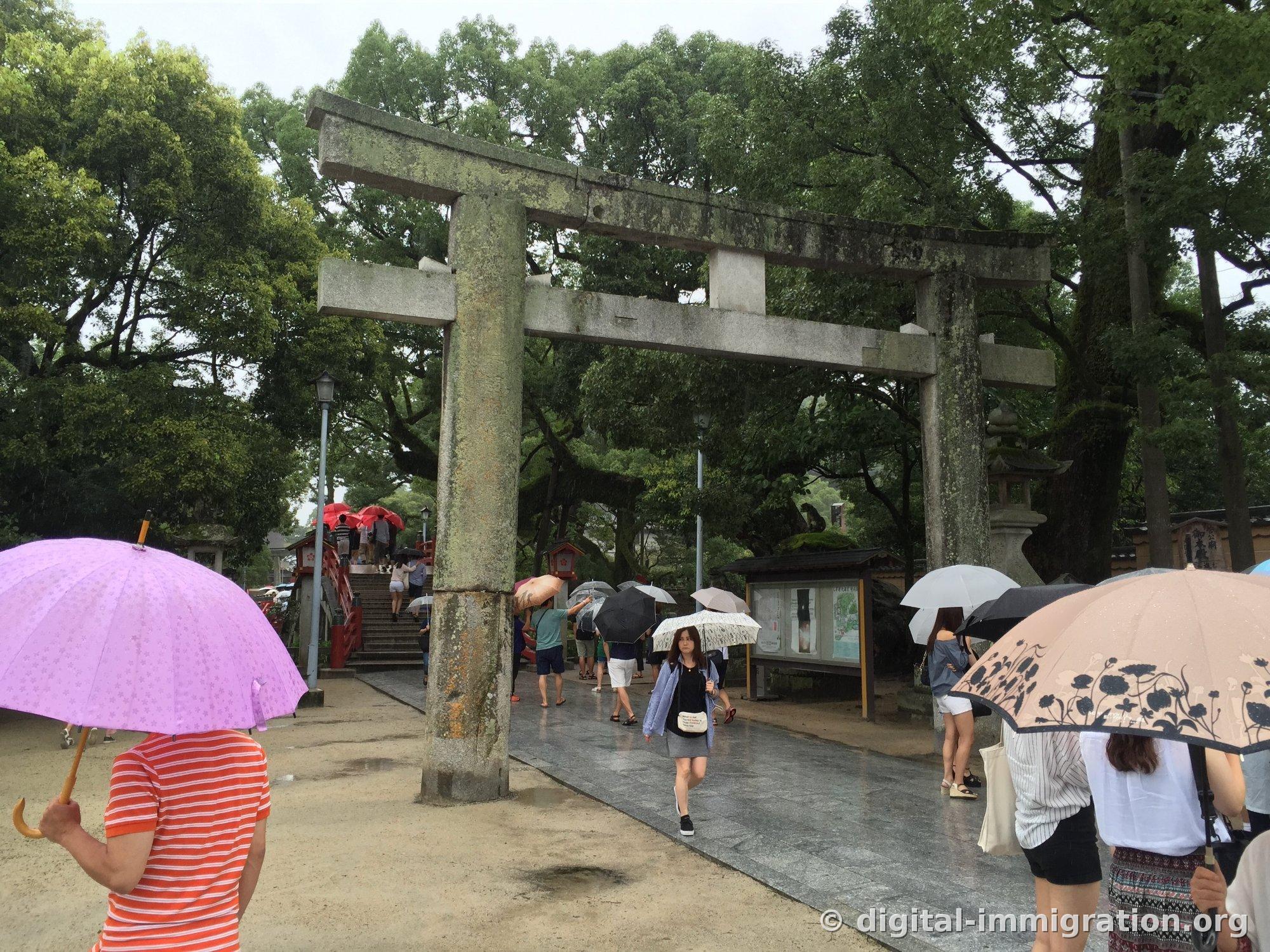
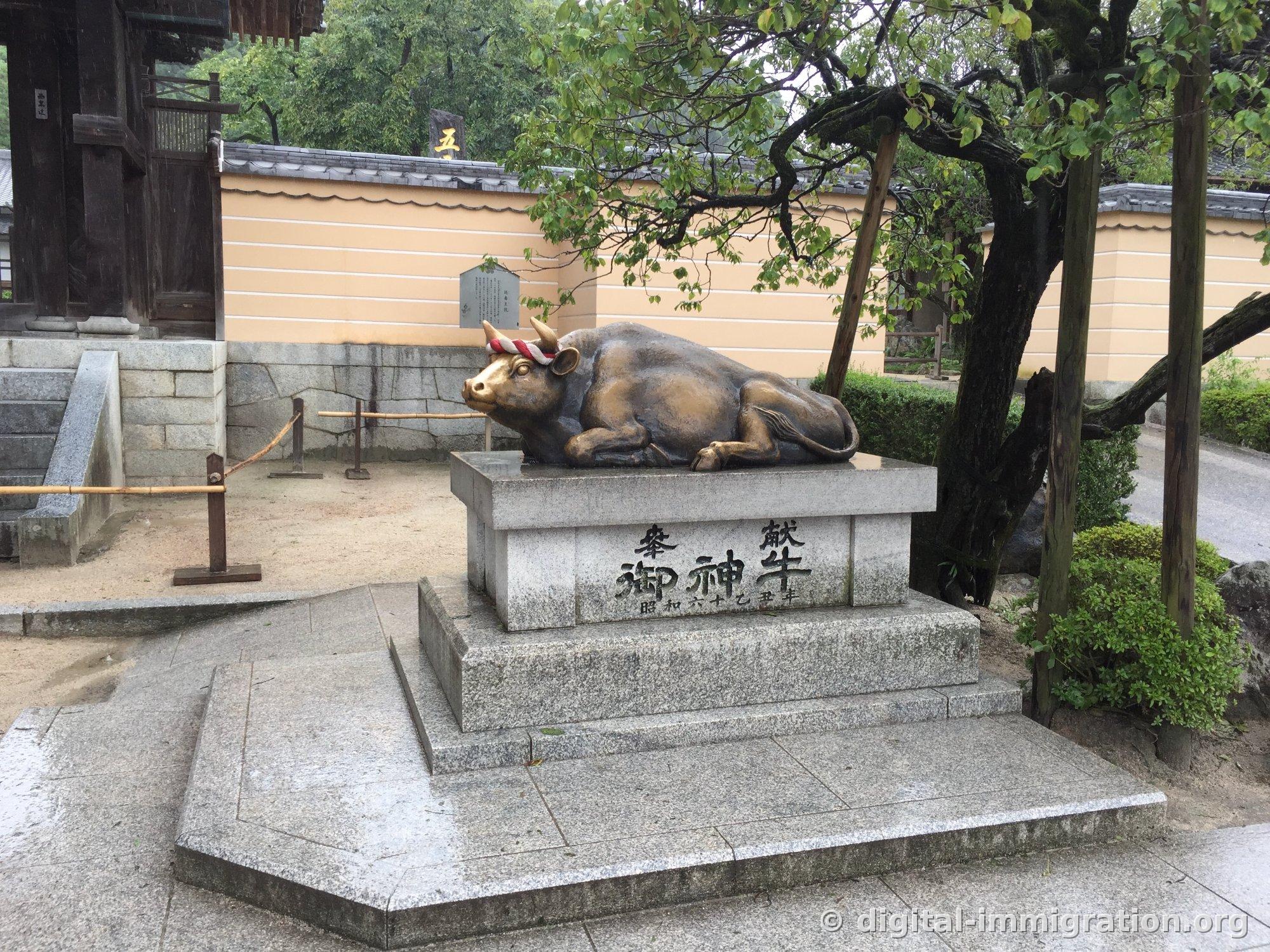
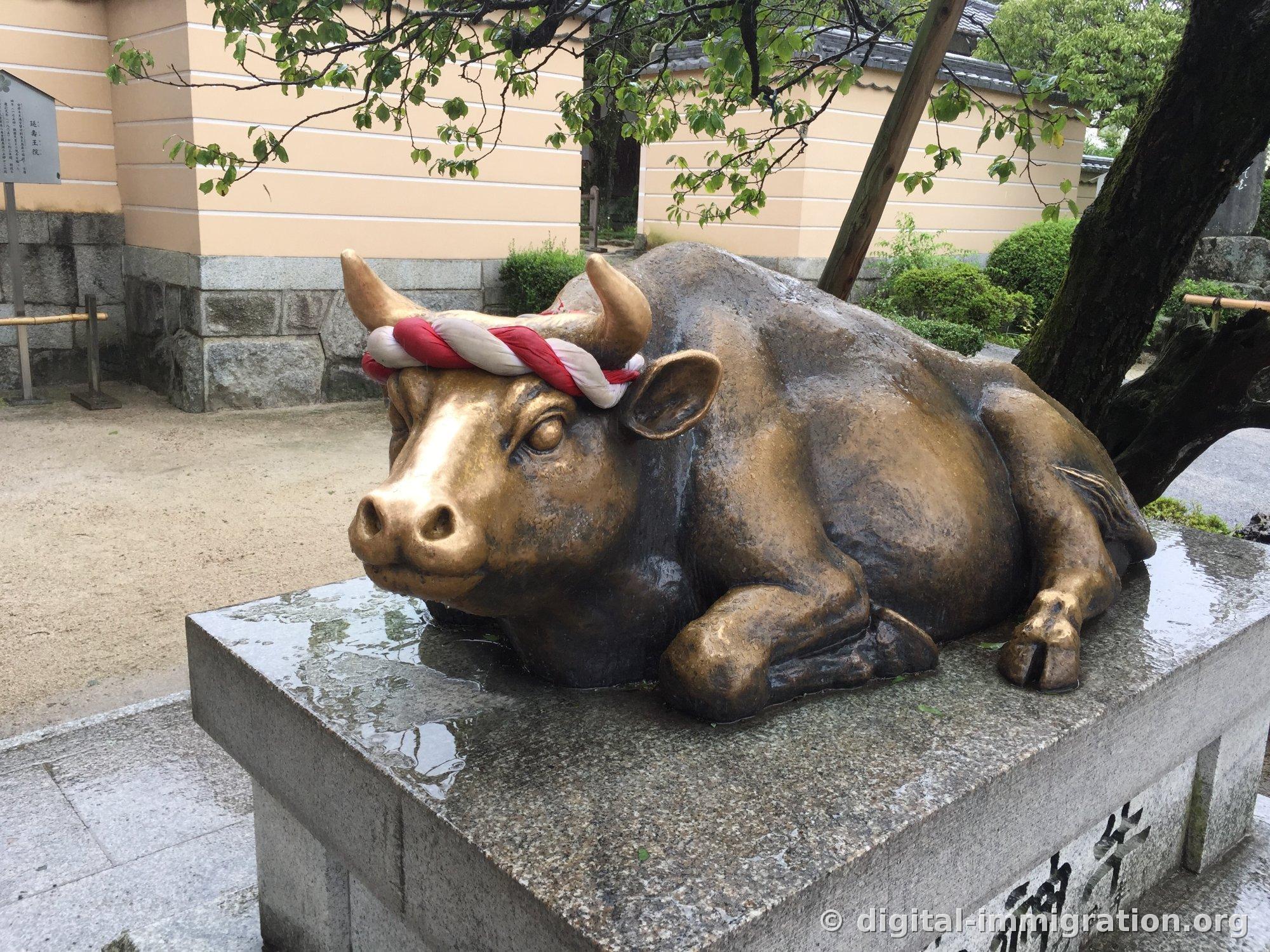
Past the torii, on the left lies a bronze sacred cow lying down—the Goshingyuu, the god's cow. There's a saying that rubbing its head grants wisdom, so each cow's head and horns are worn shiny and gleam gold from countless touches, while the body retains its dark green patina. The contrast is striking. On rainy days, water pools on the back, so I ended up wetting my sleeve reaching to touch it.
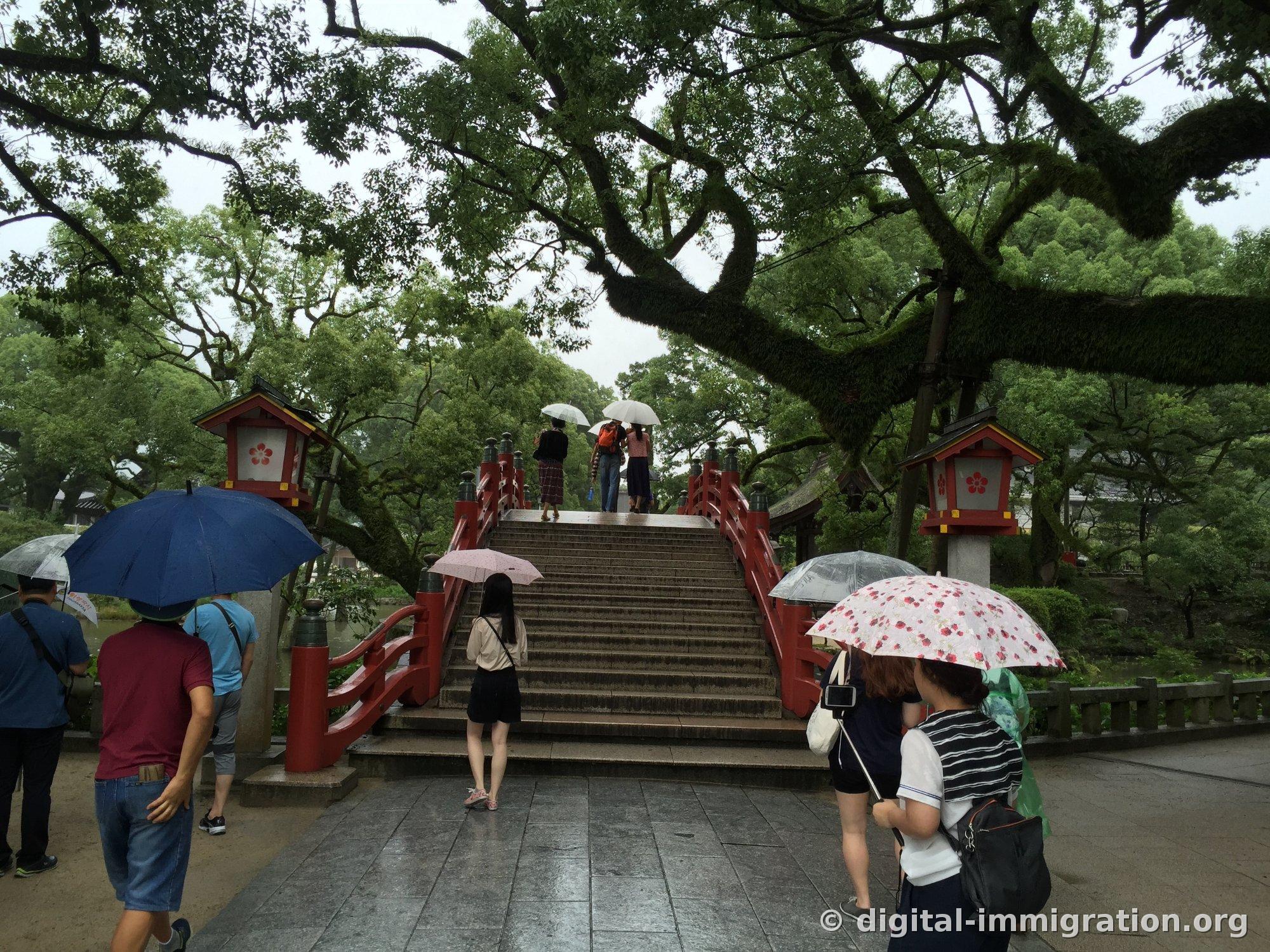
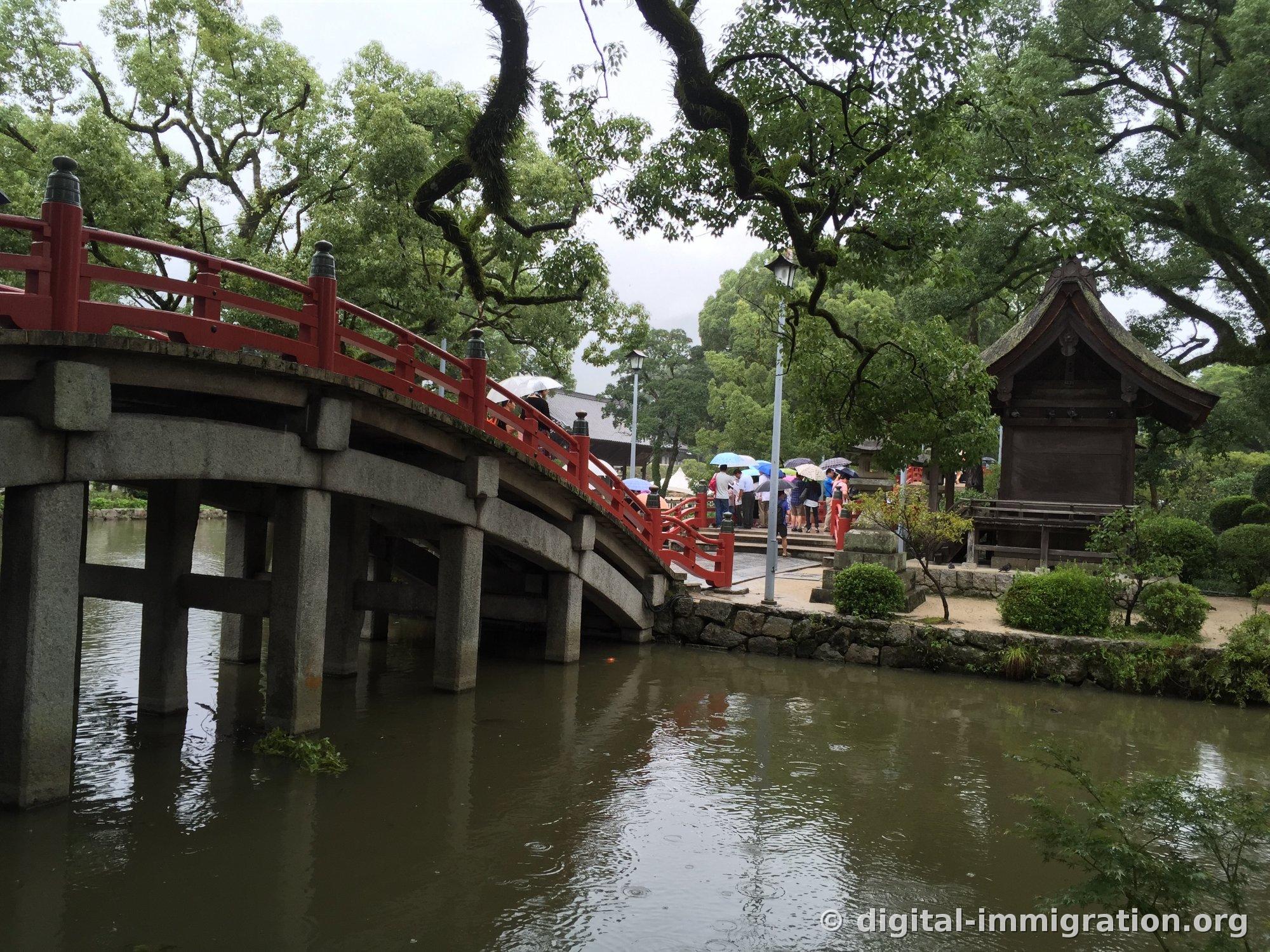
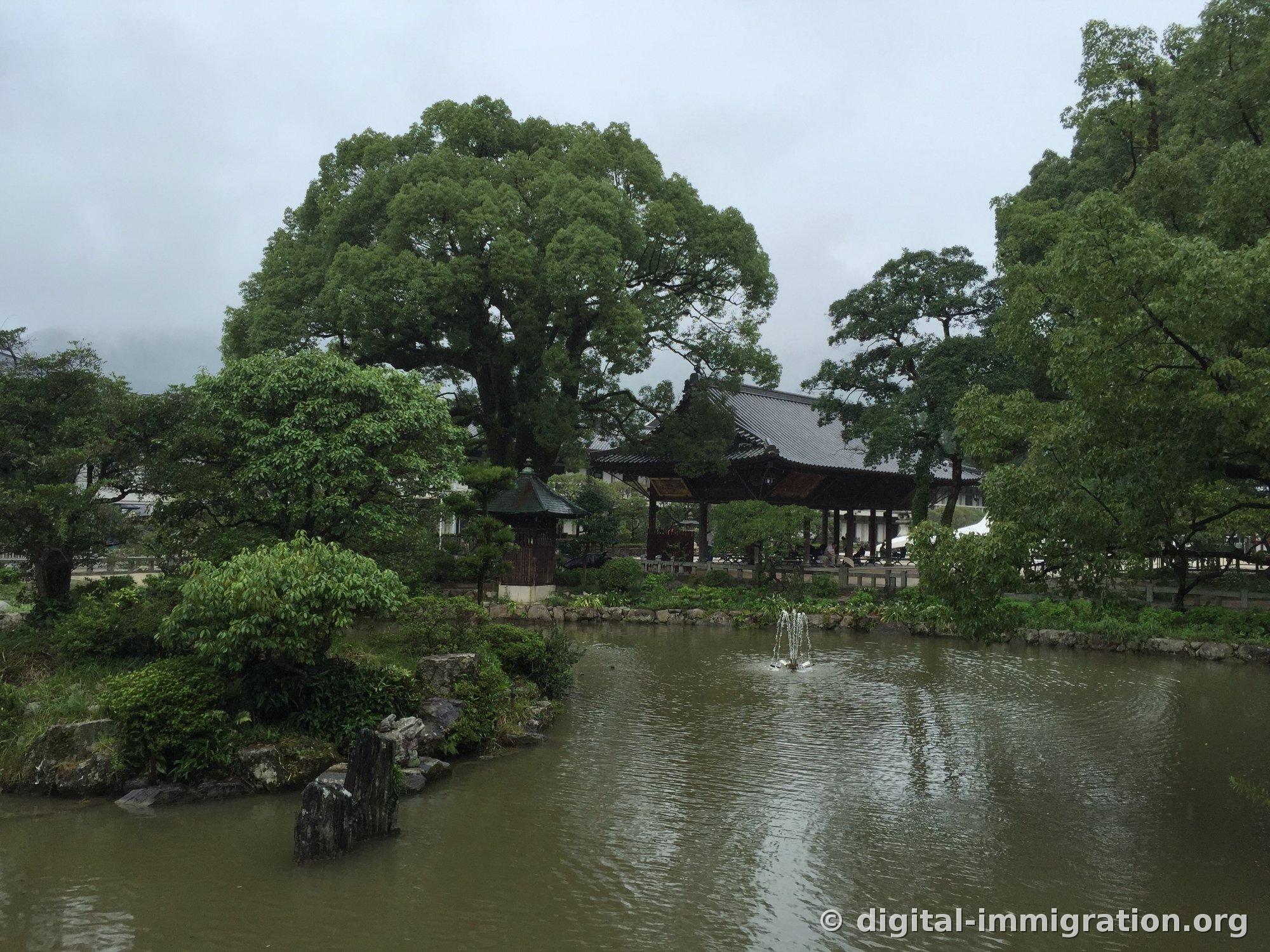
Further ahead, over the Shinjiji pond, three red bridges are laid out. These bridges symbolize past, present, and future. The central arch, the Daikoubashi, is the steepest. The wet stone steps are slippery, so those wearing heeled shoes need to be careful. Indeed, someone ahead of me slipped once.
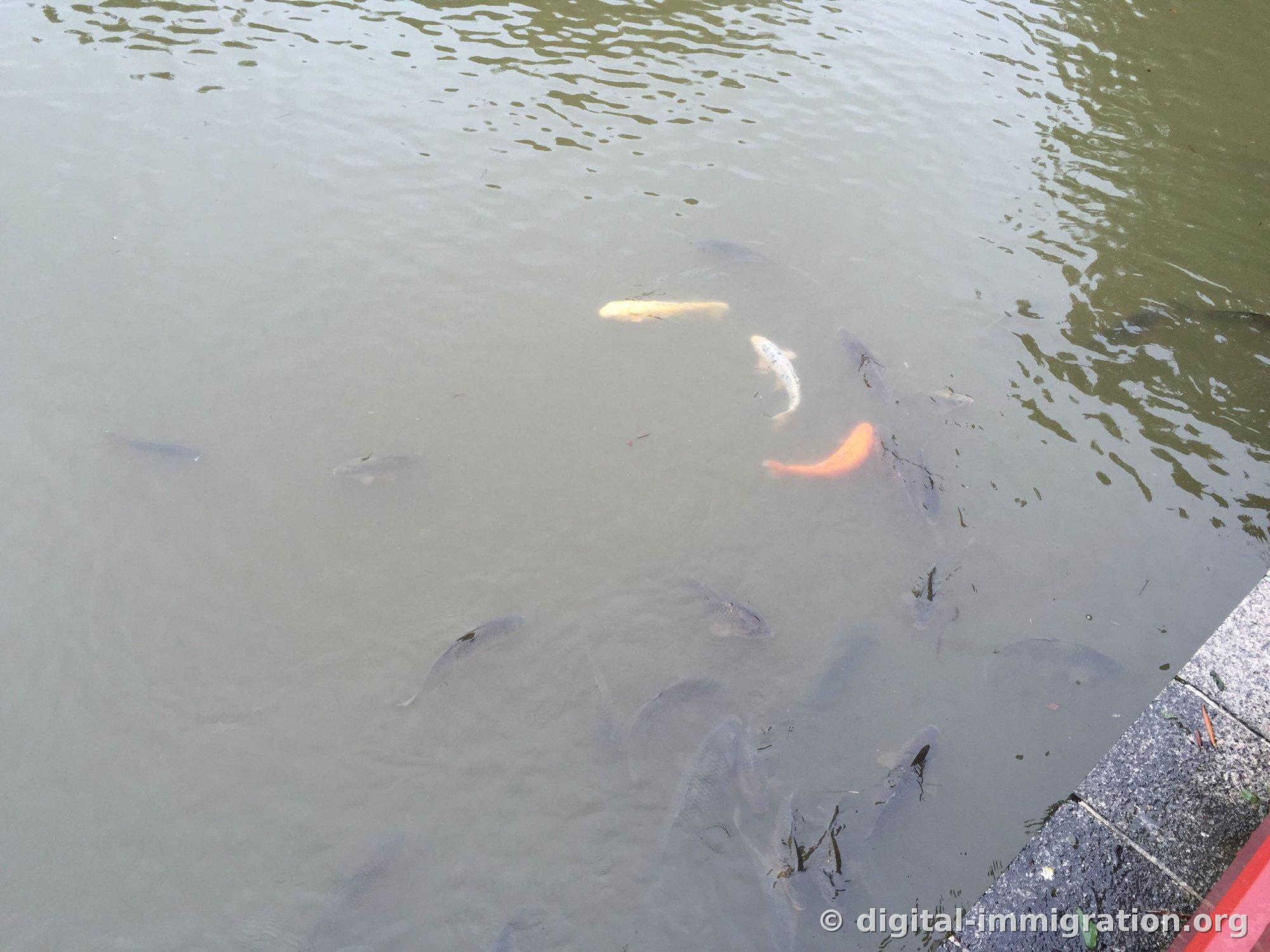
Looking down from the bridge, carp gather below. Watching them follow your footsteps suggests they're accustomed to being fed. Among the gray carp, splashes of orange and white appeared here and there.
Romon Gate and Main Hall
Past the bridge, a crimson romon gate appears. Beneath the eaves hangs a sacred rope draped with white shide. The roof is darkened by the wet weather. When passing under the gate, the sound of rain pauses for a moment—that moment was lovely.
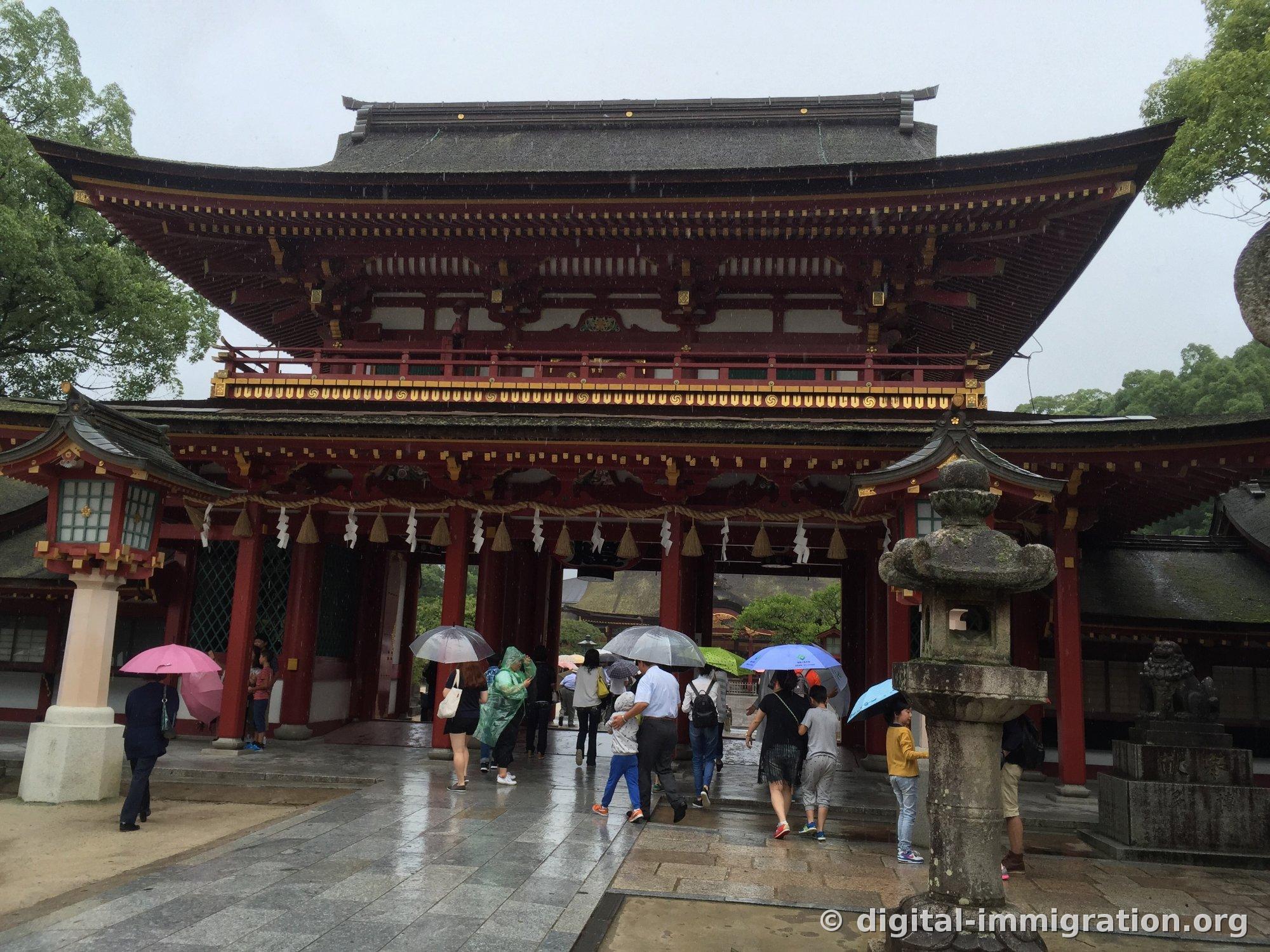
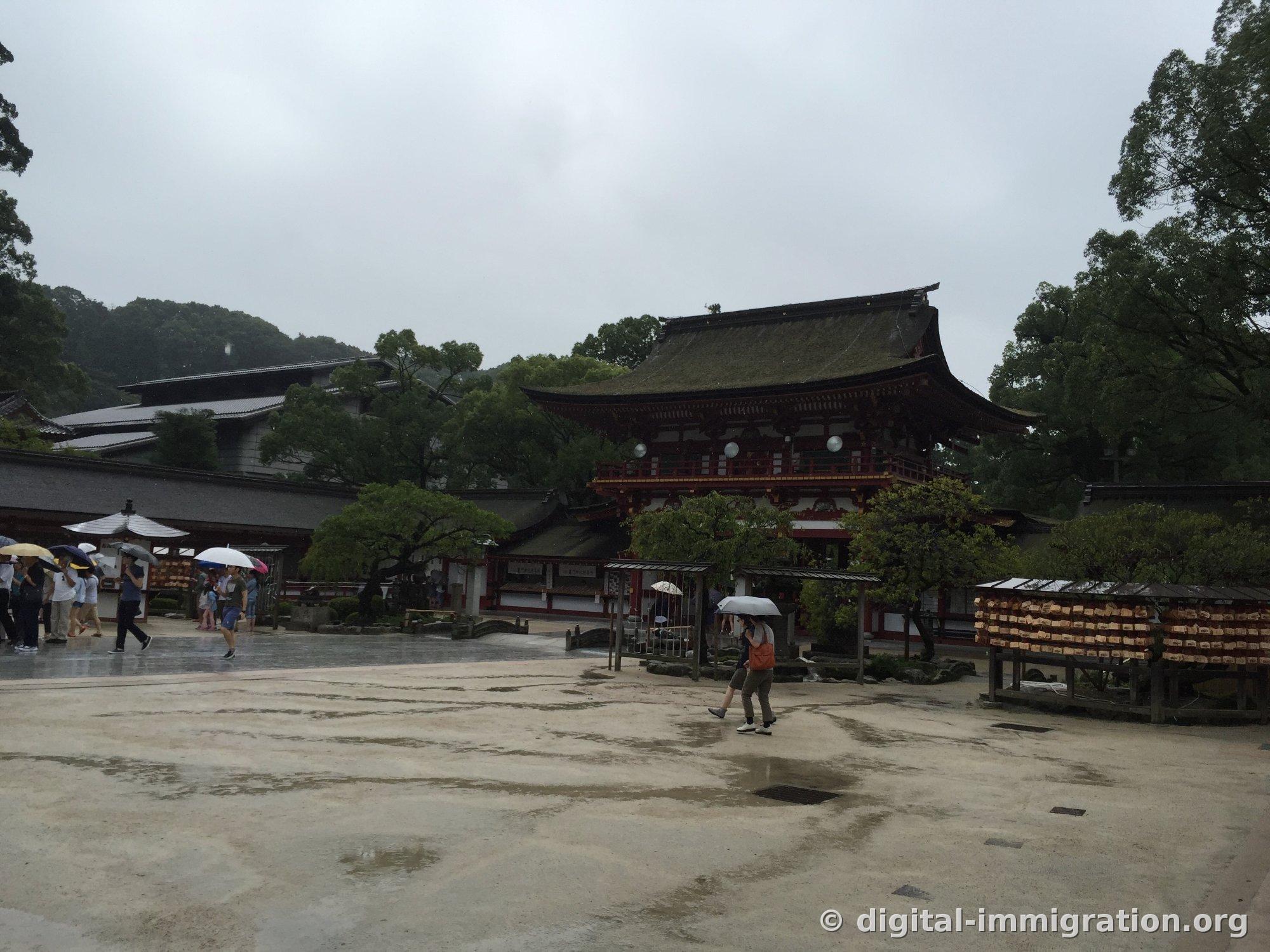
Beyond the romon is a wide stone courtyard before the main hall. The roof is thick hinoki bark, close to thatching, giving it a distinctly different impression from other shrines. The contrast between the gold decorations under the eaves and the dark roof deepened as it absorbed the rain.
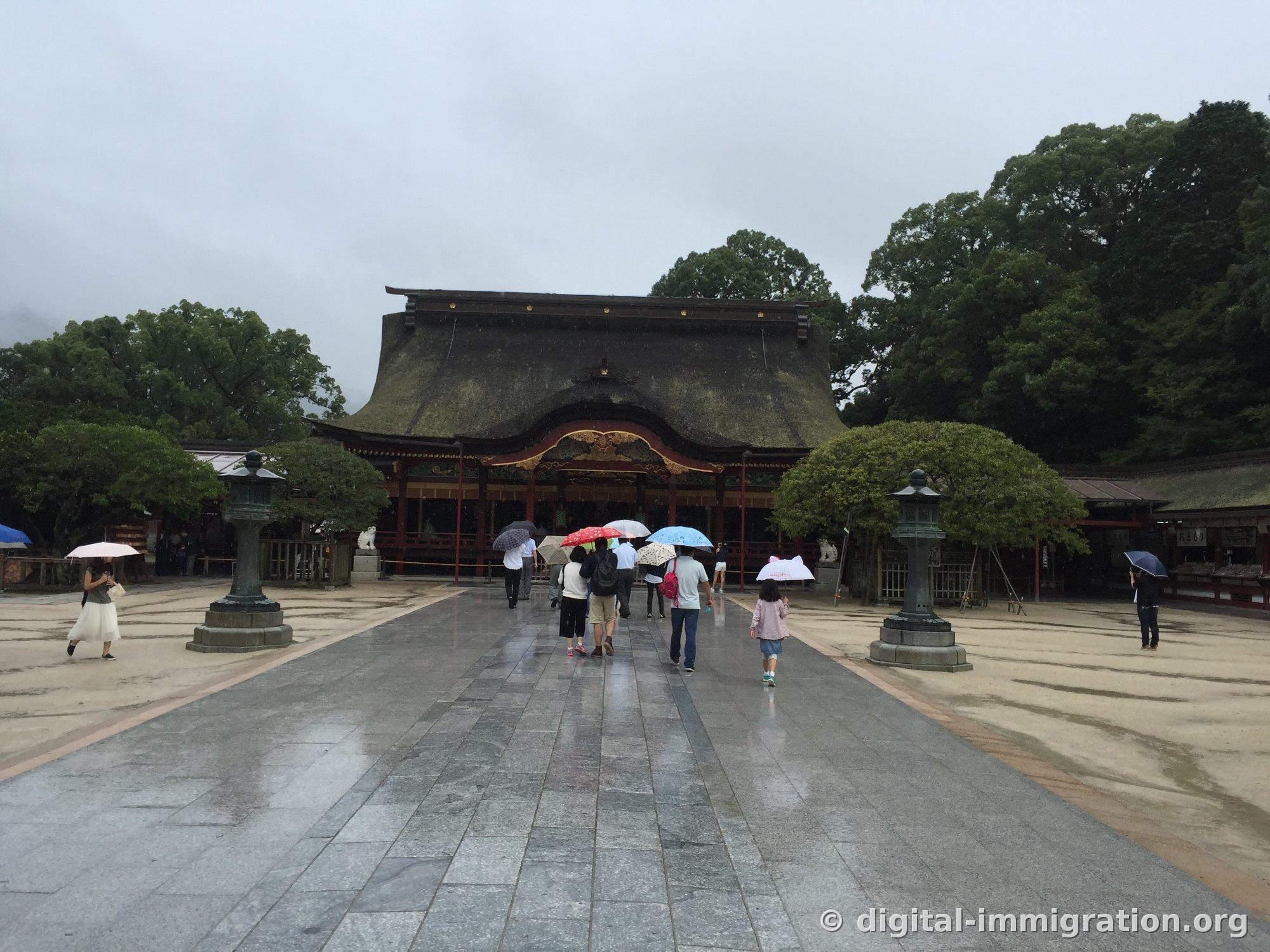
I was fortunate to witness a ritual in progress. A priest in pale green robes was waving an onusa with hanging white paper back and forth, while a few worshippers seated ahead bowed their heads. I took just one quiet photo from outside the corridor and withdrew.
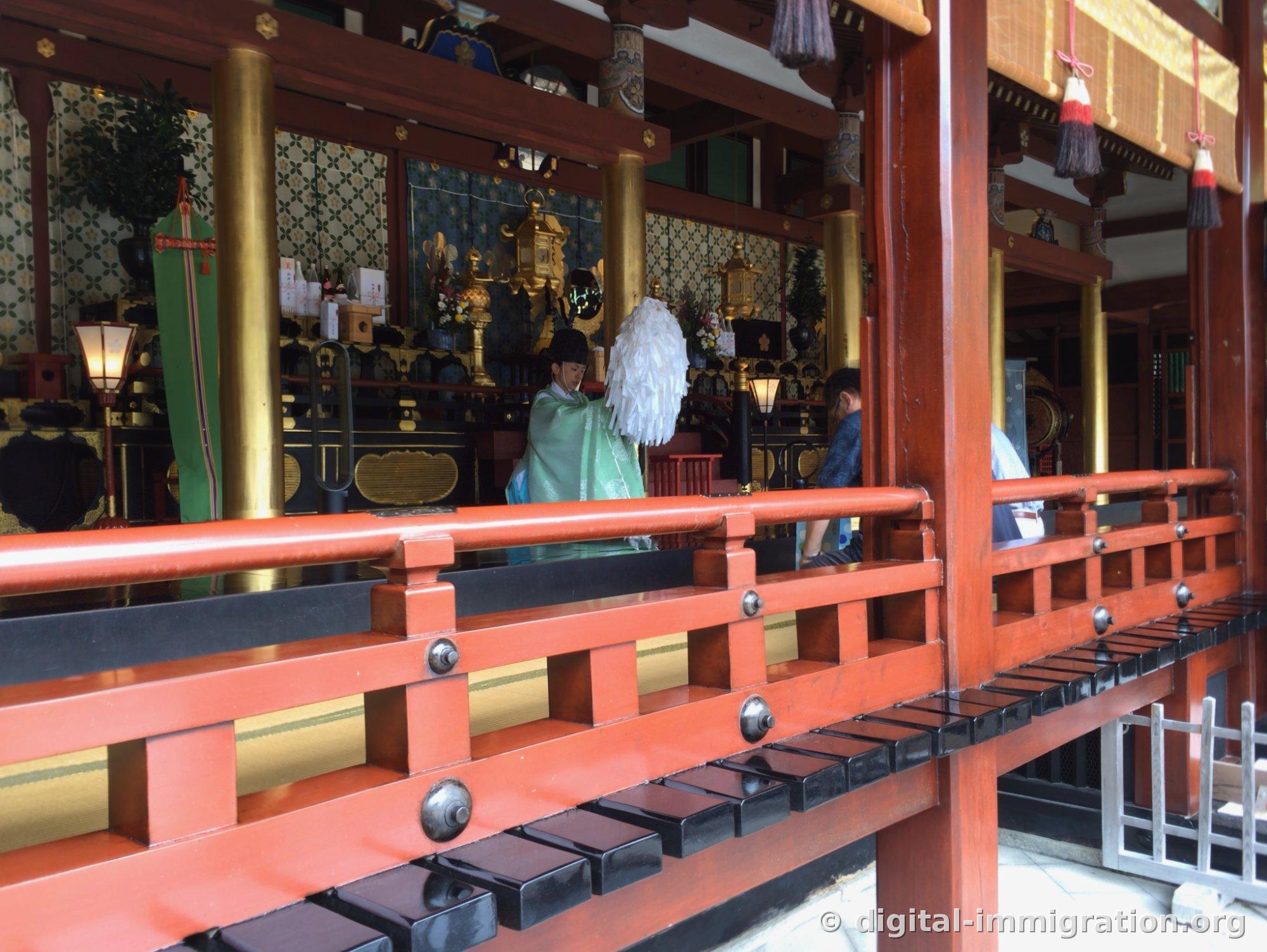
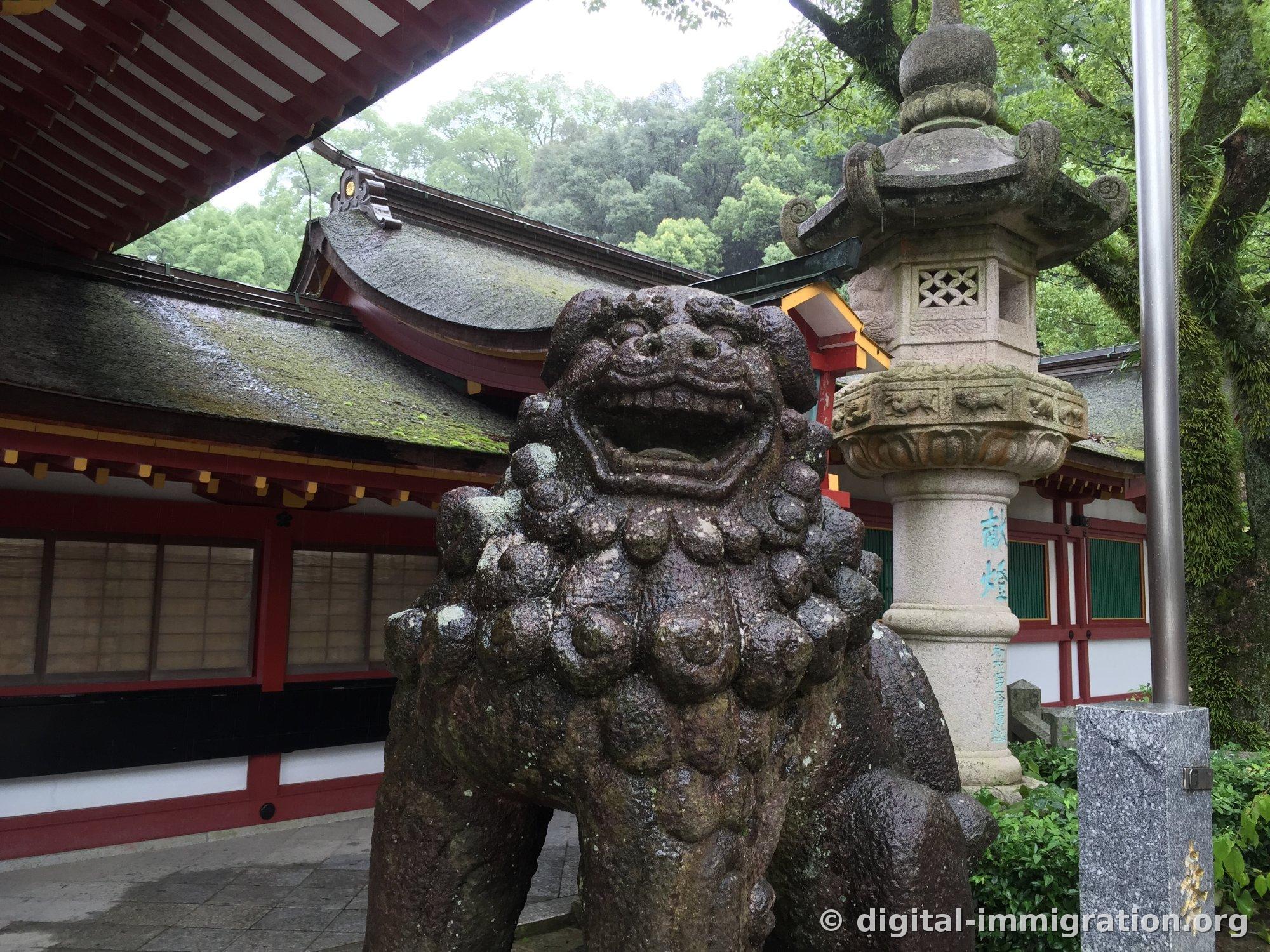
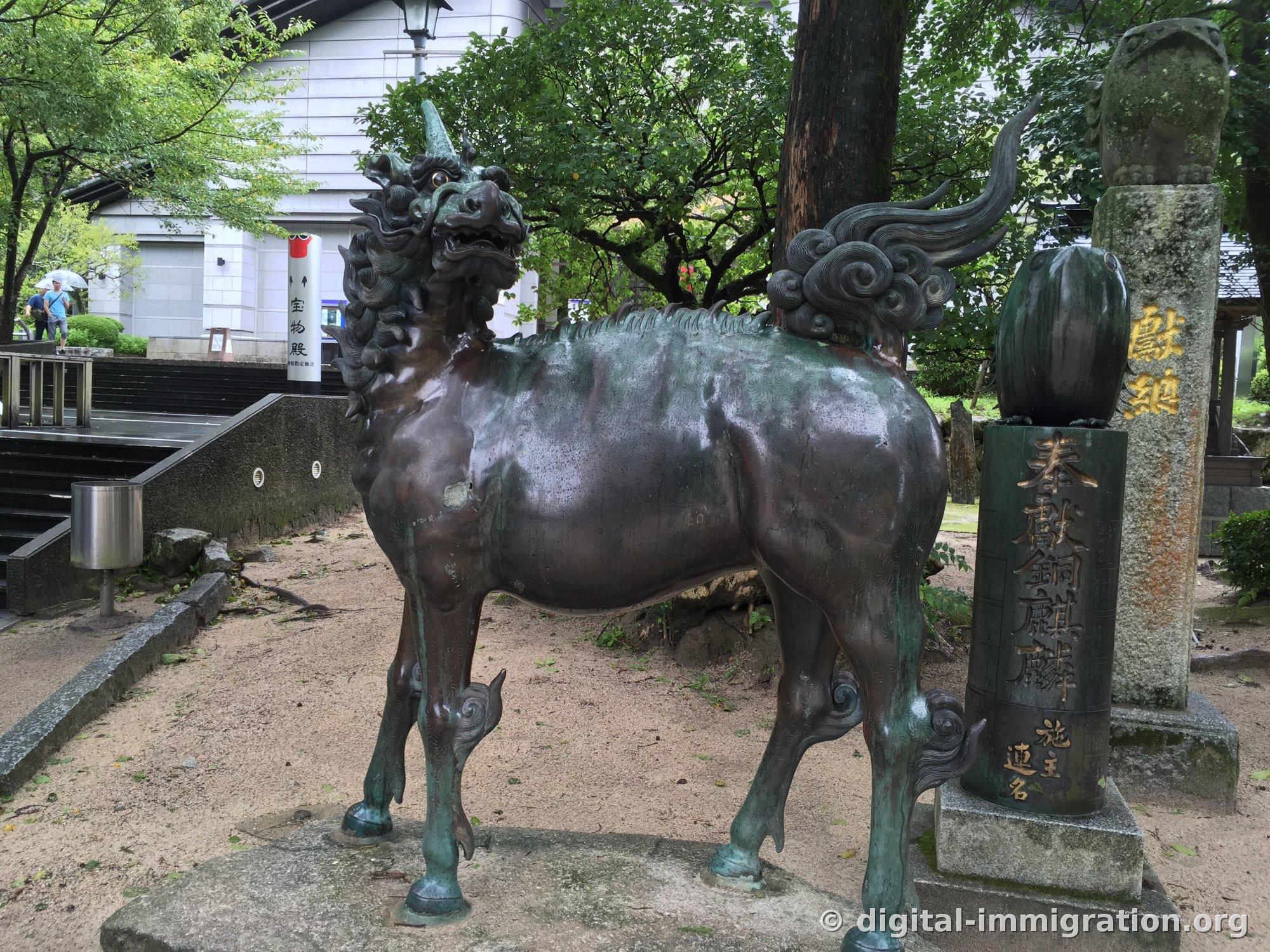
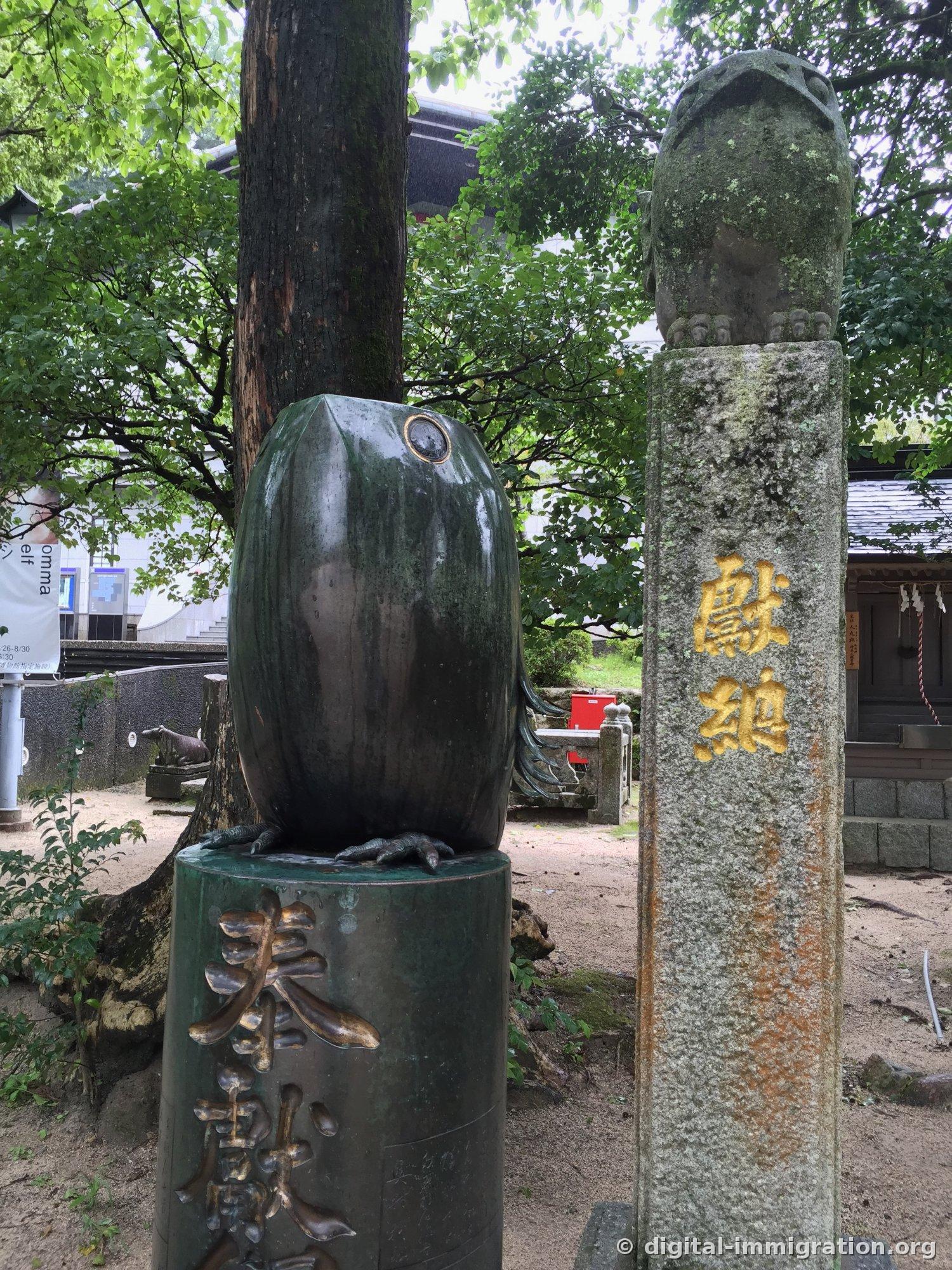
On one side of the grounds, along the path toward the treasure house, stand two bronze animal statues. One is a unicorn, and the other is a uso—the symbolic bird of Tenmangu. The uso, with its plump body and short tail, initially seemed like an abstract sculpture, but looking at the stone marker beside it reading '獻納', I realized it was a donated offering. Both are in locations easily overlooked without reading the explanatory plaques.
What People Rarely Look Up To See — The Great Camphor Tree
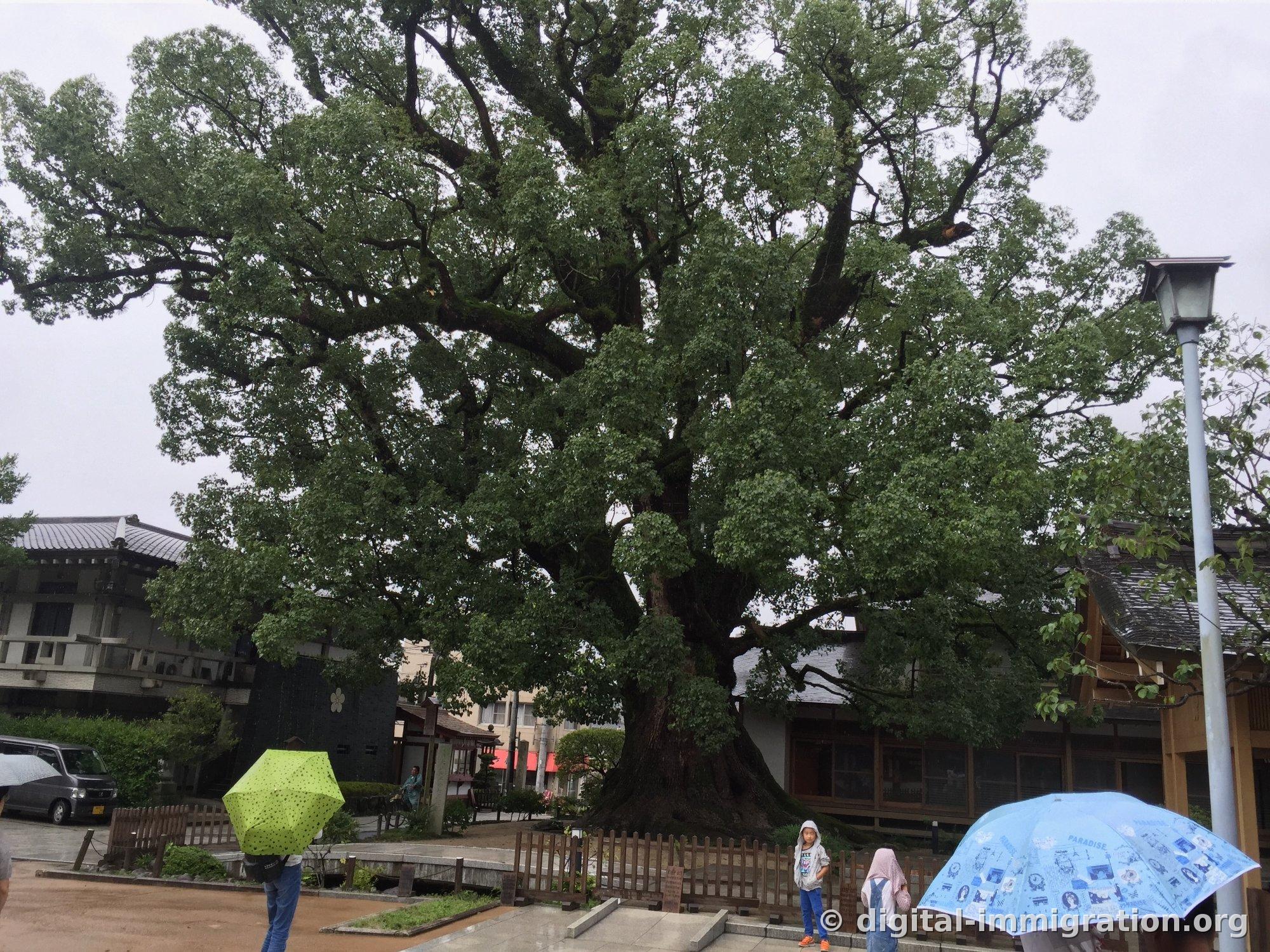
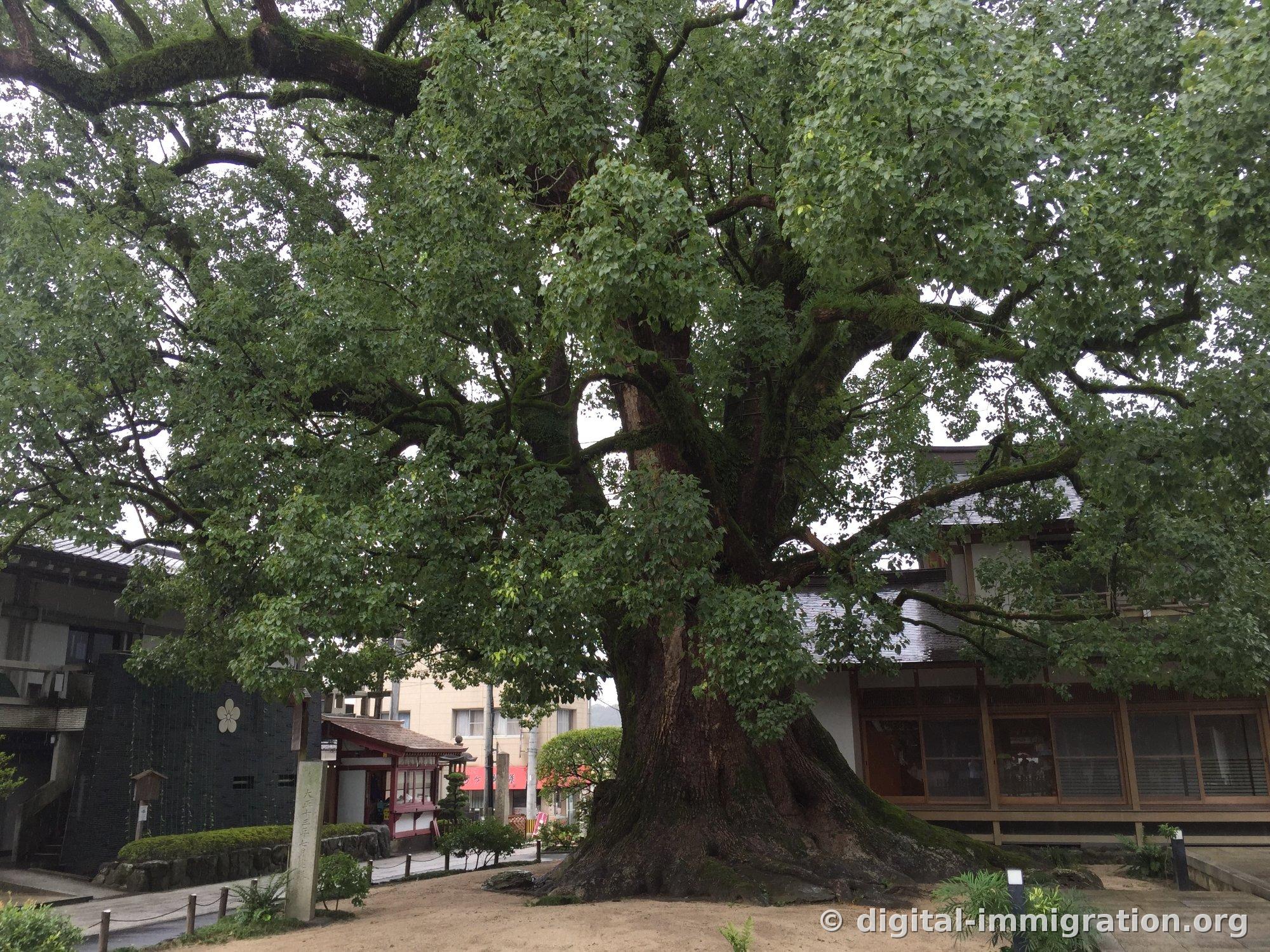
Many people take photos of the main hall and leave, but the grounds are home to several massive old camphor trees. Their trunks are so thick that several adults with outstretched arms would be needed to encircle them. On each branch, mosses and epiphytic plants layer upon layer. Standing beneath one of these trees, even moderate rain is entirely caught by the leaves. I closed my umbrella and stood there for a moment—the scent of wet bark rose strongly. The smell that stayed with me most from Dazaifu was not incense or the scent of sweets, but this tree's aroma.
Things to Remember for Your Next Visit
- There's no reason to avoid rainy days. Fewer people, and the colors of moss and crimson pillars deepen. Just wear shoes with better grip.
- Buy umegaemochi and eat while walking. The texture changes dramatically once it cools.
- For Starbucks photography, go early in the morning. Don't expect to find a seat.
- After worshipping at the main hall, take a lap around toward the treasure house direction to see the unicorn statue, uso statue, and the great camphor tree all in one go. Ten minutes is enough.
- There's a separate corridor from the shrine grounds leading to the Kyushu National Museum. If time permits, it's worth a visit.
The rain never stopped, so I eventually came back down the shopping street with umbrella in hand. The shops that had their shutters down in the morning had now opened, and the smell of grilling pastries was stronger than before. It's only about five minutes to the station from here, yet somehow the descent always feels longer than the ascent on this street.
Read next
- From Akihabara's Chuo-dori to the Kanda River: A Record of Tokyo's Electronics District Revisited Multiple Times
Tokyo's Akihabara is a neighborhood where it's hard to say you've seen everything in a single visit. I've come multiple times across different seasons, and each time the signs chan…
Tokyo · Akihabara - Buying a Single ¥300 Year-End Jumbo Lottery Ticket at Nishi-Ginza Chance Center in Tokyo
Exit from the Hibiya exit of Tokyo's Shimbashi Station, walk toward the elevated highway for about three minutes, and suddenly you'll see a line of people stretching along the side…
Tokyo · Nishi-Ginza Chance Center - Ueno Ameyoko, the real magic starts after sunset — an evening walk from the Okachimachi Gate to Ueno Station
Every time I come to Tokyo, my feet find their way to Ueno Ameyoko (アメ横) without fail. This time I entered from the Okachimachi side and worked my way toward Ueno Station. I've met…
Tokyo · Ameya Yokocho Market