Beneath the Godzilla Head in Shinjuku Kabukicho, Grilling Beef Cutlet on Stone at Gyukatsu Motomura
Walking up from the east exit of Shinjuku Station, at some point you'll find your head tilting back without thinking. A Godzilla head opens its mouth from a building rooftop. It's…
Tokyo · Gyukatsu Motomura
Walking up from the east exit of Shinjuku Station, at some point you'll find your head tilting back without thinking. A Godzilla head opens its mouth from a building rooftop. It's the TOHO Cinemas building in Shinjuku Kabukicho, Tokyo, with Hotel Gracie above it. That evening, Gyukatsu Motomura (牛かつ もと村), where I headed, was tucked in an alley directly beneath that Godzilla head. If you came to see Godzilla and are looking for somewhere to eat, honestly, knowing this place alone is enough.
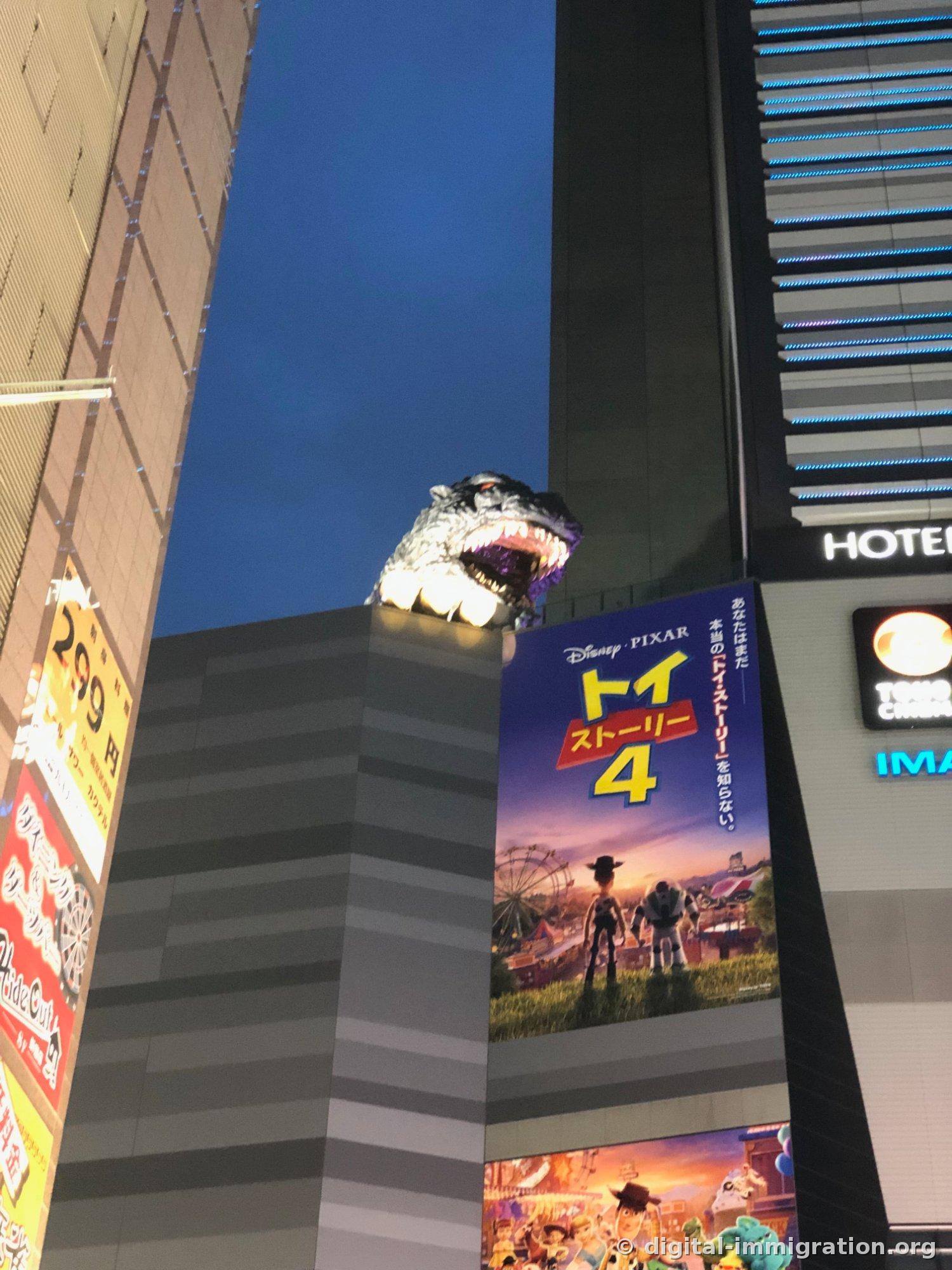
Using the Godzilla Head as Your Compass So You Don't Get Lost
The Kabukicho alleys have signs stacked vertically, so your sense of direction falls apart the first time you visit. On my first visit, I walked around the same block twice. That's when I started using the Godzilla head as a reference point. From any alley, look up and you'll see the head from some angle, and the direction where the head faces you directly is toward the TOHO Cinemas main entrance.
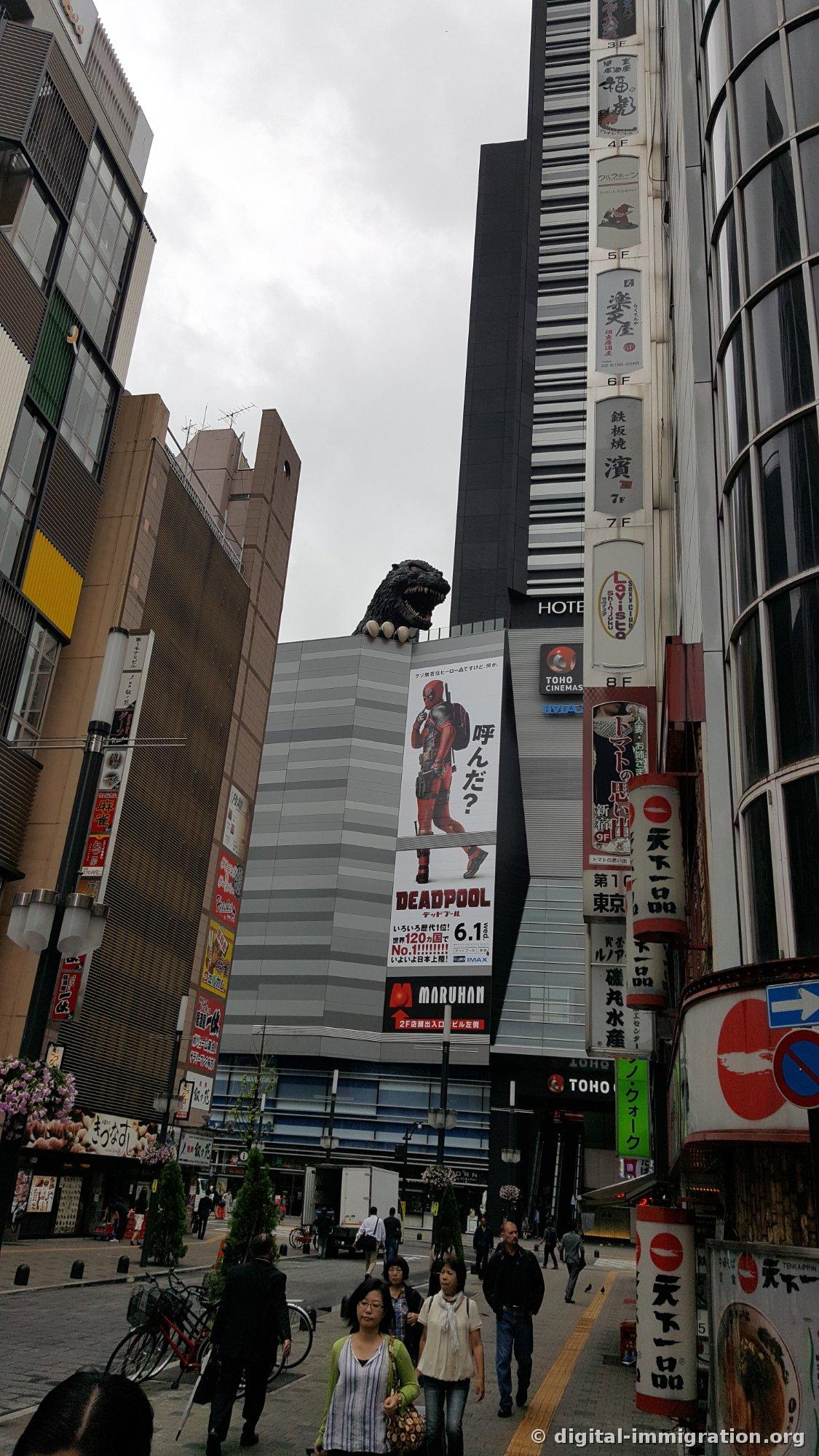
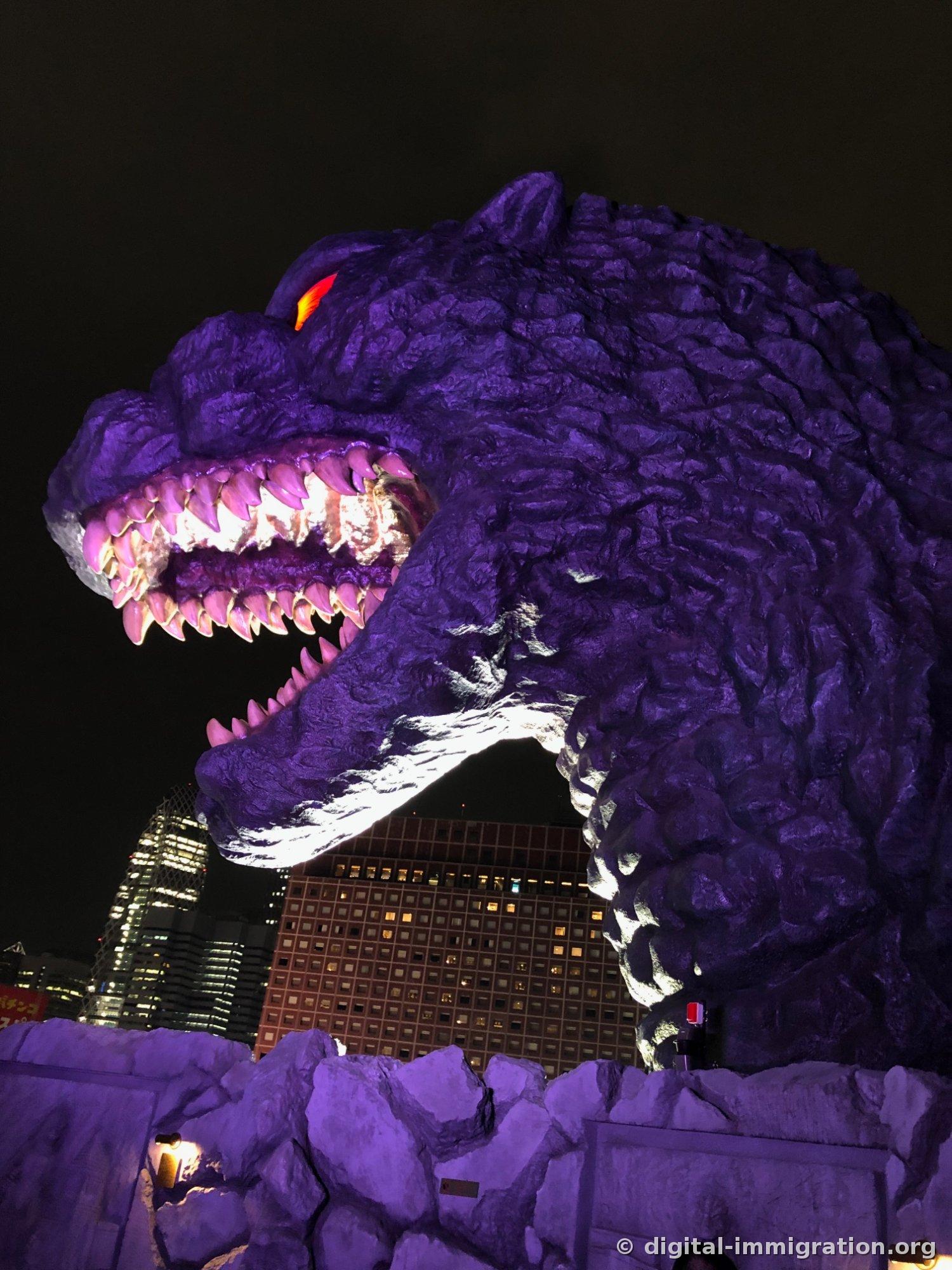
The impression is completely different day and night. During the day, movie posters on the gray building catch your eye, but at night when the lights come on, the Godzilla turns purple. Looking up close at night, each tooth is lit from within, and orange lights are set in its eyes. People stop to take photos here, occasionally blocking the sidewalk.
A Menu Stand Stands Beside the Noren
The shop entrance is unassuming. A cream-colored noren with 牛かつ written in calligraphy, with もと村 written small below it, and a red seal stamp beside. A menu stand stands in front. This is quite important. Don't go inside and deliberate over what to order—it's better to decide here in advance. This is a place with quick table turnover, so they'll take your order the moment you sit down.
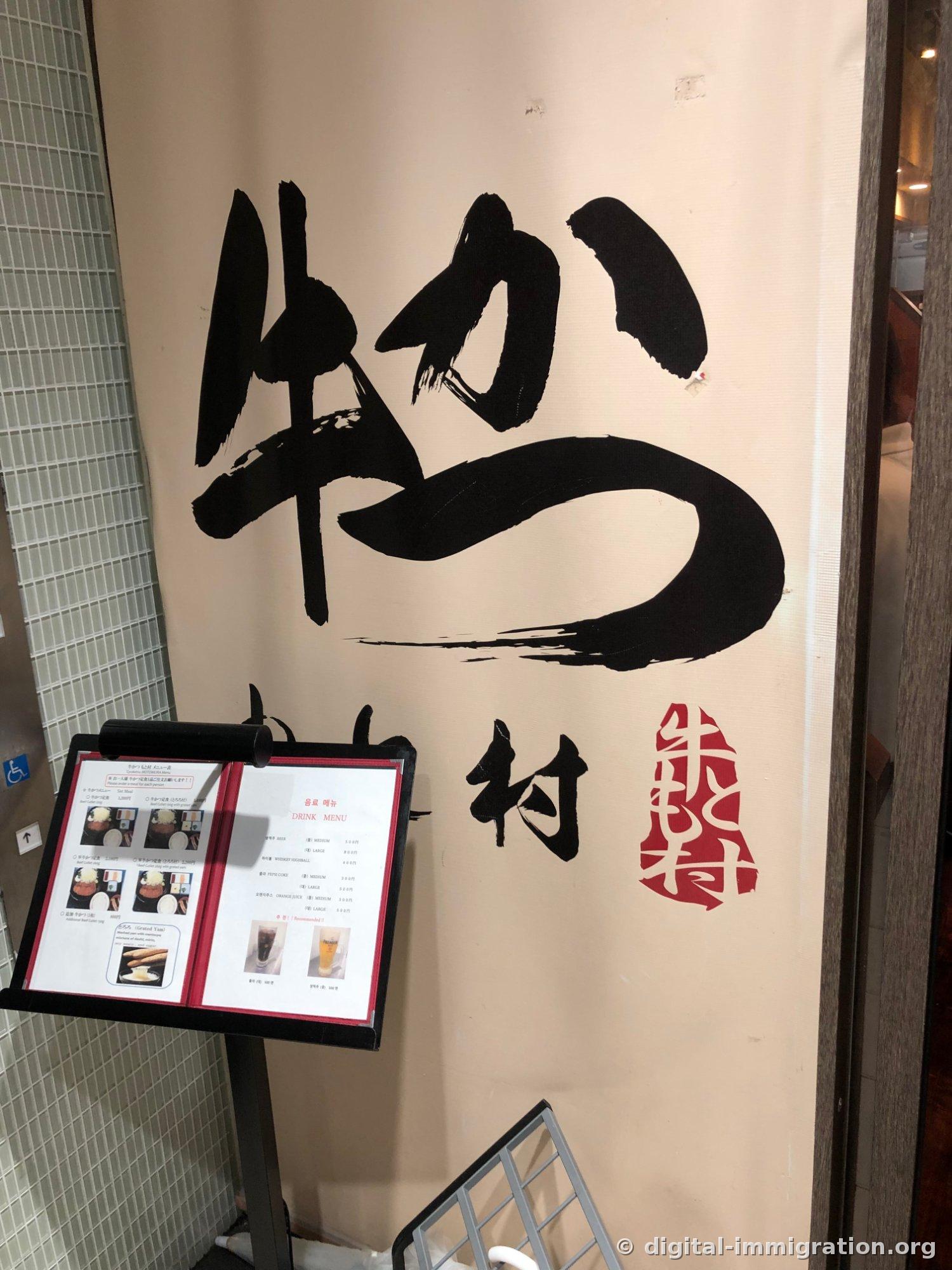
The menu is simple. A beef cutlet set at 130g for ¥1,300, or ¥1,400 with tororo (grated mountain yam). The double serving W beef cutlet set at 260g is ¥2,100, or ¥2,200 with tororo. An additional meat slice (130g) is ¥800. At the top, in a red border, it's stated in both Japanese and English: "Please order one set per person." It means two people can't split one order.
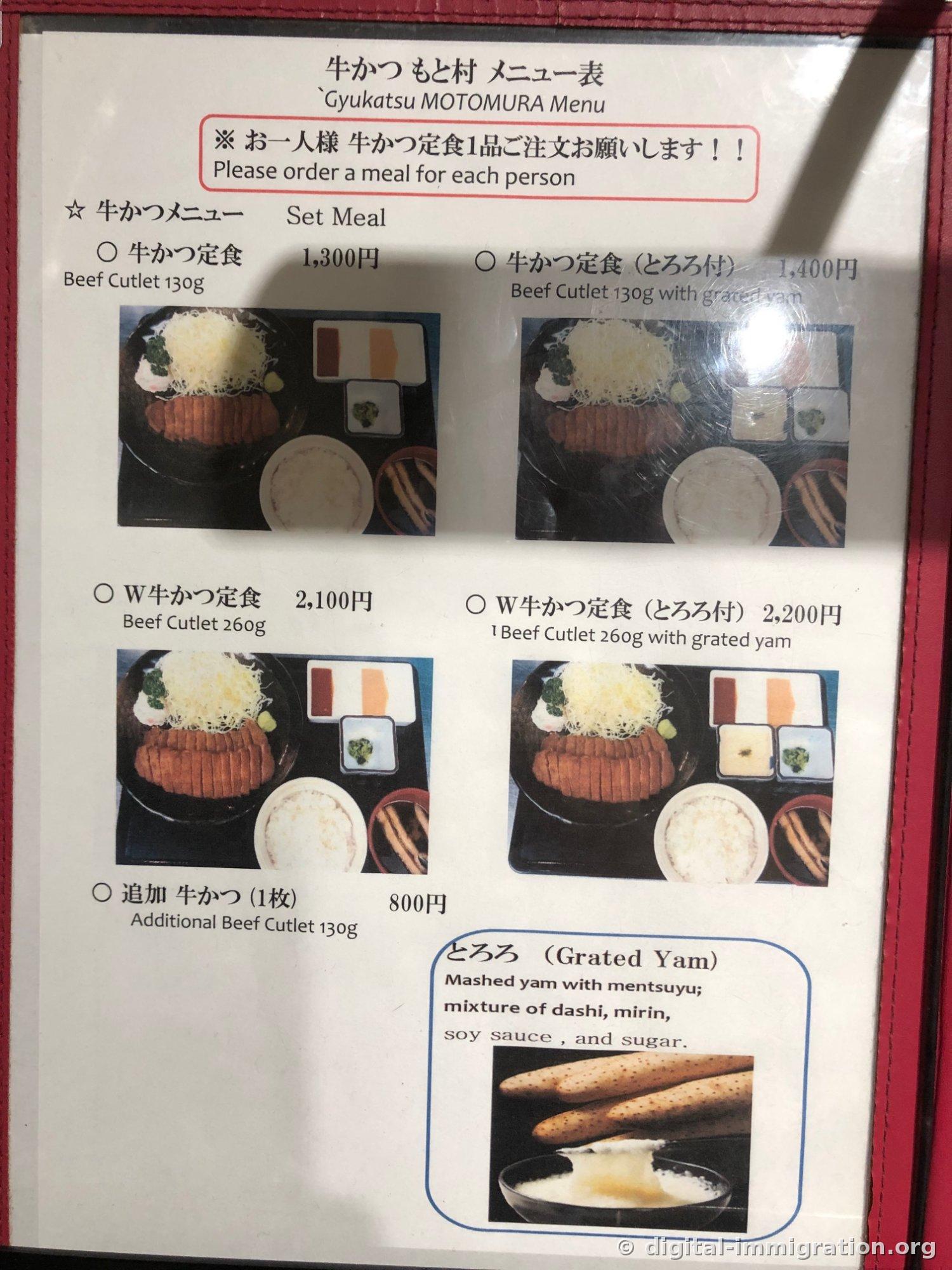
Beverages get their own page. Draft beer medium ¥500, large ¥800, highball ¥400, cola and orange juice ¥300 and ¥500 respectively. What stands out is that this beverage page also has Korean text. It speaks to how many Korean customers come here. That day too, two tables next to me were speaking Korean.
The Stone Plate Comes First — The Heart of This Place
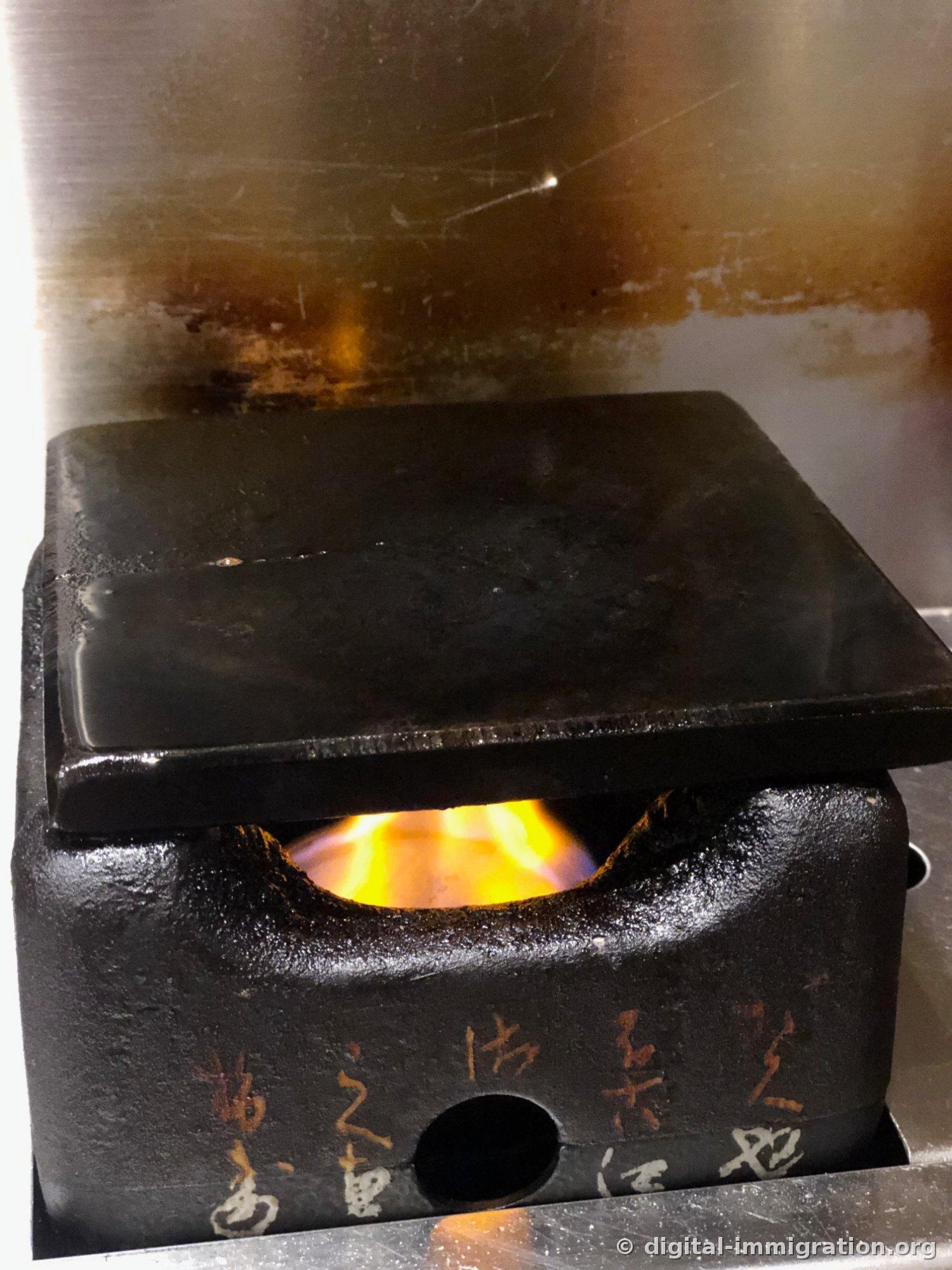
When you order, the stone plate arrives before the meat. A black stone plate sits atop an iron stand, with solid fuel burning bright orange inside. When seated at the counter, this flame flickers close to your face. In summer, the heat is subtly oppressive. On the sides of the stand, white and red lettering remain as if handwritten, all bearing the marks of repeated charring from the flames—every piece of equipment shows the patina of long use.
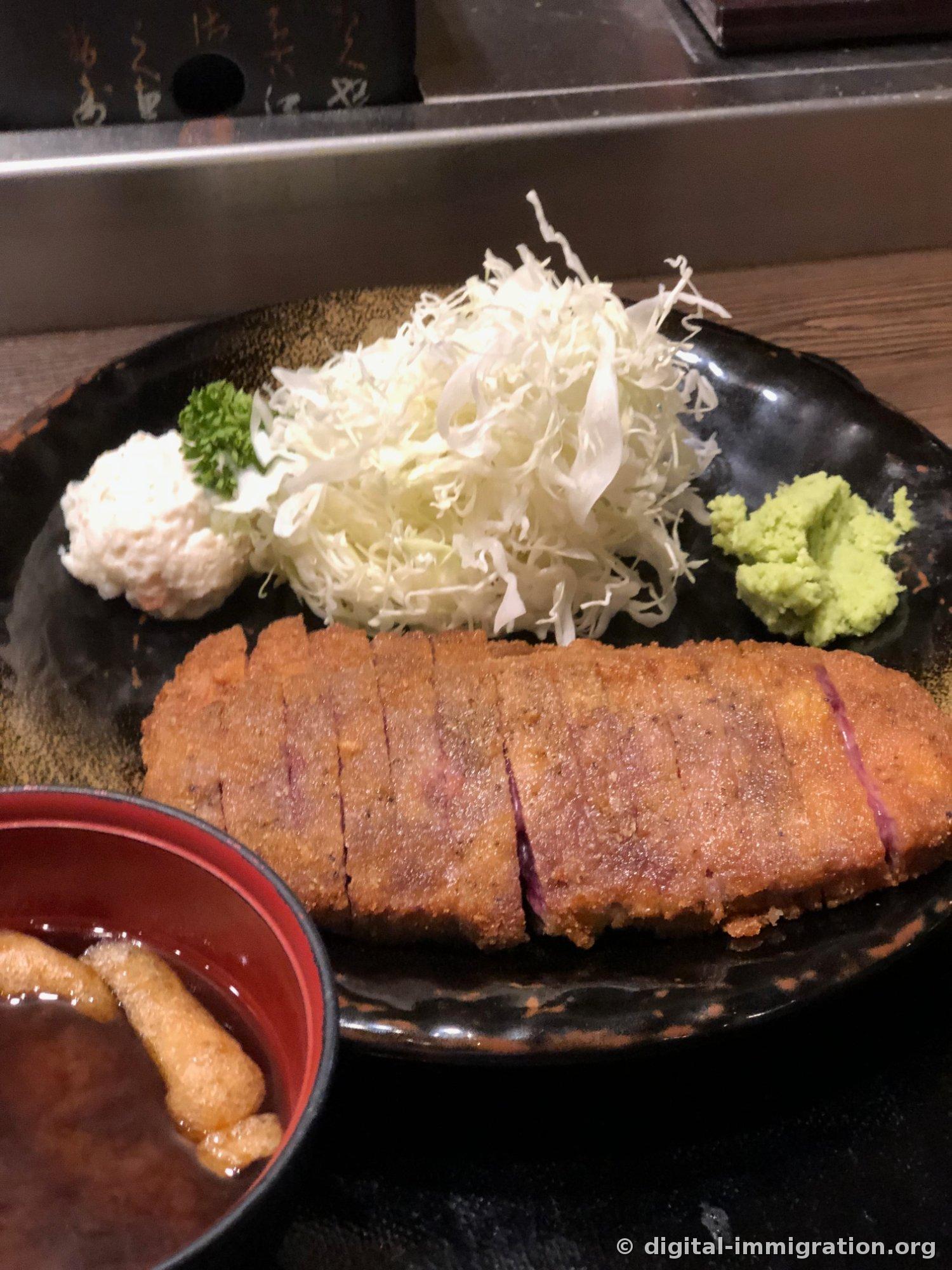
While the stone plate heats up, the full set arrives. Thick-cut beef cutlet lies on a black lacquered plate, with julienned cabbage heaped beside it like a mountain. On the left, potato salad dressed in mayo and parsley; on the right, a dollop of wasabi. Miso soup with fried tofu comes in a separate red bowl. Rice is served with free refills.
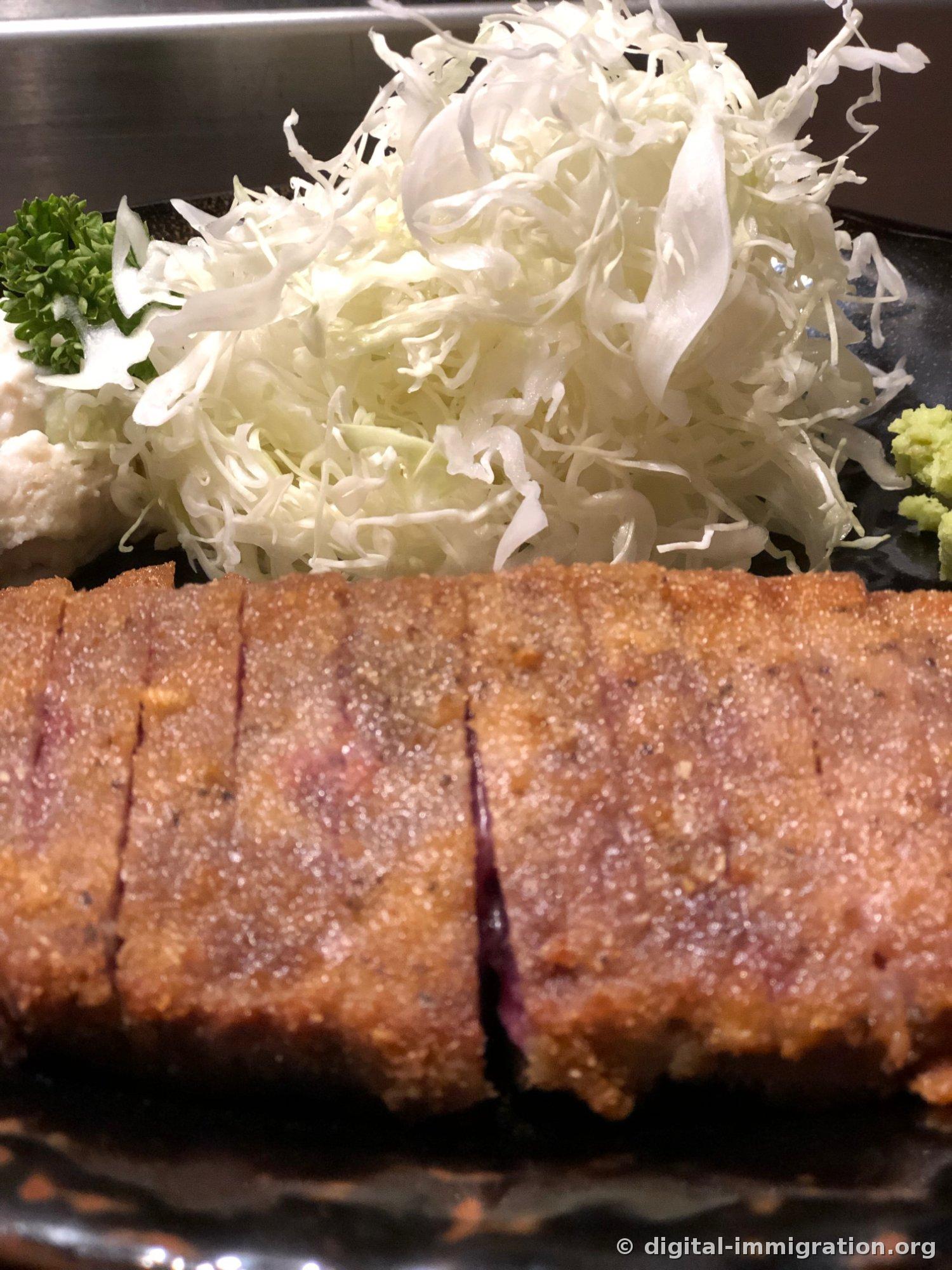
Looking close, the breading is incredibly fine. Rather than coarse panko, it's coated thinly with finely crushed crumbs and fried, so the surface has a sandpapery texture but isn't thick. Only the edges of the cross-section are slightly cooked; the inside remains raw meat with a purplish hue. First-timers might think, "They want me to eat this raw?" But that's the house style here.
It's All About the Seconds on the Stone
The moment you place meat on the stone plate, there's a sharp sizzle that ends quickly. It doesn't continue sizzling like in a pan. So if you just listen, you can't gauge the doneness. You have to watch the color of the cross-section with your eyes.
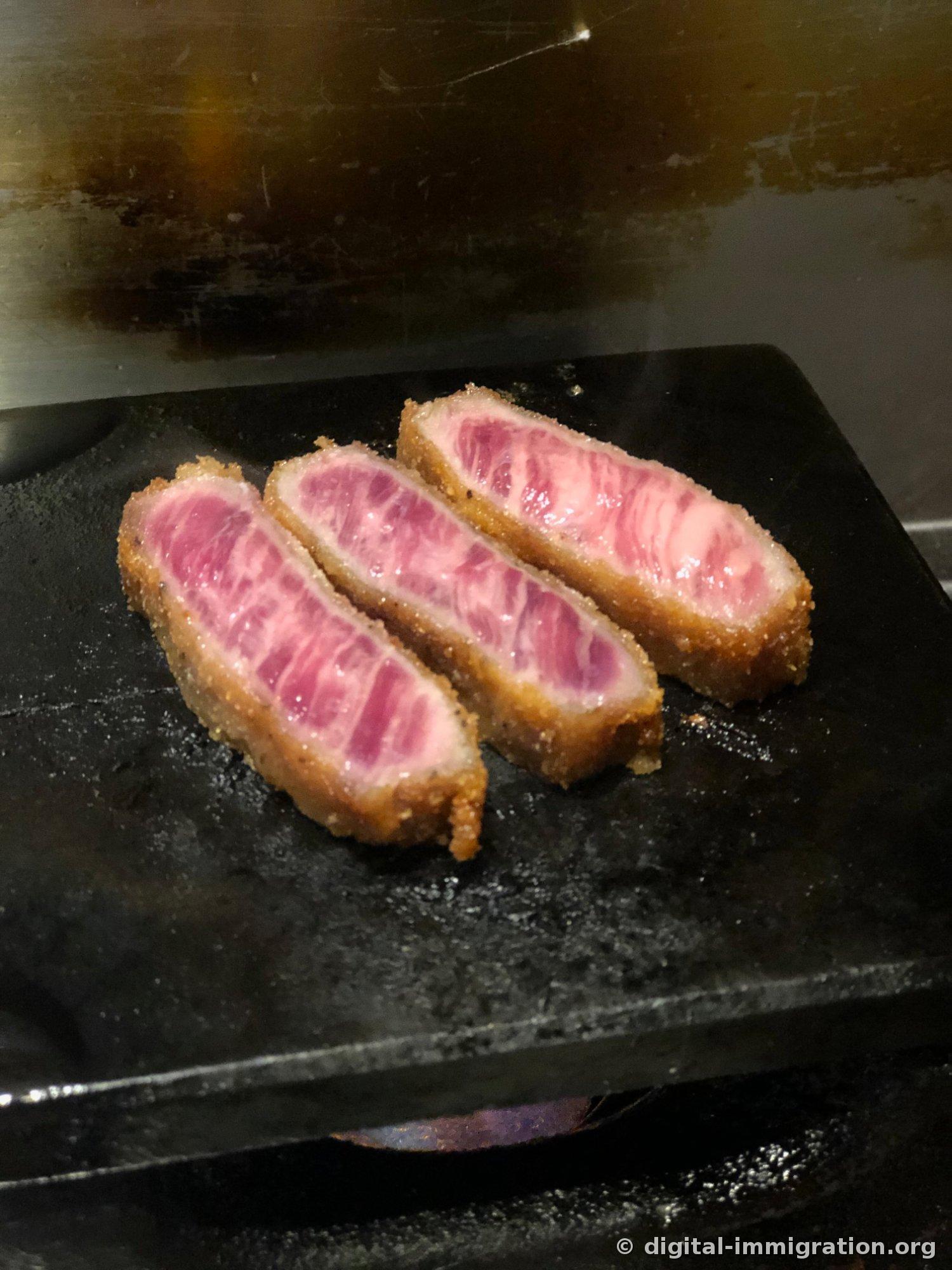
About fifteen seconds on one side, then flip and another fifteen on the other. The pink lightens, leaving only a red dot in the center. That's the level I preferred most. When you bite into it, the exterior breading shatters while the meat inside is still moist. On my first visit, I was nervous and cooked it all the way through—that was just well-fried beef cutlet. Once I reduced the cooking time, I understood why this place is famous.
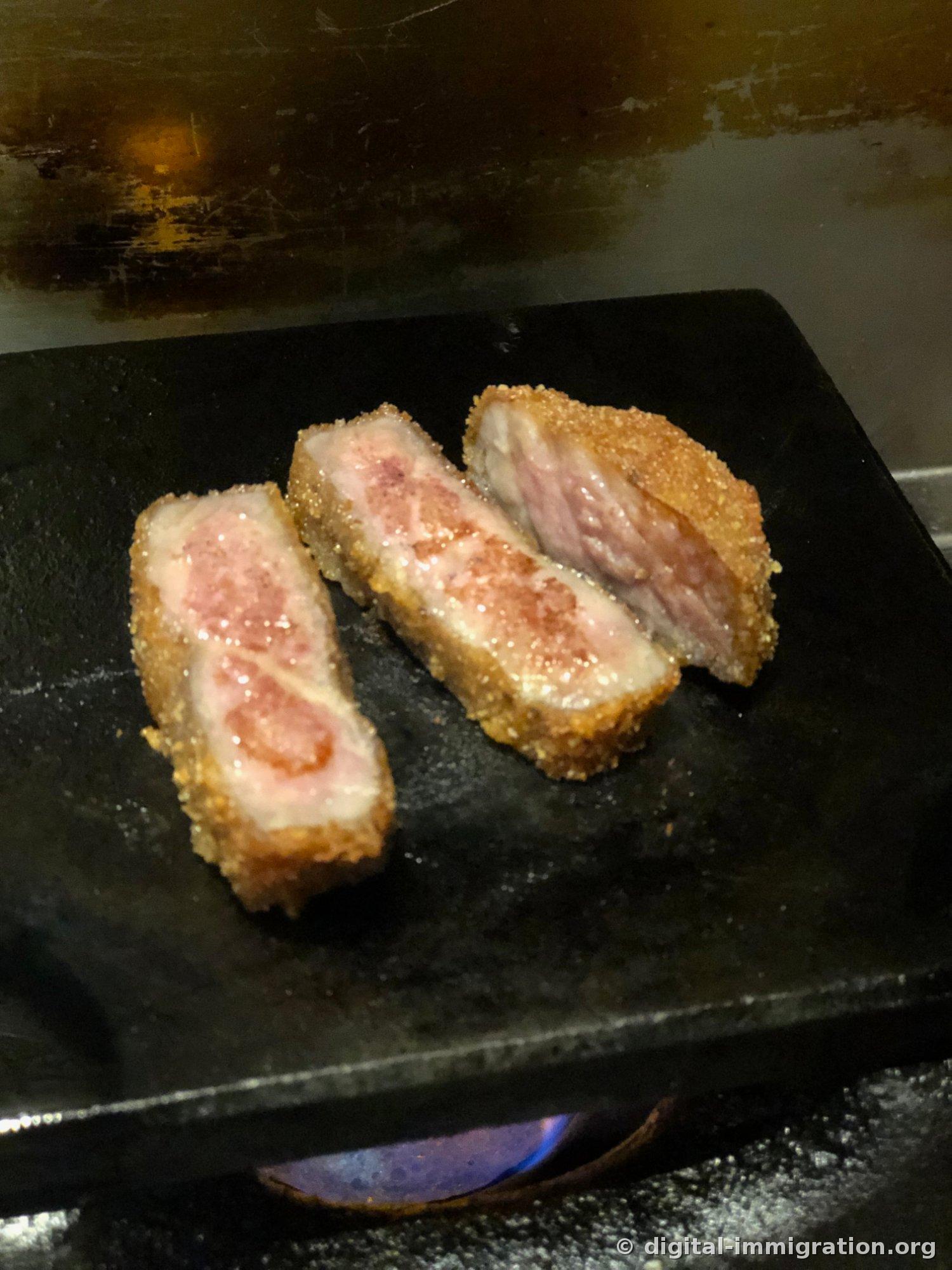
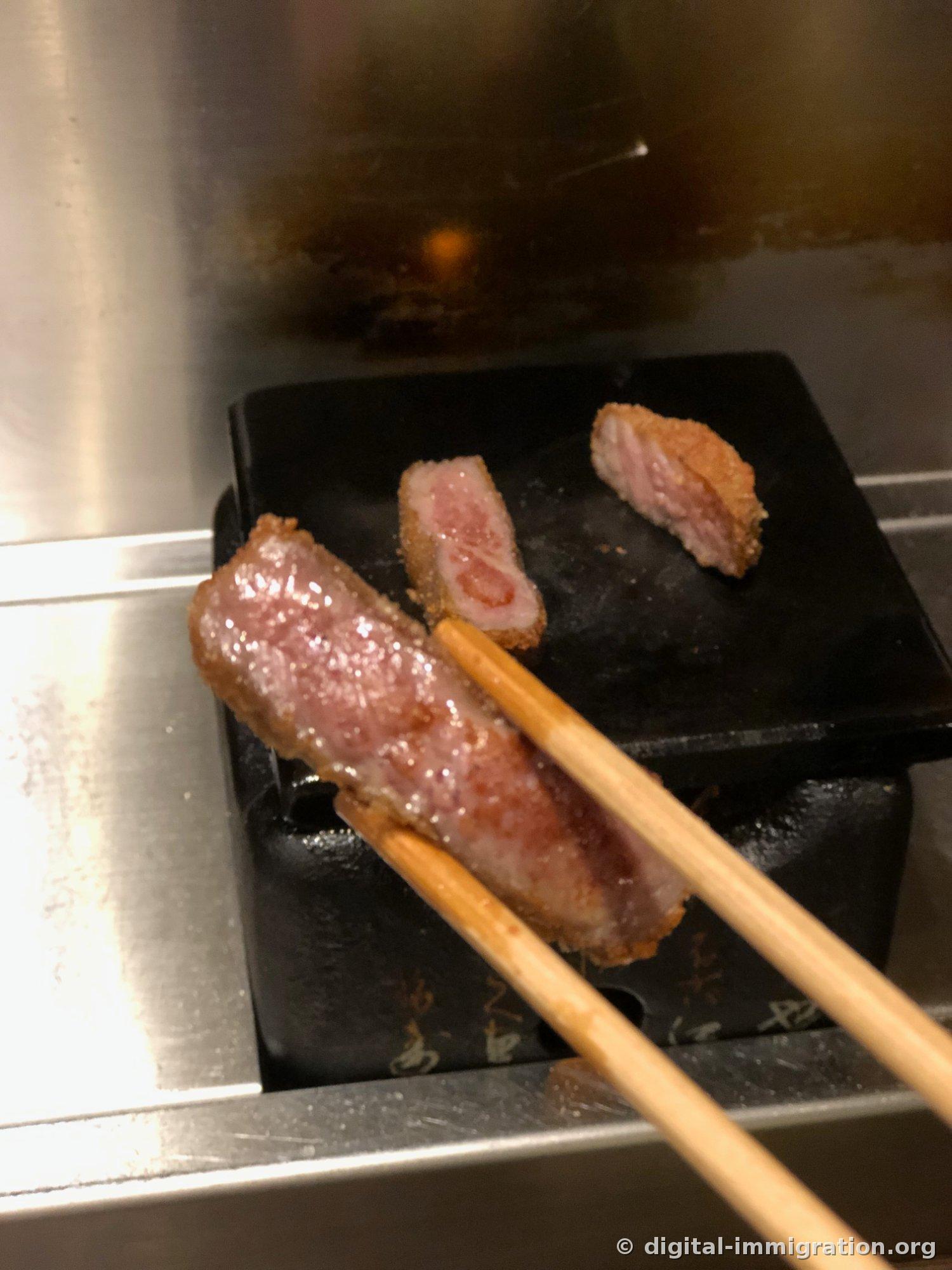
How you eat it is a matter of preference. There are two sauce options, rock salt, and wasabi on the table, so I tried dipping each piece differently. Salt and wasabi combination was cleanest, though the sauce tasted one-note by the second piece. You need to keep eating cabbage in between. Even though 130g seems small, the meat is rich, so by the end it feels heavy.
Good to Know Before You Go
- It's inside the TOHO Cinemas block where you can see the Godzilla head. About a 7-8 minute walk from the east exit of Shinjuku Station.
- One set per person is the rule, so order one set per person. If someone eats light, go with the basic 130g set.
- The stone plate doesn't stay hot indefinitely. Don't put all the meat on at once—cook it in batches of two or three pieces to maintain your desired doneness through the end.
- Most seating is at the counter, so it's not a place where groups sit facing each other to talk. Actually, it's quite convenient for eating alone.
- Lines form during meal times. Early evening when movie showtimes overlap is especially busy. Prices and hours may change, so it's safer to confirm on-site.
The Godzilla head gives you nothing more to see after one photo. But those thirty minutes in the alley below it, holding a stone plate and adjusting the doneness as you cook, stay in your memory quite a while. If you're wondering where to eat dinner in Shinjuku, this is the place I recommend first.
Read next
- From Akihabara's Chuo-dori to the Kanda River: A Record of Tokyo's Electronics District Revisited Multiple Times
Tokyo's Akihabara is a neighborhood where it's hard to say you've seen everything in a single visit. I've come multiple times across different seasons, and each time the signs chan…
Tokyo · Akihabara - Buying a Single ¥300 Year-End Jumbo Lottery Ticket at Nishi-Ginza Chance Center in Tokyo
Exit from the Hibiya exit of Tokyo's Shimbashi Station, walk toward the elevated highway for about three minutes, and suddenly you'll see a line of people stretching along the side…
Tokyo · Nishi-Ginza Chance Center - Ueno Ameyoko, the real magic starts after sunset — an evening walk from the Okachimachi Gate to Ueno Station
Every time I come to Tokyo, my feet find their way to Ueno Ameyoko (アメ横) without fail. This time I entered from the Okachimachi side and worked my way toward Ueno Station. I've met…
Tokyo · Ameya Yokocho Market