Barefoot at Okinawa's Shuri Castle — From Shureimon to the Royal Throne, A Late Afternoon Visit with a Child
As you climb Shuri hill from central Naha, the air shifts. The hot, sticky air from International Street is filtered here through tree shade. Okinawa's Shuri Castle was once the ro…
Okinawa · Shuri Castle
As you climb Shuri hill from central Naha, the air shifts. The hot, sticky air from International Street is filtered here through tree shade. Okinawa's Shuri Castle was once the royal palace of the Ryukyu Kingdom, and now the entire castle is enclosed as a park. We arrived after four in the afternoon. Our schedule had slipped because the child woke late from a nap, but it turned out to be the best decision. Shuri hill at midday has almost no shade.
Through Three Red Gates in Sequence
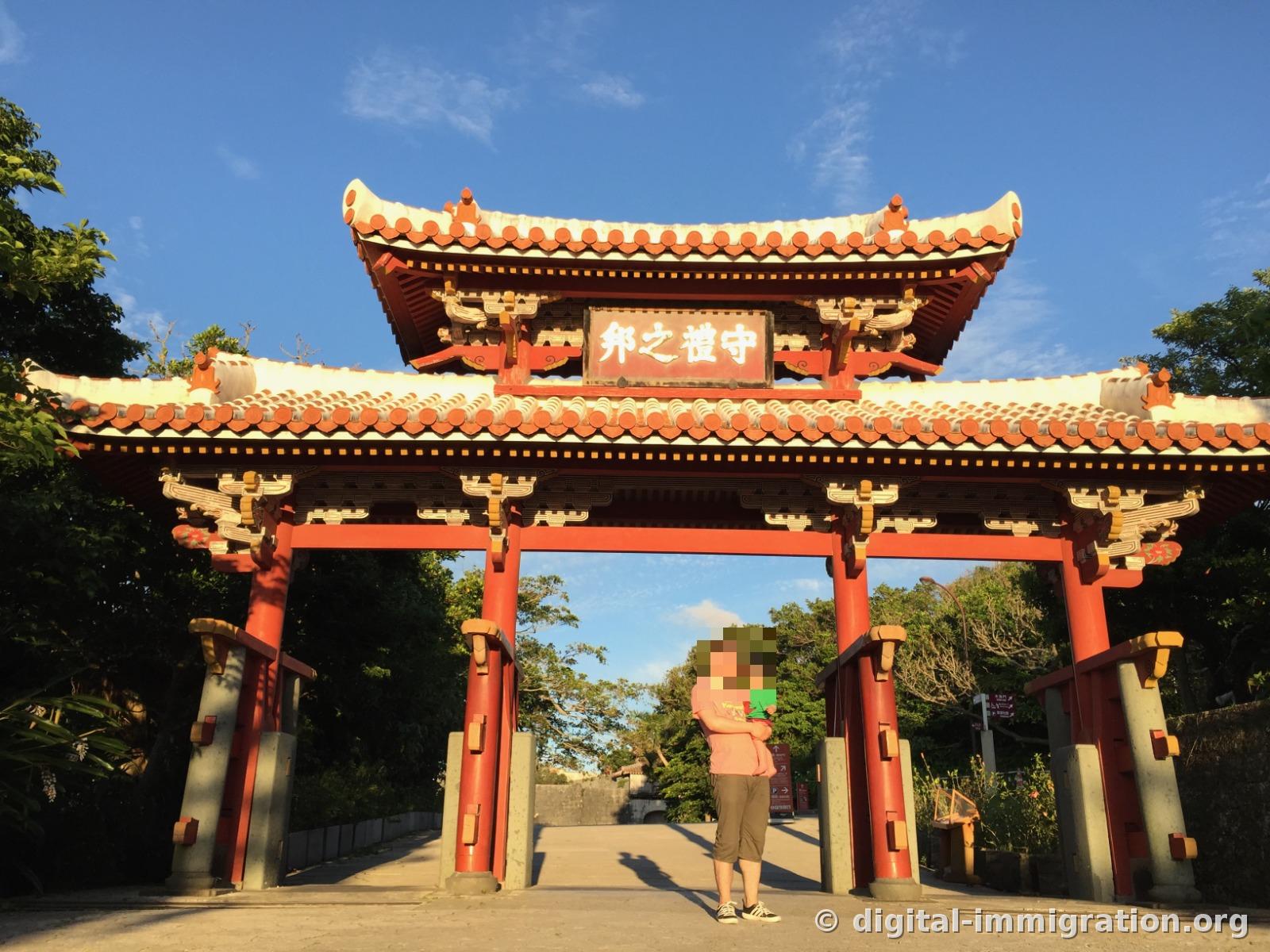
The first thing you encounter is Shureimon Gate. The wooden plaque reads "守禮之邦" in four characters—the same gate that appears on the 2,000 yen bill. I expected it to be much larger when I'd seen photos, but in person it's more modest. Instead, when the vermillion columns catch the evening sun, they glow in a completely different color than in photographs. I held the child in the center of the gate and took a photo. This is usually a crowded spot where you'd wait in line, but in late afternoon there were only two groups ahead of us.
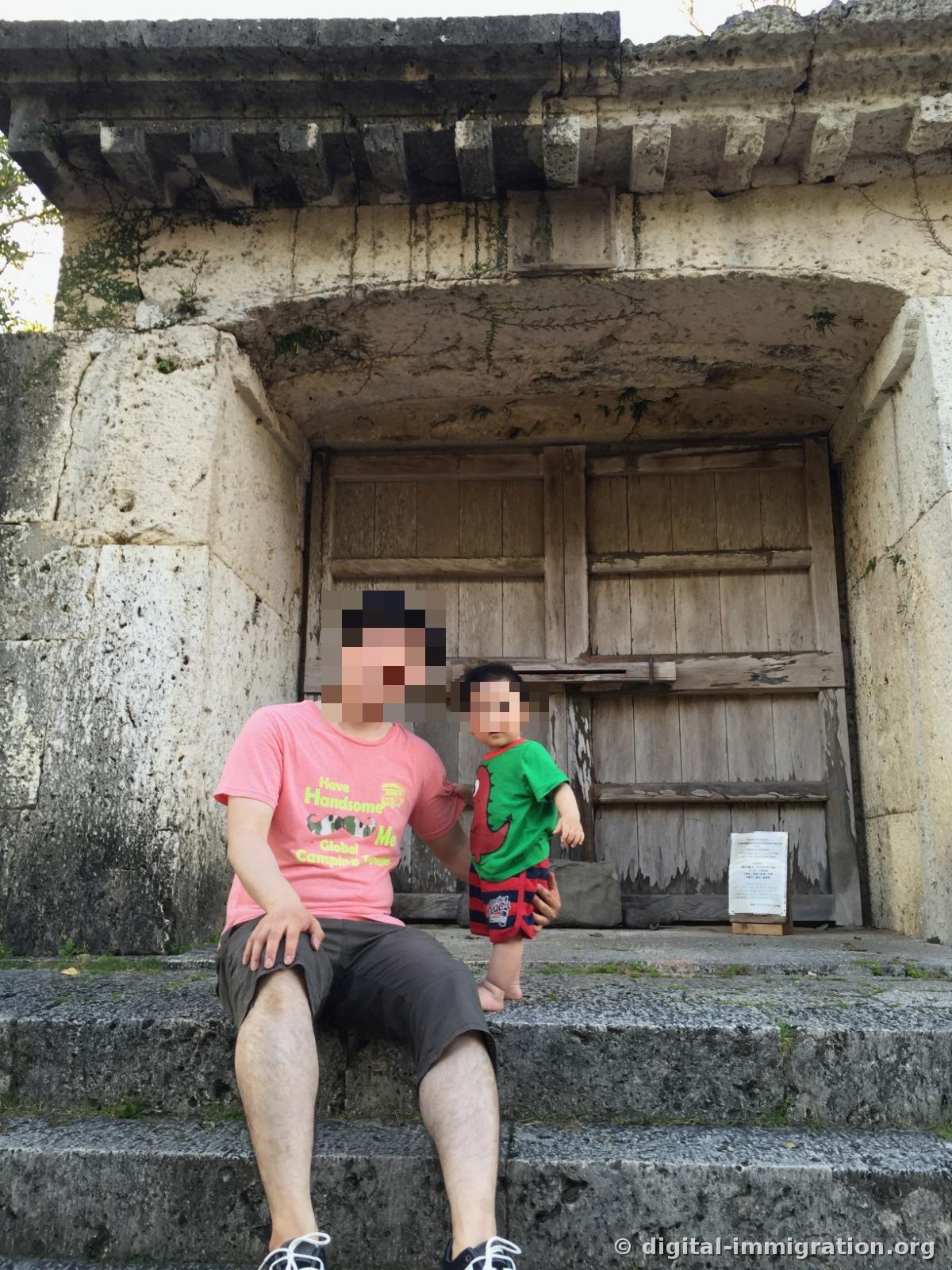
Just a few steps past Shureimon to the right is Sonohouguu Utaki Stone Gate. Most people walk right past it. I missed it on my first visit too. It's a small gate built from Ryukyu limestone, and the sign explains it was where the king would pray for safe passage when leaving the castle. The gate doors are made of old wood. The stone steps were cool, so I sat down with the child to rest for a moment. There's shade here, making it a good spot to leave a stroller and give water.
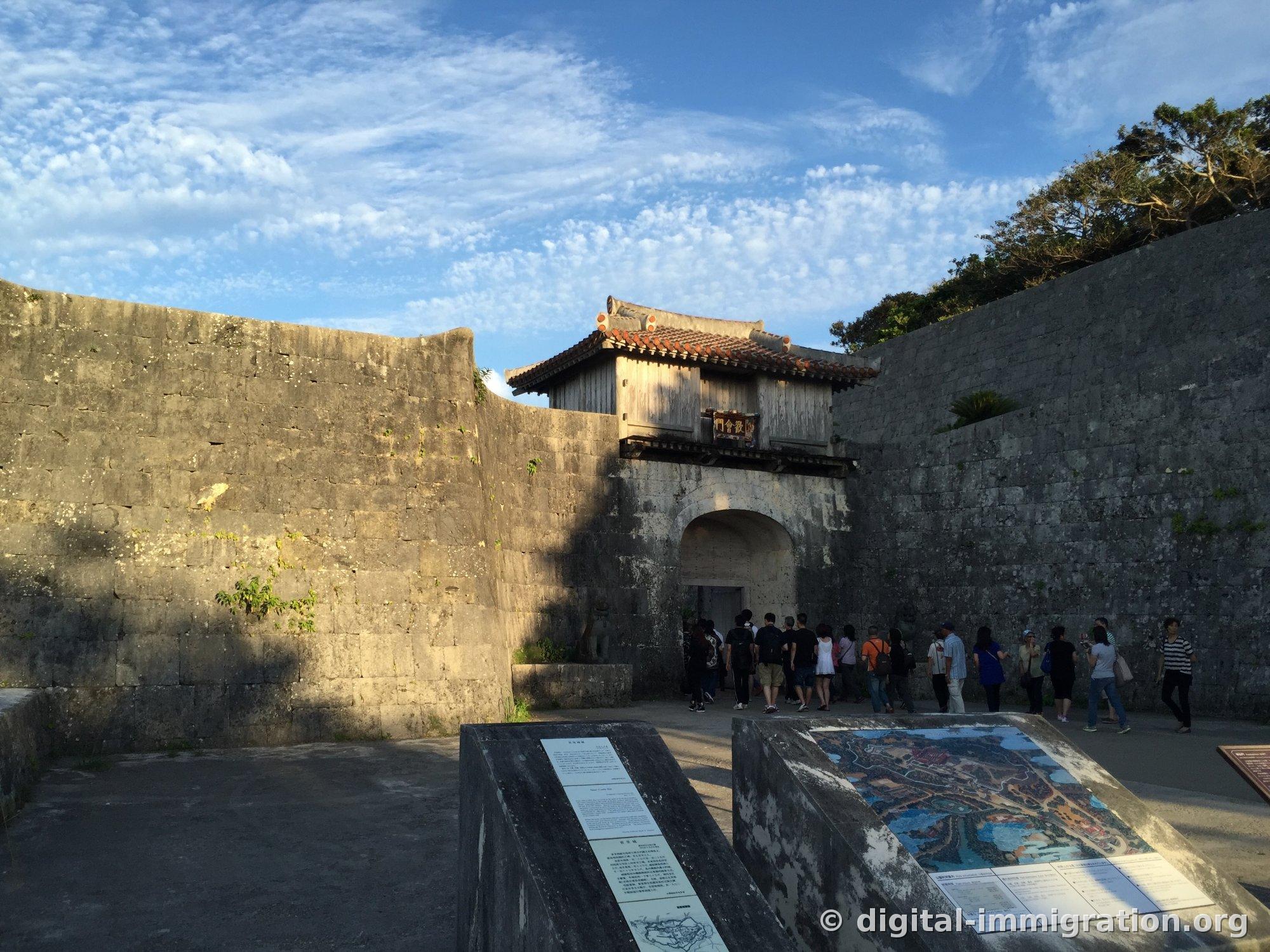
The first main gate into the castle proper is Kankaemon. The stone walls curve upward in an arc, with a red-tiled wooden gate tower perched on top. Okinawan castle walls differ from those on mainland Japan. Rather than straight angular lines, they flow like waves. The sign in front of the gate has Korean explanations too, which I read while waiting for the child. The archway is narrow inside, so it gets congested when crowds pile up.
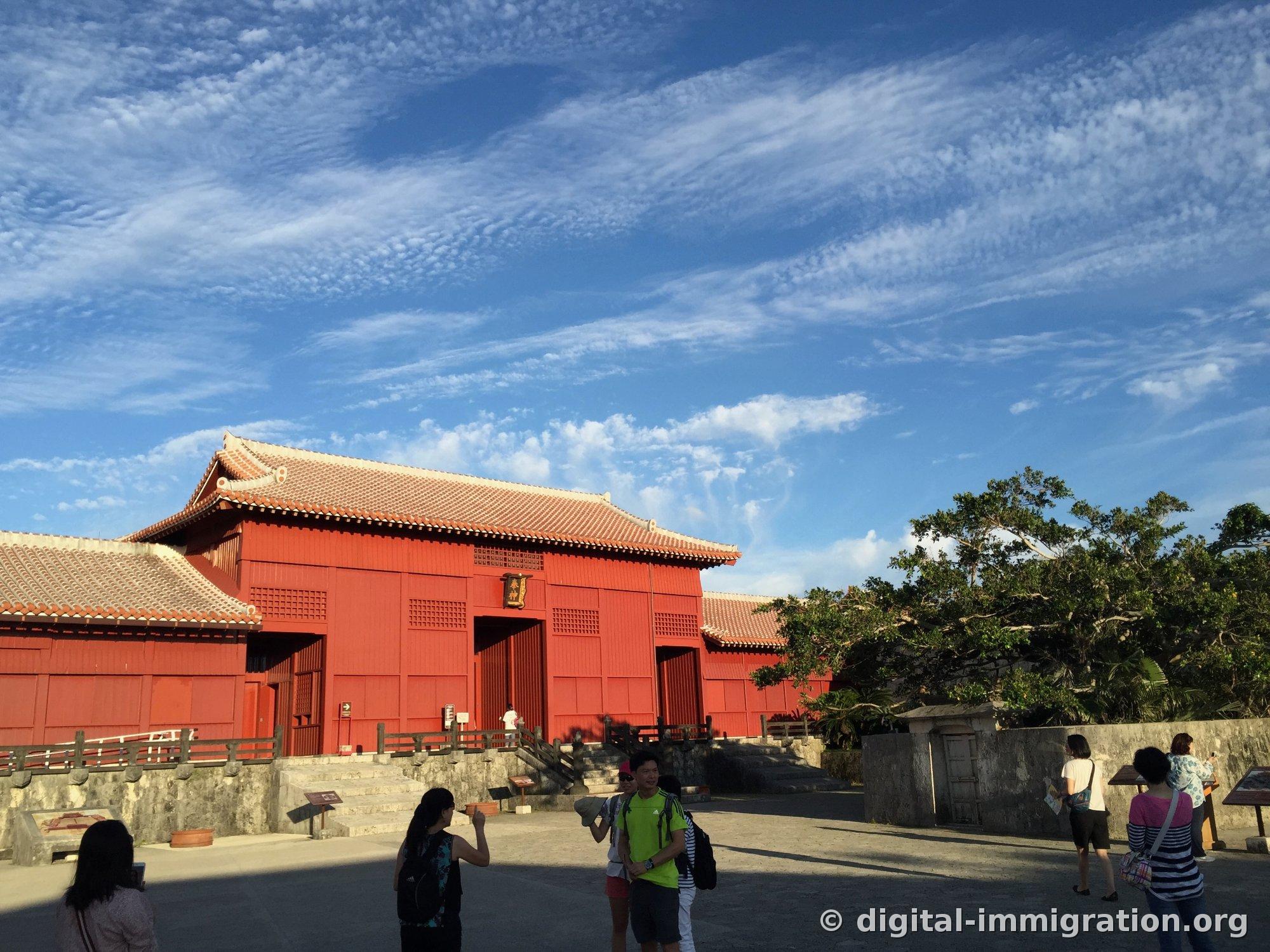
After climbing the stairs a few more times, you reach Houshinmon Gate. The entire wall is a solid vermillion, creating a strong contrast with the blue sky. Beyond this gate is the paid area. Tickets are purchased at the gate. Admission prices change by season, so checking on site is recommended.
The Route and Pacing Your Energy
It takes about 15 minutes to walk up from the monorail Shuri Station. The distance itself is short, but the uphill feels twice as long in summer. If you're bringing a stroller, be prepared. We ended up carrying the child through the castle grounds while the stroller became luggage. If you come by bus, you get off at the Shuri Castle Park entrance stop and climb less hill. If you rent a car, there's an underground parking lot, and in late afternoon there's usually space available.
The route is one-way. It's not a structure where you retrace your steps through the same entrance; instead, you're continuously moved forward while viewing. So even if you think "I want to see that again," it's inconvenient to go back. It's better to take the photos you want in the spot where you are.
Unaa Plaza and the Royal Throne
Beyond Houshinmon, the view opens completely. A vast plaza with red and white stripes laid out like concentric circles—Unaa. These stripes mark where the retainers stood during ceremonies. At the far end stands the Seiden, the main hall, facing directly toward you. Dragon sculptures sit at both ends of the roof, and dense decorative colors fill the eaves below. The child pointed with just one finger from the stroller, while the rest of us sweated in the middle of the shadeless plaza. This plaza truly has no shade whatsoever.
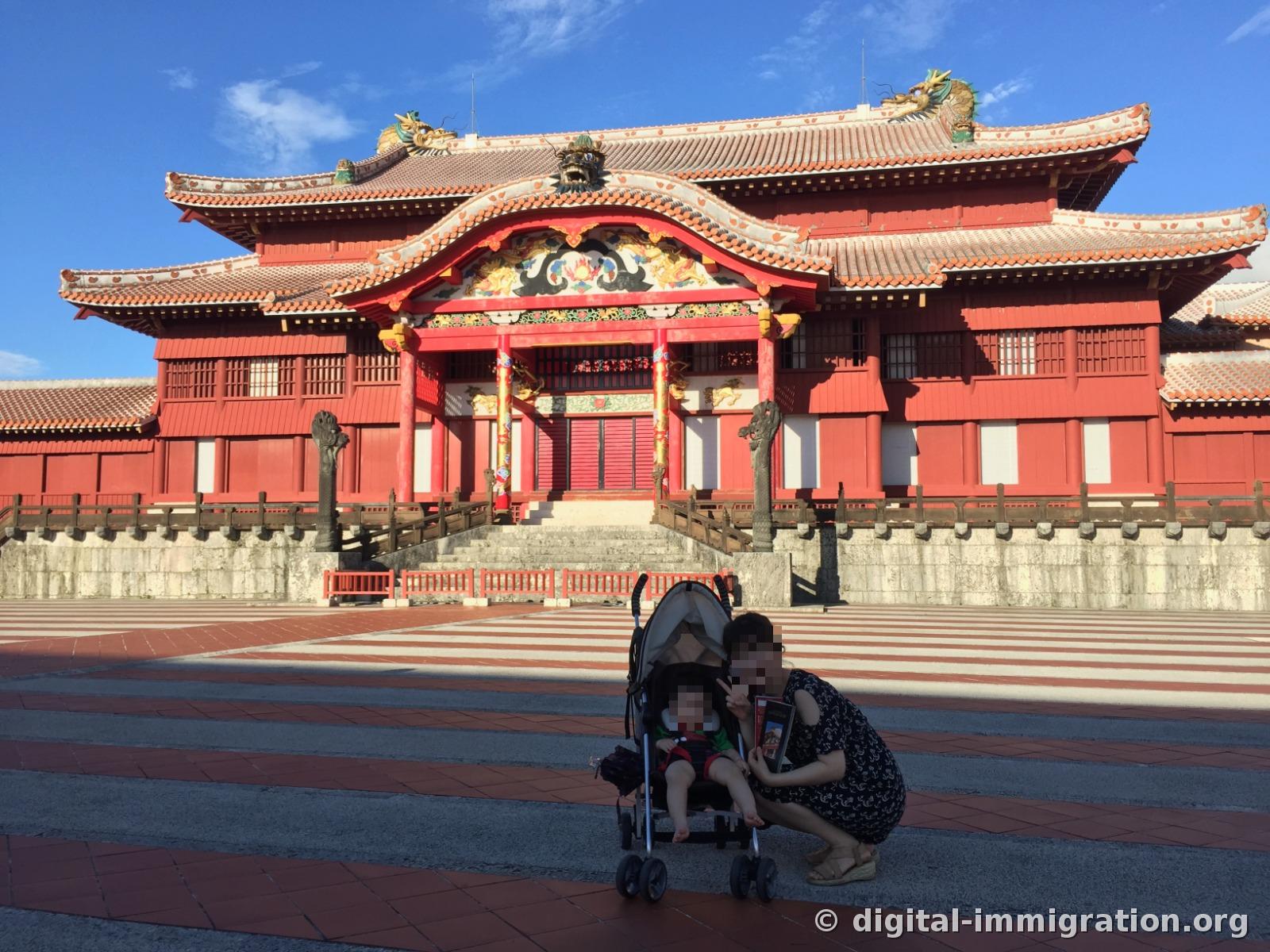
A note to add: this photo was taken before the October 2019 fire. That fire destroyed the Seiden and other major wooden structures, and restoration work has been ongoing since. If you visit now, you will encounter a different landscape than what I saw. Before visiting, I strongly recommend checking the official guide for the accessible areas.
Inside the Seiden with Bare Feet
Inside the Seiden, you remove your shoes. You receive a plastic bag at the entrance to carry your shoes. The wooden floor felt cool against my bare feet. That was the most refreshing moment of the entire day.
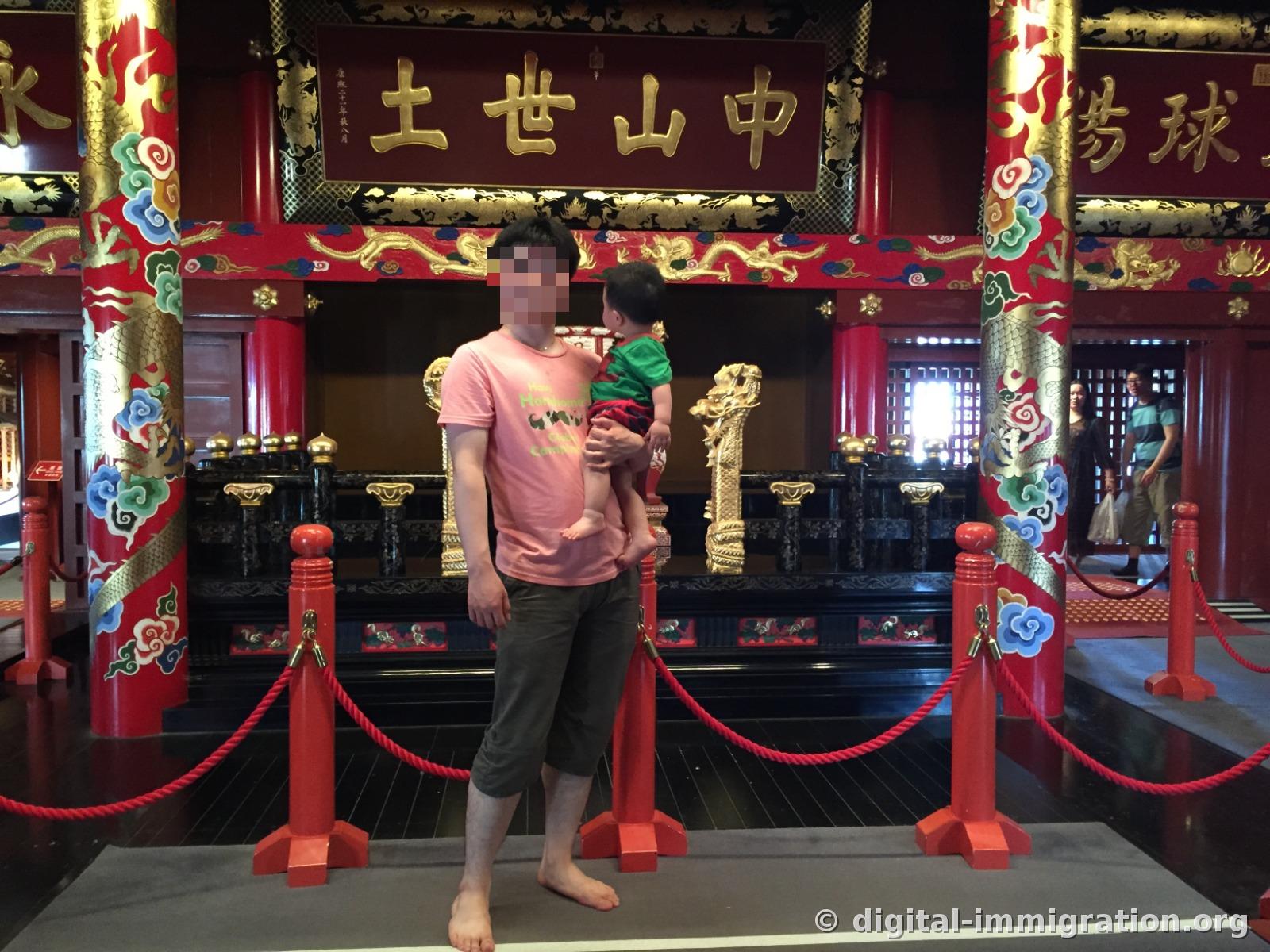
On the second floor is the Odokoro, where the royal throne sits. Over black lacquer with gold decorations, a plaque reads "中山世土" behind it. This is a replica of the plaque said to have been sent by the Kangxi Emperor of the Qing Dynasty. Golden dragons spiral up the pillars on both sides. A red rope blocks close access, and you take commemorative photos right in front. Holding the child, I stood there, and the group waiting behind smiled and stepped aside for us. The interior is darker than expected. If you shoot without flash, your hands will shake easily, so it's better to brace your arm against a pillar when shooting.
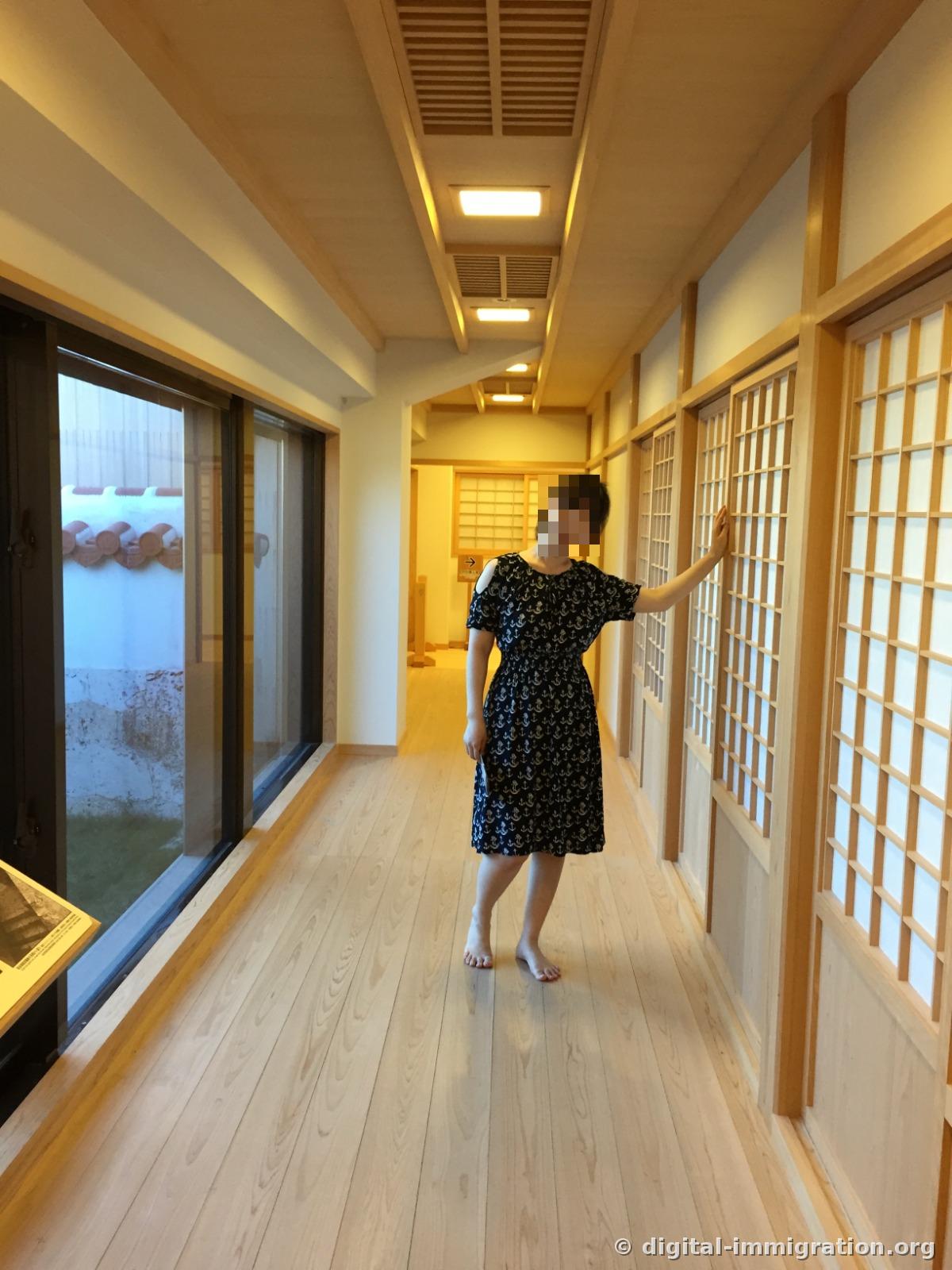
As you exit the Seiden, a corridor with the smell of fresh wood continues. The floorboards are still light in color and lined with window frames, so it looks more like a well-built new wooden construction than an ancient structure. In fact, this area is reconstructed based on historical documents. Through the glass windows on the left, you can see red-tiled walls. I walked to the end of the corridor when no one was around, and the sound my feet made was pleasant.
Easy-to-Miss Interior Exhibits and Details
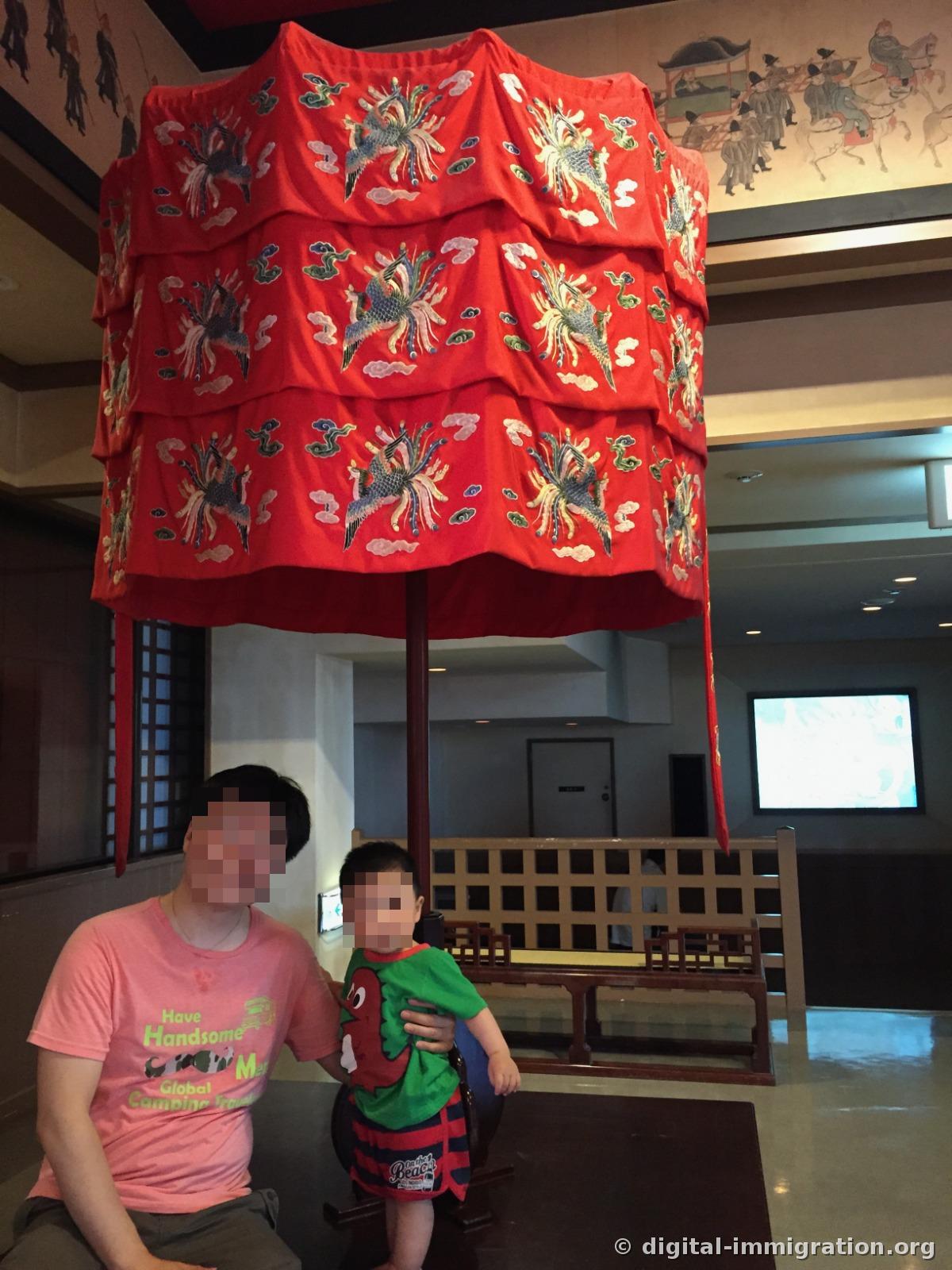
In an indoor space along the viewing route hangs a large red canopy. On each of the three draped layers, phoenixes and cloud patterns are densely embroidered. This was placed over the king's head during processions, and the walls nearby display paintings of such processions. Most people simply pass by, but up close you can see five or six different thread colors mixed in the embroidery. The child loved this red canopy most and gazed up at it for a long time.
If using a stroller or wheelchair, know this: elevators are available to avoid steep stair sections, and a tall informational sign on the wall shows the way. A character in Ryukyu dress holds a fan pointing right, with the speech bubble saying "エレベーター ご利用のお客様はこちらからどうぞ." When crowds pile up, this sign gets hidden from view. Before struggling with your stroller at the stairs, take a quick look along the wall.
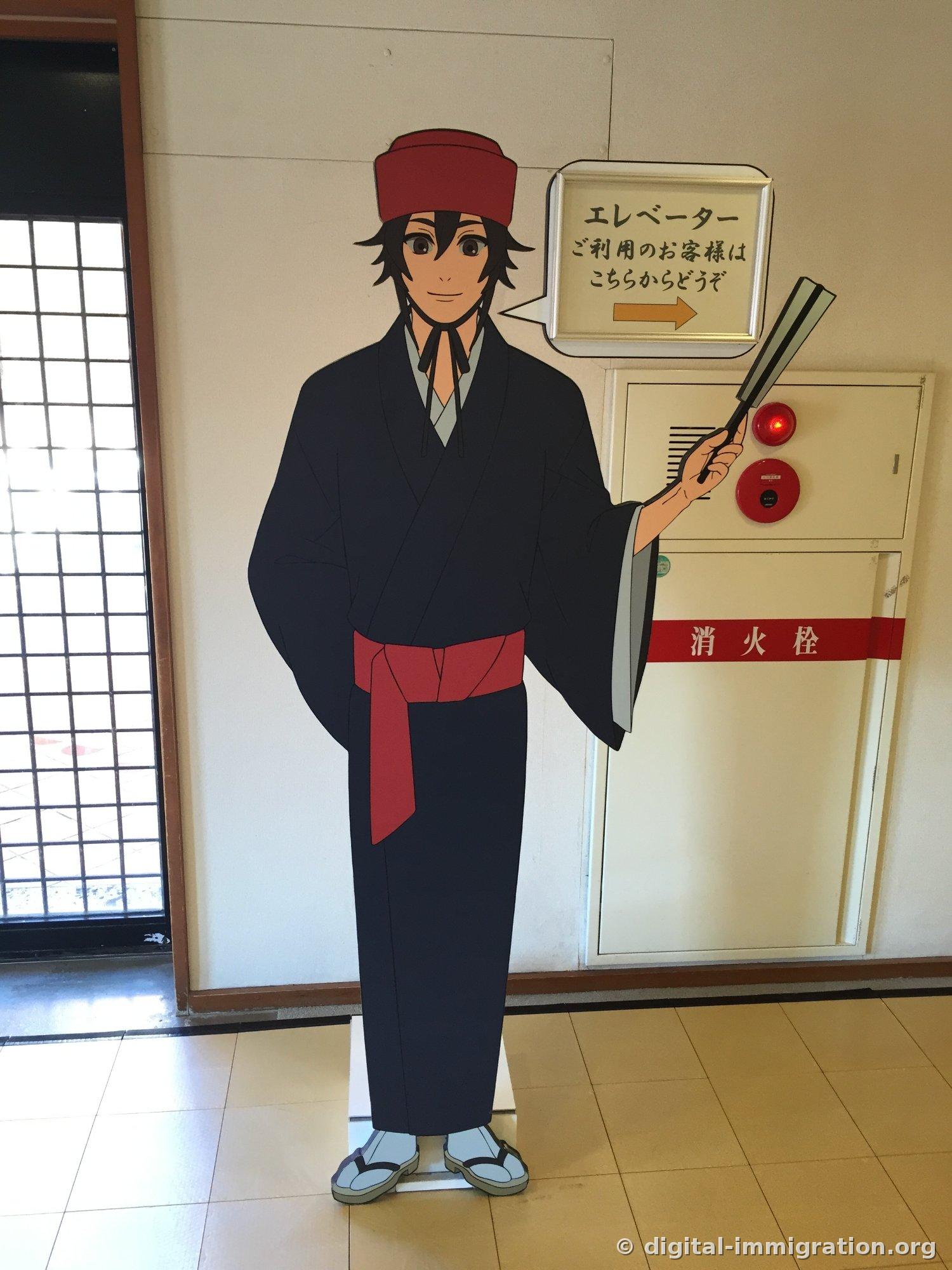
I saw something unexpected in the restroom. The sink faucet is shaped like a shisa. A small lion with mane and teeth carved in extends its neck toward the sink, and water comes from the silver pipe beside it. Next to it sits an alcohol sanitizer, and above the mirror is a sign instructing "Please sanitize after washing your hands." I was so delighted that they put this detail into the public restroom that I stopped mid-handwash to take a photo.
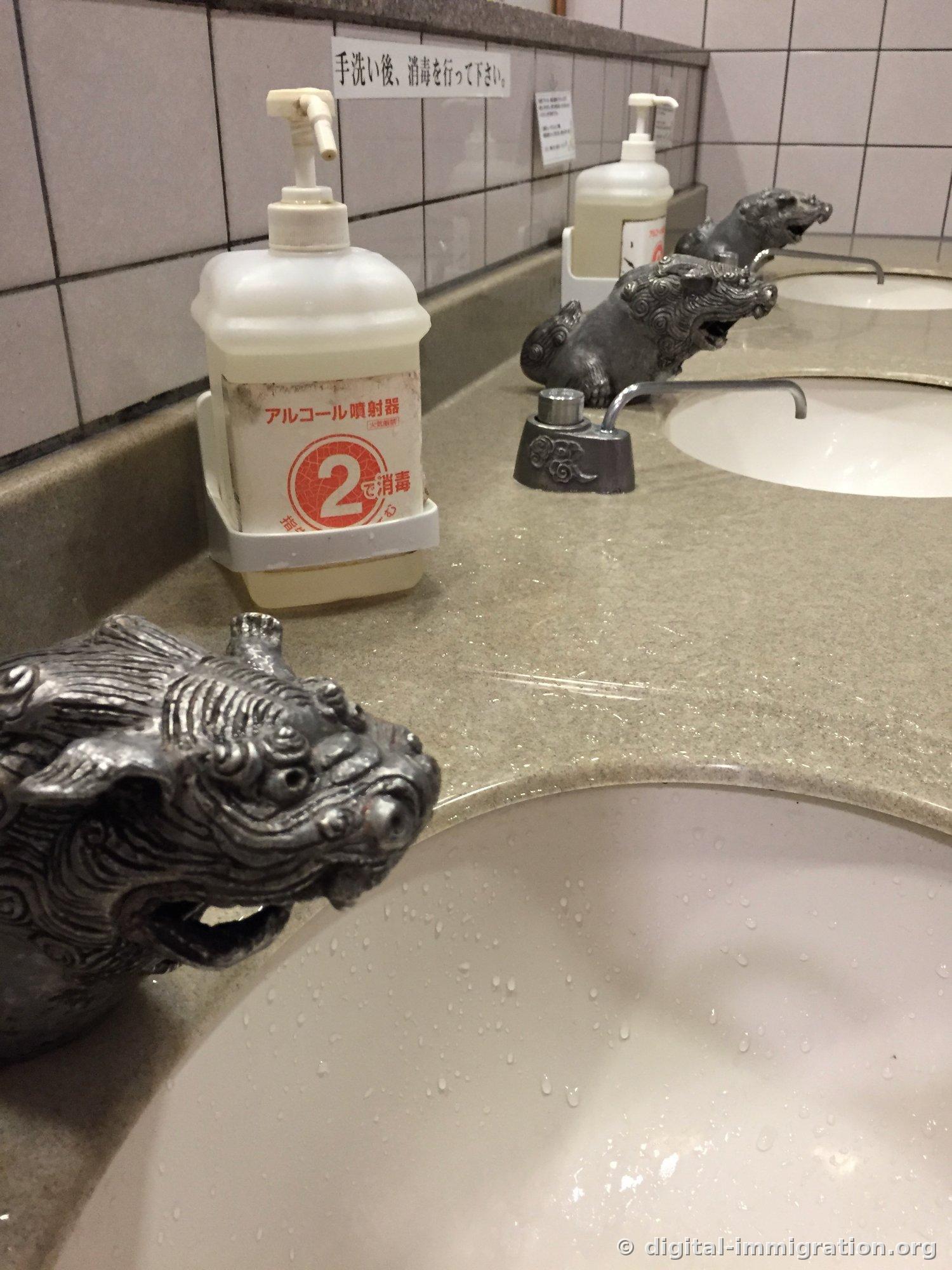
Toward the end of the viewing route is a small rest area with wooden pillars and tatami mats. A reception desk is visible inside, and hand sanitizer is placed there. When the child got tired, I set them down on the tatami, and they took off running barefoot across the floor. There's no air conditioning, but it's open on all sides so the breeze flows through. For someone bringing a child, a place like this is more appreciated than the royal throne itself.
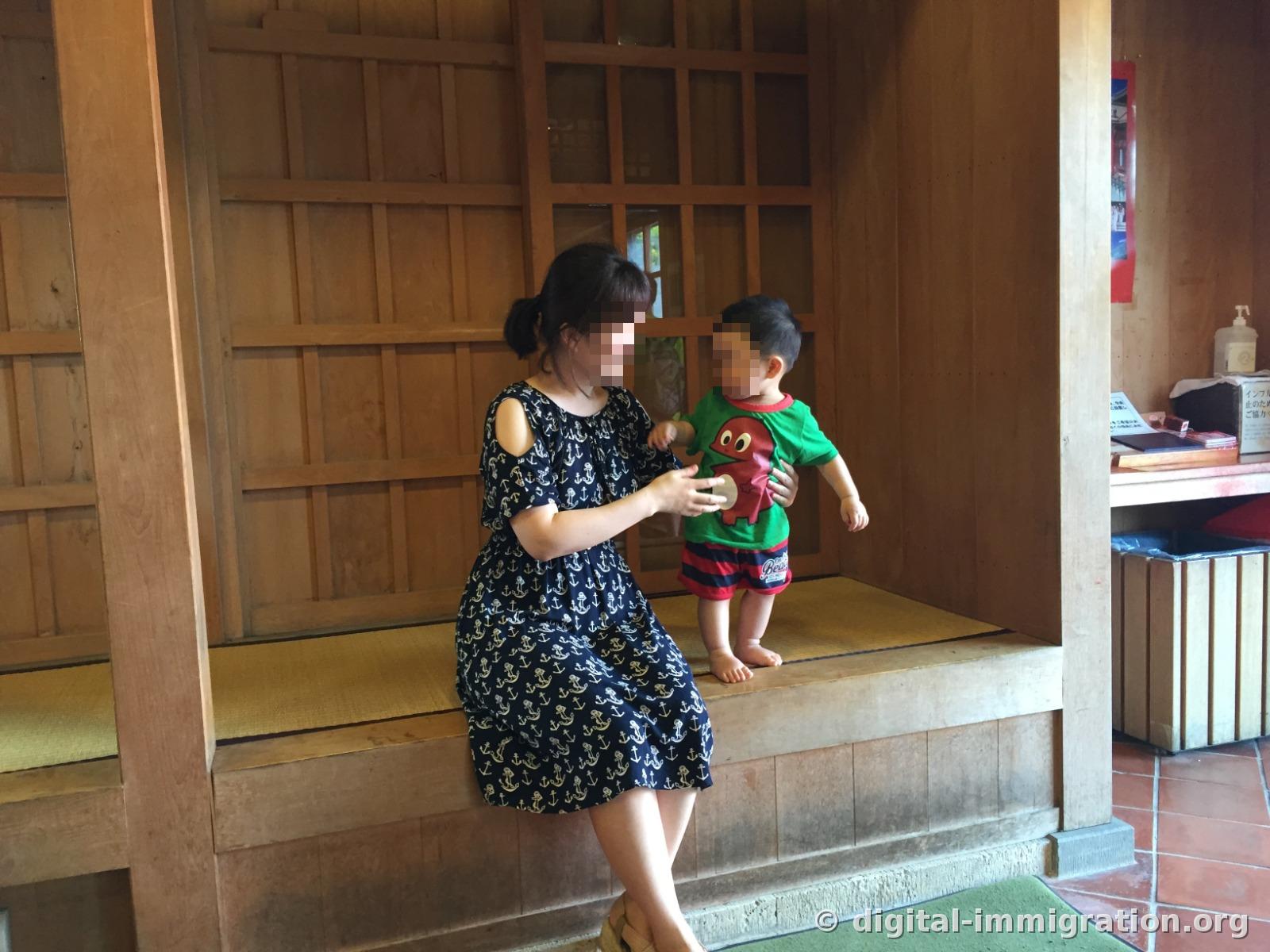
Coming Down as the Sun Sets
By the time we finished, the sun hung directly above the gate tower roof. The red P parking sign on the directional board and the traffic cones cast long shadows, and a staff member walked down the entrance road organizing the site. If you arrive in the afternoon, you'll encounter this scene. It's a color you'd never see if you came during the day.
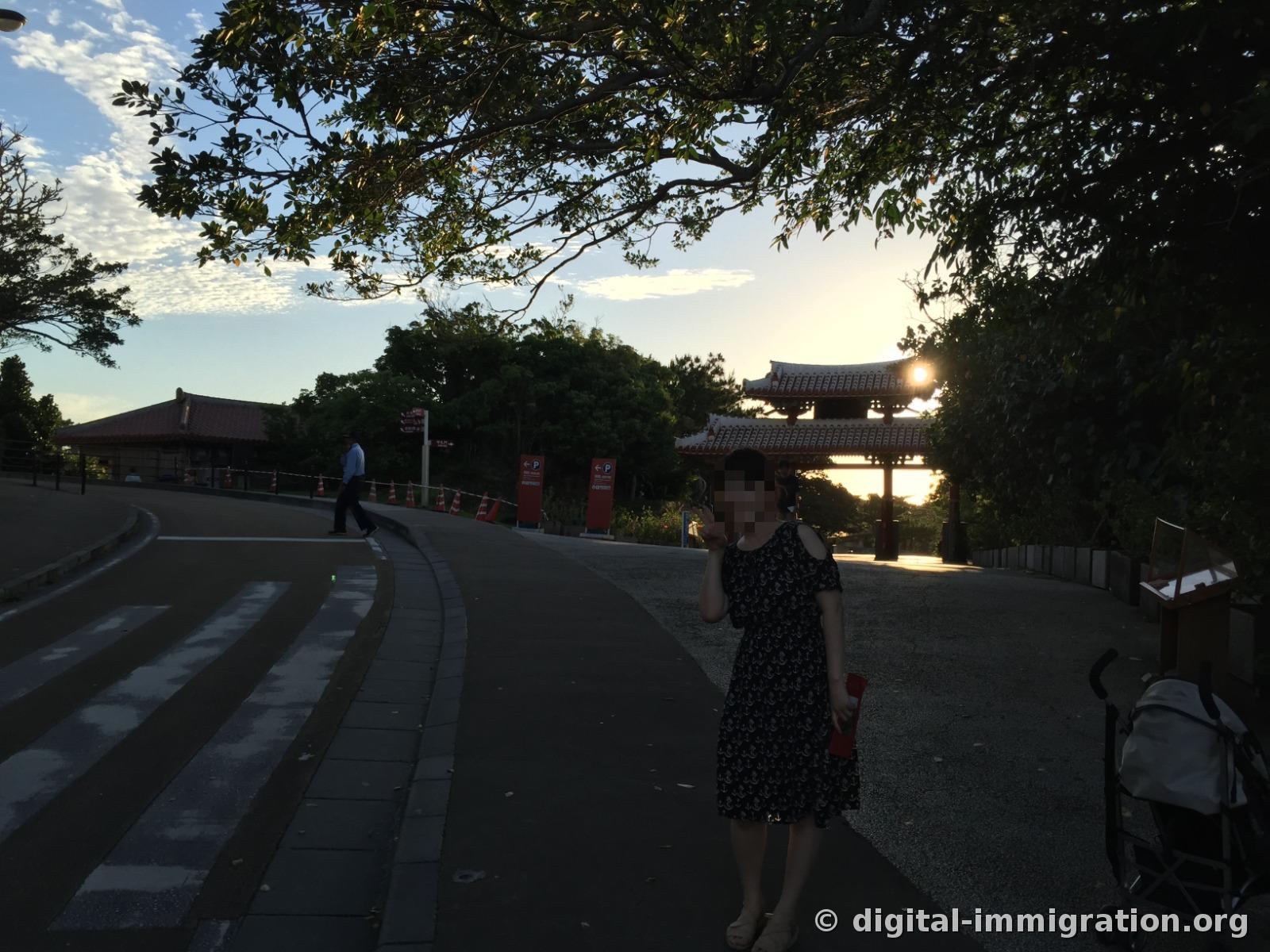
What I regretted was the time management. Because we arrived late, I rushed through the final section and didn't properly see the part where you walk along the castle walls overlooking Naha city. If I go again, I'll plan to enter two hours before closing. The cool sensation of bare feet walking on wooden floors inside the Seiden remained the most vivid memory of that day.
Things to Bring Before You Go
- Water — Unaa plaza has no shade. Bring plenty if you have a child.
- Shoes that are easy to slip on and off — You remove your shoes inside the Seiden. Lace sneakers are inconvenient.
- Plan on carrying your child through the castle and using the stroller as luggage.
- Check the official guide in advance for admission prices, operating hours, and restoration work status.
Read next
- From Akihabara's Chuo-dori to the Kanda River: A Record of Tokyo's Electronics District Revisited Multiple Times
Tokyo's Akihabara is a neighborhood where it's hard to say you've seen everything in a single visit. I've come multiple times across different seasons, and each time the signs chan…
Tokyo · Akihabara - Buying a Single ¥300 Year-End Jumbo Lottery Ticket at Nishi-Ginza Chance Center in Tokyo
Exit from the Hibiya exit of Tokyo's Shimbashi Station, walk toward the elevated highway for about three minutes, and suddenly you'll see a line of people stretching along the side…
Tokyo · Nishi-Ginza Chance Center - Ueno Ameyoko, the real magic starts after sunset — an evening walk from the Okachimachi Gate to Ueno Station
Every time I come to Tokyo, my feet find their way to Ueno Ameyoko (アメ横) without fail. This time I entered from the Okachimachi side and worked my way toward Ueno Station. I've met…
Tokyo · Ameya Yokocho Market