An Afternoon at Azabudai Hills Sky Room, 34th Floor of Tokyo: Facing Tokyo Tower Head-On
Following an underground passage from Kamiyacho and changing elevators once, I arrived at the 34th floor of Azabudai Hills Mori JP Tower—Hills House Sky Room. It's in the heart of…
Tokyo · Hillshouse Skyroom
Following an underground passage from Kamiyacho and changing elevators once, I arrived at the 34th floor of Azabudai Hills Mori JP Tower—Hills House Sky Room. It's in the heart of Tokyo's Minato ward, but there's no ticket booth. It's hard to call it an observation deck, and equally hard to call it a café—just an open floor. I didn't know this going in and hesitated at the entrance. Looking for someone to ask where to buy a ticket, I saw everyone else just walking in, so I followed.
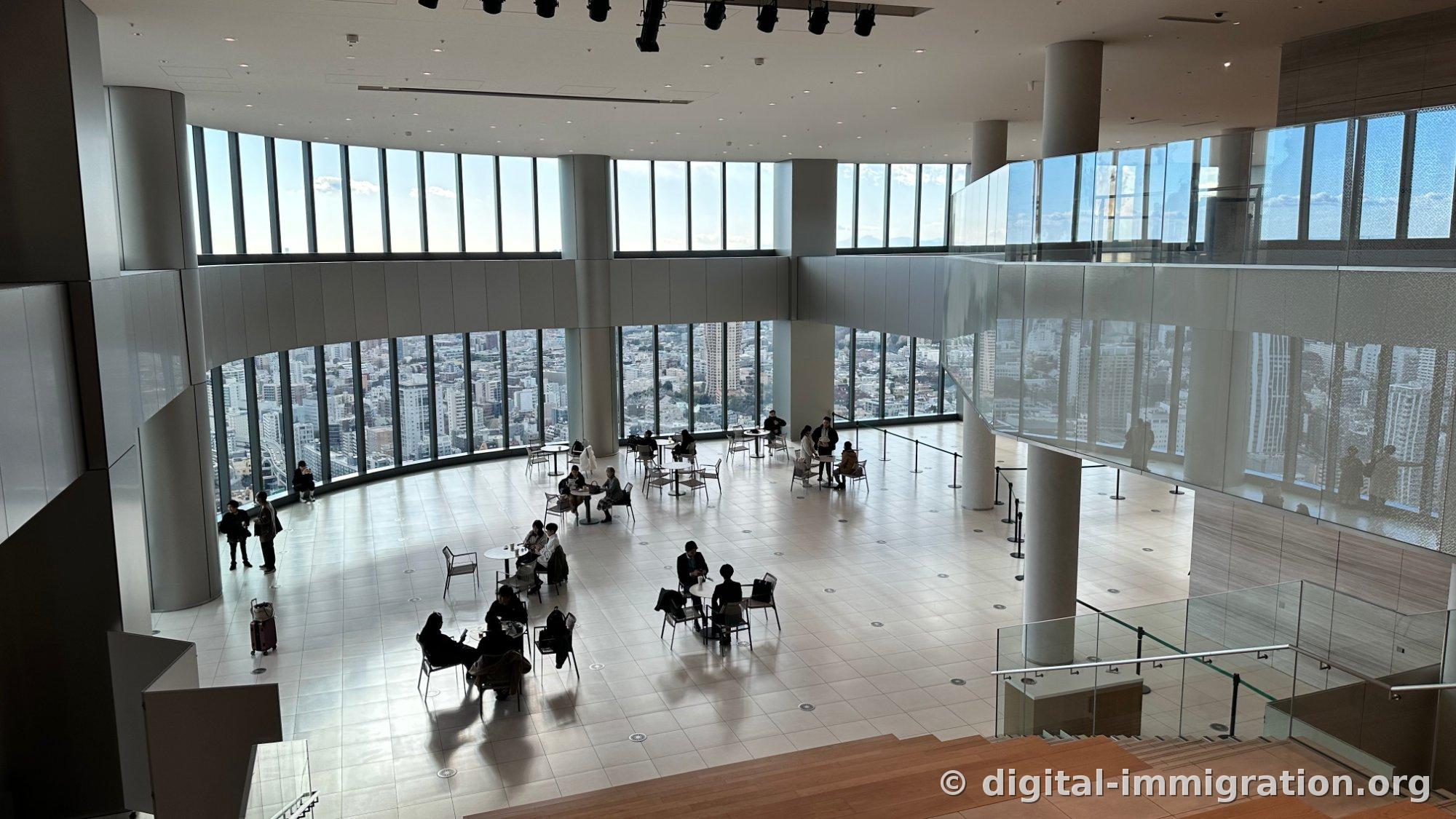
Inside, the ceiling opens up two stories high, and the windows curve like a bow. From the upper-level railing, people below look tiny. Tables are white and round; chairs mix rope-woven and metal-frame styles. I even saw someone who'd dragged in a suitcase. This seems to be where travelers who have an awkward gap of time before catching a flight kill a few hours.
Location and How to Get There — Connected Underground
Kamiyacho Station on the Tokyo Metro Hibiya Line connects directly to Azabudai Hills. You don't need to go outside—you enter the building from underground. You can also walk from Azabujuban Station on the Oedo and Nanboku lines, but it's uphill. Looking only at a map of Tokyo, I calculated "800m, so 10 minutes," but I broke a sweat on the way up. This neighborhood isn't flat. It's also within walking distance from Roppongi Itchome Station.
The elevator to the 34th floor requires a transfer on the lower levels. You can follow the signs, but if it's your first time, it's easy to get lost. I even took the wrong elevator and ended up at an office lobby before backtracking down.
Tokyo Tower Between the Windows
Head to the east-facing windows and Tokyo Tower is right in front of you. Above Shiba Park, the red steel structure stands in its entirety, and beyond it, Tokyo Bay and Rainbow Bridge fit on a single screen. The height is interesting. It's not looking up at the tower or looking completely down at it—your eye level aligns roughly with an observation deck. To see the tower in its complete form, this perspective is actually ideal.
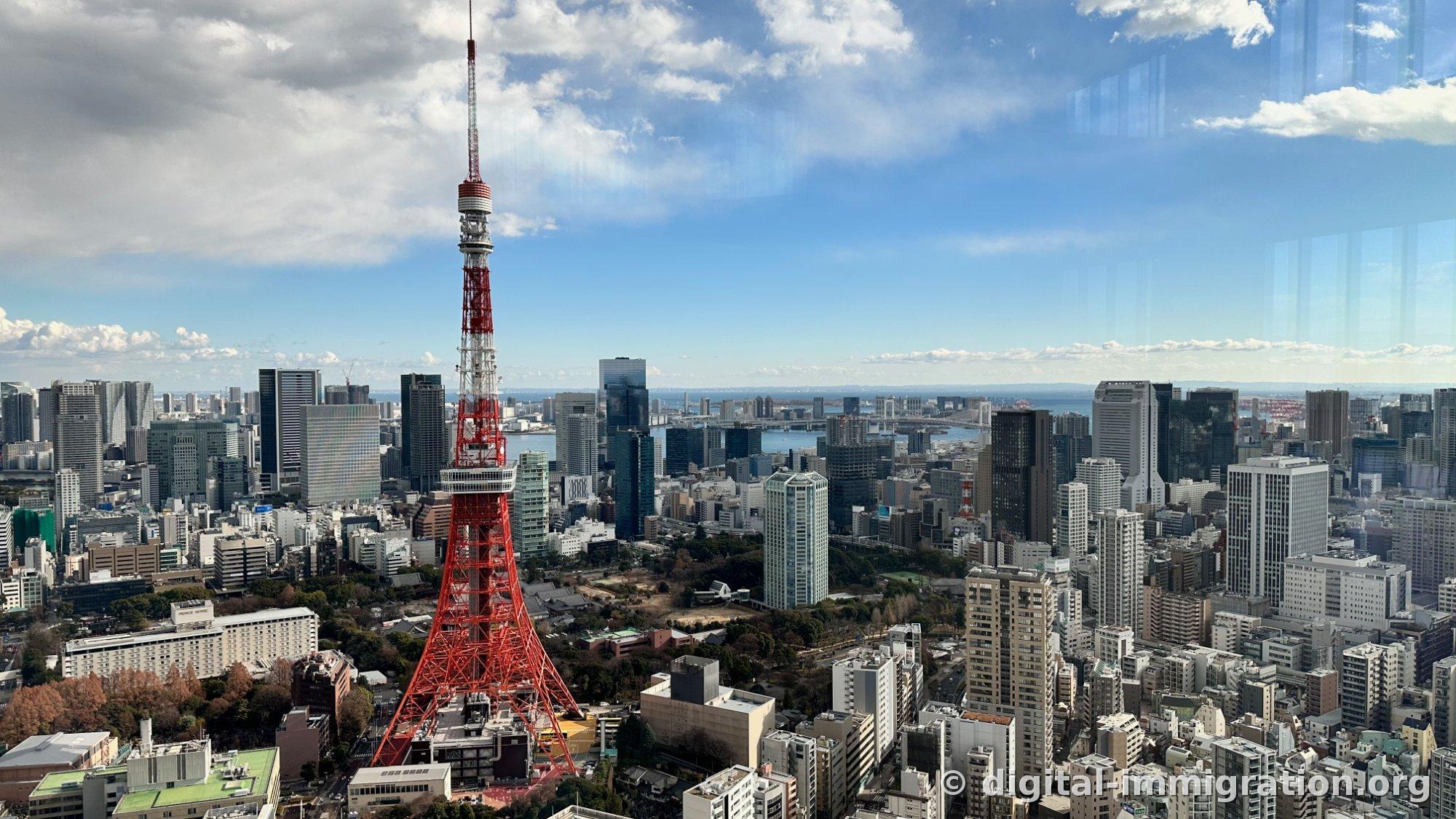
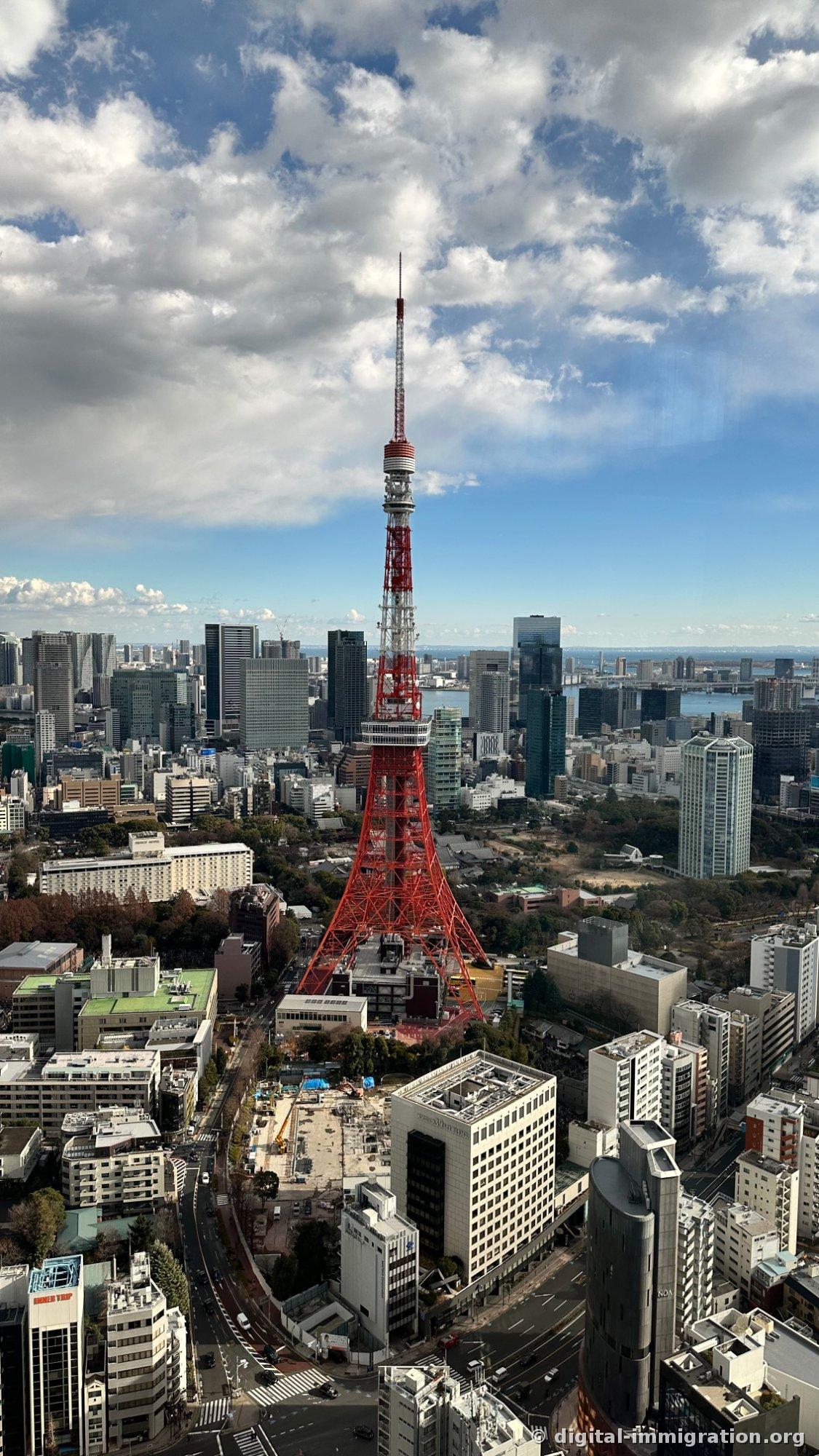
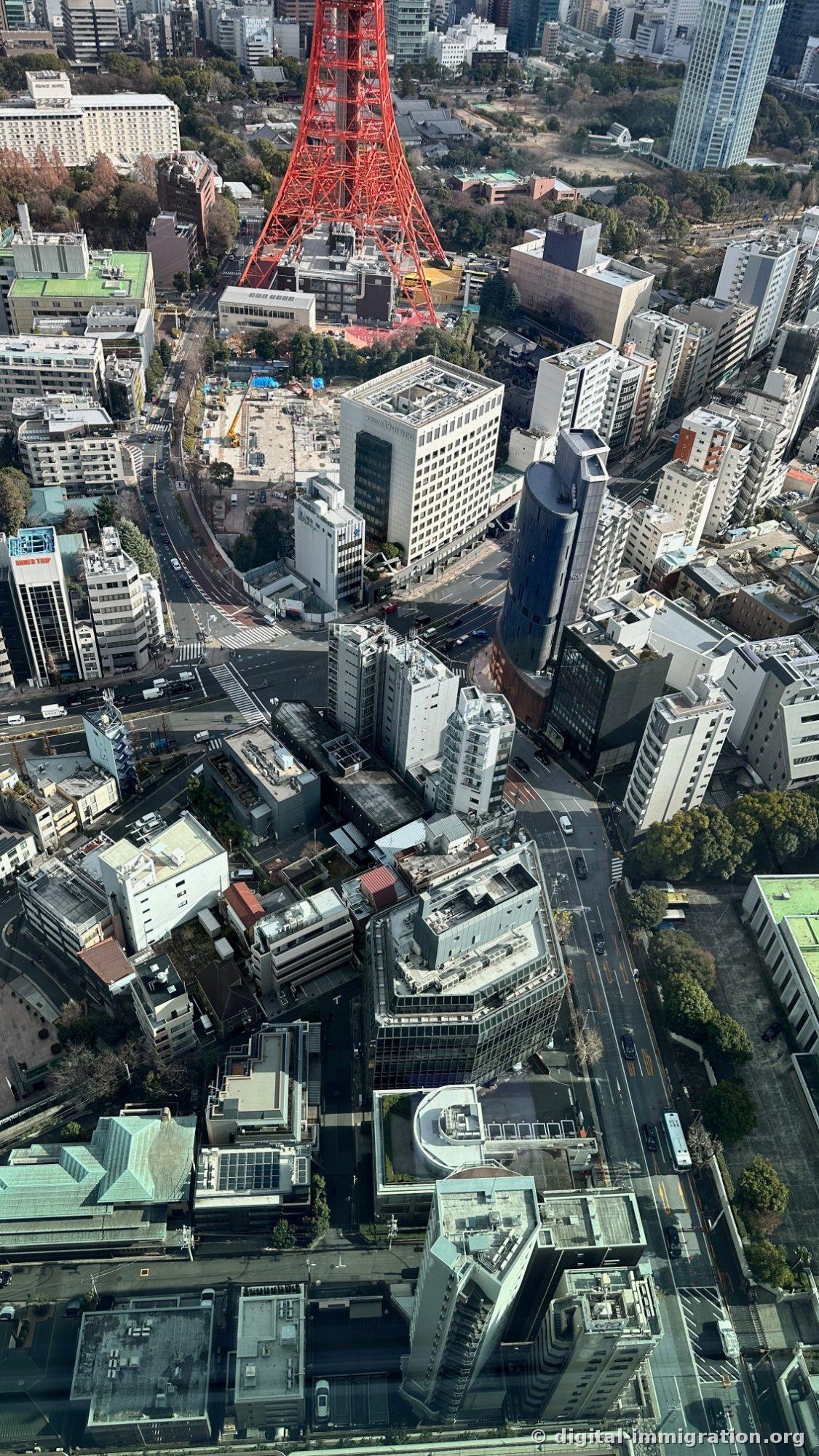
Shoot vertically and it's completely different. From the tip of the tower's spire down to where all four legs meet the ground, everything shows—with a yellow construction crane standing below and an old sign reading 'INNER TRIP' across the street. The sense that this neighborhood is constantly being rebuilt is captured in a single frame.
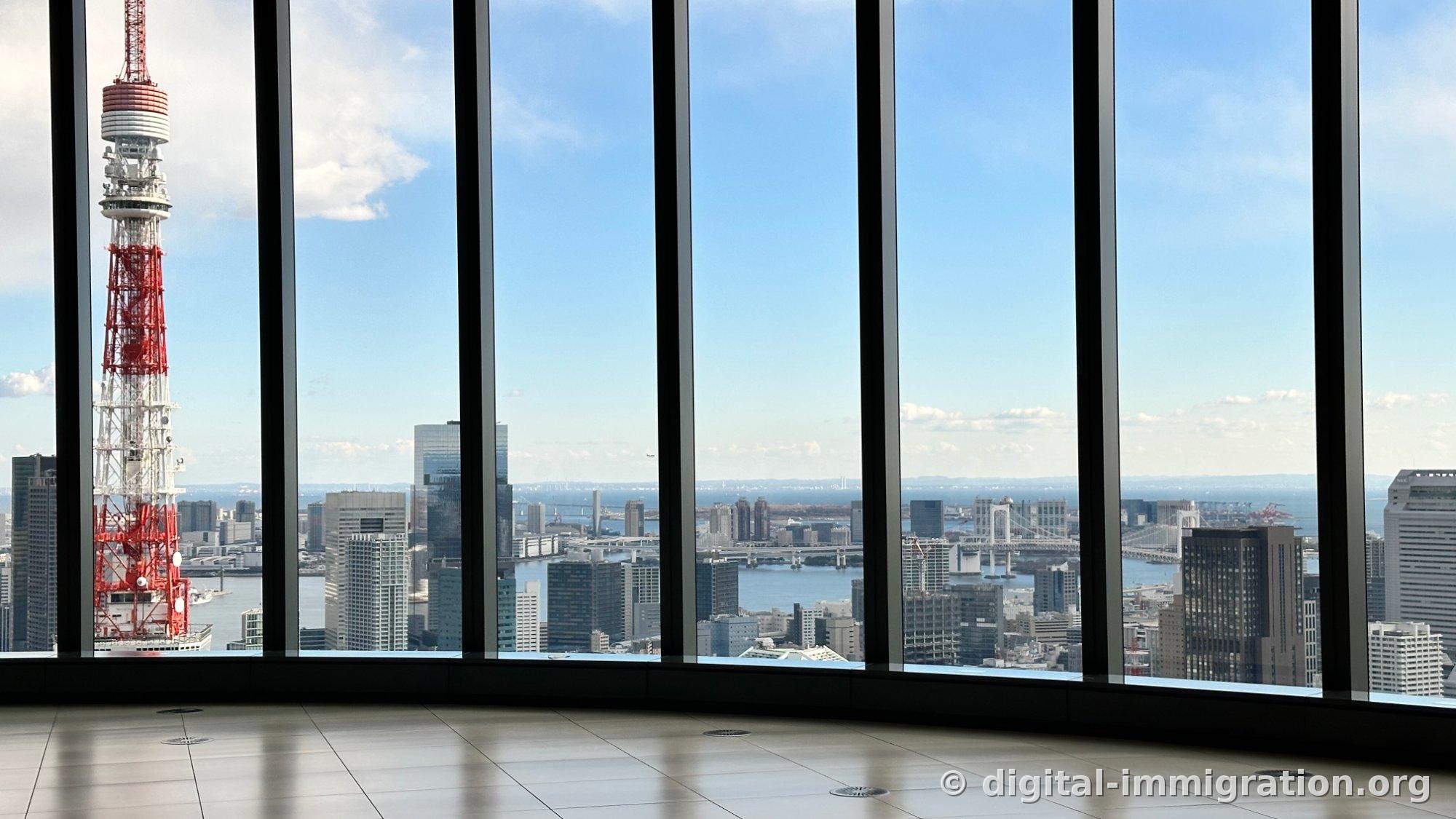
During quiet hours, the entire window row empties out. Black window frames repeat vertically, with the bay glimpsed between them, and this composition actually makes for better photographs. The shadow of the window frames stretches long across the floor tiles.
Looking Straight Down
Press your face to the glass to look down and anyone with acrophobia steps back. The Tokyo Tower's legs begin at your feet, and you can count the white lines of the crosswalk at the intersection below. Cars roll like toys; a black cylindrical building suddenly juts up. This high angle alone reveals Tokyo's hidden side—every rooftop packed with air conditioning units and water tanks.
The Opposite Side — Roppongi, and Mount Fuji on Clear Days
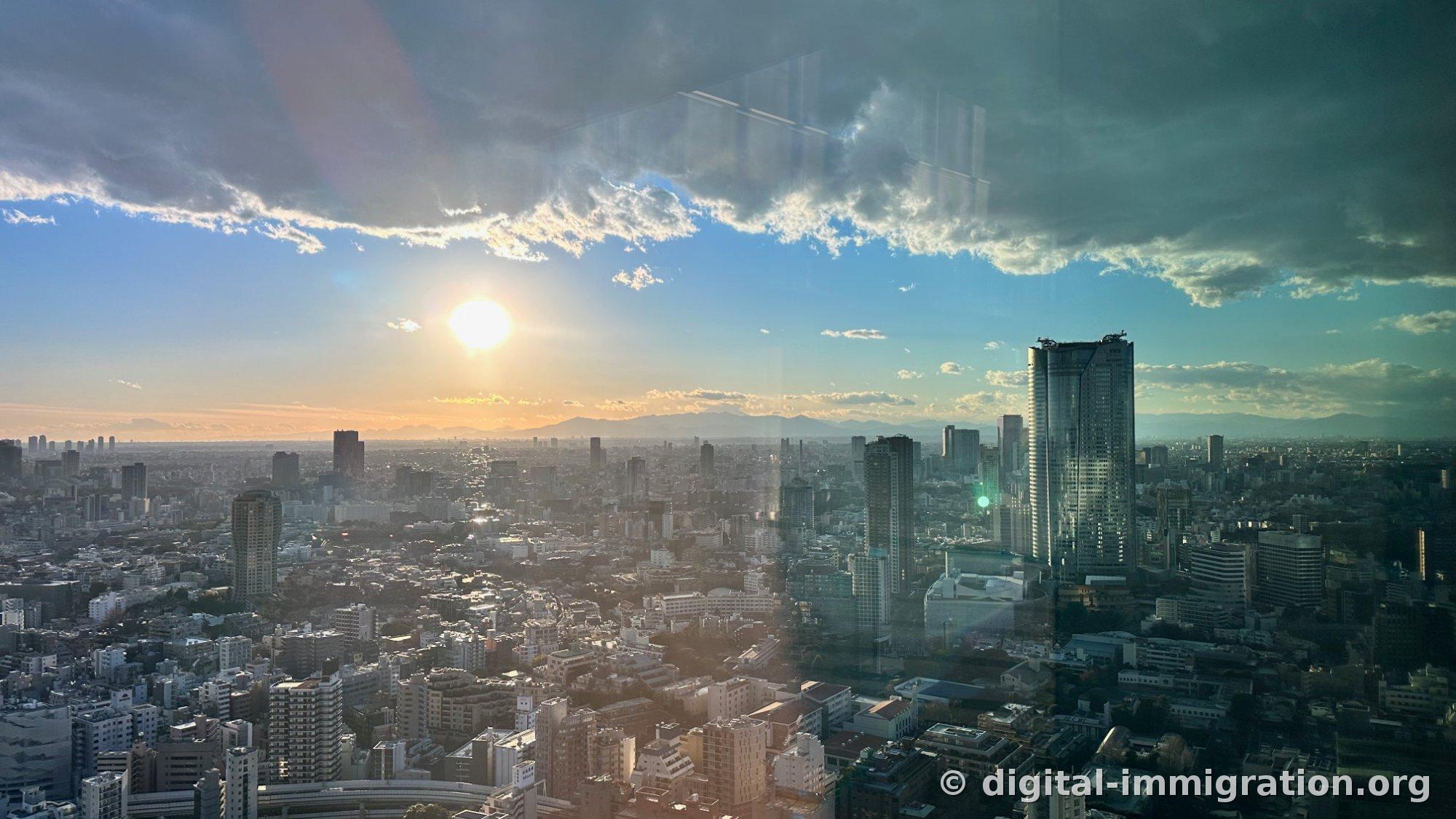
Walk to the opposite side of the same floor and the view transforms completely. Tokyo Tower disappears, and Roppongi Hills Mori Tower takes center stage. Beyond that spreads an endless expanse of low-rise residential areas, with mountain ridges hanging on the horizon.
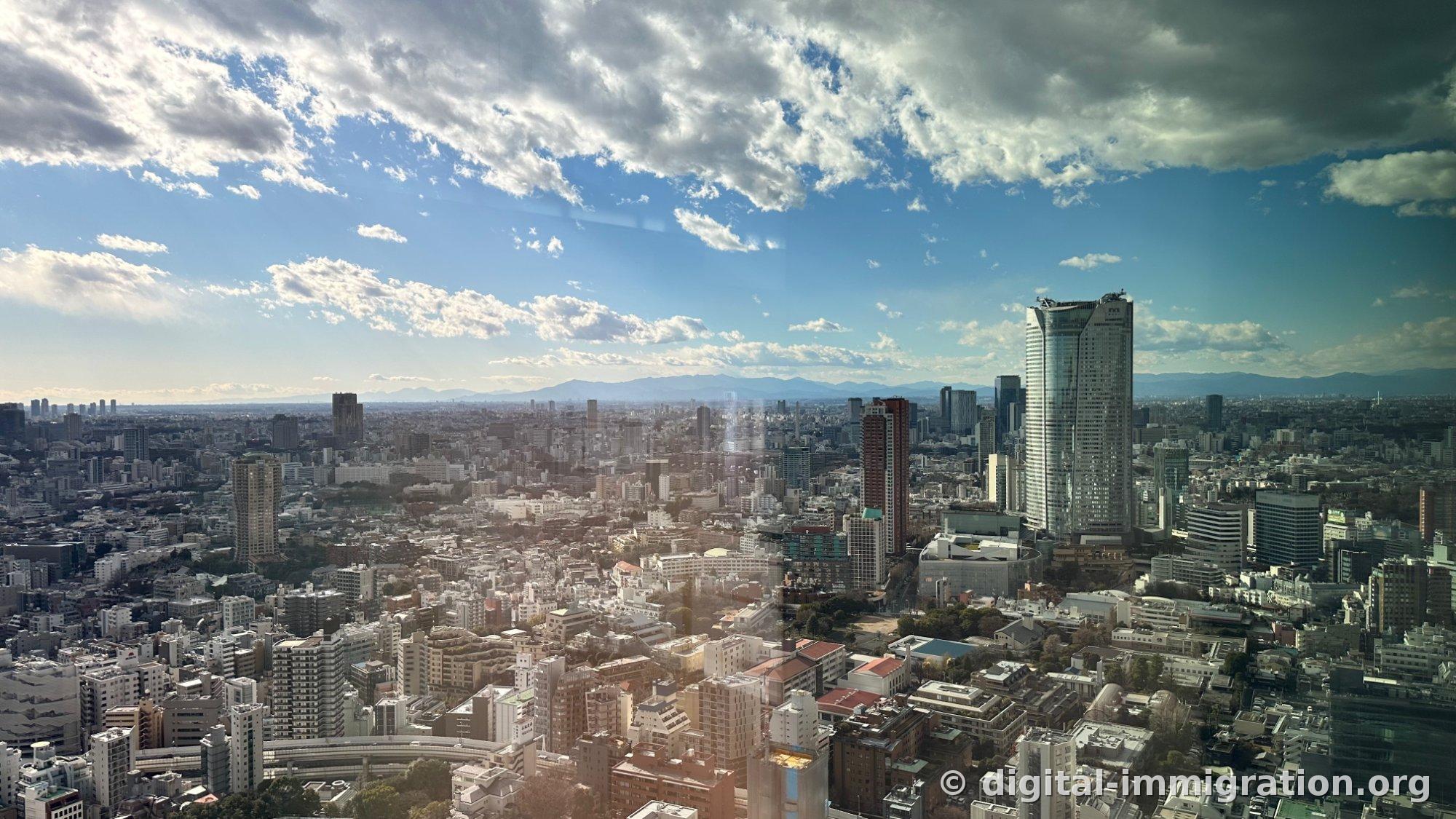
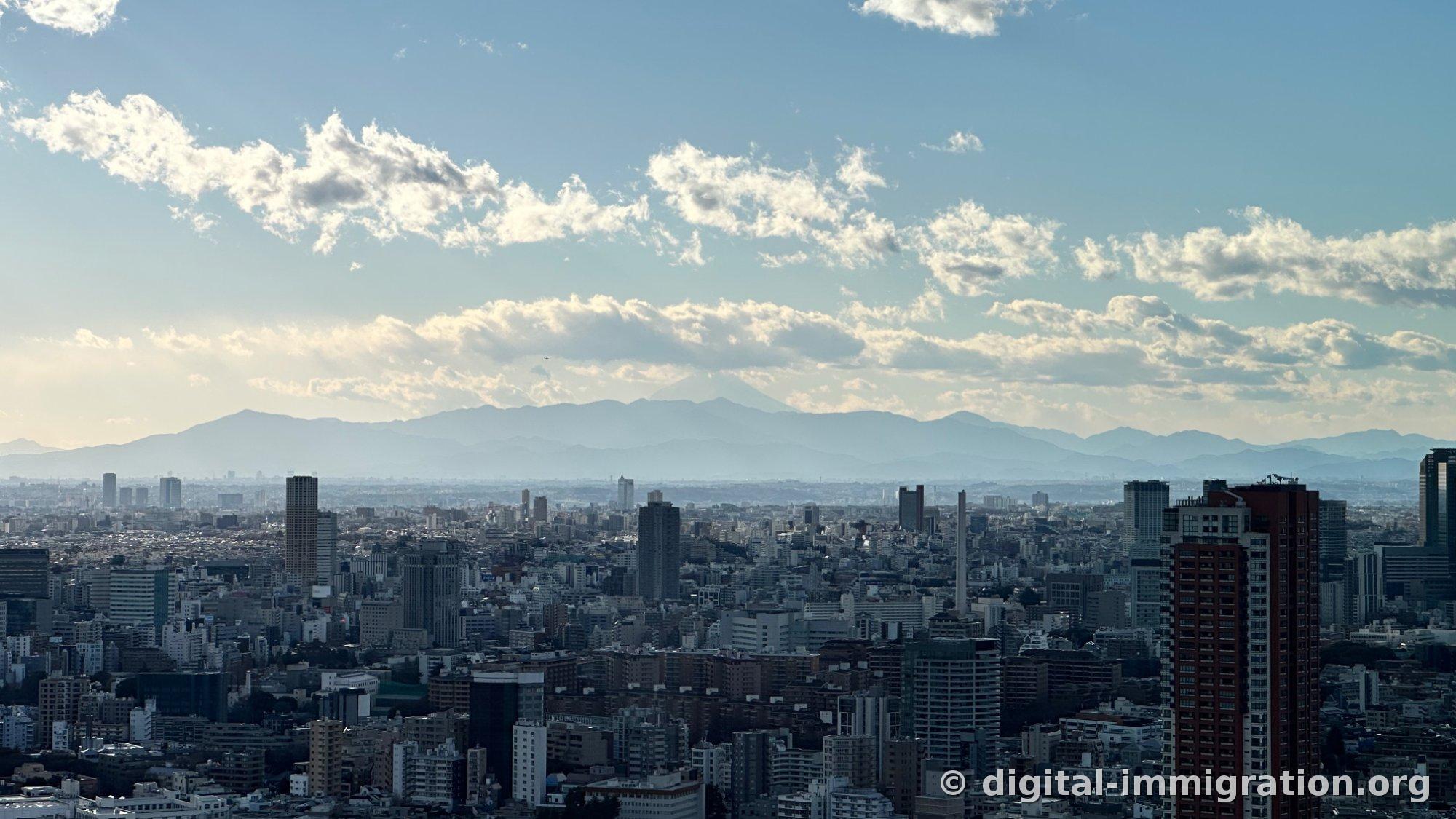
On clear winter afternoons, Mount Fuji rises above the mountains. I mistook it for clouds at first and almost overlooked it. Among the mountain ridges, there's a silhouette that spreads unusually gently left and right, with only the peak tipped white with snow. On summer days or overcast weather, it doesn't show at all. That's pure luck.
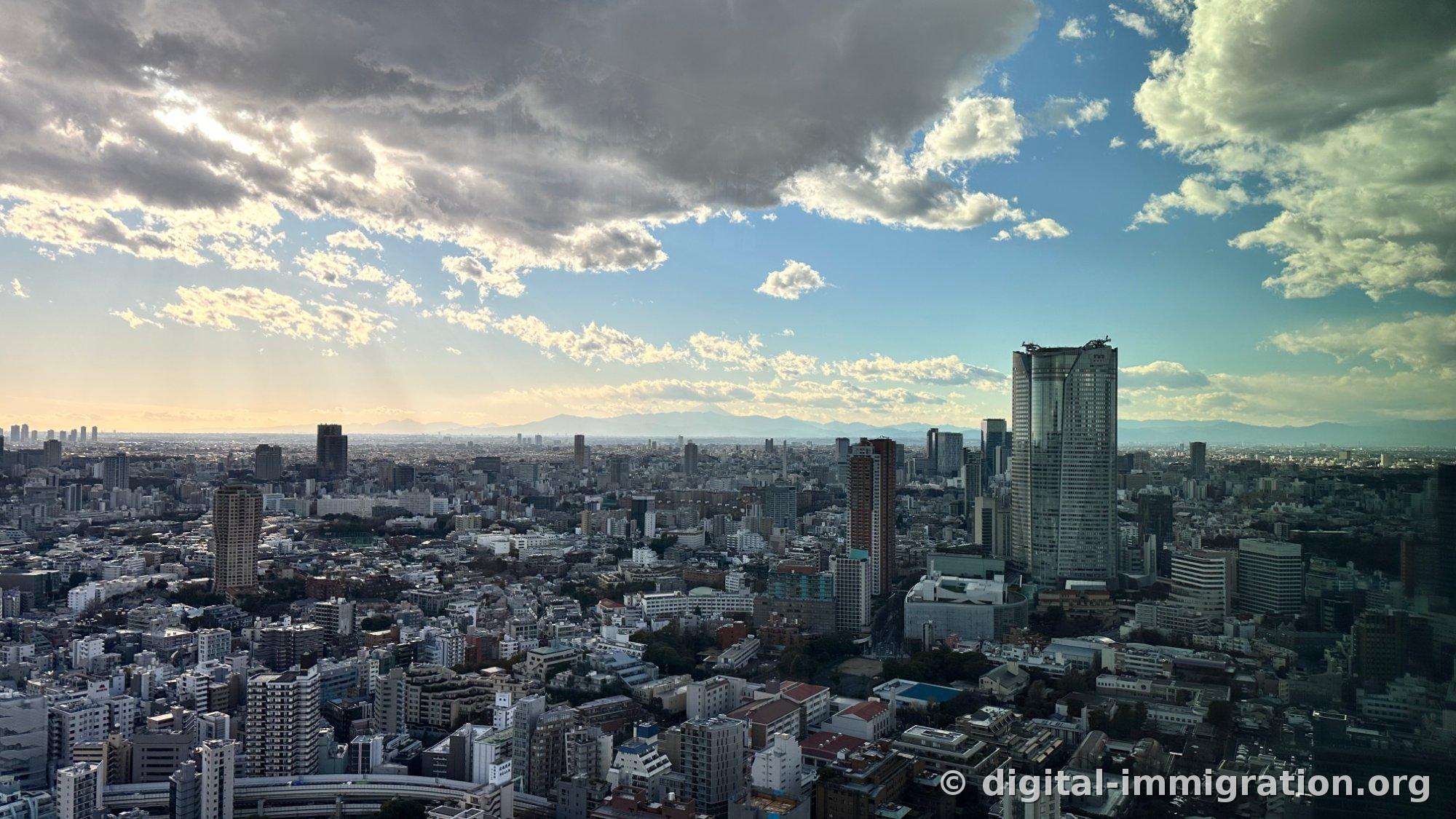
Overcast days aren't bad either. I once saw thick gray clouds covering half the city in mid-afternoon, with light rays breaking through the gaps. The glass face of Mori Tower caught that light and flashed brilliantly on one side.
Two Hours with a Laptop Open
That's where this floor really shines. Sit by the window, open your laptop, order a coffee, and no one questions it. The person at the next table was just scrolling on a phone; two middle-aged men stood by the window with arms crossed, discussing the tower for ages. Power outlets aren't at every seat, so it's wise to check your battery before heading up. I came in at 40% and spent the last 30 minutes dimming the screen to make it last.
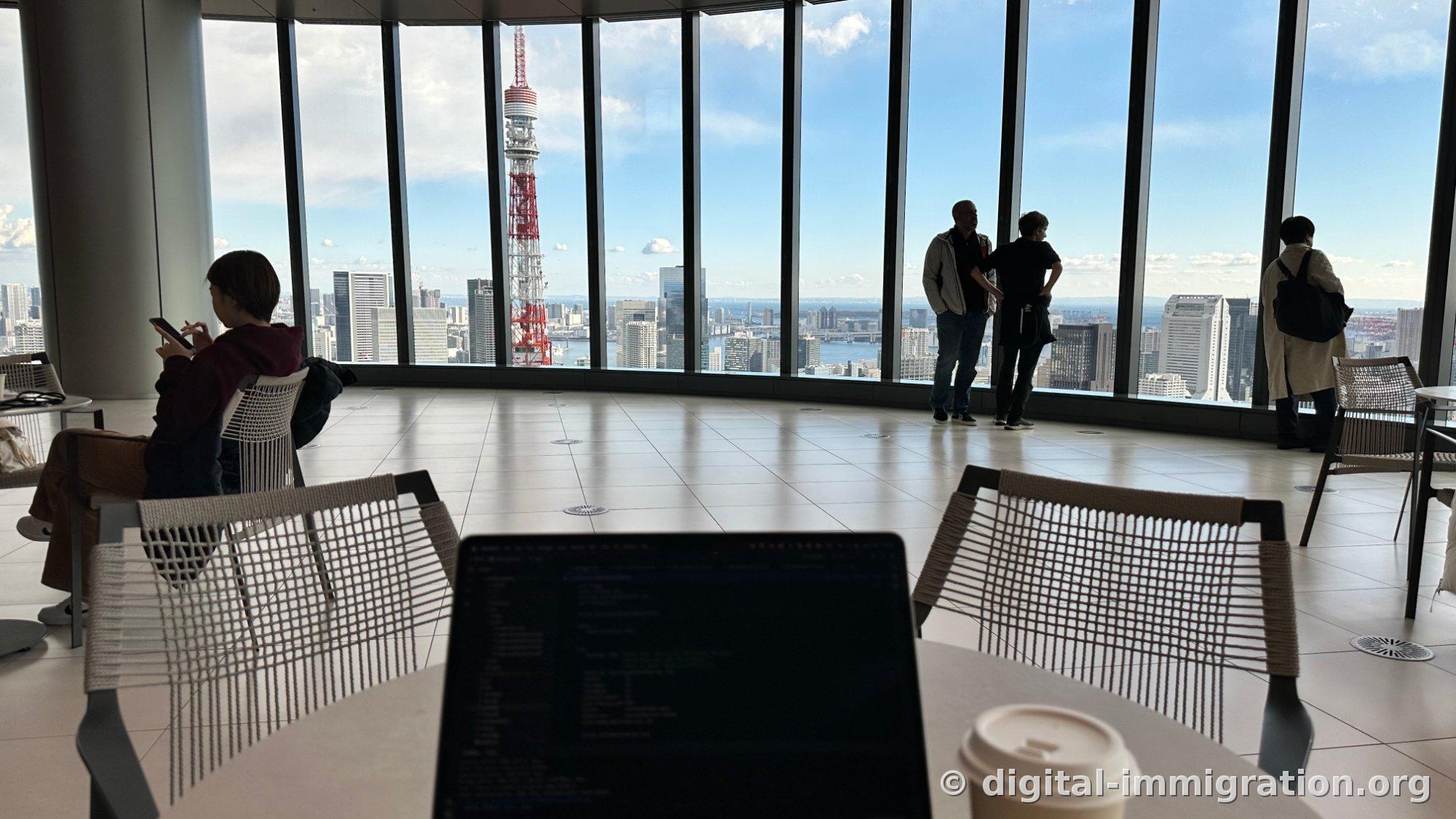
There are drawbacks. The double-pane glass causes heavy reflections. When taking photos, unless you press the lens right against the glass, the interior lighting and your clothes get superimposed in the shot. Several of the west-facing photos I took still have vertical line reflections—I gave up that day. I learned later that wearing dark clothing reduces the glare.
When the Sun Passes Over
After 4 p.m., the light completely transforms. The sky turns golden yellow and the entire city dims by a full tone. Below, a curved highway ramp passes like a white line, and the wooded residential areas begin to fall into shadow first.
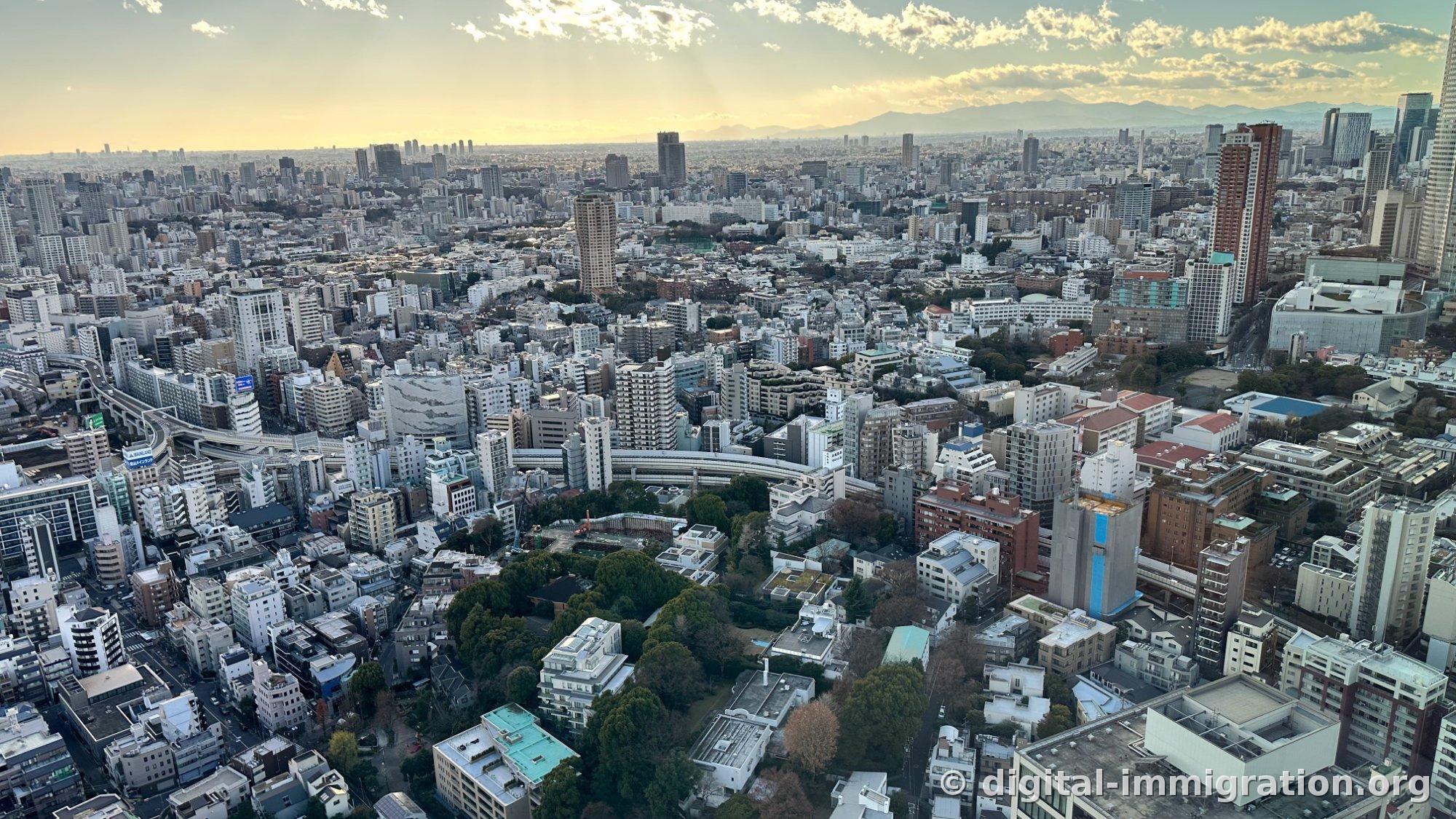
The moment just before the sun touches the ridge is the shortest and the best. Maybe five minutes. During that window, every seat by the window fills up. Being seated there in advance was my only good decision that day.
Things to Know Before You Go
- Kamiyacho Station's direct connection is most convenient. Walking from Azabujuban's side means climbing uphill.
- The 34th-floor elevator requires a transfer on the lower levels. It's easy to confuse with the office-only elevator.
- Tokyo Tower is on the east-facing window; Roppongi Hills and Mount Fuji are on the west. You see both sides from one floor.
- Mount Fuji only appears on clear days. Winter mornings through afternoons have the highest probability.
- Glass reflections are intense. Keep the lens close to the glass, and wearing dark clothing helps.
- Not every seat has a power outlet.
- Operating hours and café menu prices change seasonally, so I recommend confirming on-site before your visit.
In Tokyo, if you insist on climbing Tokyo Tower's observation deck to see the tower, you end up not seeing it at all. To see the tower, you need to be outside it. I sat in a chair by the 34th-floor window and watched it while my coffee grew cold.
Read next
- From Akihabara's Chuo-dori to the Kanda River: A Record of Tokyo's Electronics District Revisited Multiple Times
Tokyo's Akihabara is a neighborhood where it's hard to say you've seen everything in a single visit. I've come multiple times across different seasons, and each time the signs chan…
Tokyo · Akihabara - Buying a Single ¥300 Year-End Jumbo Lottery Ticket at Nishi-Ginza Chance Center in Tokyo
Exit from the Hibiya exit of Tokyo's Shimbashi Station, walk toward the elevated highway for about three minutes, and suddenly you'll see a line of people stretching along the side…
Tokyo · Nishi-Ginza Chance Center - Ueno Ameyoko, the real magic starts after sunset — an evening walk from the Okachimachi Gate to Ueno Station
Every time I come to Tokyo, my feet find their way to Ueno Ameyoko (アメ横) without fail. This time I entered from the Okachimachi side and worked my way toward Ueno Station. I've met…
Tokyo · Ameya Yokocho Market