AFURI Shinjuku Lumine in Shinjuku Underground Mall, Tokyo — A Bowl of Yuzu Shio and Abura Soba, and the Wait
Head down from the west exit of Shinjuku Station and you'll find AFURI (阿夫利) Shinjuku in the basement 2nd floor of Lumine 1. Anyone looking for it based on a street-level sign will…
Tokyo · AFURI Shinjuku
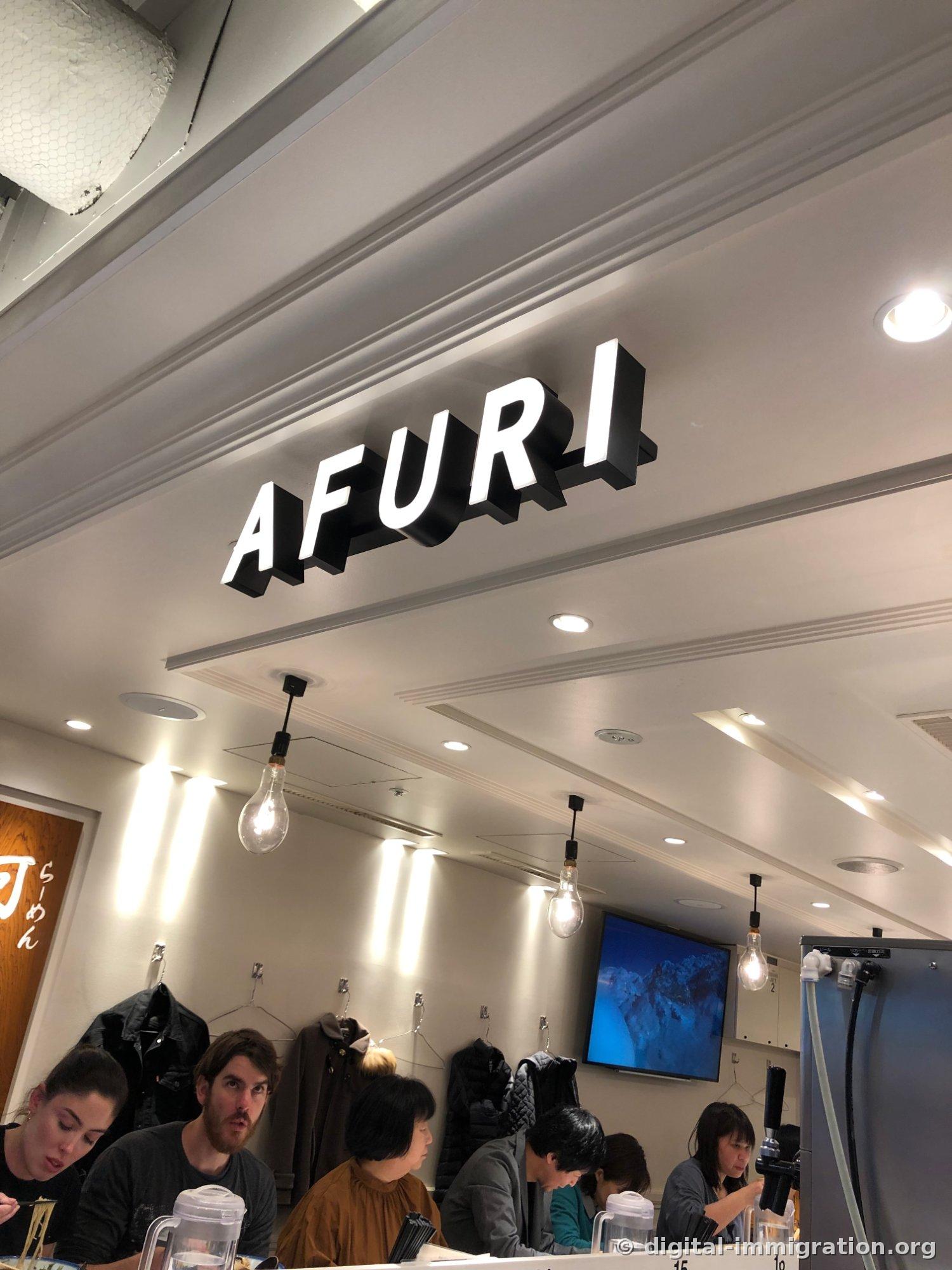
Head down from the west exit of Shinjuku Station and you'll find AFURI (阿夫利) Shinjuku in the basement 2nd floor of Lumine 1. Anyone looking for it based on a street-level sign will likely get lost at least once. Deep inside the underground food court, as you walk along the corridor, a storefront suddenly appears with 'AFURI' in bold 3D letters. The shop became famous for its yuzu shio ramen made with water from Aburi Mountain in Kanagawa, and while there are several branches in Tokyo, the Shinjuku location is particularly crowded due to its location.
Busy Hours — Best to Avoid the Lunch Rush
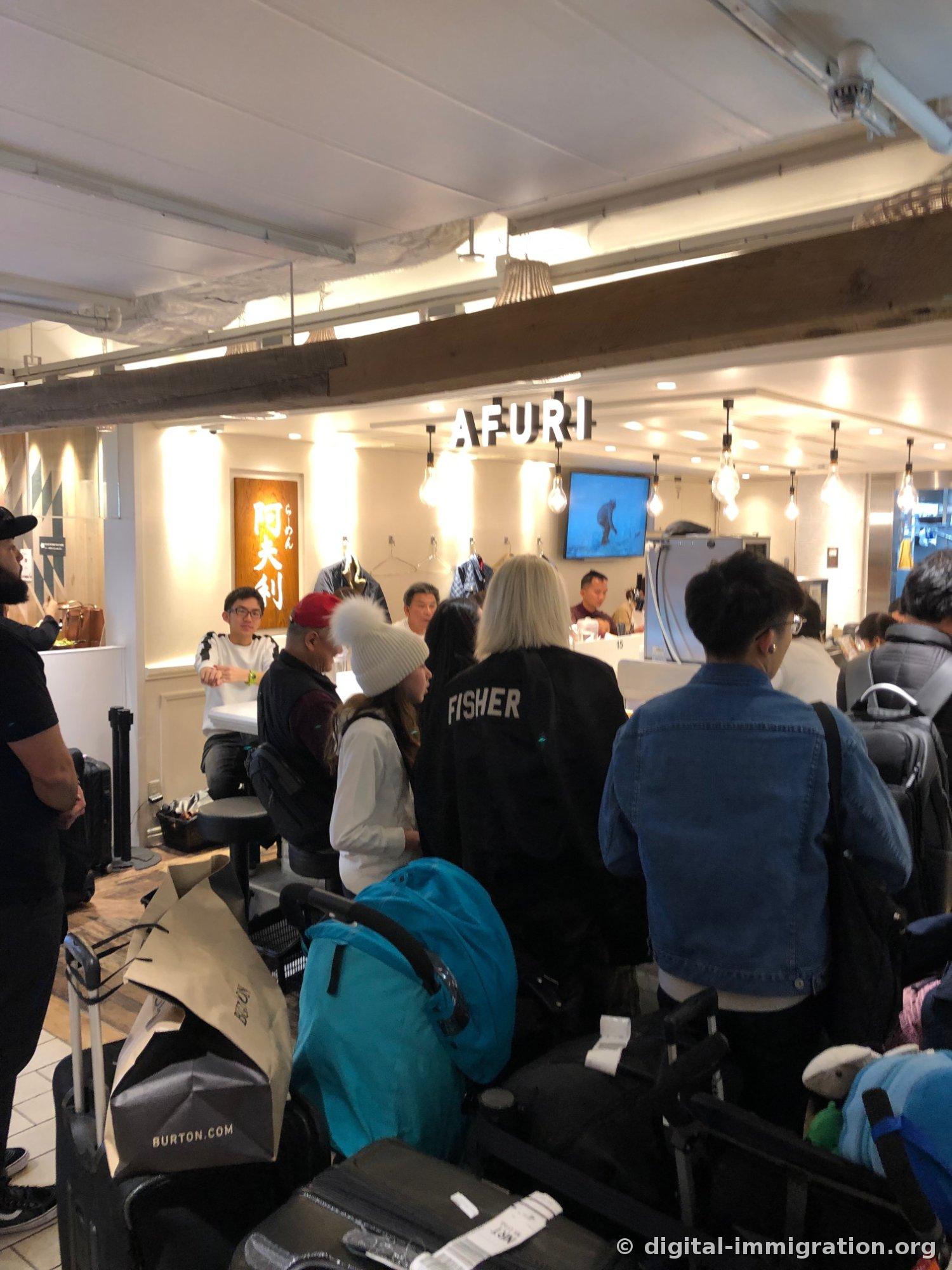
To enjoy this place without stress, timing is everything. I've gone around noon, seen people stacked up in the corridor in front of the store, and just turned back. Since it's in an underground mall, there's not much space for the queue to form, so when travelers with luggage and customers with shopping bags get tangled up, it's hard to tell where the line even starts. I'd recommend going between 1:30 and 2 PM, just after the lunch rush. The wait is dramatically shorter at the same location.
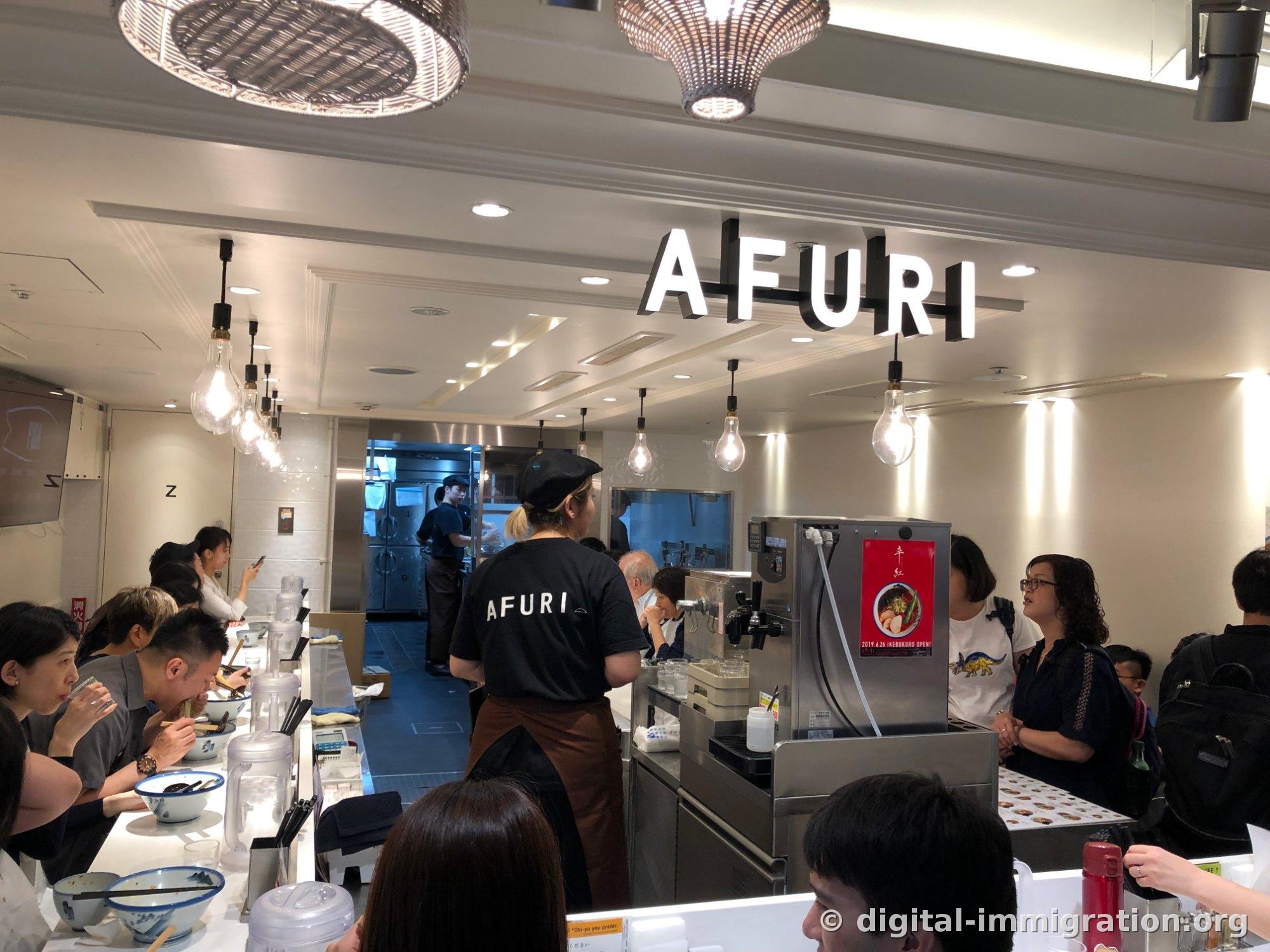
There's a clear process while you're waiting in line. Since the system is to order first at the ticket machine next to the entrance and get your ticket, you'll speed up the flow if you decide on your menu while standing in line. There's English on the menu, so ordering itself isn't difficult. Seating is mostly at the counter, and there are hooks densely packed on the wall behind you to hang coats or bags. The seating is tight, so it's hard to fit large luggage at your feet. It's more convenient to store your bags in a coin locker.
Yuzu Shio Ramen — The Broth Is Surprisingly Clear
The signature is yuzu shio (柚子塩) ramen. When the bowl arrives, the broth is almost transparent and clear, with a thin layer of oil floating on top. A spoonful first brings the sweetness of chicken stock, and then the aroma of yuzu hits your nose a moment later. For someone used to tonkotsu, it's surprisingly light—you might initially think "That's it?" The noodles are thin and straight, so they don't absorb too much broth. The chashu was lightly torched on the edges to add flavor, and the soft-boiled egg yolk was cooked just enough not to run.
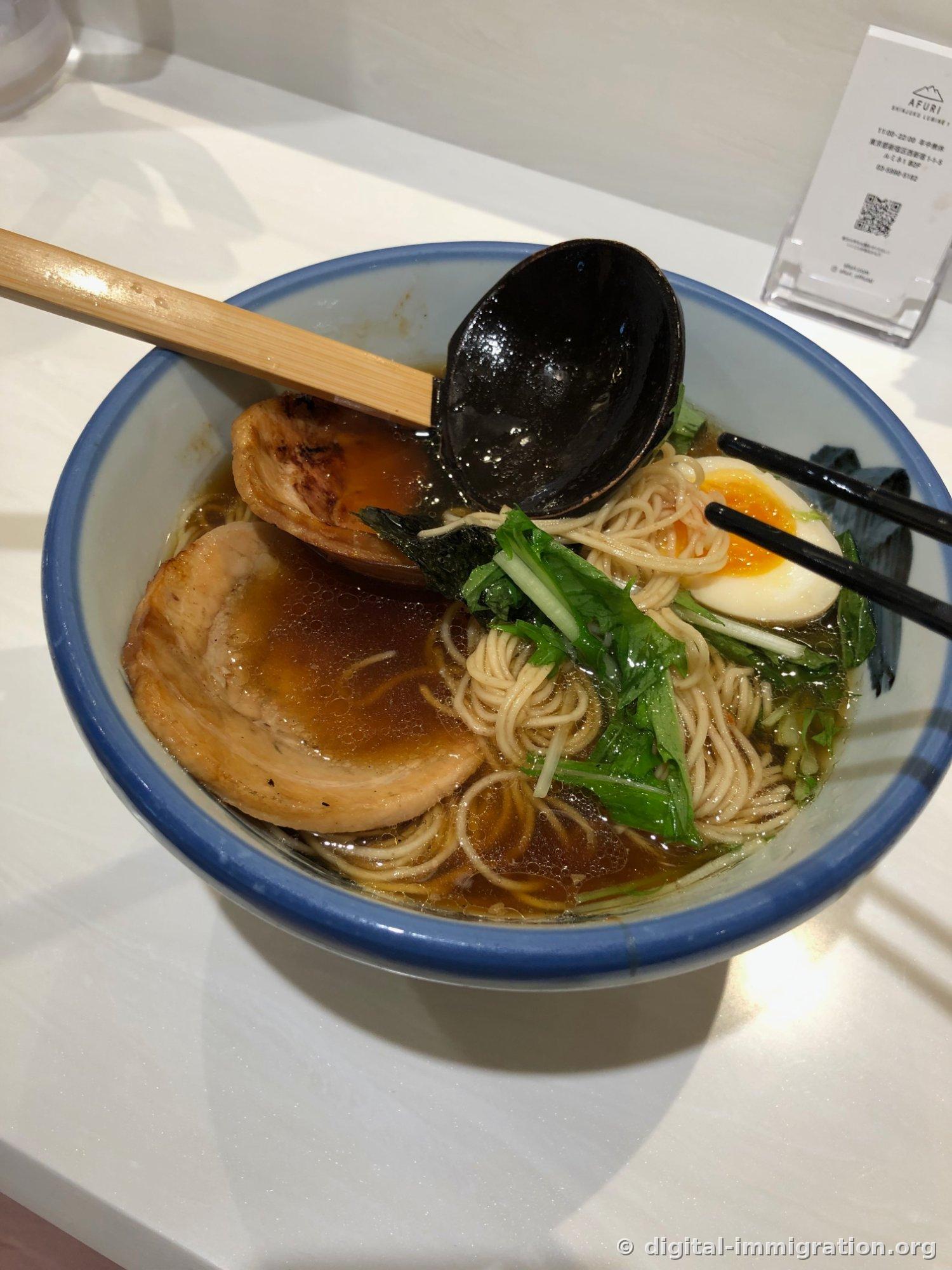
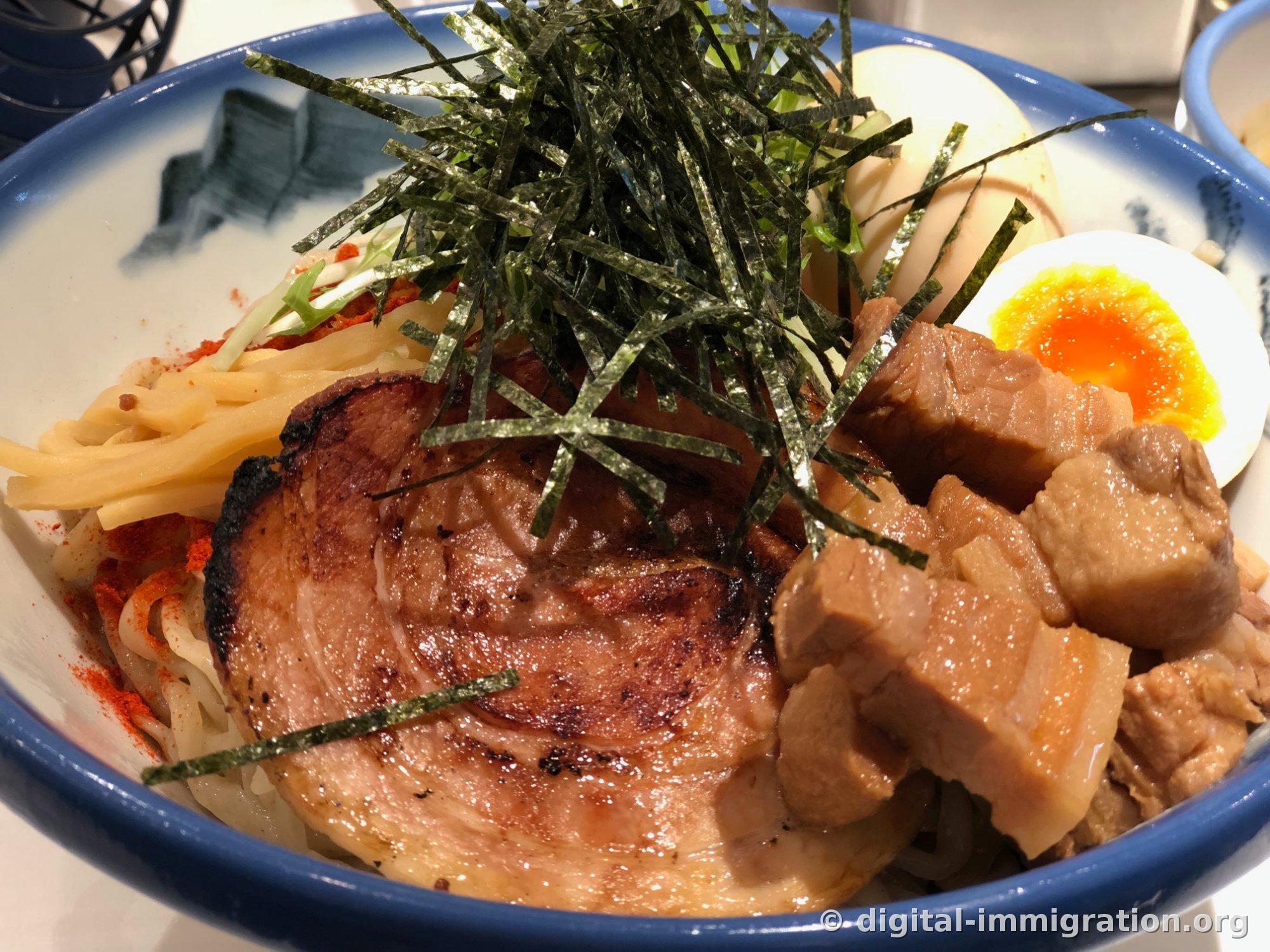
Looking at the chashu up close, you can see why it gets so much talk. The charred edges remain perfectly intact, and the fatty parts melt with a translucent quality. When you bite into it, you first taste the smoky flavor, followed by a lingering richness. The photo below is a spicy-style bowl—thick noodles piled high with shredded seaweed, topped with a soft-boiled egg and finely diced braised meat. You'd be right to consider it a completely different dish from the broth ramen.
Abura Soba — The Broth-Free Version Left a Stronger Impression
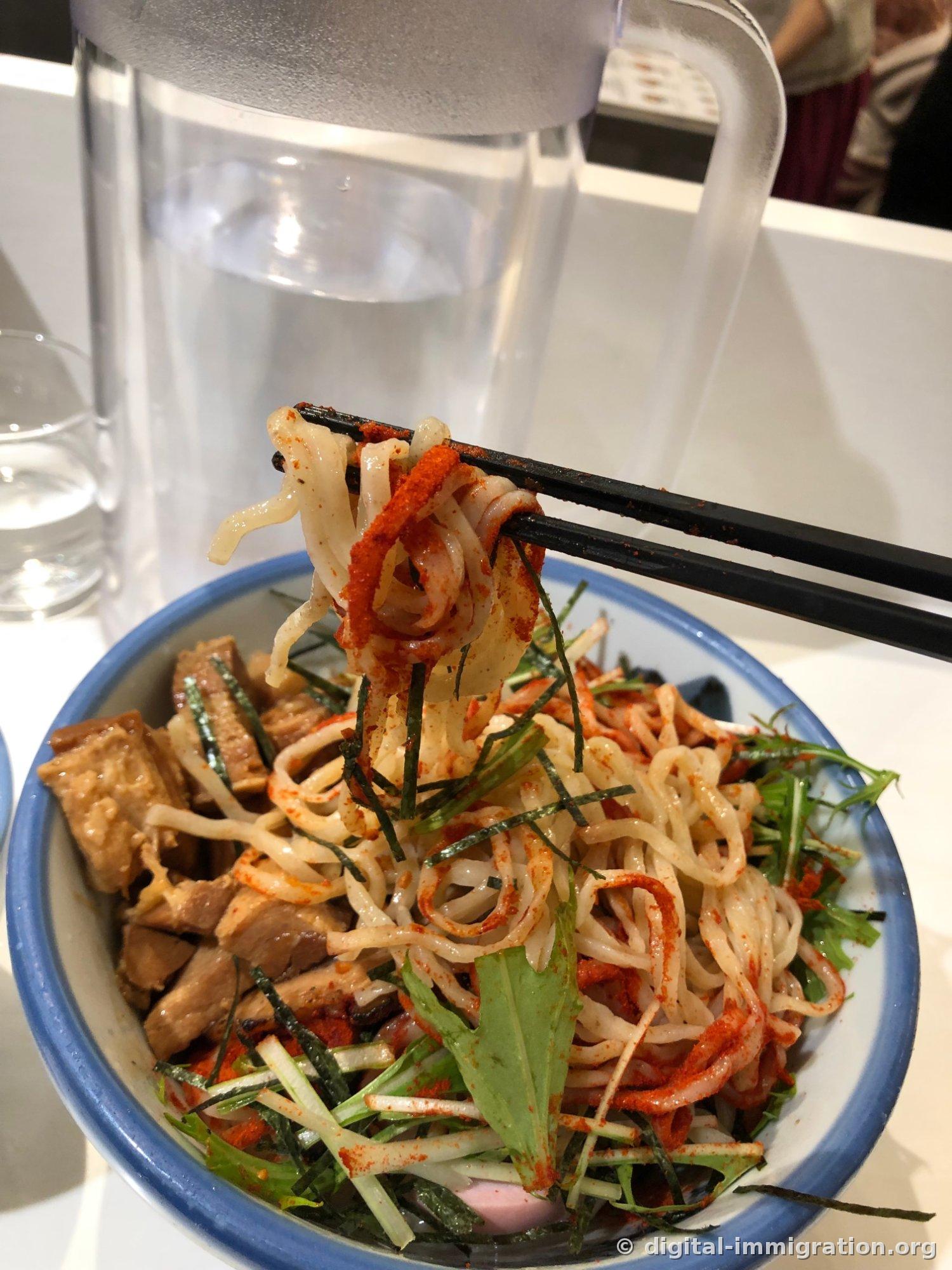
On my second visit, I ordered the broth-free abura soba. Thick noodles topped with red chili powder, shredded seaweed, mizuna greens, and thinly sliced bamboo shoots. You need to mix it vigorously from bottom to top as soon as it arrives so the seasoning on the bottom coats the noodles. At first, despite its fiery appearance, the heat is mild, but after mixing and eating a few chopstick-fulls, your tongue eventually starts to tingle.
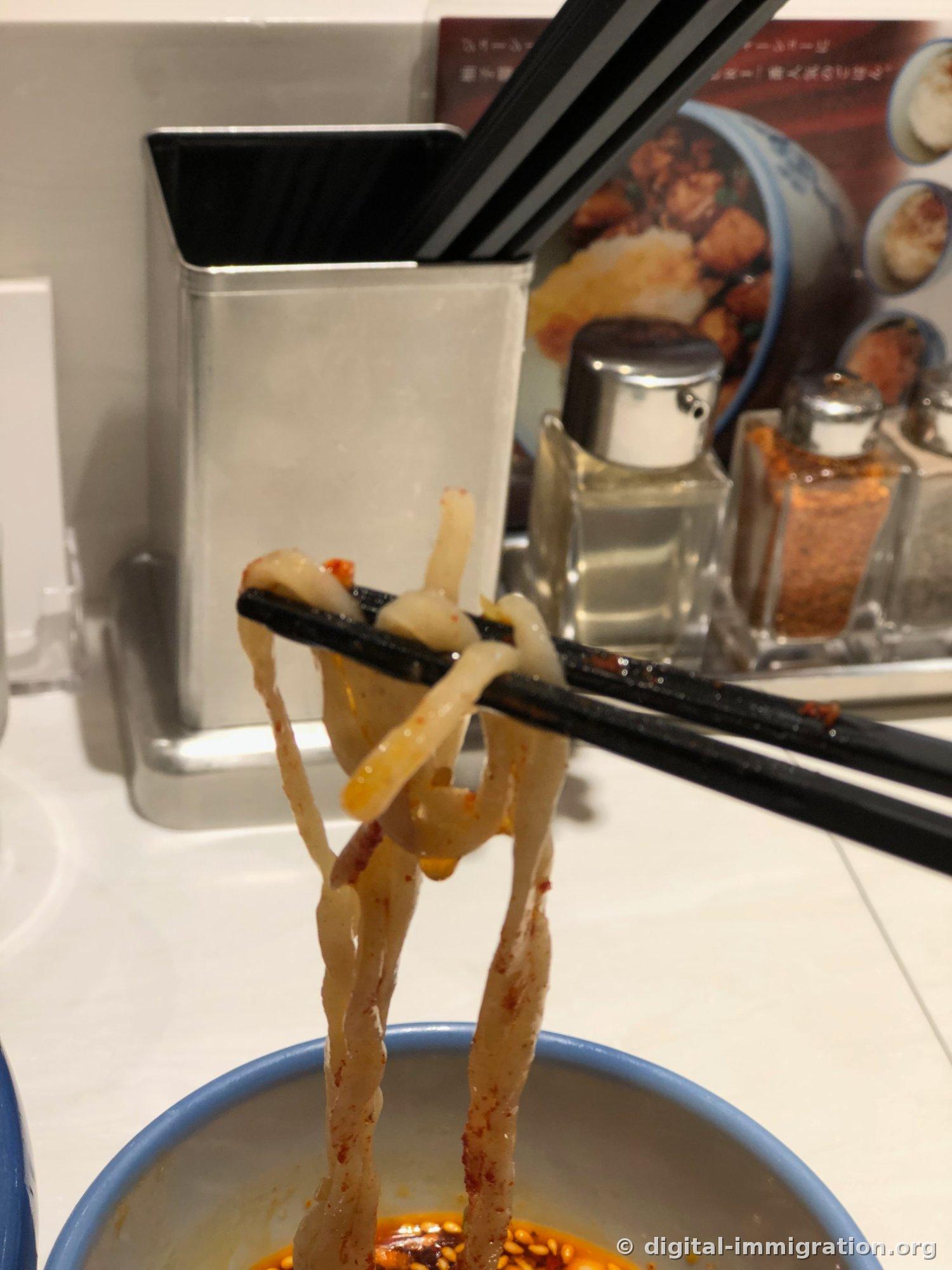
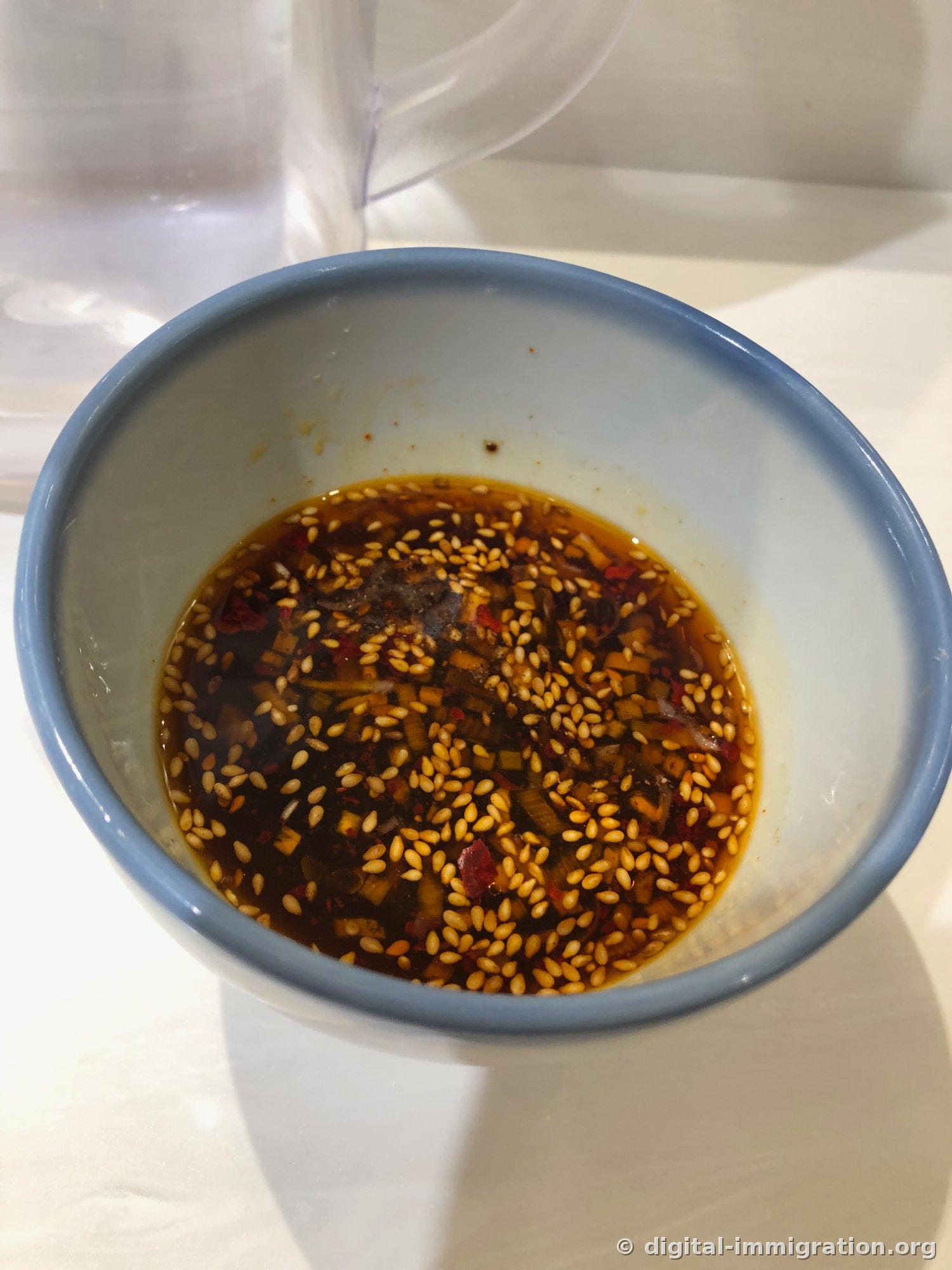
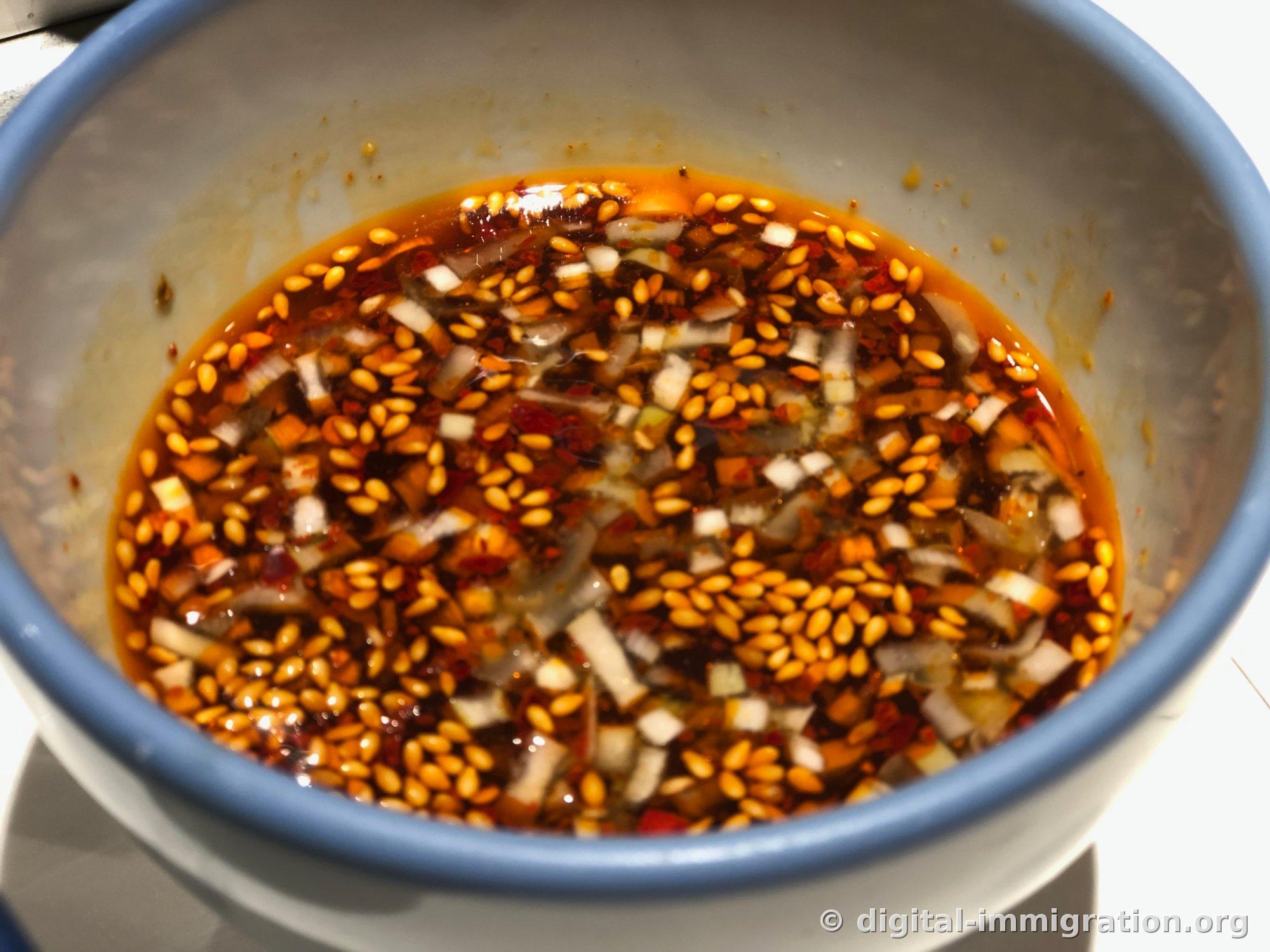
The real fun of this bowl comes after you've eaten most of it. At the bottom, you'll find sesame seeds, coarse chili powder, minced scallions, and chopped garlic all bathed in oil. Both times I couldn't bear to waste it and scraped the bowl clean to the end. It can taste quite salty, so it's better to have a water pitcher nearby. Each counter has one, so just pour and drink as you go.
How to Get There and What to Know
From the south and west ticket gates at Shinjuku Station, follow the underground passage toward Lumine 1. It's faster to keep going underground after exiting the train rather than heading up to street level. You won't even need to open an umbrella on rainy days.
- Orders are placed via ticket machine at the entrance. It helps to decide on your menu while waiting in line.
- Seating is primarily at the counter. If you're in a large group, sitting together may be difficult.
- There are coat hooks on the wall behind you, but there's limited space for large bags. Using a coin locker is recommended.
- You can adjust the flavor with the seasoning bottles on the table (garlic oil and chili powder). Mix the abura soba vigorously from the start.
- Prices and business hours vary by location and season. Check the information board at the storefront.
If you're trying clear broth ramen for the first time, start with the yuzu shio; if you prefer something richer, go for the abura soba. I preferred the second bowl. But one thing is certain: choose the wrong time of day and you'll be standing in the underground passage for 30 minutes.
Read next
- From Akihabara's Chuo-dori to the Kanda River: A Record of Tokyo's Electronics District Revisited Multiple Times
Tokyo's Akihabara is a neighborhood where it's hard to say you've seen everything in a single visit. I've come multiple times across different seasons, and each time the signs chan…
Tokyo · Akihabara - Buying a Single ¥300 Year-End Jumbo Lottery Ticket at Nishi-Ginza Chance Center in Tokyo
Exit from the Hibiya exit of Tokyo's Shimbashi Station, walk toward the elevated highway for about three minutes, and suddenly you'll see a line of people stretching along the side…
Tokyo · Nishi-Ginza Chance Center - Ueno Ameyoko, the real magic starts after sunset — an evening walk from the Okachimachi Gate to Ueno Station
Every time I come to Tokyo, my feet find their way to Ueno Ameyoko (アメ横) without fail. This time I entered from the Okachimachi side and worked my way toward Ueno Station. I've met…
Tokyo · Ameya Yokocho Market