A Night Grilling Offal at Jonetsu Horumon (情熱ホルモン), a Charcoal-Grilled Restaurant in a Hidden Alley of Omoide Yokocho, Shinjuku
West of Shinjuku Station in Tokyo, when you step into a narrow alley called Omoide Yokocho (思い出横丁), the passage is so tight that two people have to brush shoulders to pass. Red lan…
Tokyo · Jonetsu Hormon
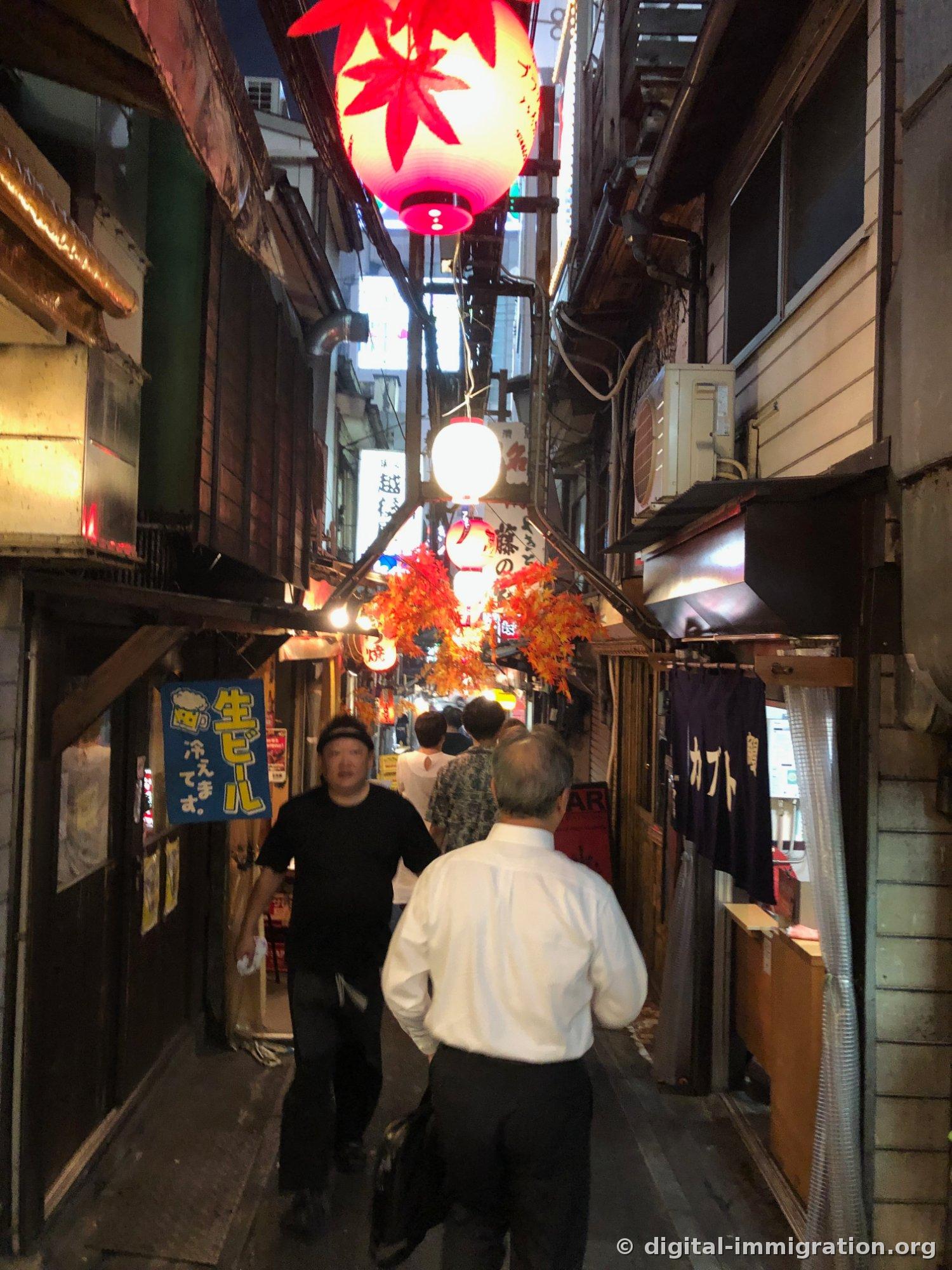
West of Shinjuku Station in Tokyo, when you step into a narrow alley called Omoide Yokocho (思い出横丁), the passage is so tight that two people have to brush shoulders to pass. Red lanterns with maple leaves painted on them hang low overhead, and on the left side of the shop wall is a blue handwritten sign reading "生ビール 冷えてます (Fresh beer, ice cold)." In the early evening, office workers in white shirts walk ahead, while shop staff dressed in black emerge from the opposite direction calling out to customers. The smell of oil and charcoal are trapped and linger deep within the alley. Jonetsu Horumon, a charcoal-grilled offal restaurant at the entrance of this alley, was our destination that evening.
The Sign Shows All the Prices
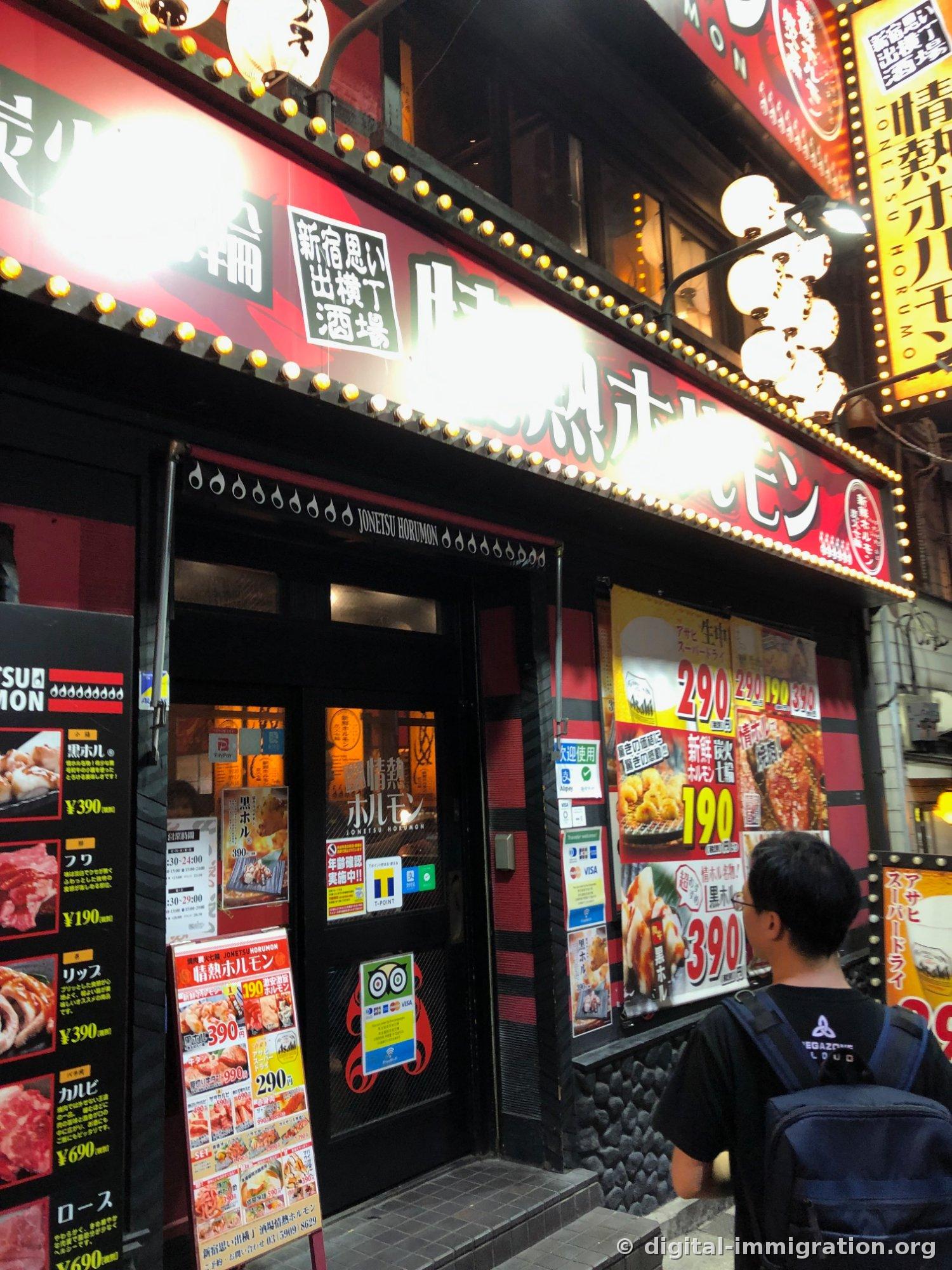
When you stand in front of the shop, a neon-studded sign on a red background catches your eye first. "新宿思い出横丁 酒場 情熱ホルモン" with "JONETSU HORUMON" in English below. On the black menu board to the left of the entrance, the restaurant's signature dishes are listed with photos: 黒ホル (kuros horumon) 390 yen, フワ (pork lungs) 190 yen, リップ (lips) 390 yen, カルビ (short ribs) 690 yen, ロース (loin) 690 yen. On the right window is a poster advertising Asahi Super Dry draft beer at 290 yen and fresh horumon starting from 190 yen. All listed prices are marked tax-not-included (税別), so the bill will be a bit higher. If you don't know this, your calculations might be off when you leave.
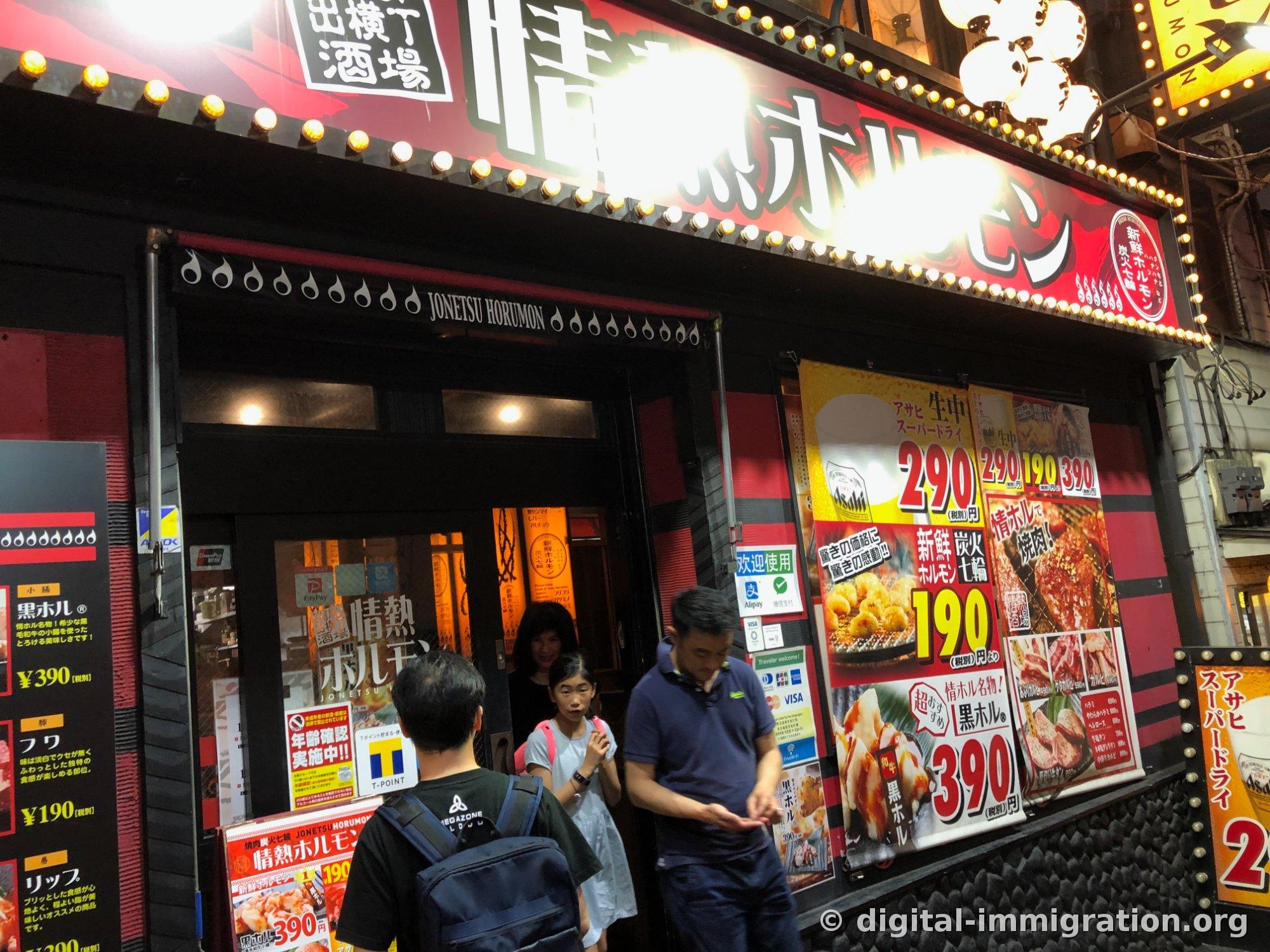
The glass door at the entrance is covered with payment method stickers. PayPay, Alipay, WeChat Pay, VISA, Mastercard, UnionPay, T-POINT. Among the alleys of cash-only shops, this place accepts cards easily. There's also a notice saying "年齢確認実施中 (Age verification in progress)," so it's wise to bring your passport if anyone in your party looks underage. There are always a few customers standing outside the door during evening hours.
The location is within walking distance from Shinjuku Station. Since the alley is right next to the tracks on the west side of the station, simply exit the west side and cross the main road, and you'll find the alley entrance. This is how it appears on map apps:
Menu Board and Tablet, Available in Korean
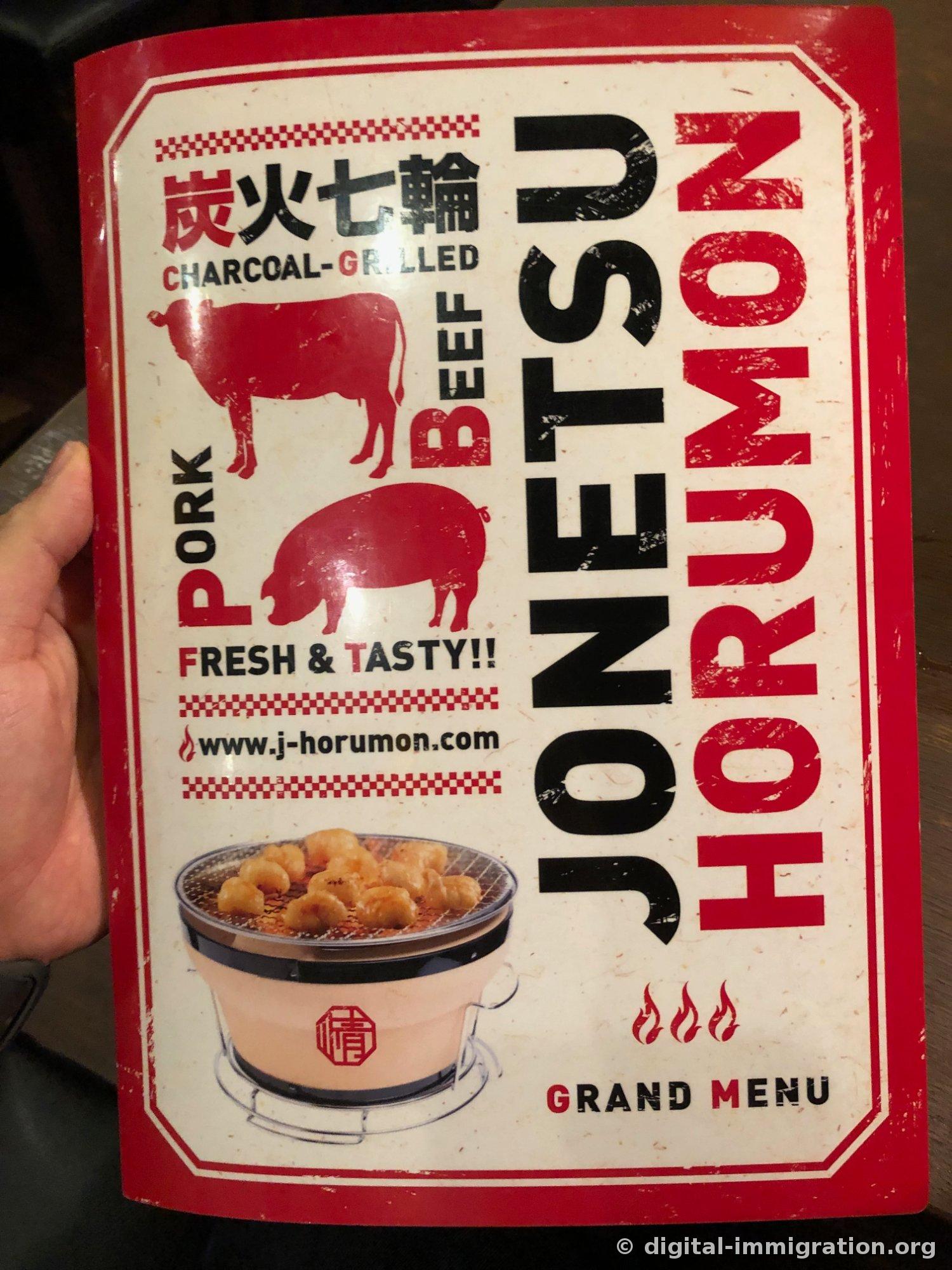
When you sit down, you're given a thick menu board with a red border. The cover features drawings of cattle and pigs, reading "炭火七輪 CHARCOAL-GRILLED / PORK BEEF / FRESH & TASTY!!" along with the website www.j-horumon.com. Below is a photo of offal piled high on a shichirin grill, which matches exactly what the actual grill looks like.
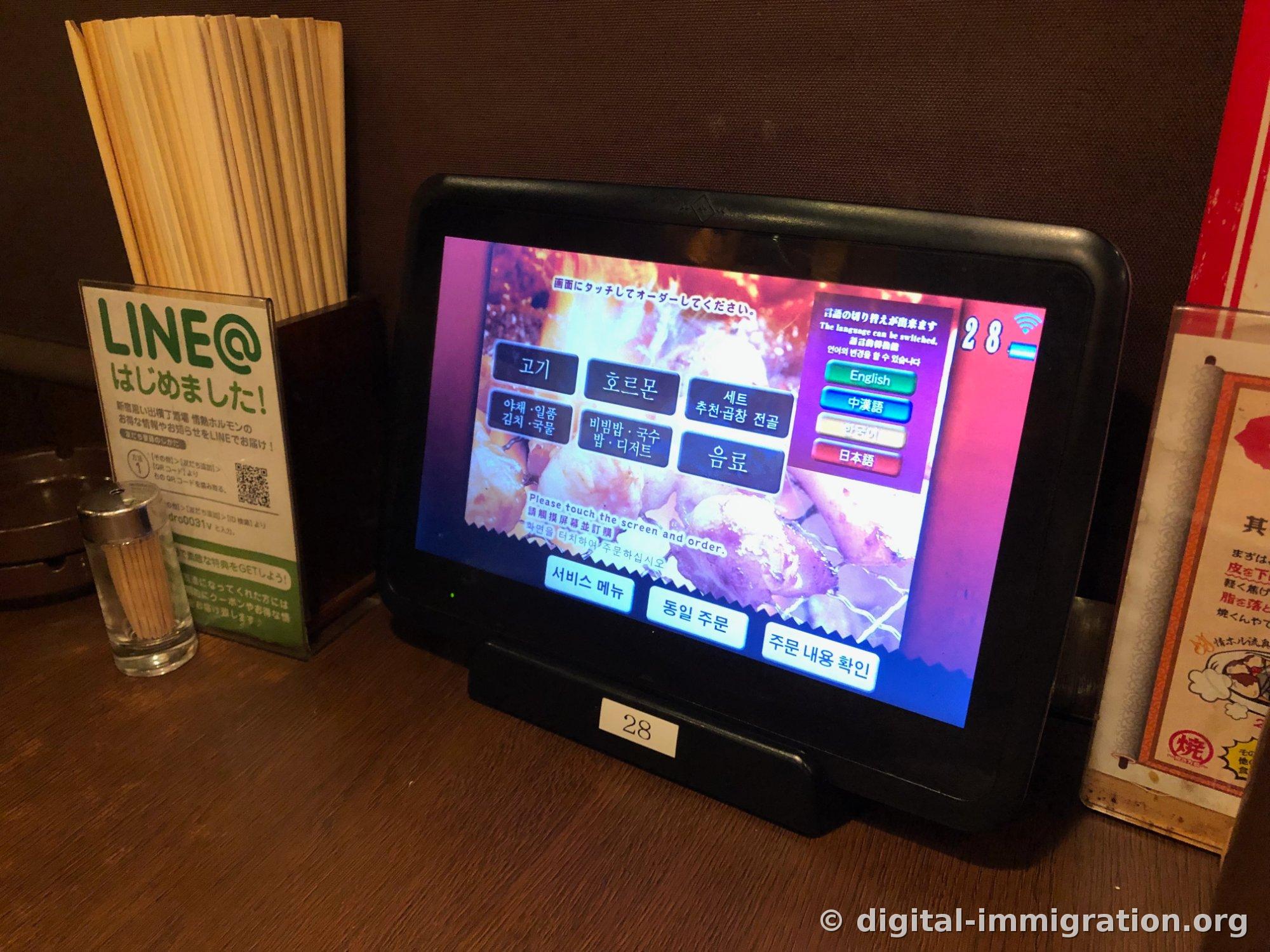
Orders are placed via a tablet on the table. On the first screen, there are buttons for English, 中漢語, Korean, and 日本語 on the right side. Selecting Korean switches all categories to Korean: Meat / Horumon / Sets·Recommendations·Offal Hot Pot / Vegetables·À la Carte·Kimchi·Soup / Bibimbap·Noodles·Rice·Dessert / Beverages. The buttons at the bottom—Service Menu, Repeat Order, Confirm Order—are all in Korean. Gone is the time spent pondering over a Japanese menu.
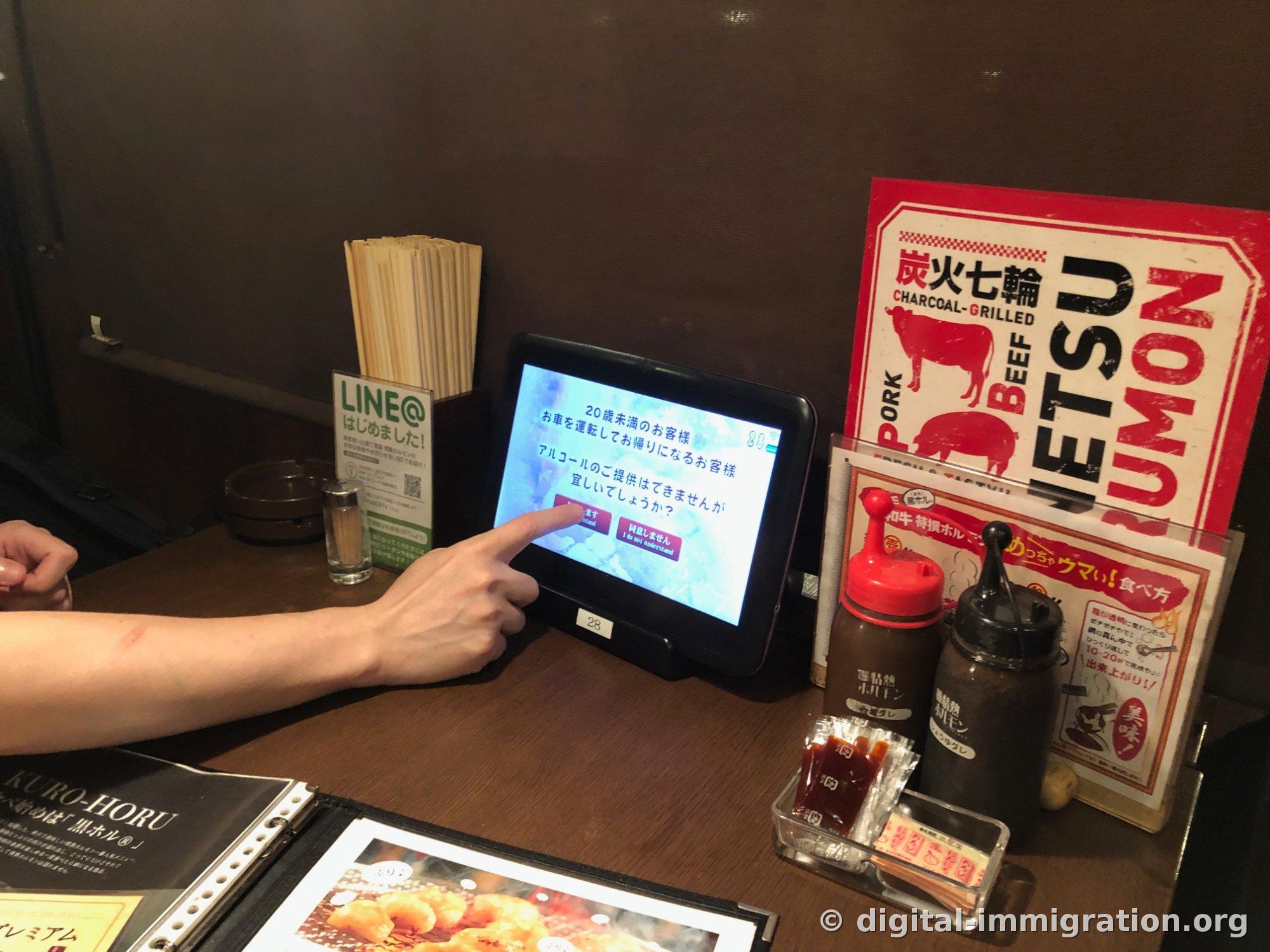
When ordering alcohol for the first time, a confirmation screen appears. It reads, "Customers under 20 years old and those driving home cannot be served alcohol. Is this okay?" You must press either "I Agree" or "I Do Not Agree" to proceed. Next to the table are two bottles of yakidare and ponzu sauce, a salt container, toothpicks, and a chopstick holder, with a guide titled "めっちゃウマい!食べ方 (Super Delicious! How to Eat)" standing nearby. It states that when the offal becomes translucent, you flip it and cook for 10-20 seconds, and it's done.
Copying Menu Board Prices
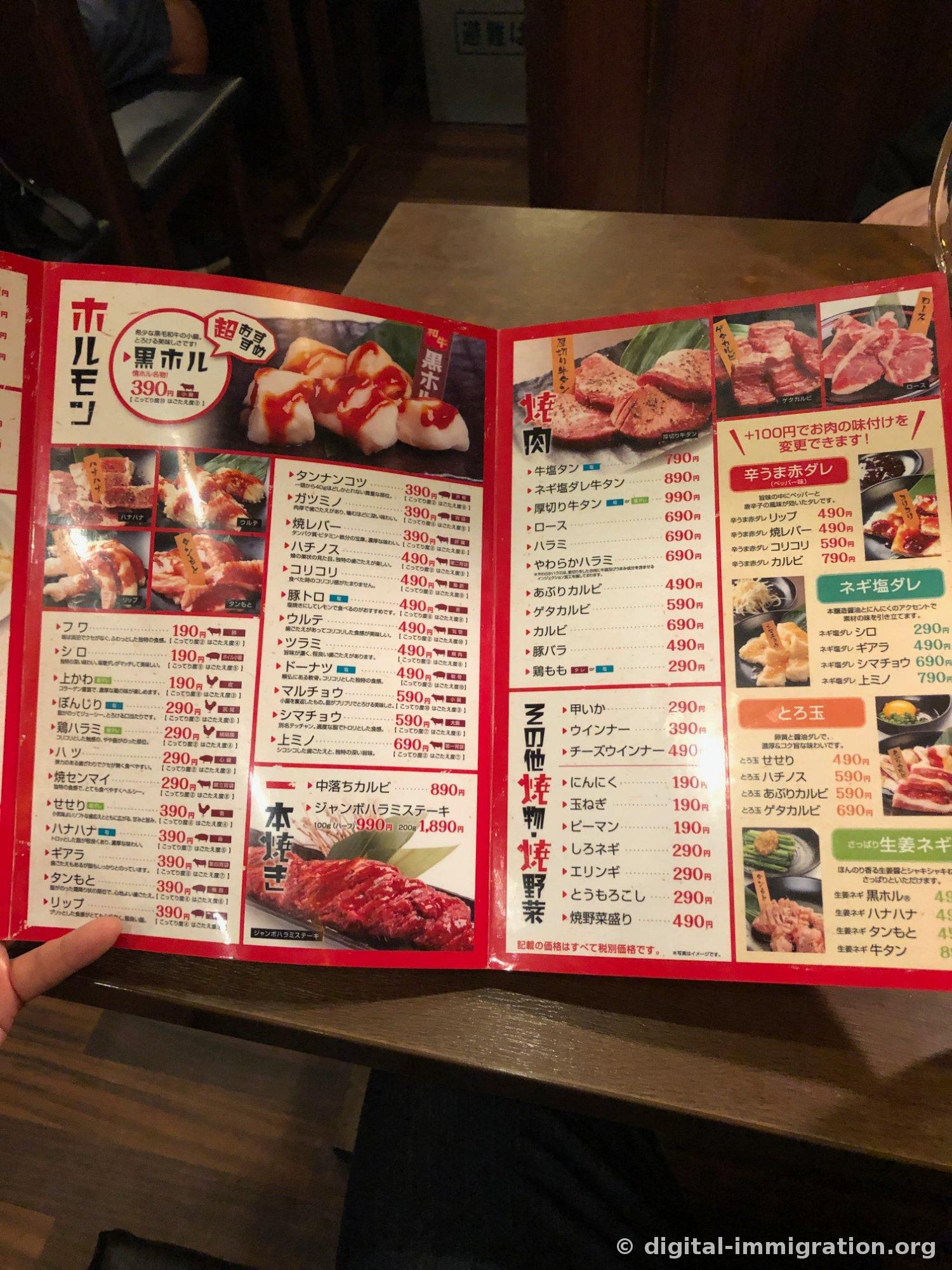
The horumon page is the heart of this restaurant. Each cut is marked with greasiness (こってり度) and chewiness (はごたえ度) ratings, making it easy to choose. Here are the prices that caught my eye:
- フワ (lungs) · シロ (pork stomach lining) · 上かわ each at 190 yen
- ぼんじり · chicken skirt steak · ハツ (heart) · grilled senbei each at 290 yen
- 黒ホル (black horumon) · ハナハナ · ギアラ · タンもと · リップ · grilled liver each at 390 yen
- ハチノス (honeycomb tripe) · コリコリ · pork collar · ウルテ · ツラミ each at 490 yen
- マルチョウ · シマチョウ each at 590 yen, 上ミノ at 690 yen
- Yakiniku side: ushi-otoro at 790 yen, thick tongue at 990 yen, loin · skirt steak · short ribs each at 690 yen, aburi short ribs at 490 yen, naka-ochi short ribs at 890 yen
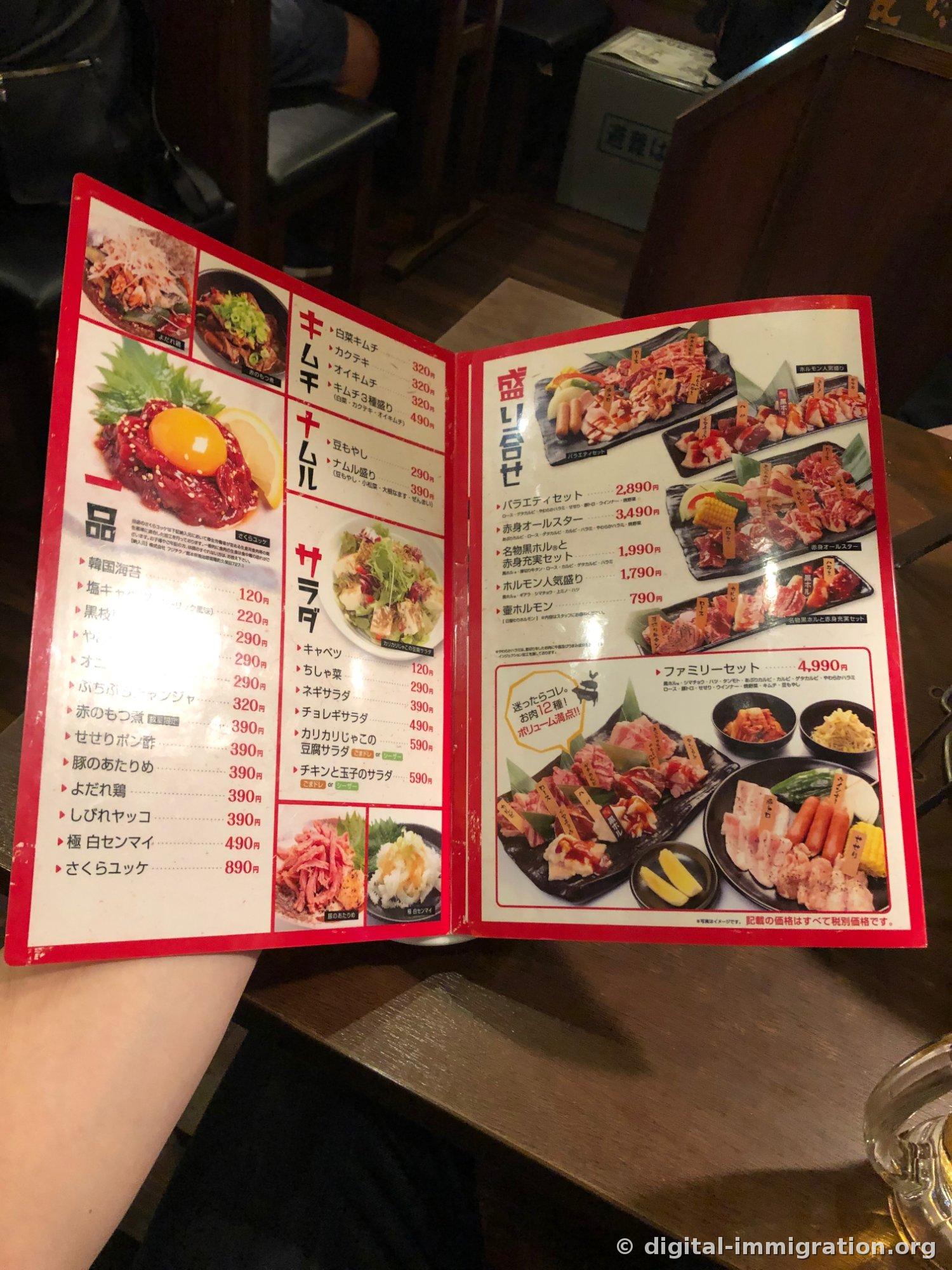
If you're with a group and can't be bothered choosing, just move to the sets page. Horumon Popular Set 1,790 yen, Specialty Kuros Horumon and Red Meat Hearty Set 1,990 yen, Variety Set 2,890 yen, Red Meat All-Star 3,490 yen, Family Set with 12 varieties 4,990 yen. On the same page are Sakura beef sashimi at 890 yen, extreme white senbei at 490 yen, and assorted kimchi at 490 yen.
The Charcoal Grill Lights Up
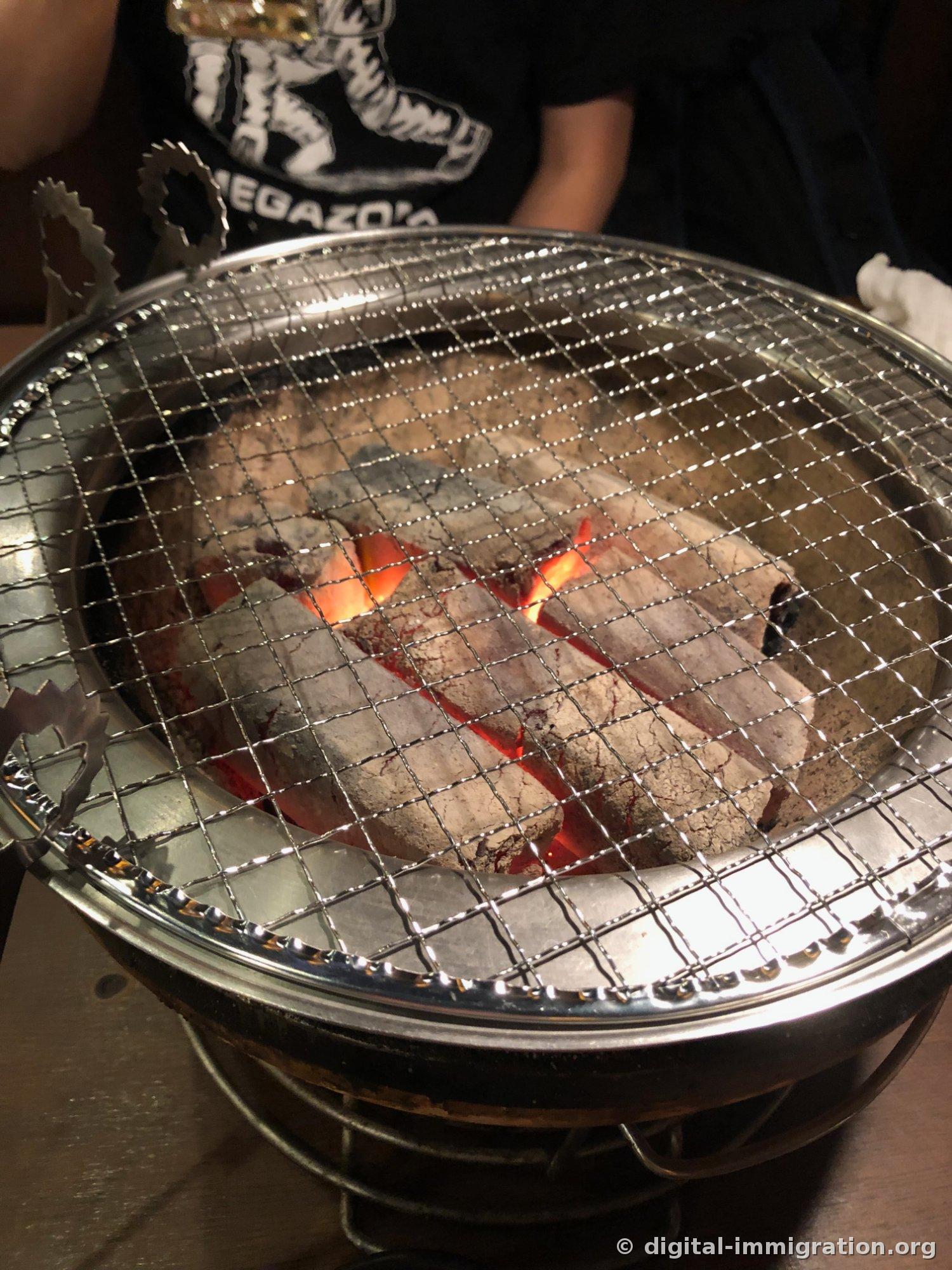
After placing your order, the shichirin grill arrives first. Inside the round grill sit about three pieces of charcoal, their surface covered with white ash, with bright orange flames visible through the cracks. A silver grate is placed on top. When you bring your face close, dry heat rushes up at you. The temperature quality is different from gas flames. The air above the table rises a few degrees, and if you go in summer, your shirt gets damp quickly.
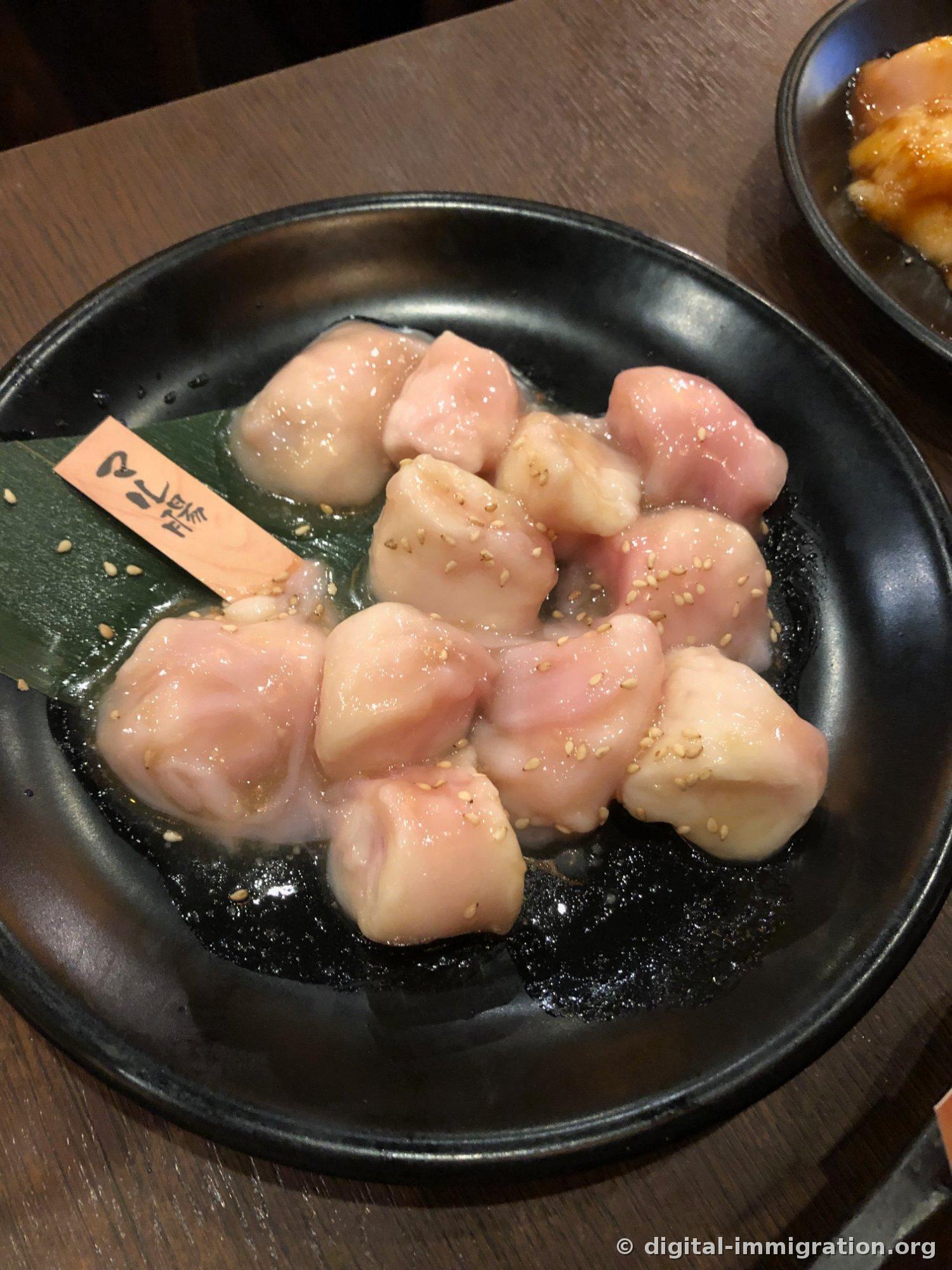
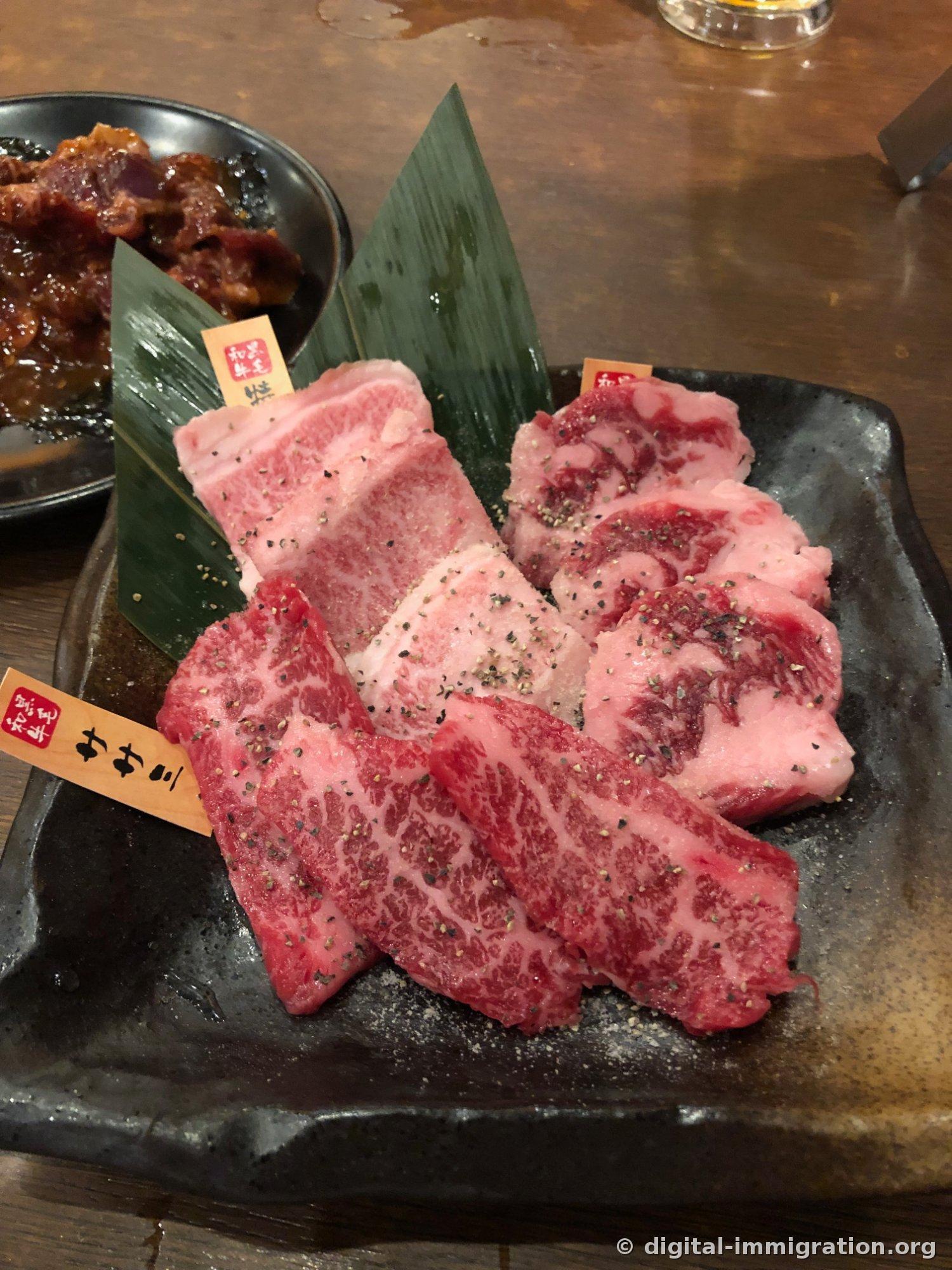
The restaurant's famous kuros horumon arrived on a black plate. According to the menu, they use black Wagyu pork stomach lining. Large pieces show translucent pink hues with white fat mixed in, topped with sesame seeds. A small wooden tag with the cut's name is placed on a bamboo leaf, so even if you order multiple varieties, you won't get confused. Just from the lustered appearance of the raw meat, you can tell it's been handled well.
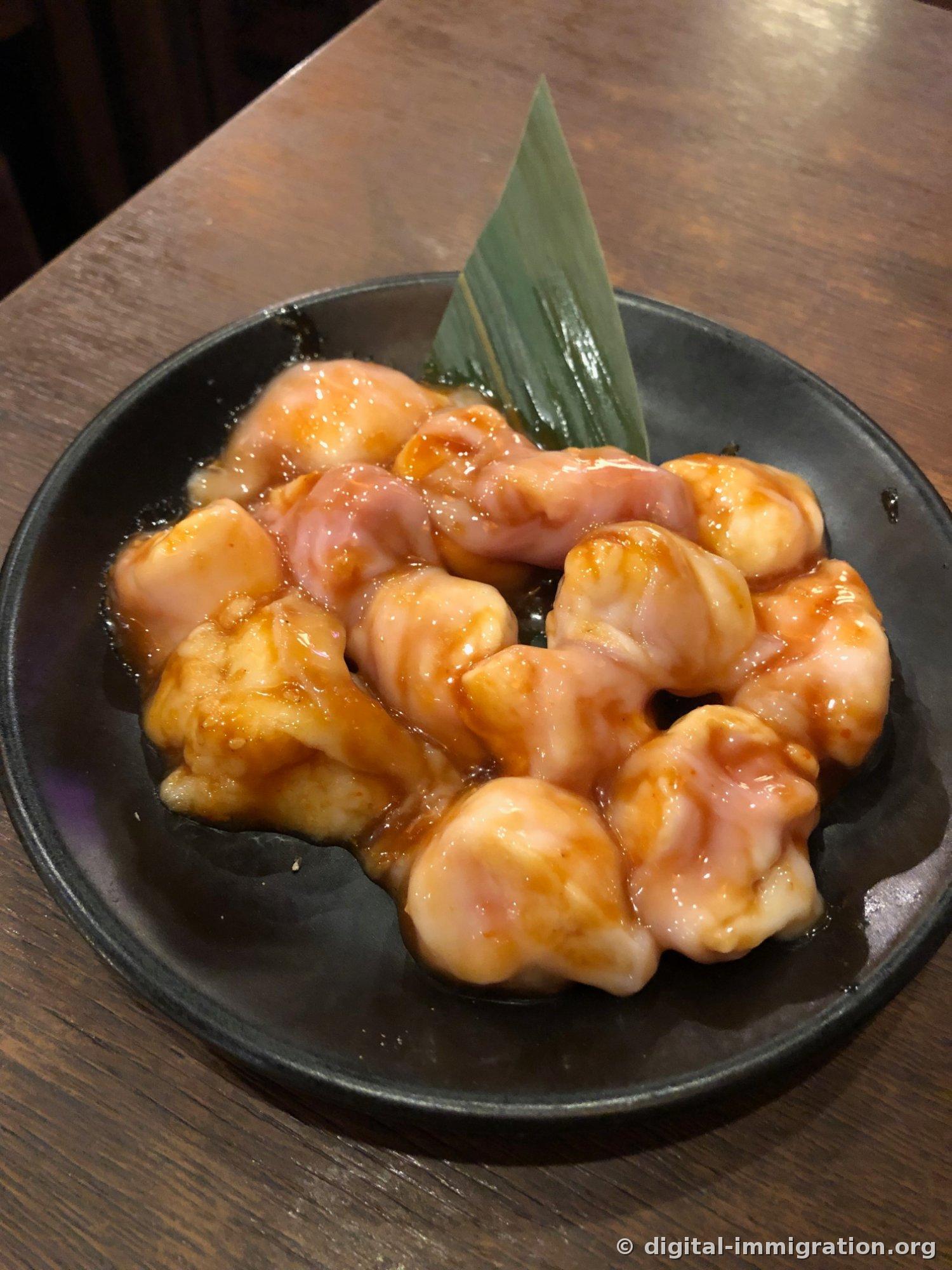
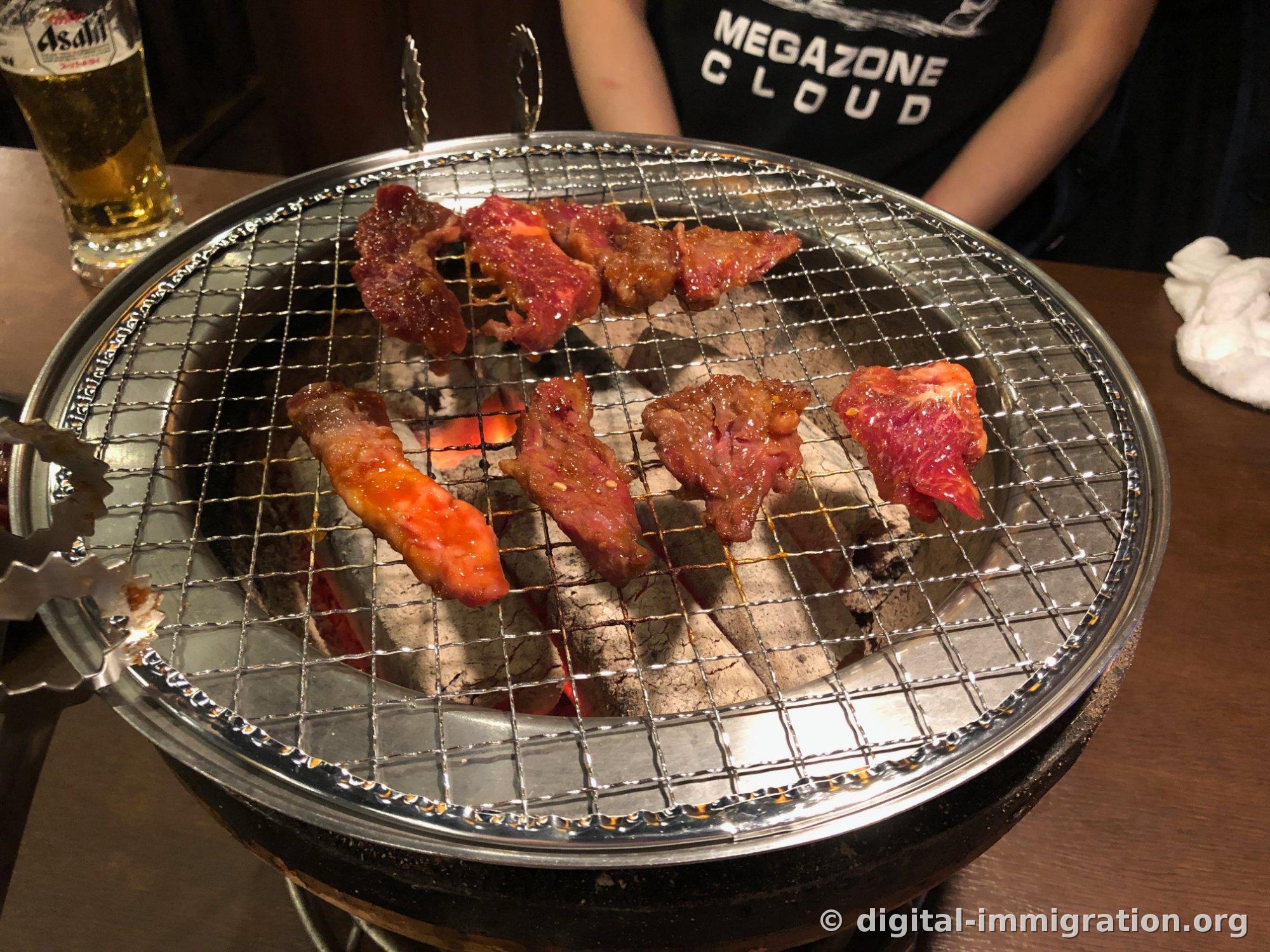
Another plate with sauce came out too. It's the same offal, but coated evenly with red dare so oil and sauce pool thinly on the plate bottom. This is more prone to catching fire while grilling, so it's better to place it on the edge away from directly over the coals. I put this in the center on the first round, and smoke rushed up, making my eyes sting.
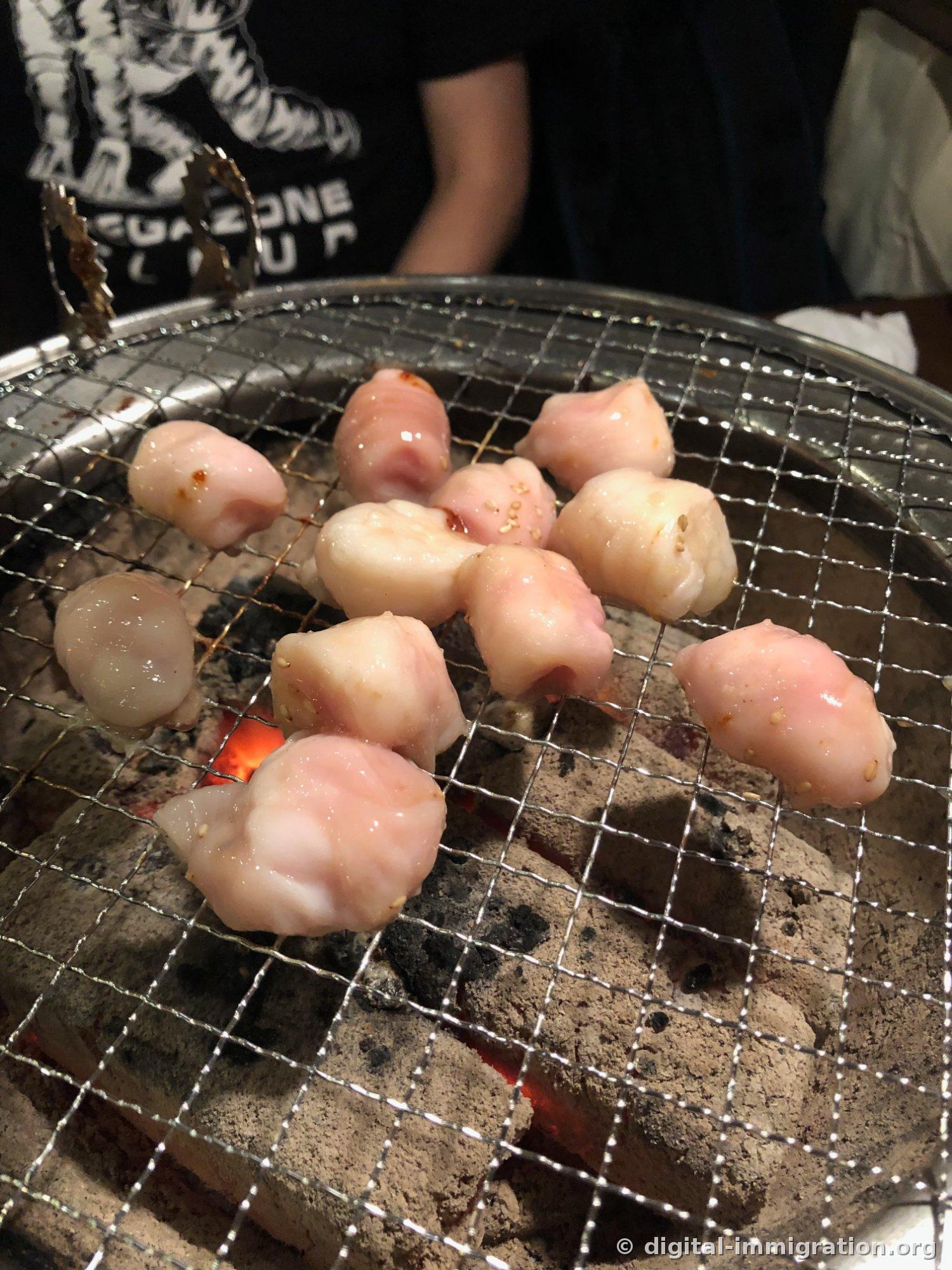
When placed on the grate, the offal doesn't make noise—it just quietly curls. Following the guide, I waited until the surface became translucent, then flipped it. As the fat drips, the charcoal briefly glows red. When the cooked piece goes into your mouth, the outside is slightly crispy while oil bursts inside. The chew isn't tough. The salt isn't overpowering, so dipping in the ponzu sauce is better.
I also ordered the red meat. It arrived on a black square plate with a Wagyu tag, a mix of densely marbled pieces and chunks with thick fat attached. You can see coarse pepper scattered over it. If you eat only offal, you get tired of it, but this plate breaks up the rhythm.
Red meat cooks much faster than offal. Because it's sliced thin, you flip it the moment one side changes color and immediately remove it. I got distracted talking and charred a piece. There's an Asahi draft beer glass beside me, and since the glass isn't large, I finish two quickly.
Rice and Finishing Menu
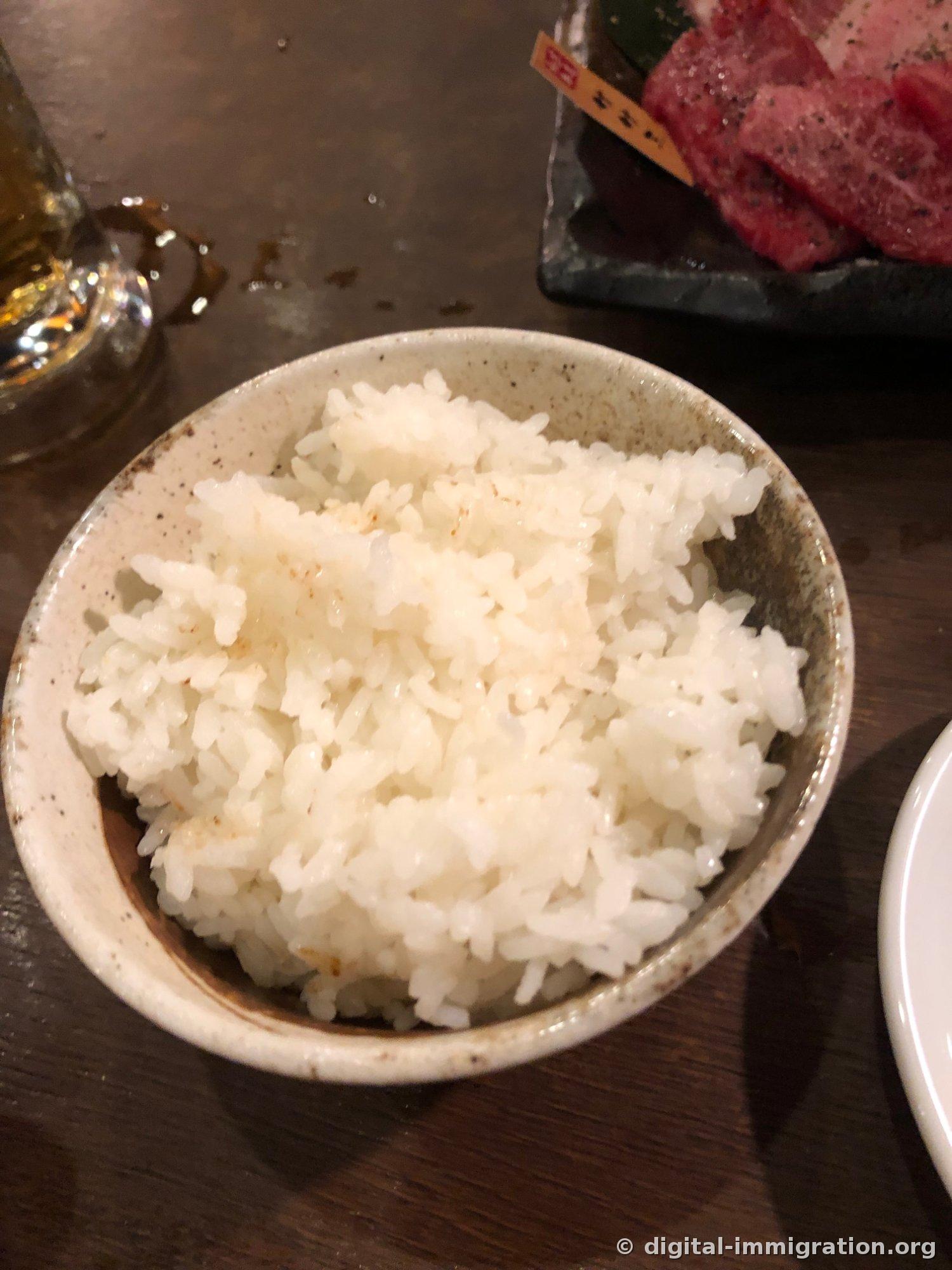
Midway through, I ordered rice. It arrives mounded high in a rough ceramic bowl studded with small dots. Small (小) 250 yen, Medium (中) 290 yen, Large (大) 330 yen. The bowl in the photo was medium-sized, appropriate for one adult as a side. When you place sauced offal on top of the rice, the oil soaks in and the flavor changes completely.
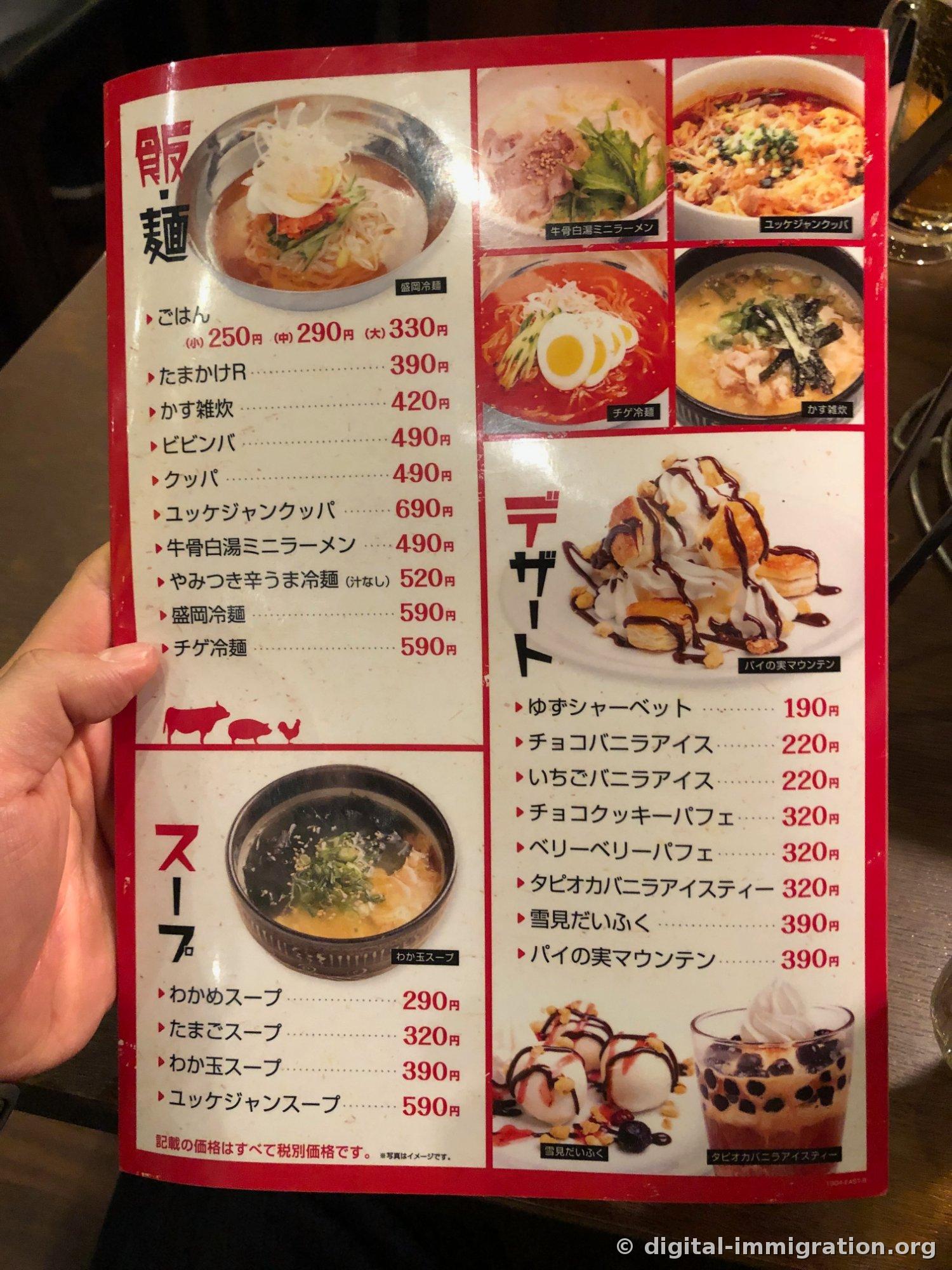
The rice and noodle page has bibimbap at 490 yen, kneaded soup rice (クッパ) at 490 yen, yukgaejang soup rice at 690 yen, beef bone and radish mini ramen at 490 yen, Morioka cold noodles at 590 yen, and kimchi jjigae cold noodles at 590 yen. Soups range from seaweed soup at 290 yen to yukgaejang soup at 590 yen. Desserts have a convenience-store feel—yuzu sherbet at 190 yen, chocolate-vanilla ice cream at 220 yen, pine-nut mountain at 390 yen—so expectations can be low. If you have room, I'd recommend the Morioka cold noodles as a finish. After sitting long before the charcoal, a cold broth becomes desperately appealing.
Good to Know Before Going
- All listed prices are tax-not-included. It's easier to budget if you assume tax will be added at checkout.
- Since the grill runs on charcoal, the smell clings heavily to your clothes. Don't wear something you plan to wear the next day.
- The tablet at each table supports Korean, so you won't have trouble ordering even if you don't speak Japanese.
- Changing the sauce on a cut (spicy akadare, negi-shio dare) costs an extra 100 yen. If you're ordering the same cut twice, try switching the sauce on one to avoid getting bored.
- The alley is narrow and there's a wait during evening hours. Operating hours and last order times are posted on the door—it's wise to check in person.
- Age verification is conducted. Bringing an ID makes things smooth.
Leaving the alley, I could smell charcoal on my shirt. I had entered after seeing prices starting at 190 yen per plate, but after ordering several plates of offal, one plate of Wagyu, plus rice and beer, the bill came to a proper Shinjuku amount. Still, the time spent holding tongs before the grill, confirming each cut's name one by one as it cooked—that's hard to put a price on. Next time, I think I'll start with the 上ミノ at 690 yen.
Read next
- From Akihabara's Chuo-dori to the Kanda River: A Record of Tokyo's Electronics District Revisited Multiple Times
Tokyo's Akihabara is a neighborhood where it's hard to say you've seen everything in a single visit. I've come multiple times across different seasons, and each time the signs chan…
Tokyo · Akihabara - Buying a Single ¥300 Year-End Jumbo Lottery Ticket at Nishi-Ginza Chance Center in Tokyo
Exit from the Hibiya exit of Tokyo's Shimbashi Station, walk toward the elevated highway for about three minutes, and suddenly you'll see a line of people stretching along the side…
Tokyo · Nishi-Ginza Chance Center - Ueno Ameyoko, the real magic starts after sunset — an evening walk from the Okachimachi Gate to Ueno Station
Every time I come to Tokyo, my feet find their way to Ueno Ameyoko (アメ横) without fail. This time I entered from the Okachimachi side and worked my way toward Ueno Station. I've met…
Tokyo · Ameya Yokocho Market