A Bowl of Tenkakê at Kirimugiya Jinroku (切麦や 甚六), an Udon Restaurant Found in Kanda, Tokyo
When I come to Tokyo, I've always gone straight for ramen, but this time I broke that habit. Kirimugiya Jinroku (切麦や 甚六), an udon restaurant tucked in a Kanda alley on the first fl…
Tokyo · Kirimugiya Jinroku
When I come to Tokyo, I've always gone straight for ramen, but this time I broke that habit. Kirimugiya Jinroku (切麦や 甚六), an udon restaurant tucked in a Kanda alley on the first floor of an office building, with just a white noren curtain hanging at the entrance. The only sign to speak of is a small black nameplate on the wall—so inconspicuous that even after Google Maps told me I'd arrived, I walked past it twice. I went in at five-thirty in the evening, just as dinner service was beginning.
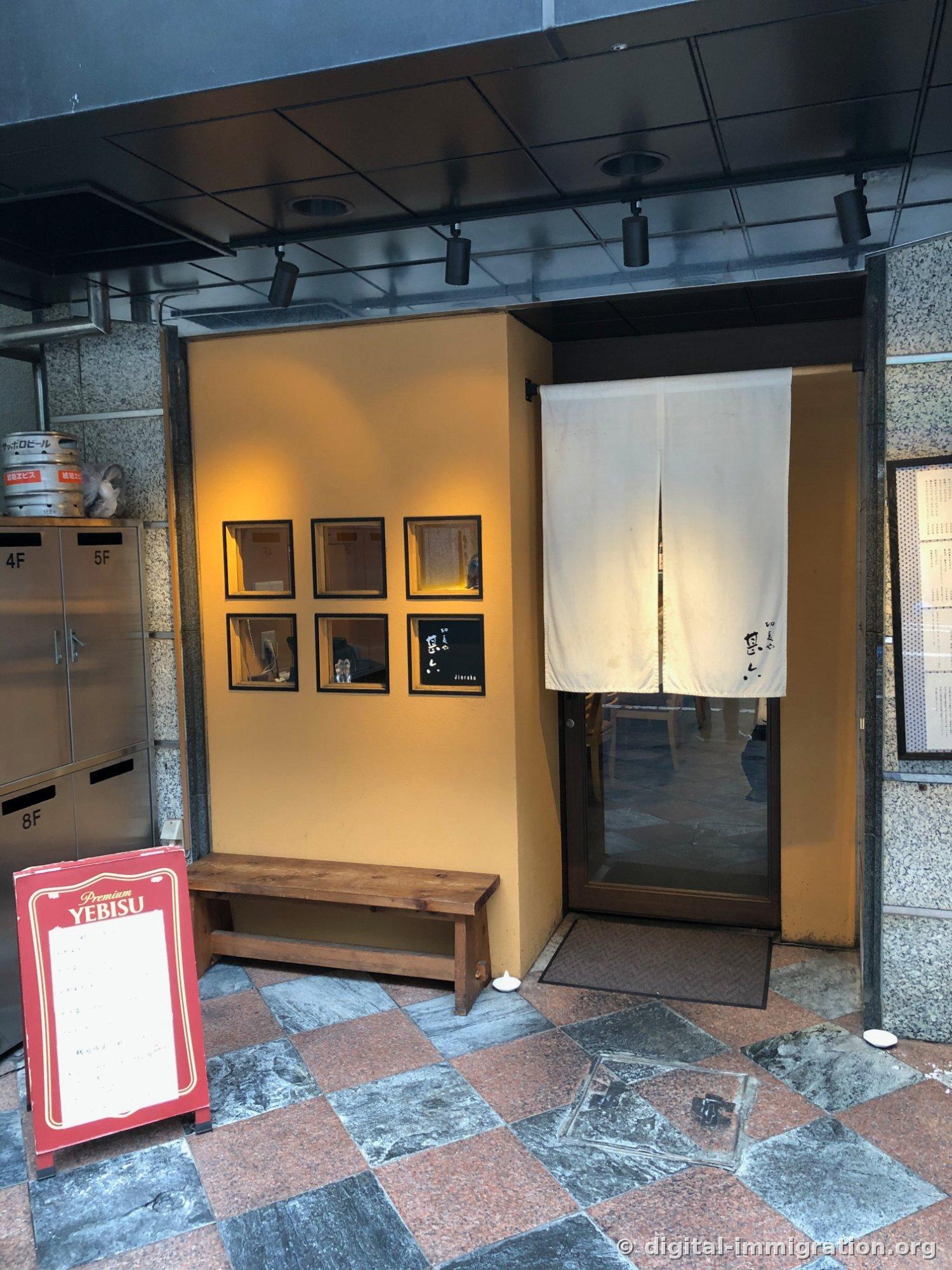
A wooden bench sits to the left of the entrance—this is where the waiting line forms during the dinner rush. Of the six frames hung on the wall, five are small windows giving views into the restaurant. When the evening lights come on, the yellow walls take on a subtle warmth. Without the red Ebisu beer sign out front, I would have taken the place for a gallery.
Read the Glass Menu Board by the Door Before You Go In
It's best to read the Japanese menu posted in the glass frame on the right before heading in. Once seated, ordering takes time. Cold udon (冷たいうどん) and hot udon (温かいうどん) are listed separately in vertical writing, with prices ranging from the 600-yen bracket to 1,200 yen. Hiyakakê udon 600 yen, zaru udon 600 yen, nikunbukkakê 900 yen, tempura udon 1,200 yen. It's noted that tempura toppings can be added separately starting at 150 yen per type.
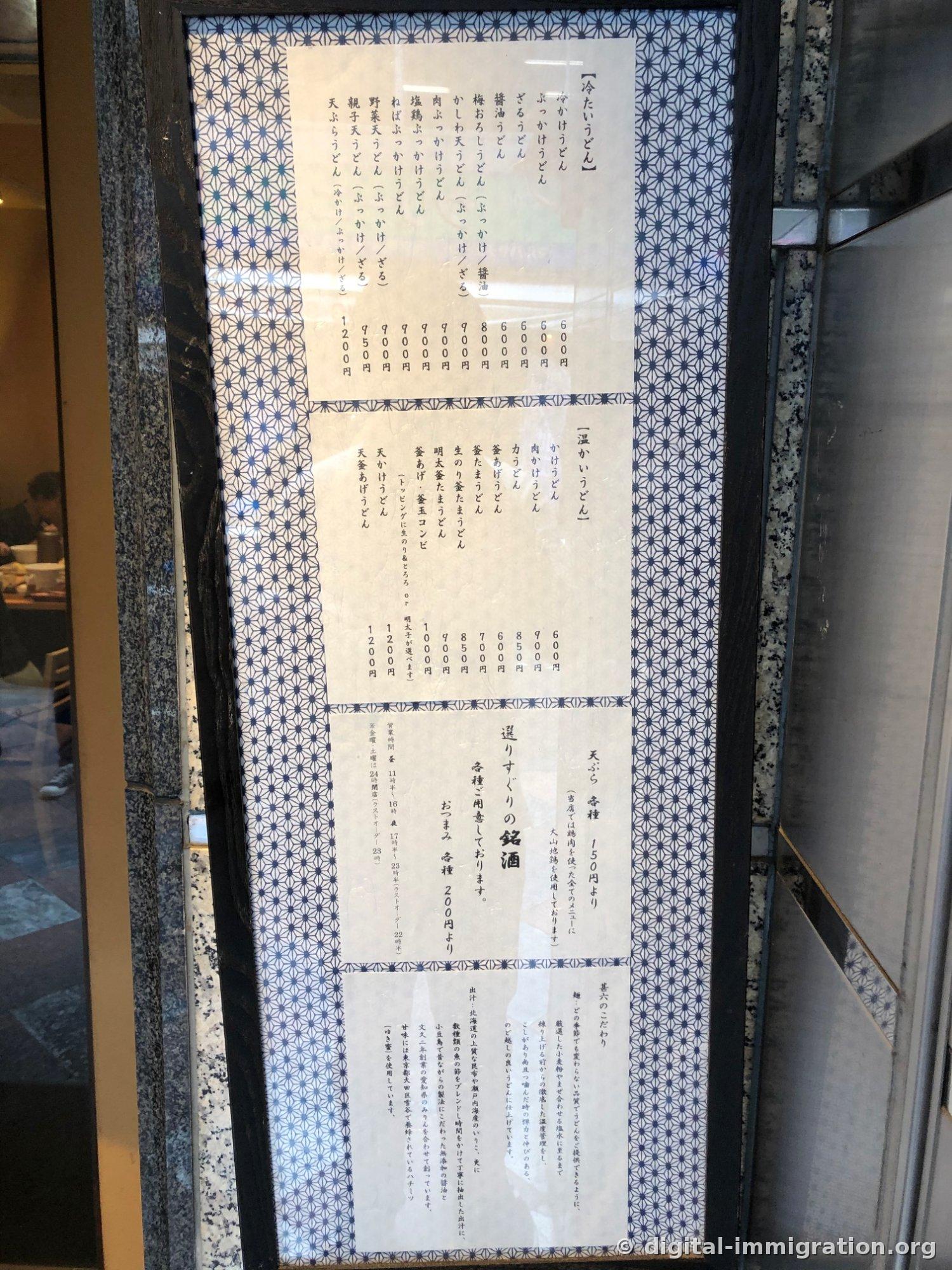
The fine print at the bottom of the menu is actually the most interesting. In handwritten script, it notes that the salt-water concentration in the flour is adjusted seasonally, that the dashi is made from Hokkaido kombu and Seto Inland Sea iriko, the soy sauce is from Shodo Island, and the mirin is from Aichi Prefecture. Hours are posted here too: lunch from 11:30 to 16:00, dinner from 17:30 to 23:00 (last order 22:00), and later on Fridays and Saturdays. That said, these details change easily, so I'd recommend confirming current information before your visit.
There's a Separate English Menu — And They Don't Take Cards
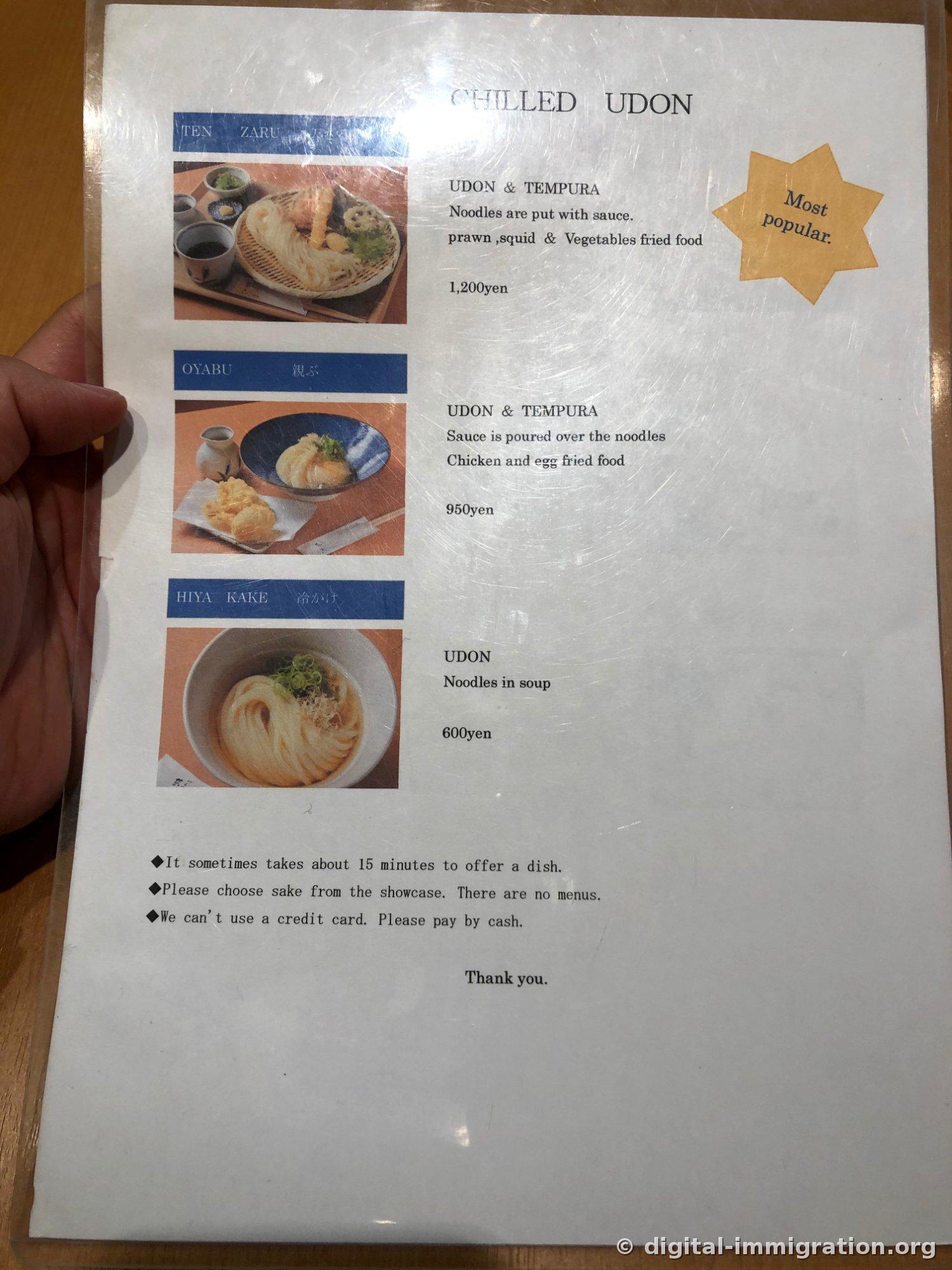
Once seated, you're given a separate English menu. It's divided into two sections—HOT UDON and CHILLED UDON—with photos included, so you can order without being able to read Japanese. The hot options are: oyakokaké (親かけ) 950 yen, tenkakê (天かけ) 1,200 yen, kamatama (釜玉) 700 yen, kamāge (釜あげ) 600 yen. Add mentai (cod roe) to the kamatama for 900 yen.
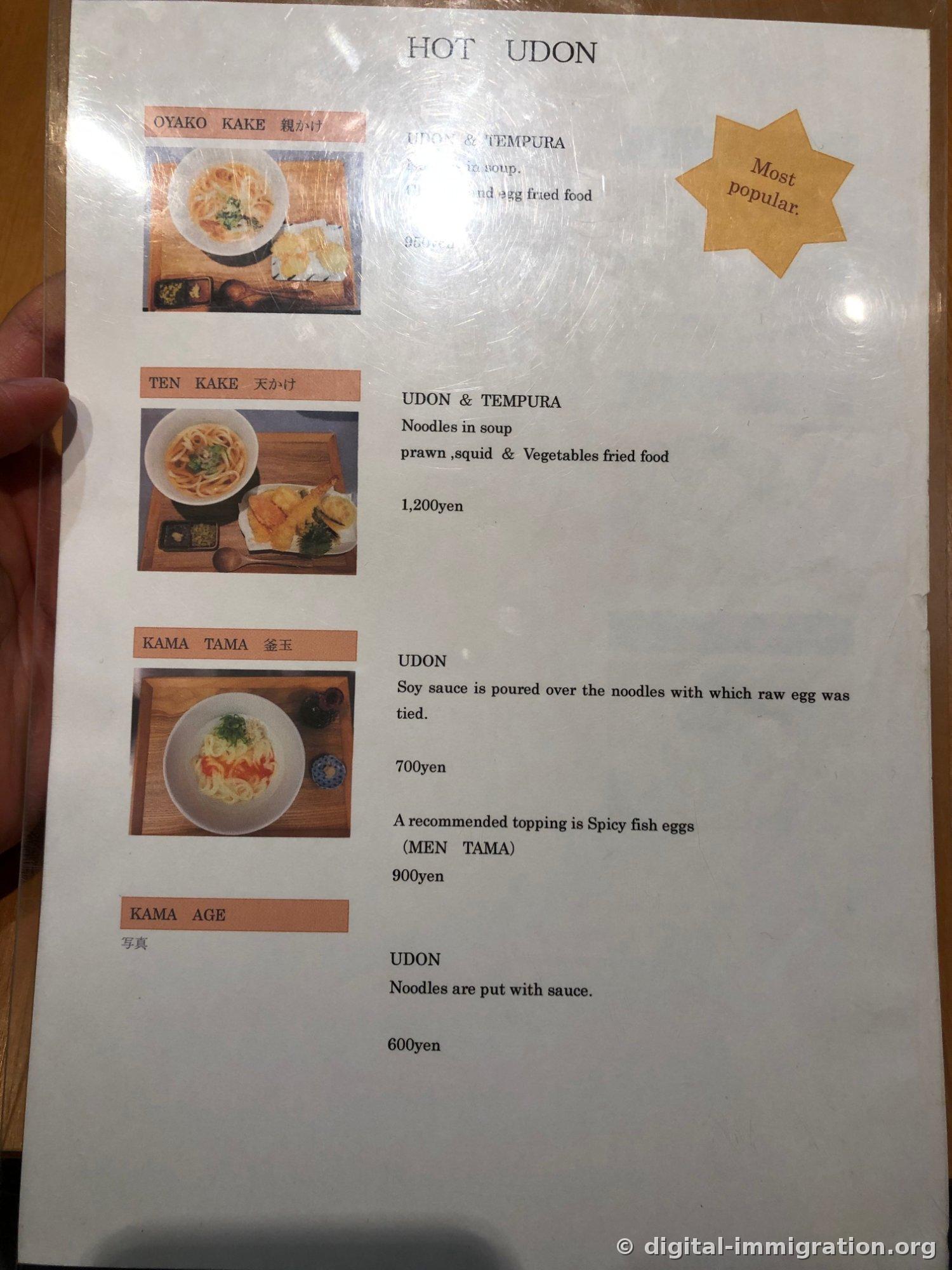
The three lines at the bottom of the chilled udon menu are actually the most important. First, dishes can take about 15 minutes to arrive. Second, there's no sake menu—you choose directly from the display case. And third, they don't accept cards, only cash. Finding out that card-free establishments still exist in central Tokyo while calculating the bill is inconvenient. I had only a single 10,000-yen note in my wallet, but fortunately the change came back smoothly.
A Bowl of Tenkakê — The Broth Surprised Me with Its Clarity
I ordered the tenkakê. It arrived on a wooden tray with the udon bowl, tempura plate, condiment dishes, and wooden spoon all in their proper places. The chopstick sleeve also bears the restaurant's logo and 'Jinroku'. I expected the broth to be clear in the Kansai style, but its color was a deep brown—deeper than I anticipated. One taste confirmed it wasn't salty. The color came from soy sauce, but the primary flavor was the umami of iriko broth. The first spoonful brought not saltiness, but the aroma of dried fish.
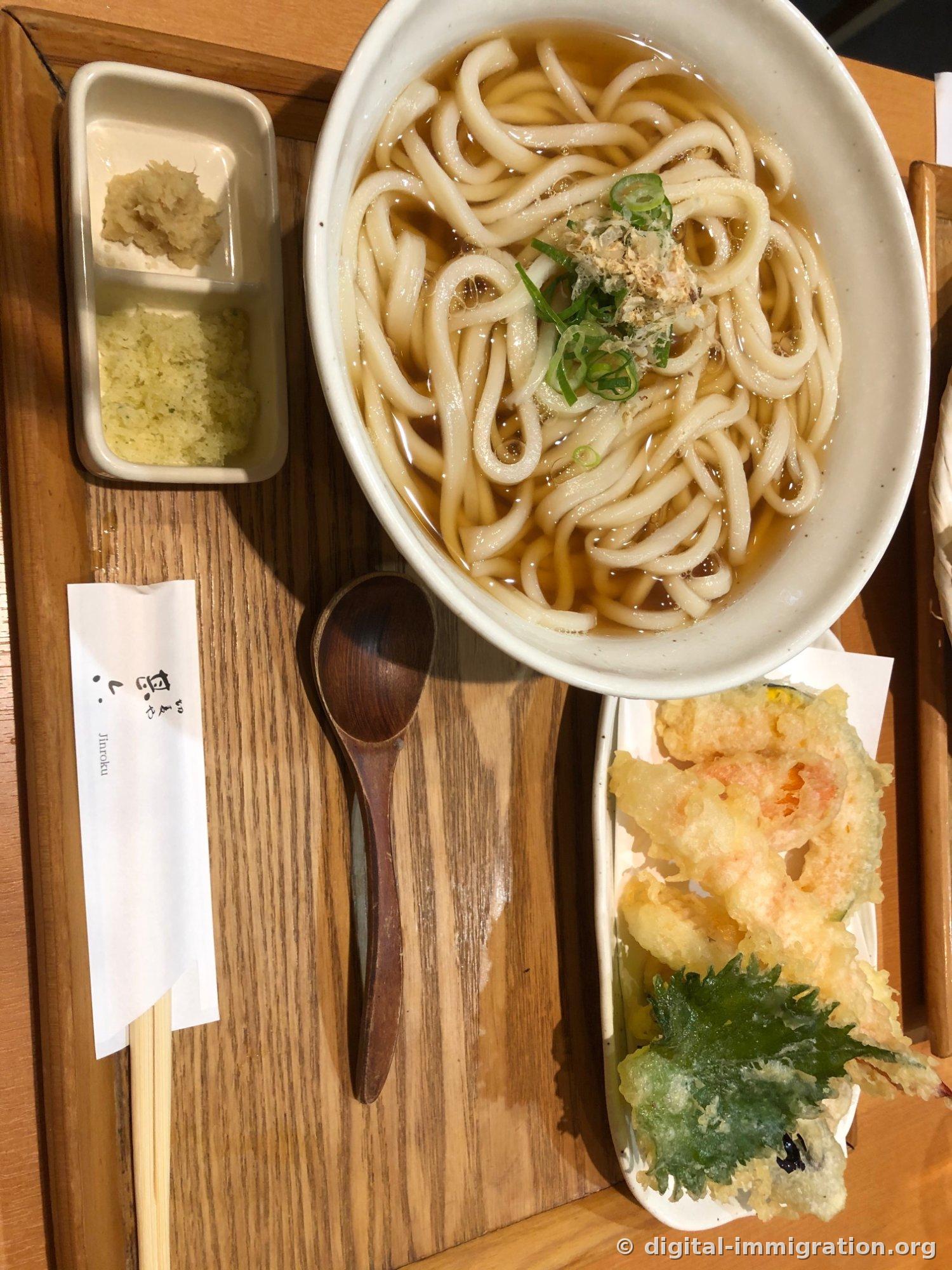
The small dish on the left arrives divided between grated ginger and pale yellow yuzu peel powder. I recommend holding back and adding the ginger midway through eating—it transforms the broth's impression. Add just a pinch of the yuzu.
What You Learn When You Lift the Noodles
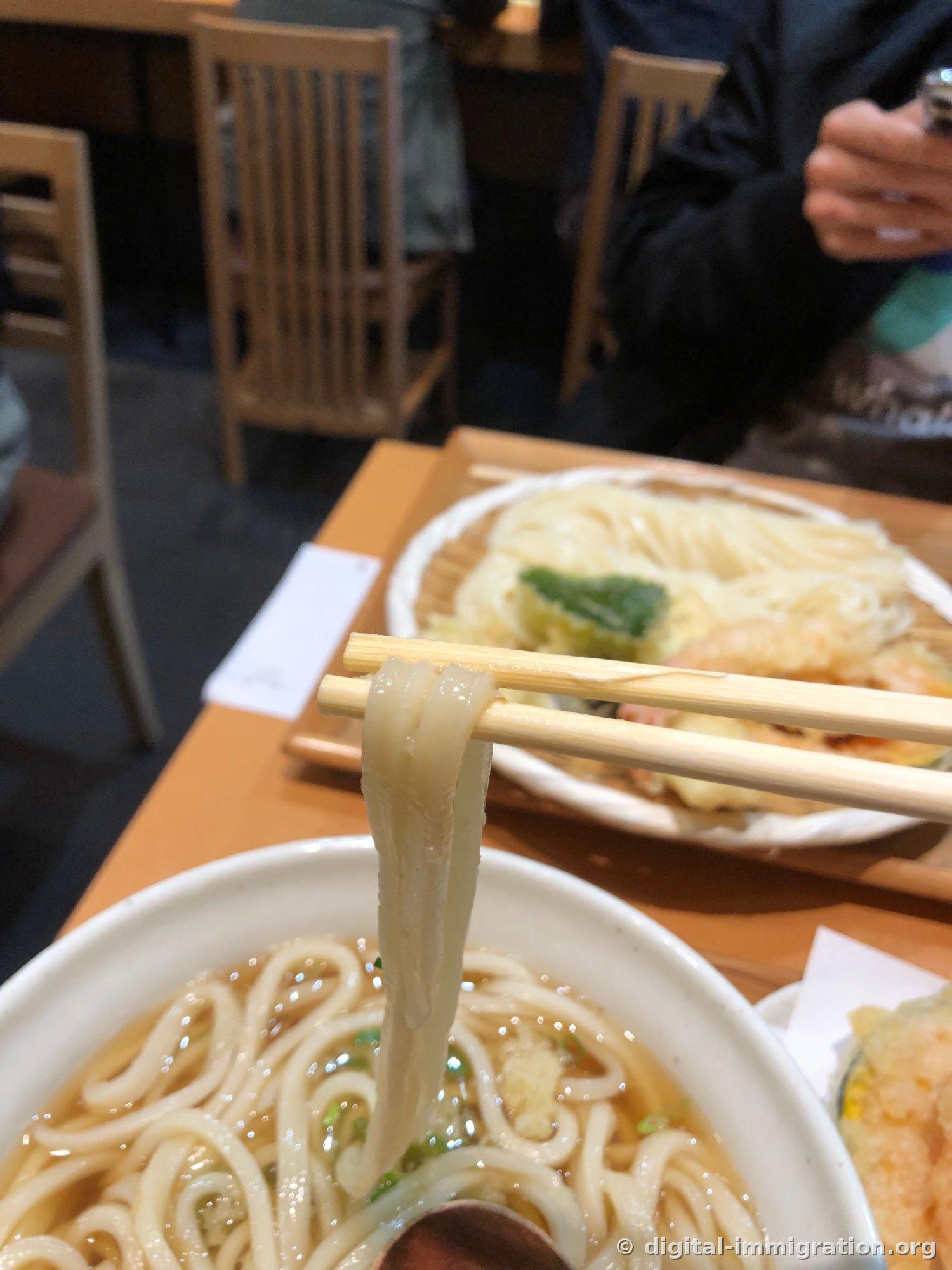
Lifting the noodles with chopsticks is when I became a convert. These aren't thick noodles with sharp edges like Sanuki udon; instead, they're broad, slightly flattened in cross-section. When lifted from the broth, they hold their shape without drooping. As you bite, there's an initial resistance, then a clean snap. The surface is smooth, the interior firm. Only then did I understand what they mean by 'smooth swallowing.'
My companion ordered the chilled udon—tenzaru—and after a taste, I could tell that cold noodles show the noodles' elasticity more honestly. If two of you go, it's best for one to get hot and one to get cold. The restaurant's interior features light-colored wooden chairs and tables with relatively subdued lighting; it's quiet enough to hear neighboring tables' conversations. If you're expecting a bustling izakaya atmosphere, you might be surprised.
The Tempura Comes Freshly Fried
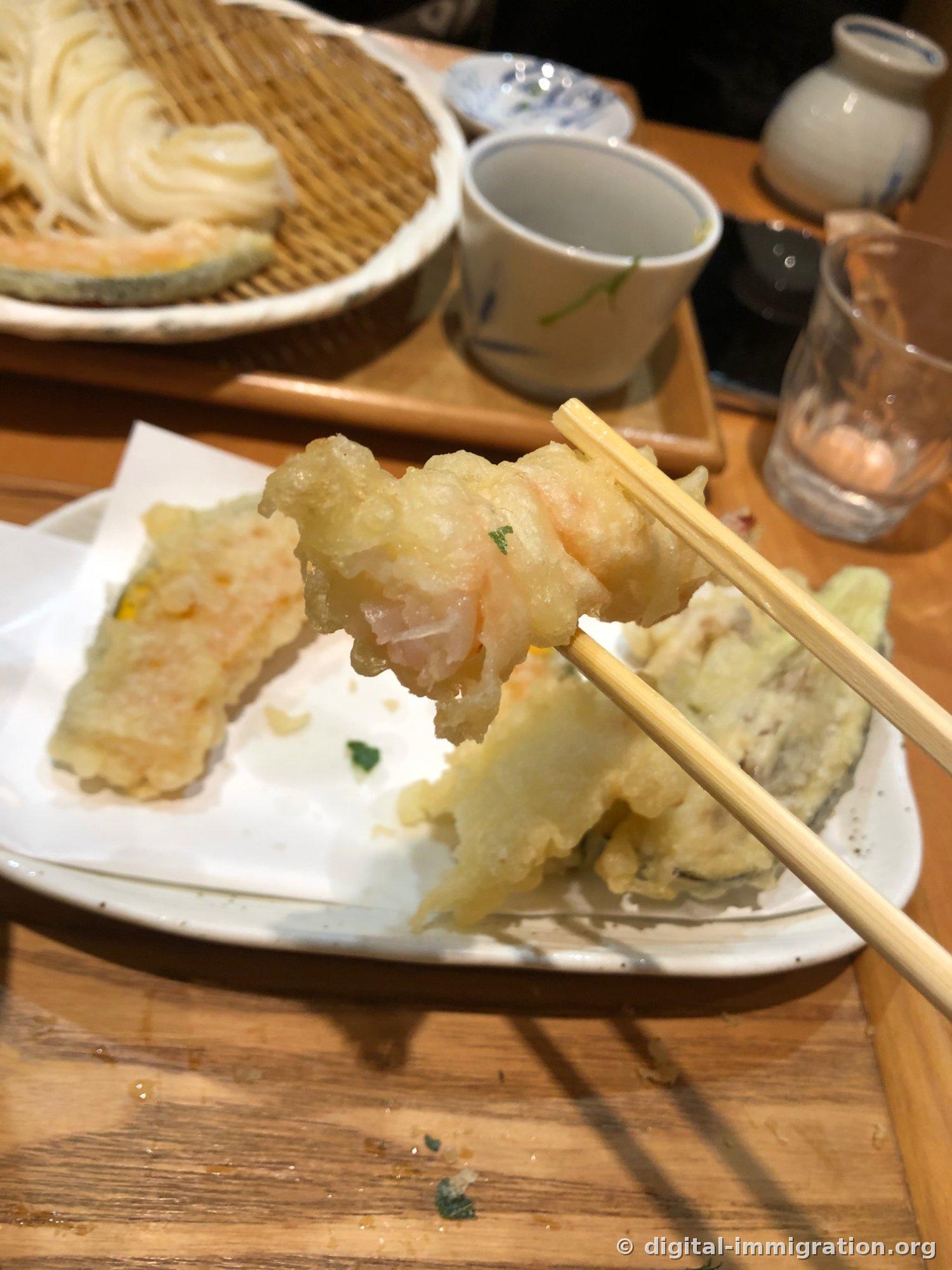
Looking at the tempura plate, you understand why the restaurant warns about 15-minute waits. When you pick up the shrimp tempura, the batter is thin and pale. The red vein of the shrimp is visible through the coating. When you bite, there's no loud crunch, just a quiet crispness, but the oil is never heavy. The paper beneath the plate bears hardly any grease marks.
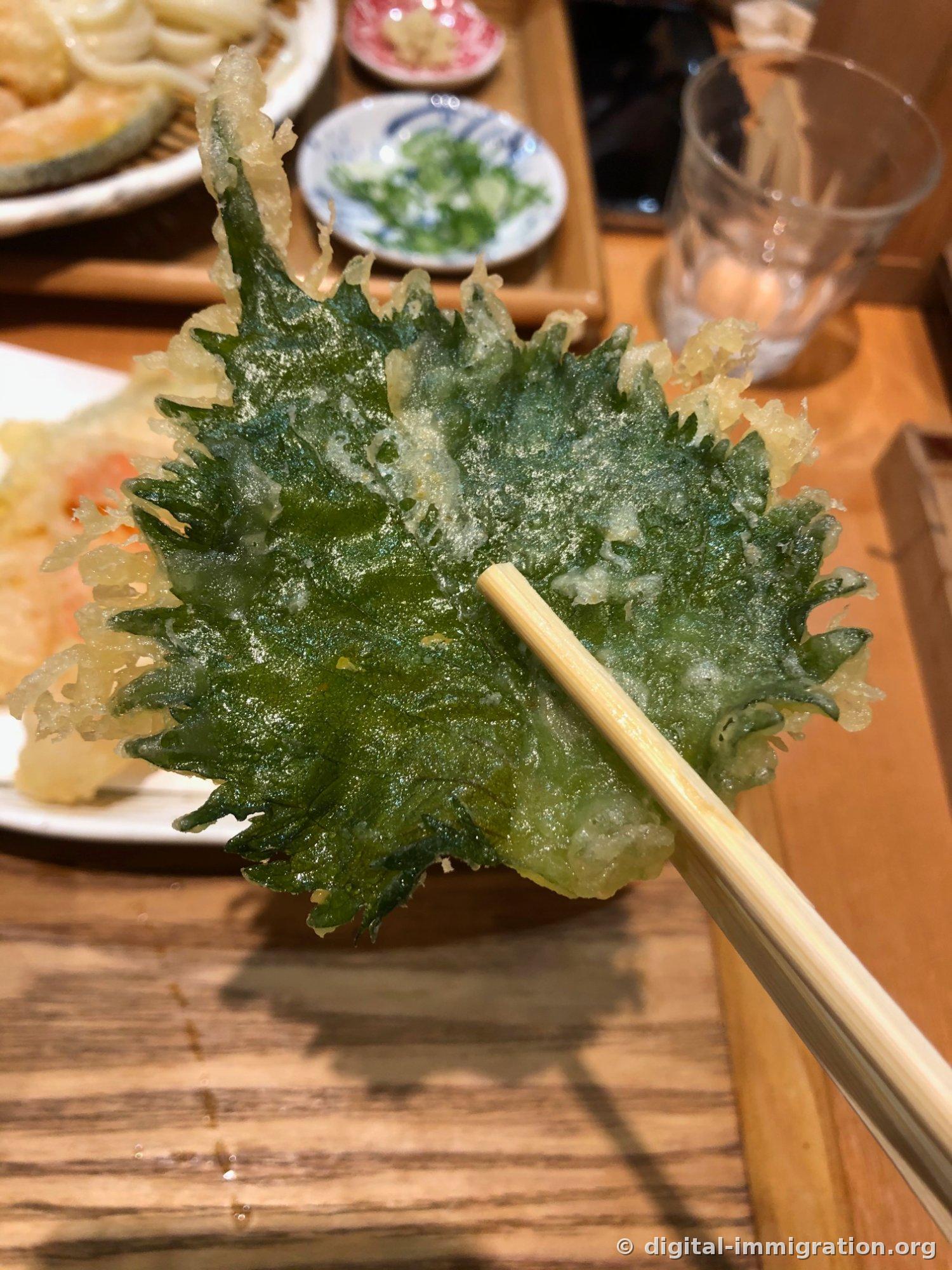
What impressed me most that day wasn't the shrimp, but the shiso tempura. A whole leaf, with batter applied delicately to just one side. Flip it over and the green veins remain perfectly intact. In your mouth, the shiso's characteristic peppery aroma comes first, before the richness of the fried coating. Eat one between sips of broth, and it cleanses the palate.
What to Know Before You Go
- Cash is essential. The menu clearly states that card payment is not accepted. Budget around 2,000 yen per person if you order a 1,200-yen dish and a bottle of sake.
- There's a notice that orders take about 15 minutes. During a rushed lunch, allow yourself extra time.
- There's no sake menu—you select directly from the display case. If you can't read the label, you can simply point to your choice with the staff.
- The signage is small and easy to miss. Look for the white noren, the red Ebisu beer sign, and the wooden bench as landmarks.
- An English menu with photos is available, so ordering is no problem even if you don't read Japanese.
The Kanda area fills with salarymen after work, and every restaurant develops a line. Best to arrive before 6 p.m., or aim for the lull after 8 p.m. Next time I come, I'm thinking of trying the kamāge at 600 yen with just a couple of tempura on the side. With noodles this good, I think they deserve to be eaten simply boiled, without broth.
Read next
- From Akihabara's Chuo-dori to the Kanda River: A Record of Tokyo's Electronics District Revisited Multiple Times
Tokyo's Akihabara is a neighborhood where it's hard to say you've seen everything in a single visit. I've come multiple times across different seasons, and each time the signs chan…
Tokyo · Akihabara - Buying a Single ¥300 Year-End Jumbo Lottery Ticket at Nishi-Ginza Chance Center in Tokyo
Exit from the Hibiya exit of Tokyo's Shimbashi Station, walk toward the elevated highway for about three minutes, and suddenly you'll see a line of people stretching along the side…
Tokyo · Nishi-Ginza Chance Center - Ueno Ameyoko, the real magic starts after sunset — an evening walk from the Okachimachi Gate to Ueno Station
Every time I come to Tokyo, my feet find their way to Ueno Ameyoko (アメ横) without fail. This time I entered from the Okachimachi side and worked my way toward Ueno Station. I've met…
Tokyo · Ameya Yokocho Market