Kuala Lumpur Monkiara Seng Kee Chicken Rice (成記雞飯) — Weekend Lunch Incomplete Without Oil Rice
Whenever I have business near Monkiara Solaris on the weekend, my feet almost automatically head to this place. Chicken rice signs hang on every street corner in Kuala Lumpur, but…
Kuala Lumpur · Seng Kee Chicken Rice
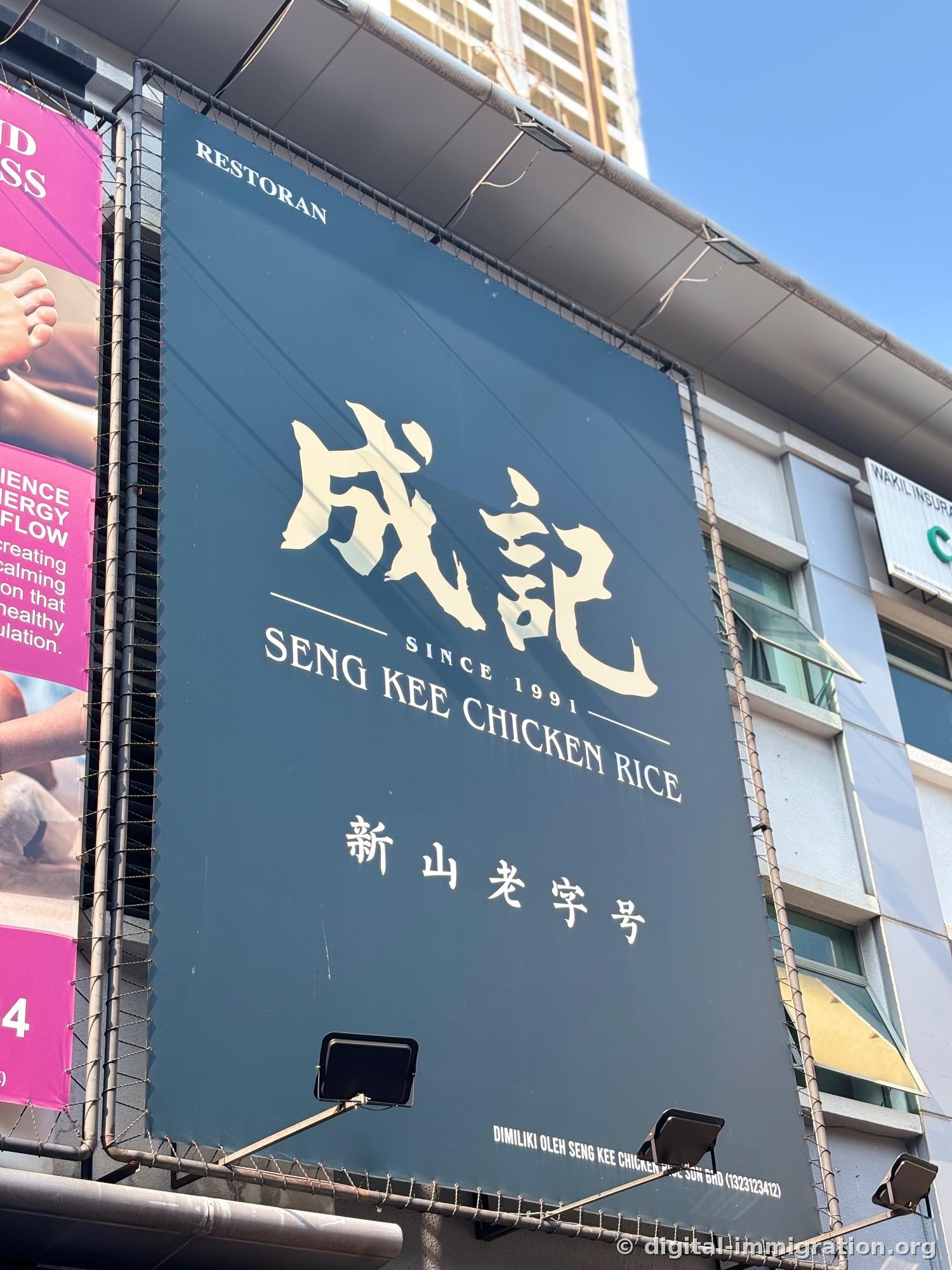
Whenever I have business near Monkiara Solaris on the weekend, my feet almost automatically head to this place. Chicken rice signs hang on every street corner in Kuala Lumpur, but I've been returning to Seng Kee (成記) for years. On the building's outer wall is a large sign reading "SINCE 1991" with "新山老字号" (Old Brand from Xinshan) below it. Xinshan is the Chinese name for Johor Bahru. It's an old establishment from Johor Bahru that made its way up to KL. If you're traveling in Malaysia, you must try Chicken Rice and Wanton Mee at least once somewhere, and I recommend this place.
Lines Start in Front of the Store
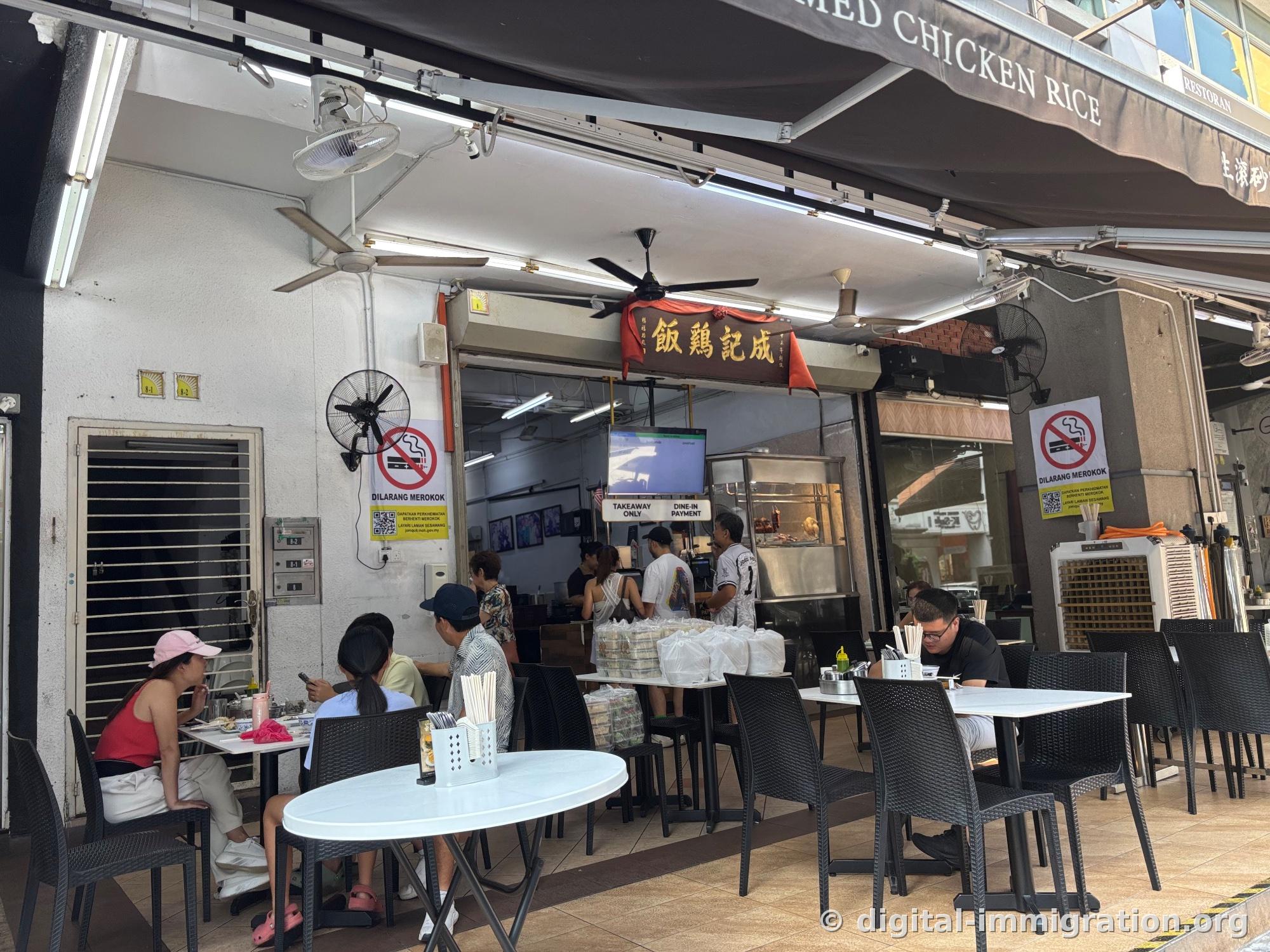
When you arrive just after noon, the tables under the eaves are almost full. There's indoor air-conditioned seating, but I prefer outdoor tables. With five ceiling fans spinning and a wall fan, even on days when the temperature hits 33°C, sitting in the shade is bearable. On many days, takeaway bags are piled high in front of the register—it's when neighborhood people come to buy lunch.
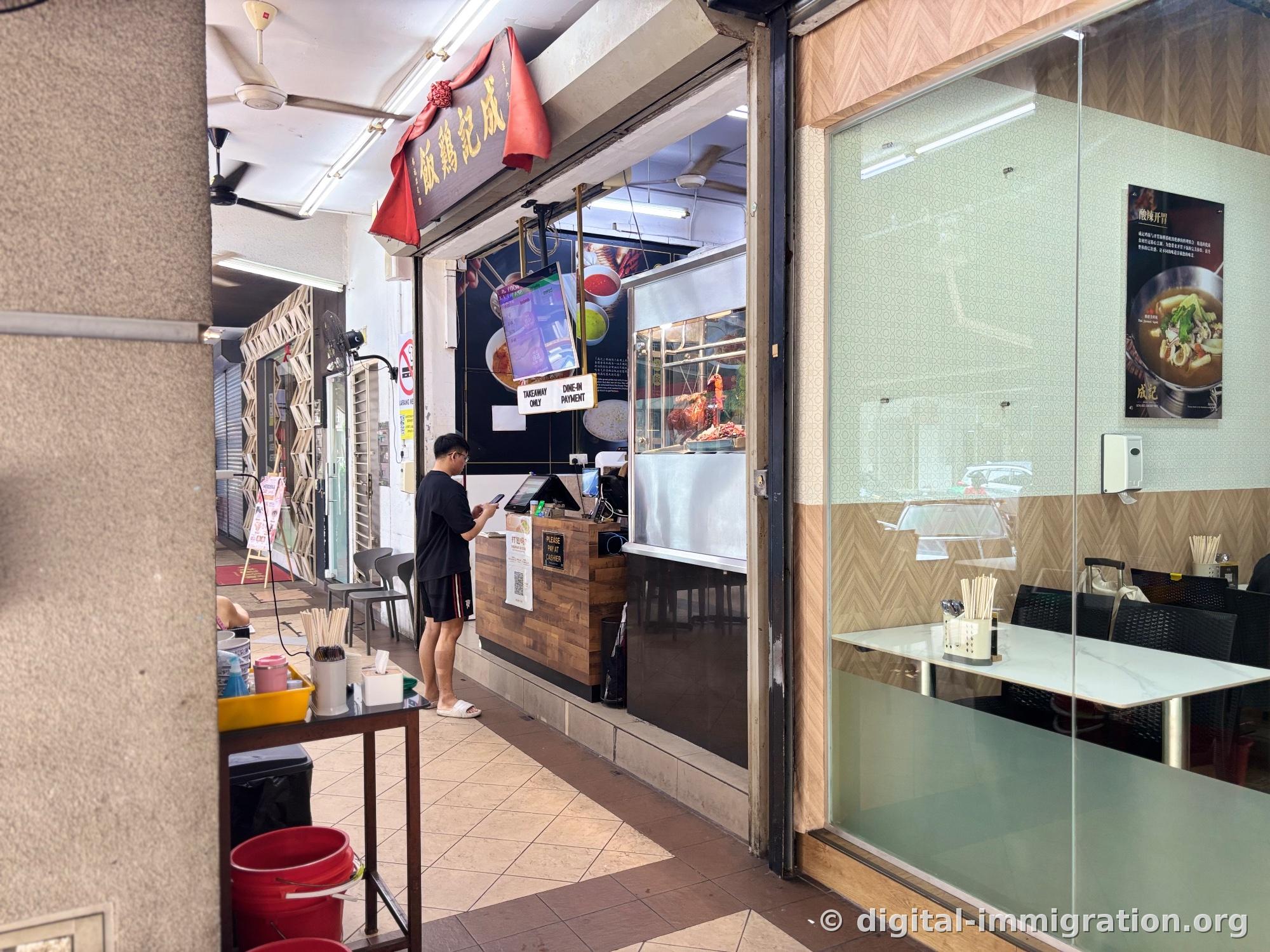
Signs reading "TAKEAWAY ONLY" and "DINE-IN PAYMENT" are posted side by side on the entrance pillar. It's something first-time visitors often get confused about—whether you eat here or takeout, you pay at the counter first. If you grab a seat and wait for staff, you'll be standing there confused for a while.
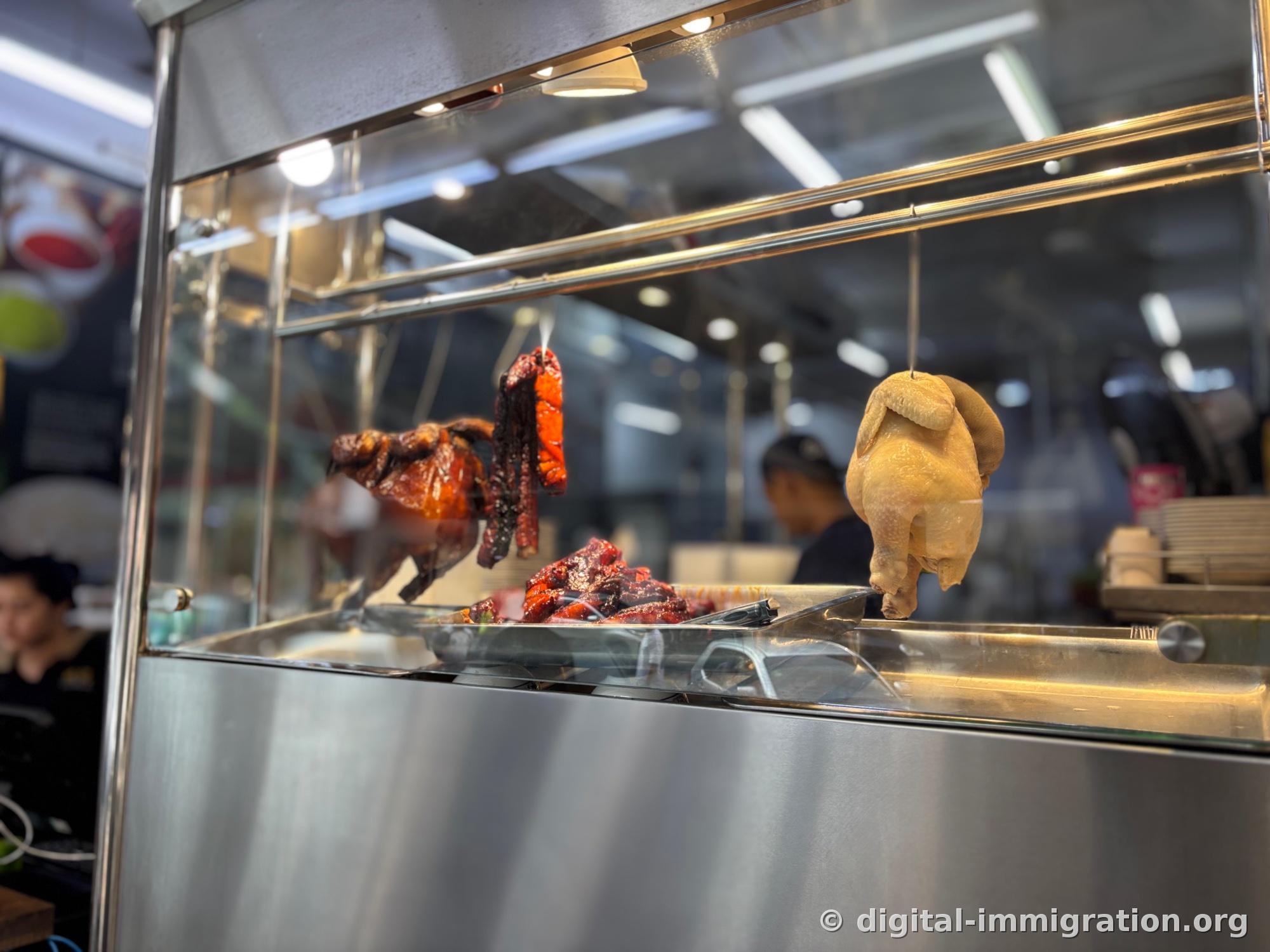
In the glass display case right next to the register are the day's meats. A steamed chicken hanging there with glossy, pale skin, to its left chunks of deeply roasted char siu and Chinese sausage. Once you see this display, your mind changes when placing your order.
Check the Order Screen and You'll See All the Prices
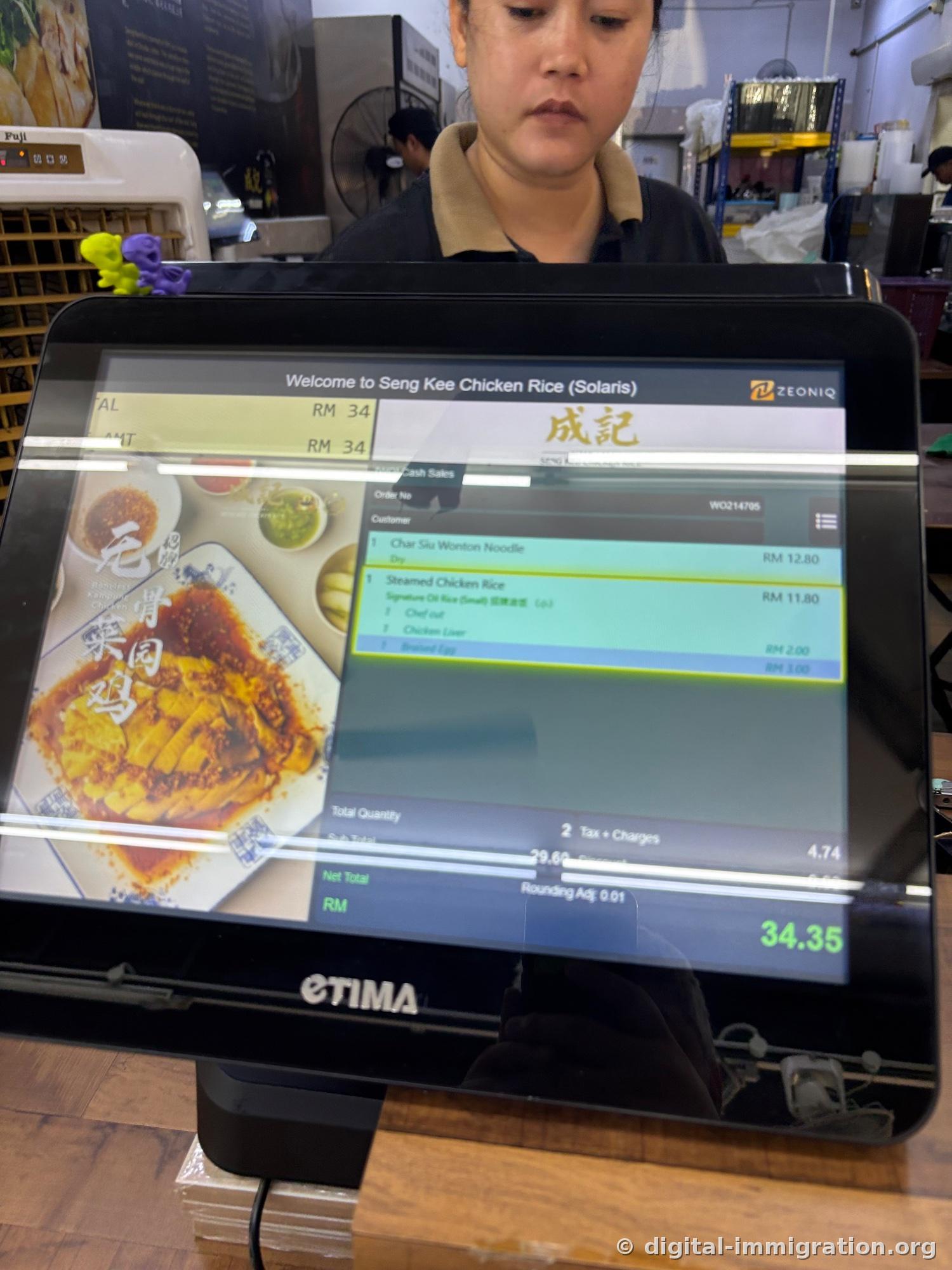
When paying, the staff turns the POS screen toward you for confirmation. "Welcome to Seng Kee Chicken Rice (Solaris)" appears at the top. Here's what we ordered that day: Char Siu Wonton Noodle (Dry) RM 12.80, Steamed Chicken Rice with Signature Oil Rice (Small) RM 11.80, plus add-ons like chef's cut, chicken liver, and soy-braised egg at RM 2–3 each. Subtotal RM 29.60, plus tax and service charge RM 4.74, for a final total of RM 34.35. Two adults eating well, with change from ten ringgit.
Why Does the Chicken Have This Texture?
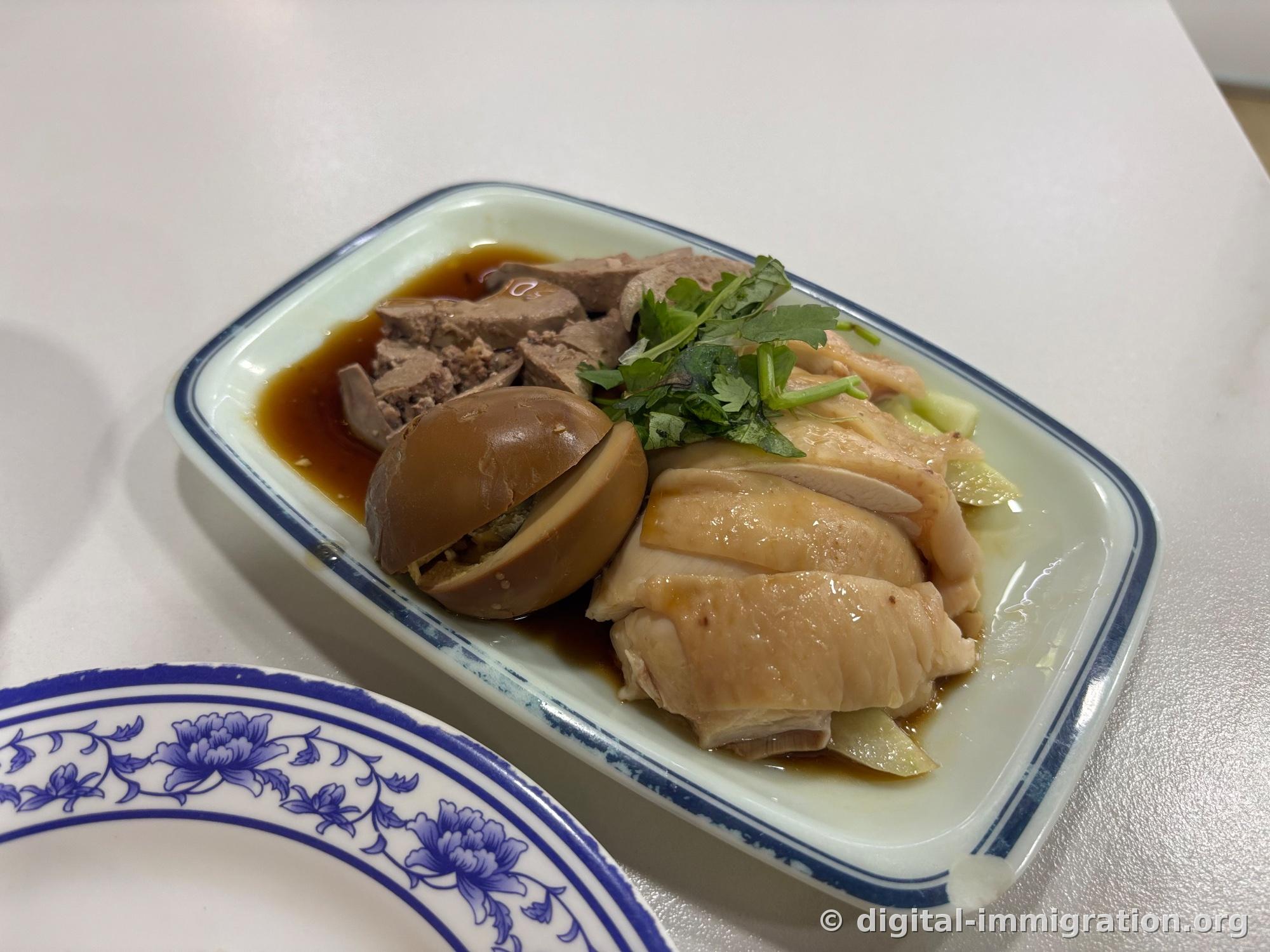
The chicken rice plate comes first. Chicken leg meat arrives sliced thickly with skin intact, accompanied by half a soy-braised egg and a few pieces of chicken liver. A handful of cilantro, thin soy sauce pooled at the bottom. If you come expecting Korean steamed chicken, the first bite feels off. The meat doesn't fall apart—it's firm and chewy.
The difference lies in the cooking method. Unlike Korean poached chicken that's slowly simmered, Chinese white-cut chicken (白斬雞) is briefly poached in boiling water, then immediately plunged into ice water. As it cools rapidly, the gelatinous layer between skin and meat sets, creating a texture that's tender yet bouncy. When you see a transparent jelly-like layer beneath the skin, you know it's done right. The chicken liver isn't dry—it's soft like pâté, so I always order extra.
Digitale Einreisekarte (MDAC) beantragen
Oil Rice Is Not Optional
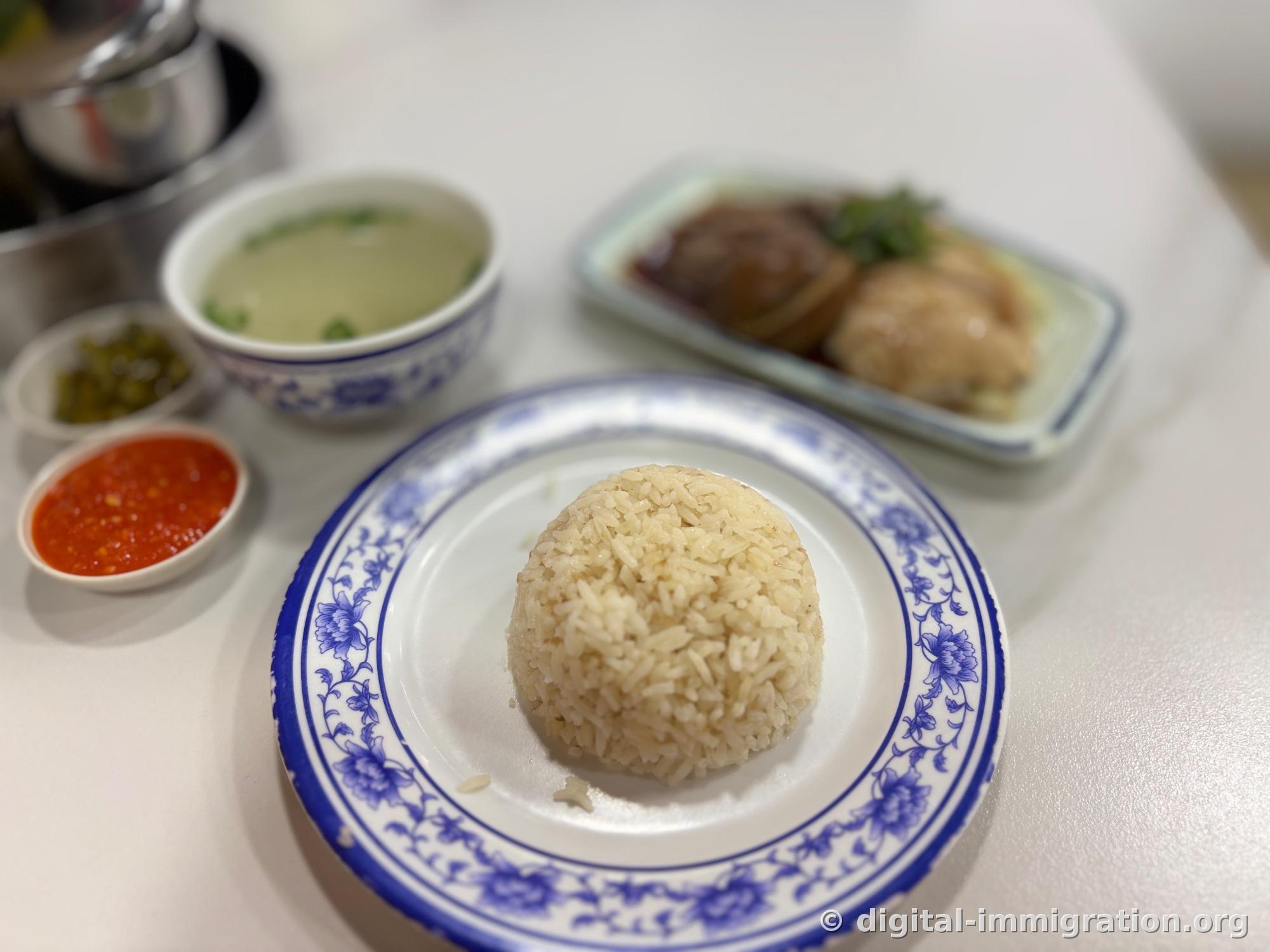
What first-time visitors most often miss here. If you order chicken rice with plain white rice, you're essentially leaving halfway satisfied. You must order the oil rice together—what the menu calls Signature Oil Rice. Since it's cooked in the broth from poaching the chicken and the chicken fat that rises to the surface, every grain of rice is infused with chicken flavor. It arrives molded in a half-sphere shape, and when you break it apart with a spoon, the aroma of oil wafts up with the steam. You could finish an entire bowl of this alone with nothing else.
Don't ignore the two small bowls that come with it either. The red chili sauce contains garlic and lime for a tangy kick, while the green pickled chilies (pickled green chili) are sour and peppery. Oil rice is rich, so a piece or two of these pickled chilies keeps resetting your palate.
Wanton Noodles: Order It Dry, Not in Soup
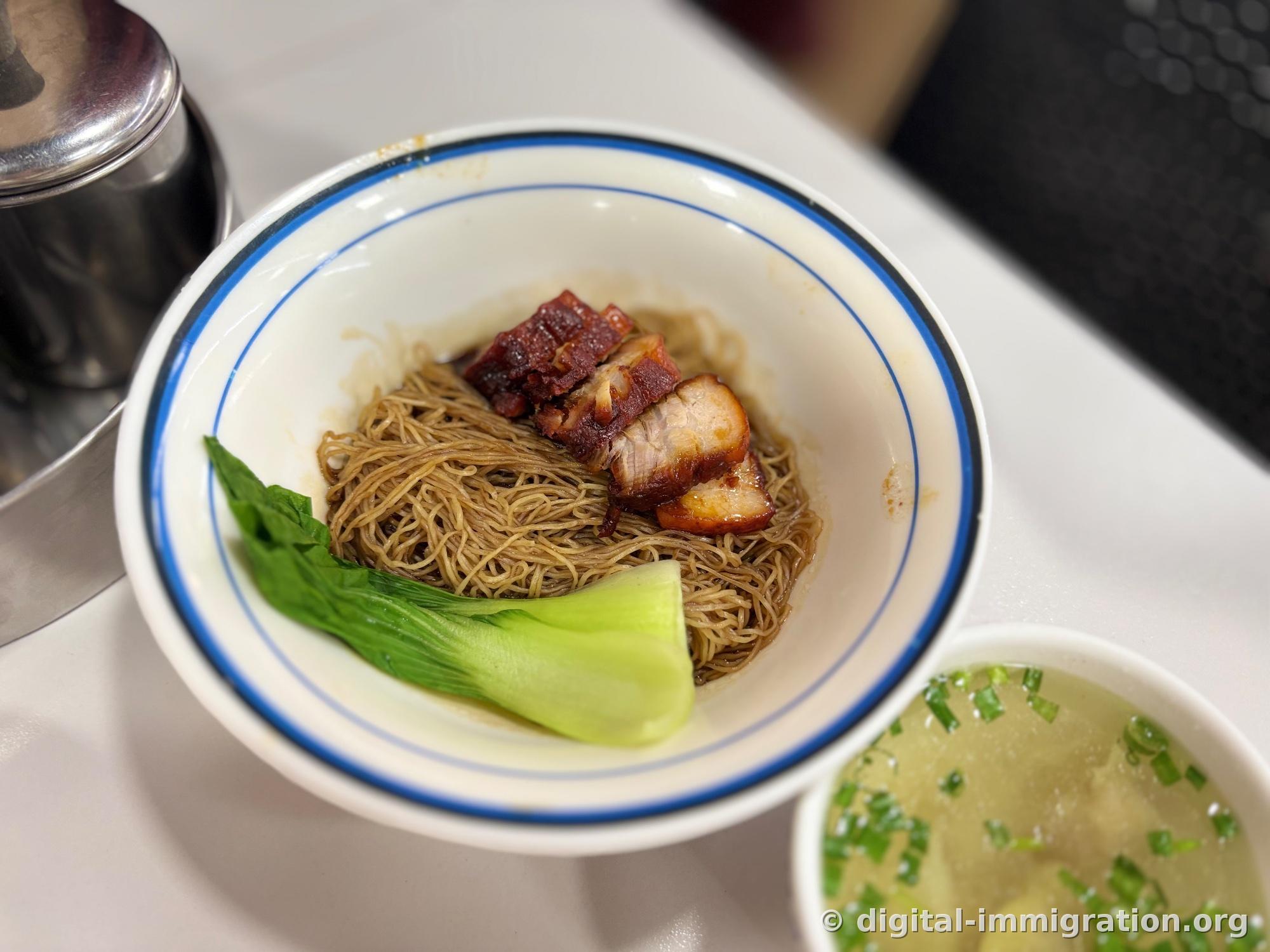
It would be a shame to eat only chicken rice and leave. Add an order of Wanton Mee (wonton noodles) dry. Thin noodles are tossed in soy sauce and topped with three pieces of char siu and blanched Chinese broccoli. The noodles are drained after cooking so they don't stick—they're springy and clean. The char siu has caramelized edges and sweet fat. Eat the first three chopsticks with just sauce, then top with pickled chilies so it doesn't get boring.
When ordered dry, the wontons come in a separate bowl of broth. This broth is more important than you'd think. It's clear with almost no oil, just scallions floating on top. The first sip seems bland, but after eating a few chopsticks of noodles, it tastes perfectly seasoned.
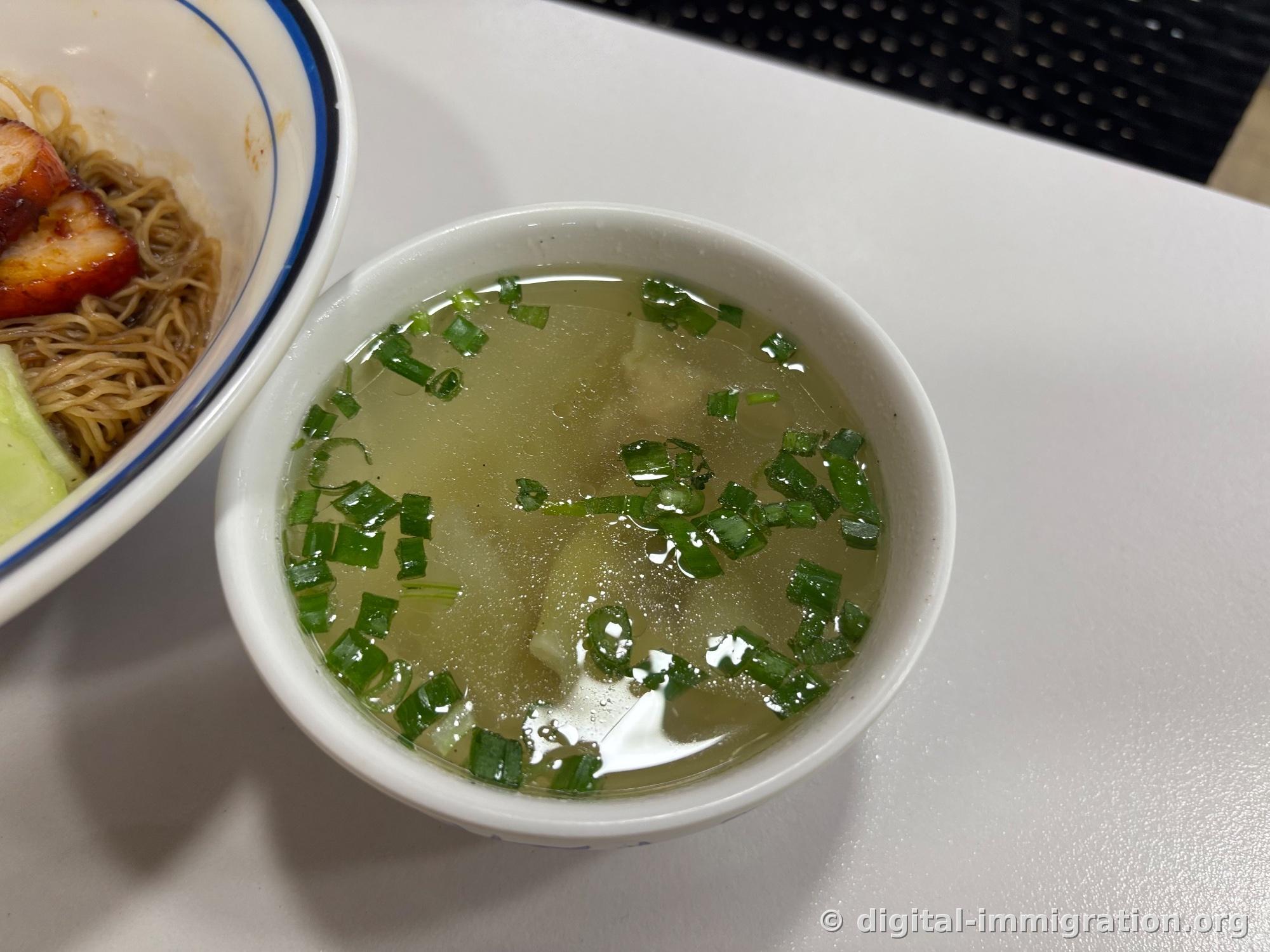
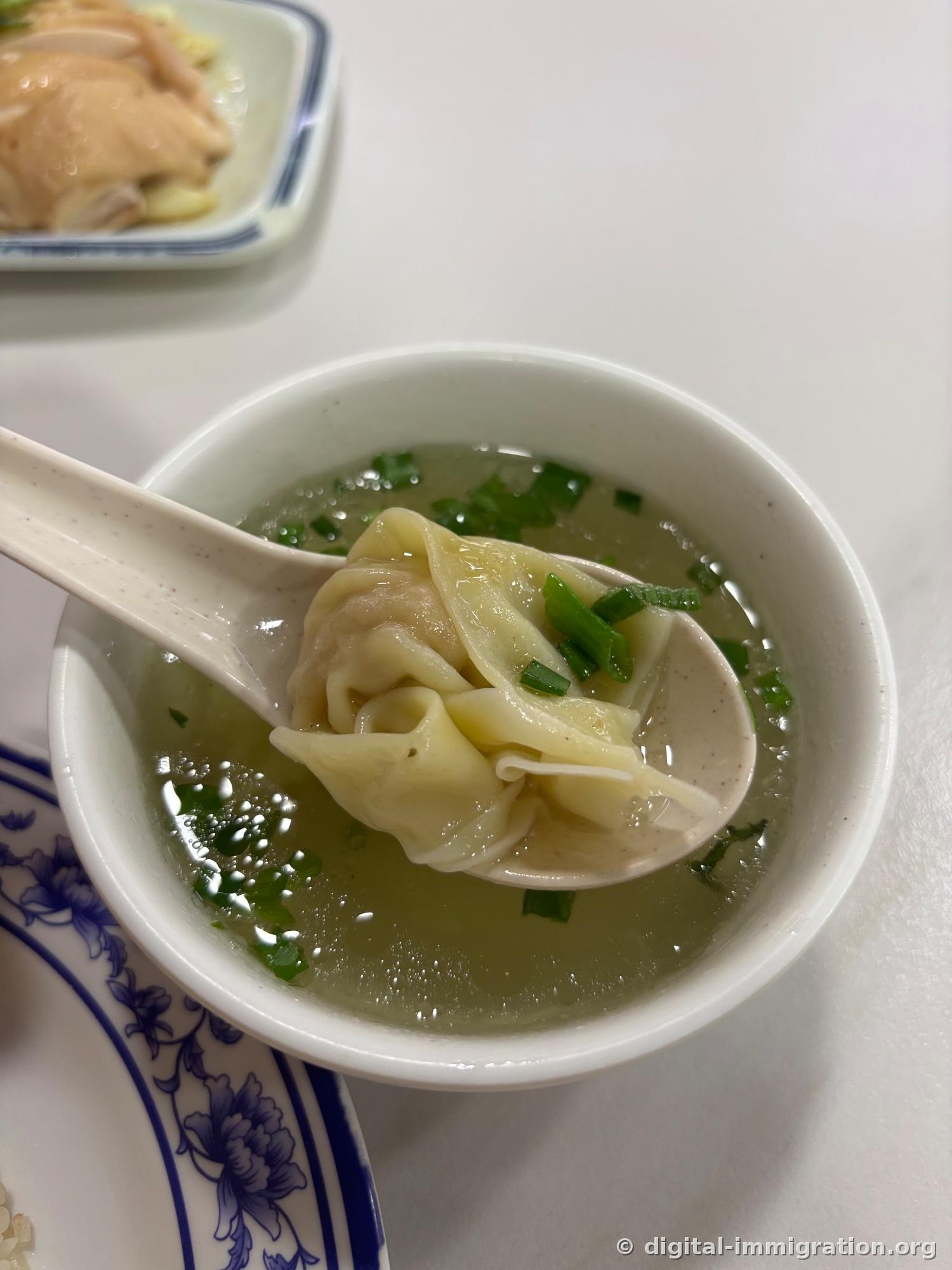
The wontons lifted with a spoon have trailing wonton skin fluttering like tails, and the filling is plump with shrimp and ground pork. The skin isn't thick, so if left in the broth too long they'll fall apart—best to eat them right away.
How to Use the Stainless Steel Tray on the Table
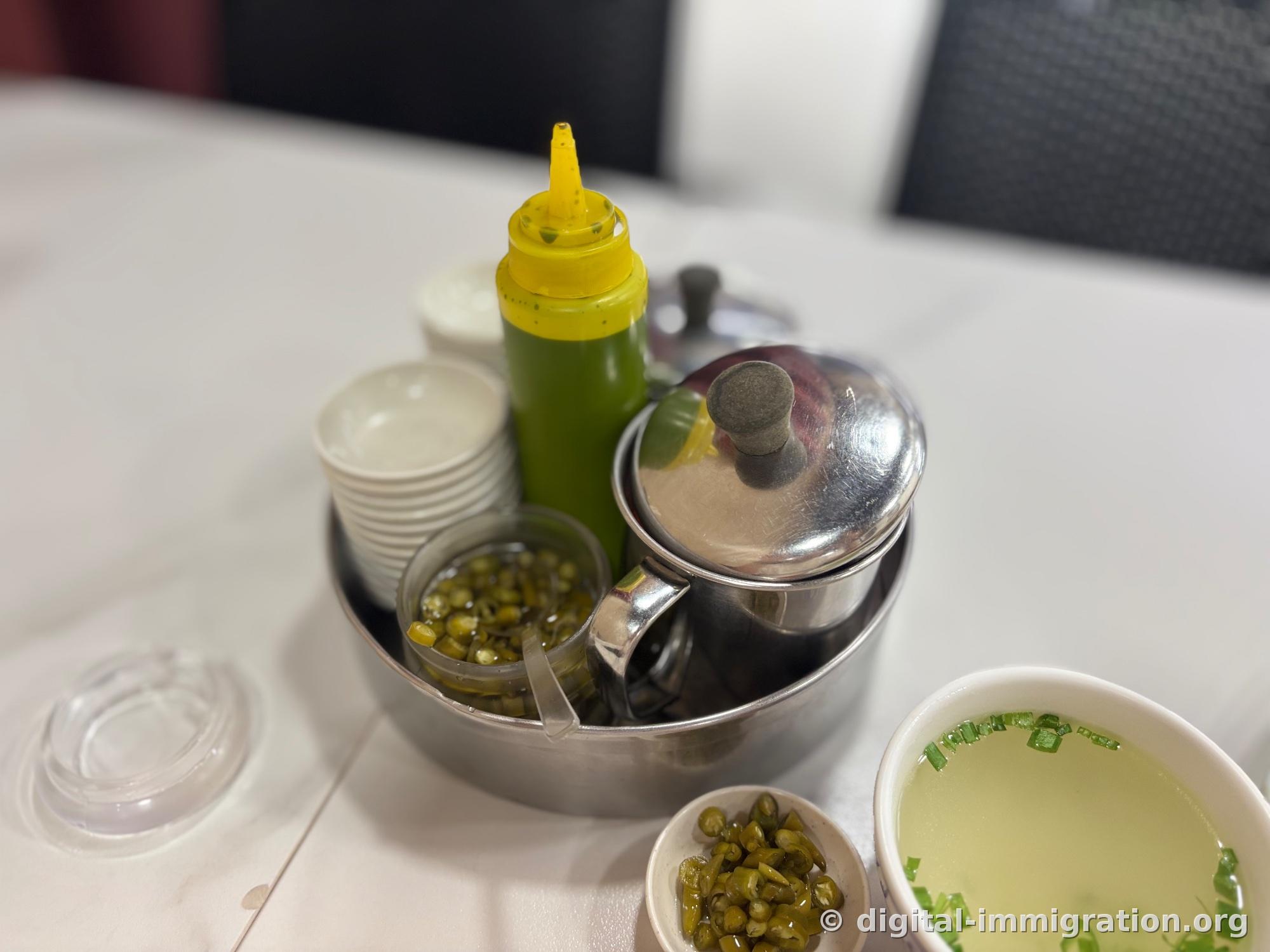
A stainless steel tray is placed at each table. The pot with a lid holds soy sauce, the green bottle with a yellow cap is spicy green chili sauce, and the glass cup contains pickled chilies. The small bowls stacked there are for you to portion into. I often see first-time visitors treat this like decoration and not touch it, but the local way is to drizzle the soy sauce pot around the oil rice. It's a light, unsalted soy sauce, so half a spoon isn't a concern.
Location and How to Get There
It's on the ground floor of Monkiara Solaris mall. About 20–30 minutes from downtown KL by Grab, though traffic varies significantly. Street parking in front of the shop is available but almost always full during lunch. On weekend afternoons, be prepared to circle. I prefer parking in the nearby Solaris building lot and walking—it's about 3–4 minutes on foot.
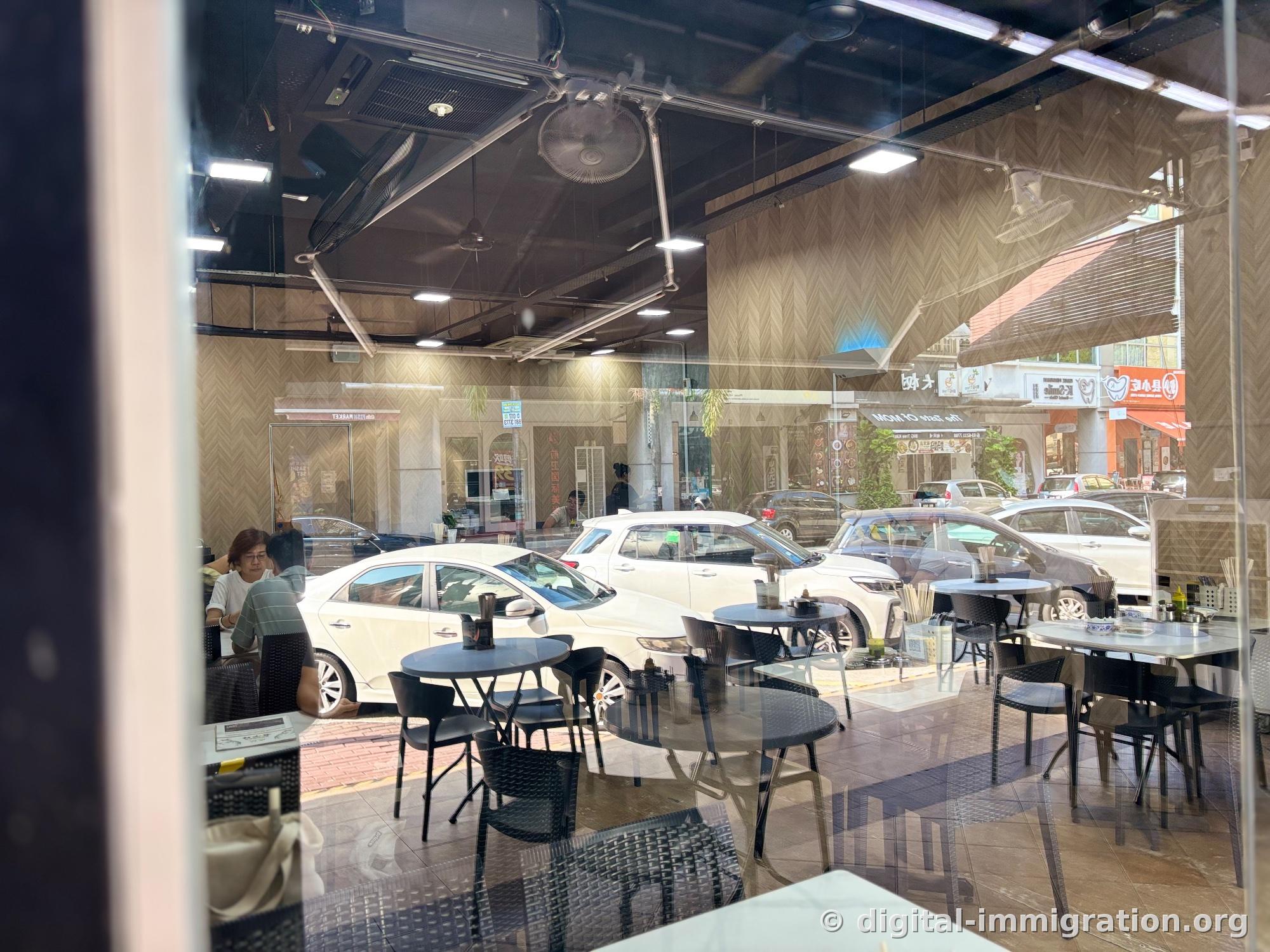
Through the glass window of the air-conditioned hall, you can see the outer shopfront row clearly. A dentist, salon, Japanese market—typical Monkiara shophouse scenery all in a row. One minor downside: the seats by this window get direct afternoon sun, so around 1–2 PM it glares. During lunch rush, staff may also ask to seat you with others if it's crowded, so if you want a quiet meal, it's better to come after 2 PM.
Two people ordering chicken rice with oil rice, dry wanton noodles, plus chicken liver and egg add-ons came to RM 34.35. Not many places in KL serve chicken of this quality at this price. If you're staying near Monkiara or passing through the neighborhood, spending lunch here is money well spent. Just remember to order the oil rice—skip it and you'll only experience half of what this place offers.
Das könnte Sie auch interessieren
- Morning at the Traditional Market Next to Johor KIP Mall, Mangoes 2kg for RM10
On the outskirts of Johor Bahru, Malaysia, on the way up toward Kulai, there's KIPMall. You walk in expecting an air-conditioned shopping center like a typical mall, but instead yo…
Johor · KIPMall - Ein Morgen auf dem traditionellen Markt von Kota Tinggi — Berge von grüner Mango und RM3.50 Waffeln
Kota Tinggi im Bundesstaat Johor, Malaysia. Ein Ort östlich von Johor Bahru, in Reiseführern nur für seinen Wasserfall bekannt. Dieses Mal konzentrierte ich mich stattdessen auf de…
Kota Tinggi - Petronas Twin Towers in Kuala Lumpur: Vom Banyan-Baum am Tag bis zur KLCC-Fontäne in der Nacht – Ein ganzer Tag festgehalten
Während meines Aufenthalts in Kuala Lumpur habe ich einen ganzen Tag ausschließlich im KLCC-Viertel (Kuala Lumpur City Centre) verbracht. Die Petronas Twin Towers sind das berühmte…
Kuala Lumpur · Petronas Twin Towers